

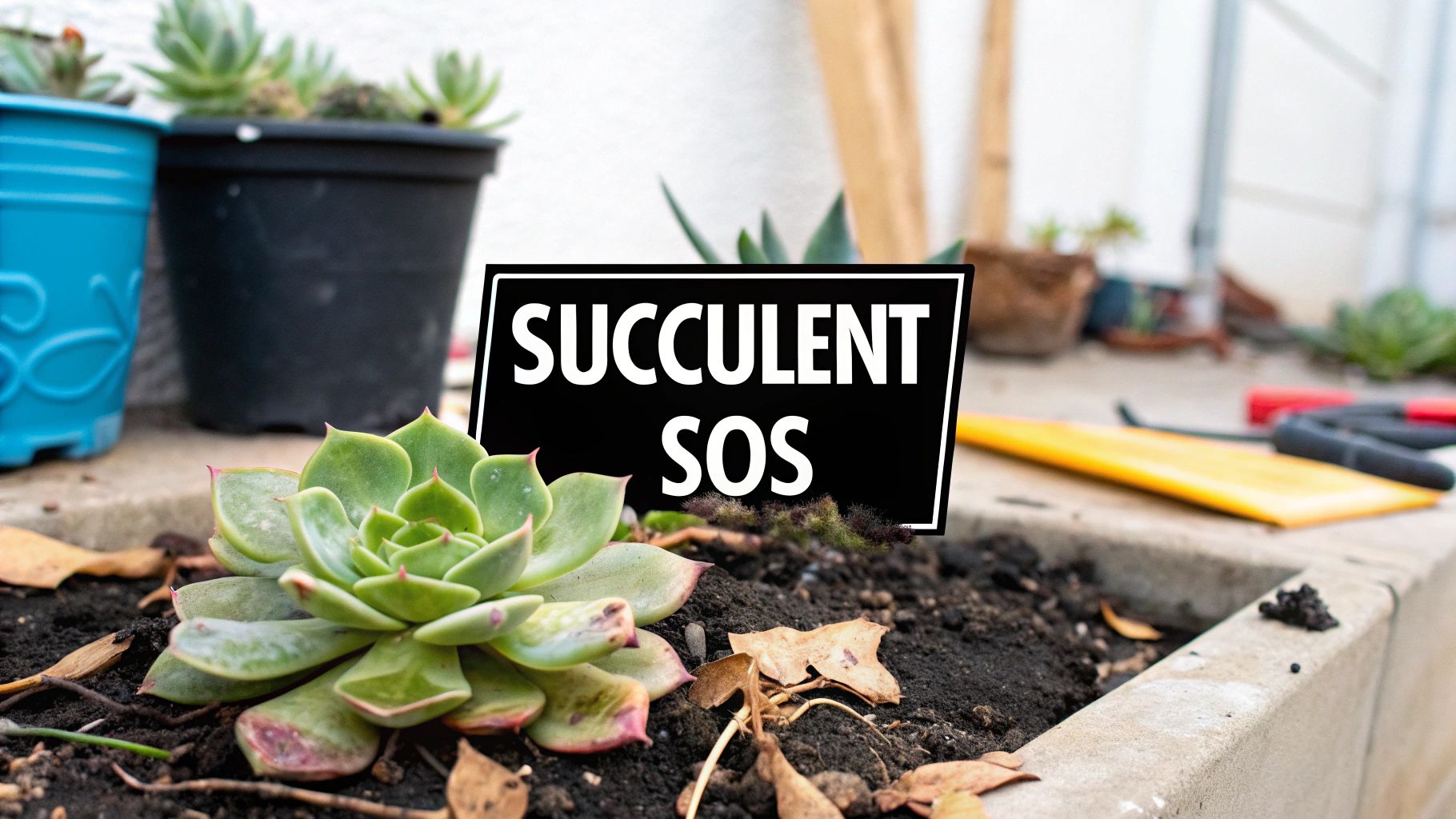

When you see succulent leaves start to drop, the most likely suspect is usually overwatering. You'll know this is the case if the fallen leaves are soft, mushy, and have a yellow or almost translucent look. They often fall off with just a gentle nudge. On the flip side, underwatering can also cause leaf drop, but those leaves will look completely different—dry, wrinkled, and crispy to the touch.
Decoding Your Succulent's Distress Signals
Finding a pile of leaves at the base of your succulent can be alarming, but don't panic. This is your plant's way of telling you something is wrong. Before you do anything, especially grabbing the watering can, it’s time to play detective. The fallen leaves themselves hold all the clues you need to figure out what's going on and how to fix it.
Your goal is a quick visual health check. By correctly identifying the root of the problem, you can move forward with confidence. Learning to read these signals means you can stop reacting to problems and start proactively keeping your plant healthy.
Reading The Leaves: What They Tell You
The texture and color of the fallen leaves are your best diagnostic tools. Take a close look. Are they firm and plump, or have they become weak and discolored?
- Soft, Yellow, or Translucent Leaves: This is the classic, textbook sign of overwatering. The plant's cells have absorbed so much water they've literally burst, which gives them that mushy, weak feeling.
- Dry, Wrinkled, or Crispy Leaves: This points straight to underwatering. Your succulent has burned through all its stored water, causing the leaves to shrivel up and become brittle.
- Healthy Green Leaves Falling Off: Now, this is a different story. If the leaves look perfectly healthy but are still dropping, it's likely a sign of environmental shock. This could be from a sudden temperature drop, the stress of being repotted, or even just getting bumped too hard.
This simple flowchart can help you visualize the process and quickly connect the leaf's appearance to the most likely cause.
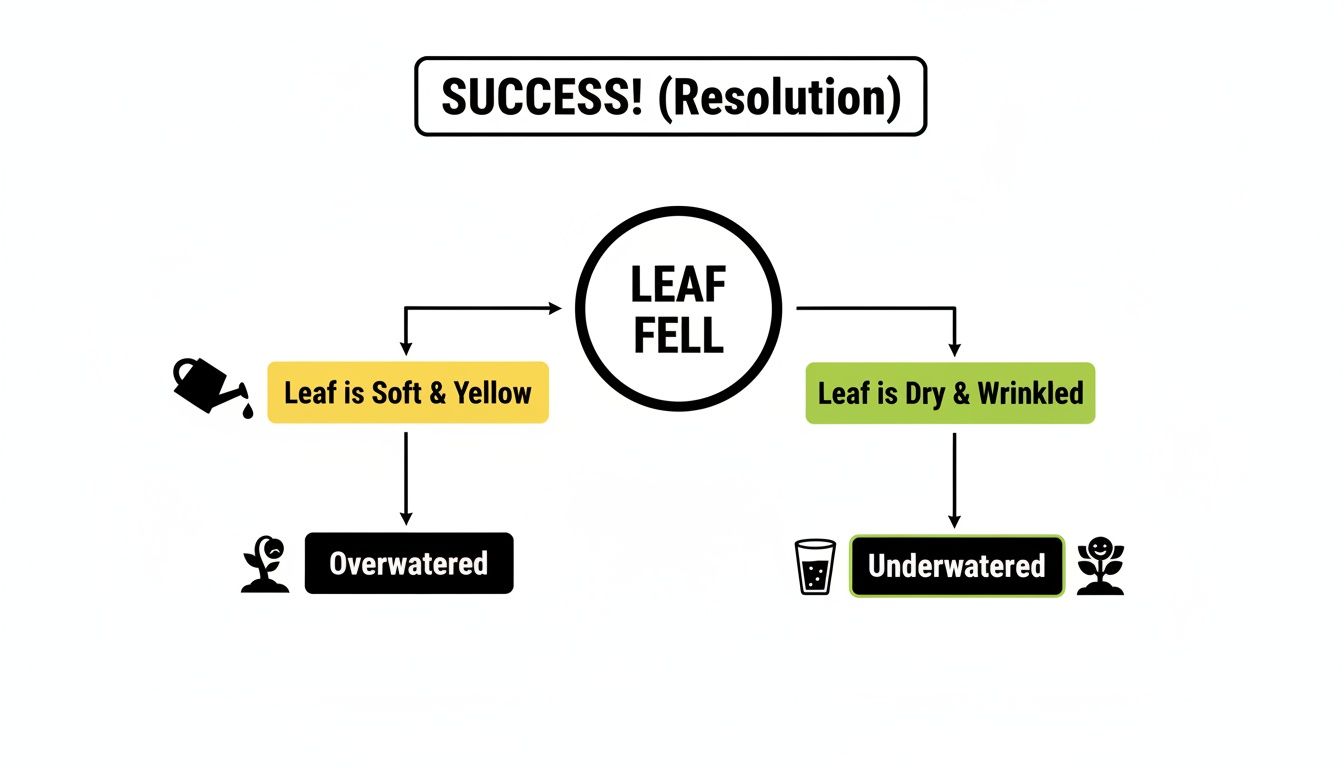
Think of it as a quick reference guide to get you on the right track without the guesswork.
Overwatering Is The Most Common Culprit
Believe it or not, the number one reason succulent leaves fall off is from too much kindness—specifically, too much water. This issue affects up to 70% of new succulent owners. When the soil stays wet, it suffocates the roots, cutting off their oxygen supply and kicking off root rot. As the rot takes hold, the plant can no longer support its leaves, and they turn soft and mushy before falling off.
In fact, horticultural data reveals that 85% of rotted succulents were watered more than once every two weeks while they were dormant. It’s an easy mistake to make! You can find more insights about the succulent plant market and its trends if you're curious.
Key Takeaway: The condition of the falling leaves is your best diagnostic tool. Mushy and yellow points to too much water, while dry and wrinkled means not enough. Always inspect the leaves before taking action.
This quick visual check is the single most important step. It prevents you from making a potentially fatal mistake (like watering an already overwatered plant) and sets you on the right path to helping your succulent recover and thrive.
Quick Diagnosis Visual Cues For Falling Succulent Leaves
This table gives you a quick side-by-side comparison to help you match the visual symptoms of the fallen leaves with their most likely cause and the immediate action you should take.
| Symptom | Most Likely Cause | Leaf Appearance | Immediate Action |
|---|---|---|---|
| Mushy & Yellow | Overwatering | Leaves are soft, swollen, and often yellow or translucent. They detach very easily. | Stop watering immediately. Check soil moisture and roots for rot. |
| Dry & Wrinkled | Underwatering | Leaves are shriveled, thin, and feel crispy or brittle. They may be dried out. | Water the plant thoroughly using the "soak and dry" method. |
| Healthy & Green | Shock or Pests | Leaves look plump and normally colored but have fallen off the stem. | Check for pests. Assess recent changes in light, temperature, or location. |
By carefully observing the leaves, you take the guesswork out of plant care and can give your succulent exactly what it needs to bounce back.
The Overwatering Epidemic And How To Stop It
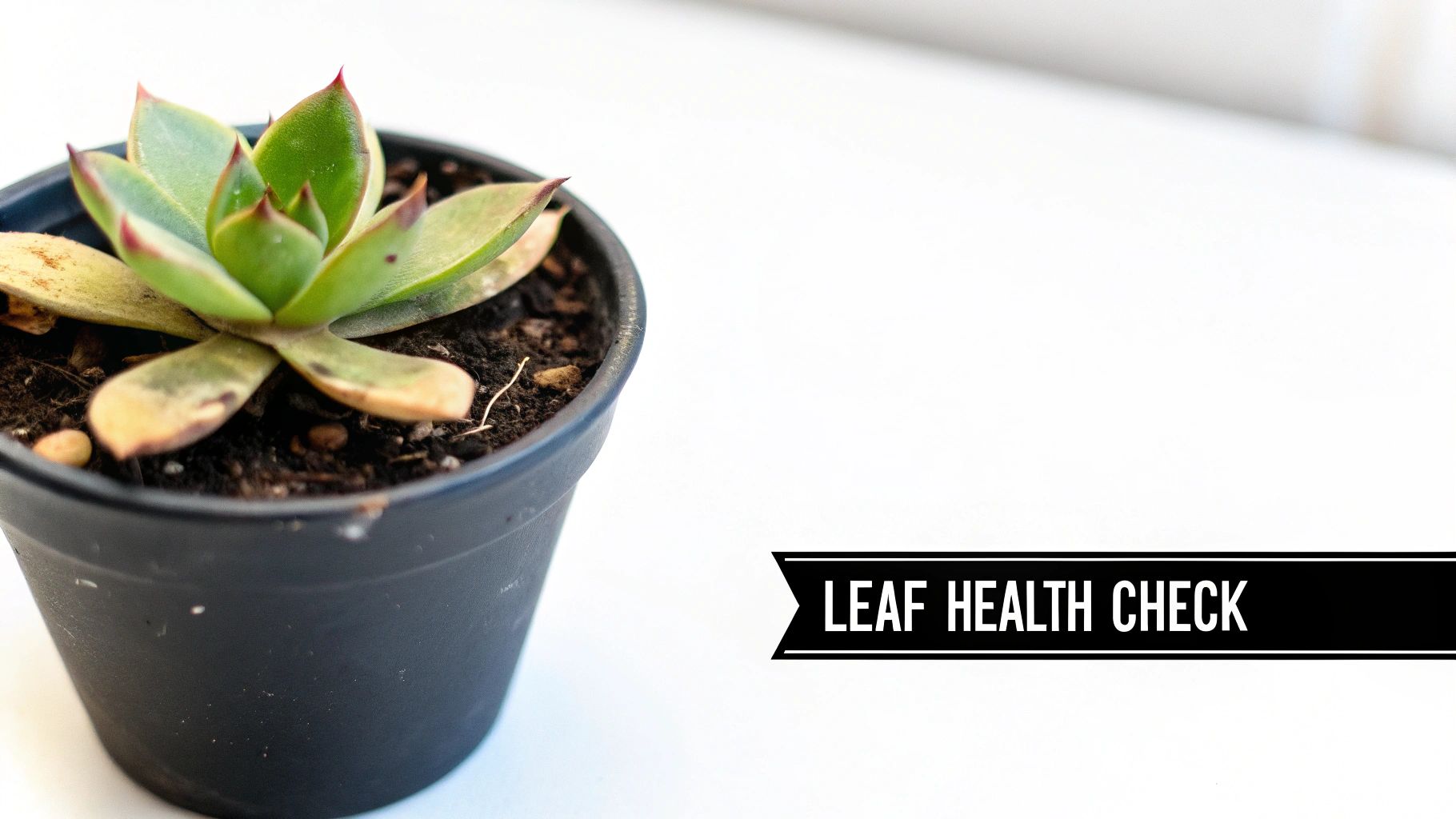
It’s a classic story I’ve heard countless times: a new plant parent, full of good intentions, ends up loving their succulent to death. This well-meaning affection, usually in the form of too much water, is the number one reason succulent leaves start dropping. You see a beautiful, resilient plant and want to care for it, but succulents are desert natives. They’re built for drought, not daily downpours.
When the soil stays constantly damp, the roots are essentially suffocating. This soggy, oxygen-starved environment is a five-star resort for fungus, leading straight to root rot. The roots turn black and mushy, they stop delivering nutrients, and the decay creeps up into the plant. That's when you see the telltale signs: soft, translucent, yellowing leaves that fall off at the slightest touch.
Master The Soak And Dry Method
To keep your succulents happy, you have to completely rethink how you water. Forget rigid schedules. "Watering Wednesday" is a recipe for disaster. Instead, embrace the "soak and dry" method, which perfectly mimics the rare but intense rainstorms succulents experience in the wild.
This approach gives the roots a deep, satisfying drink and then allows them to dry out completely, which is exactly what they need to thrive.
You can get a deeper dive into the specifics by checking out our complete guide on how to water succulent plants.
Here’s the basic idea:
- Check the Soil, For Real: Don't just poke the surface. Stick your finger or a wooden chopstick a couple of inches into the pot. If it comes out with any damp soil clinging to it, step away from the watering can.
- Look for Cues from the Plant: A thirsty succulent will tell you when it needs a drink. The leaves might look a little wrinkly or feel less firm and plump than usual. This is your sign that it’s tapping into its water reserves.
- Water Deeply and Thoroughly: Once the soil is bone dry, give it a good soak. Water until you see it freely running out of the drainage holes at the bottom. This ensures the entire root ball gets hydrated.
- Drainage is Non-Negotiable: After watering, let the pot drain completely. Never, ever let your succulent sit in a saucer of standing water. That's a direct invitation for root rot to move in.
The indoor gardening boom, especially during the pandemic, led to a 25% jump in succulent sales. While great for business, it also created a flood of new owners making the classic overwatering mistake. Smart retailers quickly learned that providing detailed, easy-to-follow care guides resulted in happier customers and a 30% increase in repeat purchases.
Emergency Rescue For An Overwatered Succulent
Think you’ve already gone too far with the watering can? Don’t panic, but you do need to act fast. If root rot has taken hold, simply waiting for the soil to dry out won't be enough to save it.
Pro Tip: If you're ever in doubt, err on the side of underwatering. A thirsty succulent will bounce back beautifully after a good soak, but a plant with advanced root rot is a much tougher patient.
Your first move is to perform a little plant surgery. Gently slide the succulent out of its pot and carefully brush the old, wet soil away from the roots. Now, inspect them closely. Healthy roots are firm and white or light tan. Rotted roots will be brown or black, feel slimy or mushy, and might even smell a bit foul.
Grab a clean, sharp pair of scissors and get to work. You need to trim off every last bit of rotted root. This isn't the time to be timid—any infected tissue you leave behind will just let the rot continue to spread.
Once you’ve trimmed it down to only healthy tissue, let the entire plant sit out in a dry, well-ventilated spot (but out of direct sun) for a day or two. This allows the cuts to form a callus, which acts like a scab to prevent new infections.
Finally, repot your succulent in fresh, dry, fast-draining potting mix designed for cacti and succulents. Critically, do not water it for at least a week. This rest period gives the recovering roots time to heal and settle into their new home before you reintroduce moisture. It's a bit of work, but this emergency intervention gives your plant its best shot at a full recovery.
Spotting and Saving a Thirsty Succulent
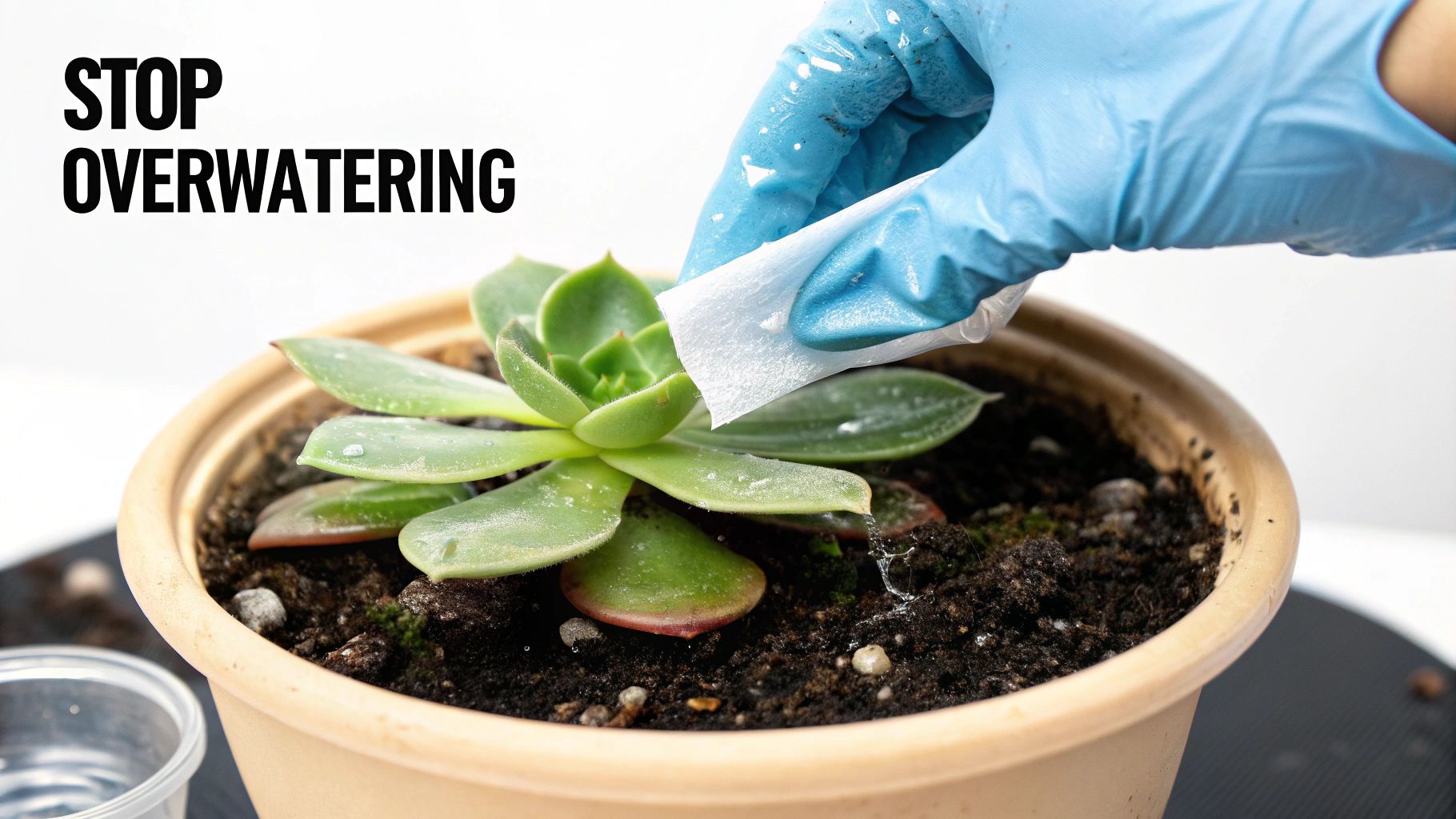
While loving a succulent to death with too much water is the classic mistake, forgetting about it entirely is a close second. When you find succulent leaves falling off, under-watering is a surprisingly common culprit. The good news? It's so much easier to bring a thirsty succulent back from the brink than to save a soggy, rotting one.
The trick is knowing what to look for, as the signs are completely different from overwatering. A thirsty succulent is practically screaming for a drink. Its leaves will look wrinkled, deflated, and feel thin or even a bit crispy. The plant is literally using up its own water stores to survive, causing those once-plump leaves to shrivel.
This usually starts with the oldest leaves at the bottom of the plant and slowly moves up. Picture an Echeveria with a healthy new rosette in the middle but a sad, shrunken skirt of lower leaves—that’s a classic sign it needs water.
How to Be Sure It's Thirst
Before you rush to water, a quick physical check will confirm your suspicions. Unlike a waterlogged succulent whose mushy leaves drop at the slightest nudge, an underwatered plant's leaves will still be firmly attached to the stem.
- Feel the Leaves: Gently squeeze one of the lower leaves. Does it feel leathery and flat instead of firm and full?
- Check the Soil: The soil will be completely bone-dry, all the way through. You might even notice it has shrunk away from the sides of the pot.
- Look for Crispiness: In severe cases, the tips of the leaves—or entire lower leaves—might turn brown, dry, and brittle.
This issue is more common than you'd think, accounting for roughly 25-30% of succulent leaf drop cases I see. A USDA report even showed that 60% of Aloe vera in U.S. homes had significant wrinkling after just 10 days without water during a summer heatwave. Luckily, they bounce back fast with the right technique. You can find more data on succulent care and market trends at Market Report Analytics.
The Best Way to Rehydrate: Bottom Watering
When soil gets that dry, it can become "hydrophobic"—meaning it actually repels water. If you just pour water on top, it will likely run right down the sides and out the bottom, barely soaking in. That's why the best revival method is bottom watering.
This technique mimics how plants absorb water in nature and encourages the roots to grow down deep and strong.
Expert Tip: Bottom watering is a game-changer for reviving a parched succulent. It hydrates the entire root ball evenly without shocking the plant or leaving any dry spots hidden in the pot.
It’s simple. Just set your pot in a bowl, tray, or sink filled with a couple of inches of water. Let it sit there for about 20-30 minutes. The soil will wick up the moisture through the drainage holes. You’ll know it’s done when the topsoil feels damp to the touch.
Once it's had a good drink, take it out of the water and let all the excess drain away. This one deep soak is usually all it takes to see the leaves plump back up within a day or two.
Looking Beyond the Watering Can: Light, Pests, and Other Hidden Stressors
So, you’ve dialed in your watering schedule, but your succulent is still dropping leaves. What gives? When the obvious culprit isn’t to blame, it’s time to play detective and look for the less apparent stressors. Sometimes, the problem isn't in the soil at all, but in the air, light, or even tiny unwanted guests.
One of the most common issues I see is etiolation. This is just a fancy word for what happens when a succulent gets desperate for light. It will literally stretch itself out, reaching for the nearest window, and the stem grows long, pale, and weak. This "leggy" look isn't just a cosmetic issue—the flimsy stem can't hold the weight of the leaves anymore, and they start to drop.
The Trouble with Too Little Light (and Too Much Change)
If you're seeing big gaps between the leaves where they used to be tightly packed, and your plant is leaning like it's trying to escape its pot, you're watching etiolation happen in real-time. The plant is sacrificing its natural, compact shape to survive, and falling leaves are a direct consequence of that structural weakness.
The fix sounds easy—just give it more light—but you have to be careful.
- Go Slow: Never, ever move a succulent from a dim corner straight into blistering, direct sun. It's the plant equivalent of getting a severe sunburn, leaving permanent white or brown scorch marks on the leaves.
- Acclimate It: The trick is to introduce it to more light gradually. Start with a spot that gets bright, indirect light for about a week. Then, you can start giving it an hour or two of gentle morning sun, slowly upping the time over a few weeks.
Environmental shock is another huge, often overlooked, reason for sudden leaf drop. Succulents are creatures of habit; they hate sudden changes. Think back: did you recently move it to a new room? Is it suddenly next to a drafty window, a heat vent, or an AC unit? A seemingly minor shift can stress the plant so much that it starts shedding perfectly healthy leaves in protest.
When you're trying to figure out why leaves are dropping, ask yourself what has changed in the last two weeks. Even small shifts in temperature, drafts, or light can be the culprit. A consistent environment is a happy environment.
It’s no surprise that the global succulent market is valued at $9.36 billion, with so many of us trying to bring a bit of green into our homes. Interestingly, a gardening app's analysis of 100,000 users found that a staggering 45% of leaf loss in Haworthia plants was linked not to watering, but to inconsistent care routines and environmental instability—a common problem in our busy lives. This really shows how much our habits and our home's environment can stress a plant. You can find more succulent market trends on MarketReportAnalytics.com.
Identifying and Evicting Unwanted Guests
Alright, it's time to get up close and personal with your plant. Tiny pests love to hide in the nooks and crannies, quietly draining the life from the leaves until they weaken and fall off. Grab a magnifying glass if you have one and check for these common freeloaders:
- Mealybugs: These guys look like tiny bits of white cotton fluff. You'll usually find them clustered where the leaves meet the stem.
- Spider Mites: Much harder to spot, but they leave a tell-tale sign: delicate, spider-web-like strands, especially around new growth.
If you only see a few pests, you can handle them with a targeted strike. Just dip a cotton swab in 70% isopropyl alcohol and dab it directly on the bugs. It’s an instant fix. For a bigger invasion, a gentle spray of neem oil solution or insecticidal soap works wonders. Just be sure to spray in the evening, as applying it in direct sun can burn the leaves.
Turn Fallen Leaves Into New Succulent Life
Watching leaves drop from your succulent can be disheartening. It feels like you've done something wrong. But in the world of succulents, this is often an incredible opportunity in disguise. These plants are built for survival, and each fallen leaf is like a little lifeboat, packed with everything it needs to grow a whole new plant.
So, instead of seeing it as a failure, think of it as a bonus. You can turn this moment of plant stress into a super rewarding propagation project, basically multiplying your succulent collection for free. It’s a powerful reminder of how resilient these plants are.
Choosing The Right Leaves For Propagation
Now, not every leaf that drops is going to be a winner. To get the best results, you need to be a little picky. The best candidates for propagation are leaves that are plump, firm, and look healthy. If a leaf is yellow and mushy, it probably fell off from overwatering and is already starting to rot. Toss it.
What you're looking for is a leaf that popped off the stem cleanly, right at the base. You should see a neat, slightly curved end where it was attached. Leaves that are torn or broken in half just don't have what it takes to sprout new roots.
- Look for plump leaves: They have the stored water and nutrients needed to kickstart new growth.
- Check for a clean break: The leaf must be whole, especially where it connected to the stem.
- Skip the bad ones: Any leaf that's mushy, completely shriveled, or has pest damage should be discarded.
Setting Up Your Leaves For Success
Once you’ve gathered your healthiest-looking leaves, your next job is simply to wait. This is where most people get impatient and mess things up. Don't just stick them in soil—they need to heal first. This is called callusing.
Just lay the leaves out on a dry paper towel or a tray. Find a spot that gets bright, indirect light, but definitely keep them out of direct sun, which will just cook them. Now, leave them alone for about three to five days. You’ll see the little wound at the base of the leaf dry out and form a callus. This tiny step is critical; it seals the leaf and prevents it from sucking up too much water and rotting later on.
Expert Tip: Don't skip the callusing step! Rushing to put a fresh leaf on soil is the number one reason propagation fails. That little scab protects the leaf and sets it up for success.
After a few days, you can check the ends. They should look dry and feel hard to the touch. Perfect. Now they’re ready.
Prepare a shallow tray with a well-draining succulent or cactus mix. Simply lay the callused leaves right on top of the soil. Don't bury them or stick them in—just let them rest on the surface.
For a deep dive into what comes next—from misting to watching the first roots appear—check out our complete guide on how to propagate succulents.
Before you know it, in a few weeks or maybe a month, you'll spot tiny pink or white roots emerging from the callused end. Soon after, a perfect miniature rosette will start to form. It’s pure magic, watching a whole new succulent come to life from a single fallen leaf.
Building A Proactive Succulent Care Routine
Once you’ve nursed a succulent back from the brink, the last thing you want is a repeat performance. Preventing leaves from dropping in the first place is far less stressful than emergency plant CPR. A proactive care routine isn't about following a rigid set of rules; it's about creating a stable, healthy environment where your succulent can thrive from the get-go.
Think of it as learning to speak your plant’s language. The foundation for this understanding is built on three core elements that, when combined, prevent the most common succulent killer: overwatering. Honestly, if you can nail these three things, you’re already 80% of the way to a happy plant.
The Unbreakable Trio of Succulent Health
I call these the pillars of any good succulent care strategy. Get them right, and you'll avoid most of the classic leaf-drop issues before they even have a chance to start.
-
The Right Soil Mix: Using standard potting soil is one of the biggest mistakes I see people make. It’s a death sentence for succulents because it holds onto moisture for way too long. Your plants evolved in arid conditions, and they need a gritty, well-draining soil mix that mimics that. You can grab a pre-made cactus mix or, even better, make your own by blending regular potting soil with an equal amount of an inorganic material like perlite, pumice, or coarse sand. This creates crucial air pockets and lets water drain right through, saving the roots from rot.
-
Pots with Proper Drainage: This one is absolutely non-negotiable. I don't care how cute a pot is—if it doesn't have a drainage hole, it’s not for succulents. Period. Trapped water has to go somewhere, and without an escape route, it just pools at the bottom, suffocating the roots. This leads directly to those dreaded mushy, yellow leaves. We actually have a great article that dives deeper into why succulents need drainage to survive.
-
Specific Light Needs: Not all succulents want the same thing from the sun. While most are light-lovers, some species will get fried in direct, scorching afternoon sun. Take a minute to research your specific plant. An Echeveria, for example, will happily soak up six hours of direct sun, but a Haworthia prefers bright, indirect light. Giving your plant the right light exposure prevents stress and stretching (etiolation), keeping it strong, compact, and happy.
Adjusting Care with The Seasons
A truly proactive routine means recognizing that your succulent's needs aren't static—they change with the seasons. Most succulents go through active growth phases and periods of dormancy. Learning to adapt your care to these natural cycles is the secret to long-term success.
Key Takeaway: Think of your succulent's year in two halves. During its active season (usually spring and summer), it's busy growing and needs more resources. During winter dormancy, it's resting and needs to be left alone.
- Spring and Summer (Active Growth): This is when your plant is pushing out new leaves and roots. You can water more often (still using the "soak and dry" method, of course) and even offer a diluted, low-nitrogen succulent fertilizer about once a month to support that growth.
- Fall and Winter (Dormancy): As the days get shorter and cooler, your succulent hits the brakes. Its water requirements plummet. This is when you need to pull back on watering significantly—sometimes to just once a month or even less, depending on your home's climate. Cut out fertilizer entirely until spring. Overwatering a dormant succulent is one of the fastest ways to cause rot and sudden leaf drop.
Your Top Questions Answered
Even the most seasoned succulent parent runs into puzzling situations. When leaves start to drop, a little panic is normal. Let's tackle some of the most common questions I get about this very issue.
Why Are the Bottom Leaves on My Succulent Drying Up?
More often than not, this is totally normal and nothing to worry about. Succulents are smart; they shed their oldest leaves at the very bottom to push energy into new, healthy growth up top. It's just part of their natural growth cycle, a process called senescence.
If you're only seeing a few crispy leaves at the base and the top of your plant looks vibrant and happy, just let it do its thing. It's a sign of a healthy, growing plant, not a cry for help.
If a Leaf Falls Off, Will It Grow Back?
Unfortunately, no. A new leaf won't sprout from the exact same spot on the stem where the old one fell off. All the new action happens at the plant's growth center, which is usually the rosette at the very top.
That bare spot on the stem is there to stay. This is precisely why catching problems like overwatering early is so crucial—it helps you keep that full, compact look we all love.
A Quick Tip: While a single leaf won't regrow on the stem, the stem itself is full of potential. If you "behead" a leggy succulent by cutting the top off, you'll often see brand new baby rosettes pop out right below the cut. It's a fantastic way to propagate!
Which Is Better: Terracotta or Plastic Pots?
For almost everyone, especially if you're just starting out, terracotta is the way to go. I can't recommend it enough. The magic is in the material itself—it's porous clay that literally breathes.
This makes a world of difference for your plant's roots.
- The soil dries out significantly faster between waterings.
- Your risk of accidentally overwatering and causing root rot plummets.
- Air can get to the roots, which is essential for a healthy plant.
Plastic pots, on the other hand, hold onto water for a long, long time. They're unforgiving if you have a heavy watering hand. While an expert can make them work, terracotta provides a fantastic buffer against common mistakes.
Ready to build a thriving collection of healthy, beautiful plants? Explore the stunning selection of cacti and succulents at The Cactus Outlet and find your next perfect plant today! Visit us at https://www.cactusoutlet.com.