

When it comes to yucca plant fertilizer, the best approach is a gentle one. Think of it as a subtle nudge, not a hard push. While these plants are famous for thriving in poor soil, a yucca in a pot has different needs. Each time you water, essential nutrients get flushed out, and a small, occasional boost is all it takes to put them back.
Why Your Yucca Might Need a Nutrient Boost
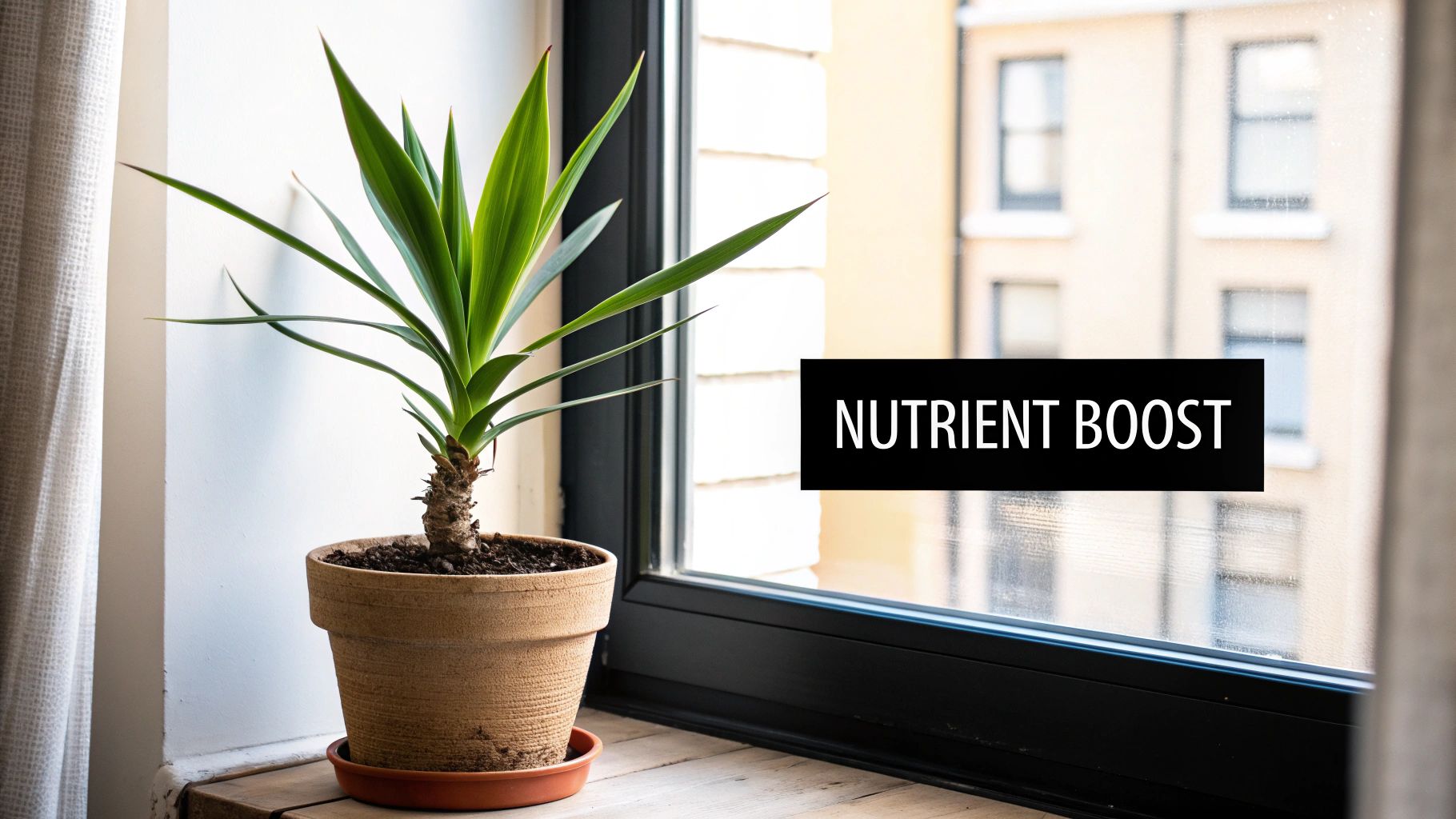
It’s easy to assume that a tough desert plant like a yucca needs nothing but benign neglect. But a container isn't the same as its native, arid home. Out in nature, the soil is slowly but surely replenished by decomposing organic matter. In a pot, that natural cycle is missing, and the soil gets depleted over time.
This is where a little bit of fertilizer makes a world of difference. The goal isn't to force a sudden growth spurt—that can actually make the plant weaker and floppy. Instead, you're just giving it a light supplement to maintain its natural strength and structure.
Supporting Health From the Roots Up
A balanced, light feeding gives your yucca the basic building blocks it needs for a strong foundation. The right nutrients encourage a robust root system, which is the key to everything—anchoring the plant, absorbing water, and keeping it stable.
When your yucca is properly nourished, you'll see the results:
- Strong, Stiff Leaves: The right minerals help the plant maintain that iconic, sword-like foliage, keeping the leaves from looking pale or flimsy.
- Enhanced Resilience: A well-fed plant is simply better at shrugging off stressors like a sudden cold snap or a forgotten watering.
- Pest and Disease Resistance: Healthy plants are their own best defense, naturally warding off common pests and diseases far more effectively.
The golden rule for feeding yuccas is 'less is more.' Seriously. One light feeding in the spring is usually all it takes for the entire growing season. You're far more likely to cause problems by over-fertilizing than by under-fertilizing.
Fertilizer vs. Yucca Extract: What's the Difference?
Here's something that often trips people up. You might see products called "yucca extract" and think it's a plant food, but it's not. Yucca extract is a supplement made from the plant's saponins, often used as a natural wetting agent to help soil absorb water more evenly. It doesn't actually contain the nutrients your plant needs to eat.
When you're looking to feed your plant, make sure you're getting a product labeled as a yucca plant fertilizer, which will have the NPK ratios and micronutrients required for healthy growth. If you're interested in learning more about the different types, you can explore the various yuccas of the Southwest on our blog.
Choosing the Right Fertilizer for Your Yucca Plant
Stepping into the fertilizer aisle can feel like you're trying to crack a secret code. With all those bottles and bags promising miracles, how do you find the right yucca plant fertilizer? The trick is to ignore the flashy labels and look for three little numbers: the NPK ratio.
This trio stands for Nitrogen (N), Phosphorus (P), and Potassium (K), the main nutrients plants need. For yuccas, the golden rule is simple: go low on the nitrogen. Too much nitrogen pushes out fast, floppy, weak growth—exactly what you don't want for a plant known for its strong, architectural shape.
Understanding NPK Ratios
A standard "all-purpose" fertilizer, like a 10-10-10, is almost always too strong for a yucca's modest appetite. Instead, you'll want to hunt for a mix with a lower first number or, even better, a formula made specifically for cacti and succulents. These blends are designed to support strong roots and resilience, not just leafy growth.
This low-nitrogen strategy ensures your yucca grows at a natural, sturdy pace, developing those classic, stiff leaves that make it so dramatic. It's why so many seasoned yucca growers just use a regular houseplant fertilizer but dilute it to half or even quarter strength. This gives the plant a gentle nudge of nutrients without overwhelming it. For a deeper dive, check out our guide to the best fertilizer for succulents.
Liquid vs. Granular: Which Is Better?
Choosing between a liquid feed and a granular one really depends on where your yucca lives and what your routine is like. Neither one is universally "better"; they just work differently.
Here’s a quick look at the most common options to help you decide what works best for your situation.
Comparing Yucca Fertilizer Types
| Fertilizer Type | Best For | Application Frequency | Pros | Cons |
|---|---|---|---|---|
| Liquid Fertilizer | Indoor potted yuccas where precise control is key. | Monthly during the growing season. | Fast-acting, easy to dilute to a very weak strength, low risk of burn. | Requires more frequent application; you have to remember to do it. |
| Granular (Slow-Release) | Outdoor yuccas planted directly in the garden. | Once or twice a year, usually in spring. | "Set it and forget it" convenience; feeds for months. | Less control over nutrient release; can be too strong for potted plants. |
| Organic (e.g., Compost Tea) | Gardeners who prefer natural, gentle methods. | Every 4-6 weeks during the growing season. | Improves soil health and provides gentle, balanced nutrients. | Can be messier to prepare; nutrient levels are less precise. |
Ultimately, the goal is to provide a small, steady supply of nutrients without shocking the plant's system.
If you're just starting out, a water-soluble liquid fertilizer is your safest bet. Diluting it to quarter-strength is practically foolproof and lets you see how your plant responds without any risk of the dreaded fertilizer burn.
For an excellent organic approach, consider using a diluted compost tea or worm casting tea. These don't just feed the plant; they also enrich the soil with beneficial microbes. Whichever route you take, the core principle is the same: keep it light and infrequent. A little goes a very long way in keeping your yucca healthy, strong, and beautiful for years to come.
A Simple Yucca Fertilizing Schedule That Actually Works
When it comes to feeding a yucca, timing is everything. These slow-growing desert natives are nothing like your leafy tropicals that seem to crave constant nutrients. Instead, yuccas follow a much more relaxed, seasonal rhythm. Your goal is to work with their natural growth cycle, not against it.
This means you’ll only be fertilizing during the active growing season—spring and summer—when the plant is busy pushing out new leaves. Once fall and winter roll around, your yucca enters dormancy. Growth slows to a crawl, and it's time for a much-needed rest. Feeding it during this period is a waste of good fertilizer and can actually stress the plant by pushing it to grow when it should be conserving energy.
Fertilizing During the Growing Season
Your cue to start feeding is in the spring, as soon as you spot the first signs of new growth, usually around April. This is the perfect time for a gentle nudge to get it through the active months ahead. How you approach this depends on where your yucca lives and what kind of fertilizer you're using.
-
For outdoor, garden-planted yuccas: Life is simple. One application of a slow-release granular fertilizer in the spring is often all it needs for the entire year. Every time you water or it rains, a small amount of nutrients will be released, providing a steady, gentle feed all summer long.
-
For potted indoor yuccas: You have more control, which is a good thing. A diluted, water-soluble yucca plant fertilizer is the way to go here. I've found the best method is to feed them with a quarter-strength liquid fertilizer once a month, starting around May and finishing up by the end of August. This light but consistent feeding is a great way to mimic the scarce nutrients they’d find in their natural environment.
A big, mature yucca in your garden has a massive root system that can forage for nutrients in the soil. A small yucca in a pot on your windowsill? Not so much. It's entirely dependent on you, so adjust your feeding based on its size and situation.
This timeline gives you a bird's-eye view of this simple seasonal strategy, making it clear when to feed and when to stop.
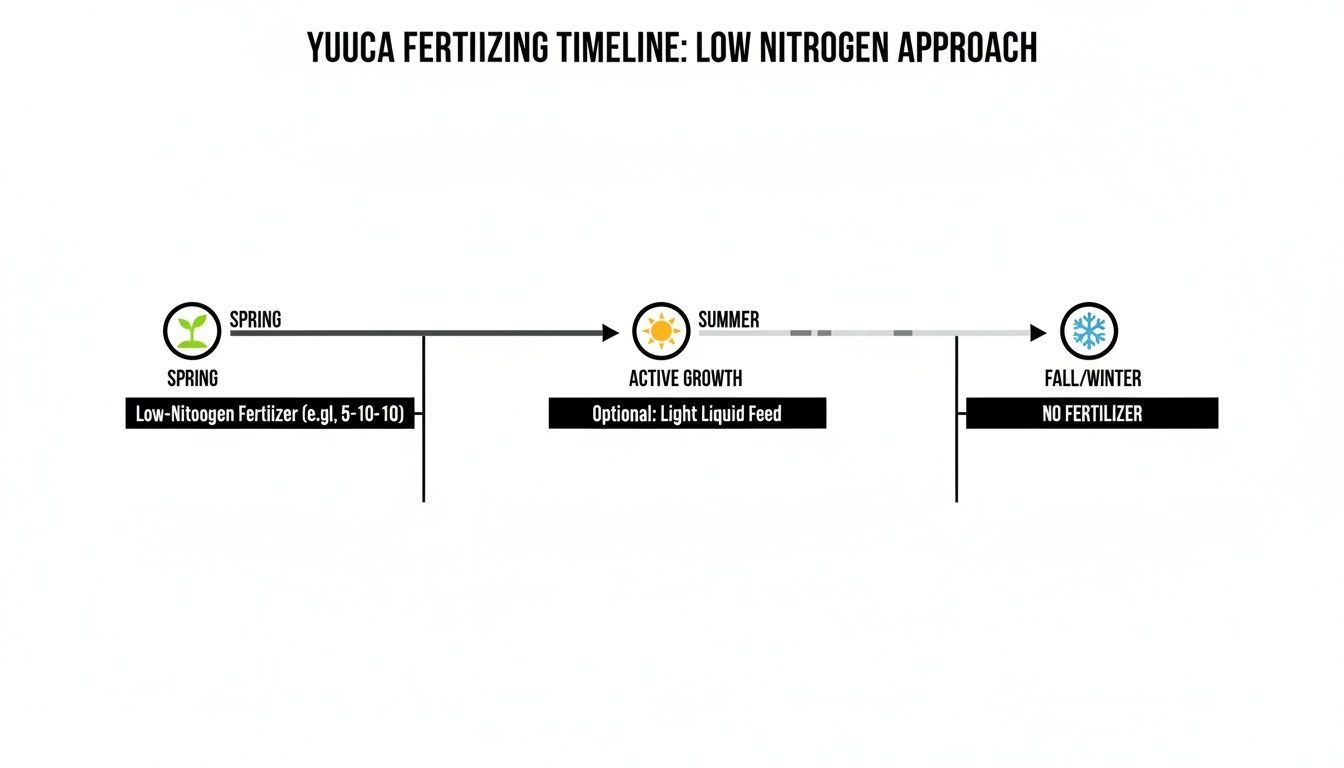
As you can see, all the action happens in the spring and summer. Once the days get shorter, it's time to put the fertilizer away.
Why Winter Rest is So Important
As autumn approaches, it's time to cut off all feeding. Your yucca is getting ready to power down for the winter, and adding nutrients now just confuses its natural rhythm. Let it slow down and have its quiet season.
This dormant period isn't just a break; it's essential for the plant's long-term health. It uses this time to consolidate the growth from the summer and store up energy for the spring. By following this simple schedule, you’re giving your plant exactly what it needs, when it needs it—and respecting the downtime it craves.
How to Fertilize Your Yucca Without Harming It
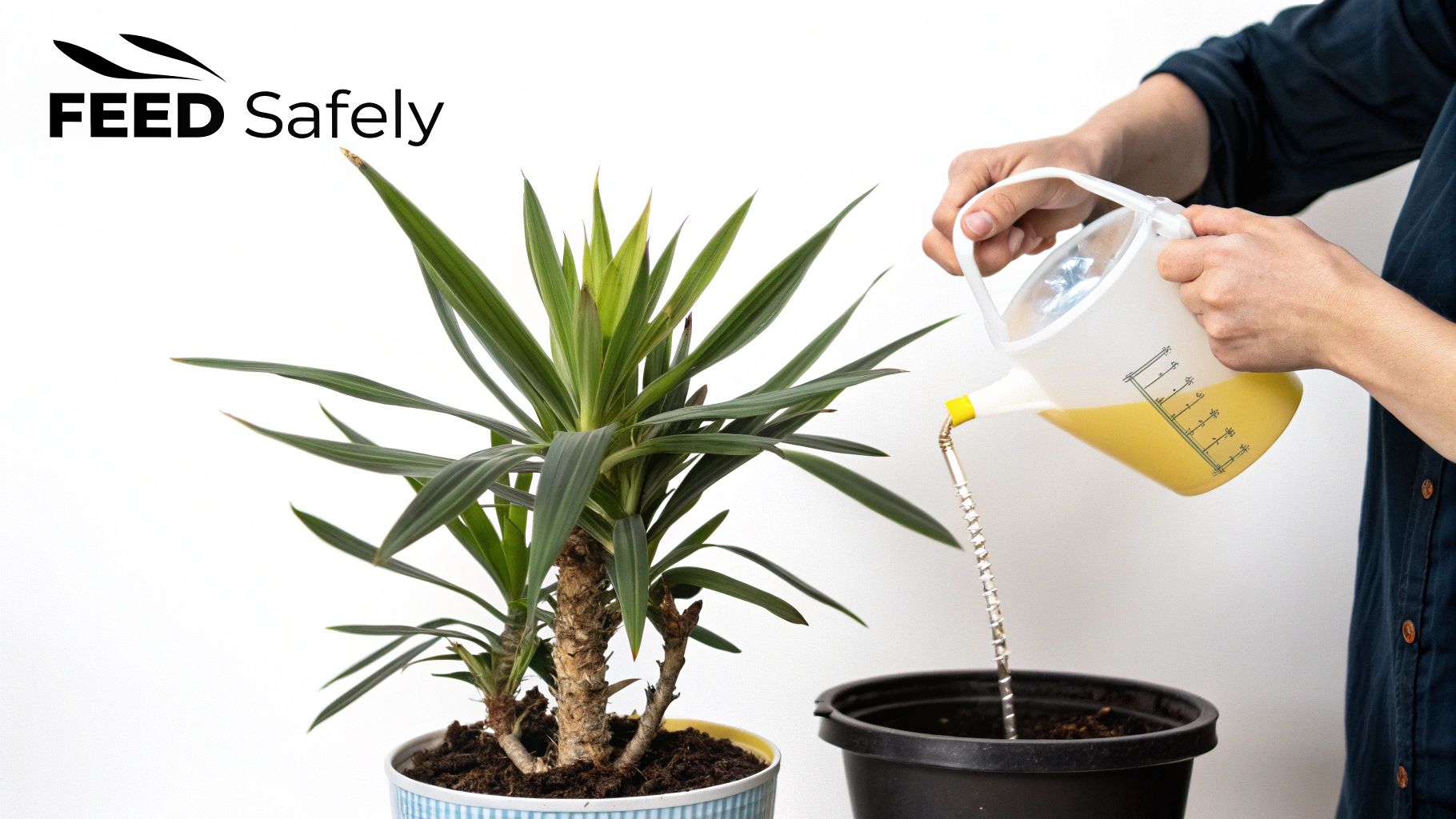
Picking the right yucca plant fertilizer is just the first step. The real trick is knowing how to apply it correctly, because that’s what protects your plant from damage. Yuccas have incredibly sensitive roots that can easily get scorched by a blast of concentrated nutrients. Your goal should always be a gentle feeding, never a chemical shock.
I've seen it happen countless times. A well-meaning gardener buys a great, low-nitrogen fertilizer but applies it full-strength. The result? The dreaded fertilizer burn—crispy brown leaf tips and a plant that looks worse than before.
The Art of Diluting Liquid Fertilizer
If you're using a liquid or water-soluble fertilizer, especially for a potted yucca, dilution is your best friend. These fertilizers are designed to be mixed with water, which puts you in the driver's seat when it comes to strength.
The golden rule here is to always start weaker than what the package tells you. Most general-purpose plant foods are simply too strong for a yucca’s modest appetite.
- For a standard houseplant fertilizer: Cut the recommended strength down to one-quarter. So, if the bottle says one capful per gallon, you’ll use just a quarter of a capful.
- For a cactus or succulent formula: These are already gentler, so diluting to half-strength is usually a safe bet. It just provides an extra buffer against burning the roots.
Always mix your fertilizer in a watering can or separate container before you pour it on the plant. Never add the concentrate directly to the soil, as it will instantly scorch any roots it touches.
Proper Granular Fertilizer Application
Slow-release granules are a fantastic "set it and forget it" choice, particularly for yuccas planted in an outdoor garden bed. But even these need to be applied with a little finesse to avoid creating hot spots of concentrated nutrients.
Don't just dump the granules at the base of the plant. Instead, sprinkle them evenly across the soil surface, making sure to stay a few inches away from the yucca's main stem. After you've scattered them, use your fingers or a small hand rake to gently work them into the top inch or so of soil.
The final, critical step is to water the area thoroughly. This first watering activates the granules, dissolving their outer coating and starting the slow release of nutrients down into the root zone. If you skip this, the fertilizer just sits on top, doing nothing. For more great tips on plant care, The Cactus Outlet Care Sheet is a solid resource.
One Pro Tip to Never Skip
Here’s a piece of advice that will save your yucca a world of stress: always water your plant the day before you plan to fertilize.
Applying fertilizer to bone-dry soil is a recipe for disaster. When the roots are thirsty, they absorb the nutrient solution way too quickly, which is a fast track to chemical burn. But if the soil is already lightly moist, the roots are hydrated and will take up the diluted fertilizer much more gently and evenly. This simple prep step makes a massive difference in how safely your yucca gets its meal.
Spotting the Signs of a Feeding Problem
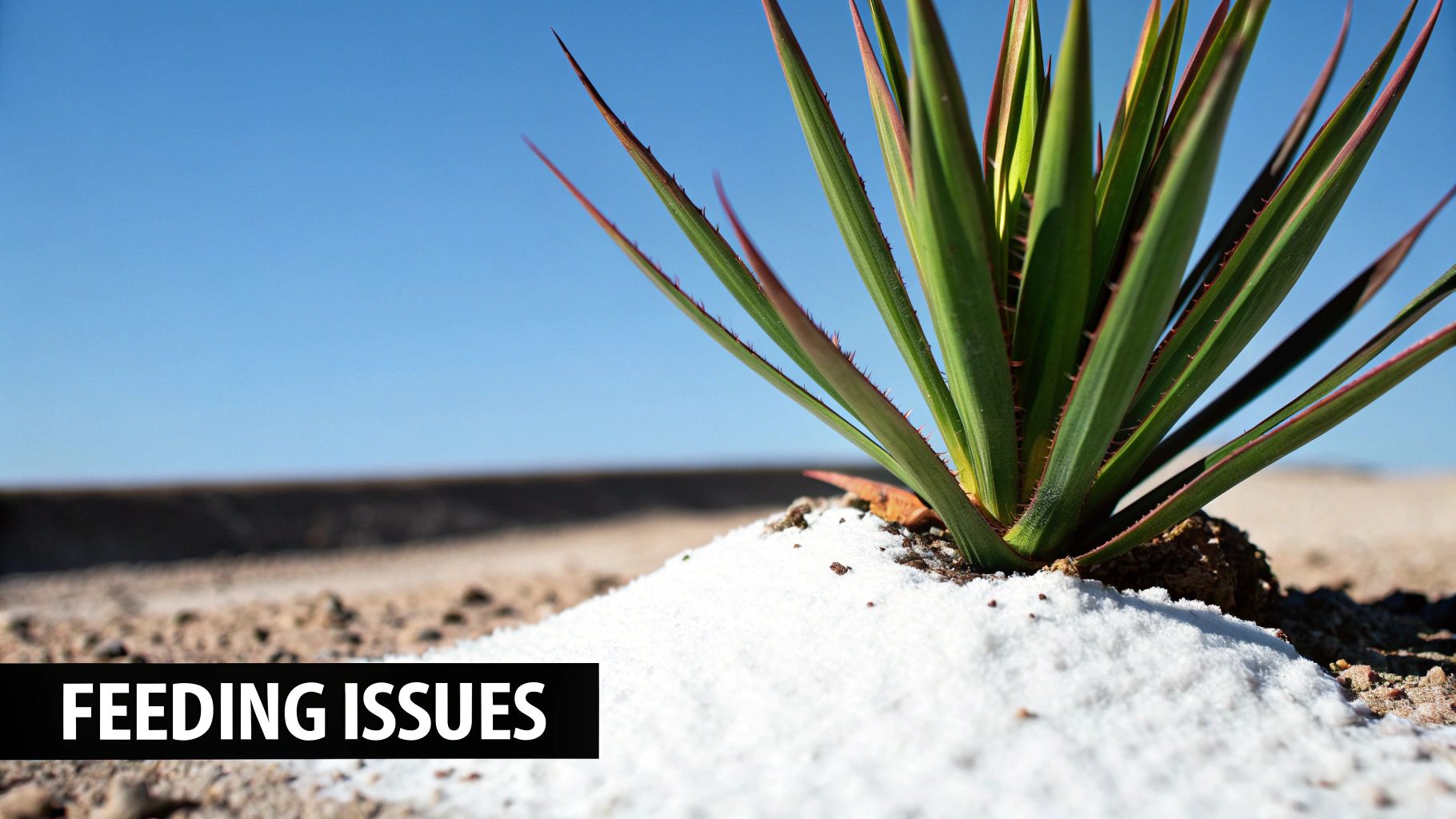
Yuccas don't talk, but they're great communicators. When their nutritional balance is off, they’ll show you clear signals. Learning to read these clues is your best bet for catching issues before they spiral.
Honestly, most problems come from too much love in the form of yucca plant fertilizer. These plants are far more sensitive to getting too much food than not enough.
The tricky part? The signs of over-fertilizing often look a lot like underwatering, which can be confusing. But if you see these symptoms pop up right after you’ve fed your plant, fertilizer is almost certainly the culprit.
Signs of Over-Fertilization
Giving your yucca too many nutrients, especially the salts found in fertilizers, can literally burn the roots. It's a classic rookie mistake, but it needs a quick response if you spot these tell-tale signs:
- Crispy Brown Leaf Tips and Edges: This is the most common symptom of fertilizer burn. The excess salts are actually pulling moisture right out of the leaves.
- Yellowing Lower Leaves: An overwhelmed plant will start sacrificing its oldest leaves. They’ll turn yellow and eventually drop off.
- White Crust on the Soil: Look closely at the surface of the soil or around the pot's drainage hole. A visible, salty white or yellowish crust is a dead giveaway of mineral salt buildup.
- Wilting Even When the Soil is Damp: If the plant looks droopy and thirsty but the soil is moist, its roots are likely damaged and can't absorb water properly.
What to do: If you’ve overdone it, the immediate fix is to flush the soil. Take your potted yucca to a sink or outside and slowly pour a large amount of water through the pot, letting it drain completely. This process, called leaching, washes away the excess salts that are scorching the roots.
Taking this step can absolutely save your plant from long-term damage. Interestingly, the yucca’s value extends far beyond the garden; its extracts are used in a variety of products, highlighting its versatility. You can learn more about the global Yucca Schidigera extract market on businessresearchinsights.com.
Clues of Under-Fertilization
On the other hand, a starving yucca is a much rarer sight, and the signs are far more subtle. These plants can go for a very long time without any feeding at all. But if it's been sitting in the same pot for years, it might eventually run out of steam.
You'll mainly notice a lack of new growth during spring and summer, which should be its most active period. The leaves might also look a bit pale, taking on a washed-out, yellowish-green hue instead of their usual deep, healthy green.
If your plant just seems lackluster and you know it hasn't been fed in a year or more, a very gentle, quarter-strength dose of fertilizer during the growing season is all it needs to perk back up.
Got Questions About Feeding Your Yucca?
Even with the best plan, you're bound to have questions. And when it comes to feeding yuccas, it's always smart to be sure. Here are some of the most common things people ask, along with some straight-to-the-point answers from our own experience.
Getting these little details right is often what separates a thriving yucca from a struggling one. Let's clear up some of that confusion.
Can I Just Use a General All-Purpose Fertilizer?
You can, but you have to be really, really careful. Your standard all-purpose plant food, like a 10-10-10 blend, is loaded with nitrogen. That's great for leafy houseplants, but for a yucca, it just encourages weak, floppy growth—the exact opposite of the strong, architectural look you want.
If a general fertilizer is all you have on hand, you absolutely must dilute it. I mean it. Mix it to one-quarter of the strength recommended on the package, and only use it once, maybe twice, at the absolute peak of summer, like in June or July. Honestly, you're always much better off grabbing a dedicated cactus or succulent fertilizer. It's the safer bet.
What About Organic Stuff Like Compost? Is That Good for Yuccas?
Absolutely! Organic options are a fantastic, gentle approach. Spreading a thin layer of compost or worm castings over the soil in the spring is a great way to give your yucca a slow, steady supply of nutrients. As a bonus, it also improves the soil's structure over time.
The trick, as always with yuccas, is to make sure the drainage stays sharp. If you're adding organic material, you have to balance it out with plenty of gritty stuff like perlite, pumice, or coarse sand. This prevents the soil from getting heavy and waterlogged, which is the fast track to root rot.
Help! My Yucca’s Leaf Tips Are Turning Brown.
Okay, take a breath. While brown tips can be a sign of fertilizer burn, it's usually not the first thing to suspect. More often than not, the culprit is inconsistent watering, super low humidity, or even a buildup of salts and minerals from your tap water.
Before you jump to conclusions about the fertilizer, take a hard look at your watering habits. Are you letting it dry out completely and then soaking it? If you're positive your watering is perfect and you did just recently fertilize, then it’s time to flush the soil. Just slowly pour a good amount of distilled or filtered water through the pot, letting it drain freely. This helps wash away any of those excess mineral salts that might be causing the burn.
A quick pro-tip: Don't automatically assume a problem needs more fertilizer. For yuccas, the solution is almost never more food. Check your watering and light situation first—that’s where the problem usually lies.
Should I Fertilize My Yucca as Soon as I Repot It?
Nope, definitely not. Give it a break. Repotting is a major shock to a plant's system, and your yucca needs to put all its energy into healing its delicate little roots. Shoving fertilizer at it now would be like asking someone to run a marathon right after surgery—it’s just going to burn out those sensitive, damaged roots.
You’ll want to wait at least 4-6 weeks after repotting before you even think about fertilizing. Besides, most fresh cactus and succulent soils come with a light dose of starter nutrients anyway, so your yucca already has what it needs to settle into its new home.
At The Cactus Outlet, we know that the right care makes all the difference. Explore our collection of healthy, thriving cacti and succulents to find the perfect architectural plant for your home or garden. Visit us at https://www.cactusoutlet.com to see our latest arrivals.