


The secret to happy spineless yucca care really boils down to two things: giving it plenty of bright, indirect sunlight and forgetting to water it sometimes. Seriously. This is a plant that truly thrives on a bit of neglect, and overwatering is its absolute worst enemy. That’s why getting the soil mix right—something with excellent drainage—is non-negotiable for keeping it healthy for years to come.
Your Quick Guide to a Thriving Spineless Yucca
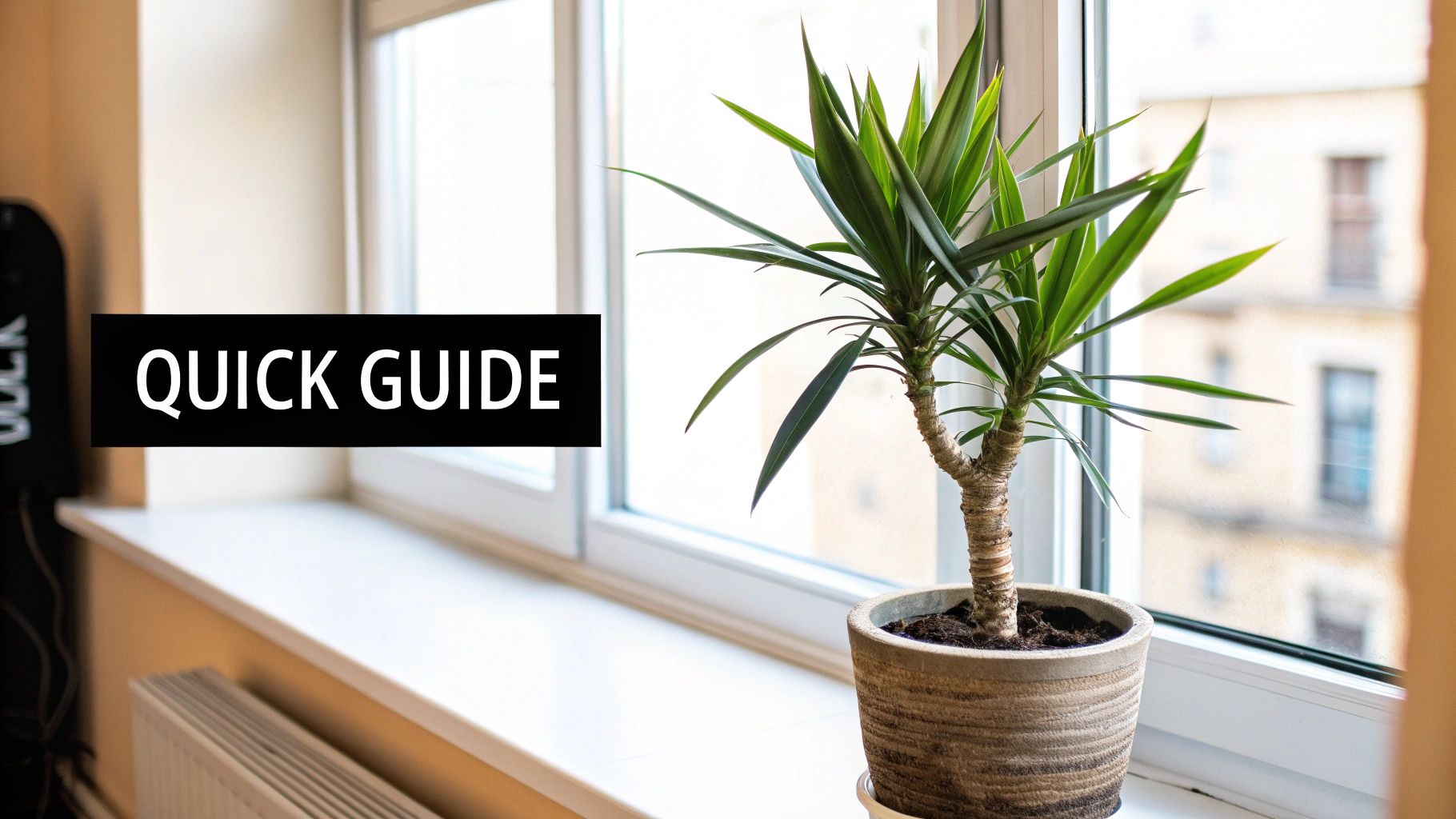
So, you've brought home a Spineless Yucca (Yucca elephantipes). Great choice! Whether you're a seasoned plant parent or this is one of your firsts, this section is designed to be your quick-start guide to success. Think of it as the cheat sheet I wish I had when I got my first one, cutting straight to the chase and helping you dodge those common beginner mistakes.
Spineless Yucca At-A-Glance Care Requirements
To make it even easier, I've put together a simple table that lays out the most critical care needs. This way, you can quickly see what your plant loves and what it hates. For example, if you see the leaves looking a bit sad and pale, a quick glance here will remind you it's probably craving more light.
| Care Factor | Ideal Conditions | Common Mistakes to Avoid |
|---|---|---|
| Light | At least 6+ hours of bright, indirect sunlight daily. A little direct morning sun is usually fine. | Sticking it in a dark corner. This leads to weak, stretched-out growth and faded leaves. |
| Watering | Water deeply only after the top 2-3 inches of soil have completely dried out. | Watering on a fixed schedule. This is the fast track to root rot, the number one yucca killer. |
| Soil | A chunky, fast-draining cactus or succulent mix. Amending with extra perlite or sand is a great idea. | Using heavy, standard potting soil that holds onto water and suffocates the roots. |
| Temperature | Happy in average room temperatures, generally between 60-90°F (15-32°C). | Placing it near drafty windows, AC vents, or exposing it to frost, which will damage the leaves. |
This table is your foundational guide to keeping your yucca looking its best.
Key Takeaway: If you remember only one thing, let it be this: let the soil dry out completely between waterings. When you're not sure if it's time to water, wait another day. It's always, always better to underwater a spineless yucca than to overwater it.
The spineless yucca is a fantastic water-wise plant, and it pairs beautifully with other drought-resistant plants for Arizona gardens if you're building out an entire low-water landscape. For those curious about its relatives, you can learn more about other incredible yuccas of the Southwest on our blog.
Finding the Perfect Light for Your Yucca Plant
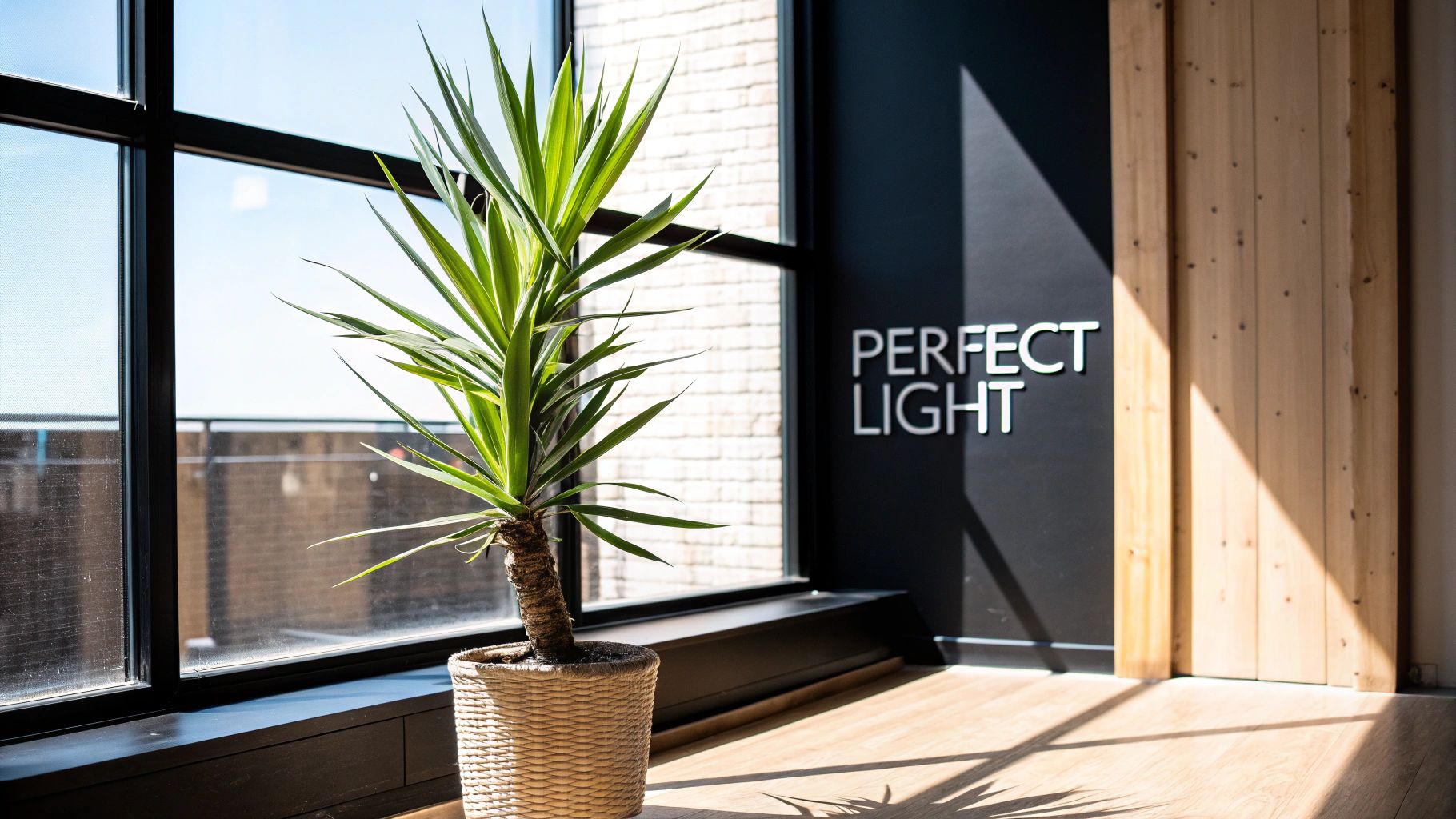
When it comes to keeping a spineless yucca happy, getting the light right is everything. These plants come from sunny, arid places, and they're looking for that same vibe in your home. Forget vague advice like "bright, indirect light"—let's break down what your yucca actually needs to thrive.
Your goal is simple: give it at least six hours of bright, filtered sunlight every single day. Think about the dappled light it would get under a larger tree in its native desert. This is absolutely not a low-light plant, so tucking it away in a dark corner is a surefire way to end up with a sad, struggling yucca.
Decoding Your Windows Light
Not all windows are created equal. The direction your window faces will completely change the quality and intensity of the light hitting your plant, so it pays to know what you're working with.
- South-Facing Windows: This is the jackpot for a yucca. South-facing windows deliver the strong, consistent light these plants crave. The only catch? The midday sun can be a bit much, so just place your plant a few feet back from the glass to avoid sunburn.
- East-Facing Windows: A fantastic second choice. These windows get that lovely, gentle morning sun that's bright without being harsh. It's the perfect setup for encouraging healthy growth without any risk of scorching the leaves.
- West-Facing Windows: Proceed with caution here. West-facing windows get blasted with intense afternoon sun, which can easily be too much for an indoor yucca. If it's your only option, pull the plant further back into the room or hang a sheer curtain to soften the light.
And north-facing windows? They just won't cut it. There isn't nearly enough light for a spineless yucca to do well.
Pro Tip: Every time you water your yucca, give it a quarter turn. This simple move ensures every side gets its moment in the sun, which promotes straight, even growth and stops it from leaning toward the light.
Reading the Signs of Poor Lighting
Your yucca will give you clear signals if it's not happy with its lighting. Learning to spot these clues means you can make changes before any real problems set in.
Is your yucca getting enough light? Watch for these signs:
- Leggy Growth: The plant will literally stretch and reach for the nearest light source, making it look thin and gangly.
- Pale or Yellowing Leaves: Without enough light for photosynthesis, those deep green leaves will start to look washed out.
- Stalled Growth: While they are measured growers, a complete lack of new leaves is a major red flag that it doesn't have the energy to grow.
Even in perfect conditions, the Yucca elephantipes grows at a manageable pace of about 6 to 12 inches per year indoors. This makes it an amazing choice for adding a touch of height to a room without worrying it will take over. For a deeper dive, OurHouseplants.com has some great info on its growth habits.
And what if it's getting too much sun?
- Brown, Crispy Leaf Tips: This is the classic sign of sunburn.
- Scorched or White Patches: Intense, direct sun can literally burn the leaves, leaving bleached-out spots that won't recover.
It's interesting to see how different desert plants handle the sun. To get a better sense of the spectrum, you can compare the yucca's needs to those of a different plant in our guide on how much sun a cactus needs.
Taking Your Yucca Outdoors
Giving your yucca a summer vacation outside can be a great boost, but you have to do it right. Moving it from a cozy indoor spot straight into the direct outdoor sun will cause serious leaf scorch.
The key is to acclimate it slowly. Start by placing it in a fully shaded spot outside for just a few hours a day. Over the next week or two, gradually increase its time in the sun, aiming for gentle morning light. You'll always want to protect it from the harsh afternoon sun, which is way more intense than anything it gets through a window. A covered porch or a spot under a leafy tree is perfect.
Mastering the Art of Watering Your Yucca
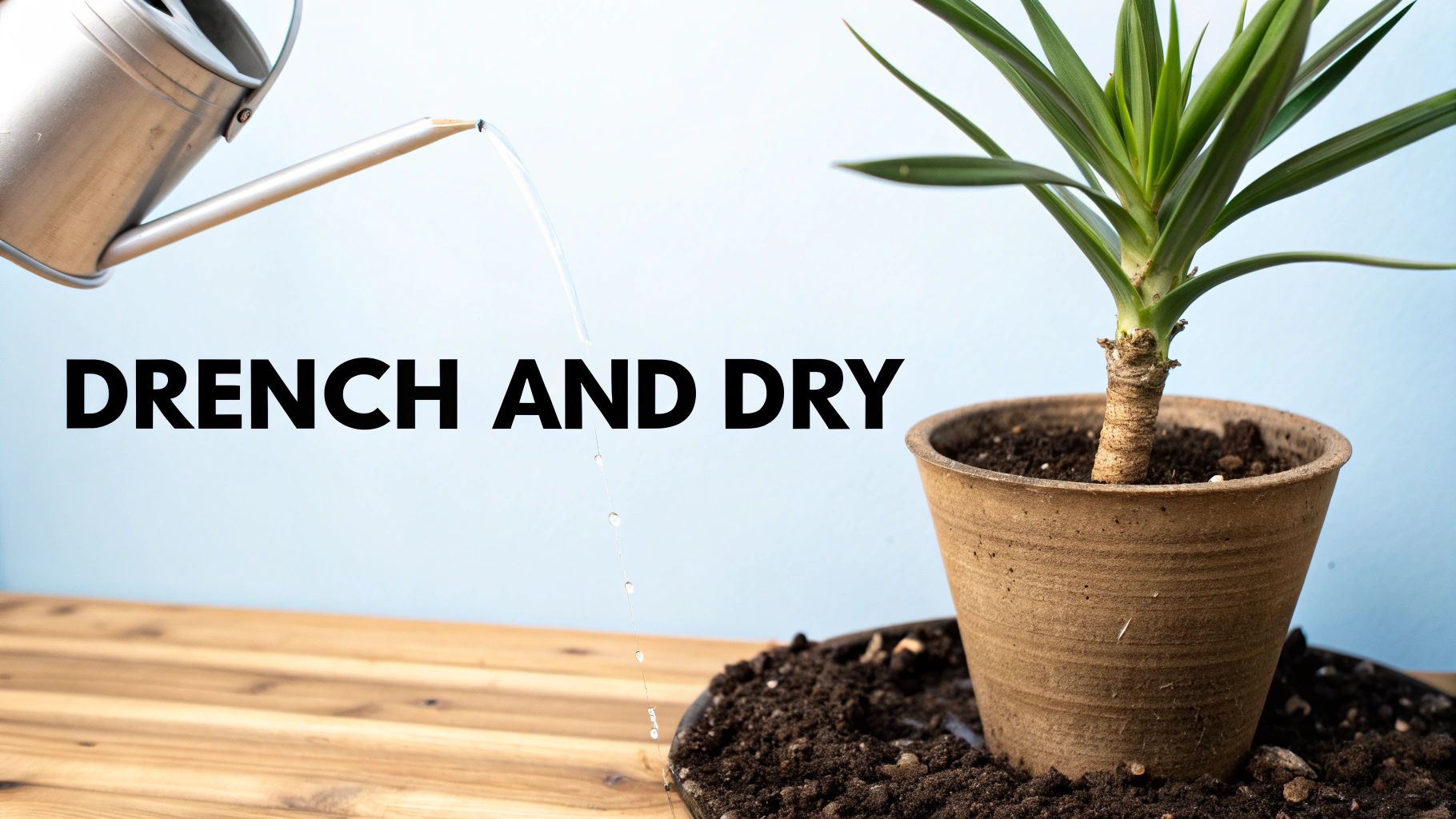
If there's one thing you need to get right with a spineless yucca, it's knowing when not to water. These plants are true survivors, storing a ton of water in their thick, cane-like trunks. Because of this, they’re far more likely to forgive you for forgetting to water than for giving them too much attention.
Overwatering is, without a doubt, the fastest way to kill a yucca.
The real secret is to ditch any kind of fixed schedule and adopt the "drench and dry" method. This approach perfectly mimics their natural habitat, where they get an occasional heavy downpour followed by a long, dry spell. When it's time to water, be generous. Drench the soil completely until water streams out of the drainage holes. Then, and this is the important part, you leave it alone until the soil is thoroughly dry.
So, How Do You Know When It’s Time?
Watering every Sunday just doesn’t work. The plant’s actual thirst depends on the humidity in your home, how much light it's getting, and the time of year. Its needs are always changing, so you need a more hands-on approach.
Here are a couple of tried-and-true methods to check:
- The Finger Test: This is as simple as it gets. Stick your index finger 2 to 3 inches down into the soil. If you feel even a hint of moisture, back away with the watering can. It needs to feel completely dry at that depth before you even think about watering again.
- The Weight Check: After you’ve been at it for a while, you’ll get a feel for the pot's weight. A freshly watered plant is surprisingly heavy compared to one that’s bone-dry. Just lift it after a good soaking to set your baseline, then check it every few days to feel the difference as it dries out.
If you really want to avoid the guesswork, you can learn how to measure soil moisture with a bit more precision. It helps you build that intuition for what your plant really needs.
Overwatering vs. Underwatering: Reading the Signs
Your yucca will give you pretty clear signals about how it's doing. Pay attention to these cues, and you can fix small problems before they become big ones.
Signs of an Underwatered Yucca (an easy fix):
- Leaf edges start to look a little wrinkly or puckered.
- Lower leaves might get a bit droopy.
- The very tips of the leaves can turn brown and crispy.
Red Flags for an Overwatered Yucca (a serious problem):
- The main cane or trunk feels soft or squishy to the touch. This is a critical sign of rot.
- Lower leaves are turning a mushy, sickly yellow and fall off way too easily.
- You notice a musty, foul smell coming from the soil, which is a sure sign of root rot.
A Word of Warning: A soft, mushy cane is the plant’s emergency signal. At this point, the internal system is breaking down, and saving it becomes a real challenge. It's always, always better to err on the side of being too dry.
Adjusting for the Seasons
A yucca's thirst changes dramatically throughout the year. In the spring and summer, during its active growing season, it's soaking up more light and pushing out new leaves. You might find yourself watering every couple of weeks.
But once fall and winter arrive, the plant goes into a semi-dormant state. Growth slows to a crawl, and it barely uses any water. You have to cut back your watering drastically—often to just once a month, or even less. Sticking to a summer watering schedule in the dead of winter is a recipe for disaster.
Following this cycle pays off. Letting the soil dry out properly is shown to reduce the chance of root rot by up to 80% compared to keeping the soil constantly damp. Considering that overwatering is the culprit behind an estimated 60-70% of indoor yucca deaths, getting the watering right is the most important part of its care.
Getting the Soil Right and Knowing When to Repot
More than anything else, the foundation of a healthy spineless yucca is the soil it lives in. These plants come from dry, arid places where soil is gritty and water vanishes almost as soon as it falls. If you can mimic that in a pot, you've won half the battle against root rot, the number one killer of these beautiful plants.
Your typical, all-purpose potting soil from the garden center is a yucca’s worst enemy. It’s designed to stay moist, which is fantastic for something like a tropical fern but spells disaster for a yucca. That heavy, damp soil literally suffocates the roots, cutting off oxygen and inviting fungus to move in. What we're aiming for is a mix that's airy, chunky, and lets water rush right on through.
The Ideal Yucca Soil Mix
You can go one of two ways here: blend your own mix or grab a high-quality pre-made bag. Honestly, mixing it yourself is incredibly simple and gives you total control.
I use a simple, foolproof recipe for all my desert plants, including yuccas. It works every time.
- Two parts standard potting soil (this is your base for nutrients and structure).
- One part perlite (those little white volcanic rocks that look like styrofoam—they're essential for creating air pockets).
- One part coarse sand or poultry grit (this adds the necessary grit for drainage and a bit of weight to keep a top-heavy plant from tipping over). Just be sure to avoid fine craft or play sand, which will compact and make things worse.
Just mix those three things together, and you’re good to go. If you'd rather buy something off the shelf, look for a bag specifically labeled as cactus or succulent mix. These are formulated to provide the sharp drainage your yucca needs. For a deeper dive into what makes a great blend, check out our guide to the perfect cactus and succulent soil mix.
A Quick Tip from Experience: The right soil is useless without the right pot. Make sure it has drainage holes. This is absolutely non-negotiable. If you've found the perfect decorative planter without holes, just use it as a "cachepot"—a stylish outer container for the basic nursery pot your yucca is actually planted in.
When Is It Time for a Bigger Pot?
Spineless yuccas grow slowly and actually enjoy being a little snug in their pots, so don't rush to repot. You’ll probably only need to do it every two to three years. Moving them too often or jumping to a pot that’s way too big is a classic mistake that can shock the plant and lead to—you guessed it—soggy soil.
Thankfully, your yucca will give you some pretty clear signals when it's feeling cramped. Look out for these signs:
- Escaping Roots: This is the most obvious clue. If you see roots peeking out of the drainage holes, they're on a mission for more space.
- A Solid Root Ball: Gently slide the plant out of its pot. Do you see more roots than soil? If it's a dense, tangled mass that holds the exact shape of the pot, it's definitely time.
- Water Drains Too Fast: If you water the plant and it seems to run straight out the bottom instantly, the pot is so full of roots that there's no soil left to absorb the moisture.
- Stalled Growth: Is it spring or summer, and your yucca just isn't putting out any new leaves? It might have used up all the nutrients and space in its current home.
The best time to tackle this job is in the spring or early summer when the plant is actively growing. This helps it bounce back and settle into its new home much faster. When you pick a new pot, only go up one to two inches in diameter. That little bit of extra room is plenty, and it prevents having a huge volume of soil that stays wet for too long.
How to Prune and Propagate Your Yucca
Pruning a spineless yucca might seem a bit daunting at first, but it's one of the best things you can do to manage its size and encourage a fuller, more balanced shape. Think of it less as a chore and more as an opportunity to invigorate your plant and even create brand-new ones from the cuttings.
Most of the time, pruning is just simple housekeeping. As your yucca gets older, the bottom leaves will naturally start to yellow and droop. Don't panic—this is perfectly normal. The plant is just shedding its old foliage to push energy toward new growth up top. A quick snip of these spent leaves right at the trunk is all it takes to keep it looking tidy.
Reshaping and Controlling Height
When your yucca starts brushing the ceiling, it’s time for a more substantial trim. This is your chance to really take control and shape the plant. Grab a clean, sharp saw or a heavy-duty pair of loppers and you can cut the main cane or trunk at literally any height you want.
I know, it feels brutal to chop the top off your plant. But you have to trust the process. In just a few weeks, you’ll start seeing new shoots—often called “pups”—sprouting right below the cut. This drastic-seeming move actually signals the plant to redirect its growth hormones, resulting in multiple new heads for a much bushier and more interesting look.
Expert Insight: Seriously, don't be shy about making a bold cut. A "topped" yucca trunk looks like a sad, bare stump for a little while, but be patient. It's an incredibly reliable way to get a fuller, multi-headed plant in the long run.
Turning Cuttings Into New Plants
Here's the best part: nothing goes to waste. Every single piece of cane you cut off is a potential new yucca. Propagating these is surprisingly simple and a great way to expand your collection or give a thoughtful gift to a friend.
Before you do anything else, the cut end of the cane needs to callus over. This is the most important step. Just set the cutting aside in a dry, shady spot for a few days. You'll see a dry, hardened layer form over the wound. This little callus is crucial because it stops the cutting from sucking up too much water and rotting when you plant it.
Once that end is dry to the touch, you’ve got two solid options for rooting your new yucca.
Rooting Yucca Cuttings in Soil
This is my go-to method. It’s straightforward, reliable, and mimics how the plant would grow in nature.
- Get Your Pot Ready: Grab a pot with good drainage holes and fill it with a fast-draining soil, like a cactus or succulent mix.
- Plant the Cane: Gently press the callused end of the cutting about 1-2 inches deep into the soil. You want it to be stable enough to stand up on its own.
- Water Sparingly: Give it just a little bit of water to help the soil settle around the base. The key from here is to keep the soil just barely moist, never soggy.
- Wait Patiently: It can take anywhere from 4 to 8 weeks for a healthy root system to get established. The big tell is when you see new leaves starting to poke out from the top.
Rooting Yucca Cuttings in Water
While soil is often more reliable, rooting in water is a fun way to actually watch the roots develop.
- Find a Container: Put the callused cutting in a jar or glass with just enough water to submerge the bottom inch or two.
- Keep the Water Fresh: Swap out the water every few days. This prevents bacteria from building up and keeps things clean for the new roots.
- Look for Roots: Within a few weeks, you should start to see little white roots emerging from the base of the cutting.
- Move to Soil: Once the roots are a couple of inches long, it’s time to carefully plant your new yucca in a pot with well-draining soil.
The infographic below shows the basic flow of repotting, which is exactly what you'll do once your propagated cutting is ready for a pot of its own.
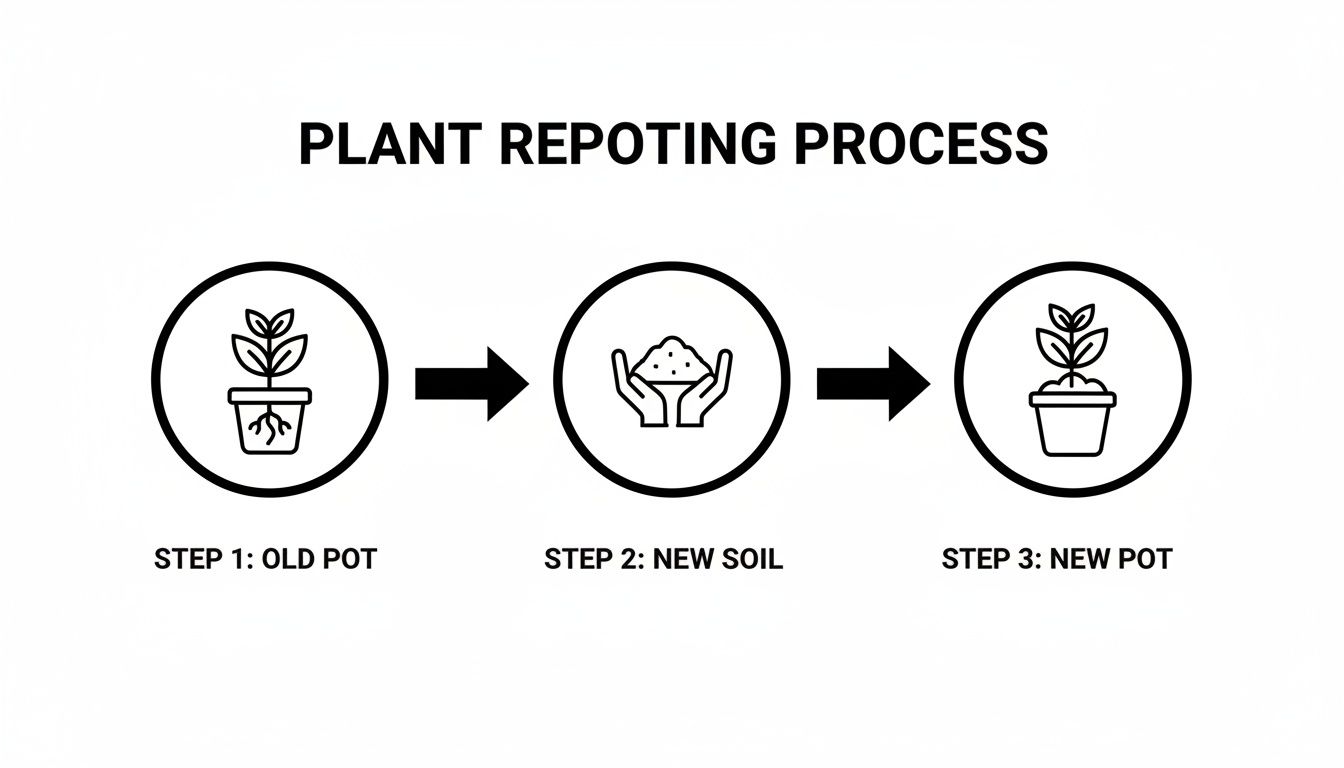
This simple visual breaks it down: out of the old pot, into fresh soil, and settled into a new home. Whether you're moving a big, established yucca or potting up a freshly rooted cutting, following these steps ensures a smooth transition and a happy plant.
Solving Common Spineless Yucca Problems
Even the most well-cared-for spineless yucca can have an off day. If you spot something amiss, don't panic. Most of the time, the fix is surprisingly simple once you know what you’re looking for. This is your field guide to troubleshooting what’s ailing your plant and getting it back to its happy, healthy self.
In my experience, almost every common yucca problem boils down to two things: water or light. These plants are tough, but they'll definitely let you know if their basic needs aren't being met. Yellowing leaves, for instance, are a classic symptom, but they can mean a few different things depending on the context.
Diagnosing Common Symptoms
Learning to read your plant's signals is key. A soft, squishy trunk, for example, is a five-alarm fire for overwatering. On the other hand, brown and crunchy leaf tips usually point to a plant that's thirsty or in a room with very dry air. Catching these signs early can stop a small hiccup from turning into a major headache.
To make things easier, I’ve put together a quick diagnostic chart. Just find the symptom your plant is showing, see the likely cause, and follow the recommended fix.
My Pro Tip: When you're not sure what's wrong, always start by checking two things: the soil moisture and the firmness of the trunk. I'd say over 90% of the time, the answer is right there. Most spineless yucca issues are just watering mistakes in disguise.
Spineless Yucca Problem Diagnosis Chart
Think of this table as your go-to reference for figuring out what's going on with your yucca and how to nurse it back to health.
| Symptom | Likely Cause(s) | Recommended Solution(s) |
|---|---|---|
| Yellowing Lower Leaves | Overwatering is the #1 suspect here, as it leads to root rot. However, it can also just be the plant naturally shedding its oldest leaves as it grows. | Feel the trunk. If it's firm, you're probably just overwatering—cut back. If the trunk feels soft, you've got root rot. If it’s only the very bottom leaves turning yellow one by one, that's totally normal. |
| Brown, Crispy Leaf Tips | This is a classic sign of either underwatering or low humidity. Our homes, especially with the heat on in winter, can be really dry. | Check the soil. If it's bone-dry, give it a good drink. You can also give the leaves a light misting every few days or place a humidifier nearby to boost the ambient moisture. |
| Soft, Mushy Trunk | This is a serious red flag. It means severe overwatering has caused advanced root rot, and the plant is literally rotting from the inside out. | You have to act fast. Immediately unpot the plant, trim off any black or mushy roots, and repot it in fresh, dry soil. If the rot is extensive, the plant might be too far gone to save. |
| Pests (Spider Mites, Mealybugs) | These tiny pests can show up, especially on indoor plants. Spider mites leave fine, silky webs, while mealybugs look like little bits of white cotton. | Isolate the plant right away to keep them from spreading. Use a cloth dipped in rubbing alcohol to wipe them off, or give the plant a thorough spray-down with neem oil or an insecticidal soap. |
Catching these problems early and acting decisively will keep your spineless yucca looking fantastic and thriving for years to come.
Your Top Yucca Care Questions Answered
Even the most straightforward plants can leave you with a few questions. I've been growing yuccas for years, and these are the issues that come up time and time again. Here are some quick answers to help you feel more confident.
Why Has My Yucca Plant Stopped Growing?
First off, don't panic. Spineless yuccas are notoriously slow growers, especially indoors. If the canes are firm and the leaves look healthy and green, a slow pace is just part of the deal.
However, if you've seen absolutely zero new growth all spring and summer, it's time to play detective. In my experience, it's almost always one of these culprits:
- Not Enough Light: This is the big one. Without bright, indirect light, a yucca just doesn't have the fuel to push out new leaves. It'll survive, but it won't thrive.
- It's Root Bound: Have you checked the pot lately? After two or three years, the roots can completely fill the container, literally leaving no room to grow.
- Depleted Soil: Even a low-maintenance plant needs a little something to eat. Old, tired soil has nothing left to give.
If your plant is already in a great sunny spot, the next step is to check if it's time to repot. A little bit of fertilizer during the growing season can also give it the nudge it needs.
Are Spineless Yuccas Safe for Cats and Dogs?
This is a really important question for anyone with furry family members. The short answer is no, they are not completely safe. The ASPCA confirms that yucca plants contain saponins, which are mildly toxic to cats and dogs if they decide to chew on them.
While rarely fatal, ingesting the leaves can cause some unpleasantness like vomiting, diarrhea, and drooling. It's always best to err on the side of caution and place your yucca somewhere curious pets can't take a sample.
Should I Be Worried About Yellow Lower Leaves?
Seeing yellow leaves can send any plant parent into a spiral, but with yuccas, it's often perfectly normal. This is just how they grow! The plant naturally sheds its oldest, lowest leaves to focus energy on producing fresh new growth up top.
The time to worry is when you see these red flags:
- A lot of leaves are turning yellow all at once.
- The yellowing is happening to new leaves at the top, not the old ones at the bottom.
- The cane itself feels soft, squishy, or looks waterlogged.
Those symptoms scream "overwatering" and could mean root rot has set in. But a few yellow leaves at the base of a strong, healthy plant? That's just business as usual. Feel free to snip them off to keep your yucca looking sharp.
At The Cactus Outlet, we provide healthy, beautiful yuccas and other desert plants that make a statement in any home. Explore our collection and find the perfect architectural plant for your space today. https://www.cactusoutlet.com