

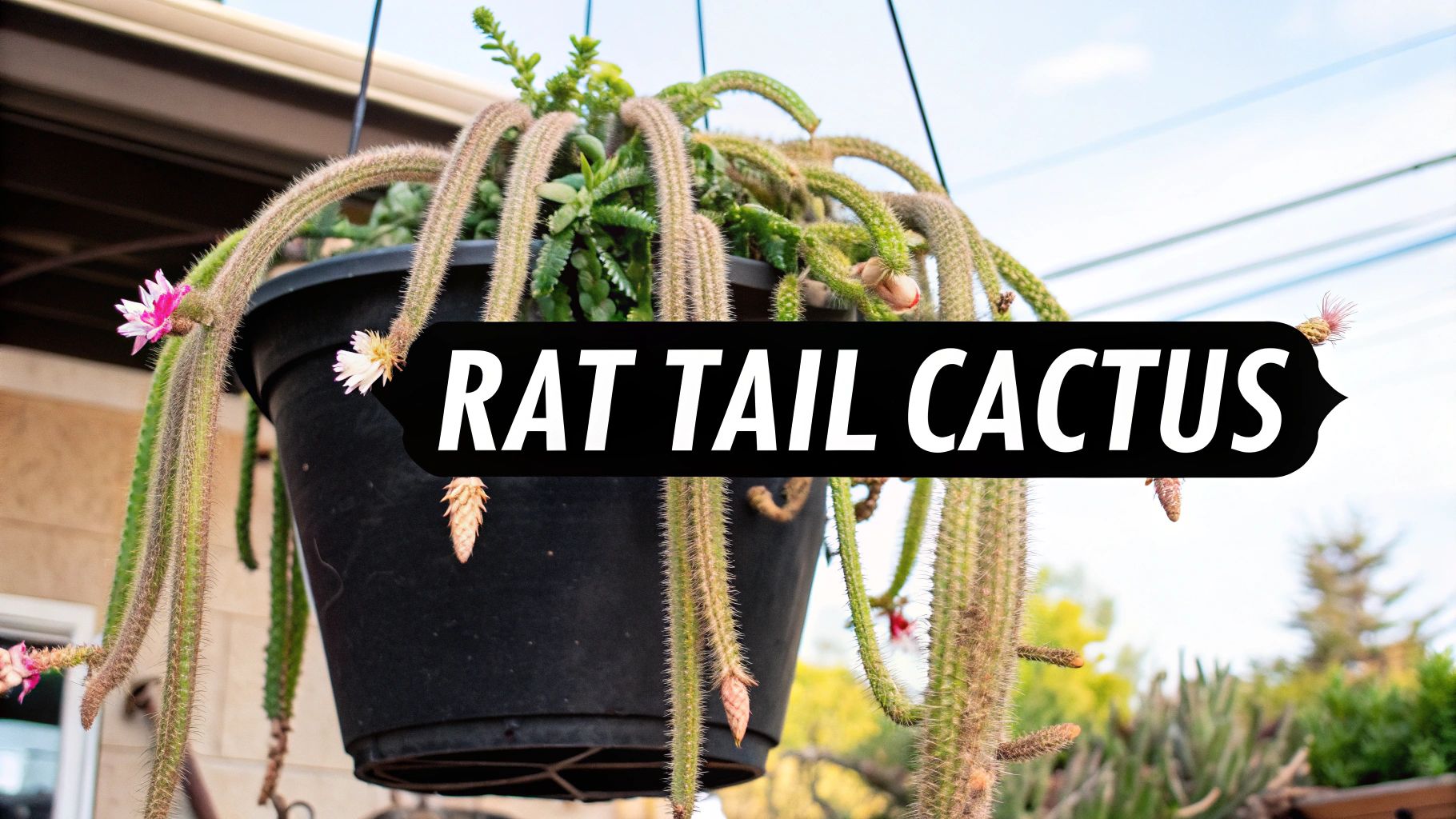

The rat tail cactus is one of those plants that just stops you in your tracks. It’s a spectacular trailing succulent, famous for its long, skinny stems that look just like their namesake, and for the ridiculously vibrant magenta flowers that pop up along them.
Its scientific name is Aporocactus flagelliformis, and it's what’s known as an epiphytic cactus. This just means that in the wild, it grows on other plants or rocks instead of in the ground. That unique trait is exactly what makes it so perfect for hanging baskets.
Meet the Showstopping Rat Tail Cactus
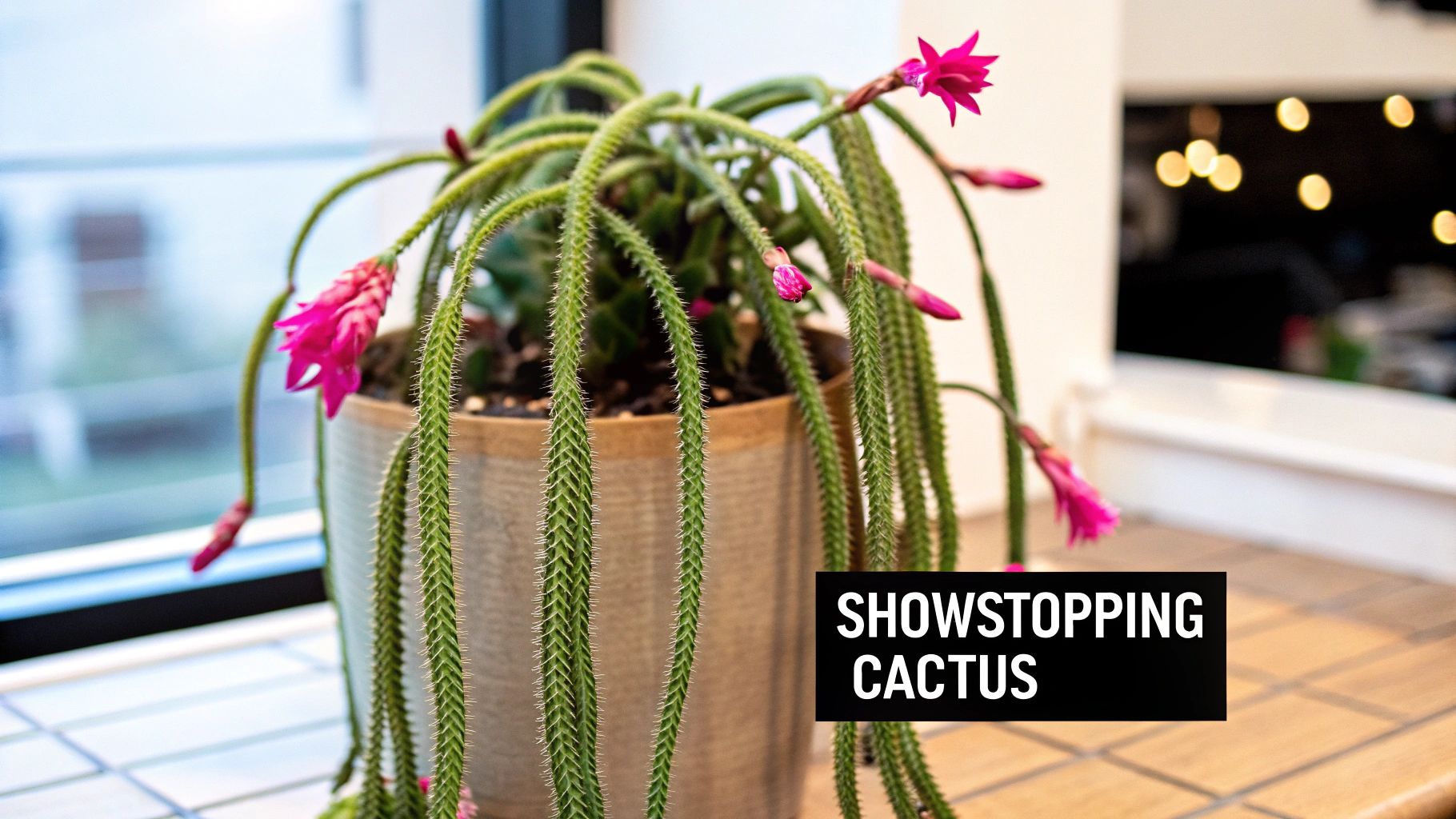
Picture a living chandelier—a cascade of slender green stems that suddenly bursts into a waterfall of brilliant pinkish-purple flowers. That's the rat tail cactus in a nutshell. This isn't just another houseplant; it's a living sculpture that brings a ton of personality and drama to any space.
Its graceful, drooping form adds texture and a bit of vertical magic, instantly turning a forgotten corner into a conversation piece.
But this captivating plant is more than just a pretty face. It’s also surprisingly easy to care for, which is a huge plus. Its fast-growing habit and forgiving nature make it a fantastic pick for beginners who want a rewarding plant, but it’s also a must-have for seasoned collectors looking for something truly special.
From Mexican Forests to Your Living Room
When you think "cactus," you probably picture a spiny giant baking in the desert sun. But the rat tail cactus has a completely different backstory. Officially known as Aporocactus flagelliformis (or sometimes Disocactus flagelliformis), this fascinating epiphyte originally comes from the rocky slopes and tree branches of southwestern Mexico.
In its native dry forests, it hangs out in partial shade with a bit more humidity than its desert cousins. This is great news for us, because those conditions are a lot closer to what we have inside our homes. To dig a little deeper into its background, check out the profile on Planet Desert.
Understanding where it comes from is the secret to keeping it happy. Knowing it grows on trees and rocks immediately tells you why it needs fantastic drainage and absolutely hates having "wet feet." Those long, trailing stems—which can easily reach 2 to 5 feet when the plant is happy—are perfectly designed for spilling over tree limbs and cliff edges.
Rat Tail Cactus Care Cheat Sheet
Before we get into the nitty-gritty, let's start with a quick-reference guide. This little table has everything you need to know at a glance to keep your rat tail cactus thriving.
| Care Factor | Ideal Condition |
|---|---|
| Light | Bright, indirect sunlight. An east-facing window is perfect. |
| Watering | Use the "soak and dry" method. Let the soil dry out completely. |
| Soil | A fast-draining cactus mix. Add extra perlite or orchid bark. |
| Best Pot | Hanging basket or a pot with plenty of drainage holes. |
| Flowering | Give it a cool, dry rest period in winter to encourage blooms. |
Keep these key points in mind, and you'll be well on your way to a healthy plant that rewards you with explosive growth and a stunning flower show every year. Now, let's explore each of these topics in more detail.
Creating the Perfect Home Environment
To get your rat tail cactus to really flourish, you have to stop thinking like a regular gardener and start thinking like a habitat designer. The trick is to mimic the conditions of its native home in the dry forests of Mexico, where it hangs from trees and sprawls over rocks. Nail the light, water, and soil, and you've laid the groundwork for a stunning, bloom-covered plant.
Don't worry, this is much easier than it sounds. Forget the vague advice. Let’s get into the specifics of what this unique cactus actually needs to feel right at home with you.
Decoding the Ideal Lighting Conditions
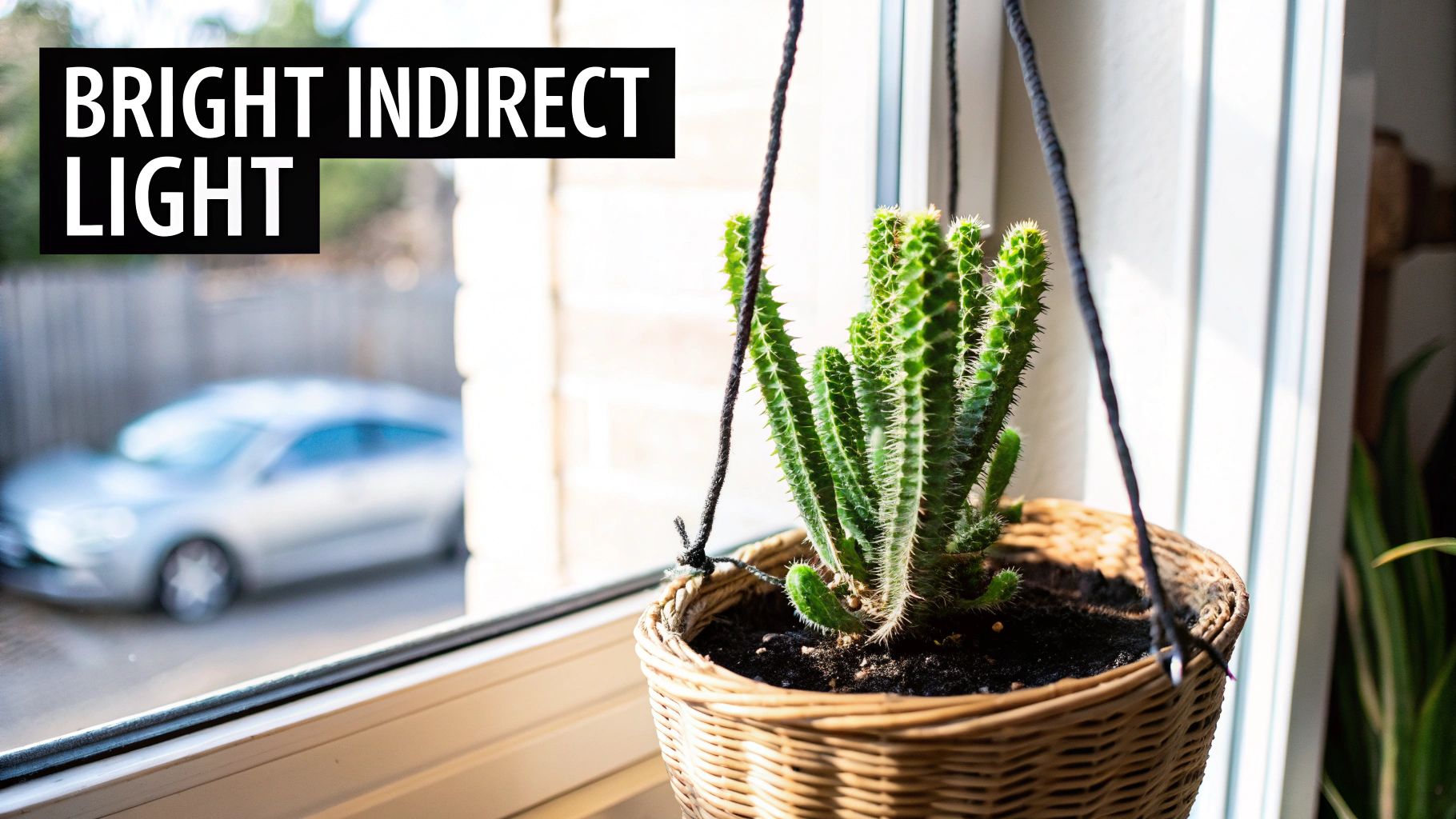
"Bright, indirect light" is probably the most common—and most confusing—piece of plant advice out there. For a rat tail cactus, it simply means finding a spot where it gets a ton of light but isn't getting blasted by the harsh, direct sun. Picture the dappled sunlight filtering through a forest canopy. That's the sweet spot.
An east-facing window is often perfect. It gets that gentle, direct morning sun that won't burn the stems, followed by bright, indirect light for the rest of the day. This gives the cactus all the energy it needs to photosynthesize without the stress.
Now, a south- or west-facing window can be a bit much, especially in the heat of summer. If those are your only options, you can absolutely make it work. Just try one of these tricks:
- Pull the plant back a few feet from the window pane.
- Hang a sheer curtain to act as a diffuser for those intense rays.
- Position it near the window but just out of the direct path of the sunbeams.
Key Takeaway: Getting the light right is your best defense against etiolation—that dreaded stretched-out, pale, and spindly look. Plenty of bright, indirect light keeps your cactus's stems robust, deep green, and growing strong.
Mastering the Art of Watering
If there's one thing that will kill a rat tail cactus, it's overwatering. These plants are epiphytes, meaning their roots are built for a good downpour followed by a long period of drying out in the open air. Your job is to recreate this cycle in a pot using the "soak and dry" method.
When you do water, don't be shy. Give the soil a complete drenching until you see water running out of the drainage holes. This ensures every last root gets a drink. Then comes the most critical part: walk away and let it be. Do not even think about watering it again until the soil is bone dry all the way through.
So how do you know when it's dry? Ditch the schedule. Instead, get to know your plant. The easiest way is to stick your finger about two inches into the soil; if you feel any dampness, wait. For a more foolproof method, grab a wooden skewer or a chopstick. Push it deep into the pot, let it sit for a minute, and pull it out. If it comes out clean and dry, it's go-time.
In the active growing season (spring and summer), this might mean watering every 10 to 14 days. But when fall and winter roll around, the plant goes dormant and its thirst plummets. Cut back watering to once every 3 to 4 weeks—just enough to keep the roots from completely drying out.
The Foundation of Good Health: Soil Mix
Since the rat tail cactus grows on trees and rocks in the wild, your average potting soil is a recipe for disaster. It's way too dense and holds onto water for far too long. This plant needs a mix that provides fantastic aeration and drainage, letting water rush through and preventing the roots from sitting in muck. A good soil mix is your best insurance policy against root rot.
You can definitely start with a commercial cactus and succulent mix, but to really give your plant an edge, you'll want to amend it for even better drainage. Blending your own is surprisingly easy and puts you in total control.
Here’s a simple, killer recipe that works every time:
- 2 parts cactus/succulent soil
- 1 part perlite or pumice (for air pockets)
- 1 part orchid bark (to mimic its natural, chunky environment)
This combination creates a loose, airy home for the roots that dries out quickly, keeping them healthy and happy. It also provides a sturdy anchor for those amazing, long stems to grow from. This little bit of extra effort in building its foundation is what separates a good rat tail cactus from a truly magnificent one.
Potting and Feeding for Vigorous Growth
Getting the potting and feeding right is where you truly set your rat tail cactus up for success. Think of the pot as its home and the fertilizer as its meal plan—nailing these two things is the secret to that dramatic, cascading growth everyone loves. A bad setup, on the other hand, can lead to a sad, stagnant plant or, even worse, the dreaded root rot.
The good news is that it’s all pretty straightforward. If you can focus on providing excellent drainage and a sensible feeding schedule, you’ll give your cactus everything it needs to grow those incredible stems and pop out a stunning flower show.
Let's walk through the best way to pot, repot, and feed your plant.
Choosing the Perfect Pot
With its long, trailing stems, the rat tail cactus was practically born to live in a hanging basket. It’s the classic choice for a reason! A hanging pot lets the stems spill over the sides and hang down, creating that living chandelier look that makes this plant such a showstopper.
But while a hanging basket is a great look, function always comes first. The single most important feature of any pot you choose is drainage. Your pot absolutely must have at least one large drainage hole at the bottom; more is even better. This isn't just a suggestion—it's the only way to let excess water escape and save your cactus from root rot.
For material, you can't go wrong with terracotta or unglazed ceramic. These pots are porous, meaning they literally breathe. They pull moisture out of the soil, helping it dry faster and preventing the soggy conditions that cacti hate.
Knowing When and How to Repot
Rat tail cacti are pretty vigorous growers, so you can expect to give yours a new home every 2 to 3 years. You’ll know it’s time when you start seeing roots poking out of the drainage holes or if the plant just seems to have stalled out during the growing season. Another dead giveaway is when the soil dries out almost instantly after you water it, a sign that the pot is packed with more roots than soil.
The best time for this move is in the spring, right as the plant is waking up and entering its prime growth phase. This gives it the whole season to settle in and get comfortable.
Here’s a simple step-by-step for a stress-free repot:
- Pick a New Pot: Go up just one size—a pot that’s only one or two inches wider than the old one is perfect. A pot that’s too big will hold onto too much water, risking rot.
- Ease the Plant Out: Gently work the cactus out of its current pot. If it’s a bit stuck, a few taps on the side of the pot should help loosen the root ball.
- Check the Roots: Take a quick look at the root system. Healthy roots are firm and white or light tan. Trim off any that look black, feel mushy, or are obviously dead.
- Add Fresh Soil: Lay down a base layer of fresh, well-draining soil in the new pot. For the perfect recipe, check out our complete guide to cactus and succulent soil mix.
- Settle It In: Position the cactus in the pot and fill in the gaps around the root ball with more soil, patting it down gently. Hold off on watering for about a week to let any bruised roots heal up.
Fueling Growth with the Right Fertilizer
Think of fertilizer as a power-up for your rat tail cactus. Feeding it during its active growing season—from spring through summer—gives it the fuel it needs for strong stem growth and the energy to produce those gorgeous magenta flowers.
Use a balanced liquid fertilizer made for cacti and succulents, and dilute it to half the recommended strength. Look for one that's low in nitrogen, because too much can cause weak, flimsy growth instead of the sturdy stems you want.
Feed your cactus about once every 4 to 6 weeks during the spring and summer. A word of caution: always water your plant first and apply the fertilizer to damp soil. Fertilizing a bone-dry plant can burn its delicate roots.
Once fall arrives, it's time to stop feeding. Your cactus needs to go dormant during the cooler, darker months to rest up for the next year's big show.
How to Encourage Spectacular Blooms
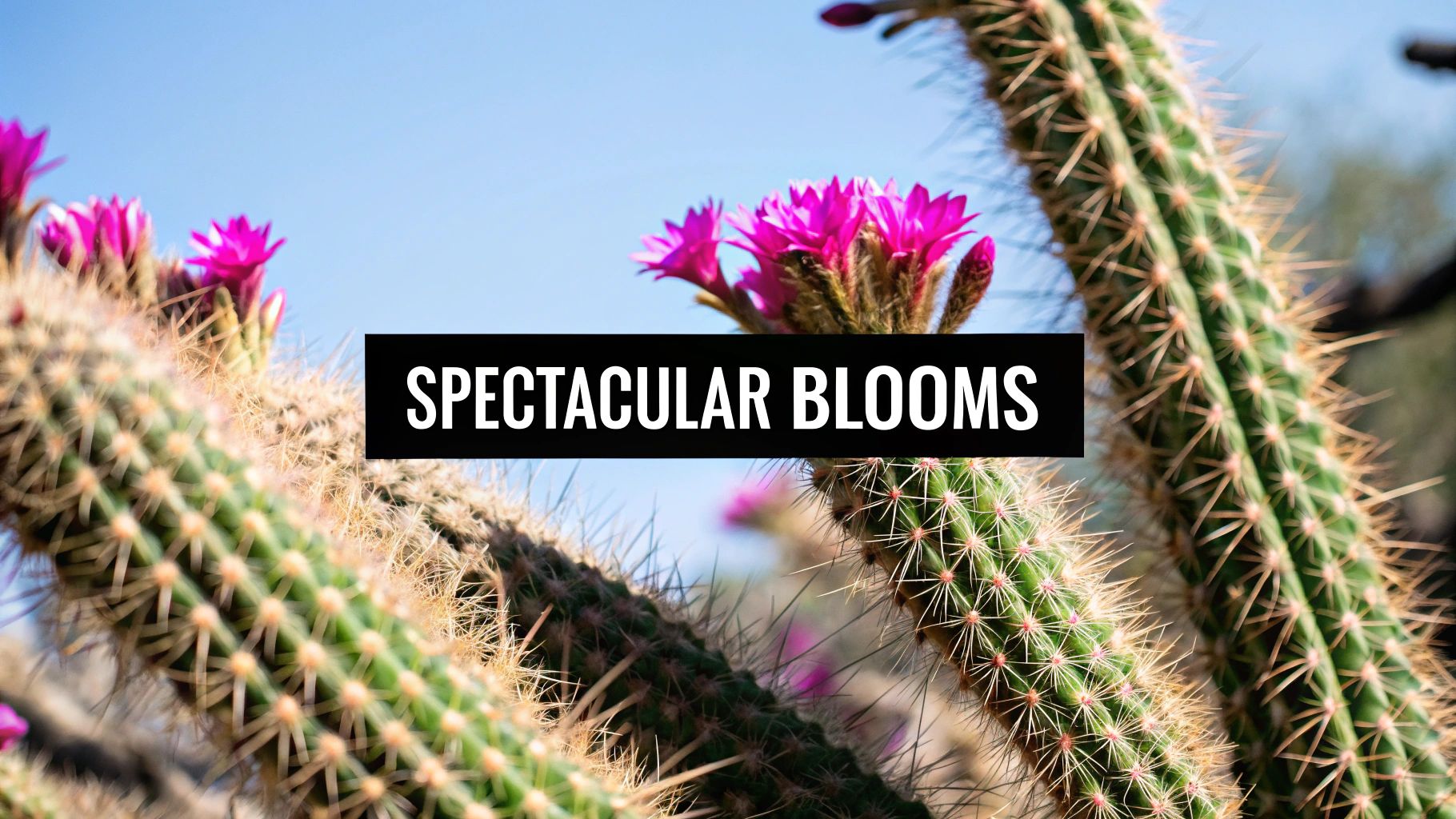
Let's be honest, the real prize for any Rat Tail Cactus owner is seeing it burst into a cascade of vibrant, tubular flowers. When it happens, the plant transforms from a cool, structural piece into an absolute showstopper. It's why so many of us fall in love with them in the first place.
Figuring out how to coax out this incredible floral display is the key to unlocking the plant's true magic.
The Secret is a Winter Rest
If there's one trick to getting your Rat Tail Cactus to bloom, this is it: give it a proper winter rest. In the wild, these cacti go through a cool, dry season. This dormancy period is like a biological reset button, letting the plant store up energy for a massive growth and flowering push in the spring.
To mimic this crucial cycle, you just need to make two simple changes from late fall through winter:
- Cut Back on Water: This is a big one. Pull way back on watering. Instead of soaking it, just give it a tiny splash of water every 4-6 weeks. You’re not trying to water it, just keeping the roots from turning to dust.
- Find a Cooler Spot: Move your cactus somewhere chilly. An ideal place stays consistently between 50-60°F (10-15°C). Think of a bright but unheated garage, a cool sunroom, or even a spot near a drafty window.
This cool, dry spell is a powerful signal. Without it, your cactus might keep putting out new stems, but it will almost certainly refuse to set flower buds, leaving you wondering what you did wrong.
Fine-Tuning for a Flower Explosion
While the winter nap is the main trigger, a few tweaks during the growing season can turn a few flowers into a full-blown spectacle. Once spring rolls around and you see signs of new growth, it's time to wake your plant up and switch back to active care.
Light is everything. Your Rat Tail needs plenty of bright, indirect sun to fuel flower production. If it's tucked away in a dim corner, it will focus all its energy on survival, not on showing off. For a deeper dive, check out our guide on how much sunlight a cactus needs.
Pro Tip: As soon as you see new growth, start feeding your cactus with a phosphorus-rich fertilizer. Look for a "bloom booster" formula (the middle number in the N-P-K ratio will be higher). This gives the plant the exact nutrients it needs to develop flowers. Feed it at half-strength every 4-6 weeks through spring and early summer.
What to Expect From Your Blooming Cactus
When it finally happens, you're in for a treat. The plant produces stunning, funnel-shaped flowers in electric shades of pink, magenta, or purple-red right along its trailing stems. They typically show up from spring into summer, with each bloom lasting for several days.
Each flower is about 1.5-2 inches (4-5 cm) long. A mature, happy plant can be covered in them—we’re talking dozens of blooms, with some growers reporting 50-100 flowers on a single large plant in a good year.
Getting your cactus to this point is incredibly satisfying. It connects you to the natural rhythm of the plant. After all that work, be sure to take time to smell the flowers. By providing the right environment, you’re not just keeping a plant alive; you're setting the stage for a spectacular annual performance.
Simple Propagation with Stem Cuttings
One of the best parts of growing a rat tail cactus is just how easy it is to make more of them. Forget about complicated horticultural science; propagating this cactus is a simple, satisfying project that's perfect for expanding your collection or sharing with fellow plant lovers.
The go-to method is taking stem cuttings. It works so well because literally any piece of a healthy stem has what it takes to sprout its own roots and become a whole new plant. All you need is a healthy "mother" plant, a sharp, clean tool, and a bit of patience.
Preparing Your Cactus Cutting
First things first, you need to choose the right stem to take a cutting from. Look for a stem that's healthy, mature, and has that nice, vibrant green color. You'll want to skip any sections that look weak, discolored, or unusually thin.
- Select a Stem: Find a good, strong stem and pick out a section that’s about 4 to 6 inches long. This is the sweet spot—it’s long enough to have plenty of stored energy for rooting but not so long that it’s clumsy to handle.
- Make a Clean Cut: Grab a sterile knife or a sharp pair of pruning shears and snip off your chosen piece. A clean cut is crucial here. It minimizes damage to both the parent plant and the cutting, which helps them both heal up quickly without inviting infection.
Now that you have your cutting, the next step is the most critical one for success. It’s the one thing that stands between you and a rotten failure.
The Callusing Process: A Non-Negotiable Step You absolutely must let the cut end of your new stem dry out and form a callus. Think of it as a scab that seals the open wound. Just lay the cutting in a dry spot away from direct sun, where it gets good air circulation. In a few days, or maybe up to a week, the end will feel dry and hard. Whatever you do, don't skip this step. A fresh, uncallused cutting will just soak up water and rot before it ever has a chance to grow roots.
Planting and Rooting Your New Cactus
Once your cutting is nicely callused, it's time to plant. Get a small pot ready with the same kind of well-draining cactus mix you use for the parent plant—something with plenty of perlite or pumice is perfect.
Gently stick the callused end of the cutting about an inch or two into the dry soil. It just needs to be deep enough to stand up on its own. Now, here's another key point: don't water it yet! Let it sit in the dry soil for about a week to get settled. This extra waiting period is your final insurance policy against rot.
For a complete walkthrough of this process, you can learn more about how to propagate cactus from cuttings in our detailed guide.
Over the next few weeks, keep the soil barely moist—think lightly damp, never soggy. Before you know it, tiny roots will form, and you might even see the first signs of new growth. Your cutting is officially on its way to becoming its own spectacular plant.
Troubleshooting Common Issues and Pests
Even a tough plant like the rat tail cactus can run into trouble now and then. Don't worry—most problems are the plant's way of telling you what it needs. Learning to read these signals is the real secret to keeping your cactus thriving for years to come.
When something looks off, a bit of detective work is all it takes. Whether you spot a weird blemish or a stem just looks sad, we’ll figure it out together.
Decoding Your Plant's Visual Cues
Your cactus speaks through its stems. If they start to look yellow and feel soft or mushy, that’s the classic sign of overwatering. It's the most common mistake people make with these cacti, and it means the roots are suffocating and beginning to rot.
On the flip side, what if the stems look thin, shriveled, or even a bit wrinkly? Your cactus is thirsty. It’s digging into its water reserves to survive. A good, thorough watering will usually have it looking plump and happy again in a day or so.
Another tell-tale sign is when the stems grow pale, skinny, and stretched out. This is called etiolation, and it’s a desperate cry for more light. The plant is literally reaching for the sun.
Key Takeaway: Before you do anything else, check your basics. Nine times out of ten, a rat tail cactus problem comes down to one of three things: too much water, too little water, or not enough light.
Dealing with Common Pests
While these cacti are pretty good at fending for themselves, a stressed plant can sometimes attract unwanted guests. Keep an eye out for two usual suspects: mealybugs and spider mites.
- Mealybugs: You'll spot these as little white, cottony fluff, usually tucked into the nooks and crannies where the stems connect. They feed on plant sap, slowly draining its energy.
- Spider Mites: These pests are tiny and hard to see on their own, but they leave behind fine, silky webbing between the stems. Their feeding causes tiny yellow or brown spots to appear.
If you catch an infestation early, the fix is easy. Grab a cotton swab, dip it in 70% isopropyl rubbing alcohol, and dab it directly on the pests. For a bigger problem, a spray bottle filled with insecticidal soap or neem oil will do the trick. Just make sure to coat the entire plant, getting into all the tight spots, and repeat every week until they're gone for good.
If part of your plant is struggling with rot or a bad infestation, you might need to propagate a healthy section to save it. This flowchart breaks down exactly how to do it.

As you can see, success really hinges on two key steps: starting with a healthy, firm stem and letting the cut end dry out and form a proper callus before you even think about planting it.
A Few Common Questions
Even the most detailed guide can't cover every single question, especially with a plant as unique as the rat tail cactus. Let's go through a few of the most common things people ask when they're getting to know this plant.
Think of this as a quick-reference for those little "what-if" scenarios that pop up.
Is the Rat Tail Cactus Toxic to Pets?
Good news for all you pet parents out there: the Rat Tail Cactus (Aporocactus flagelliformis) is considered non-toxic to cats and dogs. So, if your curious cat takes a nibble, it shouldn't cause a major issue.
That said, "non-toxic" isn't the same as "consequence-free." The stems are covered in fine, bristly spines. They aren't the big, sharp daggers you see on other cacti, but they can definitely cause some irritation to a sensitive mouth or paw if an animal gets too hands-on.
Our Pro Tip: The best way to show off this cactus is also the safest. Put it in a hanging basket or on a high shelf. This lets the beautiful stems trail down, creates a stunning visual, and keeps it safely out of reach of curious pets and toddlers.
Can This Cactus Grow Outdoors?
Absolutely! But it really depends on where you live. The rat tail cactus can be a fantastic outdoor plant year-round if you're in a climate similar to its native Mexico. We're talking USDA hardiness zones 9 through 11, where the winters stay mild and you don't have to worry about frost.
In those warmer zones, an outdoor rat tail will often grow faster and bloom more spectacularly than its indoor counterparts. It just loves the great air circulation and bright, natural light. The only thing to watch for is scorching afternoon sun in very hot climates like Arizona—a little dappled shade during the hottest part of the day is perfect.
If you live in a colder area, don't worry, you can still give your plant a summer vacation. Just keep it in a pot and move it outside once the weather is reliably warm. The key is to bring it back inside long before the first frost hits. Any temperatures dipping near 40°F (4°C) can damage the plant.
How Fast Does a Rat Tail Cactus Grow?
When it's happy, the rat tail cactus is a surprisingly speedy grower. During its peak season in spring and summer, you can easily see healthy stems put on several inches of new growth a month. It's not uncommon for a small plant to double its size in the first year.
What makes it grow fast? It really boils down to three things:
- Light: Plenty of bright, indirect light is the number one growth driver.
- Water: A consistent "soak and dry" watering routine during the growing season gives it the fuel it needs.
- Food: A little bit of diluted cactus fertilizer once a month during spring and summer works wonders.
Give it the right care, and a mature plant can eventually produce stems that cascade down an incredible 3 to 6 feet. It's a real showstopper.
Ready to bring this stunning, easy-going cactus into your home? At The Cactus Outlet, we have a fantastic selection of healthy, beautiful cacti just waiting to find a new home. Come explore our collection and find your perfect plant!