

Thinking about adding a living monument to your landscape? When you decide to buy a saguaro cactus, you're bringing home a piece of living history. The entire process has to start with finding a certified, reputable nursery. This is the only way to guarantee your new saguaro is legal, healthy, and ethically sourced, which is crucial for protecting wild populations from poaching.
The Essential Pre-Purchase Saguaro Checklist
Bringing a saguaro into your garden is a huge commitment—it’s nothing like picking up a common perennial at the local big-box store. Before you even start looking at plants, you absolutely have to get a handle on the legal and ethical side of things. This isn't just about red tape; it's about protecting a slow-growing icon of the Sonoran Desert and making sure your investment is set up to thrive for decades to come.
This majestic cactus is a protected species, most notably under Arizona's Native Plant Law. That law makes it a serious offense to dig up a saguaro from any land, public or private, without the proper permits. We're talking potential felony charges here, which is exactly why sourcing your plant from a reputable seller is completely non-negotiable.
Nursery Grown vs. Wild Salvaged Saguaros
Once you start your search, you'll quickly find there are two main types of legally available saguaros: those grown in a nursery and those salvaged from the wild.
- Nursery-Grown: These saguaros are started from seed at a specialized nursery. It's the most common and straightforward way to buy one. Their history is fully documented, and they're already used to being cared for in a controlled environment.
- Wild-Salvaged: These are mature cacti legally rescued from private land that's about to be developed. This is a tightly regulated process that requires extensive permitting from the Arizona Department of Agriculture. While it saves a plant that would otherwise be bulldozed, you need to be extra careful about checking the documentation.
This distinction really matters. Poaching is a constant threat to wild saguaro populations, and the last thing you want is for your purchase to fuel that illegal trade.
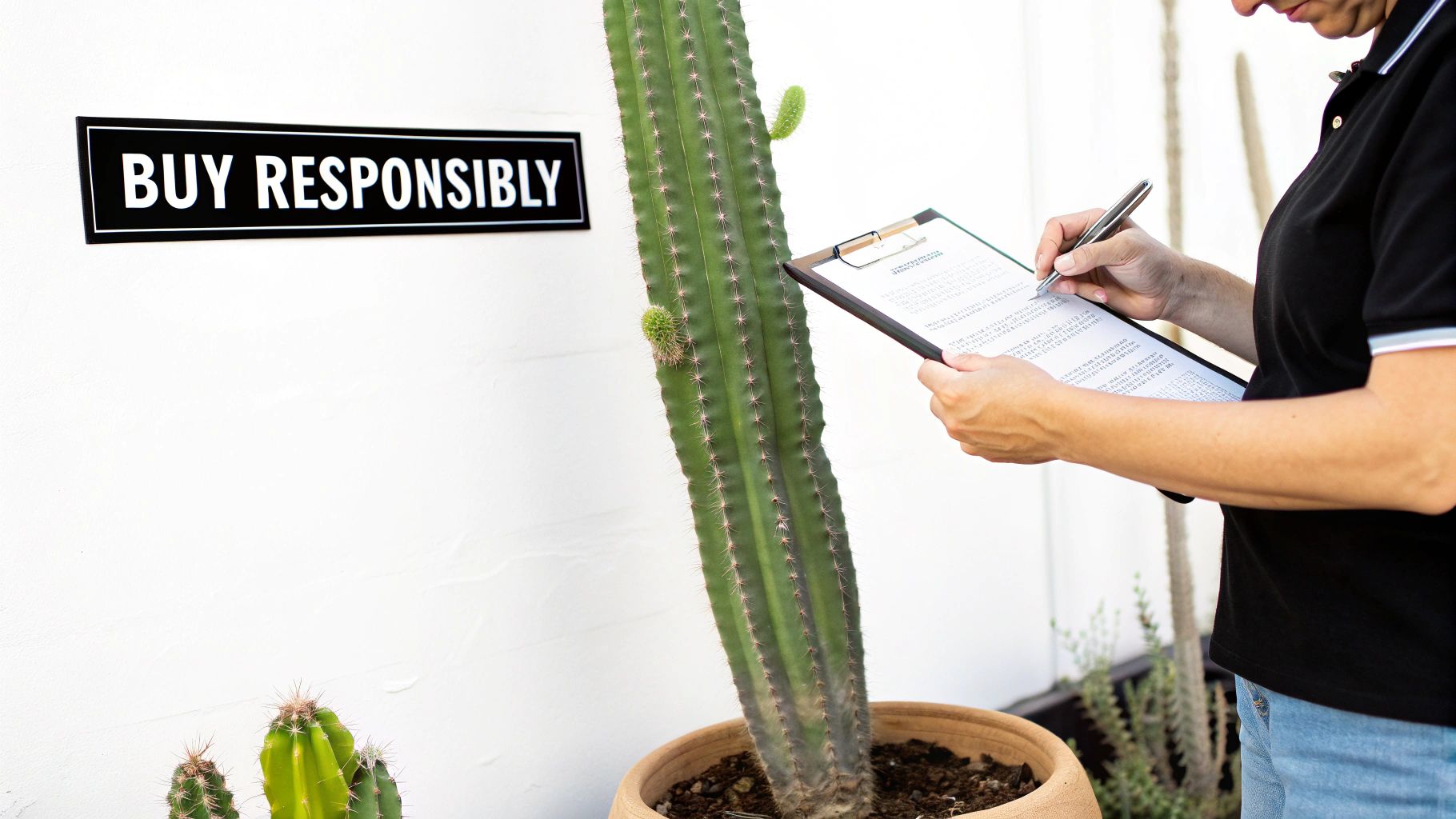
A legally sourced saguaro, whether it’s from a nursery or a salvage operation, will always come with official documentation. Think of it as the cactus's passport—it’s your proof of its legitimate origin and your ticket to a clear conscience.
Why Permits and Tags Are Not Optional
When a seller starts talking about paperwork, that’s a good sign. It shows they're committed to doing things the right way. This documentation is your guarantee that you aren't accidentally supporting the black market.
Here’s what you should always ask to see:
- State-Issued Tags: A legally salvaged saguaro must have a physical tag from the state, often locked right onto the plant itself. It will have a specific permit number.
- Transport Permits: These papers show where the saguaro came from and where it's going, proving its journey is fully authorized.
- A Detailed Receipt: Your bill of sale should clearly list the plant’s species, size, and reference any permit numbers.
If a seller gets cagey about providing this info, or if their price seems way too good to be true, walk away. By insisting on the proper paperwork, you protect yourself and play a direct role in conserving these desert giants. This is a critical part of learning where to buy a saguaro cactus and how to do it the right way.
Saguaros are the centerpiece of a booming industry. The global market for cactus plants hit $5.18 billion in 2023 and is expected to climb to $15.08 billion by 2031. At the same time, wild saguaro populations are under serious threat from climate change and illegal poaching, which makes buying ethically cultivated plants more important than ever.
How to Choose a Healthy and Thriving Saguaro
Bringing a saguaro into your landscape is a bit like adopting a living sculpture—it's a long-term commitment to a piece of natural art that could easily outlive you. That's why picking the right one is so critical. A few minutes of careful inspection before you buy can mean the difference between a magnificent centerpiece and a heartbreaking problem down the road.
This isn't just about size or shape; it's about spotting the subtle clues that tell you a plant is truly healthy.
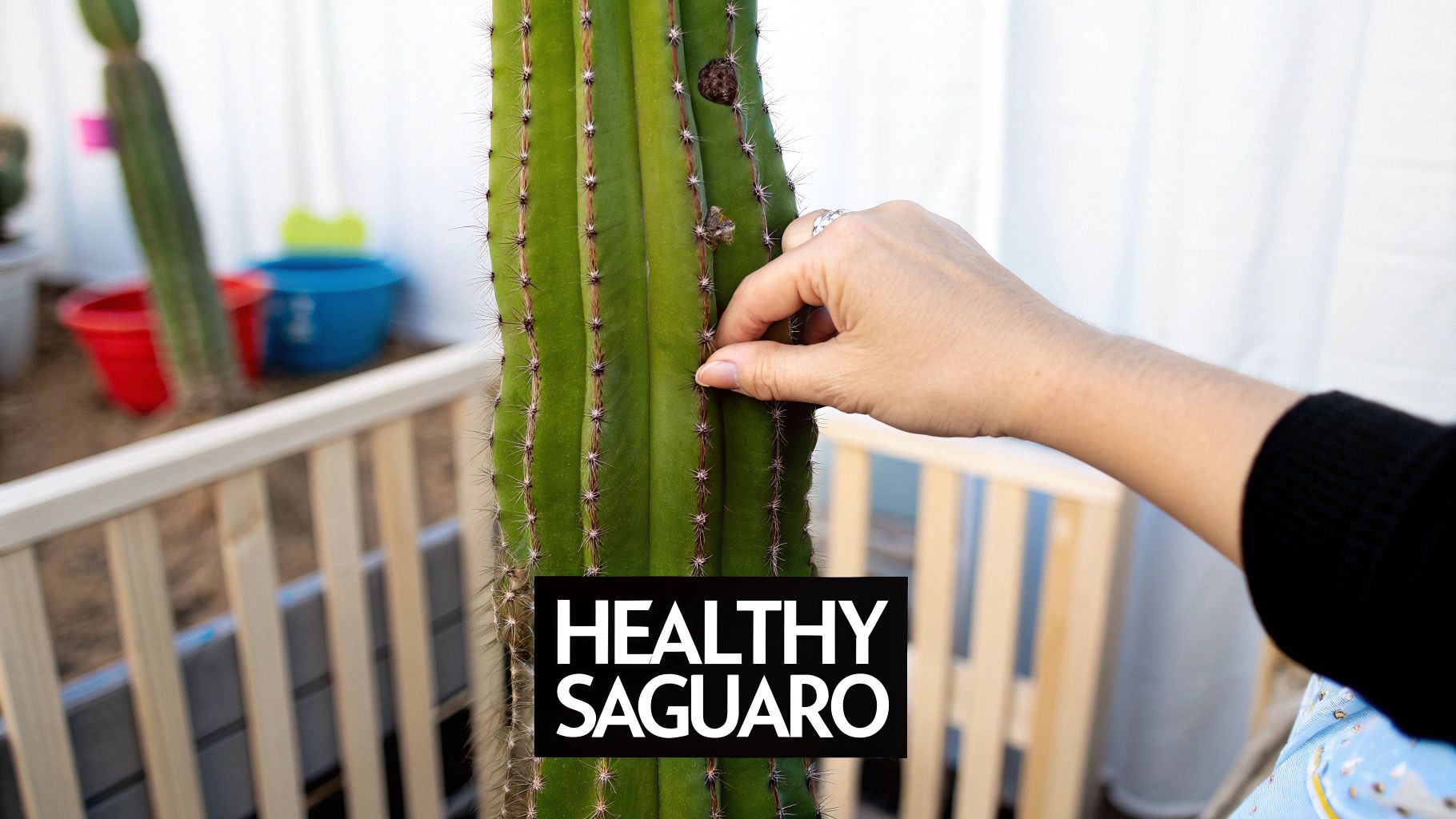
Think of it as a quick physical exam. Your best tools are your eyes and—very carefully—your hands. You’re looking for signs of vigor and trying to spot any hidden red flags.
The Physical Exam: What to Look For
First, just step back and take in the whole plant. A healthy saguaro has a deep, vibrant green skin. Be wary of large patches of yellow or brown, which can be signs of anything from sunburn to a serious nutrient deficiency.
Next, get a closer look at the ribs—those accordion-like folds running up the cactus. They are fantastic health indicators.
- Plump and Full Ribs: This is what you want to see. It means the saguaro is well-hydrated and storing water efficiently, just as it should.
- Shrunken or Pinched Ribs: While this could just mean the plant is a little thirsty, ribs that look severely shriveled might point to a bigger issue, like a weak root system that isn’t absorbing water.
Now for the touch test. Being extremely mindful of the spines, gently press against the cactus flesh. It should feel firm and solid, like a good cantaloupe. Any spot that feels soft, mushy, or squishy is a major warning sign. That’s often the first symptom of rot, a condition that’s nearly impossible to reverse and is usually fatal. Pay extra attention to the base of the cactus, as this is where moisture can gather and rot often begins.
Don't be alarmed by a woody, bark-like texture at the base of an older, taller saguaro. This is a natural aging process called corking, where the plant fortifies its base to support its immense weight. It is a sign of maturity, not disease.
Sizing Up Your Saguaro: Age, Height, and What to Expect
The saguaro you choose will depend heavily on your patience and budget. A small, spear-like saguaro might only be a few feet tall, but a mature, multi-armed giant is a century in the making. Understanding the connection between size and age helps you make an informed choice.
Here's a quick guide to what you can generally expect at different heights.
Saguaro Size and Age Quick Reference
| Height (Feet) | Estimated Age (Years) | Common Characteristics | Ideal For |
|---|---|---|---|
| 1-3 | 10-25 | Single column ("spear"), slow-growing, easily managed. | Small spaces, patient gardeners, budget-conscious buyers. |
| 4-6 | 25-40 | Still a spear, but with a more established presence. | Buyers looking for a noticeable landscape feature without the cost of an armed specimen. |
| 7-10 | 40-65 | Nearing the age for arm development. A substantial, impressive column. | Creating a strong vertical element in the landscape; a long-term investment. |
| 12+ | 70+ | Likely has one or more arms. A true statement piece with immense character. | Instant "wow" factor, mature landscapes, and buyers with a significant budget. |
Remember, these are just estimates. Growth rates can vary based on rainfall and location, but this table gives you a solid idea of the commitment you're making when you select a saguaro of a certain size.
Identifying Potential Problems and Imperfections
A saguaro that has lived for decades is bound to have a few battle scars. Minor, healed-over dings from a past scrape are usually just cosmetic and add a bit of character. What you need to watch out for are active problems.
Keep an eye out for any open wounds, areas that are oozing sap, or spreading black spots. These can be entry points for bacteria or fungal infections. It’s also a good idea to peek between the ribs for pests like webbing or small insects. A reputable nursery will have this under control, but it never hurts to double-check.
Many saguaros also have a slight, natural lean. That’s perfectly fine. A significant lean, however, could signal an unstable root system, which is a serious concern, especially with larger, recently transplanted cacti. Don't be afraid to ask the seller about the plant's stability.
Choosing Your Saguaro Style: Spear or Arms?
Finally, it comes down to personal taste. Do you want the classic, sleek look of a single column, or the iconic silhouette of a saguaro with arms?
- Spears: These are younger saguaros that haven't grown arms yet. They have a clean, modern aesthetic and are much more affordable. Choosing a spear means you get to watch it grow and develop its unique personality over the years.
- Armed Saguaros: These are the old-timers of the cactus world. Arms typically don’t even start to appear until a saguaro is 50 to 75 years old. Each arm adds a tremendous amount of character, turning the plant into a living landmark. As you'd expect, they also come with a much higher price tag.
In the end, choosing a saguaro is a personal decision that balances the plant's health, your budget, and the look you want to achieve. By taking the time to perform this thorough check-up, you can walk away confident that you’ve found a healthy, beautiful saguaro ready to grace your landscape for many years to come.
Making Sense of Saguaro Shipping and Delivery
Getting a giant, spiny cactus from a nursery to your yard probably sounds like a logistical nightmare. But for experienced sellers, it's a science they've perfected over years. The journey your saguaro takes is a carefully planned operation, all designed to reduce stress on the plant and give it the best possible start in its new home. Knowing what goes into this process helps you understand what to expect when you finally buy a saguaro cactus.
First thing to know: this is a seasonal business. Any nursery worth its salt will only dig up and move saguaros during the warmer, drier months—think late spring to early fall. Trying to transplant one in the cold, wet winter is a recipe for root rot, which is almost always a death sentence for these desert icons. This "digging season" might mean you have to wait a bit for your cactus, but that patience is exactly what ensures the plant arrives healthy and ready to thrive.
The Gear and Handling Required
You can't just toss a saguaro in the back of a pickup. These plants are astonishingly heavy, with mature ones weighing hundreds of pounds per foot, and their spines are no joke. Professional crews roll in with specialized gear to get the job done right.
- Protective Wrapping: Your cactus will likely be wrapped in thick carpeting or custom-cut foam pads. This protects its delicate skin from getting bruised or scarred and keeps the spines from snapping off.
- Custom Crates: For smaller saguaros or those traveling long distances, nurseries often build custom wooden crates to keep them secure. Bigger plants are carefully strapped onto heavy-duty pallets.
- Heavy Machinery: If you’re getting a saguaro over six feet tall, a crane is non-negotiable. It’s fascinating to watch a skilled operator gently lift the cactus off the truck and lower it perfectly into the pre-dug hole.
Even if you're buying locally, it's helpful to be aware of general international shipping considerations to appreciate the level of coordination involved. The care taken is surprisingly similar.
Navigating Agricultural Rules Between States
If your new saguaro is crossing state lines to get to you, the nursery has to deal with a tangle of agricultural regulations. Every state has its own rules designed to stop the spread of invasive pests and plant diseases.
This is exactly why you want to buy from a nursery that has experience shipping nationwide. They know the ins and outs of the inspection and certification process, ensuring your cactus arrives without any legal headaches. For more on finding a trustworthy long-distance supplier, check out our guide on the best place to buy cactus online.
On Delivery Day: What to Look For
The day your saguaro arrives is a big deal! The delivery team should be in touch to coordinate the timing. If a crane is involved, they’ll need a clear, unobstructed path to the planting spot, so make sure to clear any obstacles beforehand.
Once the cactus is off the truck, it’s time for you to do a quick inspection before the crew packs up. This is your moment to make sure you've received a healthy, undamaged plant.
Take a slow walk around the entire cactus. Look closely for any fresh, deep gashes or mushy spots that could have happened during the trip. A few minor scuffs are normal, but you'll want to flag any major damage with the delivery crew right away.
If you see something that concerns you, speak up immediately. Snap a few photos with your phone and ensure the crew documents the issue on the delivery paperwork. A good seller will have a clear policy for handling shipping damage and will work with you on a solution. This final check is crucial for making sure your incredible new saguaro gets the best possible start.
Getting Your Saguaro in the Ground
Your saguaro has finally arrived. It's a fantastic moment, but now comes the most critical part of its journey: planting. Getting this step right is the single biggest factor in whether your cactus will thrive for decades or struggle from the start.
This isn't just about digging a hole in the dirt. You're essentially trying to convince a wild, iconic desert plant that your yard is its new home. Every step, from where you plant it to how you backfill the soil, is about minimizing the shock of the move and encouraging it to send out new roots.
Finding the Perfect Spot
Before you even think about a shovel, scout the perfect location. Saguaros are sun lovers, plain and simple. They need a spot that gets blasted with at least six hours of direct, intense sunlight every day. An open area with a southern or western exposure is almost always your best bet.
Think long-term. That little spear of a cactus might one day be a 40-foot-tall giant with an arm span that could dwarf a small car. Plant it well clear of buildings, power lines, and other trees. Give it the space it will demand over the next hundred years.
A Pro's Warning: One of the most common and fatal mistakes is messing up the orientation. The nursery should have marked the north-facing side of the cactus before it was ever dug up. You must plant it facing the same direction. If you don't, the tender south-facing side, which has never seen full sun, will get a horrific, often deadly, sunburn.
The Art of Digging the Right Hole
Now you can grab the shovel. The rule for digging a saguaro hole is surprisingly simple: make it twice as wide as the root ball, but no deeper. This feels wrong to a lot of gardeners, but it’s absolutely essential.
If you dig too deep, the sheer weight of the cactus will cause it to settle over time, sinking its base below the soil line where moisture collects. This is a death sentence, leading to fatal root and stem rot. A wide, shallow hole encourages the roots to spread out horizontally to find water, just like they do in the desert.
The soil you backfill with is just as important. Forget the rich potting soil or garden compost. Your saguaro needs gritty, fast-draining soil to survive.
- The Right Mix: Aim for a blend of 50% native soil from your yard and 50% coarse sand or pumice.
- What to Avoid: Absolutely no fertilizers, manure, or moisture-retaining soil amendments. These additives hold too much water and can easily burn the sensitive, freshly disturbed roots.
Placing and Backfilling Your New Saguaro
As the delivery crew carefully lowers the saguaro into place, your job is to make sure it's standing straight and its base is perfectly level with the surrounding ground. Once it's positioned, you can start backfilling the hole with your prepared soil mix.
Gently push the soil around the root ball, but whatever you do, do not compact it. Tamping the soil down suffocates the roots and kills drainage. All you need to do is lightly firm it up to get rid of any major air pockets. The soil needs to stay loose enough for new roots to push through easily.
The whole journey, from nursery to your property, is a carefully planned operation. This infographic gives you a peek into the logistics, from timing the transplant to the equipment needed for a safe arrival.

As you can see, the entire process is designed around the cactus's well-being, ensuring it gets to you with the least amount of stress possible.
The Hardest Part: Waiting to Water
Here’s the step that tests every gardener's patience: do not water your saguaro right after you plant it. I know it feels wrong, but it’s crucial. The roots inevitably suffer some minor damage during the move. Watering immediately creates a perfect entry point for bacteria and fungus, which leads to rot.
You need to let it sit dry for at least two to four weeks. This waiting period gives those tiny wounds on the roots time to callus over and heal, sealing them off from infection. When you finally do water, give it a deep, thorough soaking that saturates the entire root zone.
Bracing for a Stable Future
A newly planted saguaro, especially a taller one, is incredibly top-heavy with no established root system to hold it in place. A strong gust of wind or even a heavy downpour could knock it right over. You have to give it some temporary support.
Drive two or three strong wooden stakes into the ground a few feet away from the cactus. Then, run padded wires or heavy-duty straps from the stakes to the saguaro, forming a stable tripod. The padding is non-negotiable—use old carpet scraps or thick foam to keep the straps from cutting into the cactus’s delicate skin.
Leave this bracing in place for at least a full year. That gives the root system plenty of time to grow, establish itself, and anchor the plant firmly into the ground for good.
First-Year Care for a Newly Planted Saguaro
Getting your saguaro in the ground is a huge accomplishment, but the real work has just begun. That first year is absolutely critical. Your new cactus is focusing all its energy on establishing a root system, so you won't see much, if any, upward growth. Patience is your best friend right now.
The single most important job you have is managing water. The goal is to mimic the Sonoran Desert's monsoon cycle: a deep drenching followed by a long, dry period. This encourages the roots to grow deep and strong. Whatever you do, resist the urge to give it small, frequent sips of water—that only creates a weak, shallow root system that can't support the cactus long-term.
After letting it settle in for two to four weeks without any water, your watering schedule should follow the seasons. In the heat of the summer, a good, deep soak every three to four weeks is about right. As things cool down in the spring and fall, you can stretch that to every six to eight weeks. Once winter hits, stop watering completely, especially if you get freezing temperatures.
Reading the Signs of Stress
Learning to "speak saguaro" is all about watching its ribs. Those accordion-like folds are the best indicator of its health, expanding and contracting with its water reserves.
- Slight Shriveling: If the ribs look a little pinched, it's just telling you it's thirsty. This is a perfectly normal sign that it's time for another deep soak.
- Softness at the Base: This is a major red flag. If the base feels mushy, you're likely overwatering and root rot has set in. Stop watering immediately and let the soil dry out completely.
- Yellowing Skin (Paling): Paleness in the green skin can signal sunburn or a nutrient issue. This is why it's so important to mark the cactus's original sun-facing side and plant it accordingly.
The number one mistake new saguaro owners make is killing their plant with kindness—too much water. If you're ever in doubt, just wait another week. An underwatered saguaro will bounce back easily, but an overwatered one rarely survives.
Protecting Your Investment
Beyond watering, a few other simple things can protect your saguaro during this vulnerable first year. If you live in a place that gets frost, be ready to cover your cactus. Young plants are especially susceptible to tissue damage when temperatures dip below 20°F (-6°C) for too long. A simple frost cloth or an old blanket draped over it on the coldest nights can be a lifesaver.
Keep an eye out for pests like mealybugs or scale, which can target a stressed plant. You can usually knock them off with a strong jet of water or treat them with a horticultural soap. While saguaros have unique needs, understanding different irrigation methods like outdoor automatic watering systems can give you a better grasp of overall landscape management.
It's no surprise these incredible plants are in high demand. The global cactus plants market was valued at $3,860.3 million in 2021 and is projected to skyrocket to $7,014.2 million by 2025. This incredible growth highlights why now is a fantastic time to get your own saguaro from a trusted nursery.
For a more detailed seasonal breakdown, be sure to check out our complete saguaro cactus care guide. The care you give it in this first year is truly the foundation for the next hundred.
Got Questions About Buying a Saguaro?
Bringing a saguaro home is a huge step, and it's totally normal to have a ton of questions. This isn't like picking up a potted plant from the local hardware store; you're investing in a living piece of the Sonoran Desert.
We get these questions all the time, so we've put together some straight-talk answers to the most common ones. Let's clear things up so you can feel good about your decision to buy a saguaro cactus.
So, How Much Does a Saguaro Cactus Actually Cost?
Asking about the price of a saguaro is a lot like asking about the price of a car—it really depends on the model. Size and age are the biggest factors by far. Because these cacti grow at a snail's pace, what you're really paying for is time.
A little one-foot-tall "spear" (a young, armless saguaro) will probably set you back between $75 and $150. From there, the price starts climbing pretty quickly. For a healthy, armless saguaro, a good rule of thumb is to expect to pay around $100 to $250 per foot.
The game changes once a saguaro grows arms. An arm is the plant's way of showing you it's likely over 70 years old. That kind of maturity and character can easily double or triple the price, pushing bigger, multi-armed saguaros into the $2,000 to $10,000+ range.
And don't forget, the sticker price isn't the whole story. For any saguaro taller than a few feet, you'll need professional delivery and installation. That's a separate cost that can easily add hundreds, or even thousands, of dollars to your final bill.
Is It Illegal to Own a Saguaro?
This is a big one, and thankfully, the answer is simple: No, it is perfectly legal to own a saguaro cactus, provided it was obtained legally and ethically. The strict regulations you hear about, like Arizona's Native Plant Law, are there to stop people from illegally digging them up from the wild, not to prevent responsible ownership.
The key is buying from the right place. A reputable, licensed nursery is your best friend here. They take care of all the paperwork, guaranteeing the saguaro was either grown from seed on their property or legally salvaged from a construction site with the proper state-issued permits and tags. If a seller seems shady or can't show you this documentation, walk away.
Can I Grow a Saguaro Outside the Desert?
You absolutely can, but it takes real dedication. You can't just stick a saguaro in the ground and hope for the best; you have to work hard to mimic its native Sonoran Desert home. They are not what you'd call an "adaptable" plant.
Here are the absolute must-haves:
- Blazing Sun: We're talking at least six to eight hours of direct, intense sunlight every single day.
- Flawless Drainage: The soil has to be gritty and drain instantly. Soggy roots are the number one killer for saguaros, especially in humid climates.
- Frost Protection: This is the make-or-break factor for most people. A saguaro can suffer fatal damage if it's exposed to temperatures below 20°F (-6°C) for too long.
If you live in a colder or wetter part of the country, this almost always means planting it in a massive container. That way, you can haul it into a protected garage or greenhouse for the winter. It’s a challenge, for sure, but incredibly rewarding if you're up for it.
How Fast Does a Saguaro Cactus Grow?
Honestly? They grow incredibly slowly. It's almost hard to believe. Understanding this from the get-go helps set realistic expectations and explains why mature saguaros are so expensive. For the first several years of its life, a saguaro puts all its energy into building a massive root system you can't even see.
Here's a little perspective on their timeline:
- After 10 years, a saguaro might only be a couple of inches tall.
- It can take 30 to 40 years just to reach six feet in height.
- Those iconic arms usually don't even start showing up until the cactus is between 50 and 75 years old.
This glacial pace is precisely why so many people choose to buy a larger, more established saguaro. You're getting an instant, dramatic landmark for your property by purchasing decades of slow, patient growth.
Ready to find the perfect desert giant for your landscape? At The Cactus Outlet, we offer a stunning selection of healthy, ethically sourced saguaros and other magnificent cacti, all available to be delivered right to your door.