

Giant cactus plants are so much more than prickly desert dwellers. Think of them as living sculptures, capable of transforming any space with their dramatic, architectural presence. These magnificent, low-maintenance titans bring a bold and unique energy to homes and landscapes, instantly becoming a conversation piece.
Why a Giant Cactus is More Than Just a Plant
Imagine turning a forgotten corner of your home or a bland patch in your yard into a living art installation. That's exactly what a giant cactus can do. We're moving beyond the typical houseplant here and diving into the world of using these giants as powerful, dramatic focal points.
Homeowners and designers are catching on, and for good reason. Unlike leafy plants that can blend into the background, a giant cactus commands attention. Its strong vertical lines, fascinating textures, and sheer size can anchor an entire room's design or create a stunning centerpiece in a xeriscape garden. They bring a touch of the wild and exotic indoors, connecting our modern spaces with the raw beauty of nature.
The Appeal of a Living Sculpture
The love for giant cacti isn't just about gardening—it's about curating a space with real personality. It’s like a painter choosing a canvas or a sculptor sizing up a block of marble. A giant cactus serves that same artistic purpose.
Here's what makes them so special:
- Architectural Interest: Their clean, geometric shapes are a perfect match for minimalist, modern, and even bohemian styles.
- Low-Maintenance Beauty: Cacti practically thrive on neglect. This makes them the perfect choice for anyone who wants huge visual impact with very little fuss.
- A Year-Round Statement: While other plants come and go with the seasons, a giant cactus offers unwavering structure and form all year long.
When you bring a giant cactus into your space, you're not just getting a plant. You're investing in a dynamic work of art that grows and changes over time, asking for little more than sunlight, a bit of water, and your admiration.
This guide will give you all the foundational knowledge you need to confidently pick, plant, and showcase a giant cactus of your own. We'll be sharing expert insights from our team right here at The Cactus Outlet to make sure you succeed.
Choosing Your Perfect Giant Cactus Species
Stepping into the world of giant cacti is like entering a gallery of living sculptures. Each species brings its own unique personality, growth style, and visual punch. Finding the right one for your space isn't just about picking a plant; it's about choosing a living, breathing architectural feature that will grow with you and define your home or garden for years to come.
Not all giant cacti are created equal. Some grow with a patient, stately slowness, while others shoot up with surprising speed. Let's get to know the superstars of the giant cactus world to help you find the perfect match for your vision.
The Iconic Saguaro
When you close your eyes and picture a giant cactus, chances are you're thinking of the Saguaro (Carnegiea gigantea). Its classic silhouette, with those majestic arms reaching for the sky, is the quintessential symbol of the American Southwest. Bringing a Saguaro into your life is a real commitment—a legacy piece that can grow alongside your family for generations.
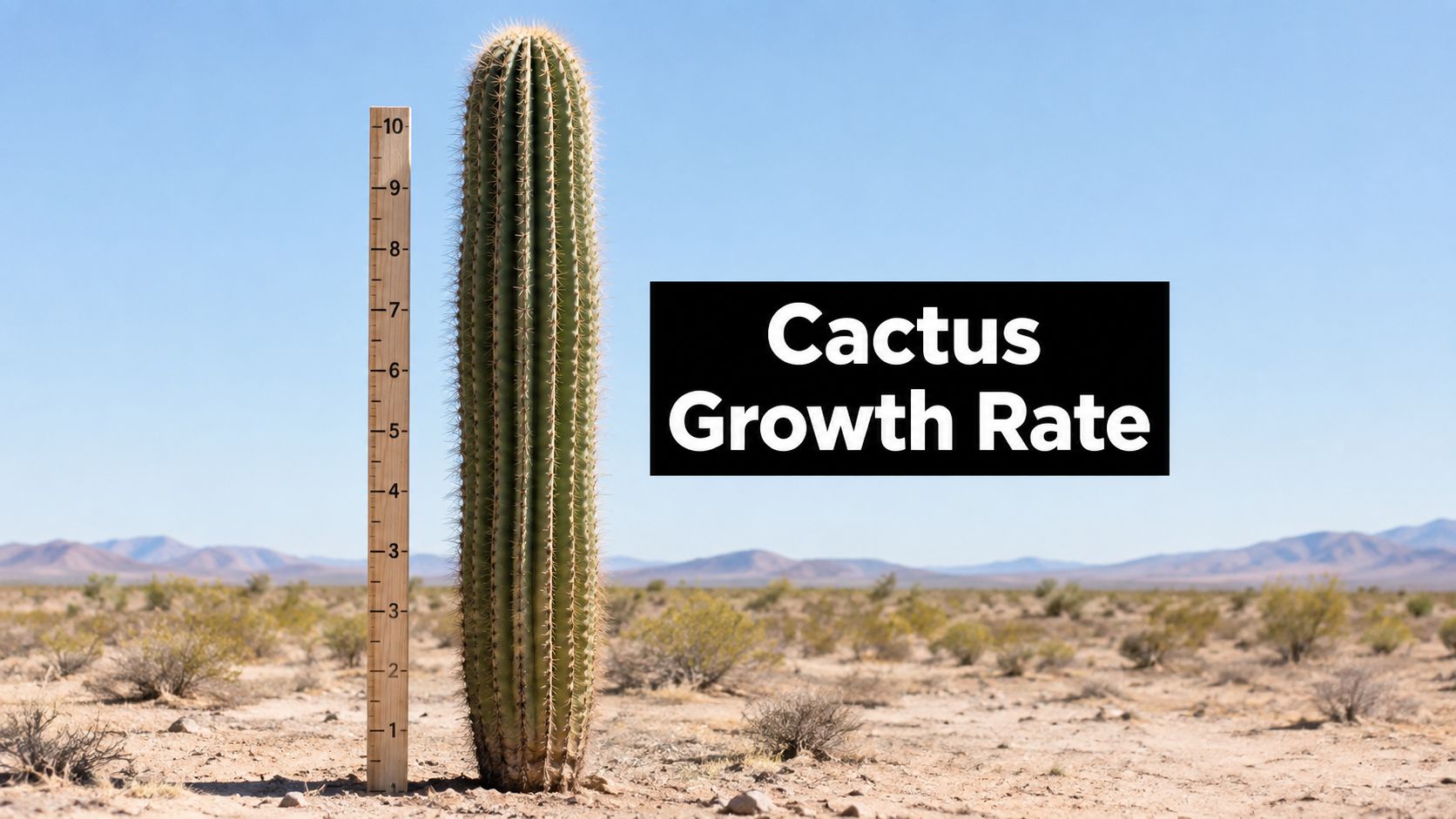
These giants are famously slow growers. We're talking really slow. A Saguaro might take a full decade to grow just a few inches and can wait up to 75 years before sprouting its very first arm. This glacial pace actually makes them fantastic indoor plants for many years before they need a permanent home outdoors in a suitable climate. Just be sure to give them what they crave: full, direct sun.
This handy decision tree can help you figure out the best placement for these living sculptures.
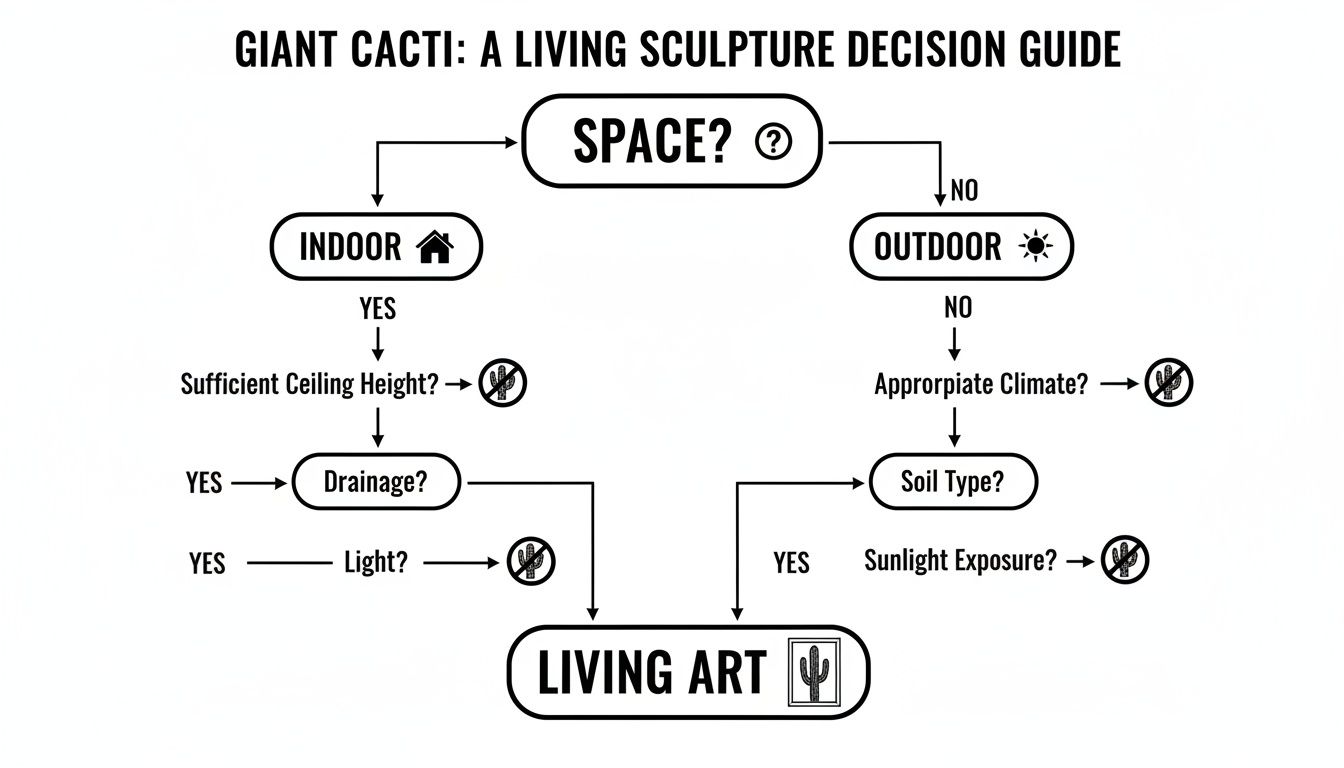
As you can see, whether you've got a sunny corner indoors or a wide-open yard, a giant cactus can absolutely become a stunning focal point in your environment.
The Fast-Growing Peruvian Apple Cactus
For those who want that impressive height without the decades-long wait, the Peruvian Apple Cactus (Cereus repandus) is a phenomenal choice. This species is a real crowd-pleaser, known for its rapid growth. It can easily add several inches, or even a foot, of height each year when it's happy. Its ribbed, columnar stems create a powerful vertical accent that commands attention.
But the real magic happens at night. The Peruvian Apple Cactus puts on a spectacular show, producing enormous, fragrant white flowers that bloom after dark. It’s a breathtaking sight. As a bonus, these flowers often develop into an edible, reddish fruit that tastes a bit like dragon fruit, adding a delicious reward to its stunning beauty.
Comparing Popular Giant Cactus Species
Use this quick comparison to find the giant cactus that best fits your space, style, and patience level.
| Species Name | Common Name | Maximum Height | Growth Rate | Key Feature |
|---|---|---|---|---|
| Carnegiea gigantea | Saguaro | Up to 40+ feet | Very Slow | Iconic, multi-armed silhouette |
| Cereus repandus | Peruvian Apple | Up to 30 feet | Fast | Night-blooming flowers and edible fruit |
| Stenocereus thurberi | Organ Pipe Cactus | Up to 20 feet | Moderate | Grows in a dense, multi-stemmed cluster |
| Pachycereus marginatus | Mexican Fence Post | Up to 15 feet | Moderate | Clean, uniform columns with white margins |
| Echinopsis terscheckii | Cardón Grande | Up to 30+ feet | Moderate-Fast | Saguaro-like look, but more cold-tolerant |
This table just scratches the surface, but it gives you a good starting point for matching a species to your specific goals and growing conditions.
Exploring Other Notable Giants
The world of giant cacti goes way beyond these two icons, offering a rich variety of forms and textures. With Mexico alone being home to nearly 563 distinct cactus species, the diversity is just astounding. That incredible concentration represents about 30-40% of all cacti on the planet, making the region a true epicenter of cactus evolution. This gives us an amazing array of options to choose from.
To broaden your horizons, you can explore our detailed guide that covers even more types of large cactus plants, helping you compare different forms and features.
Here are a few other popular choices to consider:
- Organ Pipe Cactus (Stenocereus thurberi): This species grows in a cluster of tall, slender stems from a single base, looking just like the pipes of a grand organ. It creates a dense, screen-like effect that’s perfect for adding privacy or creating a living wall.
- Mexican Fence Post (Pachycereus marginatus): True to its name, this cactus features clean, straight columns with distinct white margins along its ribs. It’s often used to create formal, living fences in warmer climates and makes a striking, orderly statement indoors.
- Cardón Grande (Echinopsis terscheckii): Often mistaken for a Saguaro, the Cardón is a South American native that’s more cold-tolerant and faster-growing. It develops thick, branching arms, offering that same iconic look but on a slightly faster timeline.
Choosing your giant cactus is the first step in a truly rewarding journey. Think about your space, your climate, and your patience. Whether you want the slow, steady presence of a Saguaro or the fast, flowering beauty of a Peruvian Apple, there is a giant cactus waiting to become the centerpiece of your collection.
Mastering the Art of Giant Cactus Care
You’d think caring for a giant cactus would be a monumental task, but it’s actually one of the most rewarding and low-maintenance relationships you can have with a plant. These incredible desert dwellers are built for survival in tough spots, so they don’t want or need you hovering over them. The secret isn't constant fussing; it's about understanding their rhythm—a natural cycle of flood and drought.
Look at your cactus as a living sculpture, one that holds its own water supply. It simply doesn't crave the daily sips that your leafy houseplants do. In fact, the most common way people kill a cactus is with kindness, or more specifically, too much water. Your goal is to replicate the rare but powerful downpours of its desert home.
The Soak and Dry Watering Method
The absolute golden rule for watering a giant cactus is the "soak and dry" method. It's as straightforward as it sounds: you drench the soil completely until water pours out of the drainage holes, and then you leave it alone until the soil is bone dry. This one practice is your best defense against root rot, the number one enemy of any cactus.
But how do you know it's really dry? Don't just trust the top inch of soil. The best way is to stick a wooden skewer or your finger deep into the pot. If it comes out clean and dry, it’s time to water. If you feel any moisture or see soil clinging to the skewer, hold off. When in doubt, wait.
It's a huge myth that cacti only need a tiny splash of water. They actually thrive on a deep, thorough drenching that encourages their roots to grow strong and deep. That soaking is then followed by a long dry spell, which is just as important for letting the roots breathe.
The timing of this cycle changes completely with the seasons. Through the active growing months of spring and summer, you might be watering every two to four weeks, depending on how hot and sunny it is. But when fall and winter arrive, the plant goes dormant. You’ll need to cut back watering dramatically—maybe only once every two months, or even less for a big, established specimen.
Finding the Perfect Light and Temperature
Sunlight is pure energy for a giant cactus. Most of them, especially desert icons like the Saguaro and Peruvian Apple, are total sun-worshippers. They need at least six to eight hours of bright, direct sun every single day to stay healthy, vibrant, and structurally sound.
-
Indoor Placement: A south-facing window is prime real estate for an indoor cactus. If that's not an option, a west-facing window is a solid second choice. Without enough direct sun, your cactus might start to etiolate—stretching desperately for light, turning pale, and looking thin and weak.
-
Outdoor Placement: If you're moving a cactus outdoors, watch out for "sun shock." A plant that's been living in a cozy greenhouse needs to be introduced to intense, direct sun gradually over a week or two. Rushing it can cause sunburn, which looks like ugly bleached or yellow patches on the cactus's skin.
Temperature is usually the easy part. These plants are tough. They're perfectly happy with normal indoor temperatures and can handle serious heat outside. Cold is the real danger. While some species can handle a surprising chill, most will be damaged or killed by frost. If you live somewhere with freezing winters, your cactus absolutely must be in a pot that can be moved indoors for protection. For a deeper dive into these topics, our complete cactus care guide has you covered.
Feeding and Airflow Considerations
One of the best parts about owning a giant cactus is that they are not heavy eaters. They’ve adapted to grow slowly in soil that isn’t very rich. Trying to push them with too much fertilizer is a bad idea; it can burn their delicate roots and lead to weak, unnatural growth.
A good rule of thumb is to feed them just once or twice during the peak of the growing season, maybe in late spring or early summer. Use a diluted, low-nitrogen cactus fertilizer, and that's it for the whole year. Never, ever fertilize a cactus during its winter dormancy.
Finally, don't underestimate the power of fresh air. Good air circulation is crucial for preventing fungal issues and keeping pests away. If your cactus lives inside, try to avoid stuffy corners. A little bit of natural air movement will go a long way in keeping your living sculpture happy for years—and even decades—to come.
The Right Foundation: Potting and Soil Mix
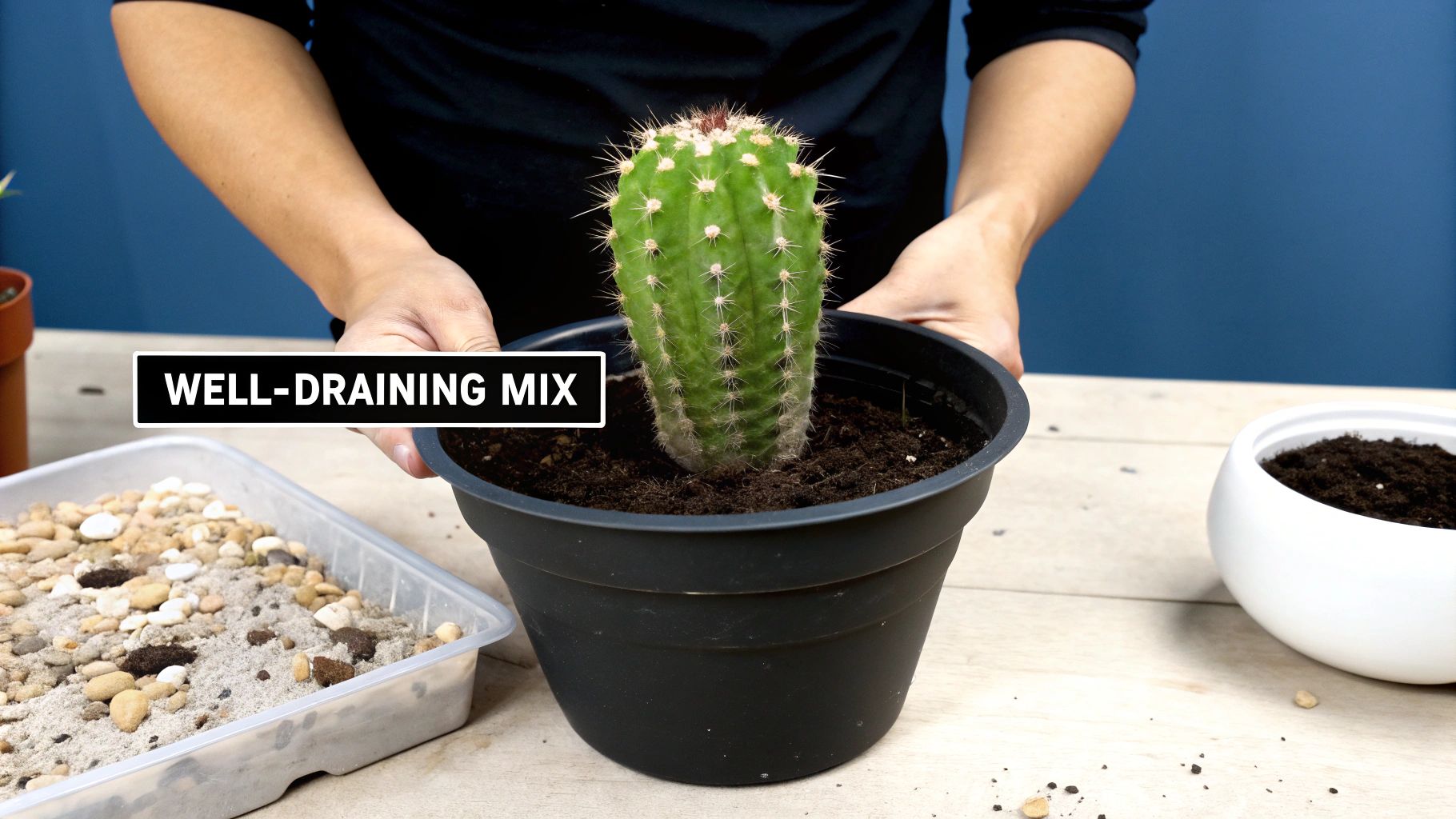
The real secret to a towering, healthy giant cactus isn't what you see above ground—it’s what’s happening in the pot. We all admire their striking shapes and impressive size, but their entire well-being hinges on the right foundation. In fact, using the wrong soil is the number one shortcut to killing your cactus, leading straight to its mortal enemy: root rot.
Think about it this way: standard potting soil is like a wet, dense sponge. It’s fantastic for tropical plants that love moisture, but for a cactus that evolved in the desert, it's a death trap. Giant cactus roots need to breathe, and constantly damp, waterlogged soil suffocates them. This creates the perfect breeding ground for the nasty fungi and bacteria that cause rot.
Crafting the Perfect Cactus Soil
So, what's the solution? A specialized cactus mix. This is completely non-negotiable. The whole point of this soil is to get water out of the pot as fast as possible, just like the gritty, porous earth of its native desert home. You can buy pre-made bags, but mixing your own is easy and lets you dial in the quality perfectly.
The goal is to create a blend that’s light, airy, and gritty to the touch. Here’s a tried-and-true recipe that works wonders:
- Part 1: Standard Potting Soil. This provides a bit of organic matter and structure.
- Part 2: Inorganic Material. This is the secret sauce for drainage. Mix in equal parts of materials like perlite, pumice, or coarse sand. Perlite is super light and creates air pockets, while pumice is a porous volcanic rock that does the same but adds a little heft for stability.
The perfect soil for giant cactus plants should feel more like gravel than rich garden loam. When you water it, the moisture should pass through quickly rather than pooling on top, ensuring the roots get a good drink without sitting in a swamp.
If you really want to get into the details, you can explore our complete guide on the ideal cactus and succulent soil mix, where we break down all the different ingredients.
Selecting the Right Container
The pot itself is just as critical as the soil inside it. The most important feature? Drainage. It doesn't matter how stylish a container is; if it doesn't have at least one large drainage hole at the bottom, it's the wrong pot for a cactus. Period.
As for size, resist the urge to go too big. Choose a pot that is only about 1-2 inches wider in diameter than the plant's root ball. It’s a classic mistake to put a small plant in a huge pot, thinking you’re giving it room to grow. In reality, all that extra soil just holds onto moisture for too long, dramatically increasing the risk of root rot.
How to Repot a Giant Spiny Cactus Safely
Moving a big, spiky cactus can feel like a daunting task, but a little bit of technique goes a long way in keeping both you and your plant safe. The trick is to create a buffer between you and the spines.
- Get Ready: First, gather your new pot, fresh cactus mix, and some protective gear.
- Make a Sling: Grab some old, thick blankets, towels, or even a rolled-up yoga mat. Wrap this "sling" securely around the body of the cactus.
- Ease It Out: With a helper if needed, carefully lay the cactus on its side. Tap the pot gently to loosen the root ball and slide the plant out, using your sling to grip and maneuver it.
- Settle It In: Place the cactus in its new pot, then backfill around it with your gritty soil mix. Use the sling to keep the cactus steady until it's secure. Hold off on watering for about a week to give any roots that might have been bruised a chance to heal.
Styling Your Space with Giant Cacti
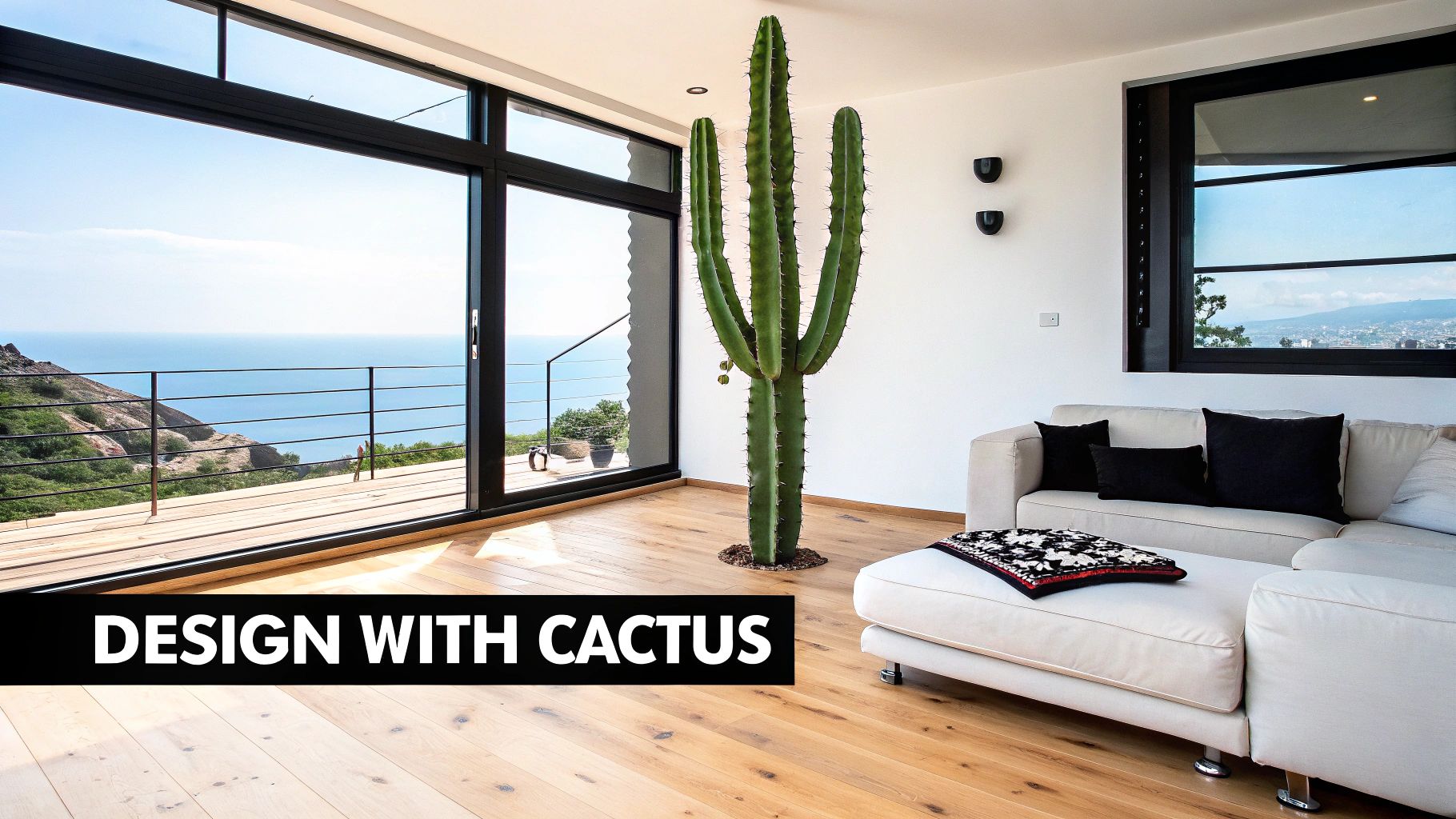
A giant cactus is so much more than just another houseplant. Think of it as a living sculpture, a powerful design element that can single-handedly define a room. With their bold, architectural shapes and minimalist vibe, these plants become instant focal points, anchoring your entire design aesthetic.
The secret to success is all about placement. Whether you’re designing a dramatic xeriscape in your yard or picking that one perfect specimen for your living room, where you put it makes all the difference. A giant cactus can frame a gorgeous view, add much-needed height to a room with low furniture, or bring a wild, organic texture to an otherwise sleek, modern space.
Indoor Placement for Maximum Impact
Bringing a giant cactus inside is like placing a piece of fine art. Its sculptural form deserves the spotlight, so find a spot where it won’t get lost in a sea of other decorations. It’s a natural fit for minimalist and contemporary styles, where the cactus’s clean lines feel right at home.
Here are a few pro tips for styling your cactus indoors:
- Own the Corner: A tall, columnar cactus like a Mexican Fence Post is perfect for an empty corner. It immediately draws the eye upward and breathes life into a forgotten space.
- Frame an Entryway: For a powerful and welcoming statement, try placing a matching pair of giant cacti on either side of a doorway or main entrance. The symmetry is stunning.
- Highlight a Window: Put your cactus near a large, sunny window. The natural light from behind will create a beautiful silhouette, turning it into a dynamic piece of art that changes with the light all day long.
If you're looking for more ways to blend botanical themes, check out these tropical bedroom decoration ideas for inspiration on mixing different styles. The real key is to let the plant’s natural beauty take the lead.
When you treat your giant cactus as a core design element—not an afterthought—you can elevate your entire interior. It becomes the exclamation point in the room, a bold statement of natural style.
Creating a Stunning Outdoor Xeriscape
Out in the garden, giant cacti are the undisputed stars of water-wise xeriscaping. A xeriscape is a landscape designed to need very little irrigation, which is perfect for dry climates and anyone looking to garden more sustainably. Giant cacti provide the strong vertical structure that these gardens need to feel dynamic and complete.
First things first: map out the sun in your yard. Most of these giants need at least six to eight hours of direct sunlight every day to really thrive. Once you’ve found the sunniest spots, think about creating layers. Grouping a towering Saguaro with shorter Organ Pipe cacti and some low-growing Agaves creates a multi-dimensional look that feels like a natural desert scene.
While these plants are tough, planting responsibly is still important. It's fascinating that out of 1,922 known cactus species, only about 3% have become invasive in new regions. Hotspots for these thorny invaders include South Africa, Australia, and Spain, which is a good reminder to always choose native or well-suited species for your area.
Practical and Safe Placement
Finally, let’s talk about the practical side of things—especially with the spiny varieties. Safety has to be a priority, ensuring your living sculpture is a source of joy, not accidental pokes.
Always, always, always keep spiny cacti far away from high-traffic areas. That means keeping them clear of sidewalks, doorways, and any place where children or pets play and run around.
A good rule of thumb is to leave at least three feet of open space around a spiny plant. This simple precaution ensures everyone can admire your beautiful giant cactus without any risk of getting hurt.
Sourcing Your Giant Cactus Ethically
Bringing a magnificent giant cactus into your life is an incredible experience, but it’s a decision that carries more weight than just finding the right spot in your garden. The rising demand for these living sculptures has a dark side: an illegal trade in cacti poached directly from the wild. This practice doesn't just harm individual plants; it tears at the fabric of fragile desert ecosystems, pushing already vulnerable species toward extinction.
It's crucial to know the difference between a properly nursery-grown cactus and one that's been ripped from its home. Wild plants tell a story of a rough life—you'll often see scars, damage from being hastily dug up (leaving behind most of its roots), and a stressed, tired look. These poached plants rarely survive the shock of being transplanted, which sadly just fuels the demand for more.
Why It's a Bigger Deal Than You Think
The threats to wild cactus populations are serious and coming from multiple directions. On top of poaching, we have widespread habitat destruction from agriculture and urban sprawl clearing out lands where these giants have stood for hundreds of years. This isn't some far-off problem; it's creating measurable, alarming consequences for biodiversity.
In fact, a major study found that nearly 30% of the 1,478 cactus species evaluated are threatened with extinction. That makes cacti one of the most endangered groups of organisms on the planet. This crisis is a direct result of habitat loss combined with the relentless pressure of the illegal plant trade. By making a conscious choice to buy from a reputable grower, you become part of the solution. You can read the full research about these critical cactus findings to see just how deep the issue runs.
When you buy a nursery-grown cactus, you're casting a vote for sustainability. You're helping ensure wild populations are left alone to thrive in their native ecosystems for generations to come.
How to Be a Responsible Buyer
Fortunately, making an ethical choice is pretty simple once you know what to look for. A healthy, sustainably grown cactus from a trusted source like The Cactus Outlet will have a full, robust root system, look vibrant, and be free of the nicks, scars, and sun-scald that often mark a wild-collected plant.
Here’s a quick checklist to make sure your purchase is a responsible one:
- Ask Where It Came From: A reputable seller will be more than happy—proud, even—to talk about their growing practices. If they're cagey about the plant's origin, that's a red flag.
- Give It a Health Check: Look for a plant that feels firm and has good, consistent color. A well-developed root system, often visible at the base of the pot, is a great sign. Steer clear of plants with mushy spots, pests, or a withered appearance.
- Know the Rules: Be aware that some species, especially the iconic Saguaro, are federally protected. It’s flat-out illegal to dig them up from the wild without very specific, hard-to-get permits.
At the end of the day, ethical sourcing isn't just about protecting the wild. It’s also about getting a better plant. A nursery-grown cactus is healthier, stronger, and already adapted to life in a pot, setting you up for a long and successful journey with your new living sculpture.
Common Questions About Giant Cactus Plants
Bringing a giant cactus into your life is an exciting step, but it's natural to have a few questions. These living sculptures are surprisingly low-maintenance, but they play by a different set of rules than your average houseplant. Let's tackle some of the most common things people wonder about so you can feel confident from day one.
Getting the right answers upfront demystifies the whole process. From how fast they'll grow to how on earth you'll move them, a little knowledge goes a long way toward building a great relationship with your new plant.
How Fast Do Giant Cactus Plants Actually Grow?
This is probably the number one question I hear, and the honest answer is: it completely depends on the species. We're talking about a difference as dramatic as a tortoise's stroll versus a rabbit's sprint.
Take the iconic Saguaro, for example. It's famous for its incredibly slow pace, sometimes taking a full decade just to grow its first few inches. It’s a plant that teaches patience. On the complete opposite end of the spectrum, a Peruvian Apple Cactus can absolutely explode under the right conditions, often shooting up several inches—or even over a foot—in a single growing season.
Knowing the growth rate of your specific cactus isn't just trivia; it's crucial for planning. It helps you manage your own expectations and ensures you pick a plant that won't outgrow its spot in a year or two.
Do a little research on your specific variety. It’s the best way to make sure you’re choosing a cactus that fits both your space and your timeline.
Can I Really Keep a Giant Cactus Indoors?
You absolutely can! Many giant cacti make for stunning indoor statement pieces, adding a bold, sculptural feel to a room. But there's one non-negotiable rule for success: light.
These are desert plants, through and through. To be happy indoors, they need at least six to eight hours of bright, direct sun every single day. The absolute best spot is right in front of a big, unobstructed south-facing window where they can just bake in the sun. A west-facing window is a solid runner-up.
If your home is on the shadier side, a powerful full-spectrum grow light isn't a suggestion—it's a requirement. Without enough light, your cactus will get weak and start stretching unnaturally toward any light it can find. This process, called etiolation, leaves it looking pale, thin, and sickly.
What Do Yellow or Brown Spots on My Cactus Mean?
Seeing discolored spots can be scary, but you can usually figure out what's going on by looking at their texture and where they are on the plant.
- Soft, Mushy Spots: If you find squishy, yellowish-brown spots, particularly down near the soil, that’s almost always root rot from overwatering. This is the most urgent problem a cactus can have and needs to be addressed immediately.
- Hard, Bark-Like Patches: Are the spots dry, corky, and feel more like bark? This is usually just "corking," a natural part of the aging process for many older cacti. It’s harmless and just adds a little character.
- Bleached, Yellow Patches: Light yellow or whitish patches on the side of the cactus that gets the most sun are a classic sign of sunburn. This often happens when a plant is moved from a lower-light spot directly into intense sun without a gradual transition.
How Do I Move a Huge Spiny Cactus Safely?
Moving a big, spiky cactus is all about having a smart plan to protect both yourself and the plant. Whatever you do, don't just try to grab it with your hands.
The professional trick is to create a set of "handles." Wrap the main body of the cactus securely with something thick—old moving blankets, several layers of cardboard, or even a rolled-up yoga mat work great. Use duct tape to hold the wrapping firmly in place. This padding gives you a safe place to grip without getting poked. For any cactus of a serious size, make this a two-person job. It’s the only way to avoid someone getting hurt or the plant getting snapped.
Ready to find the perfect living sculpture for your space? The experts at The Cactus Outlet have a curated selection of healthy, ethically grown giant cactus plants ready to transform your home or garden. Explore our collection and start your journey today.
Find your perfect giant cactus at The Cactus Outlet.