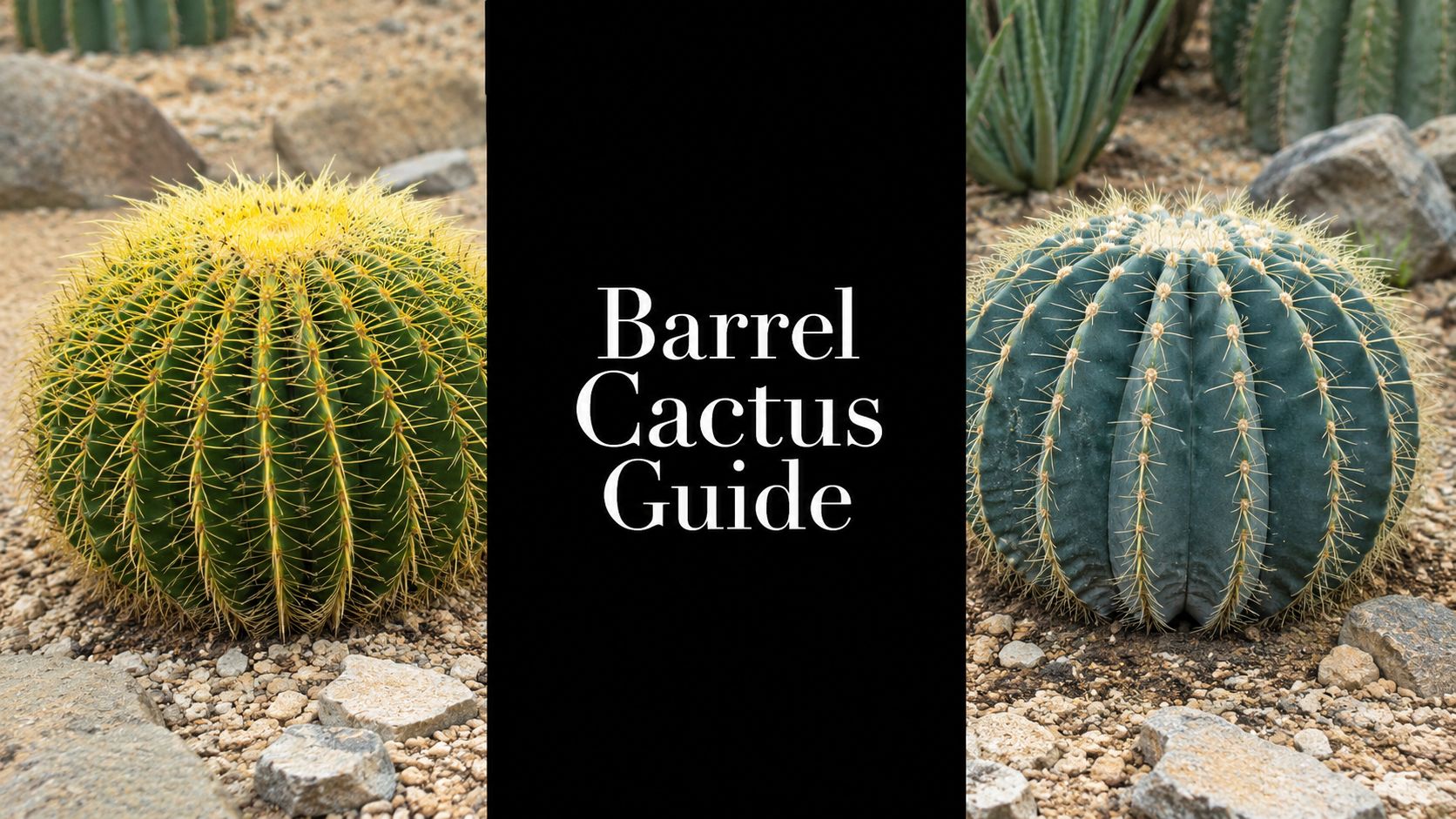



You’re probably here because you’ve seen one of these tall blue-green columns in a nursery, a desert garden, or a bright living room and thought two things at once: I love it and I might kill it.
That’s a normal reaction. The peruvian apple cactus looks dramatic, expensive, and a little intimidating. But in practice, it’s one of the more approachable large cacti you can grow if you understand three things early: it wants strong light, fast drainage, and less fuss than most new owners give it.
It also has a second life that many buyers don’t realize at first. This isn’t just a sculptural cactus for a pot or outdoor bed. It can flower, fruit, and become a long-term specimen that changes character as it matures. That’s where many basic care guides stop short. New growers need help with the first year. Serious growers need help when the plant gets tall, heavy, and ready to bloom.
I’ll walk you through both.
Meet the Stunning Peruvian Apple Cactus
The first thing people notice about Peruvian Apple Cactus (Cereus repandus) is its shape. It rises in upright columns and gives a space instant height. Even a young plant has presence.
What surprises most beginners is that this cactus isn’t slow by cactus standards. Under optimal conditions, it can grow 1 to 2 feet per year and it can survive temperatures as low as -6°C (about 21°F) while thriving in USDA zones 9 to 11, according to The Cactus Outlet’s Peruvian apple cactus overview. That combination of speed and toughness is unusual.
Why growers keep coming back to it
A lot of large cacti are admired from a distance. This one invites ownership.
It’s a strong choice for people who want:
- A statement plant indoors that doesn’t need daily attention
- A drought-conscious outdoor specimen with a clean, architectural look
- An edible cactus project if flowering and fruiting interest you
- A long-term plant that changes from decorative to structural as it ages
That last point matters. A small nursery plant behaves one way. A mature plant behaves another.
Practical rule: Buy this cactus for the plant it will become, not just the size it is today.
More than an ornamental cactus
In water-stressed regions, growers have taken this species seriously as a crop. The same source notes that in Israel, Peruvian Apple Cactus is replacing traditional orchards that require more irrigation, and its year-round harvest capability offers continuous income for farmers in challenging climates.
For a home grower, that tells you something important. This cactus isn’t surviving by luck. It’s built for hard conditions and rewards sensible care.
If you’re new to columnar cacti, that’s good news. If you’re already a collector, its primary appeal is that it can do more than sit in a pot and look handsome.
Identifying Your Peruvian Apple Cactus
When customers shop for a peruvian apple cactus, they often confuse it with other tall columnar species. That’s understandable. Young columnar cacti can look similar from across the yard.
Up close, though, this plant has a look of its own.

Start with the stem shape and color
A healthy specimen usually shows upright, ribbed columns with a gray-green to blue-green cast. The plant should look firm and clean, not puckered, dull, or soft.
Look for these visual clues:
- Columnar growth habit. It grows upward in vertical stems rather than spreading low and wide.
- Distinct ribs. The sides aren’t smooth. They’re marked by clear ridges.
- Cool-toned skin. Many plants have that glaucous, dusty blue-green tone that makes them stand out in bright light.
- Spines along the ridges. They’re present, but the plant usually reads more elegant than ferocious.
If the plant looks stretched, thin, and oddly pale, you may be looking at a cactus that hasn’t had enough light.
Notice how it carries itself
A true peruvian apple cactus tends to look organized, not chaotic. Even branching plants usually keep a strong upright posture. That posture is one reason designers like it so much indoors and outdoors.
Younger nursery plants may have a simple single-column look. Older plants can branch into a candelabra form.
The flowers tell you a lot
Its blooms are one of the easiest ways to confirm what you’ve got, if you’re lucky enough to see them.
The flowers are large, cream-colored, and open only at night, and in its native habitat they rely on bat pollination, as described by Specialty Produce’s Peruvian Apple Cactus fruit profile. That nighttime schedule explains why many owners miss the show entirely. You go to bed with buds and wake up to fading flowers.
If you see a mature plant with big night-opening flowers, you’re looking at one of the most memorable bloom events in the cactus world.
How to recognize the fruit
The fruit is often called pitaya or Peruvian apple. It has colorful skin that ranges from violet-red to bright magenta, and the inside has white flesh with edible crunchy seeds. The fruit is thornless and sweetens as it ripens.
That thornless skin catches people off guard. They expect a heavily armed fruit because the plant itself is a cactus. Instead, the fruit is easy to handle once mature.
What confuses buyers most
The name causes one of the biggest mix-ups. Despite the common name, the fruit is native to South America, specifically Brazil, Uruguay, and Argentina, not Peru, according to the same Specialty Produce profile.
That means two things for identification:
- Common names can mislead you.
- Botanical names matter when you’re buying.
If you’re shopping online or in person, ask for Cereus repandus. That cuts down on confusion fast.
Your Complete Peruvian Apple Cactus Care Schedule
Most care mistakes come from treating this cactus like a thirsty tropical houseplant. It isn’t one. If you copy its dry native rhythm, it usually responds well.

Give it the brightest spot you have
Light comes first. If the light is weak, everything else gets harder to judge.
Indoors, place the cactus where it gets strong direct sun. A south-facing window is often the easiest answer. Outdoors, acclimate it gradually if it’s moving from shade or indoor conditions.
Watch the plant itself:
- Tight, upright growth usually means the light is adequate.
- Leaning or stretching means it wants more.
- Bleached patches can mean sudden harsh exposure before the plant adjusted.
A lot of beginners hear “full sun” and move a greenhouse-grown plant into intense afternoon sun on day one. That’s how you get stress marks. Increase exposure step by step.
Soil must drain fast
A peruvian apple cactus can forgive a missed watering. It won’t forgive wet, heavy soil for long.
Use a gritty cactus mix that drains quickly. You want water to move through the pot rather than hang around the roots.
A practical mix often includes:
- Cactus soil for a base
- Coarse sand to open the texture
- Perlite or pumice to improve aeration
The exact recipe can vary. The principle can’t. Fast drainage is not optional.
The easiest way to rot a healthy cactus is to put it in rich soil that stays wet like a sponge.
Water thoroughly, then stop
New owners usually underwater in fear or overwater out of kindness. The better method is simple: water thoroughly, then wait until the soil is fully dry before watering again.
That “fully dry” part matters.
Don’t water by the calendar alone. Check the mix with your finger or a moisture tool. If the root zone still feels damp, wait. A few extra dry days are safer than one extra wet day.
Seasonal rhythm that works
Growth usually picks up in warmer months and slows in cooler months. Your watering should follow that rhythm.
Here’s a clean way to consider this:
| Care Aspect | Spring/Summer (Growing Season) | Fall/Winter (Dormant Season) |
|---|---|---|
| Light | Keep in strong sun and rotate potted plants if they lean | Maintain the brightest possible location |
| Water | Water thoroughly only after the mix dries fully | Reduce watering sharply and let soil stay dry longer |
| Soil check | Monitor drainage after each watering | Make sure cool weather isn’t leaving soil damp too long |
| Feeding | Light feeding during active growth | Stop feeding while growth slows |
| Repotting | Best time if roots are crowded or the pot is unstable | Avoid unless necessary |
| Outdoor care | Gradually acclimate to stronger sun and heat | Protect from prolonged cold and wet conditions |
Feed lightly, not heavily
This cactus doesn’t need rich feeding. During active growth, a light cactus fertilizer can support steady development. During winter rest, skip fertilizer.
Keep the feeding approach conservative:
- Use a cactus or succulent fertilizer
- Apply during active growth only
- Avoid heavy doses, which can push weak growth
If your cactus is getting strong light and proper watering, feeding is a supporting actor, not the star.
Pick the right container
Pot choice changes how easy this plant is to manage.
Terracotta helps moisture leave the pot faster. Plastic and glazed containers hold moisture longer. Neither is automatically wrong, but each changes your watering rhythm.
Look for:
- Drainage holes
- Enough weight or width to support the plant
- Room to grow without drowning in excess soil
A huge pot for a small cactus sounds generous, but it often keeps the root zone wet too long. Size up gradually.
Repot before the plant becomes a problem
Repotting is easier when the cactus is still manageable. Wait too long and you’re wrestling a tall, awkward plant with spines.
Good reasons to repot include:
- Roots escaping the drainage holes
- The plant becoming top-heavy
- Soil breaking down and staying wet too long
Use gloves, folded cardboard, or thick towels to handle the stems safely. After repotting, give the roots time to settle before you rush back to watering.
Temperature and placement choices
This cactus likes warmth and bright exposure. It also appreciates airflow. If you grow outdoors in a marginal climate, protect it during extended cold spells and especially from cold, wet soil.
Indoors, avoid tucking it into dim corners because it “fits the decor.” That usually creates a stretched, unhappy plant. Put it where the light is strongest, then design around it.
Build a routine you can repeat
The best care plan is the one you’ll follow.
A simple routine works well:
- Weekly glance for pests, softness, or leaning
- Soil check before every watering
- Seasonal adjustment as temperatures shift
- Pot stability check as height increases
Once you’ve grown one through a full year, the rhythm becomes intuitive. Many owners find the first months are the learning period. After that, the plant tells you a lot.
Propagation and Achieving Fruit Production
Many growers buy one peruvian apple cactus and eventually want another. That usually happens after the first strong season of growth, when the plant starts looking less like a novelty and more like a collection anchor.
Propagation is the easy part. Fruiting is where things get interesting.

Rooting new plants from cuttings
Cuttings are the practical way to make more plants. If you prune a healthy arm from a mature cactus, that piece can become a new specimen if you handle it patiently.
The process is straightforward:
- Take a clean cutting from healthy tissue with a sterilized blade.
- Let the cut end dry and callus in a shaded, dry place.
- Plant the callused end into dry, fast-draining cactus mix.
- Hold back on watering at first so the cut end doesn’t rot.
- Increase care gradually once rooting begins.
The part beginners rush is the callusing step. Freshly cut cactus tissue planted into damp soil often fails for one simple reason. The wound hasn’t sealed yet.
Fruiting indoors takes one extra skill
A mature plant can flower and still refuse to fruit if pollination never happens. That’s the missing piece for many indoor growers and urban gardeners.
The flowers open at night, and in places without the right natural pollinators, hand-pollination can make the difference. According to Epic Gardening’s Peruvian apple cactus guide, growers can achieve 70 to 80% fruit set with hand-pollination, compared with less than 10% without it. The same guide notes that you should use a soft brush to transfer pollen between flowers at night, around 8 to 10 PM, and fruit typically develops in 4 to 6 weeks.
That’s a major improvement, and it gives home growers a practical path to fruit where bats or other suitable pollinators aren’t doing the job.
Hand-pollination sounds advanced, but the actual motion is simple. You’re just moving pollen where nature isn’t.
How to hand-pollinate step by step
Wait until the flowers are fully open in the evening. Then use a soft, clean brush and collect pollen from one flower’s pollen-bearing parts. Transfer it gently onto the receptive center of another flower.
A few practical notes help:
- Use more than one flower if possible because pollen transfer is often better between blooms
- Work during the bloom window at night rather than the next morning
- Handle the flower gently because the petals and inner structures bruise easily
- Tag pollinated blooms if you want to track which ones set fruit
If you want a closer look at what mature fruit looks like and how growers use it, this Peruvian apple cactus fruit article is a useful companion.
After pollination, patience matters. Don’t start changing care dramatically. Keep the plant stable, bright, and properly watered.
Here’s a visual walkthrough if you like seeing the plant at different stages before trying it yourself:
Styling and Managing Your Cactus Display
A peruvian apple cactus changes a room before anyone says a word. Set one in a plain entryway and the whole space feels taller. Place one against gravel, stone, or stucco outdoors and it starts reading like living architecture rather than container gardening.
That’s why people buy it for style. The catch is that style eventually meets physics.

How it works indoors
In a home, this cactus does its best work where there’s open vertical space and strong natural light. A crowded shelf won’t do it justice. A bright corner beside a window often will.
The best indoor placements usually share a few traits:
- Clean background walls that show off the plant’s silhouette
- Simple pots in clay, stone, or matte finishes
- Room above the plant so it doesn’t look cramped
- Enough floor space that you’re not brushing spines every time you pass
It pairs well with restrained decor because the form already does a lot of visual work.
How it works outdoors
Outdoors, this cactus fits xeriscapes, gravel gardens, and modern desert planting schemes. It can act as a focal specimen or be repeated to create rhythm along a wall or path.
If you’re planning a broader dry-climate design, this gallery of desert cacti and succulents gives useful visual context for how strong cactus forms interact with stone, gravel, and low-water companion plants.
For more planting layout ideas, these cactus garden landscaping ideas can help you think beyond a single specimen in a pot.
Mature plants need management
A young cactus gets described as “low maintenance.” A mature one needs stewardship.
According to By Brittany Goldwyn’s Peruvian apple cactus article, unsupported plants can topple once they exceed 30 feet, and annual pruning of 20 to 30% of older arms helps prevent collapse and can increase fruit yield by 15 to 25% in arid farm studies.
Those numbers matter because they correct a common misunderstanding. Large columnar cacti don’t always stay neatly upright forever on their own.
Practical support and pruning choices
If your plant is heading into serious height or branching, think ahead.
Support options include:
- Staking young outdoor plants before they lean
- Using discreet frames or braces for heavy mature growth
- Positioning near walls or structures carefully, while still allowing airflow and room
Pruning is less about making the cactus look tidy and more about reducing risk. Remove weak, damaged, or poorly placed arms before they become stress points in wind or under their own weight.
A good pruning mindset looks like this:
- Protect the main structure
- Reduce excess weight where branching is crowded
- Keep the form balanced
- Use clean tools so cuts heal well
A mature cactus is part plant, part structure. Treat it that way and it stays safer, healthier, and better-looking.
Common Problems and How to Fix Them
Even hardy cacti have weak points. Most problems show up first as a visual clue, not a dramatic collapse. If you catch them early, fixes are usually manageable.
If the plant looks soft or mushy
This is the one that makes growers nervous, and for good reason. A soft base or mushy stem often points to too much moisture staying around the roots or lower stem.
Check these first:
- Is the soil staying wet too long
- Does the pot have drainage
- Has the plant been watered during a cool, slow-growth period
- Is the affected tissue spreading
If the base is rotting, remove the plant from the pot, inspect the roots, and cut away any dead or mushy tissue with a clean blade. Let healthy cut surfaces dry before replanting in fresh dry mix.
If you see white fuzz or hard bumps
That usually suggests common cactus pests such as mealybugs or scale.
A simple first response works well:
- Isolate the plant from nearby specimens
- Use isopropyl alcohol on a cotton swab for visible pests
- Repeat inspections because one treatment often isn’t enough
- Check rib creases and areoles carefully where pests hide
Spider mites can be harder to spot. Look for dull, stippled tissue or fine webbing.
If the cactus is leaning or stretching
This often traces back to light. The plant is trying to move toward a brighter source.
Correct it by:
- Moving it into stronger light gradually
- Rotating a potted plant for more even exposure
- Avoiding sudden scorching exposure after a dim indoor spot
A stretched cactus won’t become compact again, but new growth can improve once conditions do.
If color looks off
Yellowing, pale patches, or scarring can come from several causes. Don’t assume one answer immediately.
Use this quick symptom checker:
| Symptom | Likely issue | First move |
|---|---|---|
| Soft base | Excess moisture or rot | Unpot and inspect roots |
| White cottony patches | Mealybugs | Swab with alcohol and isolate |
| Brown shell-like bumps | Scale | Remove manually and monitor |
| Leaning growth | Low light | Increase light gradually |
| Bleached skin | Sun stress | Shift to bright light with gentler transition |
One habit prevents most major issues. Look at the plant closely every week. A thirty-second inspection catches more problems than any rescue treatment later.
How to Choose and Buy Your Perfect Cactus
Buying a peruvian apple cactus is easier when you know what you’re judging. New buyers often focus only on height. Experienced buyers look at structure, firmness, root health, and whether the plant has been grown hard enough to adapt well after purchase.
What a healthy plant looks like
A good specimen should feel solid and look stable. The color should be even for the variety, the ribs should be well formed, and the plant shouldn’t wobble in its pot from weak rooting.
Look for:
- Firm flesh with no soft spots
- Clean skin aside from minor cosmetic marks
- Balanced growth rather than thin, weak, stretched columns
- A root system that anchors the plant well
- No visible pest activity around ribs, spines, or pot rim
Small scars aren’t always a dealbreaker. Softness is.
Questions worth asking before you buy
If you’re shopping in person, inspect the plant slowly. If you’re shopping online, ask for recent photos and practical details.
The most useful questions are usually:
- Is the plant well rooted
- Has it been grown indoors, in greenhouse conditions, or outdoors
- What kind of light has it been receiving
- How is it packed for shipping
- Will the exact plant or a similar size specimen be sent
Those answers tell you how much acclimation the cactus may need after arrival.
Size expectations matter
A larger cactus gives instant impact, but it also brings more weight, more handling difficulty, and more long-term planning. A smaller plant is easier to place, repot, and train, especially if you’re new to columnar species.
There isn’t one right starting size. There is only the size that matches your space, light, and comfort level.
If you’re comparing options, this Peruvian apple cactus for sale page can help you think through what sellers typically highlight and what buyers should notice.
Buying online without stress
People often worry that a large cactus won’t travel well. Good packing solves most of that concern.
A properly prepared cactus should be secured so stems don’t shift, rub, or snap in transit. When it arrives, give it a short adjustment period. Don’t rush to repot on the same day unless there’s a problem.
If you want one source that specializes in large cacti and succulents, The Cactus Outlet carries Peruvian Apple Cactus among other specimen plants and provides care information alongside product listings.
Frequently Asked Questions
Is peruvian apple cactus a good beginner plant
Yes, if you have enough light and can resist overwatering. Beginners usually do well when they treat it like a sun-loving structural plant instead of a leafy houseplant.
Can I grow it indoors long term
Yes, if the window is bright enough and the plant has room to grow. Indoors, the biggest limitations are usually light, ceiling height, and pot stability.
How long does shipping shock last
A cactus may pause for a bit after shipping or repotting. That doesn’t always mean something is wrong. Give it steady light, don’t overwater, and watch for firmness rather than instant new growth.
Does it lose growth momentum in winter
Yes, many growers notice a slower period in cooler months or under reduced indoor light. That’s when people often make mistakes by watering on the old summer rhythm.
Is the fruit edible
Yes. The fruit is edible, thornless, and sweetens as it ripens, as noted earlier in the guide.
Is it safe around pets and children
Use caution. This isn’t the most vicious cactus, but it still has spines and a large rigid structure. Place it where people and animals won’t brush against it casually.
When should I prune
Prune when you need to remove damaged growth, reduce excess weight, or manage shape. For large plants, don’t wait until the structure is already unstable.
Why did my plant flower but not fruit
That usually means pollination didn’t happen. If you’re growing indoors or away from natural night pollinators, hand-pollination is often the missing step.
If you’re ready to add a peruvian apple cactus to your collection, The Cactus Outlet offers large cacti and succulents along with care resources that help you choose, place, and grow them with confidence.