
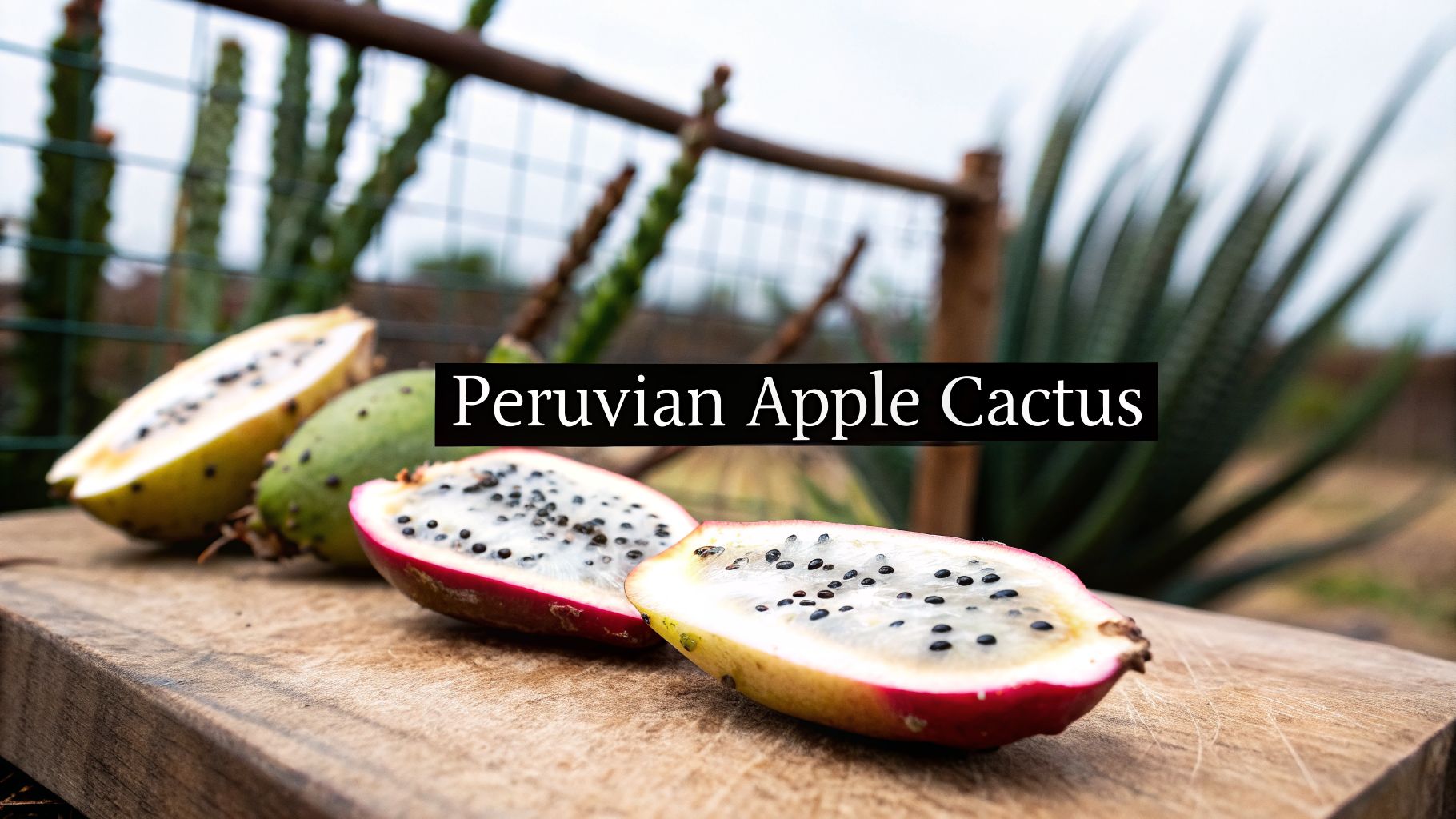

The Peruvian apple cactus fruit is a sweet, edible fruit that grows on the Cereus repandus cactus. A lot of people mistake it for dragon fruit at first glance, but it's a unique treat all its own. It has a smooth, thornless skin and a creamy white pulp filled with small, crunchy black seeds, and it's quickly becoming a favorite for gardeners and adventurous eaters alike.
Getting to Know the Cactus Apple

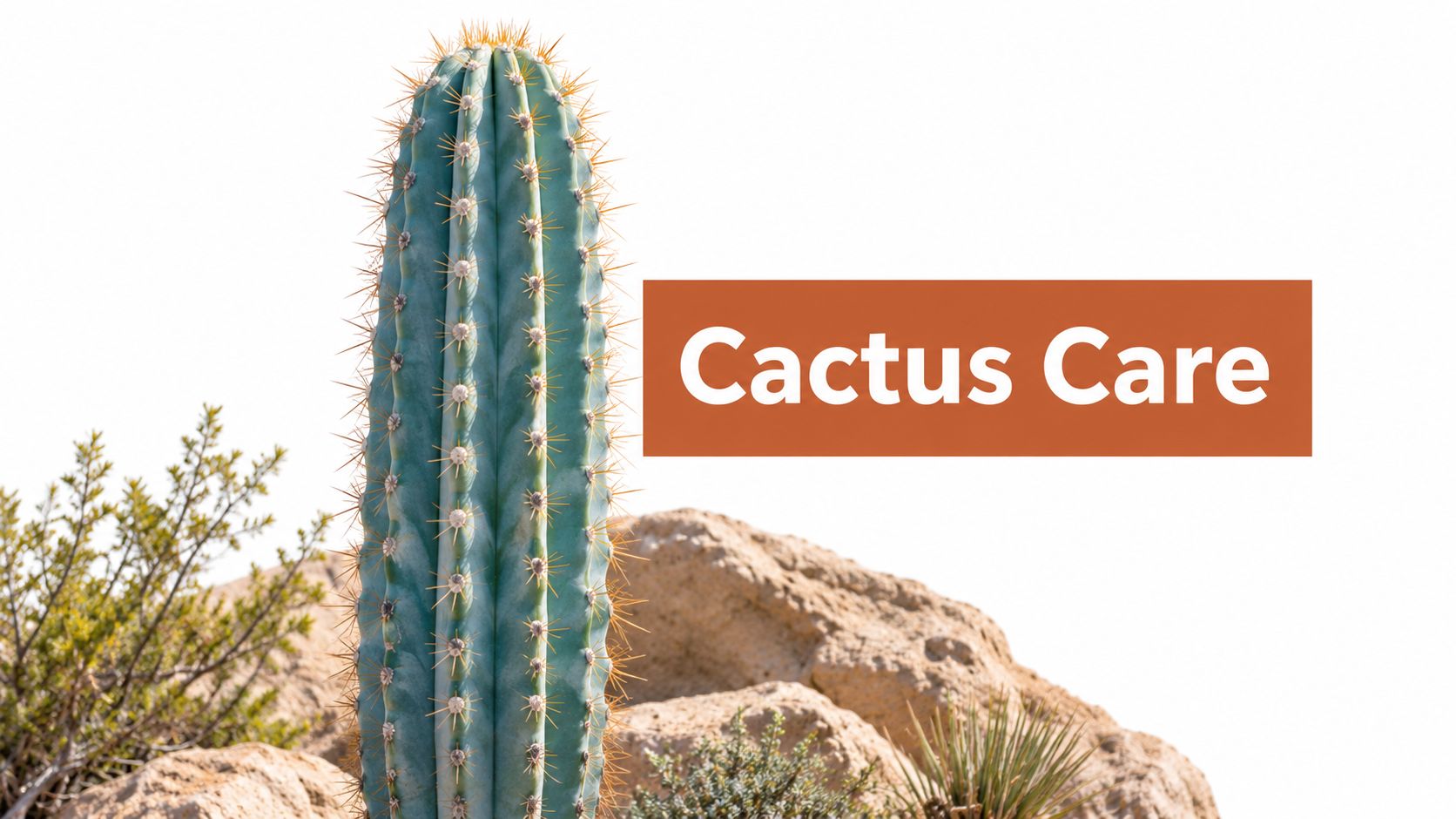
When you see a tall, stately Peruvian apple cactus, with its striking blue-green columns, you might just think of it as a dramatic landscape plant. But this cactus, Cereus repandus, also produces a round, apple-sized fruit that is surprisingly delicious.
You'll hear it called all sorts of names—pitaya, koubo, or simply a cactus apple. This is where a little confusion can creep in, as it's often mistaken for its more famous cousin, the dragon fruit (Hylocereus species). They do look similar once you cut them open, with that classic white flesh and a confetti of black seeds. But the outside tells a different story.
How to Identify the Fruit
So, what are you looking for? The fruit is usually about the size of a small apple, roundish in shape. The real giveaway is its skin. It's completely smooth and ripens to a stunning violet-red, though sometimes you'll find yellow-orange ones.
The most important difference to remember is the skin. While dragon fruit has that scaly, leafy look, the Peruvian apple cactus fruit is totally smooth. No thorns, no scales. That's its signature trait.
Once you cut it open, you're greeted with an opaque, creamy white pulp. It’s packed with tiny, edible black seeds that add a fantastic, poppy-seed-like crunch. That combination of soft, mild flesh and crunchy seeds is what makes the texture so unique and refreshing.
From Ornamental to Edible
For a long time, Cereus repandus was grown almost exclusively for its looks. It's a cornerstone of drought-tolerant gardens. But as more people look for interesting and sustainable foods, the Peruvian apple cactus fruit is finally getting the attention it deserves. You can see just how beautiful the plant itself is in our full guide to the Peruvian Apple Cactus plant.
This shift from a purely decorative plant to a food source is happening for a few simple reasons:
- Easy Harvesting: That smooth, thornless skin isn't just for looks. It makes picking the fruit incredibly easy and pain-free.
- Unique Flavor: It offers a subtle, sweet taste that’s a new adventure for anyone who loves fruit.
- Sustainability: This cactus is built for dry climates, making it a very resilient and water-wise crop.
It's this blend of stunning architectural beauty, low-maintenance care, and a tasty reward that makes the Peruvian apple cactus a truly special plant to know and grow.
What Does It Taste and Feel Like?

First things first: don't let the name "apple cactus" fool you. Biting into one of these expecting the crisp tartness of a Granny Smith is a common mistake. The experience is something else entirely—think less orchard fruit, more subtle tropical escape.
The flavor is surprisingly delicate. Most people find it tastes like a gentle blend of sugarcane and a very juicy pear, with some faint melon notes on the finish. This mild sweetness is what makes the Peruvian apple cactus fruit so special. It's sweet enough to feel like a treat but never becomes sugary or overpowering, letting its more nuanced flavors come through.
It's All About the Texture
Of course, the flavor is only half the story. The texture is where this fruit truly becomes memorable. The creamy white pulp is incredibly soft and hydrating, almost like a firm, scoopable sorbet or a perfectly ripe kiwifruit. It’s wonderfully refreshing, especially when you eat it chilled.
But the most delightful part is the tiny, edible black seeds scattered throughout the flesh. They add a fantastic, satisfying crunch.
Think of the smooth, watery feel of a dragon fruit or pear, but then add the fun, poppy-seed-like crunch of a kiwi. That contrast between the silky flesh and the crunchy seeds is what makes every spoonful so interesting.
A Chef's Perspective on Flavor
Experienced growers and chefs will tell you that the fruit’s greatest strength is its subtlety. Unlike big, bold tropical fruits that dominate everything, the Peruvian apple cactus fruit is a team player. Its flavor doesn't shout; it whispers. This makes it a fantastic, almost sophisticated, addition to fruit salads, smoothies, and desserts where it complements other ingredients instead of overpowering them.
So, what makes it stand out?
- Clean Sweetness: The taste is closer to sugarcane than rich honey, offering a mild sweetness with no cloying aftertaste.
- Sorbet-Like Pulp: Thanks to its high water content, the flesh is intensely juicy and hydrating.
- Pleasant Crunch: The seeds aren't gritty or hard. They provide a pleasant, poppy texture that perfectly balances the soft pulp.
It’s this unique combination that gets people hooked from their first bite. It’s simply an elegant, understated fruit that delivers a one-of-a-kind eating experience.
When and How to Harvest Your Fruit

The secret to unlocking that delicate, sweet flavor everyone raves about? It all comes down to timing your harvest just right. Unlike a banana or avocado that can ripen on your counter, these cactus apples have to ripen fully on the stem. If you pick them too soon, you’ll be met with a hard, flavorless disappointment. Wait too long, and they'll turn to mush.
Don't worry, though. The plant gives you plenty of clues. Think of it like picking a perfect peach from the tree; you learn to trust your eyes and hands. Once you know what you're looking for, harvesting this fruit is one of the most satisfying parts of growing the plant.
Key Signs of Ripeness
Getting that perfect window where the sugars are at their peak and the texture is just right is all about observation. There are a few dead giveaways that a fruit is ready for you.
- A Deep, Rich Color: The skin will make a dramatic shift from its initial green to a stunning, deep violet-red. Some varieties turn a vibrant yellow-orange. You're looking for a solid, uniform color without any green streaks left behind. Green means "not yet!"
- A Slight Softness: Give the fruit a gentle press with your thumb. A ripe one will have a little give, much like a ripe avocado. If it’s rock-hard, it needs more time on the stem. If your thumb sinks in easily or it feels squishy, you’ve likely missed your chance.
- The "Easy-Release" Test: This is the ultimate confirmation. A perfectly ripe fruit practically wants to be picked. It should detach from the cactus with a simple, gentle twist. If you have to pull, tug, or wrestle with it, just leave it be for another day or two.
Here's one of the best parts: the fruit's skin is completely smooth and thornless. This makes harvesting a genuinely pleasant, pain-free task, which is a rare treat in the world of cactus fruit.
The Harvesting Process Step by Step
Once you've spotted a ripe one, the actual picking is incredibly simple. If the fruit is within arm's reach, you barely need any tools at all. For a closer look at the plant's life and what leads up to this moment, check out our guide to the apple Peruvian cactus.
- Get a good grip. Cup the fruit gently but firmly in your hand.
- Twist and pull. Give it a slight turn—maybe a quarter-twist—while pulling gently away from the stem. It should pop right off.
- Reach high. For fruits on taller plants, a simple fruit picker basket on an extension pole is your best friend. Just guide the basket under the fruit and give it a little nudge to knock it loose.
This fruit is quite delicate, so be sure to handle it with care to avoid bruising the soft flesh inside. Once it's off the stem, it's ready to eat fresh on the spot or be brought inside for later.
Nutritional Value and Health Benefits
It’s easy to write off the Peruvian apple cactus fruit as just a quirky novelty, but there's a lot more going on under that vibrant skin. Beyond its refreshing taste, this fruit offers some impressive health benefits that make it a genuinely smart choice for a healthy diet.
First and foremost, it's an incredible source of hydration. The flesh is made up of over 85% water, so every bite is like a cool, refreshing drink. This makes it a perfect snack for a hot day or a great way to rehydrate after a workout, all without a lot of calories.
A Boost For Digestion and Immunity
One of the best things about this fruit is its fiber. Good dietary fiber is essential for keeping your digestive system running smoothly and helping to support the good bacteria in your gut. Along with other best foods for digestive health, the Peruvian apple cactus fruit can be a simple and delicious way to get more of it.
On top of that, it’s loaded with Vitamin C, an essential antioxidant that plays a huge role in keeping your immune system strong. A regular dose of Vitamin C helps your body fight off common bugs and keeps your cells healthy.
Think of the antioxidants in this fruit as your body's personal security team. They work to neutralize free radicals—unstable molecules that can cause cellular damage—helping to protect your body from oxidative stress and supporting long-term wellness.
Peruvian Apple Cactus Fruit Nutritional Snapshot
To really understand what this fruit brings to the table, it helps to see how it measures up against a fruit we all know well. While both are great, healthy options, the Peruvian apple cactus fruit has some unique strengths, especially when it comes to specific micronutrients and its amazing water content.
Here’s a quick look at how a 100-gram serving compares to a common apple.
| Nutrient | Peruvian Apple Cactus Fruit (per 100g) | Common Apple (per 100g) |
|---|---|---|
| Water Content | Very High (~85-90%) | High (~85%) |
| Fiber | Good Source | Excellent Source |
| Vitamin C | Excellent Source | Good Source |
| Calories | Low | Low to Moderate |
| Sugars | Naturally Occurring | Naturally Occurring |
So, while a regular apple might give you a bit more fiber, the Peruvian apple cactus fruit often comes out ahead with more Vitamin C and other powerful antioxidants like beta-carotenes. It's this unique combination of hydration, fiber, and vitamins that makes it such a wonderfully beneficial fruit.
Simple and Delicious Ways to Eat the Fruit

Alright, this is the best part—finally getting to eat the fruit you’ve patiently grown or carefully selected. With a fruit this delicate and subtly sweet, you really don't want to overcomplicate things. I find the simplest preparations are always the most rewarding, letting that unique flavor be the star of the show.
The most common and, in my opinion, most refreshing way to enjoy it is chilled, straight from the skin. Just give it a good wash, slice it in half, and grab a spoon. The creamy white pulp scoops out easily, and the experience is just fantastic on a warm day. Those tiny black seeds give it a wonderful, satisfying crunch, much like a kiwifruit.
Creative Serving Ideas
Once you've tried it on its own, you'll see how its mild flavor makes it a perfect team player in other dishes. It adds a lovely texture and a hint of exotic sweetness without ever stealing the spotlight.
- Brighten Up a Fruit Salad: Dice the pulp and toss it into a mix of berries, melon, and maybe some citrus. Its soft, creamy texture is a beautiful contrast to crisper fruits.
- Blend into Smoothies: For a seriously hydrating smoothie, blend the pulp with a banana, a splash of coconut water, and a handful of spinach. The fruit's high water content makes your drinks feel light and incredibly fresh.
- Top Your Breakfast: A spoonful of the fresh pulp is a simple but elegant way to upgrade Greek yogurt, a warm bowl of oatmeal, or your morning chia seed pudding.
The Peruvian apple cactus is a true local treasure, and its culinary roots run deep. To get a better sense of its traditional uses, it's worth exploring the broader world of Peruvian cuisine.
How to Store Your Fruit
Proper storage is absolutely crucial, especially since this fruit is quite delicate. A little care goes a long way in preserving its texture and flavor, whether you plan on eating it tomorrow or months from now.
It's important to remember that this fruit won't ripen any further once it's picked. You're not waiting for it to get better; you're just preserving that perfect ripeness you harvested it at.
For short-term storage, the fridge is your best friend. Just place the whole, unwashed fruits inside, and they should stay perfectly fresh for about 5-7 days.
If you have a bigger harvest, freezing is the way to go. Scoop the pulp out of the skin and pop it into an airtight container or freezer bag. It will keep beautifully for up to six months, and the frozen pulp is perfect for dropping straight into the blender for smoothies.
Tips for Growing Your Own Cactus and Encouraging Fruit
There's something incredibly satisfying about watching your own Peruvian apple cactus go from a striking architectural plant to a source of delicious, home-grown fruit. While Cereus repandus is known for being tough and forgiving, getting it to actually flower and set fruit is a different ballgame. It really just comes down to giving the cactus what it wants by mimicking its native home in South America.
If you get the sunlight, soil, and watering right, you're most of the way there. Nail these basics, and you'll be rewarded with those spectacular, night-blooming flowers that signal fruit is on the way.
Setting the Stage for Success
First things first: sunlight. This cactus is an absolute sun-worshipper. To have any hope of seeing flowers, you need to give it at least six hours of bright, direct sun every day. Think of the sun as its fuel for making fruit. An east-facing spot that catches the gentle morning sun or a clear, unobstructed south-facing window is usually the perfect spot.
Next up is the soil, and this is a big one. Using standard potting mix is the quickest way to kill your cactus. That stuff holds way too much water and will lead to root rot before you know it. You absolutely have to use a fast-draining cactus and succulent mix. If you want to make your own perfect blend, just mix equal parts potting soil, coarse sand, and perlite or pumice. This gritty mix lets water rush right through, so the roots never get soggy. For a deeper dive into cactus care, you can learn more about the Peruvian Apple Cactus in our article.
Finally, you have to get the watering right. Forget a schedule. Your new mantra is "soak and dry." When you do water, give it a thorough drenching until water runs out of the drainage holes. Then, don't even think about watering it again until the soil is completely bone-dry to the touch.
The Secrets to Getting Fruit
With the basics covered, a few extra details can make all the difference. The first is patience. A cactus grown from a cutting can take anywhere from 4 to 8 years to get old enough to flower, so settle in for the long haul.
The most magical and challenging part of getting fruit is pollination. The huge, fragrant flowers of the Peruvian apple cactus open only at night. In the wild, they’re pollinated by moths and bats. If you don't have those visiting your garden, you'll have to play matchmaker.
Don't worry, hand-pollination is much easier than it sounds. Here’s what you do:
- Wait for the flowers to open up completely after dusk. They're usually at their peak in the middle of the night.
- Take a small, soft paintbrush or a cotton swab and gently brush the yellow pollen off the anthers of one flower.
- Carefully dab that pollen onto the stigma (the part in the very center that looks a bit sticky) of a different flower. You can use another flower on the same plant or on a different Peruvian apple cactus nearby.
This simple step is often the key to encouraging fruit development. It's the final nudge your plant needs to turn those fleetingly beautiful flowers into the delicious Peruvian apple cactus fruit you've been waiting for.
Frequently Asked Questions
Even after covering the basics, a few questions always seem to pop up. Let's tackle some of the most common things people wonder about when it comes to the Peruvian apple cactus and its fascinating fruit.
Are All Parts of the Fruit Edible?
You'll want to focus on the good stuff inside! The sweet, juicy pulp and the tiny black seeds are the edible parts. The seeds add a really pleasant, subtle crunch, much like you'd find in a kiwifruit or dragon fruit.
The skin, on the other hand, is best left behind. While it’s not poisonous, it has a tough, leathery texture that isn't enjoyable to eat. Just scoop out the flesh and compost the peel.
How Long Until My Cactus Produces Fruit?
This is where a little patience comes in handy. If you're starting a Cereus repandus from a small cutting or a seed, you can expect to wait anywhere from 4 to 8 years for it to mature enough to flower and produce fruit.
The best way to encourage your cactus to fruit sooner rather than later is to give it exactly what it wants: plenty of direct sun, the right amount of water, and good drainage. A happy plant is a fruitful one.
Does It Actually Taste Like an Apple?
This is a common misconception, and the name is a bit misleading! The "apple" in its name refers to the fruit's round, apple-like shape, not its flavor.
The taste is much more tropical and delicate. Most people describe it as a refreshing mix of sugarcane and pear, with maybe a little hint of melon. It’s sweet and juicy, but definitely not crisp or tart like a Granny Smith.
Ready to grow your own architectural wonder? Find the perfect Peruvian Apple Cactus for your home or garden at The Cactus Outlet. Explore our collection of healthy, thriving cacti today at https://www.cactusoutlet.com.