
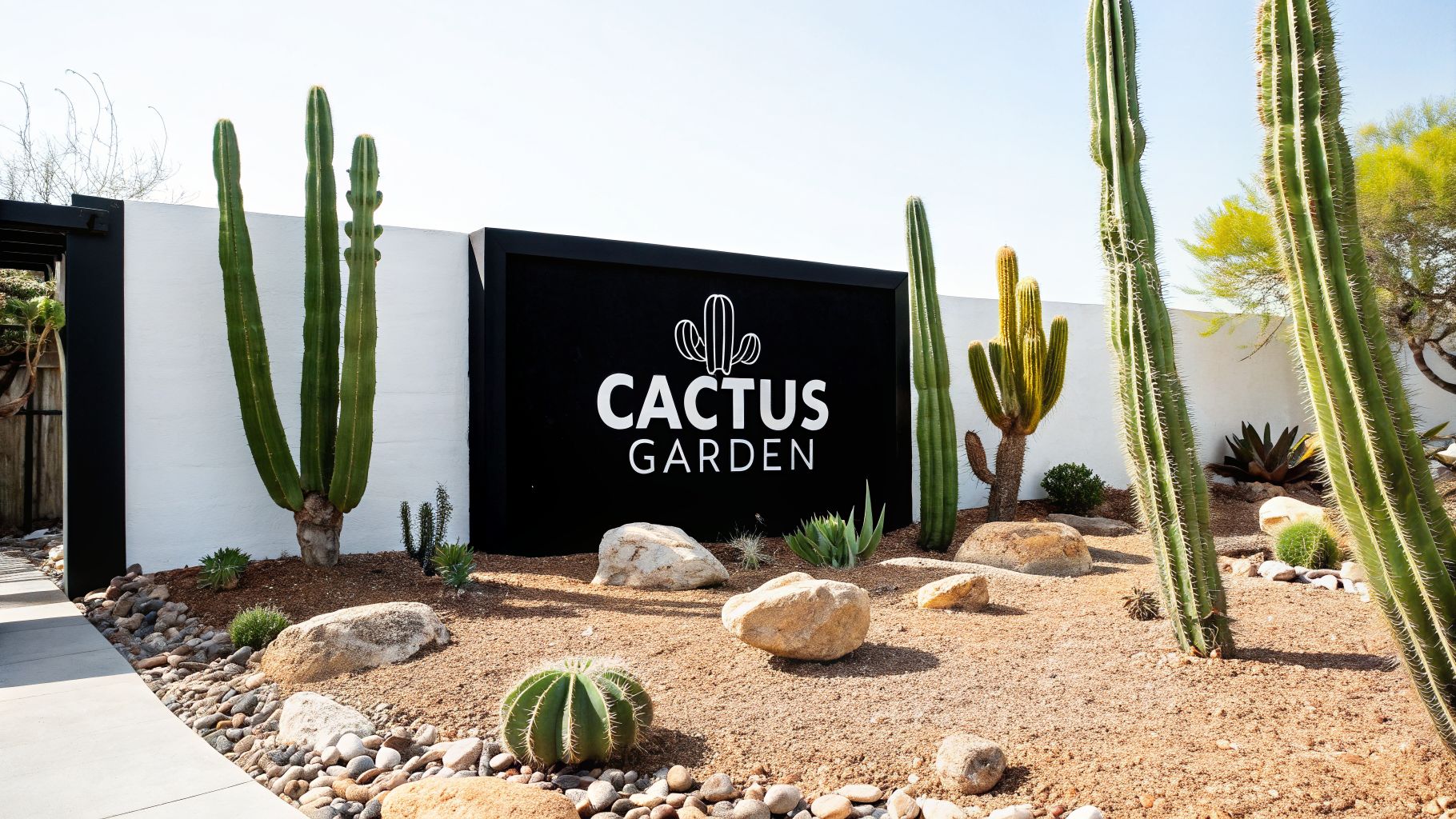

Designing a cactus garden is less about just planting cacti and more about creating a living sculpture. It's an art form that blends the right plants, natural rockwork, and smart design to build a landscape that's both stunning and incredibly water-wise. The whole process starts with getting to know your own yard—its sun, its soil—and then choosing plants that will thrive there, not just survive.
Your Blueprint for a Stunning Cactus Garden
So, you're dreaming of an outdoor space filled with the bold, architectural shapes of cacti and succulents. It's a great choice. More and more people are turning to these tough, beautiful plants to create gardens that look incredible without demanding constant watering and work. This isn't just a trend; it's a practical, forward-thinking way to garden.
The numbers really tell the story. The global market for cactus plants is expected to jump from USD 5.8 billion in 2025 to USD 10.3 billion by 2035. North America is driving a huge part of this, holding a 38.2% market share. It's clear that these plants are becoming a cornerstone of modern landscaping.
Reading Your Landscape for Success
Before you even think about buying a single plant, you need to play detective in your own backyard. Seriously, this is the most important step. A great cactus garden feels like it belongs there because it's designed to work with the natural environment, not against it. Taking the time to assess your site now will save you so much heartache (and money) later.
Here's what to look for:
- Follow the Sun: Spend a day watching how sunlight moves across your property. Where are the most intensely hot spots in the afternoon? Most cacti need at least six hours of direct sun, but the blistering western sun can scorch even tough varieties. Knowing your sun patterns is key.
- Get Your Hands Dirty: Cacti have one major dealbreaker: soggy soil. They absolutely hate having "wet feet." A simple drainage test will tell you everything you need to know. Just dig a hole about a foot deep, fill it with water, and see how long it takes to disappear. If it's gone in a few hours, you're golden. If water is still standing there the next day, you'll need to seriously amend the soil or consider building raised beds.
- Work with What You've Got: Take stock of the existing features. Do you have a natural slope? Perfect! That’s a huge head start on good drainage. Is there a big, immovable boulder? Don't fight it—make it the anchor for a new planting area.
This simple process—assess your site, design your layout, and then plant—is the foundation for any garden that's built to last.

Think of it like a roadmap. The planning you do upfront directly impacts how healthy and beautiful your garden will be for years to come.
Applying Core Design Principles
Once you understand the canvas you're working with, the fun part begins. This is where you get to apply some artistic principles and bring your vision to life. Think of yourself as a painter, but your palette is filled with plants, rocks, and gravel instead of colors.
The best designs use repetition, contrast, and scale to create a scene that feels both natural and intentional. The goal is to guide the eye through the landscape, creating little moments of interest and a sense of calm cohesion.
A great way to start is by picking a "star of the show." Maybe it's a towering Saguaro or a dramatic, spiky Agave that acts as a focal point. From there, you can create a sense of rhythm by repeating smaller plants, like clusters of Golden Barrel Cacti, throughout the design. This repetition pulls the whole look together.
For a deeper dive into creating a beautiful and sustainable yard, check out our guide on drought-tolerant landscape design. It’s packed with more strategies to help you build the garden of your dreams.
Cactus Garden Site Assessment Checklist
Use this quick checklist to evaluate your yard's potential before you start digging. It helps organize your observations and pinpoint any challenges early on.
| Factor | Ideal Condition | How to Test or Observe |
|---|---|---|
| Sunlight | 6+ hours of direct sunlight daily | Note which areas get morning sun vs. intense afternoon sun. Use a sun-tracking app or just observe at different times of day (9 am, 12 pm, 4 pm). |
| Drainage | Water drains from a 12"x12" hole within a few hours | The "Percolation Test": Dig a hole, fill it with water, let it drain completely. Refill it and time how long it takes for the water to disappear. |
| Soil Type | Gritty, sandy, or loamy soil; not heavy clay | Squeeze a handful of moist soil. If it forms a dense, sticky ball, you have clay. If it feels gritty and falls apart easily, it's sandy. |
| Slope | Gentle slope away from structures | Visually inspect the land. After a rain, see where water pools and where it runs off. A slight slope is your best friend for drainage. |
| Wind Exposure | Some protection from strong, constant winds | Observe on a windy day. Note if certain areas are buffered by a fence, wall, or existing trees, which can protect taller, more fragile specimens. |
Reviewing these factors gives you a realistic foundation to build upon, ensuring the plants you choose are set up for success from day one.
Choosing the Right Cacti for Your Climate

Here's the fun part—picking out the actual plants. This is the moment your garden's personality starts to take shape. But great design isn't just about picking what looks cool in a photo; it’s about choosing plants that are hardwired to thrive in your specific climate.
A cactus that loves the dry heat of an Arizona summer might rot in Florida’s humidity or give up during a surprise Texas freeze. Before you buy a single plant, you have to know your local environment inside and out. Pay close attention to your average rainfall, humidity, and, most importantly, the lowest temperatures you see in winter.
Choosing climate-appropriate plants is truly the secret sauce. It's what separates a garden that needs constant life support from one that practically takes care of itself.
Architectural Cacti: The Vertical Anchors
Every great landscape needs some height, something to draw the eye upward. In a cactus garden, this job falls to the tall, columnar species. They add a sense of scale and drama, acting as living sculptures that form the structural backbone of your design.
Think of these as the pillars of your garden. Just a few well-placed giants can define the entire feel of the space.
- Peruvian Apple Cactus (Cereus repandus): This one is a classic for a reason. It grows fast, giving you that iconic multi-ribbed column look pretty quickly. As a bonus, it produces huge, stunning flowers that open up at night.
- Mexican Fence Post (Pachycereus marginatus): If you’re after a more formal, organized look, this is your plant. Its clean, symmetrical lines and neat rows of spines are perfect for creating living walls or structured backdrops.
- San Pedro Cactus (Echinopsis pachanoi): Offering a bit of a softer touch, the San Pedro has smoother, blue-green skin and fewer spines. It tends to grow in clusters, forming a really striking clump over time.
I see this mistake all the time: people plant these giants way too close to a walkway or their house. Always account for their mature size—both height and width—to save yourself a world of trouble later. A little foresight now prevents a lot of painful pruning down the road.
Sculptural Cacti: The Mid-Level Interest
With your vertical anchors in place, it’s time to add character at eye level. This is where the sculptural, showstopper plants come in. They provide fascinating shapes and textures that bridge the visual gap between your tall columns and the ground.
This layer is where you can get really creative with unique forms.
- Golden Barrel Cactus (Echinocactus grusonii): You can't get more iconic than the Golden Barrel. It adds a perfect, vibrant yellow-green sphere to the landscape. My advice? Plant them in clusters of 3 or 5 for a much stronger visual punch.
- Prickly Pear (Opuntia species): The familiar paddle shape of a Prickly Pear offers a completely different silhouette. They spread out horizontally, making them great for filling in larger areas with their unique, flat pads.
- Agave Varieties: Okay, they aren't technically cacti, but agaves are non-negotiable companions in a desert garden. The sharp, rosette form of a Whale's Tongue Agave (Agave ovatifolia), for instance, creates a fantastic contrast against the upright forms of columnar cacti.
For more ideas, you can explore the different types of cacti to find the perfect mix for your design. Getting to know the unique character of each species is the key to creating a truly dynamic and compelling landscape.
Designing with Rocks and Hardscaping

While your cacti are undoubtedly the stars of the show, the hardscaping is the stage they perform on. A truly stunning cactus garden depends on its non-plant elements. Things like rocks, gravel, and boulders provide the essential structure and texture that make your plants pop, transforming a simple collection into a polished, intentional design.
These aren't just decorative fillers, either. Hardscape elements play a crucial role in the health of your garden's ecosystem. A top dressing of gravel or small stones acts as a perfect mulch, suppressing weeds, conserving precious soil moisture, and preventing mud from splashing onto your plants during a downpour.
This growing interest in desert-style gardens is part of a much larger trend. The succulent and cactus plant market is projected to reach USD 21.4 billion by 2025, driven by their unique aesthetic and low-maintenance appeal. This boom really highlights a collective shift towards creating beautiful, sustainable outdoor spaces that work with our environment, not against it.
Creating Structure with Stone
Think of hardscaping as building the "bones" of your garden. Boulders, pathways, and groundcovers are what define the layout and guide the eye, creating a natural-looking foundation long before you even think about adding a single cactus.
Here are a few practical ways I like to use different materials:
- Large Boulders: These are fantastic for creating instant elevation and anchoring key planting areas. I often nestle a few large boulders into a flat yard to break up the monotony and create protected pockets for special specimen plants. They add a real sense of age and permanence.
- Decomposed Granite: This fine, sandy material is perfect for creating soft, natural-looking pathways that feel great underfoot. It packs down firmly over time but stays permeable, so water drains right through.
- River Rock & Dry Creek Beds: A winding "creek" of smooth river rocks is a classic desert landscaping move for a reason. It not only looks beautiful but also provides a practical channel to direct rainwater away from your home’s foundation during heavy storms.
A rookie mistake I see all the time is using rocks that are all the same size and color. For a more authentic feel, you have to vary the sizes, from large anchor boulders all the way down to small gravel. This diversity is what mimics a natural desert landscape.
Defining Spaces and Adding Contrast
Hardscaping does more than just fill space; it actively shapes it. You can use different materials to delineate specific zones, like a seating area, a walkway, or a dedicated planting bed. For example, a simple border of medium-sized rocks can create a clean separation between a gravel-mulched garden and a lawn or patio.
When you're creating those defined pathways or seating areas, choosing the best tile for an outdoor patio can add both function and a surprising pop of style. The contrast between smooth, clean tile and the rugged texture of cacti and rocks is a powerful design tool.
These thoughtful combinations of hard and soft elements are what elevate a simple plant collection into a cohesive, artistic garden. For even more inspiration, you can explore some other creative rock garden landscape ideas to get the ideas flowing for your own project.
Getting Your Hands Dirty: Soil Prep and Planting

It’s easy to get caught up in the visual drama of a cactus garden—the striking silhouettes, the artful rock placements. But the real make-or-break element is happening underground. The absolute secret to a garden that thrives for years is the soil.
Cacti are built for environments where water vanishes almost instantly. If you can mimic that at home, you’ve won half the battle. Soggy roots are the sworn enemy of every cactus, a fast track to rot that there's no coming back from. If you have heavy clay soil that turns into a sticky mess after a rain, you must amend it. This isn't a suggestion; it’s a requirement for a garden that lives past its first season.
And this isn't just a niche hobby anymore. The demand for cacti and succulents is booming worldwide. In Europe alone, the market saw a massive 55.15% growth spurt between 2021 and 2025. This explosion in popularity, detailed in this global market report, just goes to show how important it is for gardeners everywhere to get the fundamentals right—starting with the dirt.
Mixing the Right Stuff for Your Cacti
Forget about complicated recipes. You don't need a degree in soil science to get this right. For in-ground beds, a simple, proven blend is all it takes to create the perfect home for your new plants. It’s all about balancing drainage with just a little organic material.
My go-to formula is a straightforward 1:1:1 ratio. It's easy to remember and works beautifully:
- One part your native soil: This gives the plant a familiar base to anchor into.
- One part coarse sand: Make sure it's horticultural or construction sand. Fine play sand or beach sand will compact like concrete.
- One part pumice or perlite: These little volcanic rocks are your best friends. They create air pockets, keeping the soil light and letting water rush right through.
For a new garden bed, just spread a few inches of the sand and pumice over the top and work it all into the native soil. You'll want to dig down at least a foot to create a deep, consistent mix that encourages strong root growth.
How to Plant Without Getting Poked
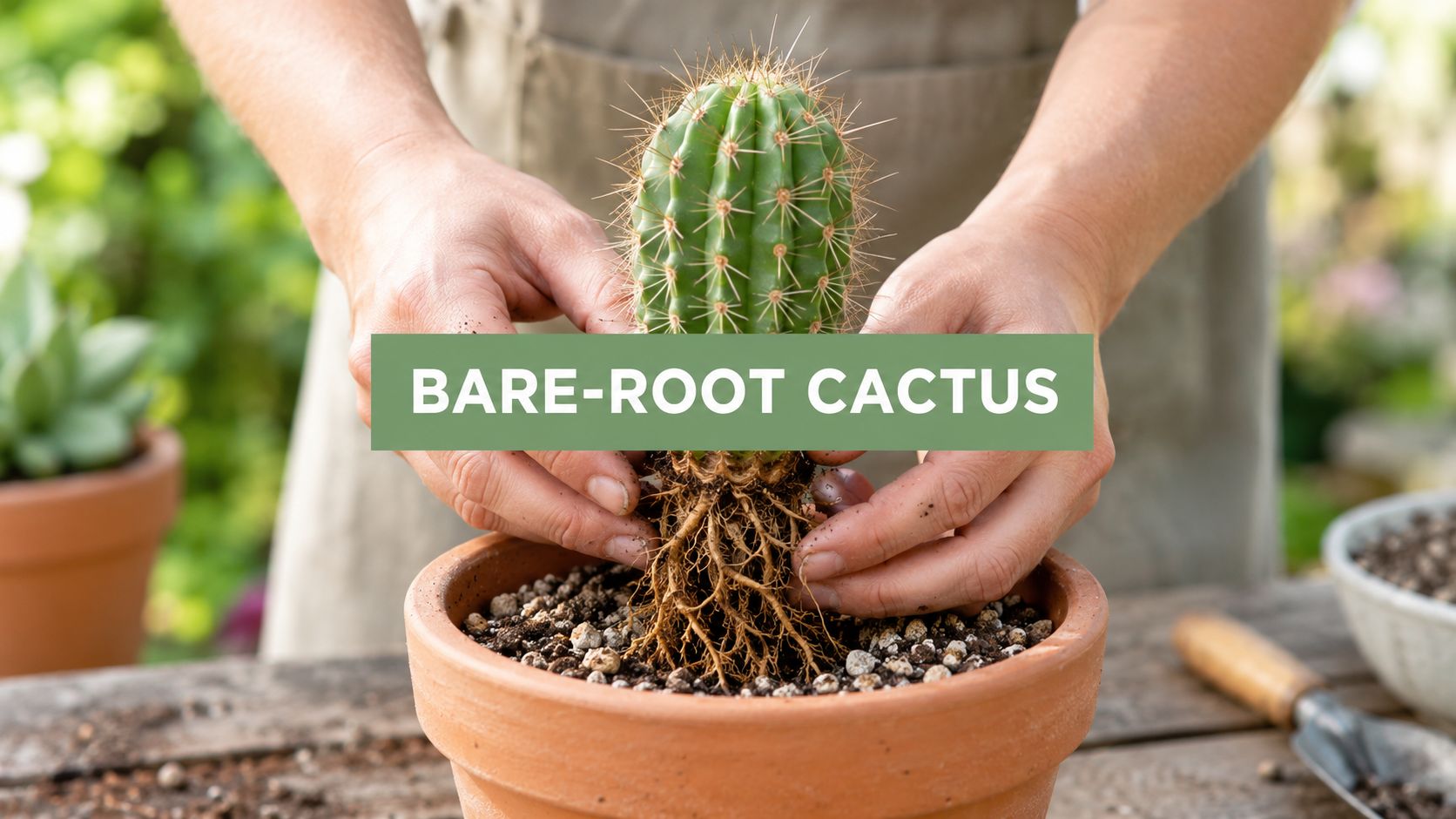
With the soil perfected, it's time for the main event. Now, planting something covered in spines can feel a bit daunting, but there’s no need to be intimidated. The trick is to use the right tools, and I’m not talking about gardening gloves—long spines will go right through them.
You probably already have the perfect cactus-handling tools in your house. For smaller plants, a set of long kitchen tongs works like a charm. For bigger specimens, I grab a few folded-up pieces of cardboard or an old carpet remnant to wrap around the plant. It gives you a firm, pain-free grip.
When digging the hole, aim to set the plant so the top of its root ball is either level with or just slightly above the surrounding ground. This simple step prevents water from ever pooling around the base of the cactus.
Once it's in place, backfill the hole and gently tamp the soil down. Now for the most important part: do not water it! This feels wrong, I know, but it's critical. The roots inevitably get a little bruised during planting. They need a week or two to heal and callus over. Watering right away is like sending an open invitation for rot and fungus to attack those tiny wounds. A little patience now sets your cactus up for a long, happy life.
Mastering Low-Effort Watering and Garden Care
One of the biggest draws of a cactus garden is its rugged independence. You can finally forget about daily sprinkler schedules. When it comes to cacti, the golden rule is always "less is more." Honestly, the number one mistake I see people make is loving their cacti to death with too much water—it's a much faster killer than any drought.
Instead of a quick, shallow spray every few days, you want to water deeply and infrequently. This simple shift in mindset encourages your plants to grow deep, strong root systems, which is exactly what makes them so resilient during long, dry spells. A slow, thorough soak lets the water seep several inches down, reaching every part of the roots.
So, when is it time? Ditch the calendar. The best way to know is to get your hands dirty and learn to read your garden. Just stick your finger a couple of inches into the soil next to the plant. If it feels bone dry, it's time for a drink. If you feel even a hint of moisture, hold off.
Keeping Your Garden Tidy and Healthy
Beyond watering, a little bit of proactive maintenance will save you a ton of work down the road. One of the smartest things you can do is lay down a thick layer of rock or gravel mulch. This top dressing looks sharp, but its real job is to smother weeds and help the soil hang onto whatever moisture it has.
This technique is a cornerstone of water-wise gardening. If you're serious about creating a beautiful, sustainable garden that doesn't demand all your time, it's worth digging into the core xeriscape landscaping principles. The whole idea is to design a space that thrives in harmony with its natural environment.
Even the toughest plants get pests now and then. Keep an eye out for unwelcome guests like mealybugs—they look like little white, cottony specks, and they love to hide in the joints where pads or arms meet. Catching them early makes all the difference.
From my experience, a simple spray bottle filled with isopropyl alcohol and a bit of water is all you need for most minor pest problems. It’s surprisingly effective and much kinder to your plants and the local ecosystem than harsh chemical pesticides.
Recognizing Signs of Stress
Your cacti will absolutely let you know when something’s not right. Learning to spot the early warning signs helps you step in before a small issue spirals into a major problem. Just pay attention to changes in their color and texture.
Common Stress Signals to Watch For:
- Yellowing or Mushy Base: This is the classic, tell-tale sign of overwatering and the dreaded root rot.
- Shriveling or Wrinkling: This is your cactus telling you it's thirsty. It’s a clear signal that it's time for one of those deep, infrequent soaks.
- Pale or "Bleached" Spots: That's sunburn. It often happens when a plant is moved too quickly into a much sunnier spot without time to acclimate.
Seasonal Tasks at a Glance
While cactus gardens are famously low-maintenance, their needs do shift slightly with the seasons. A little bit of timely care ensures they stay healthy and look their best all year. Here’s a simple calendar to help you stay on track.
Seasonal Cactus Garden Care Calendar
| Season | Primary Task | Key Consideration |
|---|---|---|
| Spring | Light Fertilizing & Planting | Apply a low-nitrogen cactus fertilizer as new growth appears. Best time to plant new additions. |
| Summer | Monitor for Heat Stress & Pests | Water deeply but only when the soil is completely dry. Watch for sunburn on hot afternoons. |
| Autumn | Reduce Watering & Prepare for Dormancy | Gradually decrease watering frequency to help plants harden off for cooler weather. |
| Winter | Protect from Frost & Minimize Water | Stop watering almost entirely. Cover sensitive species if a hard freeze is predicted. |
By following these simple care guidelines, you’ll be rewarded with a stunning, low-effort cactus garden that doesn't just survive, but truly thrives for years to come.
Answering Your Top Cactus Landscaping Questions
Even the most seasoned gardeners have questions when starting a new project. When it comes to something as specific as a cactus garden, it's completely normal to want to get the details right. Knowing the answers to a few common questions can mean the difference between a garden that merely survives and one that truly stuns.
Let’s dig into some of the questions I hear most often from people planning their own desert landscapes. From finding the right plant friends for your cacti to tackling tricky slopes, here’s some practical advice to guide you.
What Should I Plant With My Cacti?
This is easily one of the most common questions. A truly great cactus garden is more than just cacti—it’s a living mosaic of textures, colors, and forms. The trick is to choose companion plants that enjoy the same conditions, so you're not fighting to keep one plant dry while another is thirsty.
You're looking for other plants that thrive in full sun and fast-draining soil.
- Other Succulents: This is a no-brainer. Agaves and Aloes are perfect partners. Their bold, rosette shapes create a fantastic contrast against the upright or barrel forms of cacti. It adds immediate architectural interest.
- Drought-Tolerant Perennials: To soften the look, I love weaving in plants like Salvia, Lavender, or a colorful Verbena. They bring in a welcome splash of color and a finer texture without needing a lot of extra water.
- Ornamental Grasses: Don't overlook grasses! A clump of wispy Pink Muhly or striking Blue Fescue adds movement and a completely different texture that softens the hard lines of rocks and spiny plants.
Think of it like building a plant community where everyone gets along and speaks the same language. They all want the same sun and soil, so they not only look good together but grow well together, too.
How Can I Keep My Cactus Garden Safe From Frost?
This is a huge concern, especially if you're in a zone that gets the occasional freeze. Your best defense, without a doubt, is to choose cold-hardy species that are rated for your climate right from the start. That solves 90% of the problem.
But for those unexpected cold snaps, you need a plan. The go-to method is covering your most vulnerable plants overnight with a frost cloth or even an old burlap sack. The key is to use stakes or a simple frame to prop the cover up so it doesn't touch the plant itself—direct contact can cause its own kind of freeze damage. And make sure you uncover them first thing in the morning so they can breathe and don't cook in the sun.
A critical pro-tip I've learned the hard way: Make sure your soil is as dry as possible before a freeze is expected. A cactus with cold, wet feet is far more likely to suffer serious damage than one in dry soil. Water and cold are a lethal combination.
Is It Possible to Plant a Cactus Garden on a Slope?
Yes, and you absolutely should! A sloped yard can actually be the perfect canvas for a cactus garden. Why? Because slopes offer the one thing cacti need most: excellent natural drainage. Water runs away from the roots, which is the best way to prevent the root rot that plagues so many cacti planted on flat, heavy ground.
The secret is to work with the hill, not fight it. You can build beautiful terraces with natural stone to create level planting areas. This not only stops erosion but also creates a stunning, multi-layered look. I like to place the taller, more dramatic cacti on the upper tiers and let smaller, trailing succulents spill over the rock edges below. Weaving in a few large boulders helps anchor the soil and makes the whole design feel like it was carved by nature.
Ready to turn that patch of sun into a stunning desert landscape? At The Cactus Outlet, we live and breathe this stuff. We have an incredible selection of healthy, vibrant cacti and succulents to get you started. Come explore our collection and find the perfect pieces for your vision. https://www.cactusoutlet.com