
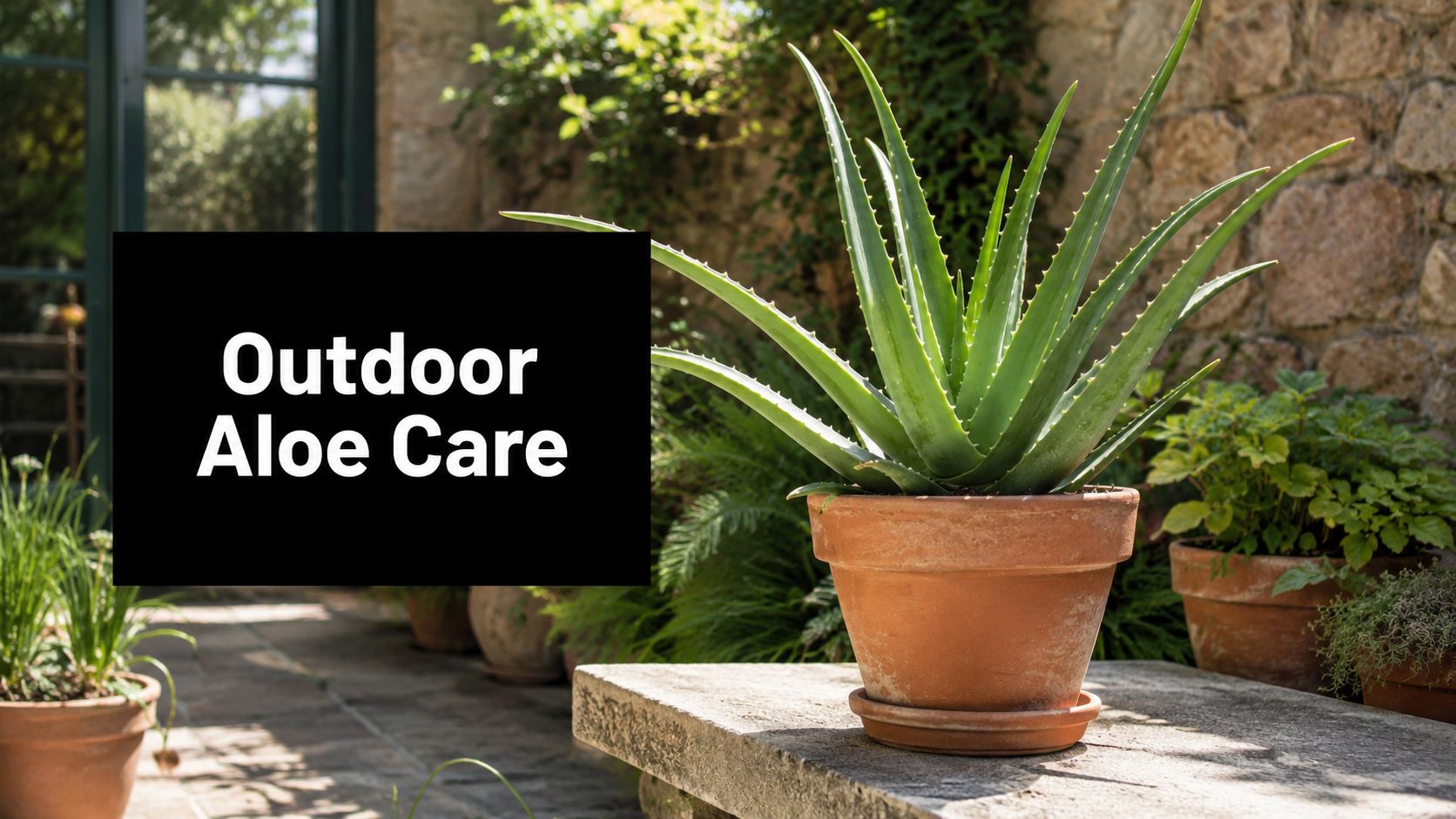

Yes, many aloe plants can live outside year-round, but only in warm climates, typically USDA zones 9 to 11. If you live outside those areas, you can still keep aloe outdoors part of the year, but winter protection or moving it indoors is usually the difference between a healthy plant and a dead one.
A lot of people ask this while standing on the patio with an aloe in hand, wondering if it would be happier outside than on a kitchen windowsill. Sometimes the answer is yes. Sometimes the answer is only for summer. The trick is to stop treating aloe like a generic houseplant and start reading what the plant is telling you.
At The Cactus Outlet, we see the same pattern over and over. Customers assume heat is the main issue, put aloe in a hot sunny spot, and then get surprised when the plant scorches, rots, or collapses after a cold snap. Outdoor aloe success comes down to climate, drainage, light, and your ability to notice early warning signs before the plant gets into real trouble.
Your Aloe's Outdoor Potential
If you're hoping to move an aloe outdoors, you're not asking the wrong question. You're just asking a question that needs a little more detail. Can aloe plants live outside? Yes, but only if your yard, patio, or balcony matches what aloe tolerates.
The biggest mistake is thinking outdoor success is about summer weather. It isn't. Aloe can handle warmth just fine. Winter is the primary test. If your area stays mild, aloe can become a durable outdoor plant. If your winters dip too low, the plant needs a seasonal plan instead of permanent placement.
That matters whether you're growing a single potted aloe on a porch or trying to work one into a low-water garden. A healthy outdoor aloe often grows with thicker leaves, better form, and stronger color than a neglected indoor one. But the wrong site will show problems fast.
Here's the practical way to look at it:
- Warm climate gardeners: You may be able to keep aloe outside all year.
- Borderline climate gardeners: Pots give you flexibility and a much better chance of success.
- Cold climate gardeners: Treat aloe as an outdoor plant for warm months, then bring it in.
If you're working specifically with aloe vera, our guide to Aloe vera basics is a good companion piece. It helps to know the plant's normal growth habits before you judge whether it's handling outdoor conditions well.
A good outdoor aloe doesn't just survive outside. It stays firm, upright, and responsive instead of looking stressed all season.
Understanding Aloe Hardiness and Climate Zones
USDA hardiness zones are the first filter. Think of them as your aloe's winter survival test. They don't tell you how hot your summers get. They tell you how cold your winters get, which is what decides whether an aloe can stay outside year-round.
According to the University of Florida, Aloe vera can be grown outside year-round in USDA zones 8 to 11, while other guidance narrows that practical range to zones 9 to 10. The same source explains that zone 9 has average annual minimum lows of 20 to 30°F, zone 10 runs 30 to 40°F, and freezing temperatures are widely considered lethal to aloe, as noted in the University of Florida aloe guidance.

What the zone numbers mean in real life
A lot of gardeners read a zone chart once and still place aloe by gut feeling. That's where trouble starts. Zone numbers are based on average annual minimum winter temperatures, not on whether the plant enjoyed June through September.
If your winters flirt with freezing, aloe isn't reading your summer highs and feeling encouraged. It's reacting to cold tissue damage, especially in the leaves and crown.
A simple way to interpret it:
| Zone | Typical winter low range | Outdoor aloe outlook |
|---|---|---|
| Zone 8 | Roughly 10 to 20°F | Borderline at best, protection matters |
| Zone 9 | 20 to 30°F | Possible outdoors, but cold events still matter |
| Zone 10 | 30 to 40°F | Much safer for year-round outdoor growing |
| Zone 11 | Above 40°F | Best fit for permanent outdoor aloe |
Read the plant, not just the map
Your local setup can run warmer or colder than the general zone. A sheltered courtyard behaves differently from an exposed yard. A terracotta pot on a windy patio cools faster than a plant tucked against a wall.
Watch for these outdoor climate signals from the plant itself:
- Translucent or water-soaked leaves: Cold damage has likely started.
- Collapsed outer leaves after a cold night: The plant was pushed too far.
- Firm leaves and steady new growth in warm weather: Conditions are acceptable.
- No recovery after a cold spell: The damage probably reached the crown or roots.
Practical rule: If your aloe's biggest annual threat is winter cold, grow it in a pot unless you're confident your site stays reliably mild.
Essential Outdoor Care for a Thriving Aloe
Aloe usually looks fine outdoors for the first week or two. Then feedback starts. Leaves change color, tips dry out, the center either stays compact or starts stretching, and those signals tell you far more than any fixed care calendar.

Sun that builds strength, not scorch
Most aloes grow best outdoors with strong light and some protection from the harshest afternoon exposure, especially if the plant spent months indoors first. Sudden full sun is one of the fastest ways to ruin good-looking leaves.
At The Cactus Outlet, we tell customers to watch the plant during the transition instead of assuming more sun is always better. A healthy response looks controlled. Stress shows up fast.
Use the leaves as your guide:
- Green, upright, and firm: Light levels are probably in a workable range.
- Light bronzing or reddish tint with firm tissue: The plant is reacting to brighter conditions. This can be acceptable if the leaves stay strong.
- Tan, bleached, or papery patches: Sunburn has started.
- Loose shape or stretched new growth: The aloe needs more light.
If you need help judging placement, our guide to aloe plant sunlight requirements and outdoor light signals breaks down what to watch for in direct sun and filtered light.
Watering outdoors without creating rot
Outdoor aloe rarely fails from being slightly dry. It fails from staying wet too long.
Warm weather, wind, pot size, and soil type all change how fast moisture leaves the root zone. That is why I do not recommend watering by the calendar alone. Check the soil below the surface, then check the plant. If the mix still feels damp down where the roots are working, wait.
The leaves will usually give early warning:
- Firm, full leaves: Watering is likely on track.
- Slightly thinner leaves with less tension: The plant may be ready for a drink.
- Softness near the base: Stop watering and inspect the root zone.
- A leaning rosette or a plant that looks unstable in wet soil: Excess moisture may already be affecting the roots.
Rain changes the equation too. A sheltered patio aloe and one sitting out in open summer storms should not be watered the same way, even if they are in the same pot size.
Soil and drainage decide how forgiving your setup will be
Aloe wants oxygen around the roots. Dense soil takes that away.
Use a gritty, fast-draining mix. Standard garden soil or rich potting soil holds moisture too long for most outdoor aloe setups, especially in humid climates or in containers that do not dry quickly after rain. A mineral-heavy succulent mix gives you more margin for error.
Pay attention to what happens after watering. If water runs through and the mix dries at a reasonable pace, you are in good shape. If the pot stays heavy for days, the saucer keeps standing water, or the planting area turns muddy after every rain, the setup needs work before the plant declines.
A thirsty aloe usually recovers. A rotting aloe often does not.
The best outdoor growers are not the ones with the strictest routine. They are the ones who notice firm leaves, fading color, soft bases, and drying speed, then adjust before small stress turns into real damage.
In-Ground Planting Versus Keeping It Potted
This decision is less about style and more about risk. Some aloes belong in the ground. Some should stay in containers forever. If you're unsure, the pot is usually the smarter choice.

When in-ground planting works
Aloe in the ground can look better than potted aloe. It has room to settle, root out, and become part of the surroundings instead of looking like a houseplant that got moved outside. But the site has to be right.
The main technical challenge for outdoor aloe is drainage. Guidance on growing aloe outdoors stresses gritty, fast-draining soil and warns that saturated soil sharply raises root-rot risk, which can be a bigger problem than temperature in many situations, according to Gardening Know How on outdoor aloe growing.
That means in-ground planting works best when your soil already drains fast or can be amended enough to avoid waterlogged roots.
Why pots win in more climates
A container gives you control. You can move the plant for light, keep rain from saturating it, and get it under cover before weather turns rough. For gardeners outside the warmest regions, that mobility isn't a luxury. It's the whole strategy.
Here's the side-by-side view:
| Choice | Strong points | Weak points | Best fit |
|---|---|---|---|
| In-ground aloe | Stable, natural look, less frequent repositioning | Harder to protect from bad weather, drainage problems are harder to fix | Warm climates with fast-draining soil |
| Potted aloe | Portable, easier moisture control, easier winter protection | Dries faster, can overheat or tip if neglected | Borderline or cold climates |
For broader succulent planting ideas outdoors, see planting succulents outside.
The signal that decides for you
If an aloe in the ground stays wet too long after rain, that's your answer. The site isn't right yet. If a potted aloe perks up while the in-ground one sulks, the container is giving you better control.
At that point, don't force the outdoor design. Grow the plant where it performs.
How to Protect Outdoor Aloes During Winter
Winter care is where a lot of outdoor aloe plans fall apart. People leave the plant out one week too long, trust a mild forecast, or assume a little cold won't matter. Aloe doesn't reward optimism in winter.

Potted aloe winter routine
If your aloe is in a pot, the safest move is straightforward. Bring it indoors before real cold settles in. Don't wait until leaves show damage. By then, the plant is already stressed.
A useful indoor reset looks like this:
- Move early: Shift the pot before freezing weather arrives.
- Choose bright light: A bright window or protected bright indoor spot works better than a dim corner.
- Water less: Cooler conditions and slower growth mean the plant uses less moisture.
- Watch for softness: Soft tissue after the move often means overwatering, not a need for more care.
In-ground aloe in borderline areas
If aloe is planted outdoors in a marginal spot, brief protection can help during short cold events. Earlier guidance on outdoor growing notes that overhead protection or mulch around the root zone can reduce damage during brief frost, while prolonged cold makes in-ground culture unreliable outside warm zones.
That means practical protection is worth doing, but only if the cold spell is short.
Use this checklist:
- Cover the plant overnight with frost cloth or another breathable layer.
- Mulch around the root zone to buffer rapid temperature swings.
- Keep water restrained so roots aren't sitting wet in cold soil.
- Remove coverings when conditions improve so the plant gets airflow and light.
Here's a useful visual if you want to see winter handling in action:
Cold damage often shows up after the event. If leaves turn mushy or translucent later, the plant was hit harder than it first appeared.
What not to do
Don't respond to winter stress by watering more. Don't trap the plant under non-breathable material for extended periods. And don't assume the roots are safe just because the outer leaves still look decent.
Outdoor aloe winter care is mostly about reducing exposure, reducing moisture, and avoiding panic moves after damage has already happened.
Top Aloe Varieties for Your Outdoor Garden
You set an aloe outside, give it sun, and a week later the leaves tell you whether that choice was smart. Strong color, firm leaves, and steady new growth usually mean the variety fits the spot. Bleaching, red stress tones that keep deepening, or leaves that stay thin and limp often mean the plant is tougher or less adaptable than you expected.
Variety choice matters because outdoor success is not just about surviving your climate. It is also about how readable the plant is once it is in the ground or in a pot. Some aloes show stress early and give you time to adjust light or watering. Others hold their shape longer, then decline fast after a bad placement.
If your goal is flexibility, Aloe vera remains a practical pick. It is familiar, useful, and manageable in a container, which makes seasonal shifts much easier. At The Cactus Outlet, one option for growers who want that classic form is Aloe barbadensis, a solid choice for container growing where year-round outdoor placement is unreliable.
For a stronger vertical look, Aloe Ferox earns its space. It brings a heavier, more structural presence than standard aloe vera, but it also asks for more room and a more deliberate placement. I usually suggest it for growers who want a specimen plant and already know they have the sun and drainage to support it.
Recommended outdoor aloe varieties
Use the table below as a starting point. Mature size, cold tolerance, and sun response can shift with age, local conditions, and how the plant was grown before you bought it.
| Aloe Variety | USDA Hardiness Zone | Mature Size | Key Feature |
|---|---|---|---|
| Aloe vera | Warm outdoor zones, often grown in pots elsewhere | Medium | Familiar medicinal-type aloe, easy to move seasonally |
| Aloe Ferox | Warm outdoor zones | Larger than typical aloe vera | Bold, upright presence for beds or containers |
| Coral aloe | Warm outdoor zones | Compact to medium | Cleaner ornamental look and attractive flowering habit |
| Soap aloe | Warm outdoor zones | Medium | Good texture for garden beds and a tougher garden look |
Coral aloe is a good choice if you want a plant that stays more controlled and gives clear feedback outdoors. If the color stays rich and the leaves remain firm, it is usually settled in well. If it washes out or starts stretching, the light is off.
Soap aloe is often more forgiving in mixed plantings, but even tough varieties signal problems. Dull color, flattened leaves, or a plant that stops firming up after watering usually points to a site issue, not a bad plant.
A patio grower in a cooler area usually gets better results from a smaller aloe that can be shifted as conditions change. In warm areas with fast-draining soil, larger forms make more sense as permanent focal plants. If you are considering a protected bright space for succulents instead of full exposure, this guide to 4 season sunroom costs can help you size up that option.
Choose the aloe that matches your space, but also choose one whose stress signals you will recognize early. That habit saves more plants than picking by appearance alone.
Conclusion: Is an Outdoor Aloe Right for You?
An outdoor aloe makes sense if your winters stay mild, your soil drains fast, and you're willing to pay attention to what the leaves are telling you. If those pieces aren't in place, a pot is the better answer.
For many growers, the best setup is simple. Let aloe live outside in warm weather, then move it under cover before cold becomes a problem. That's still outdoor success. If you match the plant to your climate instead of forcing it into the wrong spot, aloe can be one of the easiest and most rewarding succulents to grow.
If you're looking for a healthy aloe to grow indoors, outdoors, or seasonally on a patio, browse the live plant selection at The Cactus Outlet. We carry aloe and other succulents suited to container growing and warm-climate outdoor settings, with care information to help you place them correctly from the start.