
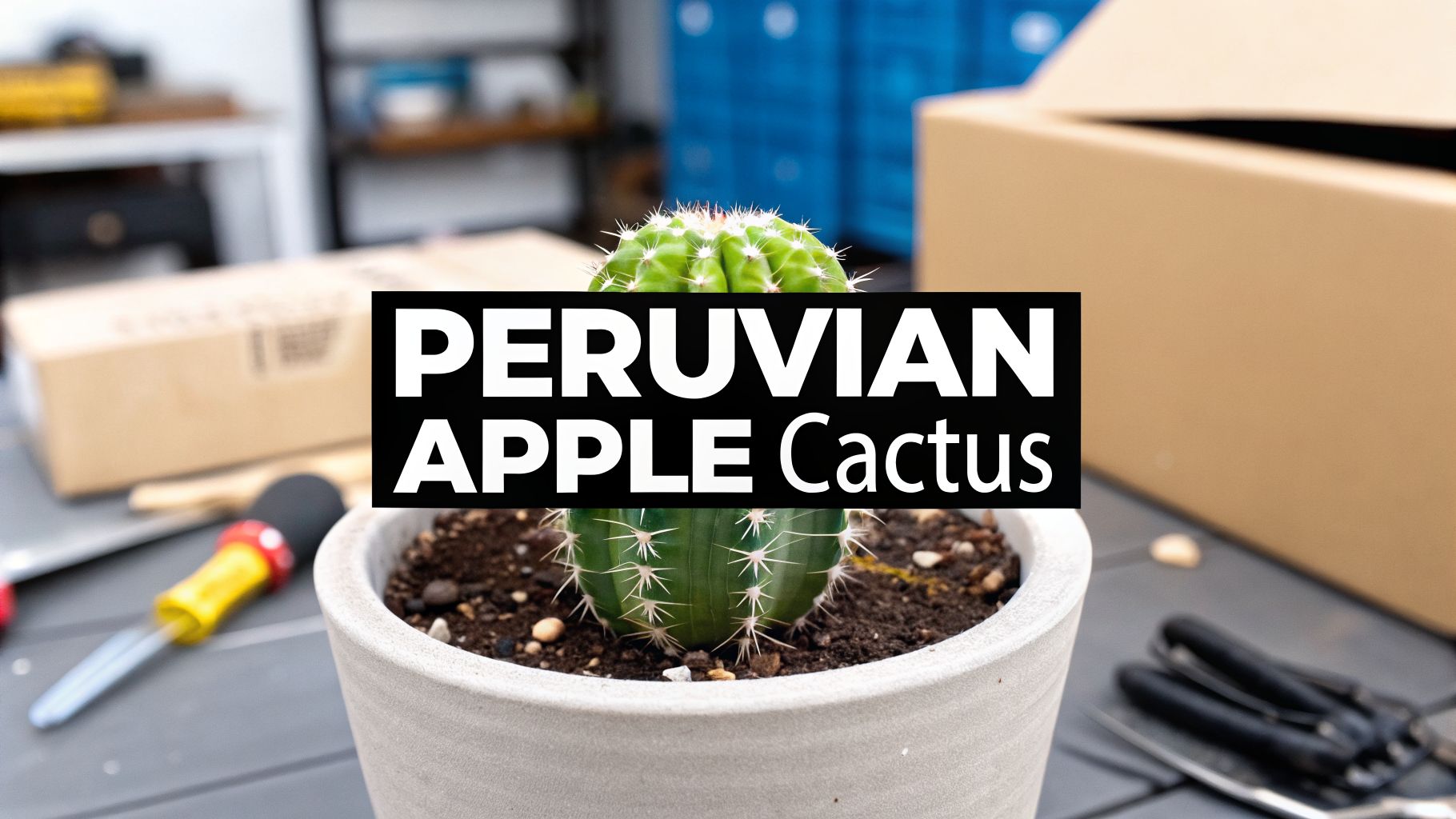

So, you’re on the hunt for a Peruvian Apple Cactus for sale. It's an exciting search! Think of it less like buying a simple houseplant and more like choosing a piece of living architecture for your home. We'll walk you through everything you need to know to find a great one, whether you’re after a small starter or a towering, multi-armed specimen.

Your Pre-Purchase Guide to the Perfect Cactus
Let’s make sure the Cereus repandus you bring home is set up for success from day one. This isn't just about picking a pretty plant; it’s about finding one that’s healthy and ready to thrive. We’ll break down how things like size, age, and shape affect the price tag, so you can find the perfect cactus for your budget and your space.
It’s no surprise these cacti are so popular. The global market for all cactus plants hit $3,860.3 million in 2021 and is on track to reach a staggering $7,014.2 million by 2025. People are falling in love with these spiny wonders, and the Peruvian Apple is a definite fan favorite. You can find more on the growing cactus craze over on The Cactus Outlet blog.
What Makes This Cactus Special
So, why all the fuss? For starters, its growth is impressive. The Peruvian Apple Cactus shoots up in a beautiful, column-like shape, adding a dramatic vertical line to a room or garden. Forget the snail's pace of a Saguaro—a happy Cereus repandus can easily grow several inches, sometimes even a foot, in a single year.
This fast growth is incredibly satisfying. It means you won't have to wait a decade to see your plant mature into a show-stopping specimen, which is a huge win for both new growers and seasoned collectors.
But the real magic happens at night. Under the right conditions, this cactus produces enormous, fragrant flowers that bloom after dark. Even better, those flowers can turn into an edible, spineless fruit known as the Peruvian Apple. It has a light, sweet taste that’s a fantastic bonus. It’s one of the few plants that delivers both stunning looks and a potential harvest.
Setting Your Expectations
Before you click "buy" or head to the nursery, let's get you prepared. Knowing what to look for is the key to a confident purchase.
We’ll cover the essentials:
- Identification: Learn how to spot the difference between the classic columnar form and the wonderfully weird 'Monstrose' variety.
- Health Inspection: Get our expert checklist for spotting a healthy, pest-free cactus.
- Price vs. Size: Figure out how to budget for the size and age of the plant you want.
- Initial Care: We'll tell you exactly what to do the moment your new cactus arrives.
With this knowledge, you'll be ready to choose a fantastic plant. For a wider look at what to consider when buying any type of succulent, check out our general guide on what to look for when you're shopping for any cactus for sale.
Identifying Cactus Varieties and Unique Forms
When you start shopping for a Peruvian Apple Cactus, you’ll quickly realize they aren't all cut from the same cloth. While they all technically belong to the Cereus repandus species, the market is dominated by two main forms that offer completely different vibes. It’s like choosing between a classic, perfectly tailored suit and a wild, one-of-a-kind piece of abstract art.
The most familiar version is the classic columnar form. This is the cactus that probably comes to mind—a majestic, ribbed tower growing straight and tall. It has that iconic blue-green skin and neat, defined ribs, creating a look of architectural elegance.
The Classic Columnar Form
Think of the classic Cereus repandus as a living skyscraper. Its clean lines and structural form bring a sense of modern order to any space. The ribs run straight up the plant's body, which might grow as a single, impressive column or eventually branch out into several arms as it matures.
This form is a fantastic choice if you're aiming to:
- Add a strong vertical element to a minimalist or contemporary room.
- Frame a doorway or entryway for a grand, dramatic statement.
- Plant a row of them to create a living, low-water fence in a suitable climate.
Because its growth is so predictable, it’s a favorite for designers and homeowners who have a specific vision. It just has this powerful, stately presence.
The Unique Monstrose Form
Then there's the wild card: the ‘Monstrose’ variety, often sold as Cereus peruvianus monstrose. This is the wonderfully weird and unpredictable cousin of the classic form. Thanks to a natural genetic mutation, it grows in a lumpy, bumpy, beautifully chaotic way. You will never find two ‘Monstrose’ cacti that look exactly alike.
The name 'Monstrose' might sound a bit harsh, but in the plant world, it’s a good thing! It just means the plant has an abnormal, sculptural growth pattern. Instead of straight ribs, it develops random, knobby clusters that twist and turn, creating a living sculpture that’s truly unique.
This variety often has a more pronounced bluish or waxy coating, and its spines can pop up in more random spots. If you want a plant that’s a true conversation starter, the ‘Monstrose’ is an incredible choice.
If you're fascinated by all the strange and beautiful shapes cacti can take, our cactus identification guide is a great place to explore the amazing diversity out there. Ultimately, whether you go for the classic column or the quirky monstrose just comes down to your personal style.
Alright, you've found a Peruvian Apple Cactus that catches your eye. Before you pull the trigger, it's time to play plant detective for a minute. A quick health check now can save you a lot of headaches later, ensuring the cactus you bring home is set up for success from day one.
Give It a Squeeze (Gently!)
First things first, check for firmness. A healthy cactus stem should feel solid and full, almost like a firm cucumber. Give it a gentle squeeze—if you feel any softness, squishiness, or mushy spots, walk away. That’s a tell-tale sign of root rot, and unfortunately, it's a condition that's nearly impossible to come back from.
This simple decision tree can help you narrow down the style you're after before you even start inspecting.

Knowing whether you prefer the tall, architectural Classic form or the quirky, sculptural Monstrose variety makes the whole selection process a lot smoother.
What to Look for in Person and in Photos
When you're shopping online, the seller's photos are your eyes. Insist on clear, brightly lit pictures that show the plant from a few different angles, paying special attention to the base and the top. A healthy, happy cactus will often have signs of new growth up top, which usually looks like a brighter, more vibrant shade of green.
Next, you'll want to scan for any unwanted hitchhikers. Here’s what to look out for:
- Mealybugs: These look like tiny, fuzzy white specks, almost like bits of cotton. They love to hide in the joints and crevices between the ribs.
- Scale: These pests look like small, brown, disc-shaped bumps stuck to the skin. You can often scrape them off with a fingernail.
While it's always best to start with a pest-free plant, don't panic over a few cosmetic flaws. Some scars or brownish, woody patches (corking) are perfectly normal, especially near the base of an older cactus. It's just a sign of age. What you don't want to see are dark, soft, or sunken spots, which could signal disease.
Pro Tip: If you're buying online, always go with sellers who show you photos of the exact plant you'll be receiving. Stock photos can be deceiving, and seeing the specific cactus gives you peace of mind that there won't be any surprises.
Finally, take a look at the overall color. A well-cared-for Peruvian Apple Cactus should have a beautiful, rich blue-green color. If it looks yellowish, it might be a sign of overwatering or a lack of nutrients. A pale, washed-out appearance, on the other hand, can mean it's been getting a bit too much harsh, direct sun. A vibrant, consistent color is one of the best indicators of a healthy plant.
Unboxing and Potting Your New Cactus
Alright, the moment has arrived. Your new Peruvian Apple Cactus is here, and it's time to get it settled into its forever home. Think of this as the final, most important leg of its journey. A little bit of care and attention right now is your ticket to a happy, thriving cactus for years to come.

How a plant is packaged and shipped makes a huge difference. If you're curious about the logistics that go into a safe delivery, this guide on how to pack plants for moving offers some great behind-the-scenes insights. A smooth trip is the first step, but what you do next is just as crucial.
Your Step-by-Step Potting Guide
First things first, let's get that cactus unboxed. Reputable sellers, like us at The Cactus Outlet, almost always ship bare-root or in a small travel pot. This keeps the plant secure and reduces shipping stress. Once you have it out and can admire it, it's time to pot it up.
-
Pick the Right Pot: This is more important than you might think. Grab a pot that's only 1-2 inches wider in diameter than the cactus itself. A pot that’s too big will hold onto way too much water, creating a swampy environment that leads straight to root rot. And, of course, make sure it has at least one good drainage hole at the bottom.
-
Get the Soil Just Right: Cacti are desert plants, and they need soil that mimics that environment—meaning it has to drain fast. You can use a pre-made cactus and succulent mix, or you can easily make your own. Just mix regular potting soil with an equal amount of perlite or pumice to improve aeration and drainage.
-
Potting Your Cactus: Line the bottom of your new pot with a layer of your cactus mix. Position the cactus right in the middle, then gently backfill with more soil. Tamp it down lightly with your fingers to make sure the cactus is standing tall and secure.
CRITICAL STEP: Whatever you do, do not water your cactus right after potting. Let it sit dry in its new pot for about a week. This might feel wrong, but it's essential. This dry period gives any tiny roots that were bumped or bruised during shipping a chance to heal over. Watering too soon can introduce bacteria to those wounds, causing rot before the plant even gets started.
This simple act of patience is one of the best things you can do for your new plant. If you want to dive even deeper into the process, our team put together a full guide on how to repot cacti that covers every little detail.
Getting your cactus settled is a rewarding experience, especially when you consider its future. For those of us in the U.S., the plant’s edible, antioxidant-rich fruits are a huge bonus. This unique benefit aligns with health and wellness trends that are helping drive cactus product sales from an estimated $1.2 billion in 2026 to a projected $2.24 billion by 2032.
To help you get everything right from the start, we've put together a quick checklist.
Essential Cactus Potting Checklist
This table summarizes everything you'll need to give your new Peruvian Apple Cactus the best possible start.
| Item/Step | Description & Why It's Important | Pro Tip |
|---|---|---|
| The Right Pot | Choose a pot only 1-2 inches wider than the cactus with drainage holes. This prevents overwatering and root rot. | Terracotta pots are excellent as they are porous and help the soil dry out faster. |
| Cactus Soil Mix | A blend of potting soil and perlite/pumice. Fast-draining soil is non-negotiable for cactus health. | Add a handful of horticultural charcoal to your mix to keep it "sweet" and prevent soil souring. |
| Gloves & Tools | Thick gardening gloves, a trowel, and newspaper or tongs to handle the cactus. Protects you from spines! | Wrap the cactus body in a folded-up newspaper or an old towel to get a firm, safe grip while positioning it. |
| Potting the Cactus | Center the plant and backfill with soil, gently firming it. Ensures stability and proper root contact with the soil. | Leave about a half-inch of space between the soil line and the rim of the pot to make watering easier. |
| The 1-Week Wait | Do not water for 5-7 days. This allows any damaged roots to callous over and heal, preventing infection and rot. | Place the newly potted cactus in a spot with bright, indirect light during this waiting period to reduce stress. |
Following these steps will ensure your cactus not only survives its move but thrives in its new environment, setting it up for a long and healthy life.
Long-Term Care for a Thriving Cactus
Bringing home a Peruvian Apple Cactus is the start of a beautiful, long-term relationship. Once you’ve got it settled in its new pot, your job is to create a stable environment that feels like home—think sunny, dry, and well-draining. This is your guide to the three essentials: light, water, and soil.
With just a few simple practices, you'll gain the confidence to see your cactus not just survive, but truly flourish into a stunning specimen. It’s no wonder these plants are gaining so much traction with everyone from houseplant collectors to interior designers. In fact, the global cactus market is projected to hit an astounding $16,951.5 million by 2033, and South American species are a huge part of that boom.
Giving Your Cactus the Right Light
Light is quite literally the food for your cactus. The Cereus repandus absolutely loves bright, direct sunlight, needing a solid 6-8 hours of it every day to stay happy. The best indoor spot is almost always right in front of an unobstructed south-facing or west-facing window.
But here’s a pro tip: even sun-worshippers can get a sunburn. If you’re moving your cactus from a shaded nursery to a spot with intense, direct sun, you have to acclimate it. Give it just a couple of hours of direct morning sun at first, then slowly increase the exposure over a week or two. This prevents the skin from scorching, which shows up as ugly, bleached-out patches.
Mastering the Art of Watering
If there's one mistake that new cactus owners make, it's killing their plants with kindness—specifically, too much water. The only method you need to know is the "soak and dry" technique. Water the plant thoroughly until you see it draining from the bottom, then let the soil dry out completely before you even think about watering it again.
Forget a rigid schedule. The real skill is learning to read your plant. Once a week or so, stick your finger a couple of inches into the soil. If you feel any moisture at all, walk away. During its active growing season in spring and summer, you might water every 2-4 weeks. But in the winter, when it's dormant, that can stretch to once every 6-8 weeks, or sometimes not at all.
A thirsty cactus might look a little wrinkled or feel less firm. An overwatered cactus, on the other hand, will turn soft, yellow, and mushy near the base—that’s the dreaded root rot. When in doubt, it is always safer to underwater.
For those planning an outdoor cactus garden, you can dive deeper into smart watering strategies with this guide to drought-resistant landscaping.
Seasonal Care and Feeding
Your cactus operates on a seasonal clock, and once you get in sync with its rhythm, care becomes second nature.
-
Spring & Summer (Growth Season): This is when all the action happens. Your cactus is putting on new growth, so provide plenty of light and stick to your soak-and-dry watering. You can also give it a boost with a diluted, low-nitrogen cactus fertilizer about once a month.
-
Fall & Winter (Dormancy): As the days get shorter, your cactus will take a much-needed nap. This is the time to dramatically cut back on watering and stop feeding it altogether. This winter rest period is vital for its long-term health and is often the key to encouraging it to bloom the following year.
When you're thinking about bringing a Peruvian Apple Cactus into your home, it's totally normal to have a few questions. From how it will grow to whether it's safe for your furry friends, getting the right info upfront makes all the difference. Let's walk through some of the most common things people ask.
How Fast Does a Peruvian Apple Cactus Grow?
If you're looking for a cactus that rewards you with noticeable progress, you've found it. Unlike famously slow-growing cacti that seem frozen in time, the Cereus repandus grows with surprising speed. With good light and proper care, it's not unusual to see 4-10 inches of fresh growth in a single growing season.
This means that even a smaller plant can transform into an impressive, architectural centerpiece in just a few years. It’s incredibly satisfying to watch that vertical growth shoot up, adding dramatic height and a modern vibe to your space.
Will My Cactus Produce Fruit?
Yes, it absolutely can! That's where the "apple" in its name comes from. The plant produces an edible, spineless fruit that's often compared to dragon fruit (pitaya). It's typically a vibrant reddish color with white, seeded flesh inside and has a mild, sweet taste.
Now, don't expect fruit overnight. Fruiting usually happens on more mature plants that are at least a few feet tall and have gone through clear growing and dormant cycles. The real showstoppers are the massive, fragrant white flowers that bloom only at night. To get fruit, these flowers need to be pollinated, either by nocturnal visitors like moths or by you, if you have another cactus blooming at the same time.
Is the Peruvian Apple Cactus Toxic to Pets?
This is a huge question for anyone with a dog or cat, and the answer is great news: the Peruvian Apple Cactus is considered non-toxic to pets.
Of course, "non-toxic" doesn't mean "risk-free." The spines are the real hazard here. A curious nose or paw getting too close can result in a painful surprise. It's always best to place your cactus in a spot where your pets can't easily bump into it, like in a tall planter or a corner protected by furniture.
What Are These Brown Spots on My Cactus?
Seeing brown spots can be alarming, but don't panic. More often than not, what you're seeing is a completely natural process called corking. As the cactus gets taller and heavier, its base turns woody and brown to provide structural support. This is a sign of a healthy, maturing plant.
However, you should pay attention to the texture of the spots. If they're soft, mushy, or feel sunken in, that could point to a problem like rot or sunburn. But if the spots are firm, dry, and look more like a scar, it’s likely just cosmetic damage from a past bump or scrape and nothing to worry about.
Ready to find the perfect columnar or monstrose cactus for your home? The team at The Cactus Outlet has a curated selection of healthy, beautiful plants ready to be shipped right to your door.