

If you're looking for a plant that makes a real statement, you can't go wrong with the Peruvian Apple Cactus. It's a stunning, fast-growing columnar cactus celebrated for its incredible night-blooming flowers and surprisingly tasty fruit. Whether you use it as a dramatic landscape feature or a striking indoor plant, its blue-green stems bring a serious vertical punch. Interestingly, despite its common name, this cactus isn't actually from Peru.
Meet the Towering Peruvian Apple Cactus
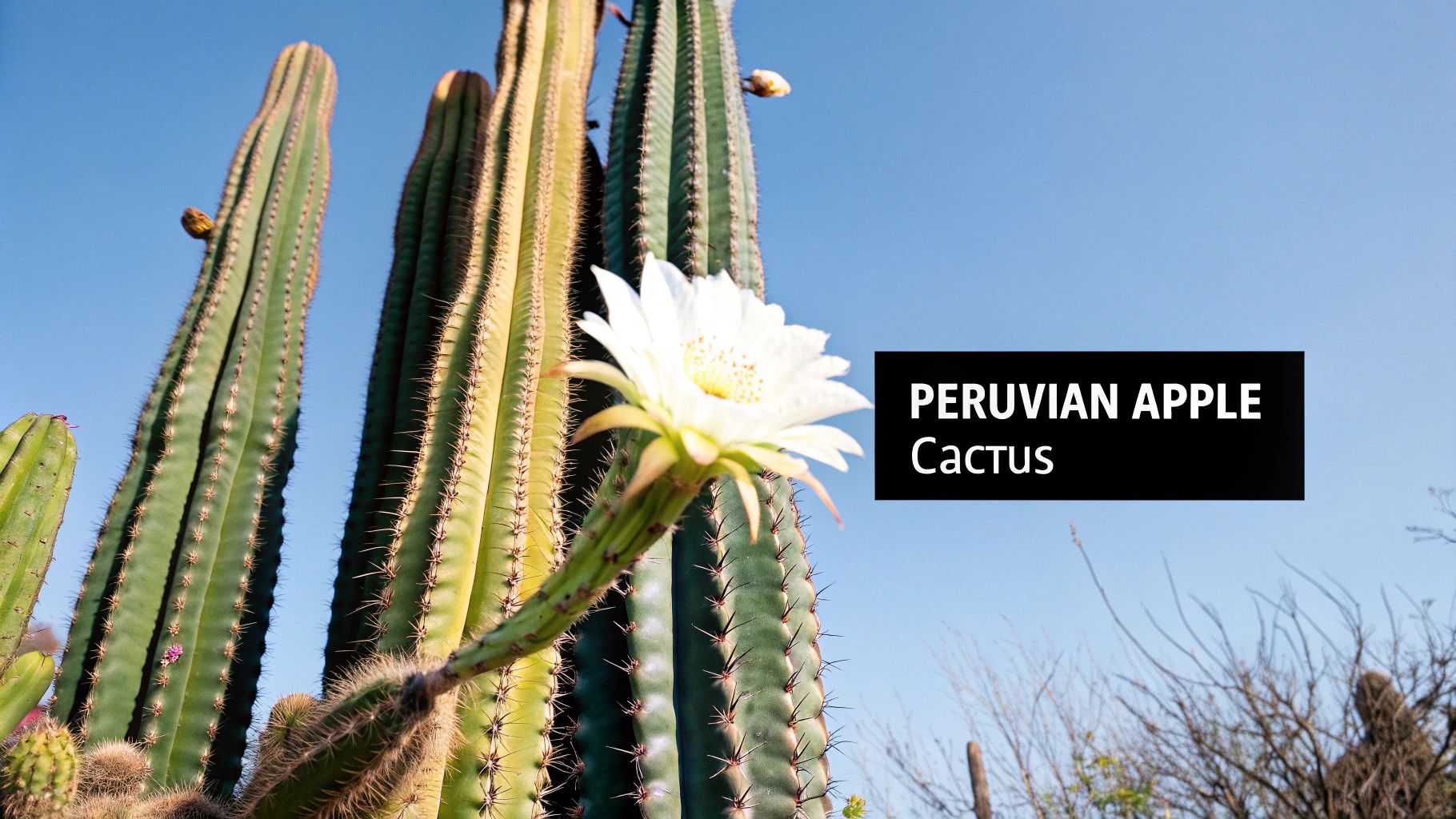
Picture a living sculpture in your home or garden—a plant that’s equal parts architectural elegance and rugged resilience. That's the Peruvian Apple Cactus (Cereus repandus, often sold as Cereus peruvianus). This plant is a true showstopper, known for its towering, tree-like form and massive, fragrant flowers that bloom for just one night.
Its look is both classic and commanding. The thick, blue-green stems have a distinctive ribbed, columnar shape, and over time, they often branch out to form a grand, candelabra-like silhouette. It's like having nature's own skyscraper, one that slowly adds height and character year after year.
More Than Just a Pretty Face
Beyond its striking shape, this cactus has a few delightful surprises up its sleeve. The main event, of course, is the bloom. In late spring or summer, enormous creamy white flowers, sometimes reaching up to 6 inches across, will emerge. These are nocturnal beauties, opening up at dusk and wilting by morning—a truly magical, fleeting spectacle if you're lucky enough to catch it.
If pollination is successful (usually thanks to moths and bats), the plant produces a round, spineless fruit. This "apple" is typically a vibrant red or magenta with a sweet, white, crunchy flesh full of tiny edible seeds. People often say the flavor is a mix between sugarcane and dragon fruit.
A Surprising Origin Story
One of the most fascinating tidbits about this plant is its misleading name. The Peruvian Apple Cactus is primarily native to parts of South America like Brazil, Uruguay, and Argentina, not Peru. This slow-growing giant can reach an astonishing 15 meters tall in the wild, growing multiple branching arms. Its incredible hardiness allows it to flourish in hot, dry climates and even survive brief dips down to -6°C, making it a viable cash crop in places like Israel. You can learn more about this adaptable cactus and its fruit over at Specialty Produce.
Key Takeaway: The Peruvian Apple Cactus is far from your average houseplant. It’s a dynamic, fast-growing species that delivers architectural beauty, stunning nocturnal flowers, and even edible fruit, making it a one-of-a-kind addition to any plant collection.
For a quick summary of its key features, check out the table below. It's a great way to get familiar with the basics before we dive into the nitty-gritty of how to care for it.
Peruvian Apple Cactus At a Glance
| Feature | Description |
|---|---|
| Common Name | Peruvian Apple Cactus, Queen of the Night, Hedge Cactus |
| Scientific Name | Cereus repandus (syn. Cereus peruvianus) |
| Mature Size | Can reach 10-20 feet indoors, and up to 30+ feet outdoors |
| Light | Prefers full, direct sunlight for at least 6-8 hours daily |
| Flowers | Large, white, fragrant flowers that bloom only at night |
| Fruit | Edible, spineless, red-to-magenta fruit with a mild, sweet taste |
| Hardiness Zones | Best suited for USDA Zones 9-11 |
Now that you have a snapshot of what this amazing cactus is all about, let's get into the details of keeping it happy and healthy.
Getting the Environment Just Right
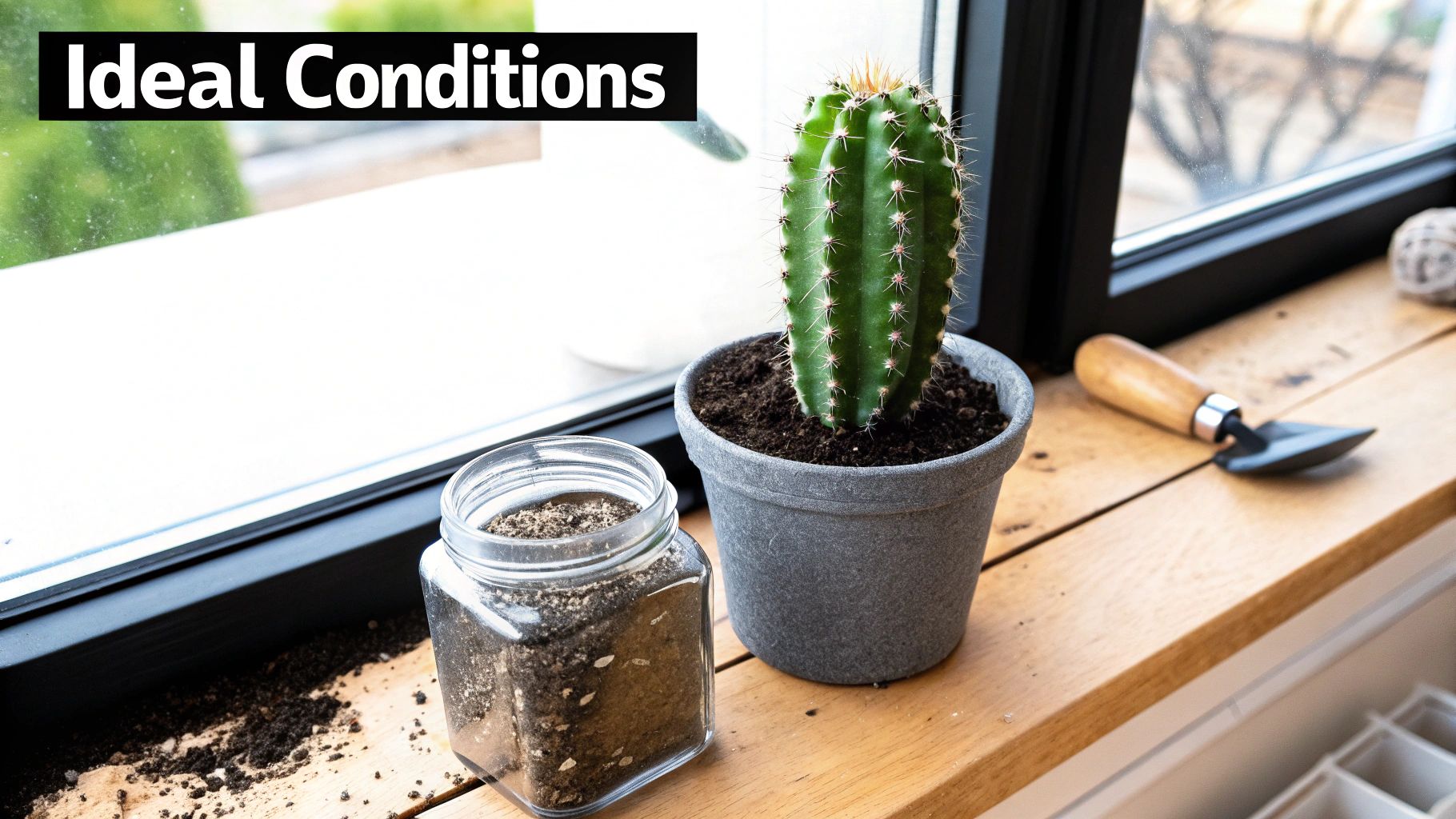
Giving your Peruvian Apple Cactus the right home isn't about following a rigid checklist. It's more like being a habitat architect—you’re just recreating a little piece of its sunny, arid homeland. Getting the fundamentals of light, water, soil, and temperature right is the single most important thing you can do to see your cactus truly thrive.
The great news is that Cereus repandus is pretty forgiving. But if you nail the basics, it will reward you with surprisingly fast growth, robust health, and maybe even a few of its famous night-blooming flowers. Let’s break down exactly what this cactus needs to feel at home.
Let There Be Light
Sunlight is pure energy for a Peruvian Apple Cactus. It craves bright, direct sun to fuel its photosynthesis—a process that, for this plant, happens in its green stems, not in leaves. For the best growth, you'll want to aim for at least six to eight hours of direct sun every day.
Indoors, a south-facing window is prime real estate. If you don't have one, a west-facing window is the next best thing. Without enough light, the cactus will start to look stretched, thin, and pale. This is called etiolation, and it's basically the plant's desperate search for more energy.
One word of caution: if you're moving a cactus from a dim nursery or indoor spot to a blazing outdoor location, you need to ease it in. Just like our skin, a cactus can get a nasty sunburn. Start it out with just a few hours of morning sun, slowly increasing the exposure over a week or two. This "tanning" period gives its waxy outer layer time to thicken up for protection.
The Art of Watering
If there's one thing that will kill a cactus quickly, it's too much love in the form of water. Overwatering is the number one mistake I see people make. These plants are built for dry, sandy soils, and their roots will rot in a heartbeat if they're left sitting in soggy soil. The trick is to mimic a desert downpour: a heavy soaking followed by a long, dry spell.
The best way to do this is with the "soak and dry" method.
- Check First, Water Later: Before you even pick up the watering can, check the soil. Stick your finger two or three inches deep. If you feel any moisture at all, walk away.
- Soak it Good: When it's finally time to water, be generous. Drench the soil until water runs freely out of the pot's drainage holes. This ensures all the roots get a proper drink.
- Let it Dry Out Completely: This part is non-negotiable. After a good soak, you must let the soil become bone dry before watering again. This dry period lets the roots breathe and keeps fungal diseases at bay.
During the growing season in spring and summer, you might water every two to four weeks. But in the fall and winter when the cactus is dormant, you'll cut back dramatically—maybe once a month, or even less.
Building a Solid Foundation with the Right Soil
Good soil is the foundation for healthy roots. Standard potting mix is a death sentence for a Peruvian Apple Cactus; it’s designed to hold moisture, which is exactly what you don't want. The perfect cactus soil is like a breathable sponge—it gets wet, but the excess water drains away almost instantly, leaving plenty of air pockets for the roots.
The Perfect Mix: The goal of a well-draining soil is to prevent water from stagnating around the roots. Stagnant water is the enemy, as it suffocates roots and is a direct invitation for root rot to set in.
You can find pre-made cactus and succulent mixes at most garden centers, but mixing your own is easy and often better. For a deeper dive into what makes an ideal medium, check out our guide to cactus and succulent soil mix.
A simple, bulletproof recipe you can make at home is:
- Three parts coarse sand (not play sand!) for excellent drainage.
- Three parts standard potting soil for a little organic matter.
- Two parts pumice or perlite to keep the mix light and airy.
This blend gives you the best of both worlds: it lets water flow right through while holding on to just enough for the plant to drink.
Ideal Temperature and Climate
Hailing from the arid landscapes of South America, the Peruvian Apple Cactus loves it warm and dry. It's incredibly heat-tolerant and thrives in summer temperatures. If you're planting it in the ground, it's best suited for USDA hardiness zones 9 through 11.
While it's a tough plant, it's not invincible against the cold. Cereus repandus can handle a brief dip down to about 20-25°F (-6 to -4°C), but any prolonged freeze will cause serious damage. If you live in a colder climate, your best bet is to plant it in a pot. That way, you can easily bring it inside or move it to a protected spot when winter arrives.
Fine-Tuning Your Cactus Care Routine
Alright, you've nailed the essentials—light, water, and soil. Now we can get into the long-term stuff that turns a good-looking cactus into a magnificent, decades-old specimen. Think of fertilizing, repotting, and pruning as the next level of care. It’s how you keep your Peruvian Apple Cactus healthy, well-shaped, and thriving for years to come.
Getting the basics right is like laying a solid foundation for a house. These next steps are the ongoing maintenance—the tune-ups and trims that prevent problems and encourage your cactus to be its best self. They aren't difficult, but they make all the difference, especially for a fast-grower like this one.
A Light Touch with Fertilizer
When it comes to feeding a cactus, less is definitely more. Your leafy houseplants might guzzle down fertilizer, but the Peruvian Apple Cactus comes from arid environments with poor soil. Dousing it with standard plant food is like force-feeding it a steak dinner; it’s just too rich and can lead to weak, stretched-out growth that’s a magnet for problems.
What you want to do is offer it a light snack, and only during its growing season.
- Pick the Right Food: Grab a fertilizer made specifically for cacti or dilute a balanced liquid fertilizer down to half or even a quarter of its recommended strength.
- Go Easy on the Nitrogen: Look for a formula with a low nitrogen number. Too much nitrogen promotes soft, flimsy growth, which is the last thing you want on a structural plant like a cactus.
- Timing is Key: Only feed your cactus in the spring and summer. Stop completely in the fall and winter to let it rest. A once-a-month feeding along with its regular watering is plenty.
This gentle approach gives it just enough of a nudge to support strong stems and maybe even encourage some flowers, all without overwhelming its system.
Repotting: Giving Your Giant More Room
Sooner or later, your Peruvian Apple Cactus will need a bigger home. This usually happens every two or three years. I know, repotting a spiky giant sounds like a nightmare, but it's totally manageable with a bit of prep. A new pot gives the roots fresh soil and space to spread out, which is critical for keeping the plant stable and healthy as it gets taller.
How can you tell it's time? Watch for a few clues:
- You see roots sneaking out of the drainage holes.
- The plant looks wobbly or top-heavy for its pot.
- Water rushes straight through the pot, which means there's more root than soil left.
Safety First: When it's time to move a big, spiny cactus, protecting yourself is non-negotiable. Wear thick gardening gloves, but don't stop there. Wrap the cactus body in several layers of folded newspaper, an old towel, or even a scrap of carpet. This gives you a safe place to grip without getting poked or damaging the plant's waxy skin.
Once you're geared up, gently tip the plant on its side and ease the pot off. Take a quick look at the roots—if you see any mushy, black ones, trim them off. Then, settle it into a new pot that’s only one or two inches wider than the old one. Backfill with fresh cactus mix, and you're done.
Pruning: Shaping and Multiplying Your Cactus
This is where you get to be an artist. Pruning a Peruvian Apple Cactus is all about managing its size, encouraging it to branch out for a fuller look, and—the best part—getting cuttings to make new plants.
Grab a clean, sharp knife or a saw (make sure to sterilize it first!) and you can slice off entire arms or even the top of the main stem. Clean cuts are crucial for helping the plant heal quickly and ward off infection. You can prune to keep it from hitting the ceiling or to remove a branch that’s growing in a weird direction.
And the bonus? Every piece you cut is a potential new cactus. This is one of the most satisfying parts of growing these plants—multiplying your collection is incredibly easy. We’ll dive into exactly how to turn those cuttings into brand-new plants in the next section.
How to Propagate Your Peruvian Apple Cactus
One of the best parts of owning a Peruvian apple cactus is realizing you can easily turn one plant into many. If you've ever wanted to multiply your collection or share a piece with a friend, you're in luck. Propagation sounds technical, but for this cactus, it's a surprisingly simple process.
We're going to use the most common and reliable method: stem cuttings. This just means taking a piece of the parent plant and encouraging it to grow its own roots. You’re essentially cloning your cactus, giving a single arm a chance to become a whole new plant.
It’s a natural next step once you get comfortable with other hands-on care like pruning and repotting.
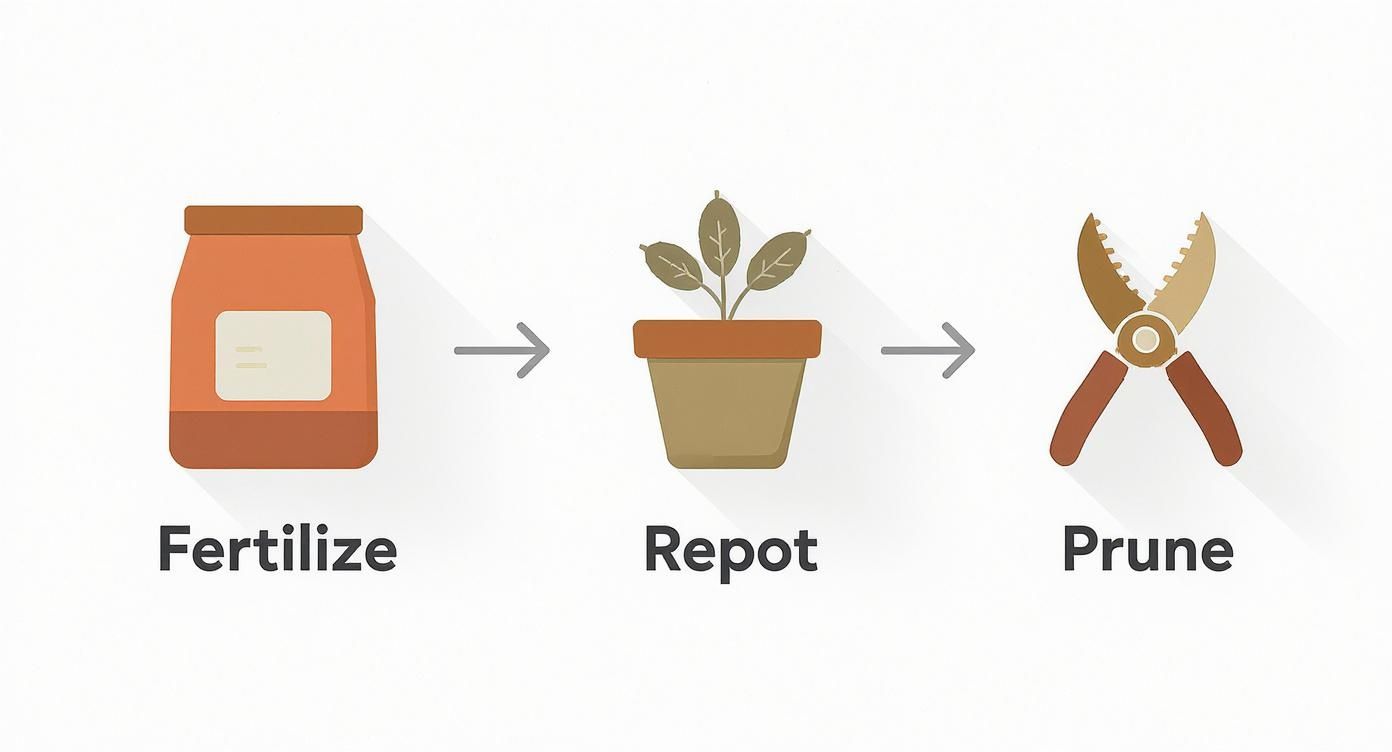
As you can see, advanced care activities are all connected. Trimming a branch to shape your cactus gives you the perfect cutting to start a new one.
The Step-by-Step Guide to Taking Cuttings
Getting this right all comes down to a clean cut and a little bit of patience. Rushing the process is the only way to mess it up.
- Pick a Healthy Arm: Look for a strong, deep green stem that's at least a few inches long. You want a piece that looks healthy and vigorous, not one that’s pale, shriveled, or has any soft spots.
- Make the Cut: Grab a sharp, clean knife or a small saw. Before you do anything, wipe the blade down with rubbing alcohol to sterilize it. This is a huge deal—it prevents nasty bacteria from getting into the fresh wounds of both your cutting and the parent plant. Make one clean, decisive slice.
- Let It Callus Over: This is the most important step, and the one people always want to skip. Lay the cutting on its side in a dry, well-ventilated spot away from direct sun for one to two weeks. You'll see the cut end dry out and form a hard, pale cap. That's the callus.
Why is callusing so important? Think of it like a scab on a wound. This dry, tough layer seals off the moist, vulnerable flesh of the cutting. Planting a fresh, wet cutting is like sending an open invitation to every fungus and bacteria in the soil to come cause rot. A good callus is your best defense.
Planting Your New Cactus Cutting
Once that cut end is dry and hard to the touch, you're ready to plant. This is where the cutting starts its journey to becoming an independent cactus with its own root system.
Fill a small pot with the same fast-draining cactus soil you use for your mature plants. Stick the callused end of the cutting about one to two inches deep into the soil—just enough so it can stand up on its own. If it’s a little wobbly, you can prop it up with a few small rocks or bamboo stakes.
Now, fight every instinct you have and do not water it. Let it sit dry for at least a week. This encourages the cutting to send out new roots in search of water. After that first week, you can give it a tiny bit of water. In a few weeks or up to a couple of months, you'll see the first signs of new growth, which means it has successfully rooted.
For a deeper dive into the technique, check out our complete guide on how to propagate cactus from cuttings. Before you know it, you'll have a whole family of Peruvian apple cacti.
Troubleshooting Common Cactus Issues
Even the most seasoned plant owner runs into trouble now and then. Don't panic if your Peruvian Apple Cactus starts looking a little off. Most issues are surprisingly easy to fix once you learn how to read the signs. Think of yourself as a plant detective—your job is to spot the clues, figure out the cause, and deliver the right remedy.
This guide will walk you through the most common problems you'll face, from pesky bugs to watering blunders. We'll show you exactly what to look for so you can get your cactus back on track.
Decoding Discoloration and Texture Changes
The way your cactus looks and feels is its primary way of communicating with you. A healthy Cereus peruvianus should be a nice blue-green color and feel solid and firm when you give it a gentle squeeze.
If you spot a yellow, mushy base, that's a major red flag. This is the classic symptom of root rot, and the culprit is almost always too much water. When the soil stays soggy, the roots can't breathe, creating the perfect environment for fungus to move in and cause havoc.
Catching it early is key. For a complete guide, you can learn how to revive a dying cactus, but the first steps are always the same: get it out of that wet soil, carefully trim away any black, mushy roots, and let the cactus dry out for a few days before repotting in a completely fresh, dry mix.
On the flip side, a shriveled, wrinkly cactus is practically screaming for a drink. This is a clear sign of underwatering. While these plants are built for drought, they aren't invincible. The puckered, deflated look means it has exhausted its internal water reserves. A good, deep soak should plump it right back up within a day or two.
Tackling Common Pests
Though it’s a tough plant, the Peruvian Apple Cactus isn't completely immune to pests. These little critters can drain the life out of your plant if you let them, so early detection is your best weapon.
Pro Tip: Make a habit of checking the nooks and crannies between the ribs and near the soil line. Pests love to hide in these sheltered spots, and finding an infestation before it explodes makes it much easier to handle.
The usual suspects are mealybugs and spider mites. Mealybugs look like tiny bits of white cotton fluff, often clustered together. Spider mites are much harder to see, but they leave behind their tell-tale signature: delicate, silky webbing. Both pests feed by sucking the sap from your cactus, leading to yellow spots and stunted growth.
Your first line of defense is simple and effective. Grab a cotton swab, dip it in 70% isopropyl alcohol, and dab it directly onto the pests. This kills them instantly. If you're dealing with a bigger invasion, a thorough spray-down with insecticidal soap or neem oil will help you regain control.
Common Pest Identification and Treatment
Spotting the difference between pests can be tricky. This table breaks down the signs and solutions for the most common invaders you're likely to encounter on your Peruvian Apple Cactus.
| Pest | Identification Signs | Organic Treatment | Chemical Treatment |
|---|---|---|---|
| Mealybugs | Small, white, cotton-like masses, often in clusters. | Dab with 70% isopropyl alcohol; spray with neem oil. | Systemic insecticides formulated for houseplants. |
| Spider Mites | Fine webbing on the plant; tiny red or brown dots. | Spray with a strong stream of water; use insecticidal soap. | Miticide spray specifically for spider mites. |
| Scale Insects | Small, hard, brown bumps that cling to the stems. | Scrape off with a fingernail; treat with neem oil. | Horticultural oil sprays can smother scale insects. |
By learning what these common problems look like, you can act fast and keep your Peruvian Apple Cactus thriving for years to come. Ultimately, your most powerful tool is simply paying attention. A quick look-over every week goes a long way.
The Surprising Market for Cactus Plants
That gorgeous Peruvian Apple Cactus in your living room? It’s more than just a cool-looking plant. It's a key player in a massive, booming global industry that has quietly taken root in everything from home decor to sustainable agriculture.
The humble cactus has officially gone mainstream. This isn't just a fleeting Instagram trend, either. It reflects a real shift in how we think about plants. As more people look for drought-tolerant, low-maintenance options that fit a busy lifestyle, resilient species like Cereus repandus have gone from a niche hobby to a serious economic force.
The Numbers Behind the Boom
The sheer scale of the cactus business might surprise you. In 2021, the global market for cactus plants was already valued at a staggering $3.86 billion. But it's not stopping there—projections show it nearly doubling to an incredible $7.01 billion by 2025.
While North America currently holds the biggest piece of the pie with a 39.71% market share, other regions are catching up fast. South America, where so many of these amazing plants originate, is seeing its market grow from $254.7 million in 2021 to a projected $469.3 million by 2025. For a deeper dive into the data, you can check out these cactus market trends on Cognitive Market Research.
This explosive growth tells us one thing: plants like the Peruvian Apple Cactus are no longer just decorative items. They've become valuable commodities in a rapidly expanding green economy.
This commercial boom has also fueled a vibrant online marketplace where collectors and casual growers can buy and sell everything from tiny cuttings to towering, mature specimens.
If you’re thinking about selling or shipping a cactus yourself, it's a whole different ballgame than sending a book. Getting it right is crucial. Learning the ins and outs of shipping perishable items successfully is key to making sure your plant arrives at its new home happy and healthy. It's a fascinating look into the complex logistics that bring these amazing plants from the grower to your doorstep.
A Few More Questions You Might Have
Even after going through a detailed guide, it's totally normal to have a few specific questions pop up. Think of this section as a quick chat about some of the most common things people wonder about when they bring home a Peruvian Apple Cactus.
We'll get straight to the point and clear up any lingering doubts you might have, from whether you can eat the fruit to how fast you can expect this thing to actually grow.
Can You Really Eat the Fruit From a Peruvian Apple Cactus?
Yes, absolutely! The fruit, often called a "cactus apple" or pitaya, isn't just edible—it's genuinely tasty. It grows with a smooth, spineless skin, usually in a stunning red or magenta color.
Most people say the flavor is a light, sweet mix that reminds them of sugarcane and dragon fruit. The inside has white flesh with tiny, crunchy black seeds, a lot like a kiwi. You can eat it straight off the plant; just slice it open and scoop it out with a spoon for a refreshing treat.
How Fast Does This Cactus Actually Grow?
Compared to other cacti, especially giants like the Saguaro, the Peruvian Apple Cactus is a surprisingly fast grower. If you give it everything it loves—lots of sun, the right amount of water, and good soil—you can see it shoot up by 1-2 feet per year.
Of course, its environment makes a big difference. A cactus planted outdoors in a warm, sunny climate will almost always outpace one living indoors. To get the best growth, just be consistent with its care during the spring and summer growing season.
Is the Peruvian Apple Cactus Safe to Have Around Pets?
This is a classic "yes, but..." situation. The plant itself, Cereus repandus, isn't toxic to cats or dogs if they happen to chew on a piece of the stem or fruit. The real problem, as you can probably guess, is the spines.
A Word of Caution: While the cactus isn't poisonous, those sharp spines can easily hurt a curious pet's mouth, paws, or nose. It’s always smartest to place your cactus somewhere your pets can't get to it. Better safe than sorry!
How Do I Get My Cactus to Flower?
Getting those incredible, night-blooming flowers is all about giving the plant the right cues. It really boils down to three things:
- Age Matters: A young, small cactus just isn't ready. They usually need to be several years old and have some decent height on them before they have the energy reserves to bloom.
- Tons of Sun: This is non-negotiable. Your cactus needs at least 6-8 hours of direct, bright sunlight every day during the growing season to even think about flowering.
- A Winter Nap: This is the secret trigger. Give your cactus a cool, dry rest period in the winter by cutting way back on water. This mild "stress" mimics its natural cycle and tells the plant it's time to get ready to flower once spring arrives.
Ready to bring one of these architectural beauties home? The Cactus Outlet has a fantastic selection of healthy, well-rooted Peruvian Apple Cactus plants that are all set to make a statement. Check out our collection and find the perfect one for your space at https://www.cactusoutlet.com.