
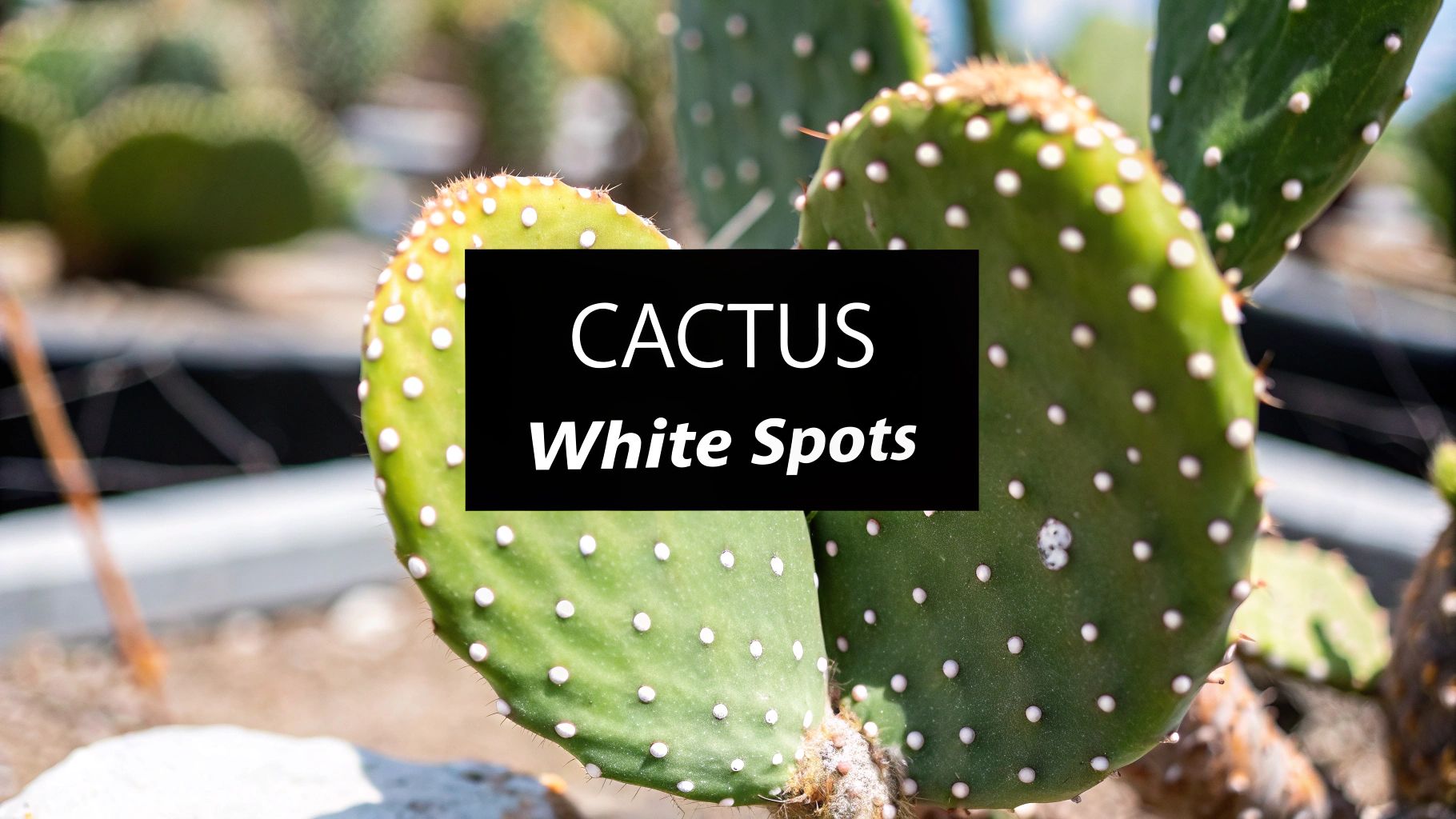

It’s a feeling every plant owner knows: you're admiring your cactus, and suddenly, you spot it. White spots. Panic can set in quickly, but don't worry. Those mysterious marks are almost always a sign of a handful of common, and usually treatable, issues.
Most of the time, you're looking at either a pest problem, like mealybugs or scale, or a fungal infection like powdery mildew. Sometimes, the cause is even simpler, like mineral deposits from your tap water. Figuring out which one you're dealing with is the critical first step to getting your cactus healthy again.
Your First Diagnostic Checkup
When you find something wrong with a plant, it’s easy to jump to the worst-case scenario. But for now, just think of yourself as a plant detective. Your job is to gather clues before you start treatment, because the fix for a pest is worlds apart from wiping away water stains. The texture of the spots, where they are, and how easily they come off will tell you everything you need to know.
This guide will walk you through that detective work. We'll explore the five most common culprits you're likely to find:
- Pest Infestations: These are the big ones. Tiny sap-sucking insects like mealybugs and scale are often the cause of those worrisome white specks.
- Fungal Infections: Powdery mildew can show up as a dusty, almost web-like film on the surface of your cactus.
- Environmental Stress: A common issue is sunscald—basically a plant sunburn—which can bleach patches of the cactus white or yellow.
- Mineral Deposits: If you use hard water, you might just be seeing crusty white spots left behind as the water evaporates. They're harmless, but not pretty.
- Natural Scarring: Sometimes, a cactus develops tough, whitish-tan patches as it gets older or heals from a bump. This is called corking, and it's completely normal.
A Quick Comparison Guide
To kick off your investigation, let's look at the tell-tale signs for each problem. A quick hands-on check is the best way to figure out what’s going on. For instance, are the spots fluffy and cotton-like? That’s a classic sign of mealybugs. Are they hard little bumps you have to scrape off with a fingernail? You're probably dealing with scale.
On the other hand, powdery mildew usually looks like someone dusted your cactus with flour, and it wipes away easily.
The most important thing you can do right now is a simple visual and touch test. It ensures you use the right remedy from the start and don't stress your plant out with treatments it doesn't need.
This little table is designed to make that initial diagnosis a breeze. Use it to compare what you're seeing on your plant with the most common causes. It’ll give you a good starting point before you dive into the specific treatment steps.
Quick Guide to Identifying White Spots on a Cactus
| Potential Cause | Visual Appearance | Texture & Feel | Easily Removed? |
|---|---|---|---|
| Mealybugs | Fluffy, cottony, web-like clusters | Soft, sticky, or waxy | Yes, often smears when wiped |
| Scale Insects | Small, hard, oval, or round bumps | Hard, crusty, or shell-like | No, must be scraped off |
| Powdery Mildew | Dusty, blotchy, web-like coating | Powdery, fine, like flour | Yes, wipes off easily |
| Sunscald | Bleached, yellowish-white patches | Dry, tough, leathery | No, it's permanent skin damage |
| Mineral Deposits | Crusty, white, chalky residue | Gritty, hard, crystalline | Yes, often dissolves with vinegar |
| Scarring/Corking | Woody, whitish-tan, rough skin | Hard, woody, firm | No, it's part of the plant |
Once you have a good idea of the culprit, you’ll have the confidence to move on to the right solution and get your cactus back on the road to recovery.
Dealing With Cactus Pests
If you’ve checked for environmental issues and still see white spots, you’re most likely dealing with tiny, uninvited guests. Pests—specifically mealybugs and scale insects—are notorious for leaving their mark as they feed on your plant’s sap. This section is your battle plan for identifying these invaders and taking back your cactus.
Think of these pests as microscopic vampires. They latch onto your cactus and slowly drain its life force, leading to stunted growth, yellowing, and eventually, the death of the plant if left unchecked. The white spots you're seeing are either the bugs themselves or the protective homes they build.
Let's get a positive ID on the two main suspects.
Mealybugs: The Fluffy Invaders
Mealybugs are masters of disguise, creating white, cottony masses that look a lot like harmless fuzz or even mold. These soft-bodied insects hide inside this waxy, web-like material, often tucking themselves into hard-to-reach spots like the joints between pads or deep within the cactus ribs.
Don't underestimate them. Mealybugs are a major headache in horticulture, affecting over 2,000 plant species and causing production losses of 10–20% in big greenhouse outbreaks. Under the warm, humid conditions they adore, their fuzzy white material can spread to cover 5–30% of a plant in just a few weeks.
What to look for:
- Appearance: Small, cotton-like puffs that look like tiny bits of lint stuck to your plant.
- Texture: Soft and waxy. It’s often sticky to the touch and will smear if you press on it.
- Location: Check new growth areas, crevices, and the base of the spines first.
If you're seeing these fluffy spots, our guide on what to do about white fuzz on a cactus can give you more targeted advice.
Scale Insects: The Armored Bumps
Scale insects are a whole different ballgame. Unlike the soft, squishy mealybugs, scale pests shield themselves with a hard, waxy shell that looks like a little bump or disc stuck to the cactus. These shells can be white, tan, or brown, and they cling on for dear life.
Because of this "armor," you can't just wipe them off. If you try to pick one off with your fingernail, it will usually pop off with a bit of a scraping motion, revealing the soft-bodied insect hiding underneath. They might not look like typical bugs, but they're every bit as damaging.
This flowchart can help you quickly tell the difference between pests, fungus, and other common causes of white spots.

It’s a great visual shortcut that walks you through simple questions about the spot's texture and how easily it comes off, steering you toward the right diagnosis.
Your Step-by-Step Pest Removal Plan
Once you know what you’re up against, it’s time to act. The key here is to be both persistent and consistent. Pests lay eggs, so a one-and-done treatment almost never works. Here’s a proven method to get your cactus healthy again.
Step 1: Isolate the Plant Immediately
This is your absolute first move, and it's non-negotiable. Pests can and will migrate to your other houseplants. Move the infested cactus to its own room, far away from any other plants, to contain the problem. This quarantine needs to last until you’re positive the infestation is gone, which can easily take several weeks.
Step 2: Manual Removal with Isopropyl Alcohol
For the first wave of your attack, nothing beats removing them by hand. You’ll need 70% isopropyl alcohol, some cotton swabs, and maybe a soft-bristle toothbrush for those tricky spots.
- Dip a cotton swab in the isopropyl alcohol.
- Gently dab each visible white spot. The alcohol dissolves the waxy coating on both mealybugs and scale, killing them on contact.
- For heavier infestations, you can use a cloth soaked in the alcohol to wipe down larger areas of the cactus skin.
- Be thorough! Check every crevice and hidden spot where these pests love to hide.
Expert Tip: Never treat your cactus with alcohol in direct sunlight. It makes the plant's skin highly sensitive to light and can cause a nasty sunburn. Do your treatments in the evening or move the plant to a shady spot first.
Step 3: Follow Up with an Insecticidal Soap or Horticultural Oil
After the initial cleanup, you need a broader treatment to catch any pests or eggs you missed. Insecticidal soaps and horticultural oils (like neem oil) are perfect for this.
These products work by smothering the pests or breaking down their protective outer layer. Always follow the product’s dilution instructions to the letter. Spray the entire cactus, making sure you get complete coverage—including the undersides of pads and around the soil line. Just be careful with oils like neem, as they can burn a cactus's skin if applied too thick or in direct sun.
Step 4: Repeat and Monitor
Pest life cycles are your enemy here. New bugs can hatch days or weeks after your first treatment. You have to repeat your treatment every 5–7 days for at least three to four weeks to break the cycle for good.
Keep inspecting the plant closely between treatments and spot-treat any newcomers. Only when your plant has been completely pest-free for a few weeks should you even think about moving it out of quarantine.
Diagnosing Fungus And Environmental Damage
So, you’ve checked for bugs and come up empty. What’s next? If pests aren't the problem, the white spots on your cactus are likely pointing to one of two things: a fungal infection or environmental stress. At first glance, these can look a lot like a pest infestation, but they need a completely different game plan to fix. Learning to spot the subtle differences is everything when it comes to getting your cactus back on track.
Unlike pests that are actively munching on your plant, fungus and environmental damage are more like symptoms. They're clues that your cactus is unhappy with its surroundings—maybe the air is too still, or the sun is just too intense. Think of it less like an attack and more like a cry for help. Once you pinpoint the real issue, you can tweak your care routine and help it heal.
Uncovering Powdery Mildew
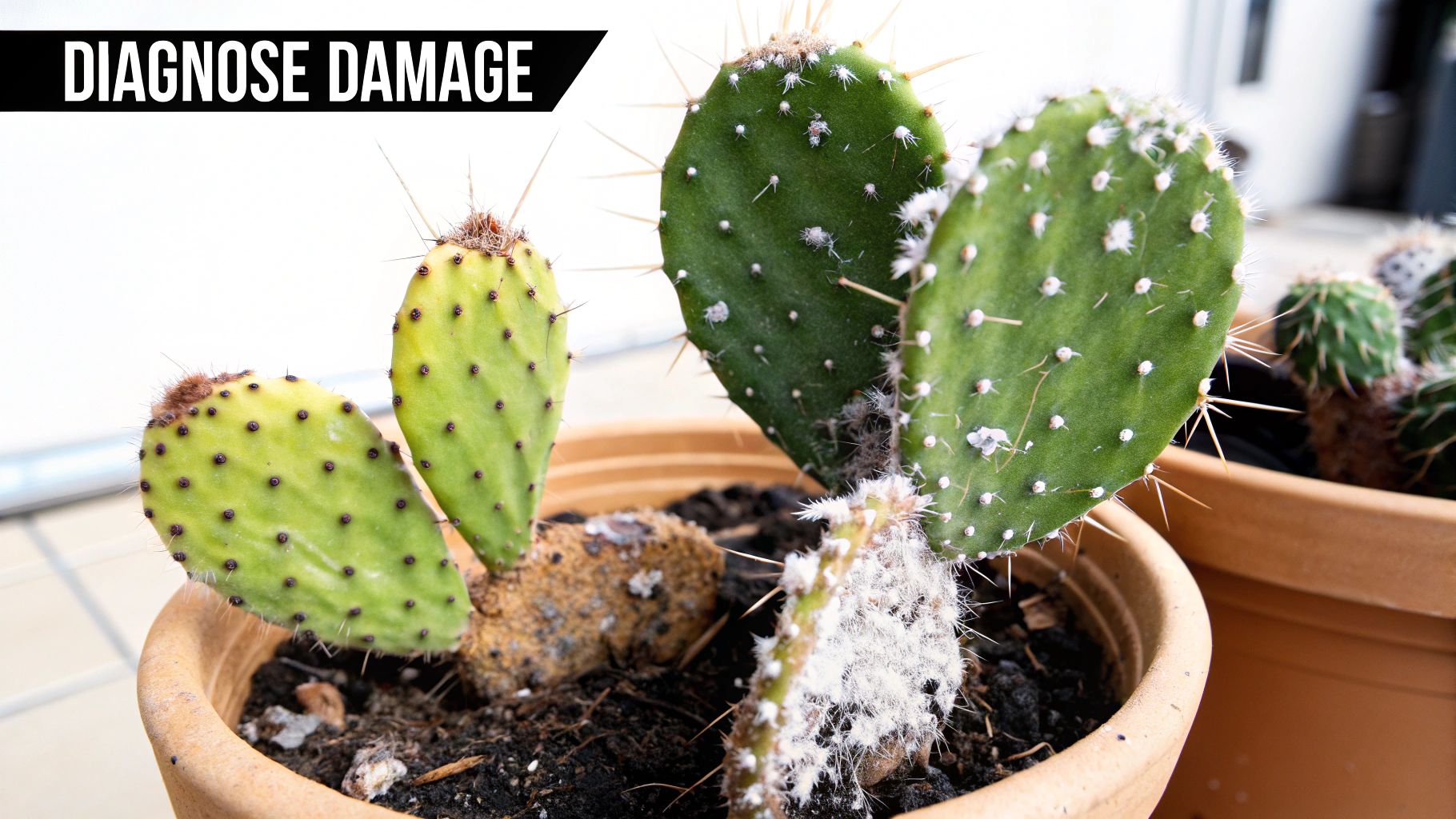
Powdery mildew is a classic fungal issue. It shows up as dusty, almost web-like white spots that settle on the surface of your cactus. The best way to describe it? It genuinely looks like someone lightly dusted your plant with flour. This fungus loves spots with poor air circulation and high humidity, which can easily happen indoors.
The real tell-tale sign is the texture. The white stuff is just on the surface. In the early stages, you can usually wipe it right off with a damp cloth, revealing perfectly healthy green tissue underneath. But don't ignore it—if you let it go, it will spread and slowly sap the life out of your plant.
Getting rid of powdery mildew is a two-pronged attack: kill the current fungus and fix the environment that invited it in.
- Treatment: A good neem oil solution or a commercial fungicide made for succulents will do the trick. Just be sure to spray the plant thoroughly, getting into all the nooks and crannies.
- Prevention: This is all about the environment. Get some air moving with a small fan, try to lower the humidity if it’s too high, and give your plants enough space so they aren’t crowded together.
Identifying Sunscald Damage
Not every white spot is a living threat. Sometimes, the culprit is just too much of a good thing. Sunscald is basically a cactus sunburn. It creates bleached, yellowish-white, or even tan patches on the side of the plant that gets blasted with intense, direct sun.
These patches feel different, too. They aren't fuzzy or raised like a fungus. Instead, the skin of the cactus gets dry, tough, and scarred. And unlike powdery mildew, you can't wipe this away because the damage is cellular—the plant's tissue is literally burned. The cactus will likely survive, but those scarred spots are permanent.
Think of sunscald as a permanent scar. The goal isn't to remove the white spot but to prevent new ones from forming by adjusting the plant's light exposure.
Acclimating your cactus to a sunnier spot is the key to prevention. Never move a plant from a dim corner straight into a blazing hot window. You have to do it gradually. Start with just an hour of direct sun a day, and slowly add more time over a couple of weeks. This lets the cactus toughen up and get used to the brighter light.
Environmental Stress And Spotting
Sometimes, the spots on a cactus can be a real head-scratcher, looking like a mix of different problems. While we're focused on white spots here, it's good to remember that fungus and environmental stress can cause other colors, too. If you're seeing other weird discolorations, our guide to identifying black spots on cactus plants can help you figure those out. A solid diagnosis is always the first step to a healthy plant.
When White Spots Aren't a Big Deal
So, you’ve ruled out the nasty stuff like pests and rot. That's a huge relief! The good news is that not every white spot on your cactus is a sign of impending doom. Sometimes, what you're seeing is totally normal—just the plant's way of dealing with its environment or simply getting older.
Before you go mixing up a treatment spray, take a deep breath. Learning to tell the difference between a real problem and a harmless quirk is what separates a novice from a seasoned plant parent. Getting it wrong could mean stressing out a perfectly healthy cactus with chemicals it doesn't need. Let's look at a few of the "false alarms" that often have people worried for nothing.
Mineral Deposits From Hard Water
Ever seen that chalky white buildup on your showerhead or kitchen faucet? That’s exactly what can happen to your cactus if you're watering with tap water. What you're seeing are mineral deposits, usually calcium and magnesium, that get left behind when the water evaporates.
These crusty spots typically show up near the soil line or tucked into the cactus's ribs. They'll feel gritty or powdery to the touch, just like hard water stains anywhere else. While they won't hurt your plant, they can be a bit of an eyesore.
Getting rid of them is simple:
- Mix up a very weak solution of about one part white vinegar to four parts water.
- Grab a soft cloth or a Q-tip, dip it in the mix, and gently wipe the spots away.
- The mild acid in the vinegar breaks down the minerals without damaging the cactus's skin.
Just remember, this is purely a cosmetic fix. If your water is hard, the spots will keep coming back. Switching to filtered, distilled, or rainwater is the best way to prevent them for good.
Good Ol' Corking (It's Just Getting Older!)
As cacti get older and taller, their base needs to get tougher to support all that weight. This natural aging process is called corking. The soft green flesh at the bottom of the plant will slowly turn into a firm, woody, bark-like layer. It usually starts out looking whitish-tan or yellowish and feels solid, not squishy.
Think of it like a tree developing bark. It's a sign of maturity, not a sickness. Corking always starts at the base and slowly creeps upward—if you see weird patches starting at the top, that’s a different issue.
A similar thing happens with minor injuries. If your cactus gets a little bump or scrape, it’ll form a hard, whitish scar over the spot to seal the wound and keep out infections. This is just the plant's version of a scab. Both corking and scarring are perfectly normal parts of a cactus's life and don't need any treatment at all. Recognizing them for what they are will save you a lot of unnecessary worry.
A Proactive Health Plan For Your Cactus
Look, treating pests and fungus is always a reactive game. You're playing defense. The real secret to a stunning cactus collection is to play offense—to create an environment so healthy that these problems rarely even get a foothold. This is your long-term strategy for preventing those pesky white spots and ensuring your plants don't just survive, but actually flourish.
Think of it like building a fortress for your cactus. A strong, healthy plant in the right conditions can naturally shrug off many of the issues we've talked about. This isn't about adding a bunch of complicated chores to your list; it's about getting a few simple fundamentals right from the start.
Master The Right Watering Technique
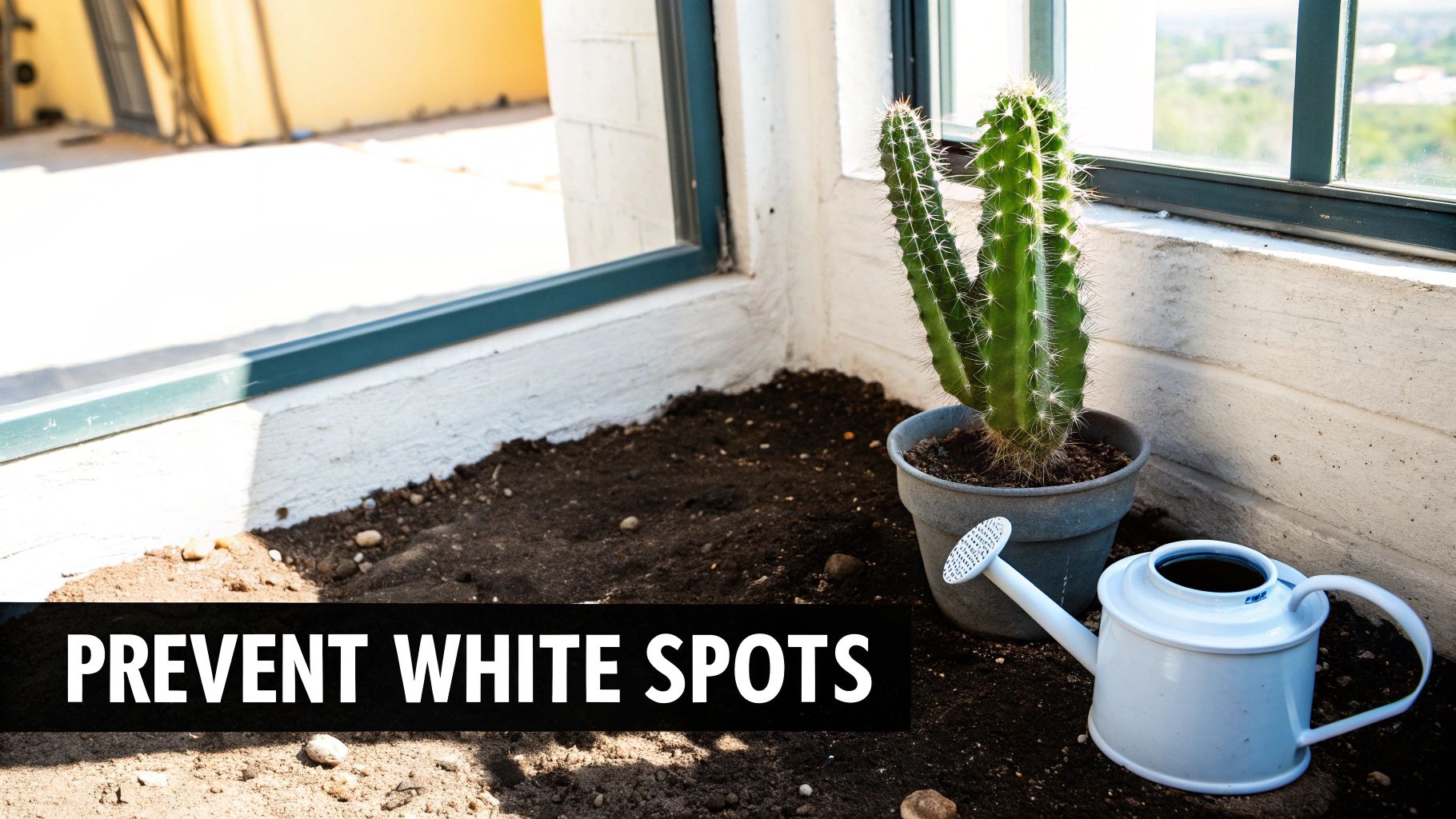
If there's one thing that kills more cacti than anything else, it's overwatering. It's also a wide-open invitation for fungal diseases like powdery mildew. These are desert plants, after all, built to handle drought—not to sit around with wet feet. The trick is to copy their natural rain cycle with the "soak and dry" method.
When it's watering day, be generous. Drench the soil until water pours out of the pot's drainage holes. This makes sure the entire root system gets a good drink. But here's the most important part: let that soil dry out completely before you even consider watering again. For many cacti, this could easily be a few weeks between drinks.
Build The Perfect Foundation With Gritty Soil
The right soil is just as critical as your watering habits. Standard potting mix is basically a death sentence for a cactus. It holds way too much water, suffocating the roots and turning into a perfect breeding ground for rot and fungus.
Your cactus craves a gritty, well-draining soil mix. You can find commercial cactus and succulent blends, or you can easily mix your own. A fantastic DIY recipe is:
- 1 part standard potting soil
- 1 part perlite or pumice (for airflow)
- 1 part coarse sand or fine gravel (for drainage)
This kind of mix lets water flow through quickly instead of turning the pot into a damp sponge. Healthy roots are the bedrock of a healthy plant, and this soil is your best defense against problems that start below the surface.
Good airflow and fast-draining soil are a powerful one-two punch. They eliminate the damp, stagnant conditions that fungal spores and pests absolutely love, keeping your cactus's environment clean and hostile to invaders.
Provide The Right Amount Of Sunlight
Cacti are sun lovers, but you can definitely have too much of a good thing. As we've covered, blasting a cactus with sudden, intense sun leads to sunscald—those permanent white scars. The goal is to give them bright, indirect light or slowly get them used to direct sun.
Most cacti are happy with about four to six hours of direct sun each day, but it really depends on the species. An east-facing window with that gentle morning sun is often the sweet spot. If you've only got a south- or west-facing window, you might need to soften that harsh afternoon light with a sheer curtain, especially for younger plants.
Quarantine New Plants Like a Pro
This is probably the single most important rule for stopping a pest outbreak before it starts. No matter how perfect a new cactus looks at the store, it could be hiding microscopic pests or their eggs.
Always, always isolate new plants for at least two to four weeks. Stick them in a separate room, far away from the rest of your collection. During this quarantine, give the new guy a thorough inspection every few days, looking for any signs of mealybugs, scale, or anything else suspicious. This simple habit is your firewall, and it's the mark of a truly experienced collector.
When It's Time to Give Up on a Plant
As much as we love our plants, sometimes the kindest thing you can do—for both the sick cactus and the rest of your collection—is to let it go. It's a tough call, but knowing when a plant is past the point of no return is a crucial skill for any plant parent. Trying to save a cactus that's too far gone can unfortunately put your other healthy plants at risk.
You've tried everything. You’ve been treating pests or fungus for weeks, but nothing seems to change. If the white spots, especially from a bad pest infestation, have taken over more than half of the plant, the damage is likely too severe. The cactus has simply exhausted all its energy trying to fight back and can't recover.
Key Signs It's Too Late
A few tell-tale signs signal that a cactus is beyond saving. The biggest and most final one is rot. If you poke the base of the plant and it feels soft, mushy, or looks black and discolored, that’s almost always a sign of advanced rot that has already destroyed the roots. At that point, there’s really no coming back.
Look for these definitive signs:
- Widespread Infestation: The pests have completely swarmed the plant, covering over 50% of its surface.
- Severe Rot: The cactus is soft, squishy, or collapsing at its base.
- No Response: You’ve been diligent with treatment for weeks, but there’s been zero improvement.
If your plant is struggling but doesn't have these severe symptoms, there might still be hope! For a deeper dive into recovery tactics, check out our guide on how to revive a dying cactus.
Deciding a plant is beyond saving isn't a failure. Think of it as a strategic move to protect the rest of your collection from a devastating pest or disease outbreak.
When you've made the decision, make sure to dispose of the plant and its soil properly. The last thing you want is for those pests to find a new home. Seal the entire plant, pot and all, in a plastic bag before tossing it in the trash. And definitely don't add it to your compost pile, as that could spread the problem right back into your garden.
Once you've cleared the space, you can give yourself a fresh start with a new, healthy cactus. When you're picking one out, give it a good once-over. Look for firm, vibrant green growth and make sure there are absolutely no suspicious white spots. Starting with a strong, healthy plant is always the best form of prevention.
Common Questions About White Spots On Cactus
Even with the best game plan, weird plant problems always spark a few more questions. Spotting some mystery white fluff on your cactus can send you down a rabbit hole of "what if's," so let's get straight to the point. This is where we’ll tackle the most common follow-up questions we get from our fellow cactus enthusiasts.
Consider this your quick-fire Q&A. We'll cover those specific scenarios that don't always fit neatly into a single category and give you clear advice to handle your plant’s health with confidence.
Can White Spots Spread To My Other Plants?
Yes, and this is probably the most important thing to get right. If those white spots are from mealybugs, scale insects, or powdery mildew, they are absolutely a threat to your other houseplants. These issues are incredibly contagious and can explode into a collection-wide infestation before you know it.
This is exactly why immediate quarantine is a must. The second you even suspect a pest or fungus, get that cactus into its own room. Keep it isolated far away from your other green friends until you're 100% sure the problem is solved.
Should I Scrape The White Spots Off?
That really depends on what you're dealing with. Going at your plant with your fingernails can sometimes cause more damage than the original problem, creating open wounds that are an invitation for infection.
Here’s a quick guide on when to scrape and when to stand down:
- Yes for Scale: Those hard, armored scale insects have to be physically pried off. You can gently use a fingernail or a dull knife to pop them loose.
- No for Mealybugs: Trying to scrape off that fluffy white stuff just smears the bugs and their eggs around. A much better approach is to dab them directly with a Q-tip soaked in isopropyl alcohol.
- No for Damage: Never, ever try to scrape off sunscald or natural corking. This is just the plant's skin, and peeling it away will only injure it.
Are The White Spots Themselves Harmful?
The spots are just symptoms, but the cause behind them is often the real danger. White spots from pests—like mealybug fluff or scale shells—are proof that insects are actively sucking the life out of your plant. This constant feeding weakens the cactus, stops its growth, and can kill it if the infestation gets bad enough.
Likewise, powdery mildew is a living fungus that’s stealing nutrients. On the flip side, things like mineral deposits or corking are totally harmless and are more of a cosmetic quirk than a health crisis.
The real goal is to treat the cause, not just the spot. Prying off a scale insect only works because you're removing the pest underneath its armor.
Figuring out the difference is everything. A pest problem demands immediate action, while a cosmetic spot just requires you to relax. Your initial diagnosis is what tells you whether it's time to go to war or just let your cactus do its thing.
Of course, the best way to sidestep these headaches is to start with a tough, healthy plant from the get-go. The Cactus Outlet has a huge selection of robust, beautifully grown cacti, giving you a strong, resilient plant from day one. Explore our collection and find your next perfect cactus today.