
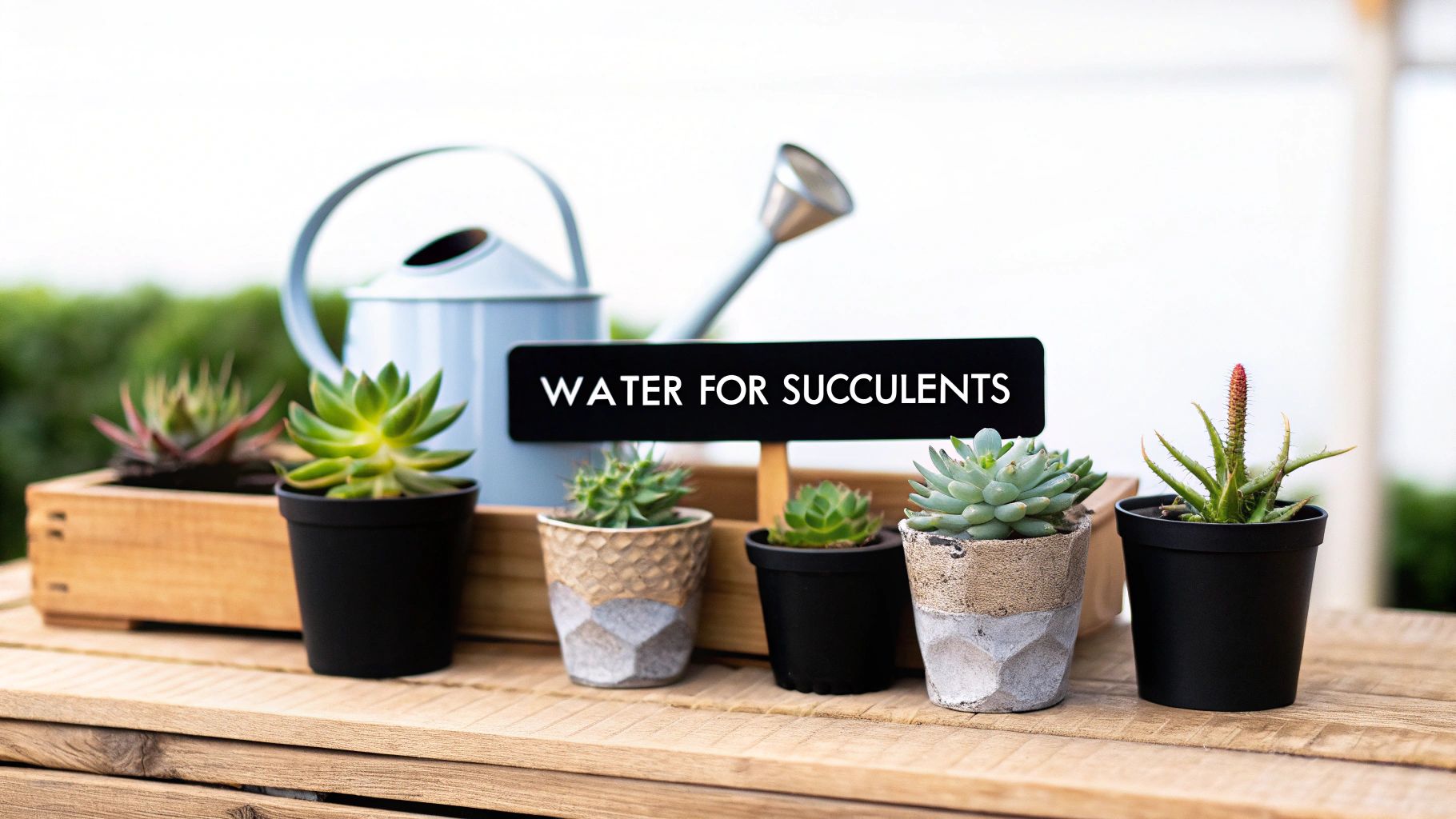

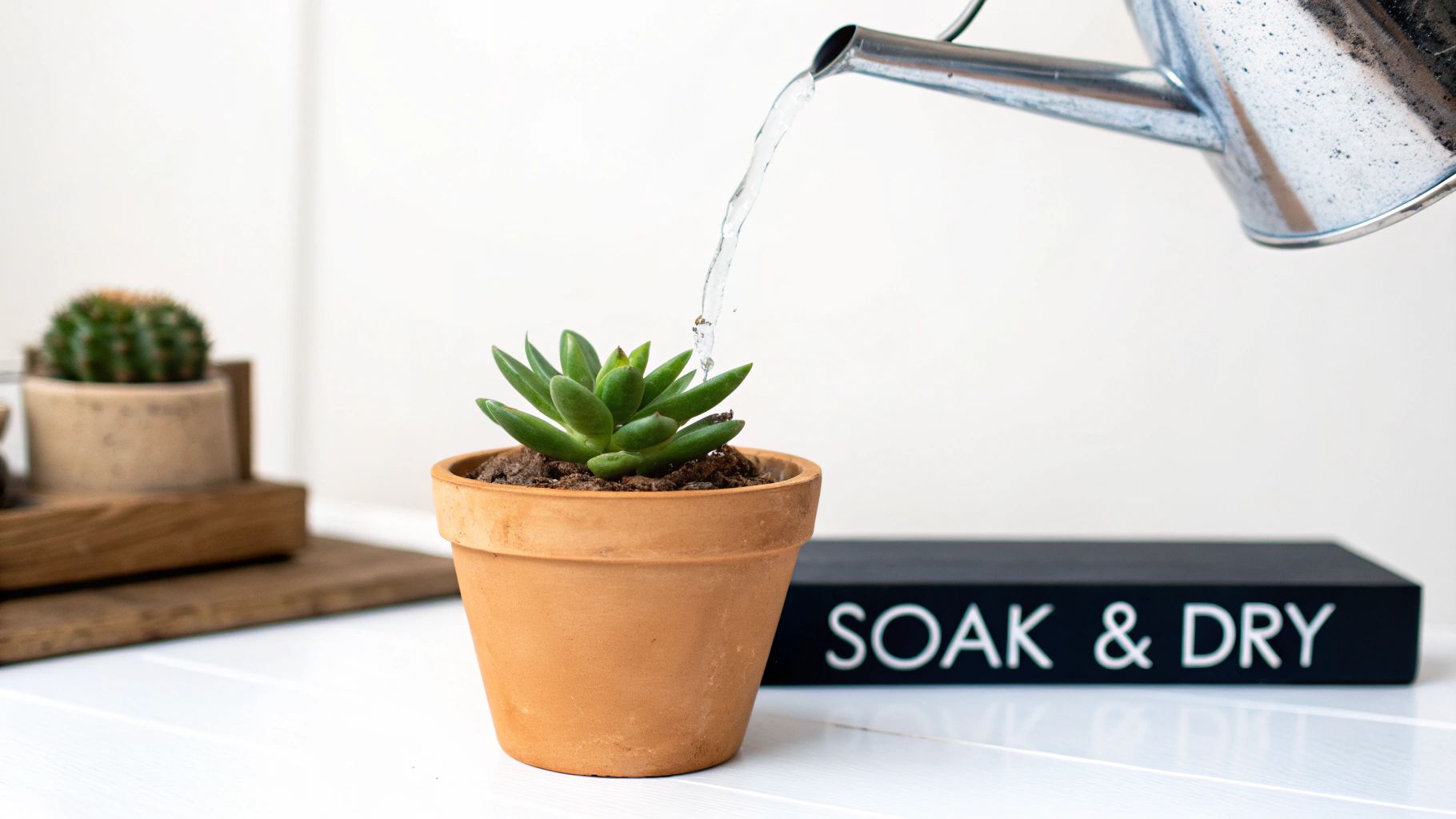
When it's time to water your succulent, forget the little sips. The best approach is to thoroughly drench the soil until water runs freely out the drainage hole, then let it dry out completely before you even think about watering it again. This "soak and dry" method is exactly what these desert-dwellers crave. As a simple starting point, a standard 4-inch pot usually needs about 2-4 ounces of water to get a proper soaking.
The Succulent Watering Method That Actually Works
If you’ve ever felt lost trying to figure out exactly how much water a succulent needs, you're in good company. The internet is a minefield of conflicting advice, from rigid watering schedules to vague tips that don't help.
Here’s the truth from someone who's learned the hard way: successful succulent care isn’t about following a calendar. It's about mastering a technique. The "soak and dry" method is the gold standard because it mimics the infrequent but heavy downpours these plants get in their natural, arid habitats.
This deep watering encourages the roots to grow down and out, creating a strong, resilient foundation. When you only give a plant a tiny splash of water here and there, you're only wetting the top layer of soil. This leads to shallow, weak roots, leaving your plant vulnerable and stressed.
Debunking Common Watering Myths
Before we go any further, let's bust a couple of popular—and destructive—myths. So many new succulent owners are told to mist their plants or use ice cubes, thinking it’s a gentle way to hydrate them. In reality, these practices are a fast track to problems.
- Misting: Succulents drink through their roots, not their leaves. Misting does next to nothing for hydration. What it does do is leave water sitting on the leaves and rosettes, creating the perfect humid conditions for fungal diseases and rot to take hold.
- Ice Cubes: The intense cold from an ice cube can actually shock a succulent's delicate root system. As the ice melts, it also creates a slow, steady drip that keeps the topsoil soggy for too long—an open invitation for root rot.
The single biggest mistake I see is watering too often. Your goal should be to drench the soil completely and then let it become bone-dry. This simple cycle is the secret to preventing root rot, which is hands-down the number one killer of succulents.
A Practical Starting Point by Pot Size
While getting a feel for your plant's soil is always the best way to go, having a rough baseline for water volume can give you confidence. It’s no exaggeration that overwatering is responsible for 70-80% of succulent failures for beginners.
To avoid this trap, start with measured amounts based on your pot size. For example, a tiny pot under 4 inches across typically only needs 1-2 ounces (30-60 ml) per soaking. A medium pot, say between 4 and 8 inches, might need 2-4 ounces (60-120 ml). For big containers over 8 inches, you could be looking at 4-6 ounces (120-180 ml) or more. For a deeper dive, you can find more details about how to water succulents and avoid these common pitfalls from seasoned plant experts.
Think of these as guidelines, not strict rules. They’re a great safety net to prevent you from accidentally drowning your plants while you're still learning.
Quick Reference for Watering Succulents by Pot Size
To make things even easier, here's a simple table to use as a starting point. These estimates are for a typical growing season—remember to adjust as you get to know your plant and its environment.
| Pot Diameter | Estimated Water Volume Per Soaking | Typical Watering Frequency (Growing Season) |
|---|---|---|
| Under 4 inches (10 cm) | 1–2 ounces (30–60 ml) | Every 7–14 days |
| 4 to 6 inches (10–15 cm) | 2–4 ounces (60–120 ml) | Every 10–20 days |
| 6 to 8 inches (15–20 cm) | 4–6 ounces (120–180 ml) | Every 2–3 weeks |
| Over 8 inches (20 cm) | 6+ ounces (180+ ml) | Every 2–4 weeks |
Use this chart to build your confidence, but always let the soil be your final guide. If it's still damp, wait a few more days before watering, no matter what the calendar says.
Toss out that rigid watering schedule. Seriously. The best thing you can do for your succulents is to stop watering by the calendar and start listening to what your plants are actually telling you. Learning to "read" your plant and its soil is the single most important skill you can develop.
It all comes down to checking the soil before you even think about grabbing the watering can. This one simple habit is the key to avoiding overwatering, which is hands-down the number one killer of succulents. Once you master this, you'll be watering with confidence.
Foolproof Ways to Check if Your Soil is Dry
For smaller pots, the good old "finger test" works wonders. But don't just tap the surface. You need to get in there. Stick your finger at least one to two inches deep into the soil. If you feel even a hint of coolness or dampness, put the watering can down and walk away. The soil needs to feel bone dry.
What about those bigger, deeper pots where your finger can't reach the bottom? A simple wooden skewer or a plain chopstick becomes your best friend.
- The Skewer Trick: Gently push the skewer all the way down into the soil, trying to avoid the main root ball. Let it sit for a minute or two.
- The Big Reveal: Pull it out. If it comes out perfectly clean and dry, it's go-time. If you see dark, damp soil clinging to it, your plant is still fine. Check again in a few days.
This little trick gives you a peek into what's happening deep inside the pot, right where root rot loves to start.
"Your succulent will always give you clues before it's in serious trouble. Wrinkled leaves are a whisper for water, while mushy, yellow leaves are a scream. Learning to listen to the whispers is what makes you a great plant parent."
Is My Succulent Thirsty? Signs of Underwatering
When a succulent gets thirsty, it starts using up the water it has stashed away in its leaves. This creates some pretty obvious visual cues once you know what you’re looking for.
A dehydrated succulent will start to look a bit deflated. The leaves, normally firm and plump, will feel soft and bendy when you give them a gentle squeeze. Think of it as your plant's main signal that its water tank is running low.
You'll also see wrinkling. The leaves might get fine lines or even deep puckers, almost like a grape slowly turning into a raisin. On an Echeveria, you might see the bottom leaves looking shriveled; on a String of Pearls, the little "pearls" might look dented or flattened. These are all clear cries for a good, deep drink.
Help! Is My Succulent Drowning? Signs of Overwatering
Underwatered plants can almost always be saved. Overwatered ones? That's a much more dangerous situation. Too much water literally suffocates the roots, leading to rot that can take down a plant with shocking speed. The signs are stark and mean you need to act fast.
The most obvious red flag is yellow, translucent, or mushy leaves. Unlike the dry, wrinkled look of a thirsty plant, overwatered leaves become soft and squishy because their cell walls have burst from taking in too much water. Often, these leaves will fall off at the slightest touch.
An even more dire sign is a darkening or blackening stem, especially right at the soil line. This is a five-alarm fire—it means root rot has spread from the roots into the plant's main body, making rescue a serious challenge. If you see your plant turning yellow, you need to play detective right away. Our guide on why a cactus turns yellow can help you figure out what's going on before it's too late.
Adjusting Your Watering for Seasonal Shifts
One of the biggest mistakes I see people make is watering their succulents on the same schedule all year long. It’s a natural assumption, but these plants are incredibly in tune with nature’s rhythms, and their thirst changes dramatically with the seasons. Getting this cycle right is the difference between a plant that just survives and one that really thrives.
Succulents have a pretty straightforward life cycle: they're either actively growing or they're resting. Your job is to match your watering to what they're doing. If you don't, you're setting yourself up for problems, especially root rot during the colder months when the plant isn't using much water.
Watering During the Growing Season: Spring and Summer
For most succulents, spring and summer are party time. As the days get longer and the sun gets warmer, they kick into high gear—pushing out new leaves, sending up pups, and sometimes even showing off with flowers. All that activity takes energy, and that energy is fueled by water.
During these months, you'll notice the soil dries out way faster, especially if your plants are catching some rays outdoors or in a bright window. This is your cue to water more often, usually somewhere between every 7 to 14 days, though this really depends on your local heat and humidity. Just stick with the classic "soak and dry" method: give them a thorough drench, then let the soil go completely bone dry before you even think about watering again.
To give you a real-world example, my Echeveria basking in the hot inland sun might need a good drink every single week in July. But if I moved that same plant to a friend's cooler, coastal garden, it might only need water every two weeks. The calendar is a suggestion; the soil is the boss.
Tapering Off in the Transitional Season: Fall
As summer’s heat gives way to the crispness of fall, your succulents sense the shift. The days get shorter, the light is less intense, and the temperatures begin to dip. This is their signal to start winding down for a long winter’s nap.
This is when you need to start scaling back. The soil will naturally take longer to dry out because the plant's metabolism is slowing. I find that stretching the time between waterings to every 2 or 3 weeks is a good rule of thumb. This gradual reduction helps ease the plant into its winter dormancy without the shock of going from a summer feast to a winter famine.
The most dangerous time for a succulent is winter. Overwatering during dormancy is a death sentence. The plant isn't using the water, so it just sits in cold, wet soil, creating the perfect storm for fatal root rot.
Watering During Dormancy: Winter
Winter is downtime for most succulents. Growth slows to a crawl, or stops completely. Because they aren’t actively doing anything, their need for water plummets. This is where your watering skills are truly put to the test.
Giving a dormant succulent too much water is the #1 rookie mistake and the fast track to rot. The roots simply can't absorb moisture from cold, soggy soil. In my experience, and the data backs this up, overwatering during dormant phases causes root rot in an estimated 90% of cases. On top of that, wet soil can increase the risk of frost damage by as much as 60% if the plant is exposed to a freeze. You can learn more about the critical need to reduce winter watering on lulasgarden.com.
In the dead of winter, you might only need to water once every 4 to 6 weeks—or maybe even less. For many of my succulents in our mild-but-cool winters, a tiny splash of water just once or twice over the entire season is all they need to keep from shriveling up.
This little flowchart is a great visual reminder of the most fundamental rule: always check the soil first.
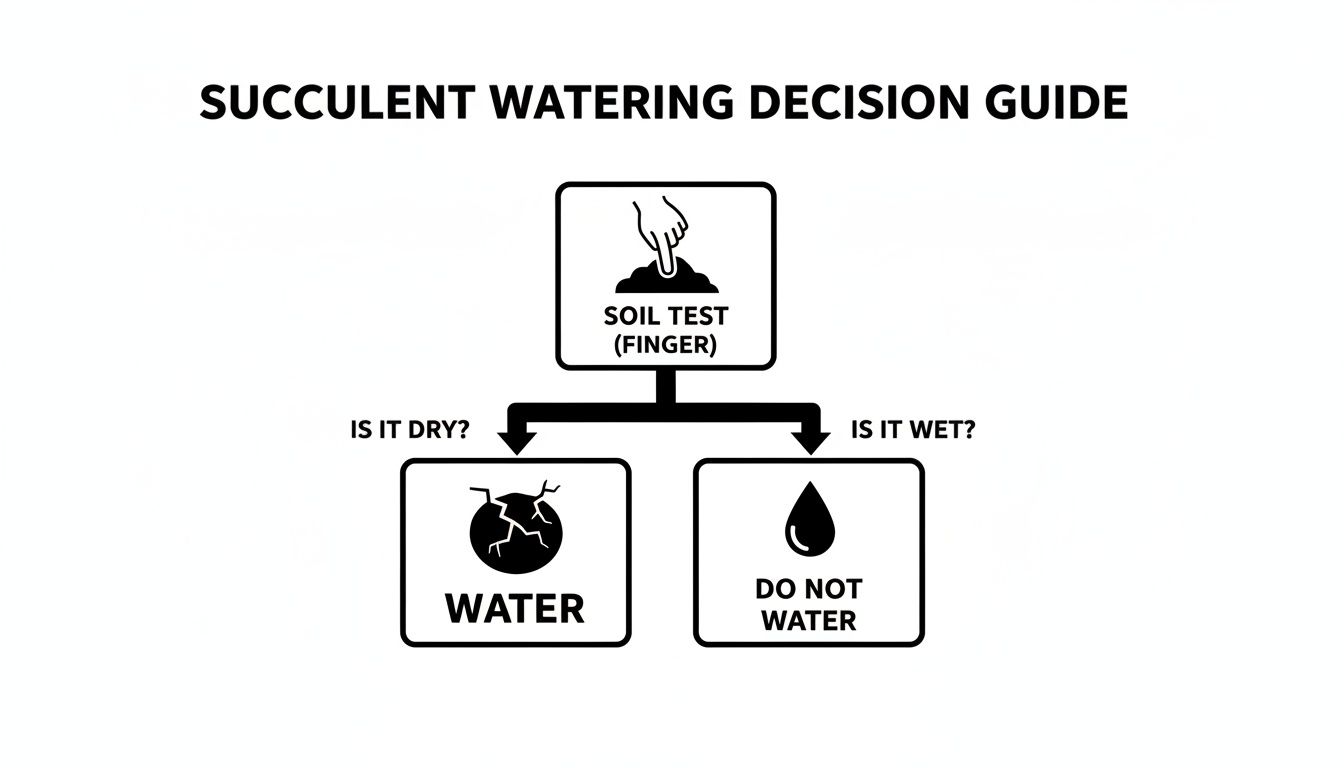
Ultimately, it’s not about the calendar, the weather, or what you did last time. It’s about whether the soil is dry or wet. That’s it. Let that simple fact guide your every move.
Why Your Soil and Pot Are Just as Important as Water
It’s a frustrating lesson many of us learn the hard way: you can follow every watering rule to the letter and still end up with a sad, mushy succulent. More often than not, the problem isn't how you're watering—it's the foundation. The pot and the soil are the unsung heroes of succulent health.
Get this combination right, and everything else falls into place. A good setup makes watering forgiving and intuitive. The right soil and pot team up to wick away excess moisture, giving the roots the airy environment they crave. Without that solid base, you're just fighting a constant, uphill battle against root rot.
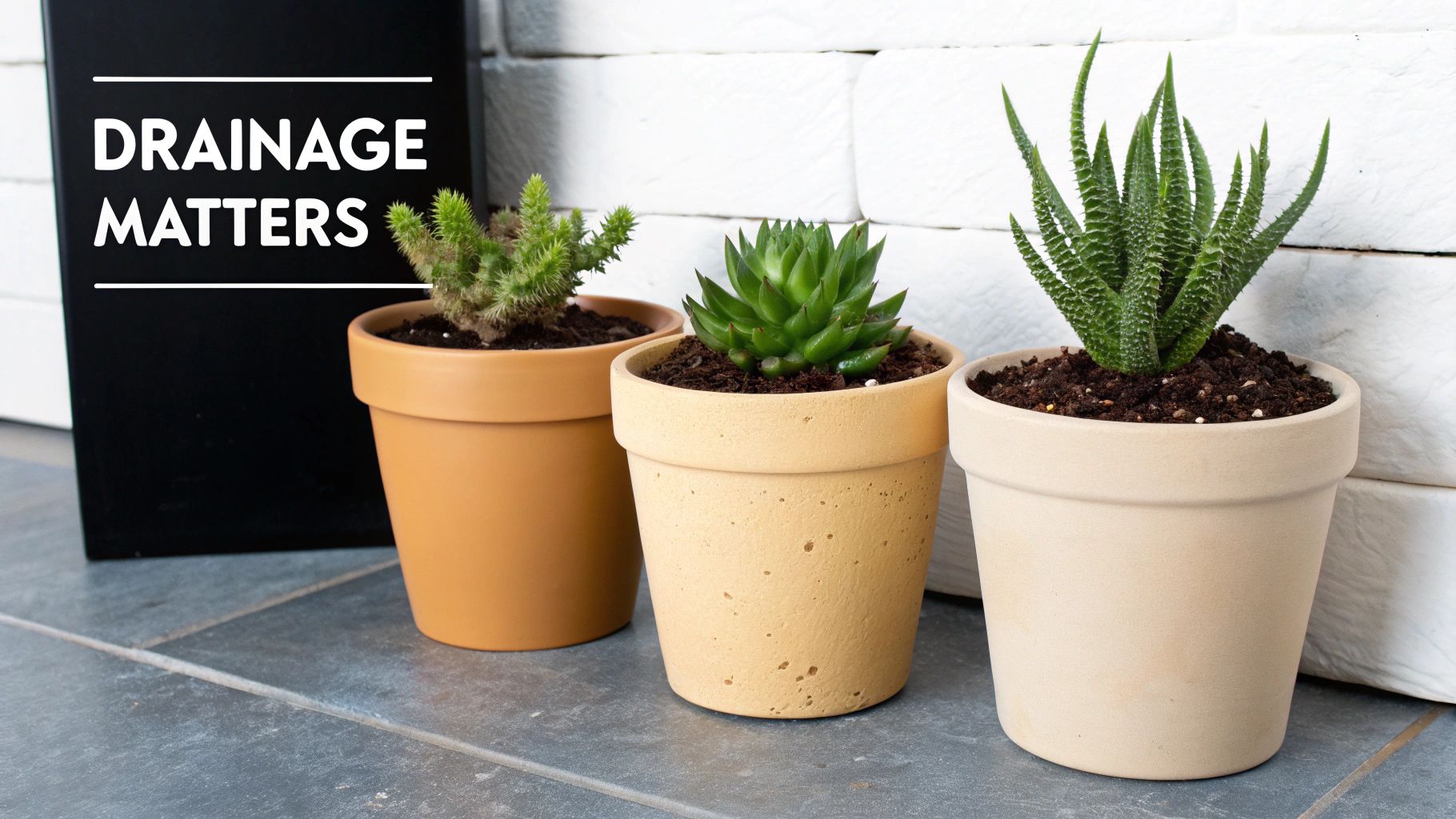
Crafting the Perfect Soil Mix
Let's get one thing straight: standard, off-the-shelf potting soil is a death sentence for most succulents. It's engineered to retain moisture, which is the exact opposite of what these desert dwellers need. Succulent roots are meant for a gritty, fast-draining environment where water rushes through, not one where they sit in a soggy mess.
The secret to a great succulent mix is creating air pockets and promoting swift drainage. You can achieve this with a few key ingredients:
- Pumice: This porous volcanic rock is a champion of aeration. It’s lightweight and won't compact over time.
- Perlite: Think of this as volcanic glass that's been puffed up like popcorn. It’s fantastic for lightening heavy soils and boosting drainage.
- Coarse Sand: We're not talking about fine beach sand here. Coarse horticultural sand has larger particles that let water flow freely without turning to concrete.
While pre-made cactus mixes are available, blending your own gives you ultimate control. A reliable starting point is a 1:1:1 ratio—one part potting soil, one part pumice or perlite, and one part coarse sand. For a deeper dive, check out our guide to the perfect cactus and succulent soil mix.
The Non-Negotiable Drainage Hole
This is the one rule you can't break. If your pot doesn’t have a drainage hole, it’s not a home for your succulent; it's a bathtub. A drainage hole is your single best defense against accidental overwatering, giving excess water a clear escape route.
I've seen so many beautiful pots without drainage, and I get the temptation. But the risk just isn't worth it. Without an exit, water inevitably pools at the bottom. That old trick of adding a layer of rocks? It’s a myth. It actually creates a soggier environment right at the root level, making rot almost a guarantee.
Your succulent's pot should be its partner in staying dry, not its enemy. A porous pot with a good drainage hole does half the watering work for you by actively pulling moisture away from the roots.
Choosing the Right Pot Material
The material your pot is made from has a huge impact on how quickly the soil dries. This, in turn, dictates how often you need to water. Understanding the difference helps you match the pot to your home's environment and even your own watering style.
- Terracotta (Porous): This is the classic choice for a reason. Unglazed terracotta is breathable, wicking moisture right through its walls. This helps the soil dry out evenly and quickly, making it an incredibly forgiving option, especially for beginners.
- Glazed Ceramic & Plastic (Non-Porous): These materials look sleek but hold water much longer since moisture can't evaporate through the sides. If you use one, you'll need to water far less frequently and be extra vigilant.
So what if you fall in love with a decorative pot that has no hole? Don't despair. Just use it as a "cachepot." Keep your succulent in its simple plastic nursery pot (with drainage!), and place that pot inside the decorative one. When it's time to water, just lift the inner pot out, give it a thorough soak in the sink, let it drain completely, and pop it back in. Problem solved.
Advanced Watering Techniques and Troubleshooting
Once you get the hang of the basic "soak and dry" method, you can start to level up your game. Exploring a few different techniques will not only solve common problems but also help you tune into the specific needs of the more unique plants in your collection. It’s how you go from just keeping them alive to helping them truly thrive.
One of the best tools in an experienced grower's toolkit is bottom watering. This simple method completely changes how a plant drinks, and for certain succulents, it's a total game-changer.
The Power of Bottom Watering
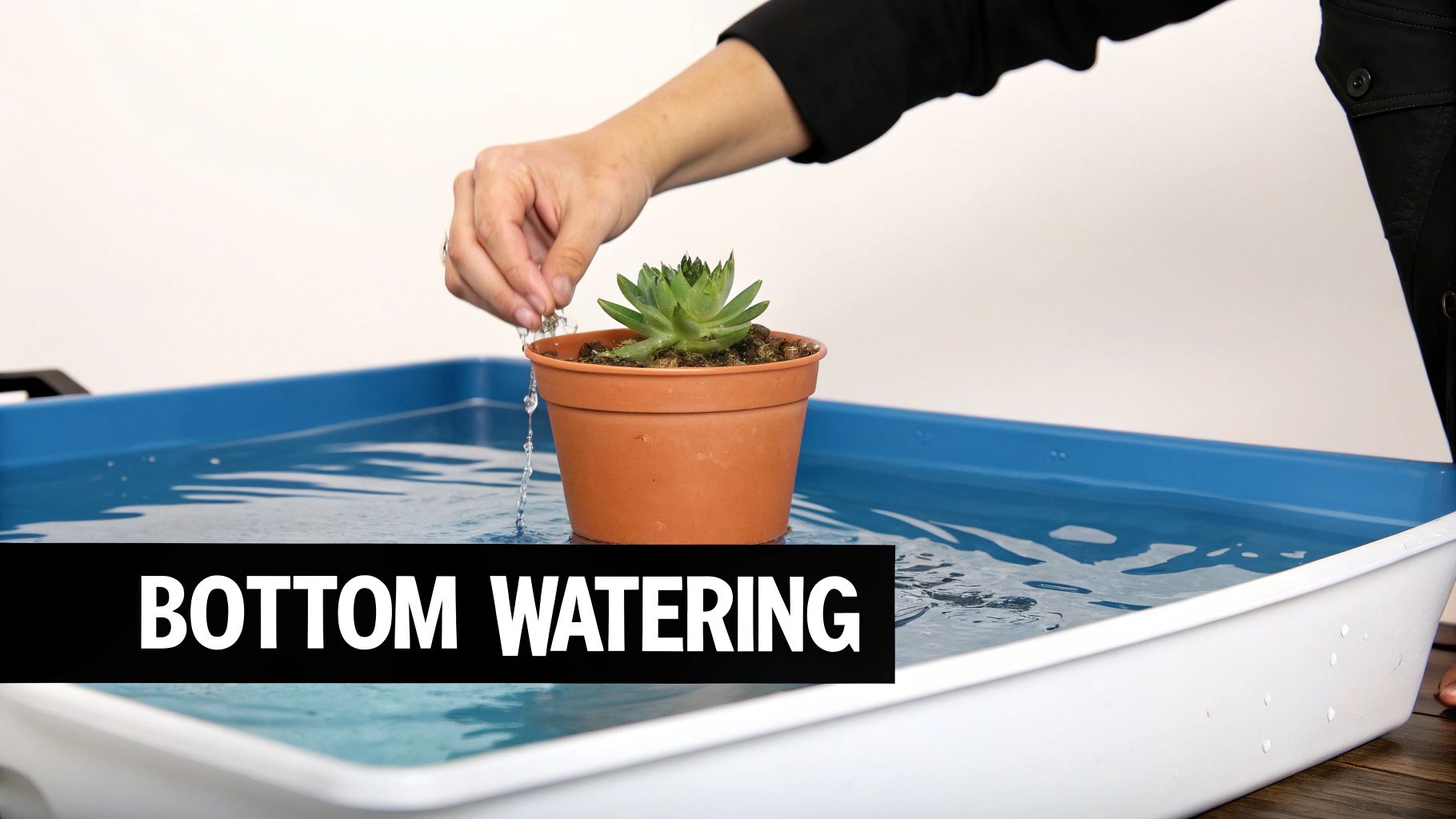
Instead of pouring water over the top of the soil, bottom watering lets the plant soak it up from below. You just need a pot with a good drainage hole. Think of it like a plant-sized straw—the dry soil uses capillary action to pull moisture up through the drainage hole, hydrating the roots directly.
Why is this so great? It encourages roots to grow downward and deep, creating a much stronger and more resilient root system. Here's all you have to do:
- Find a tray, bowl, or even a clean sink and fill it with an inch or two of water.
- Set your potted succulent right in the water.
- Let it sit for about 10-20 minutes. The best way to know it's done is when you see the soil at the surface darken with moisture.
- Pull the pot out, let any excess water drain away for a few minutes, and you're good to go.
This is my go-to method for succulents with tightly packed rosettes, like many Echeveria varieties. It prevents water from getting trapped between the leaves, which is a fast track to rot. Plus, you guarantee the entire root ball gets evenly saturated without a single drop touching the foliage.
Not All Succulents Are Created Equal
While the general rules are a fantastic starting point, you’ll quickly learn that every succulent has its own personality. A chunky Echeveria with thick, fleshy leaves is a master at water storage and can go for long stretches without a drink.
On the other hand, a vining plant like 'String of Pearls' (Senecio rowleyanus) has much smaller leaves and a more delicate root system. It can't hold as much water and will probably tell you it's thirsty a lot sooner. Its fragile stems also make it a perfect candidate for bottom watering to avoid knocking off those precious "pearls."
The real secret is to pay attention to your plant's structure. Vining types with tiny leaves usually need more frequent check-ins, while the big, dense rosette succulents are built for drought. Learning to spot these differences is what makes all the difference.
Troubleshooting Common Watering Problems
Even the most seasoned plant parents run into trouble. Don't panic when you see a sad-looking succulent; think of it as the plant giving you feedback. A dying plant is often just asking for a change, and a quick response can turn things around. If things look really dire, our guide on how to revive a dying cactus has some excellent emergency tips.
To help you figure out what's going on, I've put together a quick guide to diagnose and fix the most common issues you'll encounter.
Common Succulent Watering Problems and Solutions
This quick-reference guide helps you diagnose and fix the most common issues related to overwatering and underwatering your succulents.
| Symptom | Likely Cause | How to Fix It |
|---|---|---|
| Yellow, Mushy, Translucent Leaves | Overwatering. The plant's cells have burst from too much water, and root rot has likely begun. | Stop watering immediately. Gently unpot the plant, trim away any black or mushy roots, and repot in fresh, dry soil. Wait at least a week to water again. |
| Wrinkled, Soft, Deflated Leaves | Underwatering. The plant has used up its internal water reserves and is dehydrated. | Give the plant a deep, thorough watering until water flows freely from the drainage hole. The leaves should plump back up within a day or two. |
| Leaves Dropping at the Slightest Touch | Severe Overwatering. This is an advanced stage of root rot where the connection between the leaves and stem is weakened. | Follow the steps for overwatering. If the stem is also mushy, you may need to take healthy leaf or stem cuttings to propagate a new plant. |
| Stunted Growth or No New Growth | Chronic Underwatering or Root Bound. The plant may lack the water needed for new growth, or its roots have no room to expand. | Check the soil moisture. If it's always bone-dry, water more often. If the roots are a dense mat, it's time to repot into a slightly larger container with fresh soil. |
| White or Brown Crust on Soil/Pot | Mineral Buildup. Hard tap water can leave behind mineral deposits over time. | Every few months, flush the soil by watering thoroughly with distilled or rainwater. Let it run through the pot to wash away the excess mineral salts. |
Learning to read these signs is one of the most valuable skills you can develop. Before you know it, you'll be able to spot a problem from a mile away and know exactly what to do.
Got Questions About Watering Succulents? We've Got Answers.
Even after you think you've got it down, a specific question will pop up. It happens to everyone. When you're learning the ropes of succulent care, it's totally normal to have a few lingering doubts. We've pulled together some of the most common questions we hear from fellow growers to give you clear answers and help you sidestep common pitfalls.
Should I Be Misting My Succulents?
Let's clear this one up right away: No. Misting is probably one of the most common mistakes I see new succulent owners make, and it’s a fast track to problems.
Misting just wets the leaves, which does nothing to hydrate the roots where the plant actually absorbs water. Even worse, it creates a humid microclimate around the plant that can invite fungal growth and rot. Think about where these plants come from—deserts get infrequent but deep, drenching rains. You want to mimic that, not a humid jungle. Stick to watering the soil directly.
How Do I Water a Pot With Several Different Succulents?
Watering an arrangement is a bit of an art, but the core principle is the same: "soak and dry." The goal is to drench the entire pot until water runs out of the drainage hole, ensuring every plant gets a good drink.
The tricky part is that mixed containers don't always dry out evenly. One side might be catching more sun, or one plant might be thirstier than its neighbor. Before you even think about watering again, grab a wooden skewer or chopstick and check the soil in a few different spots. If you're building your own arrangement, it's a huge help to group plants with similar water needs together. It prevents you from drowning one while another one is still thirsty.
Root rot is the silent killer of overwatered succulents. It's a fungal disease that thrives in soggy soil, essentially suffocating and decaying the roots from the bottom up. Once it starts, it can be difficult to stop.
What Is Root Rot, and Can I Save My Plant?
Root rot is what happens when a succulent's roots sit in wet soil for too long. You'll know you have a problem when you see the base of the stem turning dark or black, and the leaves become yellow, mushy, and almost translucent. If you see these signs, you have to act fast.
Here’s your rescue plan:
- Get it out of the pot. Gently remove the plant and wash away all the old, wet soil.
- Inspect the damage. Use a clean, sharp knife to trim off any roots that are black, slimy, or have a foul smell. Healthy roots are usually firm and white or light-colored.
- Check the stem. If the rot has crept up the stem, you’ll need to cut above the rotted section to save the healthy top part as a cutting.
- Let it heal. Leave the plant (or the cutting) out in a dry, shaded spot for several days. You're waiting for the cut ends to form a dry callus.
- Repot. Plant it in a fresh pot with completely dry succulent mix. Don't even think about watering it for at least a week—this gives the new roots time to heal and get established.
Is Tap Water Okay to Use?
For most succulents, regular tap water is perfectly fine. They're tough plants. While rainwater is always the best option, it's not always practical to collect.
The main thing to watch for with tap water is "hardness"—high levels of minerals like calcium and magnesium. Over time, these can build up as a white crust on your soil and pot. It's not usually a huge deal, but it can eventually interfere with nutrient uptake. If you know your water is very hard or heavily chlorinated, a simple trick is to let it sit in an open container overnight. This allows some of the chlorine to evaporate. For particularly fussy or valuable plants, switching to filtered or distilled water is a great way to avoid any mineral buildup from the start.
Ready to add some stunning, easy-care architectural plants to your collection? The Cactus Outlet offers a vast selection of healthy, high-quality cacti and succulents delivered right to your door. Explore our inventory and find the perfect plant to elevate your home or garden today at https://www.cactusoutlet.com.