


It's a sinking feeling every cactus owner knows: you walk by your plant one morning and notice ugly black spots that weren't there before. Don't panic. These spots are just symptoms, a visual SOS from your cactus telling you something is wrong.
Think of yourself as a plant detective. The appearance, texture, and location of those spots are all clues that can help you crack the case. Once you know what you’re dealing with, you can get your cactus back on the road to recovery.
What Those Black Spots on Your Cactus Really Mean
Those dark blemishes on your prized cactus aren't a death sentence. Instead, they're your plant's way of communicating distress. Each type of spot tells a different story, and learning to read these signs is the key to solving the underlying problem and moving from worry to a clear plan of action.
The cause of black spots on a cactus usually falls into one of four main categories. Getting the diagnosis right is crucial because the treatment for a soft, mushy spot is completely different—and far more urgent—than the fix for a dry, calloused one.
The Main Suspects
Before you start surgery or reach for a spray bottle, let's run through the usual suspects behind those unsightly marks. Understanding these common culprits will help you narrow down the issue in no time.
- Fungal and Bacterial Rot: This is usually the most dangerous one. It shows up as soft, spreading black areas that signal decay is happening from the inside out.
- Sunburn: Too much direct sun can scorch a cactus. The spot will look pale or white at first, but the damaged tissue can eventually die off and turn black and hard.
- Pest Infestations: Tiny pests like scale insects can create clusters of small, dark dots. You might also spot other clues, like the tell-tale fluff detailed in our guide to identifying white fuzz on cactus.
- Physical Damage: Simple bumps, scrapes, or punctures will heal over time, leaving a dark, hardened scar that is almost always harmless.
A classic rookie mistake is treating all black spots the same way. Misting a fungal infection will only make it spread faster, while moving a pest-ridden plant without treating it first just puts your other plants at risk. Correct identification is everything.
To get you started on your diagnosis, we've put together a quick-reference table. Just compare what you're seeing on your plant to the descriptions below to get a better idea of what's going on.
Quick Diagnostic Guide for Black Spots on Cacti
Use this table to quickly compare the symptoms on your cactus and narrow down the potential cause of the black spots.
| Potential Cause | Spot Appearance | Texture | Typical Location |
|---|---|---|---|
| Fungal/Bacterial Rot | Dark, spreading, often circular | Soft, mushy, or watery | Base of the plant or any area with excess moisture |
| Sunburn | Bleached white, yellow, or tan, later turning black | Dry, tough, cork-like, or papery | Sun-exposed sides, often on the upper parts of the plant |
| Pest Damage | Small, uniform dots or clusters | May be raised, hard, or sticky | Anywhere on the plant, often in crevices or new growth |
| Physical Scarring | Irregular shape, defined edges | Hard, dry, calloused | Any location where the plant was bumped or scratched |
This initial triage should point you in the right direction. Once you have a likely suspect, you can move on to the specific treatment steps needed to fix the problem.
A Visual Guide to Diagnosing Black Spots
Figuring out what's causing black spots on your cactus can feel like a bit of detective work. Every mark, blemish, and spot tells a story—you just have to learn how to read the clues. Is it a minor cosmetic issue or a sign of something serious? Getting this part right is the most important step in saving your plant.
I like to think of a suspicious spot on a cactus like a bruise on an apple. A soft, mushy spot that spreads is like deep rot that will ruin the whole fruit. But a small, hard nick on the skin? That's just superficial damage. The black spots on your cactus work the same way, and their texture is your number one clue.
Reading the Texture: Soft vs. Hard Spots
The very first thing you should do is gently touch the spot (with clean hands or gloves, of course). This simple action will tell you almost everything you need to know and will immediately narrow down the potential causes.
-
Soft, Mushy, or Watery Spots: This is the big red flag. A soft texture almost always points to fungal or bacterial rot. Microorganisms are actively eating away at your cactus tissue, which is why the area feels squishy. These spots often look sunken and might even ooze a bit if you press them. They can spread alarmingly fast, especially if it's humid, and require immediate action.
-
Hard, Dry, or Cork-Like Spots: A hard spot is usually much less of a concern. This could be a few different things. It might be sunburn, where the tissue got scorched and died, or just a physical scar from getting bumped or scraped. It can also be a sign of cactus scab, a condition often tied to inconsistent watering or mineral buildup from hard water.
To make things even clearer, this flowchart can walk you through the decision-making process based on what you see and feel.
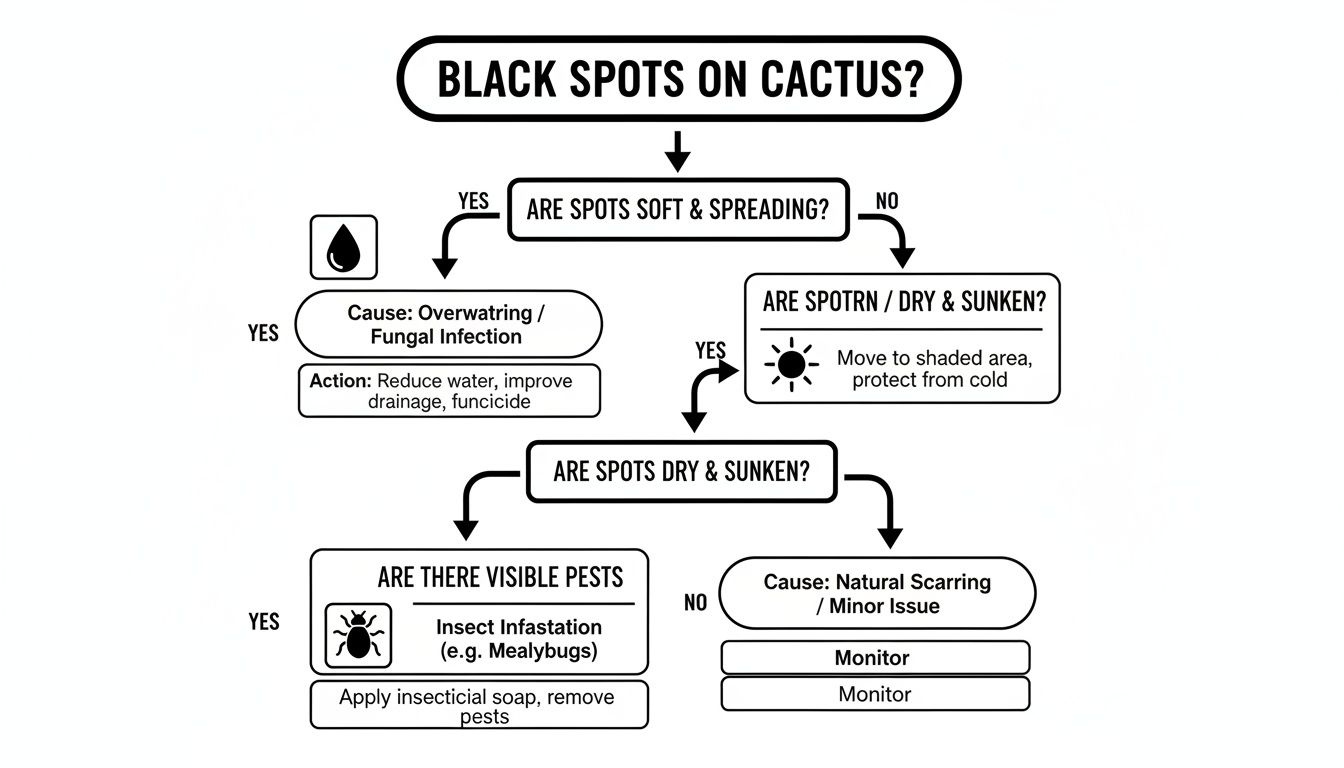
As you can see, just by checking the texture and appearance, you can quickly get to the bottom of the issue and figure out the right way to handle it.
Identifying Sunburn and Physical Damage
Not every dark mark is a disease. More often than not, it's something in the environment or just a simple accident. The marks might be permanent, but they usually aren’t a threat to the plant's survival. Learning to spot these will save you from trying unnecessary "cures" that could do more harm than good.
Sunburn on a cactus often starts as a bleached-out, yellow, or white patch on the side that gets hit with the most intense sun. That tissue is dead and won't turn green again. Over time, that dead patch dries out, gets tough, and can turn black as harmless secondary fungi move in. The biggest giveaway is its location—the sun-facing side—and its dry, papery feel.
Physical damage is just a scar. If your cactus falls over or gets scraped, it forms a callus over the wound to protect itself, just like a scab on our skin. This calloused area is typically hard, dry, and has an irregular shape. It won't spread and is purely a cosmetic battle scar.
Spotting Pests That Cause Black Marks
Sometimes, the black spots aren't even part of the cactus itself—they're something on it. A close look can reveal that pests are the real culprits.
A common one is scale, tiny insects that latch on and suck the plant's juices. They have a hard, shell-like covering that looks like a small, raised black or brown dot. The definitive test? Gently try to flick one off with your fingernail. If it pops right off, you've got pests, not a plant disease.
Another pest indicator is the sticky stuff they leave behind, called "honeydew." This sweet residue can attract sooty mold, a fungus that grows on the honeydew and creates black splotches on the cactus. Unlike rot, sooty mold is just on the surface and can often be wiped away, revealing healthy green tissue underneath.
Remember, the goal of a visual diagnosis is to gather evidence. Note the spot's texture, location, and whether it can be removed. This information is crucial for deciding on the next steps, whether that's performing surgery for rot, moving a sunburnt plant, or treating for pests.
The shape of your cactus can also offer clues. On columnar types like the Peruvian Apple Cactus, rot often starts near the base where moisture gets trapped. Sunburn is more likely way up on the side facing the sun. On round cacti like a Golden Barrel, rot can sneak into the crevices between the ribs where water might sit. These little details help you zero in on the problem. You can check out all kinds of beautiful cactus varieties over at The Cactus Outlet.
The Fungal Threat: Why Some Black Spots Are a Serious Problem
Of all the things that can cause black spots on your cactus, a fungal infection is easily the most dangerous. While sunburn or a physical scrape are usually just cosmetic issues, fungus is an active, aggressive disease. Think of it as a relentless invader that, if you don't stop it, can turn a tiny blemish into a fatal wound.
This isn't just a surface-level problem. It's a sign of decay that's happening deep inside. Tiny pathogens like Anthracnose work their way through the cactus’s skin and start breaking down the tissue from the inside out. That black, often mushy, spot you see is just the tip of the iceberg—the visible evidence of this internal rot.
The Perfect Storm for Fungal Growth
Fungi don't just pop up for no reason. They need the right conditions to take hold, creating a "perfect storm" for disease. If you can understand what triggers them, you're already halfway to preventing an outbreak in your collection.
Fungal attacks are usually fueled by three main ingredients:
- Too Much Moisture: This is the number one culprit. Overwatering your cactus, using a pot with poor drainage, or even just letting water sit on its skin for too long creates the perfect damp breeding ground for fungal spores.
- Poor Airflow: Stale, stagnant air is a fungus's best friend. It lets humidity hang around the cactus, keeping its surface damp. This creates a cozy microclimate that fungi absolutely love.
- Wounded Plant Tissue: Any break in the skin—a tiny bite from a pest, a scratch from being moved, or even a patch of sunburn—is like an open door inviting fungal spores inside to start an infection.
When these three things come together, your cactus is in real trouble. The spores, which are practically everywhere in the environment, land on the damp surface, find an entry point, and get to work.
How a Fungal Infection Spreads
Once a fungal infection starts, it acts like a slow-moving fire. The first black spot you notice is just the beginning. The fungus releases enzymes that literally dissolve the plant's tissue, turning it into a soupy meal. As it feeds, the infection spreads outward, creating a bigger and deeper wound.
The process is insidious. While the spot on the outside might look small, a network of fungal threads, called mycelium, can be spreading through the cactus's vascular system—the plant's version of veins and arteries. If it gets in there, the infection can travel through the whole plant, leading to a systemic rot that’s nearly impossible to stop.
The key thing to remember is that fungal spots are progressive. They won't heal or disappear on their own. The only way to save your cactus is with early, decisive action to stop the spread.
This isn't just a headache for hobbyists; it's a massive threat in commercial agriculture. On large-scale prickly pear farms in Mexico, for example, studies found that black spot disease hit an alarming 60% of the crops in some areas. Researchers pinpointed aggressive fungi like Neoscytalidium dimidiatum as the cause of the worst damage, which really shows how destructive these pathogens can be. You can read more about these agricultural findings and the ongoing research.
Why You Can't Afford to Wait
The scary part about fungal rot is how fast it moves. What looks like a dime-sized soft spot today can swallow the entire base of a columnar cactus in just a few weeks, especially if it's warm and humid.
Once the rot destroys the base or the root system, the plant can’t support its own weight or absorb water and nutrients. It will eventually collapse and die. This is why you have to treat black spots on cactus plants caused by fungus immediately and aggressively. Waiting gives the disease a head start and dramatically lowers your chances of saving the plant. The goal is always to surgically remove all the infected tissue, leaving a clean margin of healthy tissue to stop the pathogen dead in its tracks.
Your Step-by-Step Cactus Treatment Plan
Alright, you've played detective and have a good idea of what’s causing those black spots. Now it's time to roll up your sleeves and get to work. Knowing the cause is one thing, but saving your plant requires a steady hand and the right approach.
Let's walk through the specific treatments for the most common culprits. Remember, the fix has to match the problem. You wouldn't put a cast on a sunburn, and you definitely don't want to spray water on a fungal infection—that’s just asking for trouble. We'll start with the most critical situation: rot surgery.

Performing Surgery on a Rotted Cactus
If you’ve found soft, mushy black spots, you’re dealing with rot, and there’s no time to waste. This isn't something that will clear up on its own. The only way forward is to surgically remove all the infected tissue. Think of it as cutting out a bad spot on an apple—if you leave any brown behind, the rest will quickly spoil.
1. Gather Your Tools:
- A very sharp, clean knife or razor blade.
- Rubbing alcohol or a bleach solution for sterilization.
- Gloves to keep your hands clean.
- An antifungal powder, like sulfur dust or plain ground cinnamon (no sugar added!).
2. Sterilize Your Blade: This is the most important step, so don't skip it. Wipe your blade down with rubbing alcohol before you make a single cut, and I mean every single cut. A dirty blade can introduce a whole new set of problems, turning your rescue mission into a failure.
3. Make the First Cut: Begin by cutting away the visible black area. If you have a column-style cactus with a spot on its side, you can try to scoop it out. If the rot is creeping down from the top, you might have to "behead" the cactus, making a clean, horizontal cut well below any signs of infection.
Here's the golden rule of cactus surgery: keep cutting until you see nothing but healthy, vibrant green tissue. Even a tiny speck of brown or discolored flesh means the rot is still there, ready to spread. Wipe your knife between each slice to avoid smearing the infection onto the healthy parts.
Treating the Open Wound
With all the rot removed, you’re left with an open wound. Just like a cut on your skin, it’s a prime target for infection. Your job now is to protect it so it can heal properly.
The goal is to help the cactus form a callus, which is basically a dry, tough scab that seals off the wound.
- Apply Antifungal Powder: Right away, dust the entire cut surface with a good coating of sulfur powder or cinnamon. This acts as a natural fungicide, creating a dry barrier that stops new fungal spores from settling in.
- Ensure Good Airflow: Move the cactus to a dry spot with plenty of air circulation. A small fan on a low setting can make a huge difference. Stagnant, humid air is your enemy and will only encourage more fungus to grow on that fresh cut.
- Be Patient: This is the hard part. Do not water the cactus until a solid callus has formed. This can take anywhere from a few weeks to over a month. Don't worry, the plant will tap into its own water reserves to survive. Watering too early will get the wound wet and bring the rot right back.
When a cactus has been through major surgery, getting it back to full health is a process. For a deeper dive into nursing a plant back from the brink, our guide on how to revive a dying cactus has some great extra tips.
Handling Pests and Sunburn
Thankfully, not all black spots are a surgical emergency. If you've figured out the problem is pests or a bit too much sun, the solution is much less dramatic.
- For Pest Infestations (Scale): The fix is pretty direct. Dip a Q-tip in 70% isopropyl alcohol and touch each little scale insect. The alcohol quickly dissolves their waxy, protective shell. For a bigger outbreak, you can use a spray bottle, but move the plant out of direct sun until it's completely dry to avoid creating new burn spots.
- For Sunburn: Bad news and good news. The bad news is that a sunburnt spot is a permanent scar; it won't turn green again. The good news is that the treatment is simply prevention. Move your cactus to a spot with less intense sun, especially during the peak afternoon hours. When you do move a plant to a brighter spot, do it gradually over a week or two to let it acclimate.
As you tackle fungal issues with your cacti, learning about effective methods to get rid of black mold in your home can be surprisingly helpful. The core principles are the same: control moisture and improve airflow. It's a universal truth for fighting fungus, whether it's on a plant or in your bathroom.
How Your Cactus’s Environment Shapes Its Health
Fixing a black spot on your cactus is a good start, but it's really just damage control. If you want to stop these problems for good, you need to look beyond the plant itself and consider the world it lives in. Everything from the humidity in your sunroom to the temperature on your patio has a massive impact on whether your cactus thrives or just survives.
Think of it this way: your cactus is like a seasoned athlete. Its pot and soil are its gear, but the environment is the stadium where it performs. If that stadium is constantly damp, chilly, or has no air movement, even the toughest athlete is going to run into trouble. It's the same for your cactus; its health is a direct reflection of its living conditions.
Temperature and Humidity: A Delicate Balance
Most cacti are built for dry, warm climates with plenty of airflow—just like their native desert homes. When you flip that script and introduce high humidity or consistently cool temperatures, you're essentially rolling out the welcome mat for the very fungal pathogens that cause black spots. Air that’s stagnant and moist keeps the cactus's skin damp, giving fungal spores the perfect opportunity to latch on, germinate, and start an attack.
A cool, damp autumn, for instance, can be a real danger zone. Even if your watering schedule is perfect, that combination of low temps and lingering moisture in the air can set off a fungal bloom that rips through an entire collection.
The Big Picture: You can't eliminate every risk, but you can definitely manage them. Get to know your local climate's quirks. By anticipating high-risk times—like a rainy spring or a muggy summer—you can adjust your care routine before the black spots even think about showing up.
This isn't just a hunch. Studies on commercial nopal cactus farms in Mexico found a direct link between the environment and disease outbreaks. Researchers saw an almost perfect correlation: as altitude increased and temperatures dropped, the severity of black spot epidemics went through the roof. At elevations where the average low was around 5°C (41°F), disease intensity shot up to 85-88%. Some plants were hit with over 90 spots in a single month. You can read more about these environmental findings to see just how much climate can fuel fungal damage.
Airflow and Soil: Your Two Secret Weapons
You can’t change the weather, but you have total control over your cactus’s immediate personal space. When it comes to preventing the conditions that lead to black spots, two things are absolutely non-negotiable.
- Get the Air Moving: Stagnant air is a fungus’s best friend. If your plants are indoors, a small fan set to low and placed nearby can work wonders by keeping the air circulating and the humidity down. For outdoor collections, simply give your plants some breathing room. Avoid packing them in like sardines so air can flow freely between them.
- Nail Your Soil Mix: The right soil is your first and best defense against root rot, a problem that weakens the whole plant and opens the door to other infections. A gritty, well-draining mix is critical. It ensures that even after a deep drink, the roots aren't left sitting in a soggy, suffocating mess. For a deep dive, check out our guide on choosing the best cactus and succulent soil.
By taking charge of these environmental factors, you're fundamentally changing your approach from reactive to proactive. You’re no longer just fighting off diseases; you're building a resilient, healthy ecosystem where your cactus is set up to win.
Proactive Care to Keep Black Spots Away for Good

While treating a sick cactus is rewarding, the real goal is to create an environment where black spots simply can't get a foothold. Honestly, the best defense is a good offense. It’s all about building a solid wellness plan for your plants so they're too resilient for common diseases to take hold.
This whole approach boils down to nailing the "holy trinity" of cactus care: water, light, and soil. When you get these three things just right, you build a fortress around your cactus, making it tough enough to fend off the fungal and environmental stresses that cause black spots on cactus plants. It’s less about being a plant medic and more about being a wellness coach, focusing on long-term health.
Mastering the Watering Routine
If there's one thing that trips people up, it's watering. By far, it’s the most common mistake. To avoid the rot that leads to those mushy black spots, you need to live by the “soak and dry” method. This approach perfectly copies the rare but heavy downpours cacti experience in their native desert habitats.
It's pretty straightforward:
- Check the Soil: Don't even pick up the watering can until you're sure the soil is completely bone dry. Stick a wooden skewer or your finger all the way to the bottom of the pot to check.
- Soak Thoroughly: When it's finally time to water, give it a good, deep drenching. Keep going until you see water running out of the drainage holes.
- Dry Completely: Now, the most important part—let that soil dry out entirely. Resist the urge to water again until it's back to being bone dry. This cycle kills any chance of the constant dampness that fungus loves.
Remember this simple rule: it's always, always safer to underwater a cactus than to overwater it. They are built for drought, not for soggy feet.
Perfecting Light and Airflow
Cacti are sun-worshippers, but finding that perfect balance is key to preventing sunburn and stress. Most types are happiest with a few hours of bright, direct morning sun, followed by more filtered light during the harsh afternoon hours. For indoor cacti, an east-facing window is usually the sweet spot.
Just as important is good air circulation. Stale, humid air is a five-star resort for fungal spores. If your plants are inside, just opening a window or placing a small fan on a low setting nearby can work wonders. Good airflow helps the cactus and the soil surface dry out properly, which is a huge step in preventing infection. For those who want to really dive deep into creating the ideal growing conditions, exploring comprehensive horticulture studies can provide a fantastic foundation for keeping all your plants healthy.
Common Questions About Black Spots on Cacti
Even after you've started treatment, it's natural to have a few lingering questions about your cactus's prognosis. Getting a handle on what to expect can make all the difference in managing its recovery. Let's tackle some of the most common concerns we hear from fellow cactus enthusiasts.
Can a Cactus Heal on Its Own?
Honestly, it's pretty rare. If the black spots on your cactus are from something like fungal or bacterial rot, these problems almost never resolve themselves. Think of them like an infection that will only get worse without treatment.
While a minor scrape or an old sunburn scar will eventually just become part of the plant's character, active infections are a different beast entirely. They demand swift action, which usually means surgically removing the diseased tissue to save the rest of the cactus.
Are Black Spots Contagious?
This one really depends on the culprit. If you're dealing with a fungal issue or a pest like scale, then yes, they can absolutely spread to your other plants. This is precisely why quarantining a sick plant is the first and most important step—it's all about protecting the rest of your collection.
On the other hand, if the spots are just from a bad sunburn or a physical bump, there's no risk of them spreading.
When is it too late to save a cactus? The point of no return is usually when rot has consumed the base and infiltrated the root system or the core. If the base feels soft and mushy or black is taking over most of the plant, recovery is unfortunately very unlikely.
At The Cactus Outlet, we're all about giving you a head start with healthy, resilient plants. Take a look at our diverse selection of cacti and succulents to find a new, happy addition to your home.