

A lot of people decide to transplant a Christmas cactus at the exact moment they get nervous about it. The plant was a gift from a parent, a cutting from a grandmother, or the one houseplant that has somehow stayed with you through several moves. Now it looks tired, the soil seems old, and the blooms aren't what they used to be. You know it probably needs attention, but you don't want to be the person who ruins it.
That hesitation makes sense. Christmas cactus is one of those plants people love partly because it lasts. It can stay with a family for years, and it often does better with a steady hand than with constant fussing. Repotting isn't about disturbing a happy plant for no reason. It's about knowing when a snug pot is helping, and when stale mix or stressed roots are holding the plant back.
When I handle an older holiday cactus in the nursery, the goal isn't to "upgrade" it. The goal is to read what the plant needs. Sometimes that means leaving it alone. Sometimes it means refreshing the soil, trimming damaged roots, and giving it just enough room to recover without inviting rot. That trade-off is the whole art of transplanting this plant well.
Giving Your Christmas Cactus a Fresh Start
A lot of repots start the same way. You pick up an older Christmas cactus, feel how tight the pot has become, notice the mix has turned flat and tired, and wonder whether touching it will help or set it back.
That concern is justified. Christmas cactus often blooms better when the roots stay a little snug, so leaving it slightly pot-bound is not automatically a problem. The trouble starts when the soil has broken down enough to hold water poorly, shed water too fast, or stay wet around aging roots. At that point, repotting is less about giving the plant more space and more about restoring the root environment.
That distinction matters.
A healthy, bloom-ready plant can stay in a modest pot longer than many growers expect. A worn-out root zone cannot. Fresh mix improves air flow, drainage, and moisture balance, which gives the plant a better chance to recover strength after flowering. If you want a clear benchmark for when to repot a Christmas cactus, use the plant's condition first and the calendar second.
Christmas cactus also passes easily from one home to the next because cuttings root readily and established plants tolerate years in the same container. That long lifespan is exactly why people hesitate to transplant them. In practice, the safest repot is usually a restrained one. Keep the pot only slightly larger if the roots need room, or refresh the soil and return the plant to the same container if the size still suits it.
A Christmas cactus usually responds best to a careful reset, not a dramatic upgrade.
The goal is to help the plant keep what is useful about being slightly root-bound, reliable blooming and compact growth, while removing what is working against it, exhausted soil and stressed roots. That trade-off is the reason good repotting advice can sound mixed. Both sides are true, and the right choice depends on what your plant is showing you today.
Reading the Signs When to Transplant
The calendar matters, but the plant matters more. A foundational rule is to repot a Christmas cactus only every 2 to 3 years, because it performs best when slightly root-bound. The Royal Horticultural Society guidance summarized in this repotting guide recommends repotting after flowering, from late January to late March.

That timing works because the plant isn't busy setting buds. If you repot while it's preparing to flower, you're asking it to split energy between bloom production and root recovery. That's when people often say their plant "sulked" after repotting.
A snug plant versus a stressed plant
This is the distinction that matters most when you transplant a Christmas cactus.
A happily snug plant may have a tight root system, but it still drinks normally, the stems stay reasonably firm, and the plant flowers on schedule. It isn't asking for a larger home just because roots fill the pot.
A stressed plant usually shows a different pattern:
- Water behavior changes. Water rushes through without soaking in, or the mix stays wet too long.
- Soil has broken down. The potting mix feels dense, flat, or muddy instead of springy and open.
- Roots are escaping. You may see roots at the drainage holes or circling heavily at the pot edge.
- Growth stalls. New segments are sparse, smaller, or weaker than before.
If you're unsure, compare your plant against the guidance in this when to repot a Christmas cactus article. It helps to think in terms of condition, not just age.
The bloom trade-off
Many people are told never to disturb a Christmas cactus because root-bound plants bloom better. That advice is incomplete.
A slightly crowded root ball can support better flowering because the plant isn't sitting in a big mass of damp soil. But there is a tipping point. If the mix has collapsed, salts have built up, or roots are damaged, keeping the plant tight stops being helpful. At that stage, you're not preserving bloom performance. You're preserving a problem.
Practical rule: Repot for root health, not because you feel guilty about the pot size.
A plant that is merely crowded may only need fresh mix and the same size pot, or one size up. A plant with sour soil, root damage, or chronic waterlogging needs intervention even if it bloomed last season. This is why blanket repotting advice often fails. Two plants can look equally full in the pot and need completely different decisions.
Selecting the Perfect Pot and Soil Mix
A Christmas cactus usually gets into trouble before the owner realizes the pot was the cause. The plant still looks full on top, but the root zone stays wet too long, the mix turns flat, and bloom performance starts slipping. Pot choice and soil choice decide how quickly that happens.
The goal is not to give the plant the biggest upgrade you can. The goal is to keep the root ball in a container that dries evenly, holds some moisture, and still leaves air around the roots. That balance is why a slightly snug Christmas cactus often flowers well, while an overpotted one often sulks.

How to choose the pot
At the nursery bench, I make this decision based on the roots and the condition of the old mix, not on how top-heavy the plant looks.
| Situation | Better choice | Why |
|---|---|---|
| Soil is old but roots look healthy | Same size pot or one size up | Fresh mix improves root conditions without leaving a large ring of wet soil |
| Roots are damaged or trimmed back | Same size pot | A smaller soil volume dries more predictably while the plant recovers |
| Plant is clearly packed and still vigorous | One size up | You give the roots room without changing moisture levels too abruptly |
That last point matters. A Christmas cactus can stay pleasantly root-bound and still perform well. If it is blooming reliably and the mix still drains properly, a same-size pot with fresh soil is often the better call than a much larger container.
Pot material changes the watering rhythm. Terra cotta loses moisture faster and gives a heavier-handed waterer more margin for error. Plastic holds moisture longer, which suits a dry house or someone who forgets to water, but it also means soggy mix takes longer to correct. In either case, drainage holes are required.
How to mix soil that actually works
Christmas cactus grows more like an epiphyte than a true desert cactus, so the roots want moisture with airflow, not dense, wet compost. A loose mix is what keeps that trade-off in line. You want enough organic material to hold moisture for active growth, and enough coarse material to stop the root zone from staying stale.
A reliable homemade mix is equal parts potting soil and perlite or pumice. If you want a side-by-side breakdown of common ingredients, this cactus and succulent soil mix guide is a useful reference.
Use this formula:
- Base mix. Start with regular potting soil, not garden soil.
- Air component. Add an equal amount of perlite or pumice.
- Optional texture. If your bagged mix feels heavy, add a little extra coarse material to keep it open.
Skip clay-heavy or compacted garden soils. They hold too much water and collapse around the roots, which is exactly what a Christmas cactus struggles with after transplanting.
Fresh soil does more than add nutrients. It restores air space, resets drainage, and gives the roots a cleaner environment to grow in.
This is the part many care guides miss. Keeping a Christmas cactus somewhat snug can support blooming, but only if the soil still works. Once the mix has broken down, staying root-bound stops being an advantage. Fresh, open soil in the right-size pot protects both flowering and long-term plant health.
The Gentle Art of Transplanting Your Cactus
A Christmas cactus usually gets damaged at the exact moment someone tries to "help" it out of the pot too fast. The stems snap, the root ball breaks apart, and a simple repot turns into recovery work.

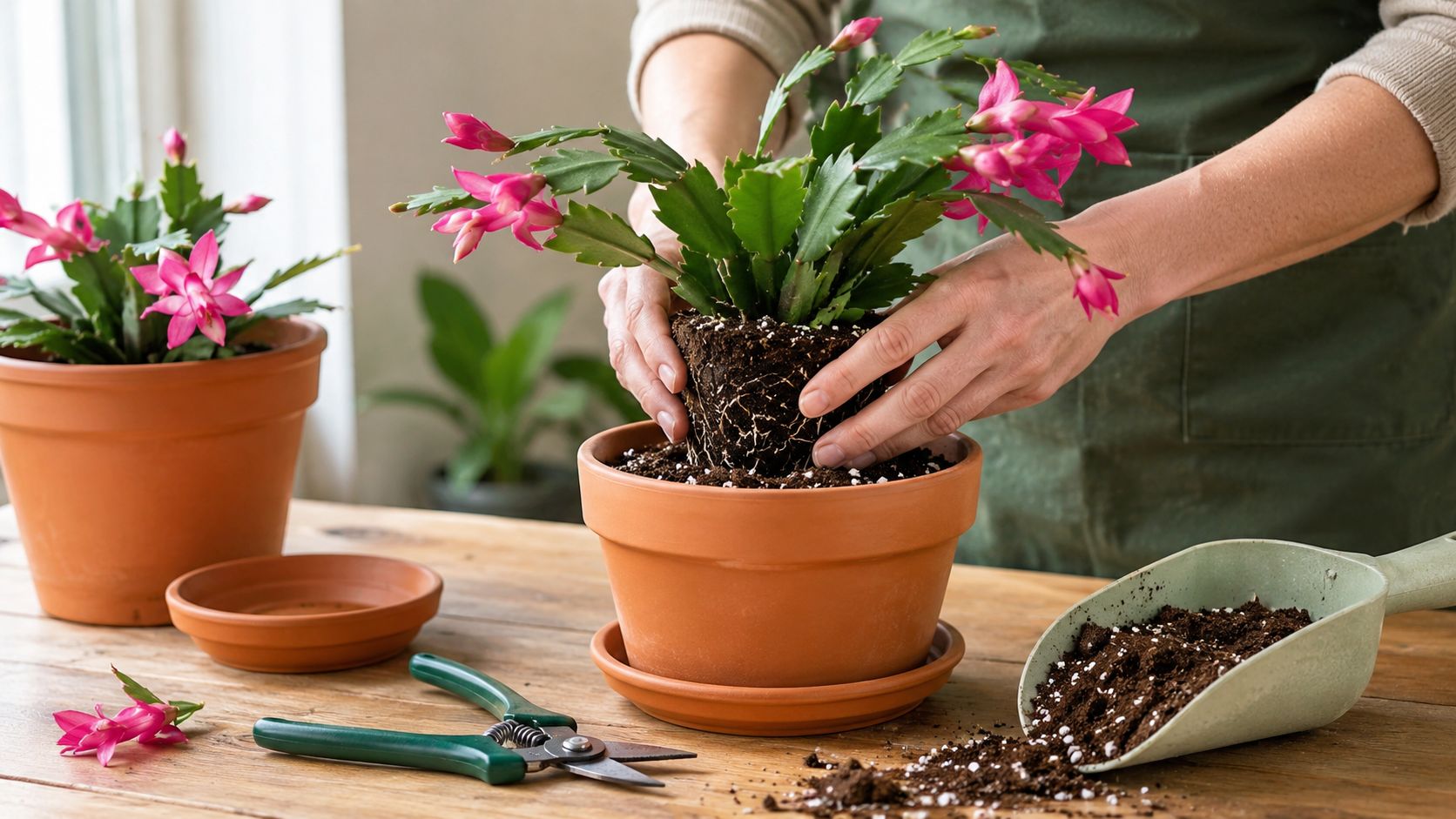
Set up the new pot first. Add enough fresh mix to the bottom so you can place the plant at the same height it was growing before. That small bit of prep matters because once the plant is out, you want to handle it once, position it, and finish the job without leaving the roots exposed longer than necessary.
Start with a calm setup
I like to work with the plant slightly moist, not soaked and not bone dry. A mildly moist root ball usually slides out more cleanly and holds together better, which reduces root breakage and makes it easier to judge the plant's actual condition.
Before you begin, keep these within reach:
- A clean pot with drainage
- Fresh potting mix
- Sterilized shears or scissors
- A small scoop or trowel
- Gloves if they help you grip the pot
The goal is simple. Keep stress low and disturbance controlled.
Removing the plant without breaking stems
Lay the pot on its side or tip it slightly while supporting the base of the plant with one hand. Tap the sides and bottom of the pot to loosen the root mass. If it still clings to the container, slide a clean knife around the inside edge.
Support the crown or the base of the stems. Do not pull on the hanging segments. They detach easily, and once several joints break off, the plant has to spend energy replacing lost growth instead of settling into the new pot.
A quick visual walkthrough can help if you prefer to see the hand positions and pacing before you start.
Inspect the roots and make the real decision
Once the plant is out, loosen some of the old soil with your fingers. There is no prize for stripping the roots bare. Christmas cactus roots are finer than many people expect, and rough handling sets the plant back.
Look at what is in front of you. Firm, pale roots usually mean the plant only needs fresh mix and a little more room, if any. Dark, soft, collapsed roots point to a drainage problem or soil that stayed wet too long. In that case, trim off only the damaged portions with sterilized shears and keep the next pot conservative in size.
This is also where the bloom-versus-health trade-off becomes clear. A slightly snug Christmas cactus often flowers well. A plant sitting in exhausted, compacted soil loses the benefit of being root-bound because the root zone is no longer healthy. If the roots look sound and the plant is still manageable, stay close to the current pot size. If the soil has broken down or the roots are circling hard, fresh soil matters more than preserving tight quarters.
Healthy roots in tired soil call for a refresh. Damaged roots call for a careful reset.
Potting it back up
Set the plant so the old soil line stays at the same level. Burying the stems deeper invites trouble, especially if the base stays damp.
Fill around the root ball with fresh mix, working it in gently with your fingers or a scoop. Shake the pot lightly or tap it once or twice on the bench to settle the soil. Use only enough pressure to steady the plant upright. Packed soil loses the air spaces these roots need.
If you are using a bagged cactus mix, check the texture before you trust it. Some blends are open enough as-is. Others hold more moisture than a Christmas cactus likes after repotting, which is why I always judge the mix in my hand instead of relying on the label alone. That same practical approach shows up in the transplanting guidance published by The Cactus Outlet for damaged-root holiday cacti.
Post-Transplant Care for a Swift Recovery
You set the plant back in its pot, step away for a day, and the stems look a little less firm than they did on the bench. That is the moment many growers overcorrect. They water again, move the plant around the house, or start feeding it to force new growth. Freshly disturbed roots rarely respond well to that kind of attention.
The goal after repotting is simple. Keep conditions steady while the roots re-establish.

What to do in the first days
Give the plant bright filtered light rather than hot direct sun. I usually place a newly repotted Christmas cactus near a bright window with some protection from the strongest rays, because stressed roots support the top growth less efficiently and the stems can scorch faster during that window.
Be restrained with water. If the root ball was disturbed, especially if any damaged roots were removed, wet soil can create more trouble than a short dry spell. I prefer to let the mix settle toward lightly dry before watering again, then judge the next drink by the feel of the soil and the weight of the pot instead of following a fixed schedule.
A good short-term routine looks like this:
- Keep the plant in steady filtered light and away from hot glass or heating vents.
- Check the mix before watering by feeling below the surface, not just the top.
- Skip fertilizer for now until you see fresh segments or firmer growth.
- Leave it alone as much as possible so the roots can start working into the new mix.
That last point matters more than many people expect. A Christmas cactus often blooms best when a bit snug in the pot, but after repotting the priority shifts from bloom pressure to root recovery. Pushing growth too early can set the plant back.
What recovery should look like
A healthy recovery is usually uneventful. The plant may pause, look slightly dull, or soften a touch, then gradually firm up as the roots settle into the fresh mix.
Use this quick read:
| Symptom | More likely meaning | Response |
|---|---|---|
| Mild droop for a short period | Root disturbance and adjustment | Keep light, water, and placement steady |
| Soil stays soggy | Mix too dense or pot too large | Let it dry, then reassess drainage and pot size |
| Segments redden or scorch | Light is too intense | Shift to softer filtered light |
If the plant loses a segment or two, I would not treat that as a crisis on its own. Ongoing collapse, a sour smell from the pot, or stems that keep softening usually point to excess moisture around stressed roots.
Quiet aftercare gives a Christmas cactus the best chance to settle in.
Once you see the plant holding firm and starting to grow again, return to your normal care rhythm. Water thoroughly, then let the mix approach dryness before the next round. If a few pieces broke off during repotting, you can also use them to start new plants with this guide on propagating cactus from cuttings.
Troubleshooting and Propagating New Plants
A Christmas cactus often looks a little unsettled after repotting, and that is where many owners get into trouble. They see a limp segment, assume the plant is thirsty, and add more water to roots that are still trying to recover. In my experience, extra watering causes more setbacks than the repotting itself.
The better approach is to read the plant before reacting. A few dropped segments or slight softness right after transplanting usually reflect root disturbance. Ongoing collapse, wet soil that never dries, or stems turning mushy point to a root problem that needs attention.
Common post-transplant worries
If the plant looks wilted, start with the potting mix. Wet soil paired with limp stems usually means the roots are short on air, not short on moisture. If the plant rocks in the pot, firm the mix gently around the root ball instead of pressing hard and compacting it.
Give it a little time.
Christmas cactus has always involved a trade-off. A slightly snug plant often blooms better, but fresh soil supports longer-term root health. After repotting, the goal is not to force top growth or flowers right away. The goal is to let the roots reestablish cleanly so the plant can return to normal on its own schedule.
A few checks help sort out what you are seeing:
- Wilting with wet soil points to excess moisture or poor aeration around stressed roots.
- A loose crown or wobbling plant means the root ball needs better contact with the new mix.
- No improvement after a reasonable settling period can justify slipping the plant out and checking for rot or dead roots.
- Broken, healthy segments are good propagation material, not waste.
Turn broken pieces into new plants
Repotting often leaves you with a few snapped sections. That is frustrating if you were trying to keep the plant tidy, but it is also the easiest time to start backups from a favorite plant.
Use only firm, healthy pieces. Let the cut ends dry and callus before planting, then place several segments together in a small pot rather than spacing single pieces into a large container. A small group fills in faster and is easier to keep evenly moist while roots form. If you want a step-by-step method, this guide to propagating cactus from cuttings is a useful companion.
For cleaner results:
- Choose segments with no soft spots or bruised tissue.
- Let the cut end dry first so it is less likely to rot in the mix.
- Use a light, airy medium with just a little moisture, not a wet pot.
- Plant a few cuttings together for a fuller starter pot.
That is one part of Christmas cactus care I always appreciate. Even if repotting gets a little messy, a broken piece can still become a healthy new plant, while the parent plant settles into fresh soil and stronger root space.
If you're looking for more practical cactus care, plant selection, and growing guides, The Cactus Outlet is a useful place to browse both plants and care information, especially if you like keeping a mix of holiday cacti, succulents, and larger specimen plants at home.