

You don't need another cute little cactus that looks right for six months and then starts crowding the hallway console, brushing curtains, or tipping in a shallow pot. You need a cactus that still makes sense after it settles in, stretches a bit, and lives where your furniture and foot traffic already do the work of a tight room. That's the core question behind the best cactus for narrow spaces, and the answer is not “the smallest one at the garden center.”
A narrow ledge, a slim entry table, or a windowsill in an apartment asks for a plant with discipline. Compact size matters, but growth habit matters more, because a cactus that stays low and rounded will keep fitting long after a skinny columnar type starts crowding the space. If you're arranging a small room with storage, seating, and plant displays, the same logic applies to furniture. A resource like Suburban Furniture showroom options makes the point well, even if you're using it for interiors rather than plants. The best plant choice is the one that keeps its footprint under control without turning into maintenance work.
Why Narrow Spaces Trip Up Most Cactus Buyers
The trouble starts in the store. A cactus in a 4-inch pot looks safe on a windowsill, so buyers assume it will stay that size. It rarely does. A plant that seems compact today can become awkward in a year or two if its mature form is columnar, broad at the base, or too top-heavy for the ledge it was given.
That is why a narrow-space purchase is really a 1 to 3 year decision, not a quick decorating choice. For a hallway, entry niche, or slim console, the key question is whether the cactus will still belong there after it settles in and starts showing its natural shape. Homeowners who think this way avoid the usual problem of buying a plant that looks neat for a season and then starts crowding the space.
The mistake buyers make
They shop by pot size instead of adult footprint. That is the trap.
A cactus can be small in nursery packaging and still be wrong for a tight spot if it wants to grow tall, lean, or push outward. The better buying habit is to look for a cactus with a naturally upright, slow, low-spread form that will still fit after it matures. The same logic applies to slim furniture, and Suburban Furniture showroom options make that point clearly if you are trying to keep a room from feeling cramped.
A cactus that stays compact in the center and does not throw its weight sideways is far easier to live with in a narrow room. Buyers usually do best with rounded, restrained forms instead of plants that promise a clean look only because they are young. Once the growth starts, the adult silhouette is what matters.
Round beats tall in tight interiors
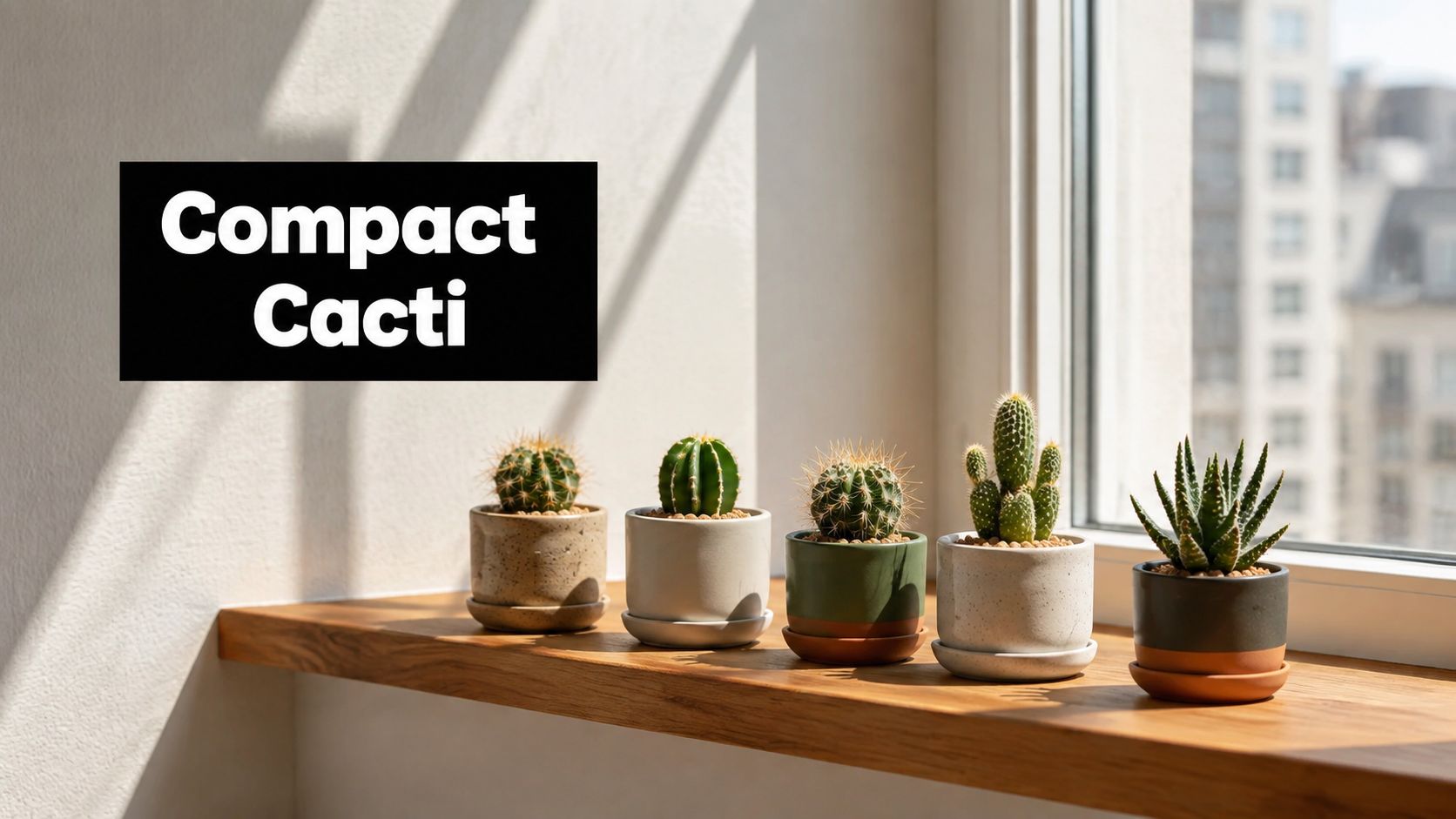
A slow-growing globular or dwarf cactus is the safer structural fit for shelves, desks, and reduced areas. Rounded shapes are easier to center in a shallow pot, and they are less likely to become lopsided when the light only reaches one side of the plant. Tall forms can still work, but they demand more room, steadier support, and more careful light placement.
Traffic clearance matters too. A cactus that technically fits on a console can still be a bad choice if it reaches into a walkway, brushes sleeves, or tips when the pot is nudged. In a narrow interior, the plant should clear people, doors, and curtains without needing constant correction. If it needs special handling every time you pass by, it is in the wrong place.
Light penetration is the other problem buyers miss. In tight interiors, a plant can look fine from the front while the lower growth stays shaded and uneven. Narrow spaces do not forgive awkward placement, so the best cactus is the one that keeps its shape in a limited footprint and still gets enough light to stay balanced.
The Key Traits of a Narrow-Space-Friendly Cactus

Use the adult form, not the nursery tag
A cactus earns a narrow spot when its mature form stays compact, keeps a globular or upright dwarf form, and grows slowly enough that it will still fit a hallway console or shallow sill a few years from now. That is the point, not the size of the pot in the shop or the way it looks when it is still juvenile (compact-space selection guidance; small indoor cactus types). A plant that stays low and restrained is easier to place, easier to rotate, and less likely to start looking awkward as soon as it gains height.
The best candidates do more than stay short. They keep a low-spread shape and hold their center of gravity close to the pot. That matters in a narrow room because a cactus that throws weight sideways can crowd a walkway, snag sleeves, or tip when the container gets brushed. A columnar plant may look neat in the nursery, but if it leans outward or gets top-heavy, it stops being a good fit for tight interiors.
Round beats tall in tight interiors
A slow-growing globular or dwarf cactus is the safest structural fit for shelves, desks, and reduced areas (compact-space selection guidance). Rounded forms take up less visual room, sit more cleanly in shallow containers, and usually need less fuss over time. They also work better near traffic areas because they do not project outward as aggressively as spiny columns.
One cultivar gets recommended again and again for this reason, Mammillaria gracilis fragilis. It stays low-profile and clumping instead of turning into a tall feature plant (small indoor cactus types). Another tiny standout is Rebutia minuscula, which can stay around 1 to 1.5 inches in cultivated form, and Globulostylis buchholzii can stay under 1 inch (mini cactus species guidance). Those are the kinds of plants that belong on a narrow ledge without taking over the whole surface.
A narrow-space cactus also needs the right pot. The container should fit the root ball, stay stable, and match the plant's slow growth, which is why the right cactus pot matters just as much as the species itself.
Light penetration is the other filter buyers miss. In tight interiors, a cactus can look balanced from the front while the shaded side stretches, thins out, or leans toward the window. Narrow spaces punish sloppy placement, so the best choice is a plant that keeps its shape in a limited footprint and still receives enough light from more than one angle to stay even.
Pot Size, Root Behavior, and Watering in Tight Spots

The pot has to fit the roots, not the decor
A hallway console, narrow sill, or crowded entry table gives you little room for error. If the pot is too large, the extra soil stays wet around a small root system, and that is how compact cacti rot in places with weak airflow. Choose a container that sits just a little wider than the roots, then stop trying to make the pot do more than it should.
Drainage is mandatory. A decorative cachepot without a hole may look tidy, but it traps water and turns a small-space setup into a problem fast. Use a fast-draining mineral mix, keep the root zone airy, and stick with pots that match the plant's actual size instead of the size you wish it would become. The right container choice matters just as much as the plant, as shown in best pots for cactus.
Water by dry-down, not by habit
Small cacti in narrow spots dry unevenly, especially when they sit against walls, backsplashes, or furniture where air movement is limited. Water only after the soil is completely dry from top to bottom. That usually means a much slower schedule than a leafy houseplant needs, and the timing changes with season, humidity, pot depth, and how much light the plant gets.
Overwatering kills compact cacti more often than neglect does. In a tight interior corner, evaporation is slower, so a pot that looks dry at the surface can still stay damp below. That is the mistake to avoid. Give the plant a thorough soak, then let the mix dry out fully before you water again. If you want a simple rule, use dry soil as the trigger, not the calendar.
A good narrow-space cactus is not just small. It is a plant with roots that stay manageable, a top that does not become lopsided, and a watering rhythm that still works when air circulation is poor.
Top Compact Cactus Picks Worth Buying
Choose for shape, growth rate, and stability. A cactus that fits a narrow shelf today can still be a bad buy if it spreads wide, leans early, or turns top-heavy as it matures. The plants below keep a tight profile and hold up better in narrow interiors than a generic “small cactus” label suggests.
Compact cactus comparison for narrow spaces
| Species | Mature Height | Spread | Light | Best Spot |
|---|---|---|---|---|
| Mammillaria gracilis fragilis | Low-profile, compact | Clumping, low spread | Bright indoor light | Windowsill, shelf edge |
| Rebutia minuscula | About 1 to 1.5 inches | Tight, rounded clumps | Bright light | Desk, shallow ledge |
| Gymnocalycium mihanovichii | Small, globular | Modest footprint | Bright, filtered light | Apartment window, small planter |
| Echinopsis subdenudata in small form | Compact, rounded | Controlled width | Bright light | Sunny windowsill, tabletop |
| Small columnar option | Taller than globular types | Narrow base, vertical rise | Brightest available light | Tall ledge only, not a traffic zone |
My take on each one
Mammillaria gracilis fragilis is the safest bet for a hallway console or narrow windowsill. It stays low, clumps instead of stretching upward, and keeps its footprint modest even as it settles in. That makes it easier to place without crowding the surface or stealing light from nearby objects.
Rebutia minuscula is even tighter in scale. At about 1 to 1.5 inches, it is one of the most space-efficient choices for a shallow shelf or desk. It stays subordinate to the container, which is exactly what you want when the ledge itself is doing the visual work.
Gymnocalycium mihanovichii works for buyers who want a rounded, decorative plant without a bulky base. It fits best where light is steady and the pot can stay small without looking lost. Echinopsis subdenudata in a small form gives a softer silhouette and still reads cleanly in a simple container, so it works well when you want something compact but not spiny-looking from every angle.
A small columnar cactus is the only pick here that can go wrong in a narrow interior. It gives vertical interest, but the trade-off is obvious. If the base stays too small, the top can become awkward and unstable, especially on a ledge that gets bumped or moved around. Use that form only where the surface is sturdy and the plant will not be brushed on the way past.
For a wider reference point, compact indoor cactus options from The Cactus Outlet make it easier to compare upright, clumping, and globular forms before you buy.
Placement, Clearance, and Light in Tight Interiors

Keep spines away from traffic
A narrow space is usually a traffic space too. Hallways, entry consoles, and the ends of bookshelves get brushed by sleeves, bags, and curtains all the time. Give spined plants real breathing room, and keep them out of the main path so they do not snag fabric or hands. That buffer also protects the plant itself, since repeated bumps break spines and chip pots. For renters who want the room to stay tidy without drilling into walls or making permanent changes, damage-free decor for renters is the right mindset for cactus placement too.
On a shallow ledge, stability matters as much as clearance. A single tiny cactus in a tall pot tips more easily than a low, balanced grouping. Use a wider, heavier base if the surface gets touched often, especially on a console or shelf that sits in a walkway.
Match the light to the spot
Light decides whether a cactus stays compact or starts reaching. Compact cacti belong near bright east- or south-facing windows, and the placement advice in where to put a cactus in the house points to that same basic rule. If the spot is dim, add a grow light instead of pretending the plant will adjust on its own.
Morning sun is the safest target in tight interiors. Filtered afternoon light can work too, as long as the plant still gets enough direct exposure to hold its shape. A hallway that only feels bright is usually still too weak for a cactus, so do not judge by the look of the room alone.
Best placement rule: if the spot is narrow and bright, choose a rounded plant with a stable pot. If the spot is narrow and dim, either add light or move the cactus to a better window.
The pot matters here as much as the window. A cactus that is trying to stay upright needs a container that does not shift or wobble every time someone passes by. Keep the pot proportionate to the plant, and avoid oversized decorative planters that invite overwatering or make the whole setup harder to steady.
A shallow shelf can work if the light reaches in from the side and the plant stays compact. A deep, shaded shelf does not work. Cacti do not reward guesswork, and the farther they sit from usable light, the more likely they are to thin out, tilt, or lose their clean outline.
Matching Species to the Right Spot in Your Home
A bright south-facing windowsill suits Mammillaria gracilis fragilis and Rebutia minuscula. Both stay compact, both keep a tidy outline in a shallow pot, and both are built for a spot that has height limits as well as width limits. A top-heavy columnar cactus belongs elsewhere, even if the light is perfect, because a narrow ledge gets less forgiving as the plant matures.
A dim hallway console calls for stricter judgment. If you will not add light, skip the cactus. If the area gets a strong burst of natural light and you still want a plant there, Gymnocalycium mihanovichii is the cleaner choice from this shortlist because it holds a compact, rounded form instead of stretching outward. A hallway that only looks bright is a poor test, since reflected light rarely keeps a cactus tight for long.
A shallow bookshelf needs the same discipline. Echinopsis subdenudata in a small form works because it stays visually contained and does not push into the room with sharp outward growth. Anything that rises quickly or leans toward the aisle turns a shelf into an obstacle, and that defeats the point of a narrow-space plant.
A covered patio ledge with morning sun gives you a little more flexibility. A small columnar cactus can work there if the ledge is steady, the pot fits cleanly, and nobody will brush past it. That setup can handle vertical interest without creating a tipping risk.
If you are decorating a rental and want the room to feel finished without permanent changes, pair a compact cactus with damage-free decor for renters ideas. The goal is a display that can move with you and still look deliberate.
The rule is simple. Narrow and bright, choose an upright globular form. Narrow and dim, use a grow light or leave the cactus off the table unless the species can handle the light available.
Common Mistakes That Kill Small Cacti in Tight Spaces
The first mistake is watering on a fixed schedule. Weekly watering sounds tidy, but cactus roots do not care about your calendar. In a small pot with poor airflow, that habit is a fast path to rot, and overwatering is one of the main reasons indoor cacti fail, as noted earlier.
The second mistake is putting a small cactus into a large decorative cachepot with no drainage. It looks polished on day one, then traps moisture where the roots sit. In a narrow space, that oversized container also makes the display less stable, which is the opposite of what you want on a console or shelf.
The third mistake is buying a columnar cactus for a ledge that cannot support its mature form. A plant can look narrow at purchase and still become too tall, too top-heavy, or too easy to knock over. That is why mature silhouette matters more than the current pot size.
Check three things before you buy for a tight spot, adult size, drainage, and light. If one of those is wrong, the plant will make the room harder to live with, not better.
If you want a cactus that still fits after the novelty wears off, shop compact forms with a hard look at mature shape, pot fit, and light. The Cactus Outlet carries cacti and succulents for buyers who want plants that work in the world, not just on day one. Choose the right specimen now, and you will save yourself from repotting, tipping, and awkward overgrowth later.