
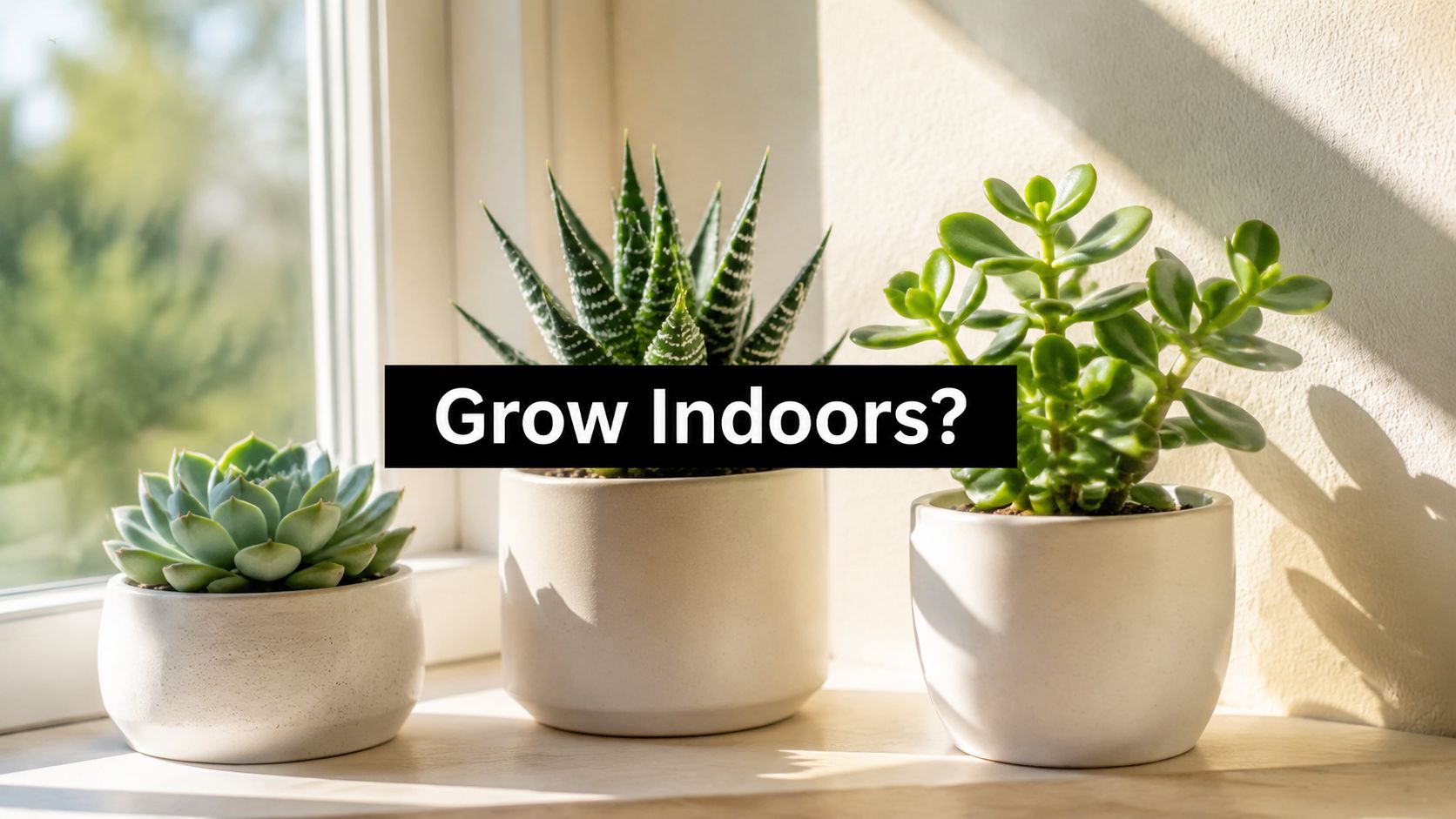

Yes, succulents can grow indoors. A solid starting point is watering every 2–3 weeks and giving them 10 or more hours of bright, indirect light, though some can manage with 6–8 hours when conditions are right.
That answer surprises people because the most common advice about succulents is also the most misleading. People hear that they're “low maintenance” and translate that into “ignore them and they'll be fine.” Indoors, that usually ends with a stretched, pale plant in a dark corner or a mushy one in soggy soil.
I've grown succulents long enough to tell you this. They are not neglect-proof. They're adaptation-proof. If you match the conditions they evolved for, they're wonderfully forgiving. If you don't, they fail in very predictable ways.
Think of succulents as the camels of the plant world. They carry water in their leaves and stems, so they don't need frequent drinks. But a camel still belongs in a desert, not in a swamp and not in a dim basement. Indoor success comes from recreating a dry, bright, fast-draining environment inside your home.
That mental model changes everything. Instead of memorizing random care tips, you start asking better questions. Is this room bright enough? Does the potting mix dry quickly? Are the roots sitting wet? Is the plant getting a day-and-night rhythm that feels natural?
So Can Succulents Really Grow Indoors
They can. The better question is this: can succulents grow indoors well enough to stay compact, colorful, and healthy over time? The answer is still yes, but only when your home gives them what the outdoors normally provides.
A lot of beginners buy a succulent because it looks tidy on a desk or shelf. Then they place it where it looks good instead of where it can live well. That's the trap. Indoors, appearance and plant health often pull in opposite directions.
Succulents don't want your attention every day. They want the right environment every day.
That's why the phrase “low care” needs a little correction. Succulents are often low-frequency care plants. You won't water them constantly, and you won't fuss over them like a fern. But you do need to set them up correctly. Light, drainage, and airflow matter more than doting.
Why the neglect myth causes trouble
When people say a succulent likes neglect, they usually mean it tolerates dry spells. That part is true. These plants store moisture and can go longer between waterings than many tropical houseplants.
What gets lost is the second half of the story. Many succulents also come from places with intense light, sharp drainage, and open air. Indoors, the watering is easy to reduce. The light is much harder to replace.
So if you've been wondering, “Can succulents grow indoors if I'm not a plant expert?” absolutely. But don't think of them as decorations first and plants second. Think of them as desert plants trying to make sense of your living room.
A simpler way to judge indoor success
Use this test. When you look at your setup, ask whether it feels more like a desert morning or like a damp corner of a bathroom.
- Bright and dry: You're moving in the right direction.
- Dim and moist: Your plant is already working against the room.
- Fast-draining and airy: Roots can breathe.
- Heavy soil and frequent sips: Root problems usually follow.
Once you start from habitat instead of habit, succulent care stops feeling mysterious.
Replicate Their Native Environment Indoors
The easiest way to understand indoor succulent care is to stop thinking about houseplants and start thinking about habitat. A succulent doesn't care that it's on a windowsill. It only “cares” whether that windowsill behaves enough like home.

The indoor desert model
A desert is not just “hot and dry.” For succulents, it's a pattern. Bright light. Quick drainage. Deep but infrequent moisture. Warm days followed by cooler nights.
New York Botanical Garden guidance notes that indoor survival depends on recreating a diurnal thermal variance of at least 10°C (18°F) between daytime highs of 60–75°F and nighttime lows of 40–60°F, along with light equivalent to 6–8 hours of bright, indirect sunlight in a southern or western-facing window to avoid problems like root rot and etiolation, as outlined in the NYBG succulent growing guidance.
That sounds technical, but the idea is simple. Succulents don't just respond to light. They respond to rhythm. They're built for a day that feels different from the night.
Why light and temperature work together
Light fuels growth. Without enough of it, a succulent starts stretching toward the nearest source, making long weak stems and wider gaps between leaves. Growers call that etiolation. I call it a plant reaching in desperation.
Cooler nights matter too. They help maintain the natural cycle these plants are used to. When indoor temperatures stay too flat around the clock, the plant may stay alive, but it often won't look or grow the way you hoped.
Practical rule: Don't aim for “indoor plant conditions.” Aim for “desert conditions moderated for a home.”
That affects where you place your plants. A bright southern or western exposure usually gives you the best chance. Good airflow helps as well. If a room feels stuffy, damp, or stagnant, your succulents will notice before you do. If you're trying to improve the growing environment overall, understanding your home's home air quality can help you spot rooms that trap humidity and stale air.
What desert replication looks like in practice
Here's the version I use when teaching beginners:
- Sun first: The brightest spot in the room belongs to the succulent.
- Dry feet: Water should move through the soil instead of lingering around roots.
- Big drink, long pause: Rain in nature is occasional, not constant.
- Warm day, cooler night: Daily variation helps the plant follow its natural rhythm.
Once you see care through that lens, most problems become easier to diagnose. The plant isn't being “fussy.” It's telling you which part of the habitat is missing.
Mastering Light Water and Soil Indoors
Indoor succulent care comes down to three levers you can control. Light, water, and soil. When one is off, the other two usually can't save the plant.

Get light right before anything else
Iowa State University Extension recommends 10 or more hours of bright, indirect light for indoor succulents, while noting that some species can manage with 6–8 hours, and says artificial lights should run for 14–16 hours per day when used in place of sunlight, as explained in this indoor succulent care guide from Iowa State.
That's the number many indoor growers underestimate. A room that feels bright to you may still be dim for a succulent. Human eyes adjust well. Succulents don't.
If you have a sunny window, start there. Rotate the pot now and then so the plant doesn't lean hard in one direction. If your brightest window gets harsh afternoon glare through glass doors, light control can help. In rooms like that, motorized solar shades for glass doors can make it easier to manage heat and glare while still keeping the area usable for plants near the glass.
Water with the soak and dry method
Succulents hate the “little splash every few days” routine. That keeps the top layer damp while the deeper root zone never gets the clean wet-dry cycle it needs.
A much better approach is soak and dry. Think of a desert rainstorm. When you water, water thoroughly. Then leave the plant alone until the potting mix dries several inches down.
Iowa State's starting point is watering every 2–3 weeks, but that is a starting point, not a timer. Pot size, season, room temperature, and light all change how quickly soil dries. If you want a more detailed walkthrough of the technique, this guide on how to water succulent plants is a useful visual companion.
If you're checking a calendar instead of checking the soil, you're guessing.
A thirsty succulent often wrinkles or softens slightly as it uses stored moisture. An overwatered one often turns translucent, mushy, or yellowish. New growers mix those up all the time.
Soil should drain fast, not stay fluffy and wet
Regular indoor potting mix usually holds too much moisture for succulents. It's like asking a desert plant to sit in a sponge.
What you want is a gritty, fast-draining succulent or cactus mix. The point is not just to “feed the plant.” The point is to protect the roots from staying wet too long. Succulent roots need oxygen around them. Dense, water-holding soil robs them of that.
A simple indoor setup works best when all three parts support one another:
| Care area | What to aim for | What usually goes wrong |
|---|---|---|
| Light | Bright window or supplemental grow light | Plant stretches and loses shape |
| Water | Thorough watering, then full dry-down | Frequent small sips cause rot |
| Soil | Fast-draining succulent mix in a pot with drainage | Heavy mix stays wet around roots |
A simple windowsill example
Let's say you place an echeveria on a bright kitchen windowsill. If the window gets good exposure, the pot has drainage, and the soil dries properly between waterings, that plant can stay compact and attractive for a long time.
Now change one variable. Put the same plant on a bookshelf across the room and water it on the same schedule. Suddenly the soil stays wet longer, the leaves flatten, the stem stretches, and the whole plant declines. Same plant. Same owner. Different habitat.
That's why indoor succulent success is less about having a green thumb and more about matching the setup to the plant.
Best Succulent Species for Indoor Growing
Not every succulent responds the same way to indoor life. Some demand stronger sun and punish weak placement quickly. Others are more flexible and make excellent starter plants for a windowsill, bright office, or shelf near a sunny room.
If you're new to this, choose species that tolerate indoor conditions a bit more gracefully. Confidence matters. A plant that stays attractive under ordinary home conditions teaches you faster than one that declines at the first mistake.
Starter choices that forgive more
The easiest indoor picks usually share a few traits. They stay compact, they don't require blazing outdoor-style exposure to look decent, and they signal stress clearly.
For a broader shopping list, this roundup of best succulents for indoors is a helpful place to compare options before you buy.
Here's a practical comparison I'd give a customer standing at the nursery bench:
| Species Name | Light Needs | Watering Frequency | Why It's Great Indoors |
|---|---|---|---|
| Haworthia | Bright light, tolerates less direct sun than many rosette succulents | Water only after the mix dries well | Compact, tidy, and forgiving for beginners |
| Gasteria | Bright indirect light to gentle sun | Let soil dry between waterings | Handles indoor conditions calmly and grows slowly |
| Snake Plant | Bright light is ideal, but it adapts well to average indoor spots | Infrequent watering after full dry-down | Tough structure, easy form, and strong tolerance for indoor living |
| Aloe varieties | Bright window light | Water deeply, then wait for dry soil | Familiar, easy to read, and often quick to show stress before major damage |
| Jade Plant | Bright light near a strong window | Allow a full dry period between waterings | Sturdy growth and easy pruning if it gets leggy |
| Zebra Haworthia | Bright light, often easier indoors than sun-hungry rosettes | Sparse watering once dry | Decorative texture and compact size suit small spaces |
Which type fits your room
If your home has a sunny window, you can try classic sun-lovers such as jade or aloe. If your light is bright but filtered, Haworthia and Gasteria are often safer bets.
That doesn't mean lower-light succulents want darkness. It means they're less likely to protest immediately if your indoor conditions aren't perfect. There's a difference.
A beginner usually succeeds faster with the right plant in an average room than with a demanding plant in a nearly-right room.
One buying tip that saves frustration
Match the plant to the window before you match it to the pot or decor. That sounds obvious, but it's where many collections go wrong.
A minimalist white shelf with no direct light might look beautiful in a photo, but a succulent chosen for color and shape may slowly unravel there. Start with a species that suits your space. Then style around it.
If you're buying online, compare growth habit, mature shape, and light tolerance carefully. The Cactus Outlet offers succulent and cactus plants with species-specific listings, which can help buyers choose plants that fit a bright indoor setup instead of buying by looks alone.
Troubleshooting Common Indoor Succulent Issues
When a succulent struggles indoors, it usually isn't random. The plant is giving you clues. Leaves, stems, color, and posture all tell a story if you know what to read.

What the common symptoms usually mean
A succulent that stretches, leans, or forms long gaps between leaves is almost always asking for more light. This is one of the most common indoor issues because people underestimate how much brightness these plants need.
Mushy leaves or a soft stem usually point to too much moisture around the roots. Sometimes the owner watered too often. Sometimes the schedule was reasonable, but the soil stayed wet too long because the room was dim or the mix was too heavy.
Wrinkled leaves are more nuanced. They can mean the plant is thirsty. They can also mean the roots are damaged and can't take up water properly. That's why you don't solve every wrinkle by watering blindly.
A simple diagnosis chart
| Symptom | Likely cause | First fix |
|---|---|---|
| Stretched growth | Insufficient light | Move to a brighter spot |
| Mushy leaves or stem | Overwatering or poor drainage | Stop watering and inspect roots |
| Wrinkled leaves | Dry soil or weak root function | Check soil moisture before watering |
| Pale color | Light mismatch or stress | Adjust placement gradually |
| White fuzzy patches | Mealybugs or similar pests | Isolate and clean the plant |
How to respond without making it worse
Start with the environment, not fertilizer. A weak succulent in the wrong light won't recover because you fed it. It recovers when the habitat improves.
Use this order:
- Check light: Is the plant in the brightest suitable place you have?
- Check soil moisture: Is the mix still damp well below the surface?
- Check drainage: Does excess water leave the pot freely?
- Check roots if needed: A collapsing plant may need repotting into fresh dry mix.
- Check for pests: Mealybugs often hide where leaves join stems.
Most indoor succulent problems come from a mismatch between the plant and the room, not from bad luck.
If pests show up, isolate the plant first. Mealybugs often appear as white cottony spots tucked into crevices. Wipe or dab them off carefully and keep watching the plant so the issue doesn't spread to the rest of your collection.
How to Buy and Propagate Healthy Succulents
A healthy plant gives you a head start. A stressed plant can still recover, but beginners learn faster when they begin with strong roots, firm leaves, and a shape that already looks stable.

What to look for when buying
Pick up the pot and study the plant from all sides. You want leaves that feel firm, not squishy. You want growth that looks compact and balanced, not elongated from a struggle for light.
A good buyer's checklist looks like this:
- Firm foliage: Leaves should feel plump for that species.
- Clean leaf joints: Avoid obvious white fuzz, webbing, or sticky residue.
- Stable base: The plant shouldn't wobble as if roots are failing.
- Dry, sensible mix: Soil shouldn't feel swampy or smell sour.
- Natural shape: Avoid severely stretched plants unless you want a rehab project.
Propagation is the fun part
Many succulents can produce new plants from a leaf or cutting. That's one reason people fall in love with them. You trim one stem, let the cut end dry, and suddenly you're growing the next generation.
The key is patience. Don't rush fresh cuttings into a wet pot. Let the cut surface callus first, then place it in a suitable mix and wait for rooting to begin. If you want a clear visual guide, this article on how to propagate succulents walks through the process in beginner-friendly terms.
A quick demonstration can make the process much easier to picture:
Buying well and propagating carefully both come back to the same idea. Indoor succulents do best when you respect what they are. They aren't decorative objects that happen to be alive. They're desert-adapted plants that reward you when your home starts to feel, in all the right ways, a little more like their native ground.
If you're ready to build an indoor collection around that habitat-first approach, The Cactus Outlet is one place to browse succulents and cacti with care information that can help you match the plant to your space.