
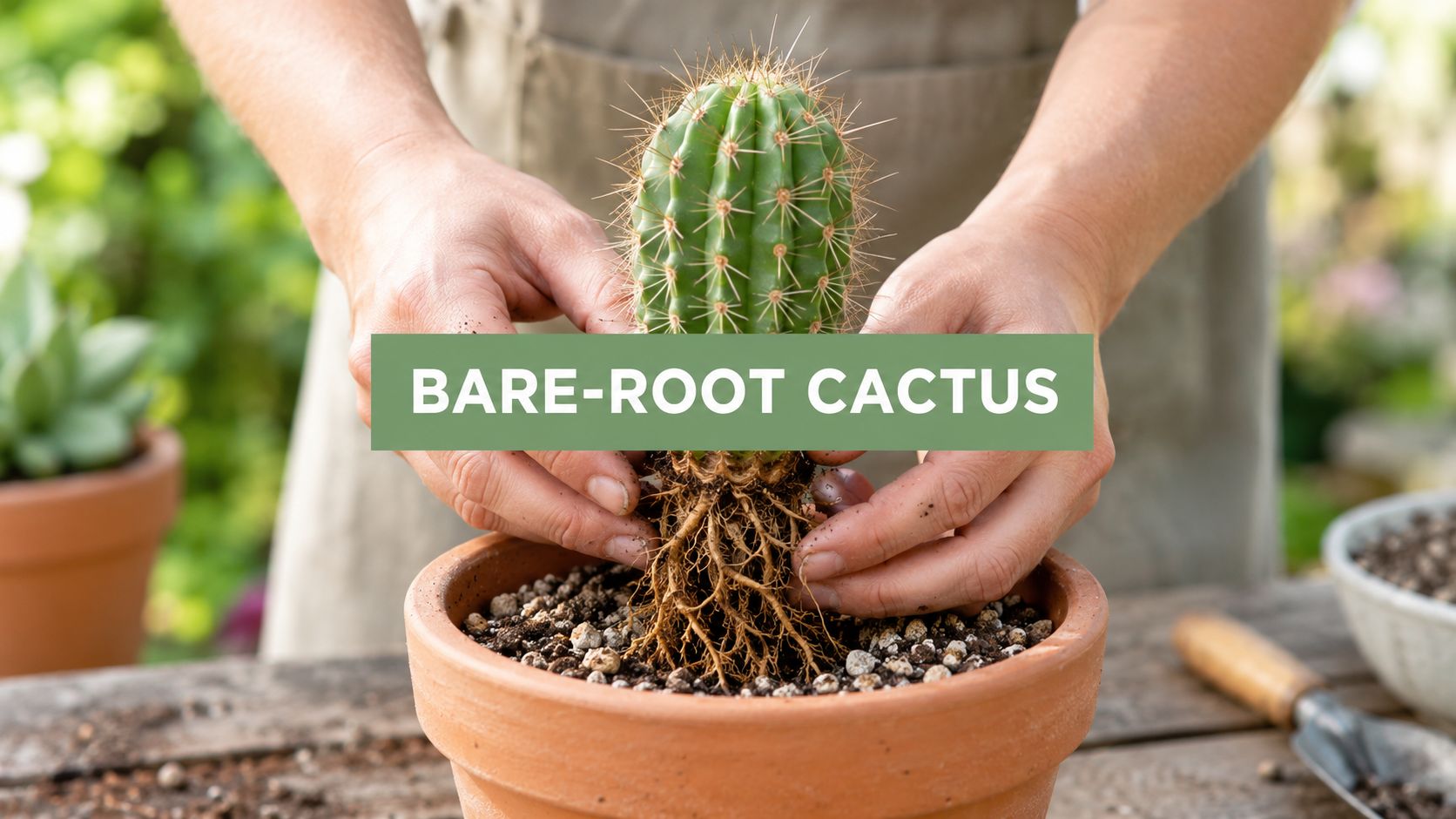

The box shows up at your door looking harmless, but a bare-root cactus is not a normal houseplant with a forgiving root ball. It has been lifted, cleaned, packed, and shipped in a state that asks for restraint, not urgency. If you want it to settle in instead of sulk or rot, the first moves matter more than the first drink of water.
A good result starts with a simple mindset. Treat the cactus like a plant that has survived shipping, not one that needs rescuing from dryness. The roots need time, the crown needs air, and the soil has to be right before anything else can work.
Unboxing and Preparing Your Shipment
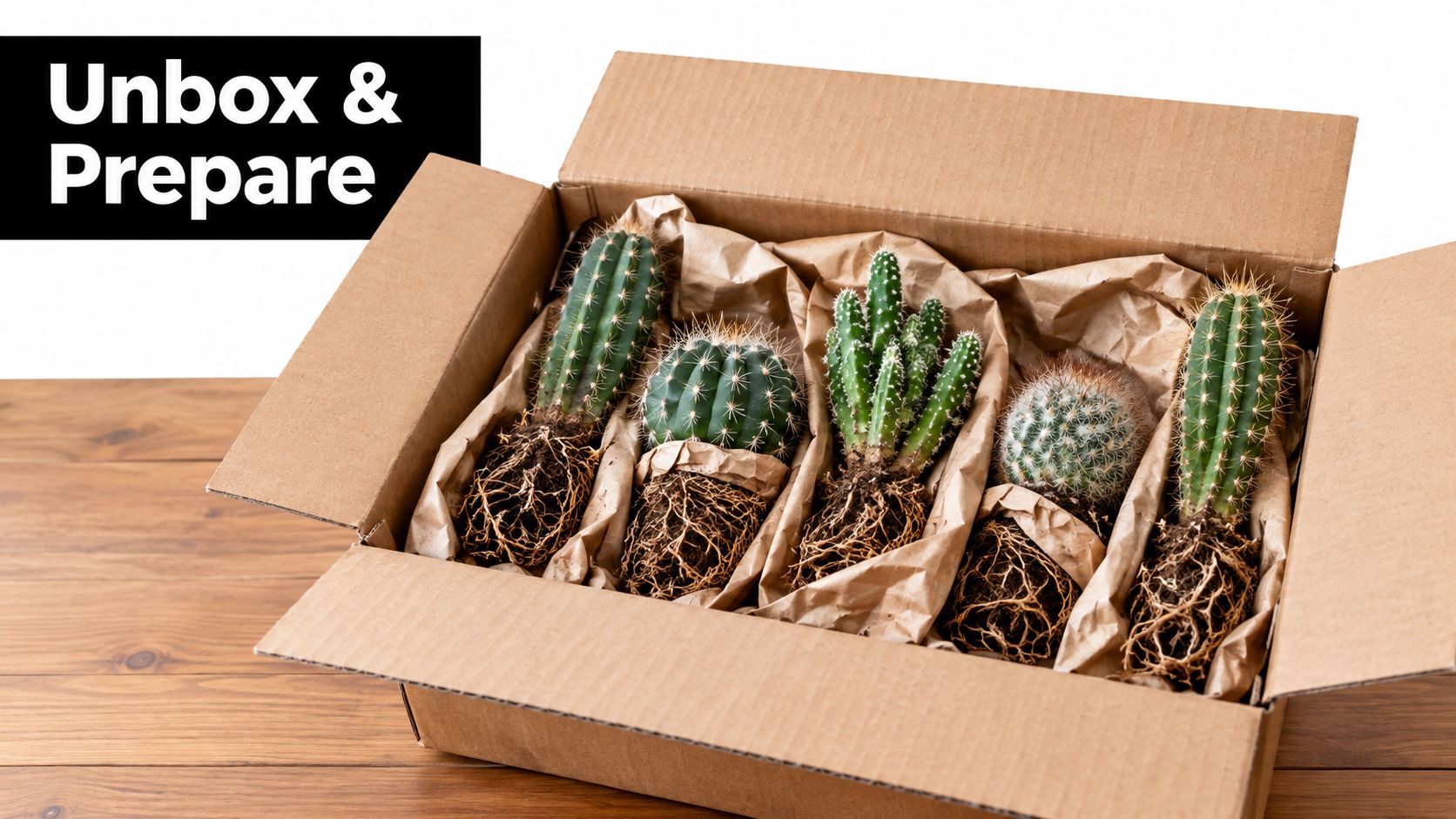
A bare-root cactus arrives with very little margin for error, so the first job is to keep it calm. The packing material has usually done its job by holding the plant dry and stable, which gives the roots a little time to recover before they meet soil. The Cactus Outlet's buying guide for online cactus shipments follows the same logic, because a shipped cactus does better when stress stays low from the start.
Open the package with the plant in mind
Cut the tape slowly and peel back the packing instead of pulling the cactus out in a rush. Spines catch on paper, foam, and cardboard easily, and a fast unboxing can nick the crown or bruise the base. Hold the plant by the body only when you have to, and use gloves, folded cardboard, or newspaper as a buffer.
Practical rule: If the cactus looks dry, a little wrinkled, or tired from travel, that usually reflects shipping stress, not a need for immediate water.
Inspect the roots while they are still dry. Firm roots can usually be worked with, while black, soft, or foul-smelling tissue points to rot and should be trimmed before planting. This is the easiest time to clean up damage, because once the cactus is set in soil, the root crown is harder to reach.
Give it a dry, ventilated holding spot
Set the cactus in a shady, dry, well-ventilated place and let it rest. A small, intact plant usually needs less time than a larger specimen, and a freshly cut cactus needs longer before planting. The Pioneer Nursery's bare-root cactus guide lays out those recovery ranges clearly.
That waiting period is not wasted time. Cactus tissue seals best when it stays dry and exposed to air, not when it sits in humid packing residue or damp soil. For a small barrel, the pause is usually short. For a large columnar specimen, patience matters more, because the larger body stores more stress and takes longer to settle.
Choosing the Right Soil and Container
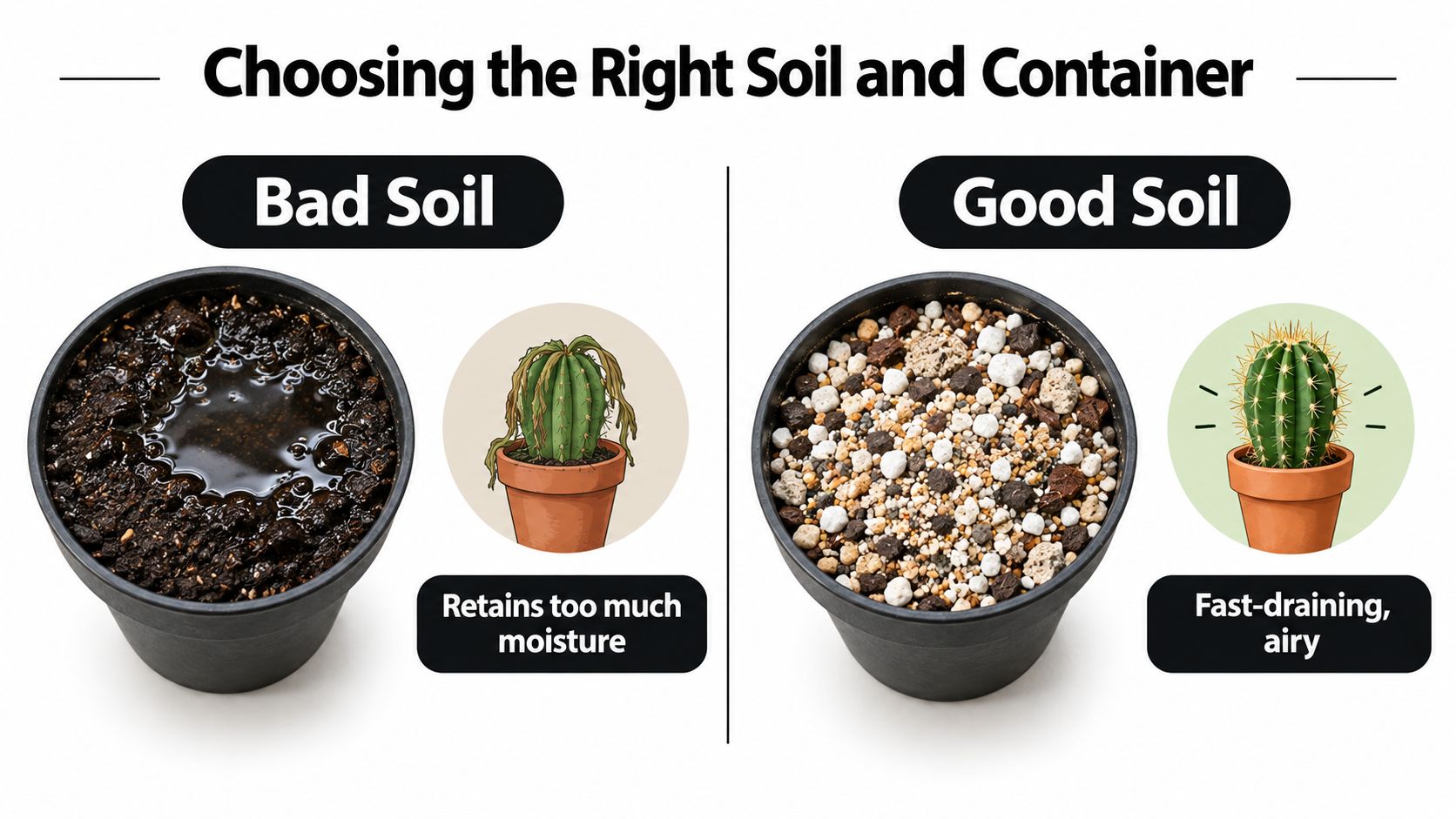
A bare-root cactus needs a mix that drains fast and leaves air around the roots. Rich, spongy soil holds water too long, and that is hard on a plant that is already rebuilding its root grip after shipping. The root crown is the weak point, so the soil has to dry cleanly and stay open.
Match the mix to the planting site
Outdoor planting starts with the site, not the bag of soil. The University of Arizona Extension notes that nursery-grown cacti are usually planted bare root, and that nursery medium should come off when it differs too much from the destination soil. The practical goal is one soil profile, not two moisture zones. Use a very fast-draining planting spot and let the soil settle naturally, instead of packing it hard around the roots. University of Arizona's cactus transplant guidance makes that point clearly.
For a container, drainage is required. Choose a pot with a drainage hole, and keep the fit snug rather than roomy. A container only 1 to 2 inches wider than the root ball is a sound target, and a common cactus mix uses about 60% coarse mineral grit like pumice or perlite and 40% porous cactus soil. If you need a practical starting point, use a fast-draining cactus and succulent soil mix and adjust from there if your climate stays damp.
Avoid the two common container errors
The first mistake is an oversized pot. Too much empty mix stays wet, especially around a rootless plant that cannot draw moisture through the whole container yet. The second is regular potting soil, chosen because it looks richer. For cactus, the better mix is airy, gritty, and quick to dry.
A cactus in a pot should never sit in a swampy middle layer. If the mix stays damp below the surface, the roots are not recovering, they are staying wet too long.
The New York Botanical Garden says proper cactus soil should drain in less than a minute after watering, which is a practical check when you test your own mix. Their indoor cactus guidance also supports the soak-and-dry rhythm once the plant has settled. NYBG cactus care guidance is a useful reference when you are deciding whether the mix drains fast enough.
The Step-by-Step Planting Process
Bare-root planting is really about placement, not force. If the cactus sits too deep, the crown stays wet longer than it should. If it sits too high, the roots dry out before they reconnect with the soil. The best planting depth is the one that keeps the root flare exposed enough to breathe while still giving the plant enough support to stand without wobbling.
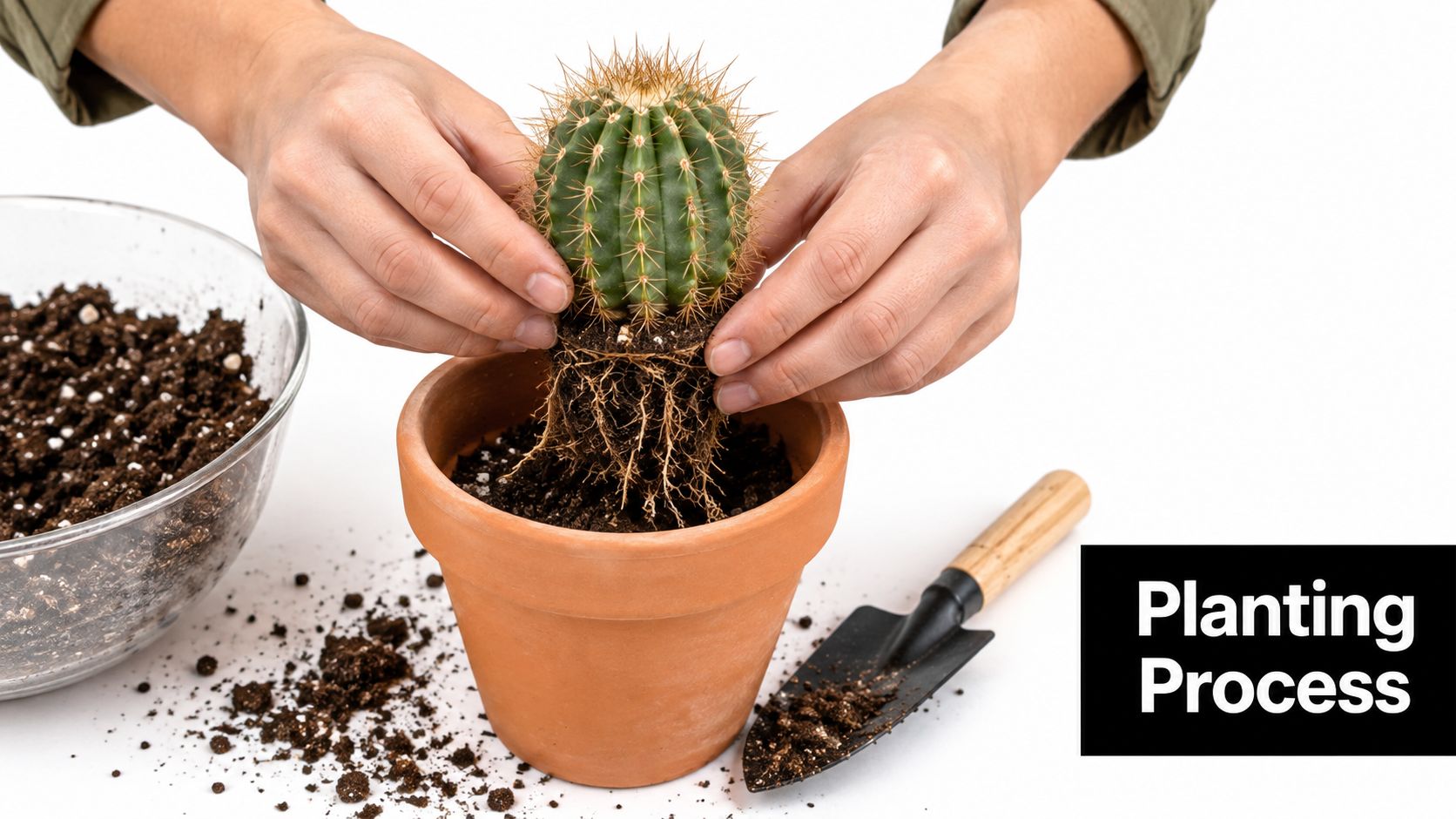
Set the plant before you backfill
Start with a dry pot or a shallow planting hole. Position the cactus so the base sits at the same level it held before shipping, or slightly proud of the surface if the crown is wide and sensitive. For container work, a shallow pot about 1 inch wider than the cactus and soil line kept roughly 1 inch below the rim adds stability and drainage, according to cactus care discussion guidance.
Once the cactus is centered, add mix around the roots in small amounts. Tap the pot lightly or shake the container just enough to settle the medium between roots without compacting it. You want contact, not compression.
Build around the roots without sealing the crown
In garden beds, the same principle applies, but the hole matters more than the pot. Dig shallow and wide, not deep and narrow. A cactus should sit in a root zone that allows water to move away from the crown, not pool around it after a storm or irrigation cycle.
For larger specimens, especially columnar cacti, a slight mound can be more reliable than a bowl-shaped hole. Mounding keeps the crown higher and gives gravity a chance to help with drainage, which is often the difference between a plant that settles and one that fails slowly in hidden wet soil.
Do this, not that: Firm the mix enough to remove air gaps, but don't press it down hard. Tight packing can create the same oxygen problems as soggy soil.
If the cactus is tall, stake it lightly only when necessary and only for stability, not as a crutch. The plant needs gentle support while new roots form, but it still needs air movement around the base. That balance is what helps the transplant interface knit together.
Watering and Acclimation Schedule
A bare-root cactus needs a dry recovery window before it sees water again. Fresh root wounds close best in dry air, and moisture too soon gives rot a place to start. The right delay depends on the plant's size, form, and how much root it lost, so the schedule has to match the cactus in front of you.
Let the plant's size set the pace
For many bare-root transplants, growers keep the plant dry for 5 to 7 days before the first watering, a common rule of thumb for letting damaged roots settle, as summarized in cactus-growing discussion guidance. Other bare-root cactus re-rooting guidance recommends a dry, shaded rest of 1 to 3 days for some plants, while larger or recently cut specimens may need 3 to 7 days or even 5 to 14 days before planting or watering, based on bare-root cactus re-rooting guidance.
The practical difference shows up in size. A small globular cactus usually comes through recovery faster than a heavy columnar specimen, because the wound load is smaller and the plant has less top weight to support. A useful transplant guide breaks that into a size-based matrix, with 5 days for small globular cacti, 7 days for mid-size plants, and 10 days for large or columnar specimens. Waterwise Gardening's transplant guide is useful here because it matches the delay to plant form instead of treating every cactus the same.
Use climate as a modifier, not a shortcut
Heat, dormancy, and airflow all change how fast a cactus can safely return to water. In warm, bright, active growing conditions, rooting can begin sooner than it does in cooler or dormant weather. That does not mean watering by calendar. It means checking the plant, the soil, and the weather together.
Once the cactus is established, follow a soak-and-dry routine. Water thoroughly, then wait until the mix dries completely before watering again. That approach protects recovering roots and matches The Cactus Outlet's succulent watering guide.
A newly planted cactus usually fails from too much water, not too little. If the soil still feels cool or damp below the surface, wait. Small barrels and large columnars do not recover on the same clock, and the larger plant always asks for more patience.
Species-Specific Care for Large Specimens
A small barrel cactus and a tall columnar cactus do not recover on the same timetable. Their weight, wound size, and root-to-body ratio are different, so the transplant strategy has to change with the plant. That's especially true with premium specimens, where one mistake can cost you an established focal point instead of a small patio plant.
Compare the recovery load
USDA materials report that barrel cacti can reach about 95% survival when small, while larger saguaros over 15 feet have lower survival, showing how size changes the odds. One Arizona transplant study reported 71% survival for 951 replanted saguaros, with 75% survival for plants up to 12 feet tall versus 63% for taller plants. Those numbers come from USDA transplant and salvage material and they underline a simple point, larger cactus takes longer to stabilize and is less forgiving of poor placement.
The same USDA report also found that Joshua trees and barrel cacti, when bare-rooted and held in high-density nurseries for at least two years, had very low death rates of 4% and 8% respectively. That doesn't mean every home transplant needs nursery-style holding, but it does show how important controlled drying, root recovery time, and stability are after handling. The plant is not asking for pampering, just for a clean transition.
Support the plant without suffocating it
Tall columnar cacti may need temporary support if wind or body weight can rock the root zone. Support should keep the plant steady, not clamp it rigidly in place. If the base moves, fresh roots tear before they anchor.
For smaller barrel forms, support is usually less about staking and more about preventing overpotting or overwatering. They establish faster when the container is proportionate and the soil dries quickly. For taller forms like San Pedro cactus, Peruvian Apple cactus, or a saguaro cactus, the root zone must be especially stable because the top-heavy body magnifies every small mistake in drainage and depth.
The practical takeaway is simple. Large specimens need more patience, a wider margin for drainage, and less handling once they're set. Smaller specimens need the same principles, just with less structural risk.
Common Mistakes and Troubleshooting
When a bare-root cactus struggles, the symptoms can look confusing at first. Yellowing, softness, or a slightly off color doesn't always mean failure. The plant may be adjusting to a new environment, shedding damaged roots, or sealing wounds before it starts again. The key is to separate normal adaptation from active decay.
Read the tissue, not just the color
A firm cactus that stays upright and gradually rehydrates after planting is usually on track. A base that turns mushy, dark, or smells bad is not. That difference matters because rot starts in wet tissue and spreads into healthy tissue quickly if the plant is left in a poorly drained mix.
If the plant looks wrinkled, that can mean it's using stored water while roots reestablish. If it goes soft at the base, especially after watering, stop watering and reassess the drainage and planting depth. In many cases the fix is not more water, but more air.
Troubleshoot by environment first
Before touching the plant, look at the container or bed. Was the pot too large? Did the mix hold moisture too long? Was the root crown buried below grade? Those are the most common reasons a cactus declines after transplant.
A second mistake is chasing symptoms too quickly. Homeowners often water again because the plant looks stressed, then make the original problem worse. A better response is to let the mix dry, improve airflow, and keep the cactus under bright shade until it stabilizes.
If the crown stays wet, the plant can't callus properly. If the soil stays cold and damp, roots don't restart.
The biological reality is simple. A bare-root cactus can survive a dry interval far better than it can survive a saturated root zone. That's why patience beats rescue watering every time.
Long-Term Care and Maintenance
Once the cactus has settled, the job shifts from recovery to steady support. The first growing season is when the plant tells you whether the planting was right. New growth, firmer tissue, and better color usually mean the roots are reconnecting with the soil. Problems in this phase usually trace back to watering rhythm, drainage, or planting depth.
Keep the routine simple
Use soak-and-dry watering rather than a fixed calendar. Water thoroughly, then wait until the mix is completely dry before watering again. That rhythm works because cactus roots need oxygen between drinks, not constant moisture.
Fertilizer should stay light and selective, especially in the first year. The plant is trying to build root mass, not push lush top growth. A gentle feeding approach is enough once active growth begins, but only if the cactus is otherwise stable and the soil drains well.
Watch for seasonal and structural stress
Cold-hardy cactus and outdoor specimens need extra attention going into winter. Wet soil and cold weather are a bad combination for a recovering plant, so drainage matters even more as temperatures drop. If a cactus is in a container, move it to a more protected spot before prolonged cold and rain turn the pot into a moisture trap.
Monitor the crown and base after storms, heavy irrigation, or unusual softness. That's where trouble shows first. Healthy cacti stay firm, hold their form, and recover from mild stress without collapsing into the soil.
You can also use the plant itself as feedback. If the cactus looks stable and is pushing new growth, the planting depth and watering rhythm are probably right. If it shrinks, softens, or fails to anchor, revise the drainage and stop treating it like a thirsty bedding plant.
If you're planting a bare-root cactus from The Cactus Outlet, choose a fast-draining setup, give the plant a dry recovery window, and keep the first watering conservative. Visit The Cactus Outlet to explore large cacti, columnar specimens, barrel cacti, agaves, and other desert plants that ship bare root and are ready for a careful planting job.