


When people ask if cacti are poisonous to cats, the answer isn't a simple yes or no. While most true cacti aren't chemically toxic, that doesn't mean they're safe. The real threat isn't poison; it's the plant's built-in defense system: its spines.
Toxic vs. Hazardous: It's Not the Same Thing
To really get a handle on plant safety for our pets, we need to think beyond the "toxic" label. Here’s a helpful way to look at it: a handful of grapes is toxic to a dog because of the chemical compounds inside that can shut down its kidneys. A steak bone, on the other hand, isn't chemically toxic at all, but it’s still incredibly hazardous—it can splinter and cause devastating internal damage.
That steak bone analogy is perfect for understanding the situation with cats and cacti.
The vast majority of cacti fall into that "non-toxic" category, but their physical structure makes them a major hazard. The danger comes from their sharp spines and the even peskier, hair-like bristles called glochids. All it takes is one curious sniff, swat, or nibble for a cat to end up with a painful lesson.
A plant doesn't have to be poisonous to be dangerous. For cacti, the physical risk of injury from spines is so high that it often makes the question of chemical toxicity almost irrelevant. They are, first and foremost, a physical hazard in a home with cats.
Physical Dangers vs. Chemical Dangers
It’s so important to separate these two risks when you’re deciding whether to bring a cactus into your home.
- The Physical Hazard: This is the big one for nearly all cacti. Those sharp spines can puncture a cat's mouth, paws, throat, or even stomach if swallowed. A simple brush-up against the plant can leave a cat in a world of pain and set them up for nasty infections. You can read more about how these physical risks impact cats over at Catster.com.
- The Chemical Toxicity: This is what we usually think of when we talk about poisonous plants—they contain compounds that make an animal sick if eaten. While most true members of the Cactaceae family are clear of these, many other succulents that look like cacti (such as certain types of Euphorbia) are highly toxic and can cause serious illness.
So, while the technical answer to "are cacti poisonous to cats?" is generally no, the much more important question for a pet owner is, "are cacti safe for cats?" And considering the very real physical dangers, the answer is usually a hard no.
How to Tell Safe Cacti From Dangerous Lookalikes
Walking through a plant nursery can feel a bit like navigating a minefield when you have a curious cat at home. So many succulents look alike, and it's shockingly easy to mistake a perfectly safe plant for its toxic twin. Many people casually use the word "cactus" for any spiky, desert-dweller, but for a pet owner, that's a dangerous oversimplification.
The real trick is knowing that while most true cacti—plants from the Cactaceae family—are non-toxic, many other succulent families have members that are masters of disguise. These lookalikes mimic the cactus form but hide a nasty, toxic secret.
Take the Euphorbia family, for instance. A plant like the Pencil Cactus (Euphorbia tirucalli) is a prime example. It’s got that cool, minimalist cactus vibe, but if a cat chews on it, they’ll get a mouthful of a milky white sap that's incredibly irritating and can cause serious mouth pain and an upset stomach.
Identifying Safe Cacti for Your Home
The good news is you don’t have to swear off succulents forever! There are plenty of genuinely cat-safe cacti that can brighten up your space without posing a threat. While they won't poison your cat, it’s still best to discourage them from becoming a chew toy to avoid any minor digestive issues.
Here are a few solid, worry-free choices:
- Christmas Cactus (Schlumbergera): This classic holiday plant is completely non-toxic and a beautiful, pet-friendly option.
- Haworthia (Zebra Plant): With its spiky stripes, it’s often mistaken for aloe, but its fierce look is just for show. It's totally safe for cats.
- Bunny Ear Cactus (Opuntia microdasys): This one is non-toxic, but a word of caution: its tiny, hair-like spines (called glochids) can detach easily and cause irritation. Keep it somewhere your cat can't rub up against it.
This visual guide can help you quickly spot the difference between some common safe and unsafe plants.
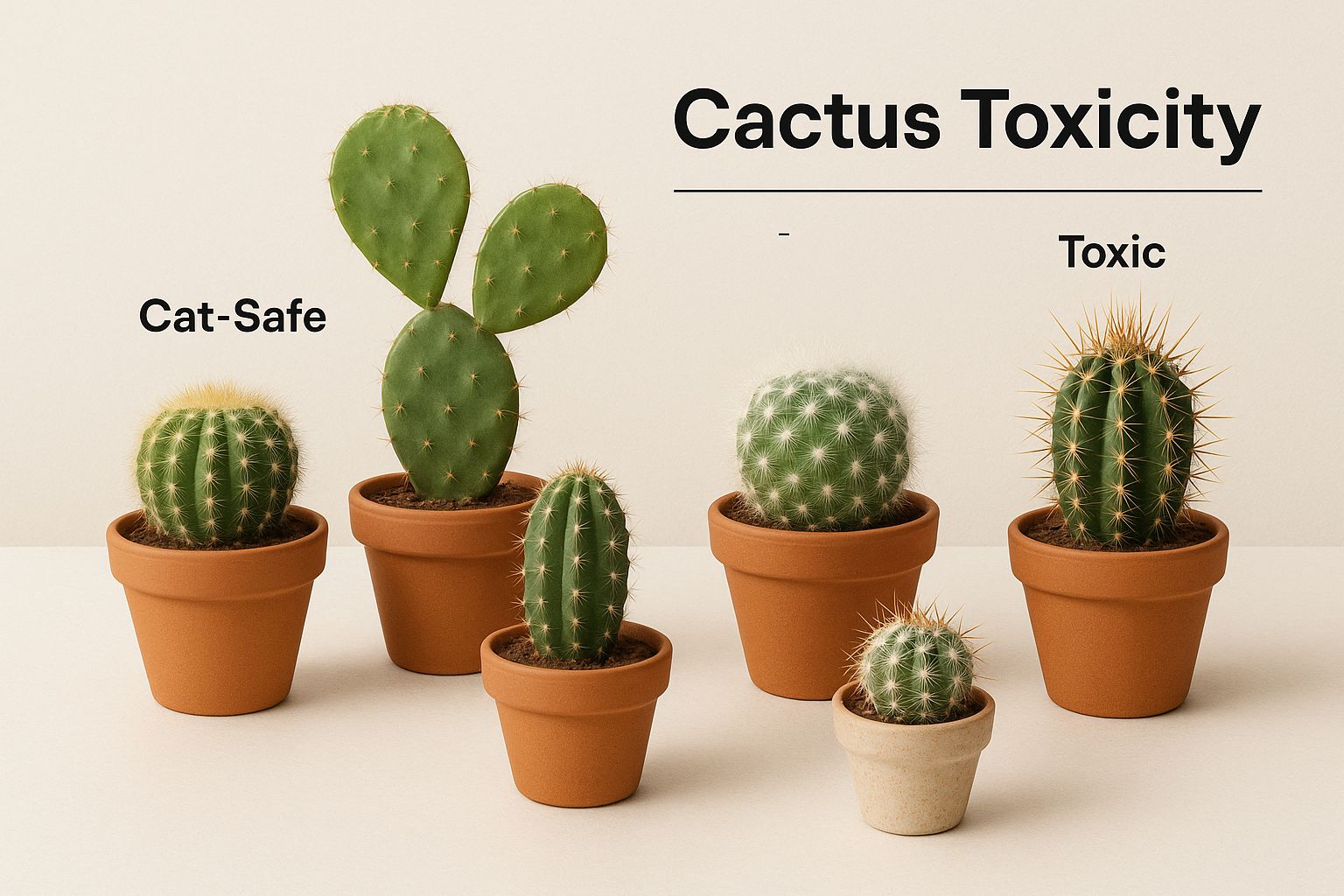
As you can see, the real danger often isn't the true cacti but the common succulents that masquerade as them.
Common Household Cacti and Succulents: Friend or Foe?
To make it even clearer, I've put together a quick-reference table. It pits some genuinely cat-safe cacti against popular succulents that look similar but are definitely not cat-friendly. This should help you spot the good guys from the bad guys at a glance.
| Plant Name (Common & Scientific) | Toxicity Level for Cats | Primary Danger (Physical vs. Chemical) |
|---|---|---|
| Christmas Cactus (Schlumbergera) | Non-Toxic | Physical (mild stomach upset if eaten) |
| Pencil Cactus (Euphorbia tirucalli) | Toxic | Chemical (irritating sap causes oral pain, vomiting) |
| Haworthia (Haworthia fasciata) | Non-Toxic | Physical (pointy leaves, but generally harmless) |
| Aloe Vera (Aloe barbadensis miller) | Toxic | Chemical (causes vomiting, diarrhea, lethargy) |
| Bunny Ear Cactus (Opuntia microdasys) | Non-Toxic | Physical (fine glochids/spines cause irritation) |
| Jade Plant (Crassula ovata) | Toxic | Chemical (causes vomiting, depression, incoordination) |
Remember, this isn't an exhaustive list, but it covers some of the most common cases of mistaken identity you're likely to encounter.
The biggest takeaway here? Always, always, always identify a plant by its scientific name before you bring it into your home. Common names are notoriously unreliable and often overlap, which can lead to a dangerous mix-up for your four-legged friend.
So, when you ask, "are cactus poisonous to cats?" the answer really comes down to whether you're dealing with a true cactus or a convincing imposter. By learning to spot the fakes and sticking with verified safe species, you can create a home that’s both stylish and secure for your cat. If you want to get better at telling them apart, you can learn about the many different types of cacti that exist.
Spines vs. Toxins: Understanding the Real Dangers
When we talk about whether a cactus is "safe" for a cat, we're actually talking about two very different kinds of threats. One is the obvious, physical danger of the spines themselves. The other is a more hidden, chemical threat of toxicity. Teasing these two apart is the first step to keeping your curious cat out of harm's way.
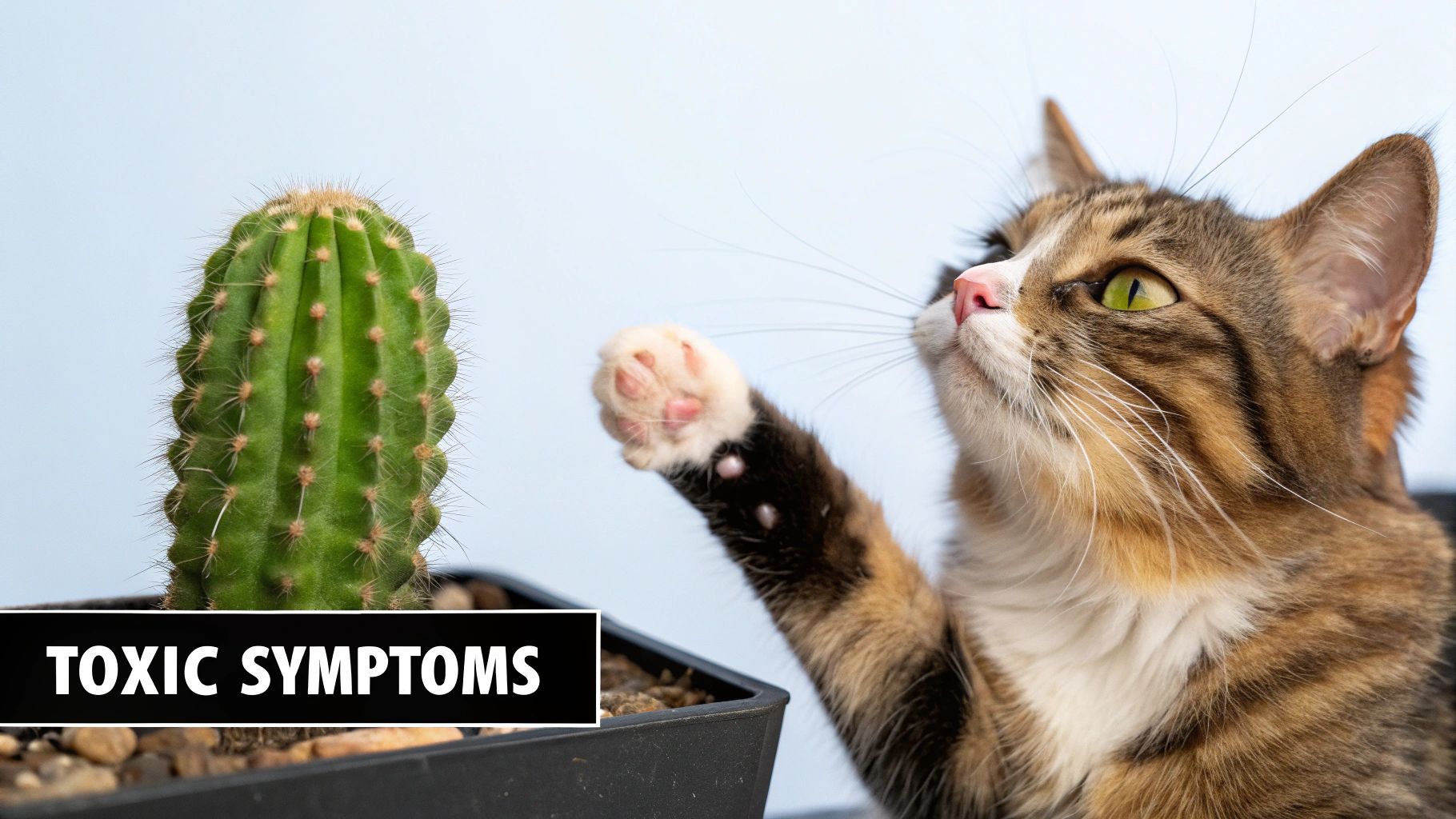
Think of it this way: the spines are like broken glass on the floor—a mechanical hazard. The toxins are like a hidden poison—a chemical one. Both are bad news for your pet, but you have to handle them differently.
The Physical Threat: More Than Just a Prick
The most immediate danger from any cactus is, of course, its spines. A cat's natural curiosity—a playful bat with a paw or an inquisitive sniff—can lead to painful punctures on their nose, paws, or inside their mouth.
But it gets trickier. Some cacti, like the popular Bunny Ear Cactus, are armed with something even more troublesome than large spines: tiny, hair-like bristles called glochids. These almost invisible needles detach at the slightest touch, embedding themselves in fur and skin. They're a nightmare to remove and can cause prolonged irritation, inflammation, and even nasty abscesses if they get infected.
The risk isn't just skin-deep. If a determined cat manages to chew on or swallow a piece of a cactus, those spines become an internal weapon. They can perforate or obstruct any part of the digestive tract, turning a simple houseplant into a life-threatening emergency requiring a trip to the vet.
The Chemical Threat: Toxins and Lookalikes
Now for the chemical side of things. Here’s the good news: the overwhelming majority of plants in the true Cactaceae family are not poisonous to cats. They don't contain the kind of deadly toxins you'd find in something like a lily or an oleander.
However, a huge point of confusion comes from plants that look like cacti but aren't. Many succulents from the Euphorbia family are dead ringers for cacti, but they ooze a milky white sap that is a potent irritant. This sap can cause painful skin rashes, severe mouth irritation, vomiting, and diarrhea. This is why it's so important to know the difference between a true cactus and a Euphorbia.
Even with genuinely non-toxic plants, "safe" doesn't mean "edible." Take the beloved Christmas Cactus (Schlumbergera truncata). It’s not poisonous, but if your cat decides to make a meal out of its fibrous leaves, you can expect some digestive backlash. Veterinary sources confirm that this can lead to vomiting, diarrhea, and general lethargy.
At the end of the day, a cat's digestive system just isn't built to handle a bunch of plant material. So even with a "safe" plant, the goal is always to prevent your cat from eating it in the first place. By keeping both the physical and chemical risks in mind, you're covering all your bases to keep your pet safe.
Spotting the Signs of a Painful Cactus Encounter
Cats are absolute pros at hiding pain—it's a throwback to their days in the wild when showing weakness was a big no-no. Because of this, the signs they’ve had a run-in with a cactus can be surprisingly subtle. Knowing what to look for is the key to getting them help right away.
The symptoms your cat might show can be split into two main buckets: physical injuries from the spines themselves, and tummy trouble from actually eating part of the plant. Figuring out which one you're dealing with helps you understand the situation and give your vet a clear picture.
A physical injury is usually the most obvious problem. You might see your cat suddenly pawing at their face or mouth, which is a dead giveaway that something is stuck and hurting them. This is a classic reaction when a sharp spine or tiny bristle gets lodged in their tender gums, tongue, or lips.
Physical Injury From Spines
When a curious cat gets a little too friendly with a cactus, the first issue you'll likely face is physical damage. Those spines can create some pretty painful and obvious wounds that need immediate attention. Keep a close eye out for these behaviors—they're your cat's way of showing you exactly where the trouble is.
Here are some clear signs they've been poked:
- Excessive Drooling or Foaming: This is a common response to pain or a foreign object in the mouth.
- Visible Swelling: Check their paws, nose, and mouth for any unusual puffiness or inflammation.
- Limping: If your cat is suddenly favoring one paw, they could easily have a spine stuck in their foot pad.
- Refusal to Eat or Drink: Mouth pain makes eating and drinking a miserable experience, so this is a serious red flag.
Gastrointestinal Distress From Ingestion
Sometimes, the problem isn't on the outside. If your cat decides to take a bite out of a cactus—even a "safe" one like the Christmas Cactus—their digestive system is going to have something to say about it. Chewing on all that fibrous plant material can cause some real discomfort.
It's important to know that while these aren't signs of true poisoning, they are a direct result of your cat eating something their stomach just can't handle. You should still report these symptoms to your vet right away.
Look for these classic signs of an upset stomach:
- Vomiting or Diarrhea: This is your cat's body trying its best to get rid of the plant material.
- Lethargy or Hiding: A cat who feels sick will often withdraw, becoming quiet and hiding away.
- Decreased Appetite: A sudden lack of interest in food is one of the most reliable signs that a cat isn't feeling well.
By distinguishing between these two types of symptoms, you can quickly narrow down the cause of your cat's distress. This helps you give your veterinarian specific, useful information, which means your furry friend gets the right care, fast.
Your First Aid Plan for a Cat and Cactus Incident
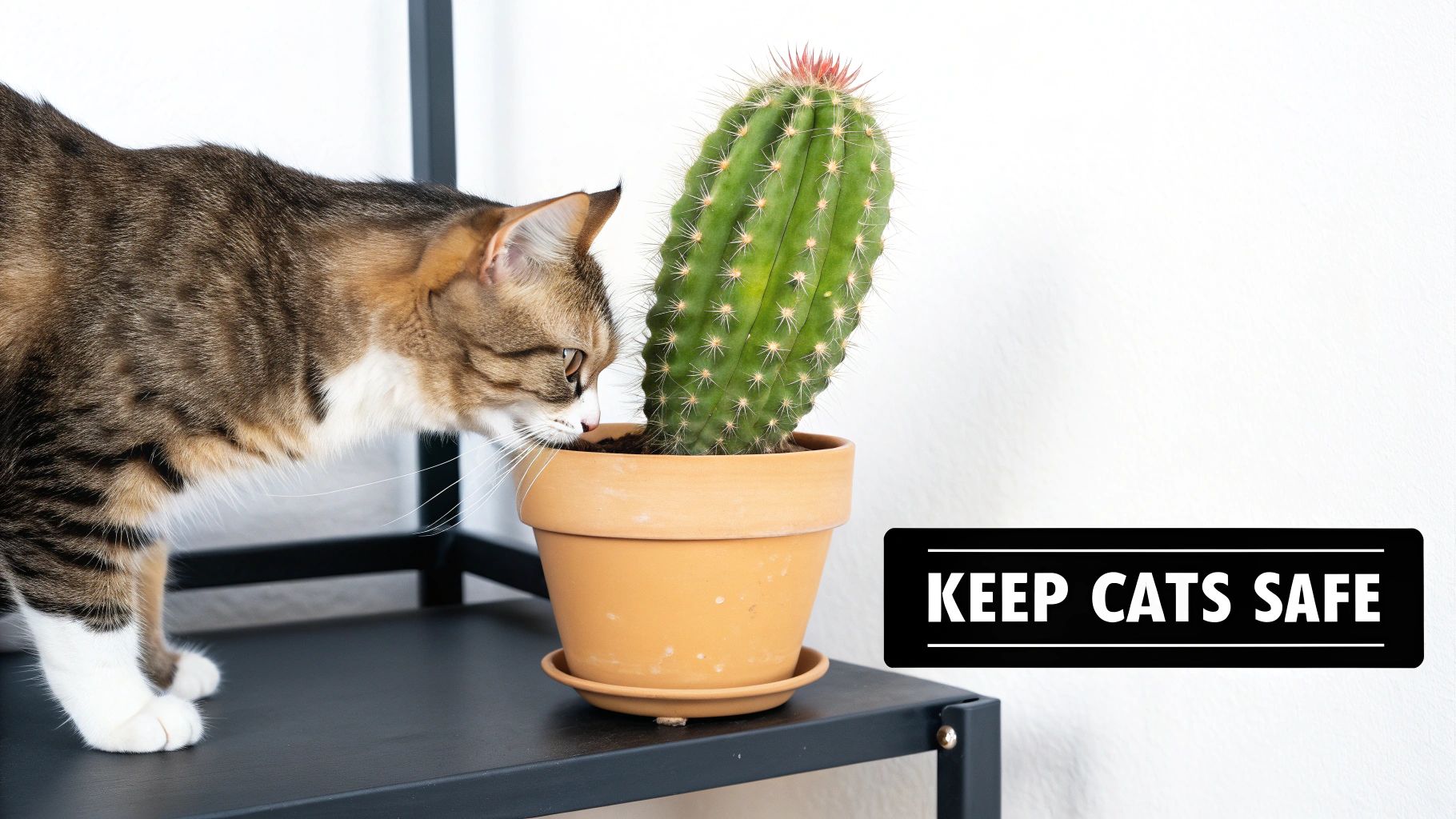
Finding your cat tangled up with a cactus is a heart-stopping moment. The sight of those spines can send any pet owner into a panic, but the best thing you can do is take a deep breath and stay calm. Your first job is to figure out if you're dealing with a true emergency or something you can handle at home.
Some situations are clear-cut emergencies that need a vet's expertise, and fast. If you see any of these red flags, don't wait—call your veterinarian or the nearest emergency animal hospital right away.
When to Call the Vet Immediately
In a serious situation, every minute counts. Don't hesitate to get professional help if you notice any of these signs:
- Suspected Ingestion: If there’s any chance your cat swallowed spines or a chunk of the plant, it’s a major internal risk. This needs a vet.
- Difficulty Breathing: Any choking, wheezing, or struggling for air is an absolute emergency. Go now.
- Extreme Pain or Distress: Is your cat crying uncontrollably, acting aggressive when you get near, or just seems frantic? This signals serious pain that needs to be managed by a pro.
- Spines Near Eyes or Deep in the Mouth: Never try to remove spines from these incredibly delicate areas yourself. You could easily cause permanent damage.
- Severe or Persistent Vomiting: A single episode of vomiting might not be a huge concern, but if it keeps happening, your cat is at risk for dangerous dehydration.
If the encounter seems less severe, you can often start with some basic first aid at home, but you’ll still need to keep a very close eye on your cat.
Steps for Minor Incidents
When it's not a full-blown emergency, your goal is to get your cat comfortable and prevent any more harm. Remember, a panicked cat is much harder to help, so a calm and steady approach is your best friend.
- Remove the Plant: First things first, get that cactus out of reach. Move it to a room your cat can't get into.
- Gently Restrain Your Cat: The "kitty burrito" method works wonders. Wrap your cat securely in a thick towel or blanket, leaving only the injured area showing. This keeps your cat from wiggling away and protects you from claws and teeth.
- Remove Visible Spines: Grab a clean pair of tweezers and carefully pull out any spines you can easily get a grip on. Pull straight out, in the same direction the spine went in, to keep it from breaking off under the skin.
Important Safety Tip: Never go digging for spines that are deeply embedded or have broken off below the surface of the skin. Poking and prodding can just push them in deeper and introduce bacteria, leading to a nasty infection.
What if your cat just chewed on a non-toxic cactus without getting poked? In that case, gently wipe their mouth with a cool, damp cloth to get rid of any plant bits. Offering a little water or some tuna juice can also help rinse their mouth and soothe any irritation.
Even after you've handled the immediate problem, your job isn't done. You'll need to monitor your cat for the next 24-48 hours. Watch for any new swelling, limping, or signs of infection where the spines were. When we ask are cactus poisonous to cats, it’s often the physical injury from the spines that demands the most immediate attention, not the plant's toxicity itself.
How to Create a Cat-Friendly Cactus Garden
Being a cactus lover doesn't mean you have to give up on being a cat owner. With a bit of creative thinking, you can absolutely design a space where your prickly plants and your furry friend can live together in harmony. The real secret is to get ahead of the problem by thinking like your cat and removing the temptation before it starts.
Smart Placement is Key
Your best line of defense is simply putting your cacti where your cat can't get to them. A curious kitty can't get into trouble with a plant it can't reach, right?
Think vertically. Stylish hanging planters are a fantastic way to lift your cacti well out of paw's reach. High, sturdy shelves that are difficult to access also work wonders. Honestly, this one simple trick often solves the entire issue.
Another great option is to create a physical barrier. A beautiful glass cloche or a sleek, modern terrarium can transform a single cactus into a stunning—and fully protected—centerpiece. This move not only keeps your cat safe from spines but also adds a really sophisticated touch to your home.
Redirect Their Natural Instincts
Sometimes, a cat's urge to chew on plants is just that—a natural instinct. Instead of fighting it, you can work with it by giving them a better, safer alternative. It's all about redirecting that curiosity away from your spiky collection.
Give your cat a resounding "yes!" by offering them their own little garden. Cat-safe plants like cat grass or silver vine sticks provide a designated green space to nibble on, which often makes your cactus collection seem much less appealing by comparison.
You can also use gentle deterrents to make your cacti seem less interesting. Most cats can't stand the smell of citrus. A light spritz of a diluted lemon juice and water solution around the outside of your pots (never directly on the plants!) can be surprisingly effective at keeping a curious nose at bay.
By mixing these strategies, you can enjoy all your beautiful plants—even a prickly pear cactus, which you can learn how to grow at home—without a single worry about your feline companion.
Common Questions About Cats and Cacti
Let's wrap things up by tackling a few of the most common questions I hear from cat owners. Think of this as a quick-reference guide to put your mind at ease and reinforce what we've covered.
Are Any Cacti Actually Poisonous to Cats?
This is the big one, and the answer can be a bit confusing. While almost all of the cacti you'll find in a typical plant shop belong to the non-toxic Cactaceae family, "poisonous" isn't just about chemical compounds.
A couple of rare species, like the Peyote cactus (Lophophora williamsii), do contain psychoactive alkaloids that are truly toxic if eaten. But for the average houseplant, the real danger isn't poison—it's the physical damage from the spines.
My Cat Just Licked a Cactus—What Now?
First off, take a breath. A single lick is rarely a catastrophe. The immediate job is to check for any tiny, almost invisible spines (glochids) stuck in your cat's mouth or on their tongue.
If your cat is calm and you can see a spine, you might be able to gently remove it with tweezers. However, trying to fish around in a cat's mouth is often a losing battle and can make things worse. The safest bet is to call your vet for advice. Keep a close eye on your cat for the next few hours, watching for excessive drooling or pawing at their mouth, which indicates irritation.
With a cactus lick, the main worry isn't poisoning. It's the painful, embedded spines that can get infected if they aren't removed.
Can Cats and Cacti Really Live Together?
Yes, they absolutely can! It all comes down to smart placement and a little bit of foresight. Making your cacti completely inaccessible is the name of the game.
Here are a few proven strategies:
- Use hanging planters that are well out of your cat's athletic jumping range.
- Place them on high, sturdy shelves that your cat can't easily scale.
- Display smaller cacti inside a beautiful glass terrarium or under a cloche.
By creating a "no-cat zone" for your plants, you remove the risk entirely. This shifts the focus from "are cactus poisonous to cats?" to simply making sure your curious kitty can't get close enough to find out.
Ready to build a stunning, cat-safe plant collection? You can find gorgeous, non-toxic cacti and succulents perfect for your home at The Cactus Outlet. Stop by our website at https://www.cactusoutlet.com to see what we have in store.
Article created using Outrank