

You've probably got a product page open right now. It might be a chunky Golden Barrel, a tall Peruvian Apple, or a collector plant you never see locally. The photos look clean. The seller says it ships safely. Then you hesitate.
That hesitation is reasonable. When you buy a cactus online, you're not just buying a plant. You're buying the seller's packing habits, shipping judgment, root honesty, and after-sale support. A cactus can look excellent in a listing and still arrive cold-damaged, freshly repotted, poorly rooted, or mislabeled.
Online buying is still worth it. The category keeps expanding because buyers want access that local nurseries rarely offer. The global cactus plants market reached an estimated USD 1.2 billion in 2024 and is projected to reach around USD 2.5 billion by 2033, growing at a projected 8.9% CAGR, with online retail playing a major role in that growth, according to DataHorizzon Research's cactus plants market analysis.
What changes the outcome isn't luck. It's process.
The Allure and Anxiety of Buying Cacti Online
A local nursery usually gives you a narrow slice of the cactus world. You'll see common starter plants, smaller pots, and whatever happened to arrive on the last truck. Online stores are different. You can compare sizes, forms, branching habits, and species in one sitting.
That access is the reason so many collectors and home growers eventually decide to buy a cactus online. It's often the only practical way to find a larger specimen, a more architectural form, or a species that suits a specific room or outdoor design.
The anxiety comes from the part you can't inspect in person. You can't squeeze the stem for firmness. You can't check if the root system is established. You can't tell whether the seller watered it yesterday and boxed it anyway.
Practical rule: Treat an online cactus purchase as a handling process, not a simple retail transaction.
That mindset helps. Instead of asking only whether the cactus looks good, ask whether the seller gives you enough evidence to judge risk.
Why online buying still makes sense
The online market isn't growing because buyers enjoy gambling on damaged plants. It's growing because serious sellers can offer more species, more sizes, and more useful detail than most local garden centers.
A good online listing gives you a chance to compare actual plant form, shipping method, and seller policies before spending anything. A bad listing hides those details behind pretty photos and vague promises.
What buyers usually get wrong
Most disappointing purchases start before checkout. Buyers focus on the species name and ignore the operational details:
- They trust a hero photo. One polished image tells you almost nothing about the base, roots, or current condition.
- They ignore shipping timing. A healthy cactus can still fail if it travels during the wrong weather window.
- They overvalue broad guarantees. “Live arrival” sounds protective until you read the exclusions.
- They treat arrival like the finish line. The first days after delivery matter as much as the listing.
If you approach online buying like a collector rather than an impulse shopper, the odds improve fast.
Decoding Listings to Find the Perfect Plant
A strong cactus listing gives you enough information to picture the actual plant in your real space. A weak one gives you a species name, a styled photo, and just enough ambiguity to create disappointment.

Read size descriptions like a skeptic
“2-gallon,” “5-gallon,” and similar labels describe the container, not the visible stature. Height matters. Width matters. Stem thickness matters. So does whether the plant has a single clean column, multiple heads, or a lopsided shape from growing toward light.
If the listing gives only pot size, ask for actual plant dimensions. If it gives only height, ask whether that measurement starts at the soil line. Those sound like small details until the box arrives and the cactus is far narrower, shorter, or less developed than you expected.
A useful listing should show more than one angle. You want the crown, the side profile, and the lower stem area. The base often tells you more than the top.
Rooted plant or unrooted cutting
This is one of the biggest points of confusion for newer buyers.
A rooted plant has already done the hard part. It has an established root system and usually a smoother path after shipping. An unrooted cutting can still be a good buy, but it asks more of the buyer. You'll need patience, proper potting, and restraint with water.
Use this quick comparison before you order:
| Listing term | What it usually means | Better for |
|---|---|---|
| Established plant | Rooted and growing in media | Beginners, decorators, gifting |
| Rooted cutting | Started root system, not always fully established | Buyers with some experience |
| Unrooted cutting | Callused section intended to root later | Collectors comfortable with propagation |
If the seller doesn't clearly state root status, assume nothing.
Match the plant to the space you actually have
A cactus can be healthy and still be wrong for your room. Tall columnar types need more than floor space. They need stable light. Broad forms need horizontal room that buyers often underestimate. A small decorative pot in a listing photo can distort scale badly.
Species identification matters here too. If you're comparing forms and trying to avoid mislabeled plants, a practical reference like this cactus identification guide helps you spot whether the photos and name line up.
If the listing can't tell you what the plant is, how big it is, and whether it's rooted, you're not buying confidently. You're guessing.
Photo clues that matter
Look beyond whether the cactus looks attractive.
- Check the stem color. Healthy color varies by species, but uneven pale patches can signal stress.
- Look at spine pattern. Consistent spine formation usually tells you more than a glossy edited image.
- Inspect the base. Corking can be normal on older plants, but hidden dark, wet, or collapsed tissue is not.
- Watch for fake scale cues. Tiny pots, tight crop shots, and no hand or object for scale often hide the plant's true size.
Good listings reduce surprises. That's the standard.
Vetting Sellers and Dodging Common Traps
You find a rare cactus at a price that looks fair, the photos are clean, and the reviews seem decent. Then the plant arrives stretched, soft at the base, or excluded from the seller's guarantee because it was listed as a “collector specimen.” That pattern is common enough that experienced buyers stop judging sellers by storefront polish and start judging them by how they handle risk.

A serious cactus seller usually sounds a little boring. That is a good sign. Clear taxonomy, a real nursery identity, current plant photos, and direct answers about condition matter more than polished branding. Sellers who grow or inspect their stock can usually answer specific questions quickly. Resellers and drop-shippers often stay vague because they have never handled the exact plant.
What a specialist seller usually shows
Start with business transparency. A listed physical address, a traceable business name, and nursery documentation where applicable tell you there is a real operation behind the listing. Botanical naming helps too. A seller who labels a plant as Echinocereus reichenbachii is usually paying closer attention than one selling “assorted rare cactus.”
I also look for evidence that the seller understands cactus failure points, not just cactus aesthetics. Can they show the base? Will they discuss old corking versus possible rot? Do review photos show actual delivered plants rather than the same marketing image repeated by every buyer?
Those details separate growers from box movers.
The DOA loophole most buyers miss
A DOA policy only helps if the seller defines damage in a way that covers the problems cacti suffer in transit. Rare plants are where weak policies tend to show their teeth. Some sellers cover obvious breakage but exclude cold stress, delayed collapse, minor softness, or any issue they can label “transit shock.” Others require such a short reporting window that a buyer can lose coverage before the plant has even reached room temperature.
Read the terms like you expect a dispute. Check whether the policy excludes “collector,” “specimen,” oversized, imported, or weather-sensitive plants. Look for instructions on what photos are required, how fast you must report damage, and whether hidden problems such as basal rot or root loss are covered at all. A clear cactus shipping and returns policy is worth more than a bold guarantee badge.
One more point that catches buyers off guard. A seller can promise replacement credit while reserving the right to decide whether the plant was viable on arrival. If that judgment rests only with them, the guarantee has limited value.
Read the policy like someone who has had to use one
Good policy language answers practical questions without forcing you to guess:
- What counts as proof on arrival? The seller should state what photos they need and where to send them.
- How short is the claim window? Very short windows can be unreasonable for plants delivered while the buyer is at work.
- Are high-value plants treated differently? Rare and oversized cacti are often carved out in the fine print.
- Does the policy cover concealed damage? Some transit injuries show up a day or two later, especially cold damage and compromised roots.
- Who chooses refund, replacement, or store credit? That choice affects the actual value of the guarantee.
I trust sellers more when the policy reads like it was written by someone who has shipped cacti through bad weather and carrier delays, not by someone trying to deny every claim.
The drop-shipped growth retardant problem
This is one of the least discussed problems in online cactus buying. Some mass-market sellers offer plants that look unusually compact, uniformly shaped, and shelf-ready because they came out of high-volume greenhouse production or warehouse inventory. In some cases, those plants have been pushed hard for retail appearance, then stressed further by poor handling and long shipping chains.
The listing will not say that plainly.
What you see instead is a cactus that looks tidy in the photo, then stalls after arrival, produces weak new growth, or declines even with decent care. Chemical growth control is not the only cause of that pattern, but mass-produced stock can carry hidden stress that does not show up on day one. That is why seller type matters. A nursery that grows cactus for cactus buyers usually presents plants with more natural form, more honest sizing, and fewer surprises after the first watering cycle.
These clues help:
| Green flag | Red flag |
|---|---|
| Current nursery photos | Repeated stock images across listings |
| Clear species naming | Generic names like “rare cactus plant” |
| Seller answers technical questions | Seller dodges propagation and root questions |
| Reviews show actual delivered plants | Reviews are generic or photo-free |
Questions worth sending before checkout
A short message before purchase can save months of frustration. Ask questions that a real grower can answer without theatrics.
- Is this the exact plant, or a representative photo?
- How long has it been established in its current state?
- Has it been recently repotted, heavily fertilized, or recently watered?
- Will it ship bare-root, in dry medium, or in active soil?
- Can you show the base or a current side photo?
- If it arrives stressed, what does your claim process require?
The answers matter. So does the tone. Clear, specific replies usually signal a seller who knows their stock and expects informed buyers. Evasive replies, canned responses, or pressure to “buy now before it's gone” usually signal the opposite.
Mastering the Logistics of Shipping and Timing
A cactus can look flawless in the listing and still arrive soft at the base, split at the ribs, or cooked inside the box. Online buying turns shipping into part of the plant itself. If the seller handles timing badly, you are not just buying a cactus. You are buying a stress event.

Collectors who get consistent results pay close attention to dispatch timing, packing method, and weather exposure. That matters even more with imported plants, freshly rooted offsets, and rare species sold under tight DOA terms. Some sellers advertise a live-arrival guarantee, then narrow it so aggressively that a delayed scan, minor cosmetic damage, or failure to report within an hour leaves the buyer with no real protection.
Packaging that protects the plant
Dry, immobilized packing is usually the safer choice.
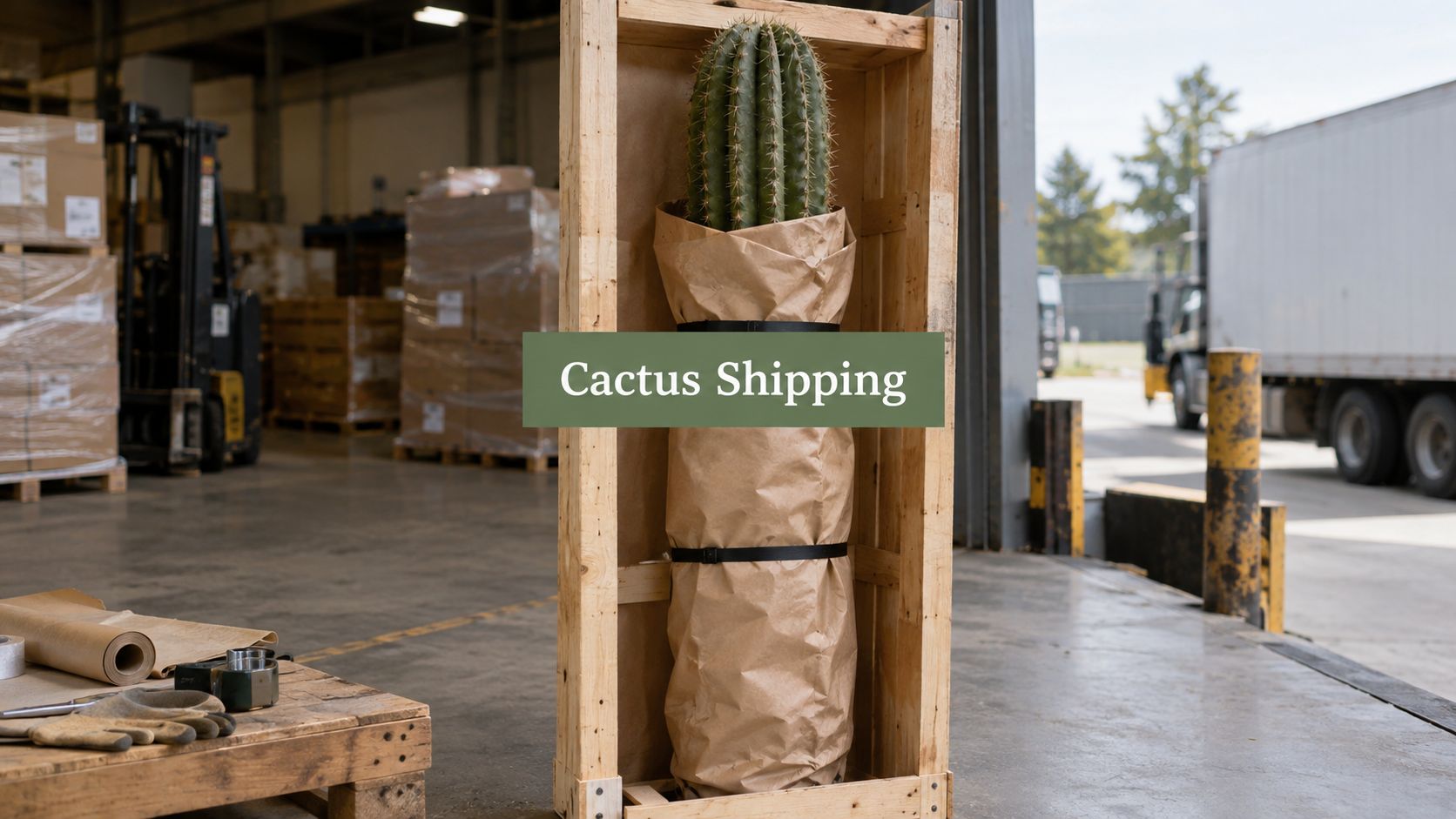
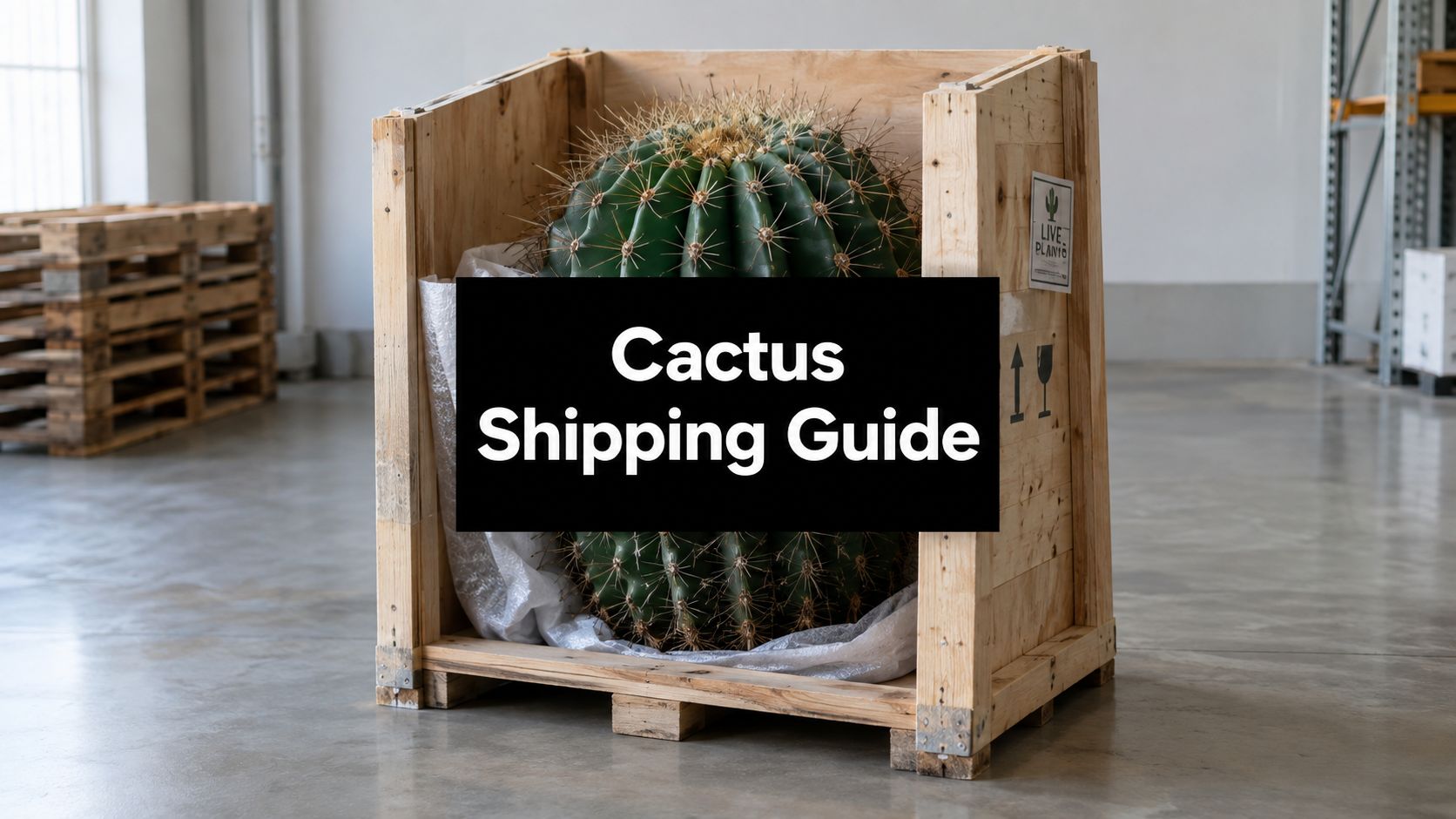
For most cacti, bare-root shipping or dry mineral fill works better than active soil or damp moss. Moisture inside a dark box raises the risk of rot, especially if the plant was watered too recently or sits in transit over a weekend. Tall stems should be braced so they do not hammer the sides of the box. Spines should be wrapped in a way that limits abrasion without trapping humidity against the skin.
Ask one direct question before you order: how was the plant watered, rooted, and packed for transit? A seller who grows their own stock can usually answer that clearly. A reseller often cannot.
Packaging also reveals seller type. Mass-market sellers sometimes send cacti in peat-heavy nursery plugs, recently watered, because the plant was prepared for shelf appearance rather than safe transit. That can be even riskier if the plant was pushed with chemical growth retardants. Those plants may look compact and tidy in photos, then struggle after shipment and normal watering resumes.
Timing beats urgency
The safest order is the one that waits for a reasonable weather window.
Heat and cold both kill in transit. A box left on a truck or porch can swing far beyond the forecasted air temperature, so check temperatures at the origin, the hub cities, and your delivery address. If any part of that route looks rough, ask for a ship date hold. Good sellers do this without acting offended.
Early-week shipping is usually the smart play because it reduces the odds of a weekend stall. Short transit is better than cheap transit. Overnight is not always necessary, but economy shipping across multiple climate regions is a gamble with live plants, especially for thinner-skinned species, seedlings, or anything recently rooted.
A seller willing to ship during a heat spike or freeze without discussing holds, insulation, or timing is showing you exactly how they handle risk after payment.
What to do if a package stalls
Act fast, but do not panic.
If tracking stops updating and the box misses its delivery window, contact the carrier that day and ask for a trace or hold for pickup. Then message the seller through the order channel so the timeline is documented. Many DOA policies require clear photos of the unopened box, label, and plant condition immediately after delivery. Miss that window and the guarantee may be useless, particularly on rarer plants that sellers classify as final sale or limited coverage.
This short video is useful if you want a visual sense of how live plant handling affects outcomes:
Compare published policies, not reassuring messages
Read the actual terms before checkout, not after something goes wrong. A published shipping and returns policy for live cactus orders shows the kind of details worth checking: weather holds, carrier methods, claim deadlines, and what counts as eligible transit damage.
I also look for the loopholes. Does the seller exclude sun stress, minor scarring, loose roots, or delayed scans from coverage? Do they require signature delivery, unboxing video, or pickup from the carrier on the first attempt? Those conditions are not always unreasonable. They do tell you whether the guarantee is real protection or just sales copy.
Understanding Price Tags and Finding True Value
The online cactus market isn't just bargain starter plants. It has real depth. The broader succulent cactus plants market includes strong mid-priced ($10-$50), high-priced ($50-$200), and premium (over $200) segments, showing that buyers will pay for size, rarity, and quality, according to Wise Guy Reports' succulent cactus plants market overview.
That pricing range surprises first-time buyers. It shouldn't.
What you're actually paying for
Two cacti can look similar in a thumbnail and be very different in value. Price often reflects a mix of factors:
- Age and establishment. A rooted, stable plant commands more than a fresh cutting.
- Form. Clean symmetry, branching habit, cresting, or unusual structure can raise value.
- Species rarity. Common nursery stock and harder-to-source collector plants don't occupy the same category.
- Shipping complexity. Larger specimens cost more to pack safely and move without damage.
The mistake is assuming a cheaper cactus is the better deal. Sometimes it is. Often it's just less established, less accurately represented, or more stressful to ship.
Cheap, expensive, and worth it
A low price can make sense when you're comfortable rooting cuttings, rehabilitating slightly rough stock, or buying smaller plants to grow on. It makes less sense when you want a finished specimen, a gift-ready plant, or a large statement piece for a bright room or outdoor planting.
Here's a practical perspective:
| Price mindset | What usually happens |
|---|---|
| Buy the cheapest listing | Higher chance of compromise in size, rooting, or seller transparency |
| Buy for appearance only | Risk of overpaying for a styled photo |
| Buy for long-term value | Better odds of getting an established plant that settles in |
When premium pricing is justified
Premium pricing makes more sense when the cactus is large, difficult to source, unusually shaped, or already established enough to reduce risk after arrival. Garden contractors and decorators often care less about getting the lowest price and more about getting plants that match the intended look without surprises.
A mature specimen that arrives healthy, fits the project, and doesn't need rehab is often the better value than a cheaper plant that loses weeks to recovery or fails outright.
Price should make you ask “why,” not automatically say “no.”
The First 14 Days Your Post-Arrival Action Plan
You cut open the box, and the plant looks fine at first glance. Then you notice a bruise at the base, stale moisture in the packing paper, or a body that seems oddly squat and overfed for the species. This is the point where online cactus buying stops being about the listing and starts being about judgment.
Arrival day is also when weak seller policies show up. Some rare-plant sellers write DOA terms so narrowly that a cactus counts as "alive" if any tissue is still firm, even when the growing point is damaged or the roots are failing. Mass-market growers can add another complication. A cactus pushed with chemical growth retardants may photograph well, then stall or deform once it adjusts to normal conditions in your care.

Start with evidence, not treatment
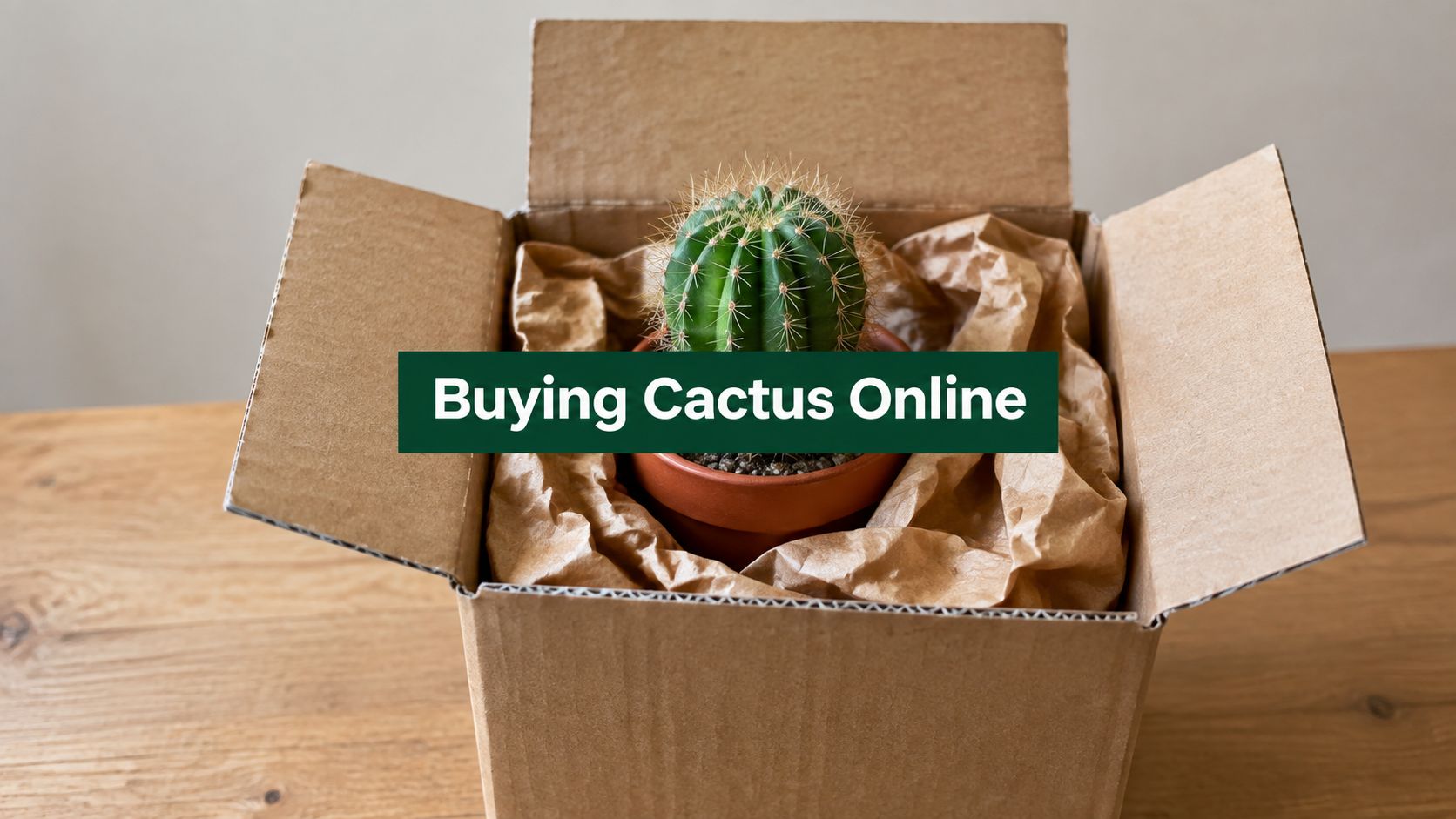
Open the package promptly in a dry, ventilated space. Before you water, repot, or set the plant in a window, photograph the outer box, shipping label, inner packing, the cactus from multiple angles, and the base or roots if visible.
That photo set does two jobs. It supports a claim if the seller packed badly or shipped an already compromised plant, and it gives you a clean baseline for the next two weeks.
Check for the problems that matter most after shipping:
- Fresh splits, soft spots, or wet tissue
- Blackening at the base
- Mealybugs in areoles or roots
- Fine webbing from mites
- A loose root mass or a plant that was recently stuck into soil without being established
- Unnaturally compact growth that can signal heavy production treatments rather than good culture
A little wrinkling after transit is common. Mushy tissue is not.
The first few days should look boring
Place the cactus in bright, indirect light and keep it away from the rest of your collection for about two weeks. Quarantine sounds cautious because it is. One infested online purchase can spread scale, mealies, or mites faster than buyers expect, especially in a tight indoor setup.
Avoid the rescue reflex. A stressed cactus usually handles stable conditions better than extra handling. Repot only if the current medium is staying wet, smells sour, or was clearly packed as temporary filler for shipping.
Watering is where buyers cause a lot of preventable losses. If the plant arrived bare-root, let damaged feeder roots settle before watering. If it arrived potted, check the mix before doing anything. Dry mineral mix is one thing. Dense, cold peat wrapped around travel-stressed roots is another, and that combination is where rot gets started.
For buyers who want a cleaner record of condition on arrival, Logivo's features for transport firms show why time-stamped delivery photos and proof-of-delivery notes matter when a shipped item needs to be assessed quickly.
Days 4 through 14
Watch for change, not instant improvement. Good signs are steady firmness, normal color, and slight rehydration without new blemishes. Bad signs are spreading softness, yellowing from the base, hidden pests emerging after the plant warms up, or a cactus that keeps collapsing despite dry conditions.
This is also when seller quality becomes easier to read. A well-grown plant usually settles in smoothly. A plant forced for fast sale often reveals itself after a week or two through stretched new growth, stalled roots, or tissue that cannot handle ordinary light. If you want a broader reference once quarantine ends, this cactus care guide for light, watering, and long-term setup is a useful companion.
Keep communication with the seller plain and factual if there is a problem. Send clear photos, note the timeline, and quote their policy back to them if needed.
Restraint saves more cacti than enthusiasm.
If you're ready to shop with this standard in mind, The Cactus Outlet offers online access to large cacti and succulents with detailed product information that can help you compare plants before you buy.