

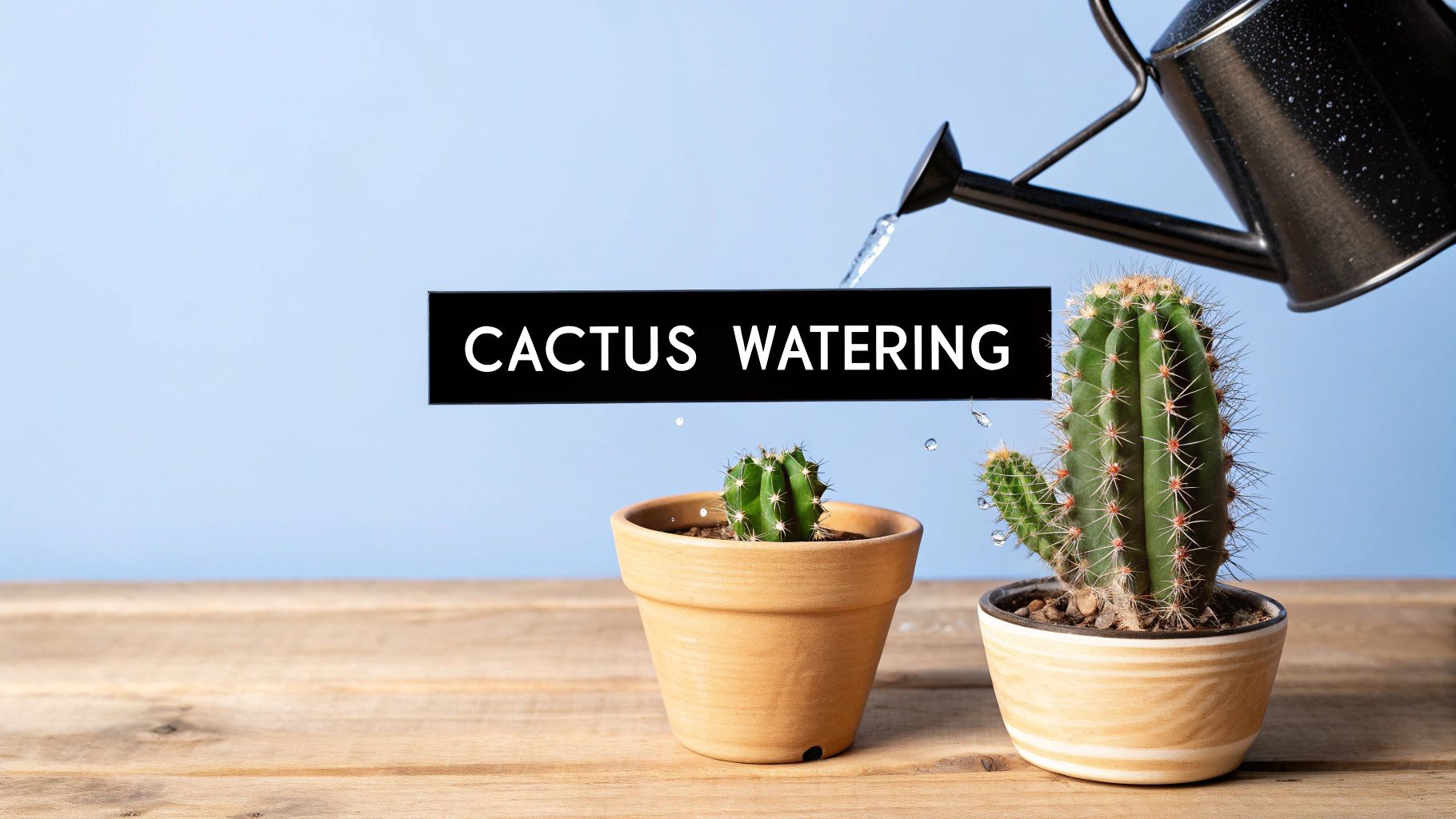

If you're asking, "How often should I water my cactus?" you're looking for a schedule. But the real secret isn't about the calendar—it's about a rhythm. The best approach is to soak your cactus thoroughly, then let the soil dry out completely before you even think about watering it again.
This simple soak and dry method is the single best way to prevent root rot, the number one killer of these incredible plants. It mimics the desert downpours they're adapted to and gives them all the hydration they need to thrive.
The Simple Answer to Cactus Watering
Forget about setting a weekly reminder on your phone. When it comes to watering your cactus, you need to think more like a desert rainstorm: a rare but absolute drenching. Cacti are master water hoarders, designed to guzzle up a huge amount of water fast and then store it for the long haul. Giving them little sips of water here and there just doesn't work; it encourages weak, shallow roots and can lead to a slow decline.
The golden rule is to get your hands dirty. Well, one finger, at least. Stick your finger or a simple wooden chopstick about two inches into the soil. If it comes out with any damp soil clinging to it, hold off. If it comes out bone-dry, it's go time. This hands-on check is infinitely more reliable than guessing based on a date.
Watering Frequency Changes With The Seasons
Your cactus lives by the seasons, even indoors. It has a busy growing period and a long, sleepy dormant phase. Matching your watering to these natural cycles is absolutely essential for a happy plant.
-
Spring and Summer (Growing Season): When the days are long and warm, your cactus is hard at work, pushing out new growth. It’s thirsty. You'll probably find yourself watering every one to two weeks, sometimes more if it’s in a hot, sunny spot.
-
Fall and Winter (Dormant Season): As the light fades and things cool down, your cactus hits the brakes and goes into a deep rest. Its need for water plummets. Watering just once a month is often more than enough to see it through until spring.
This seasonal shift means a massive 75-85% reduction in watering during the winter. It’s a critical rhythm that protects the roots from rot when the plant isn't actively using water.
To give you a clearer picture, here’s a quick reference for a typical indoor cactus.
Cactus Watering Quick Reference Guide
This table provides a general starting point for watering indoor cacti. Remember to always check the soil before watering, as conditions in your home can change.
| Season | Typical Frequency | Watering Goal |
|---|---|---|
| Spring | Every 2-4 weeks | Support the start of the active growing season as the soil begins to dry out faster. |
| Summer | Every 1-2 weeks | Provide consistent moisture for peak growth during the hottest, brightest months. |
| Fall | Every 3-5 weeks | Gradually reduce watering as the plant's growth slows and it prepares for dormancy. |
| Winter | Every 4-6 weeks | Water sparingly, just enough to prevent the cactus from completely shriveling. |
Think of this table as a guideline, not a strict rule. The "finger test" is always your most accurate tool.
One little trick I've learned over the years: if you're using tap water, let it sit out for 24 hours before watering. This allows chlorine to dissipate, which is just a bit gentler on the plant's roots. You can find out more about mastering your cactus watering schedule and see how these small adjustments can make a huge difference.
Key Takeaway: The "soak and dry" method is your compass. Water deeply only when the soil is completely dry to the touch, and dramatically cut back in the winter to respect the plant's natural dormancy.
The 6 Key Factors That Dictate Your Watering Schedule
Trying to stick to a rigid, one-size-fits-all watering calendar is the single biggest mistake I see new cactus owners make. It just doesn't work. A much better approach is to think of yourself as a plant detective, always on the lookout for clues.
The real answer to "how often should I water my cactus?" isn't a fixed number of days. It's a living, breathing response to six interconnected variables. Once you learn to read these signs, you'll be able to give your cactus exactly what it needs, precisely when it needs it. This is how you go from just keeping a plant alive to helping it truly thrive.
1. Cactus Species and Origin
First things first: not all cacti are the same. A Christmas Cactus (Schlumbergera) from the humid jungles of Brazil has wildly different needs than a classic Golden Barrel Cactus (Echinocactus grusonii) from the sun-scorched deserts of Mexico.
The jungle cacti are often epiphytes, meaning they grow on trees, used to more frequent moisture and filtered light. Desert cacti, on the other hand, are built to withstand long droughts and intense sun. Knowing where your plant comes from is the first big clue to how thirsty it's likely to be.
2. The Current Season
As we touched on before, the time of year is a massive piece of the puzzle. The long, sunny days of spring and summer are the active growing season. Your cactus is busy pushing out new growth and flowers, so it's using water much more quickly. During this time, you might find yourself watering every 1 to 4 weeks.
Then comes fall and winter. The shorter days and cooler temps signal it's time to rest. This is the dormancy period. The plant’s metabolism slows right down, and its water needs plummet. Watering just once every 4 to 6 weeks (or even less) is usually plenty.
3. Light Exposure
Think of light as the gas pedal for your cactus's growth engine. More light means more photosynthesis, and photosynthesis requires water.
A cactus sitting in a bright, south-facing window getting six or more hours of direct sun will burn through water far faster than one in a less sunny spot. If you decide to move your cactus to a brighter location, be prepared to water it more often to keep up with its increased activity.
This chart really simplifies the "Soak & Dry" method, showing how everything branches off from the plant's current state—either growing or dormant.
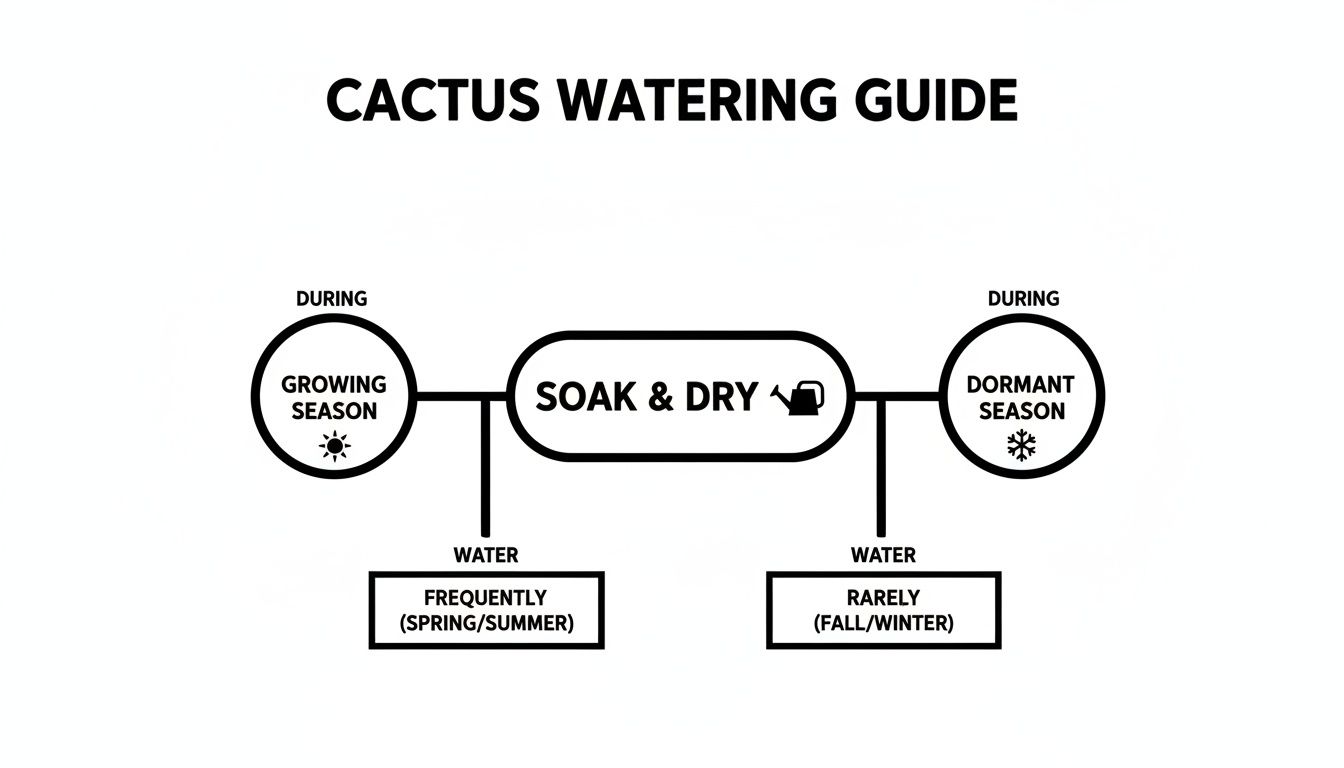
As you can see, the season is what kicks everything off. It tells you whether your plant needs regular attention or just wants to be left alone for a while.
4. Pot Type and Size
The pot itself plays a huge role in how quickly the soil dries out. It’s an often-overlooked but critical factor.
- Terracotta and Clay: These are my personal favorites. They're porous, which means they breathe. Moisture evaporates right through the walls of the pot, helping the soil dry out evenly and providing a fantastic buffer against overwatering.
- Plastic and Glazed Ceramic: These pots are non-porous, so they hold moisture in for much longer. They work perfectly well, but you have to be extra careful to check that the soil is completely dry before watering again.
- Pot Size: A plant in a tiny pot will dry out in a flash compared to one in a huge container. Putting a small cactus in a giant pot is a recipe for disaster, as the excess soil stays wet for too long and can easily lead to root rot.
5. Soil Composition
This is non-negotiable. Cacti need soil that drains like a sieve. Using standard, all-purpose potting soil is a guaranteed death sentence—it holds onto water and will suffocate the roots.
A proper cactus mix from a specialty shop like The Cactus Outlet is specifically formulated with gritty materials like pumice, sand, or perlite. This creates a loose, airy structure that lets water rush through, giving the roots a chance to drink what they need before it dries out again.
Expert Insight: I like to think of good cactus soil as your safety net. Its fast-draining nature gives you a much wider margin for error, making it incredibly difficult to accidentally overwater your plant to the point of no return.
6. Your Home Climate
The final factor is the unique environment inside your own home. The ambient temperature and humidity levels are always at play.
If you live in a humid area, evaporation will be slower, and you'll water less frequently. On the other hand, a home with dry air from central heating in the winter or AC in the summer will wick moisture from the soil much faster, meaning you'll need to water more often. Pay attention to your indoor climate—it’s constantly influencing your cactus’s needs.
The Right Way to Water Your Cactus Step by Step
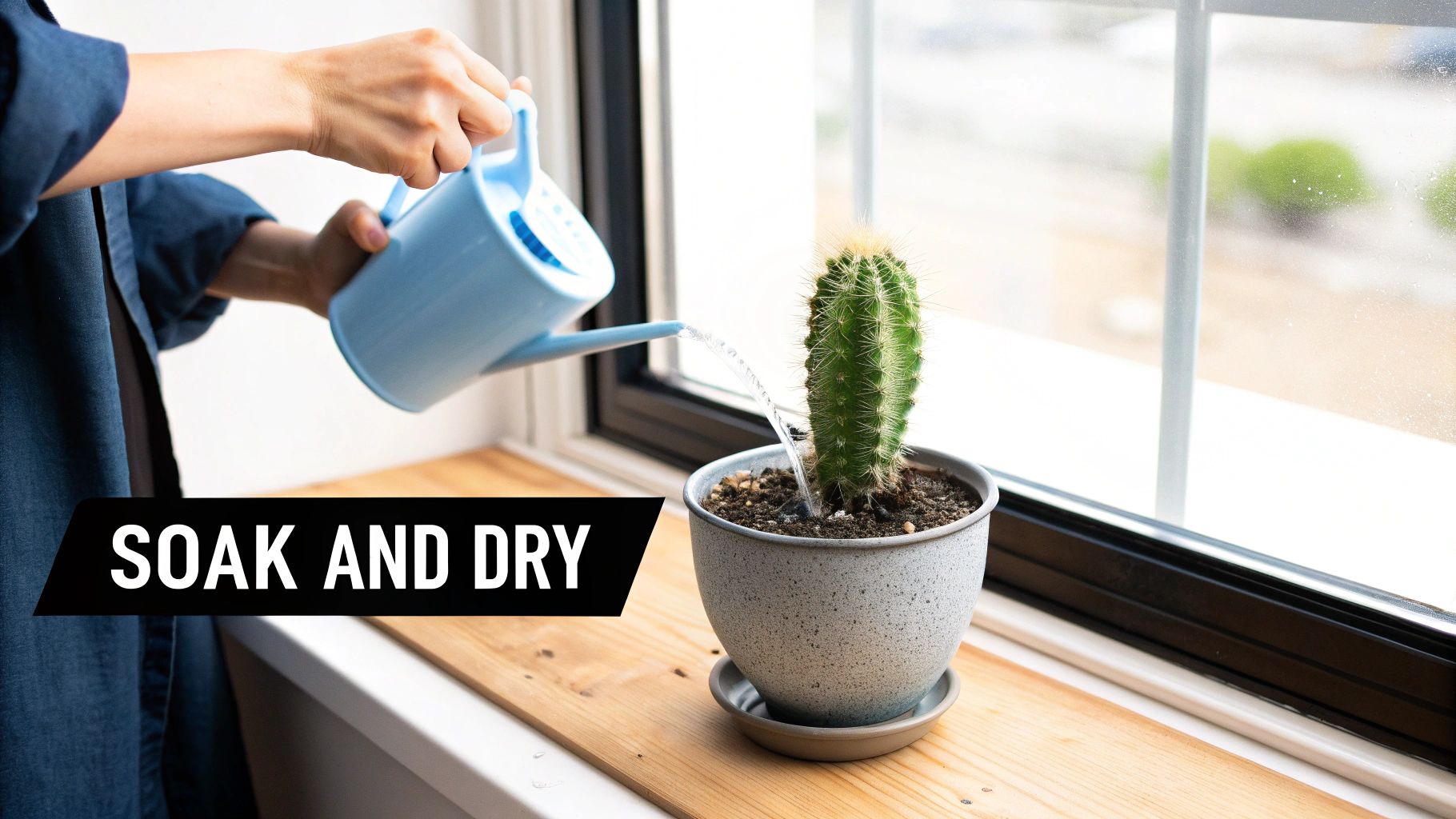
Knowing when to water your cactus is one thing, but knowing how is what really makes the difference between a plant that just survives and one that truly thrives. We live by the "soak and dry" method, a technique that perfectly mimics the downpours and long dry spells of a cactus’s native desert habitat.
Forget about misting or giving your cactus little sips of water every few days. Those common mistakes only wet the top inch of soil, which encourages weak, shallow roots that can't anchor or sustain the plant properly. The goal is a deep, thorough drenching that builds a strong, resilient root system.
A Four-Step Watering Guide
This simple routine will take all the guesswork out of watering and help you avoid the most common pitfalls. Just follow these steps every single time the soil has completely dried out.
- Check the Soil First: Before you even grab the watering can, make sure the soil is completely dry. The easiest way is to stick your finger or a wooden skewer about two inches deep. If it comes out clean with no moist soil clinging to it, you’re good to go.
- Soak the Soil Thoroughly: Slowly pour water over the soil, aiming for the base of the cactus. Keep going until you see water running freely from the pot's drainage holes. That’s how you know you’ve reached the entire root ball.
- Let It Drain Completely: Give the pot a few minutes to let all the excess water run out. It's critical to never let your cactus sit in a saucer of water. This is the fastest way to invite root rot, the number one cactus killer.
- Wait for It to Dry Out: Now for the most important part: do nothing. Don't even think about watering again until the soil is bone-dry all the way through. This drying-out period is just as vital as the soaking itself.
Think of your cactus as a camel. It’s built to take a massive drink of water all at once and then store it for a long journey. The "soak and dry" method is the perfect way to replicate that natural cycle.
Common Mistakes to Avoid
A lot of well-meaning cactus owners end up doing more harm than good by following bad advice. Make sure you steer clear of these habits:
- Misting the Plant: Cacti are desert dwellers, not tropical foliage. Misting provides zero useful hydration to the roots and can actually encourage fungal spots and rot on the plant's skin.
- Watering on a Strict Schedule: Your cactus doesn't know it's Saturday. Watering based on a calendar instead of the soil's actual condition is a recipe for disaster. Always check the soil first.
- Using a Pot Without Drainage: This one is non-negotiable. A pot without drainage holes will trap water, suffocate the roots, and guarantee rot. No exceptions!
Once you get the hang of this technique, you'll start to develop a real intuition for what your plant needs. Many of these same principles apply to other desert plants, too. For a deeper dive, check out our guide on how to water succulent plants. By focusing on deep but infrequent watering, you’re giving your cactus the perfect conditions to grow strong and healthy for years to come.
Reading The Signs: Is Your Cactus Thirsty Or Drowning?
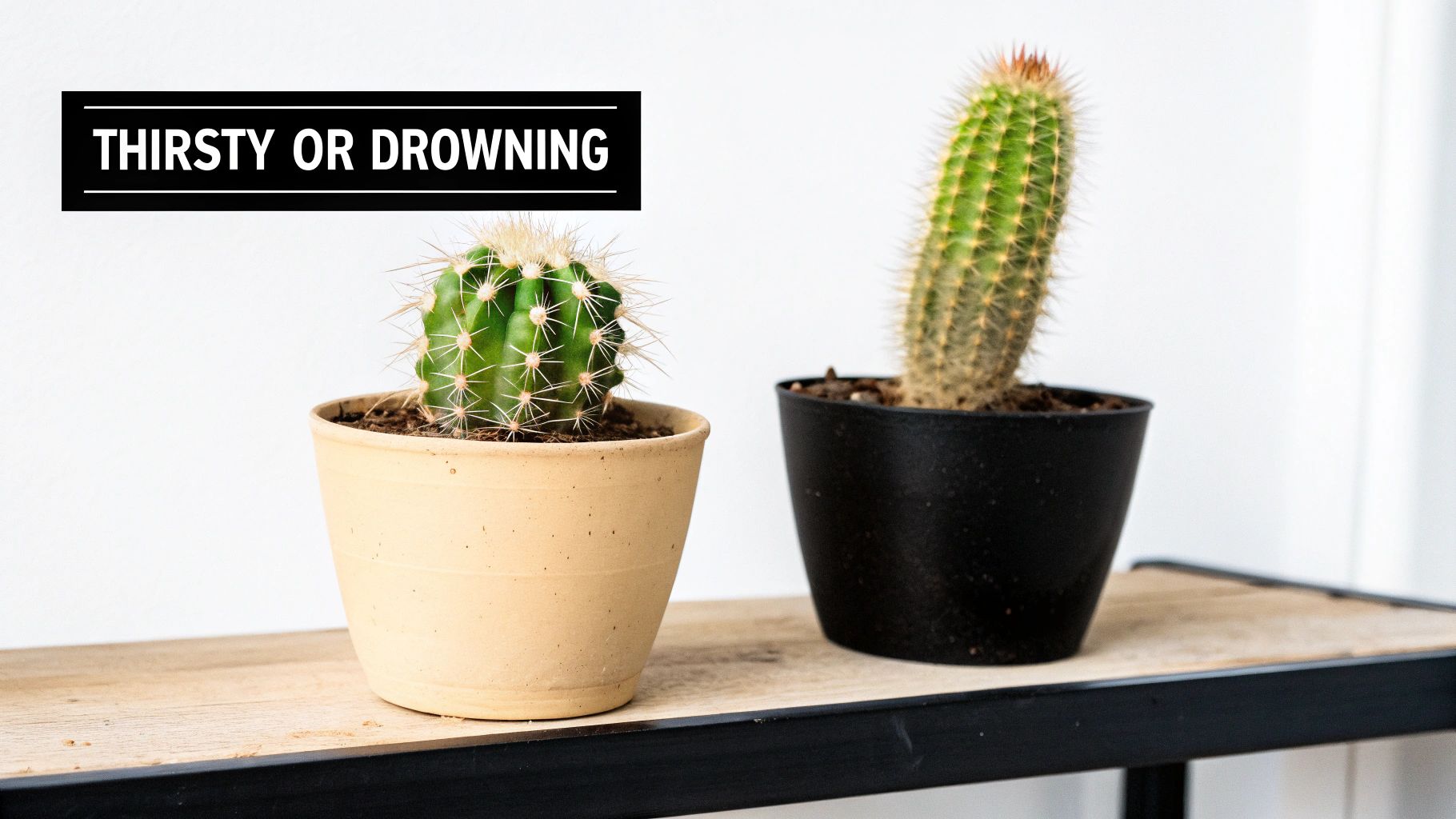
Your cactus is constantly communicating its needs, but you have to know its language. Think of yourself as a plant detective, learning to spot the subtle clues that tell you exactly when it's time to water. This is the skill that will help you ditch the rigid calendar and develop a true green thumb.
Instead of just guessing, you can learn to simply look at your plant. A cactus that's thirsty will look a bit deflated, its skin wrinkling as it uses up the water stored inside its body. An overwatered cactus, on the other hand, sends out much more alarming distress signals.
Signs Of An Underwatered (Thirsty) Cactus
A thirsty cactus is asking for a drink, and the great news is that this is usually a very easy fix. The signs of dehydration are pretty straightforward.
- Wrinkled or Shriveled Skin: This is the most common first sign. Just like a grape turns into a raisin, a cactus will start to pucker as its water reserves run low.
- A “Soft” Feel: The plant will lose its usual firmness and might feel a little squishy or bendable when you gently press it.
- Lightweight Pot: Lift the pot. If it feels feather-light compared to when you last watered it, the soil is bone dry.
- Leaning or Drooping: In more severe cases of thirst, a cactus may start to lean over because it lacks the internal water pressure to stand up straight.
The solution is simple: give it a deep, thorough watering using the “soak and dry” method. You’ll be amazed at how quickly it plumps back up, often within a day or two.
Signs Of An Overwatered (Drowning) Cactus
This is the big one. Overwatering is, without a doubt, the #1 killer of cacti. Too much water literally suffocates the roots, inviting rot that can spread with terrifying speed and kill the entire plant.
Did you know that some species, like the Golden Barrel, can survive for up to four months without a single drop of water? It’s this incredible drought tolerance that makes them so vulnerable to drowning. In fact, gardening surveys suggest root rot from overwatering is the culprit in up to 70% of potted cactus deaths.
Keep an eye out for these critical red flags:
- Mushy, Soft Base: If the stem feels squishy or soft right at the soil line, that's the classic sign of rot.
- Yellowing or Browning: The cactus might take on a sickly yellow or brown hue, usually starting from the bottom and creeping its way up.
- Unpleasant Odor: Rotting roots often give off a distinct musty or foul smell from the soil.
- Black or Dark Spots: Soft, dark, and mushy patches appearing anywhere on the cactus are another clear sign of rot.
If you even suspect overwatering, you need to act fast. Saving the plant often requires emergency surgery—repotting into dry soil and trimming away any dead or rotting roots. For a step-by-step walkthrough, check out our guide on how to revive a dying cactus. Catching the problem early is the best shot you have at a full recovery.
Diagnosing Your Cactus Watering Issues
It can be tricky to tell the difference between a thirsty cactus and a drowning one, as some signs (like feeling soft) can overlap. This table breaks down the most common symptoms to help you make the right call.
| Symptom | Likely Cause: Overwatering | Likely Cause: Underwatering |
|---|---|---|
| Texture | Mushy, squishy, especially at the base. | Wrinkled, shriveled, and deflated-looking. |
| Color | Yellow or brown, often starting from the bottom. | Color may look dull or faded, but not discolored. |
| Stability | May feel unstable or wobbly in the pot due to rotted roots. | May lean over from lack of internal water pressure. |
| Smell | A distinct musty or rotting smell from the soil. | No noticeable odor. |
| Soil | Soil is damp or wet to the touch, even days after watering. | Soil is bone-dry and may have pulled away from the pot's edges. |
By learning to spot these key differences, you can confidently diagnose the issue and give your cactus exactly what it needs to thrive.
Why Your Pot and Soil Mix Are Crucial for Success
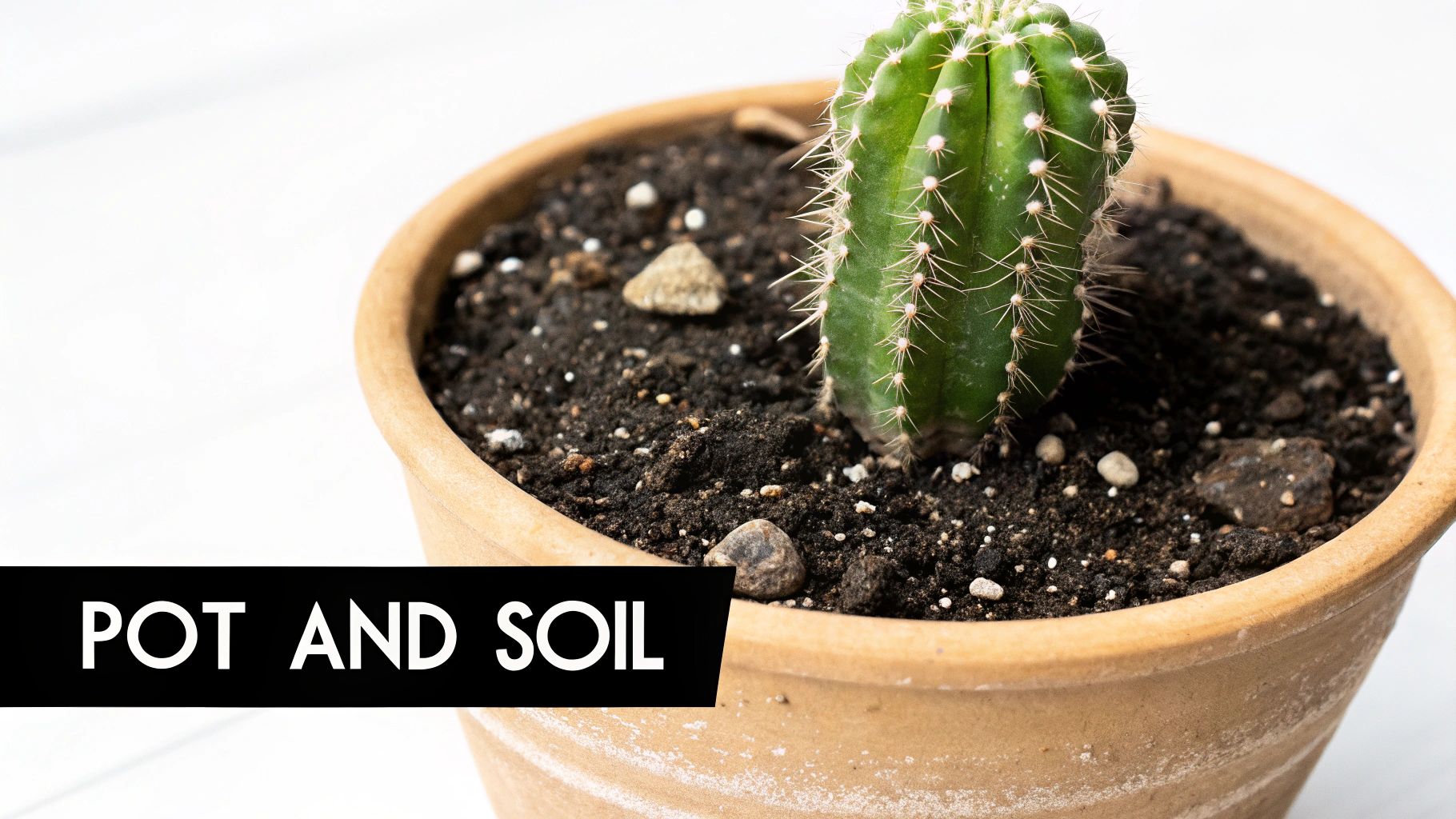
Before you even start thinking about a watering schedule, we need to talk about your cactus's home. The pot and soil you choose aren't just decorative details; they are the most critical factors in preventing root rot and setting your plant up for a long, healthy life.
Getting this foundation right is your ultimate safety net against watering mistakes.
Think of regular potting soil like a dense kitchen sponge. It’s designed to soak up water and stay damp for days. For a cactus, that’s a recipe for disaster. Cacti have delicate roots that simply can't handle sitting in wet, boggy soil—they’ll suffocate and rot in no time. That’s why using a specialized, fast-draining soil mix isn't just a suggestion, it's a must.
Choosing the Right Soil
The magic of a good cactus soil lies in its gritty, airy texture. It’s loaded with inorganic materials like pumice, perlite, or coarse sand. These particles create tons of tiny air pockets, which allows water to flow straight through.
This structure lets the roots grab a quick drink as the water passes by, then allows the soil to dry out rapidly, just like it would in the desert.
Using the right soil is like having an insurance policy against overwatering. Even if you get a little heavy-handed with the watering can, the soil’s excellent drainage will prevent it from turning into a swamp. Want to get the recipe just right? Check out our deep dive into the perfect cactus and succulent soil mix.
Selecting the Best Pot
The container is just as important as what you put inside it. While any pot with a drainage hole is a start, the material it’s made from makes a huge difference.
- Unglazed Terracotta: This is the gold standard for a reason. The porous clay literally breathes, wicking moisture away from the soil and allowing it to evaporate through the walls of the pot. This dramatically speeds up drying time and gives you a much wider margin for error.
- Glazed Ceramic & Plastic: These pots look great, but they are non-porous and trap moisture inside. They can absolutely work, but they require more careful watering. You have to be 100% certain the soil is bone dry before you even think about watering again, as the pot won't help you out.
Think of your pot and soil as a team. A terracotta pot filled with a gritty cactus mix is the dream team—it creates a forgiving, airy environment where roots can breathe and thrive, making your job of watering so much easier.
Your Top Cactus Watering Questions Answered
Even when you've got the "soak and dry" method down, weird situations pop up that can leave you second-guessing. Let's tackle some of the most common questions I hear from cactus owners. This is your go-to guide for those "what do I do now?" moments.
Think of these as real-world solutions that build on everything we've talked about, giving you the confidence to handle anything your cactus throws at you.
Should I Water From The Top Or The Bottom?
Always water from the top. There's a good reason this is the classic method: it works. When you pour water slowly and evenly over the soil, you're mimicking a natural rainfall. It ensures the entire root ball gets access to water as it travels down and out the drainage hole.
This top-down approach also has a hidden benefit—it helps flush out excess mineral salts that can build up in the soil over time.
You might have heard about bottom watering, where you set the pot in a saucer of water to soak it up from the base. While it can work, I find it often leaves the top layer of soil bone dry and doesn't always saturate the root ball evenly. For consistent, healthy results, always stick with watering from the top.
Is Tap Water Okay For Cacti?
For the most part, yes, tap water is perfectly fine. But the water in your area might be "hard," which just means it's high in dissolved minerals like calcium and magnesium. You'll know if you have hard water because you'll eventually see a white, crusty buildup on the soil or the sides of your terracotta pot.
Pro Tip: If you're worried about your water, here's a simple fix. Fill up your watering can and let it sit out for 24 hours before you use it. This gives the chlorine, which is common in city water, time to evaporate. It just makes the water a little gentler on the roots. Of course, using filtered water or collected rainwater is the gold standard if you want to go the extra mile.
What If My Pot Doesn't Have Drainage Holes?
A pot without drainage is a death sentence for a cactus. I know it's a bummer when you find the perfect decorative pot and it doesn't have a hole, but trapping water at the bottom creates a swampy mess that will lead to root rot, no question.
You have two good options here:
- Drill a Hole: This is the best fix. Grab a masonry drill bit (they're made for materials like ceramic and terracotta) and you can add a drainage hole yourself.
- Use it as a "Cachepot": This is my favorite trick. Keep your cactus in its simple plastic nursery pot (with holes!) and just slip it inside the pretty decorative one. When it's time to water, just lift the inner pot out, take it to the sink, water it thoroughly, let it drain completely, and then pop it back in.
Whatever you do, don't plant a cactus directly into a pot without drainage. It's just not a risk worth taking.
Should I Water My New Cactus Right Away?
I know how tempting it is to welcome your new plant home with a nice drink of water, but hold off! That cactus has been on a journey from the nursery to your home and needs some time to adjust to its new surroundings—your specific light, temperature, and airflow.
Give your new cactus at least a week to acclimate before you even think about watering it. This grace period also lets you check if the soil is already damp from the store. Watering too soon just adds stress to a plant that's already in transition. A little patience now pays off big time later.
Here at The Cactus Outlet, we know that pairing a great plant with the right knowledge is the secret to a happy collection. We invite you to explore our beautiful, healthy cacti and find your next favorite. Visit us at https://www.cactusoutlet.com to see what's new.