


Welcome to the captivating world of cacti. At first glance, the sheer variety can feel a little overwhelming, but getting a handle on any type of cactus really just boils down to two simple things: its physical shape and its scientific family, or genus.
Think of it like learning about dog breeds. A towering Saguaro and a tiny Pincushion are both clearly cacti, but they have their own unique looks, needs, and personalities. This guide will help you crack the code.
Cracking the Cactus Code: An Introduction
Navigating the diverse landscape of cacti is way less intimidating than it seems. The trick is to start with the big, obvious traits before you get lost in the weeds. Whether you're just starting out or have been collecting for years, this guide will give you a clear roadmap to make sense of the incredible variety in the Cactaceae family.
We'll walk through the two main ways to classify these resilient plants. It’s a practical approach that builds your knowledge step-by-step, giving you a solid foundation for identifying, choosing, and caring for the perfect cactus for your home or garden.
The Two Pillars of Cactus Classification
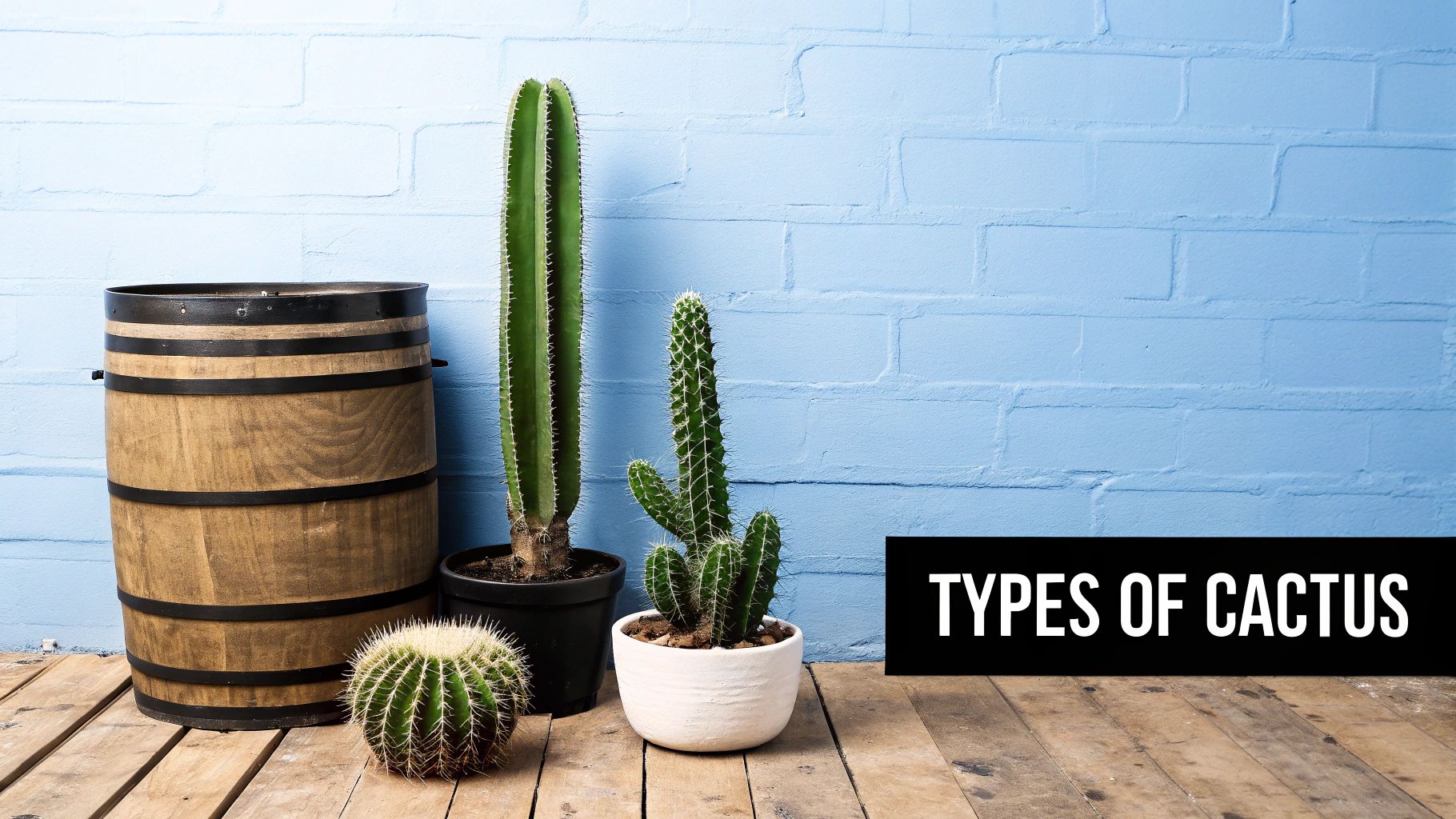
The easiest and most intuitive way to start is by looking at a cactus’s growth form—basically, its overall shape. This is the first thing you'll notice at a nursery. Just like you can instantly tell an oak from a pine, you can learn to spot the differences in cactus structures. The main forms include:
- Columnar: These are the tall, upright cacti that create those dramatic, vertical silhouettes everyone loves.
- Globular (or Barrel): Think of the classic, round, stout icons of the desert.
- Padded (or Prickly Pear): Instantly recognizable by their flat, paddle-like segments.
- Epiphytic: These are the oddballs—often trailing or climbing, they actually grow on other plants in jungle environments.
The second method is to understand its genus, which is just its scientific family name. This is like knowing a dog is a Terrier or a Retriever. When you learn about genera like Opuntia (the Prickly Pears) or Mammillaria (the Pincushions), you start to see deeper connections between plants, like similar care needs or flowering habits.
It’s a common point of confusion, but while all cacti are succulents, their unique features put them in a class of their own. If you want to dive deeper into this, you can explore the key differences between various types of succulents and cacti in our detailed article.
At its core, every type of cactus is a succulent, meaning it stores water to survive arid conditions. However, not all succulents are cacti. The defining feature of a true cactus is the presence of areoles—small, cushion-like bumps from which spines, flowers, and stems grow.
Using this dual approach—looking at both the shape and the family name—gives you the complete picture. It empowers you to make smart choices for your collection.
To get started, here's a handy table that gives a quick overview of the major categories we'll be exploring throughout this guide.
Quick Overview of Major Cactus Categories
| Category | Key Characteristics | Common Examples |
|---|---|---|
| Growth Form | Based on the plant's overall physical shape and structure. | Columnar, Barrel, Padded, Epiphytic |
| Genus | The scientific classification grouping related species. | Opuntia, Cereus, Echinocactus, Mammillaria |
This simple breakdown is the foundation for everything that follows. Now, let's get into the details of each group.
Understanding Cactus Types by Growth Form

Before you get tangled up in scientific names, the easiest way to start identifying a type of cactus is simply by looking at its shape. It’s a lot like telling animals apart by their silhouette; you can learn to spot a cactus by its basic structure, or what we call its growth form. This visual-first approach is your best tool for making sense of the huge cactus family.
Think of these growth forms as architectural blueprints. While every species adds its own flair—different spines, unique flowers, subtle colors—they almost always stick to one of a few core designs. Get these basic shapes down, and suddenly, any nursery or botanical garden will feel a lot less intimidating.
Let's walk through the four most common forms you'll run into.
The Towering Columnar Cacti
When you picture a classic desert scene from an old Western, you're almost certainly thinking of columnar cacti. These are the skyscrapers of the cactus world, defined by their tall, ribbed, pillar-like stems. They might stand as a single, solitary tower or branch out from the base or higher up, creating some truly dramatic, sculptural silhouettes.
These giants are perfectly engineered for life in the harshest, sun-scorched environments. Their upright posture minimizes how much direct sun hits the plant’s surface during the hottest part of the day. Those pleats or ribs you see running down the sides? They let the stem expand and shrink like an accordion, allowing it to gulp down and store incredible amounts of water after a rare desert rain.
A few popular columnar types are:
- Saguaro (Carnegiea gigantea): The undisputed icon of the American Southwest. It’s famous for its massive size and the characteristic arms it develops as it gets older.
- Organ Pipe Cactus (Stenocereus thurberi): This cactus grows in a big cluster of individual stems that rise from a shared base, looking just like the pipes of a giant church organ.
- Peruvian Apple Cactus (Cereus repandus): A fast-growing favorite for landscaping, this one is loved for its beautiful blue-green stems and large, edible fruit. You can check out some fantastic examples in our Cereus collection at The Cactus Outlet.
The Stout Globular or Barrel Cacti
Next up are the globular cacti, which most people just call barrel cacti. These are the stout, spherical, or barrel-shaped members of the family, known for their compact and almost perfectly symmetrical look. They tend to hug the ground, keeping a low profile that’s incredibly good at conserving water and bracing against strong winds.
Their deeply ribbed bodies are often topped with a dense patch of woolly fuzz where new growth and flowers pop out. Their spines are often the main event, showing up in brilliant shades of yellow, red, or white and arranged in stunning geometric patterns.
There's a persistent desert myth that you can slice open a barrel cactus for a refreshing drink. While they do hold water, the liquid inside is a thick, alkaline goo that's pretty unpalatable—definitely not the life-saving oasis you see in the movies.
Well-known barrel cacti include:
- Golden Barrel Cactus (Echinocactus grusonii): Famous for its bright yellow spines that practically glow in the sun, this is one of the most popular landscaping cacti on the planet.
- Fishhook Barrel Cactus (Ferocactus wislizeni): As the name suggests, this species has thick, curved central spines that look just like fishhooks, giving it a rugged and striking appearance.
The Distinctive Prickly Pear Cacti
You know a Prickly Pear when you see one. These cacti, all from the Opuntia genus, are defined by their unique, padded growth. Instead of a single stem, they grow as a series of flattened, paddle-like segments called cladodes. These pads do it all—they function as both stems and leaves, handling photosynthesis and water storage.
This segmented design lets the plant spread out wide, capturing as much sunlight as it can. Prickly Pears are also famous (or maybe infamous) for their two-part defense system. They have the big, obvious spines you expect, but they’re also covered in tiny, hair-like spines called glochids. These detach at the slightest touch and are incredibly irritating. On the bright side, many species grow delicious, edible fruits known as "tunas."
The Surprising Epiphytic Cacti
Finally, we meet the epiphytic cacti—the delightful oddballs of the family. Unlike their desert-loving relatives, these plants come from tropical and subtropical rainforests. The word epiphyte means they grow on other plants, usually nestled in the crooks of tree branches, but don't worry, they aren't parasites.
They get all the moisture and nutrients they need from the air and rain. Because they come from the jungle, their look and their needs are completely different. They often have thin, flat, leaf-like stems that trail or cascade downwards and produce some of the most breathtaking flowers in the entire plant kingdom. These cacti actually prefer filtered light and higher humidity, a total reversal from their desert cousins.
A few familiar epiphytes are:
- Christmas Cactus (Schlumbergera): A holiday favorite, treasured for its beautiful, cascading blooms that show up in winter.
- Orchid Cactus (Epiphyllum): Prized for its enormous, incredibly fragrant flowers that often bloom only at night.
- Rhipsalis (Mistletoe Cactus): This group of cacti has thin, pencil-like stems that hang down, creating a delicate, trailing curtain of green.
A Tour of the Most Popular Cactus Genera
Once you move past a cactus's general shape, you start to get a much clearer picture of what it is and what it needs. When we talk about a type of cactus, getting specific with its genus—the scientific family that groups closely related plants—is key. Think of it as the difference between a general description, like "a tall dog," and a specific breed, like "a Greyhound."
Knowing the genus unlocks a deeper level of understanding. It tells you about the plant’s potential size, its flowering habits, and most importantly, its specific care needs. Let's dive into some of the most popular and beloved cactus genera you're likely to come across.
Opuntia: The Prolific Prickly Pears
The Opuntia genus is one of the most widespread and easily recognizable cactus groups out there, famous for its signature flat, paddle-like stems called cladodes. These are the classic Prickly Pears. Their segmented growth allows them to spread out and form dense shrubs or even small trees in their native habitats.
One of their most talked-about features is a dual-defense system. They have the large, obvious spines you'd expect, but they're also covered in tiny, hair-like spines called glochids. These things detach at the slightest touch and can be a real pain to remove from your skin, so always handle them with extra care. On the bright side, many Opuntia species produce delicious, vibrant fruits known as tunas and edible pads called nopales.
The sheer adaptability of the Opuntia genus is incredible. With over 200 species, they're found from the chilly plains of Canada all the way down to the southern tip of Argentina, which just goes to show their amazing tolerance for different climates.
Cereus: The Columnar Champions
When you picture a towering, tree-like cactus, you're probably imagining a member of the Cereus genus. These are the quintessential columnar cacti, known for their strong, ribbed, and often branching stems that create dramatic silhouettes in any landscape. They also tend to be relatively fast growers, making them a popular choice for gardeners who want to make a bold statement sooner rather than later.
Cereus cacti are also famous for their absolutely spectacular, large, and often nocturnal flowers. These blossoms typically open at dusk and close by morning—a brilliant strategy to attract nighttime pollinators like moths and bats. A well-known example is the Peruvian Apple Cactus (Cereus repandus), which not only looks stunning but also produces a sweet, apple-like fruit. You can explore some incredible examples in our collection of large specimen Cereus cacti for a little inspiration.
Echinocactus: The Golden Barrels
The Echinocactus genus is home to some of the most iconic ball-shaped cacti, most famously the Golden Barrel Cactus (Echinocactus grusonii). The name itself comes from the Greek words echinos (hedgehog) and kaktos (thistle), which perfectly describes their stout, spiny, and rounded appearance. These plants are true masters of symmetry, with perfectly aligned ribs and spines that create stunning geometric patterns.
Their low, spherical shape is a clever adaptation for conserving water and withstanding harsh desert winds. The dense, colorful spines—often in brilliant shades of yellow or reddish-brown—don't just provide protection; they also help shade the plant's sensitive skin from intense sunlight. They are slow growers but can live for decades, eventually becoming magnificent centerpieces in a garden.
Mammillaria: The Pincushion Powerhouses
With over 200 species, Mammillaria is one of the largest and most diverse genera in the entire cactus family. Commonly known as Pincushion Cacti, they are typically small, globular, or cylindrical plants that often grow in charming little clusters. Instead of the prominent ribs you see on barrel cacti, their stems are covered in small, nipple-like bumps called tubercles, which is where the spines emerge from.
This is a fantastic genus for beginners. Their compact size makes them perfect for indoor collections, and they are generally pretty forgiving if you make a few minor care mistakes. One of their most delightful features is their habit of producing a "crown" of small, vibrant flowers that form a ring around the top of the plant, adding a brilliant splash of color.
Speaking of diversity, the global hotspot for cacti is, without a doubt, Mexico. The country is home to nearly 563 species across 50 genera, which is almost 40% of the world's entire cactus diversity. This incredible richness is detailed in studies on cactus evolutionary history, and you can discover more insights about Mexico's botanical treasures from recent research.
Care Needs for Popular Cactus Genera
Getting a handle on these genera helps you anticipate what a plant will need before you even bring it home. A towering Cereus is going to crave a lot more sun than a jungle-dwelling Schlumbergera, and a hardy Opuntia might handle a cold snap that would spell trouble for a delicate Mammillaria.
The table below is a quick-reference guide to help you compare the general needs of these popular groups.
| Genus | Light Requirement | Watering Frequency | Cold Hardiness |
|---|---|---|---|
| Opuntia | Full, direct sun | Infrequent; allow soil to dry completely between waterings. | Varies by species, but many are quite cold-tolerant. |
| Cereus | Full to partial sun; loves bright light. | More frequent during growing season, very little in winter. | Generally not frost-tolerant; prefers warm climates. |
| Echinocactus | Full, direct sun is essential for dense spine growth. | Very infrequent; highly susceptible to root rot from overwatering. | Can handle light frost but requires protection from deep freezes. |
| Mammillaria | Bright, indirect light to partial sun. | Allow soil to dry out thoroughly; reduce water in winter. | Varies, but most need protection from frost. |
Think of this as a starting point. While it's a great overview, remember that individual species within each genus can have their own unique quirks and preferences. Always do a little research on the specific plant you have
How to Choose the Right Cactus for Your Space
Now that you have a good handle on the different growth forms and popular genera, it's time for the fun part—picking the perfect cactus for your home, office, or garden. This is about more than just finding one that catches your eye. It’s really about matching a plant’s unique personality and needs with your specific environment.
Think of yourself as a cactus matchmaker. A sun-worshipping Golden Barrel will be absolutely miserable in a shady corner, and a humidity-loving Christmas Cactus is going to struggle on a scorching hot balcony. The secret to a long, happy relationship with your plant is finding the right fit from the very beginning.
Start With Your Environment
Before you even start browsing for a specific cactus, take a hard look at the spot you have in mind. The conditions of that location are, without a doubt, the most important factor in your decision. Answering a few straightforward questions will narrow your options down dramatically and set you up for success.
Start by asking yourself these key things:
- How much light does this spot really get? Be honest here. Is it six hours of direct, blazing sun, or is it bright but indirect light for most of the day? This is the number one consideration.
- Is this for indoors or outdoors? An indoor cactus needs to tolerate lower light levels and stable temperatures. An outdoor one, on the other hand, must be tough enough to handle weather fluctuations and maybe even frost.
- How much space do I have? Always think about the plant's mature size, not just how cute it looks in that little nursery pot. A small Cereus can quickly outgrow a tight corner.
Once you have a clear picture of your environment, you can start looking for the right kind of plant to match it.
This simple flowchart is a great way to see how your available light can point you toward the perfect type of cactus.
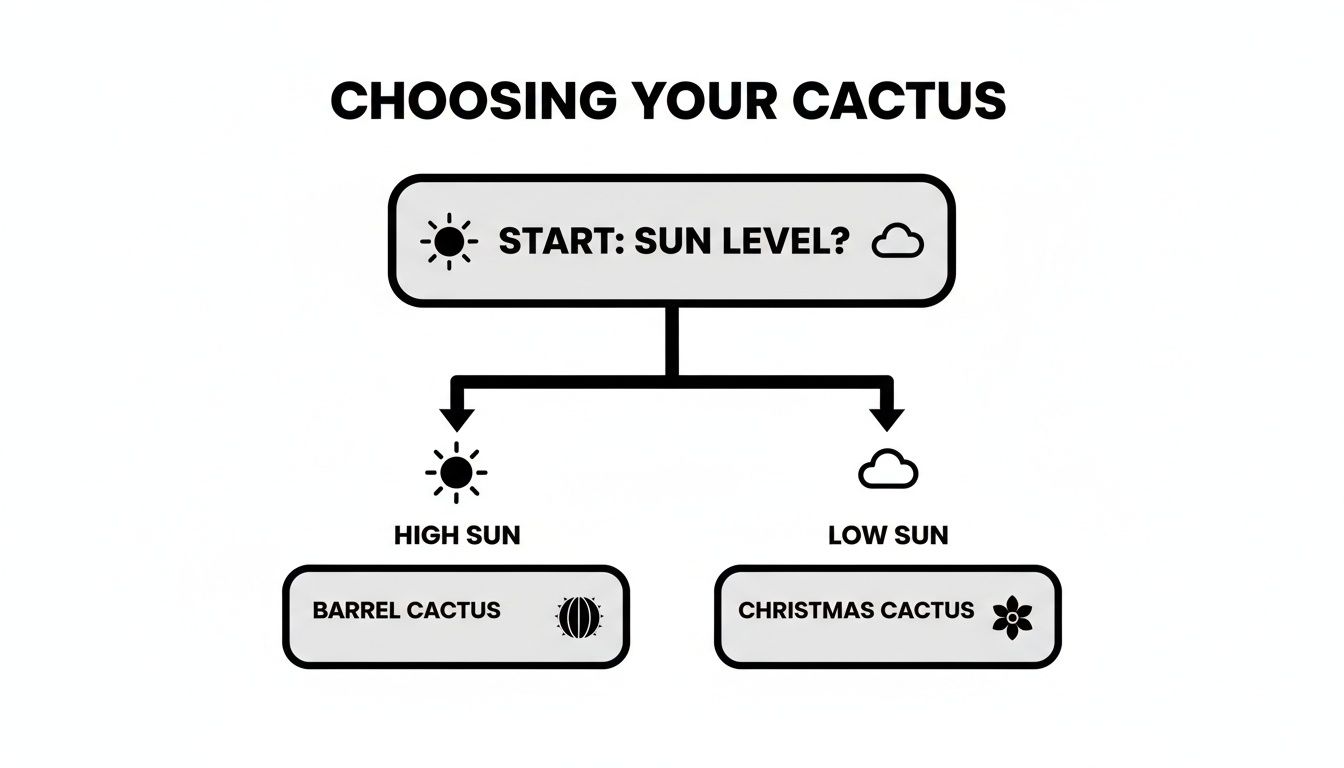 As you can see, high-sun areas are ideal for classic desert dwellers like Barrel Cacti, while those lower-light indoor spots are perfect for jungle species like the Christmas Cactus.
Matching Cactus Types to Common Scenarios
Let's put this into practice. Different spaces and aesthetic goals call for completely different types of cacti. Whether you're decorating a minimalist apartment or designing a sprawling, drought-tolerant garden, there's a perfect cactus out there for the job.
For a Sunny Windowsill That south-facing window getting tons of direct sun is a dream come true for many desert cacti. Small, sun-loving species are going to be your best bet here.
- Best Choice: Mammillaria (Pincushion Cacti). They stay compact, come in hundreds of varieties, and will reward you with a stunning crown of flowers when they get enough bright light.
- Why it Works: Their small size is perfect for a sill, and they absolutely thrive on the kind of intense light that would scorch most other houseplants.
For a Modern, Minimalist Interior If you’re looking for a living sculpture to act as a statement piece, a columnar cactus is an unbeatable choice. Their clean lines and dramatic vertical presence add a touch of architectural interest to any room. For more ideas, you might explore articles on trendy houseplants to complement new furniture to see how different plants can elevate your home's design.
- Best Choice: Cereus peruvianus (Peruvian Apple Cactus). Its beautiful blue-green stems and fast-growing habit make it an instant focal point.
- Why it Works: Its upright form adds height and drama without eating up a ton of floor space.
Pro Tip: For indoor cacti, remember that even "full sun" lovers need to be acclimated. Don't just move a plant from a dim nursery to a blazing hot window in one day. Gradually increase its sun exposure over a week or so to prevent sunburn.
For Low-Light Apartments Not every home is blessed with tons of sunlight, but that doesn't mean you have to give up on owning a cactus. The trick is to choose an epiphytic, or jungle, cactus. These plants have naturally adapted to grow in the filtered light of a forest canopy.
- Best Choice: Schlumbergera (Christmas or Thanksgiving Cactus). These beautiful trailing plants are perfectly happy with bright, indirect light and produce incredible flowers. You can discover more about the best indoor cactus plants that thrive with less sun in our dedicated guide.
- Why it Works: They prefer the exact conditions that many apartments offer—no direct sun necessary.
Bringing Your New Cactus Home Safely
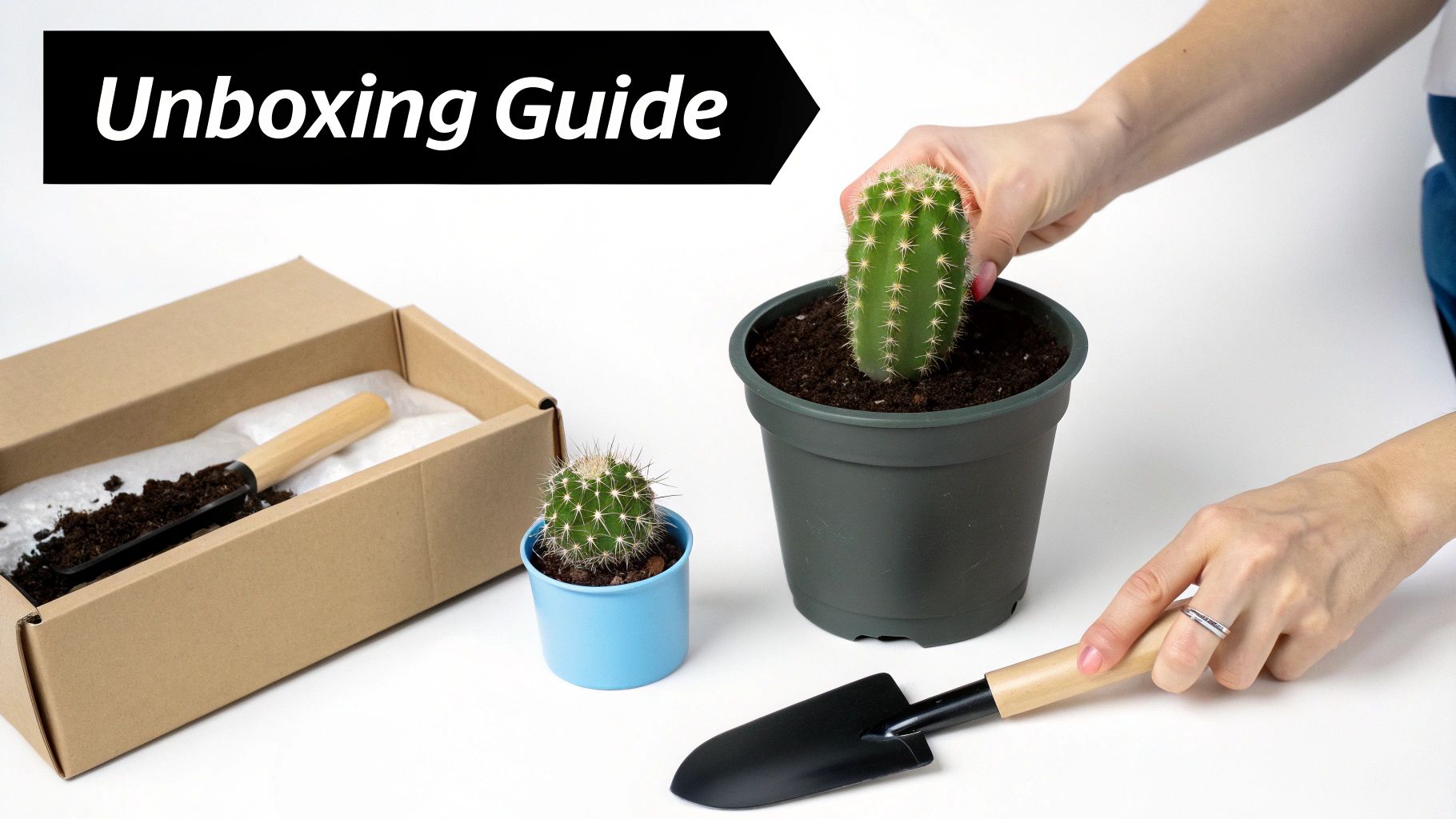
You’ve finally picked out the perfect cactus. But bringing it home is where the real adventure begins. Getting a plant from a trusted online source like The Cactus Outlet is fantastic, but that moment of unboxing can be a little intimidating. How do you welcome your new spiky friend without stressing it out?
This initial transition is everything. A smooth move from the shipping box to its new spot in your home sets the stage for a healthy, thriving plant. It's all about careful handling, a little patience, and knowing what to look for when it arrives.
The Unboxing Process
When your package shows up, fight the urge to rip it open. Think of it less like a standard delivery and more like unveiling a living sculpture. Good growers take incredible care to pack their plants, protecting them from bumps, temperature swings, and dehydration on their journey to you.
Your job is to reverse that process just as carefully. Here’s how to do it right:
- Set Up Your Station: Put down some newspaper or a tarp to make cleanup easy. A good pair of leather gloves or even kitchen tongs are your best friends for handling spiny varieties.
- Check the Box: Before you open it, give the box a quick once-over for any major dents or damage.
- Gently Unpack: Slowly remove the packing peanuts, paper, and any other cushioning. Your cactus will likely be wrapped or secured to keep it from bouncing around.
- Lift, Don’t Pull: Once you can get to the plant, lift it out by the pot or the root ball. Never, ever pull it by its body—that’s a recipe for disaster.
Once it’s out, give your new cactus a quick health check. You want to see a firm stem, good color, and no signs of pests or mushy spots. Don’t worry if a little soil has spilled; that’s completely normal.
Acclimating Your New Arrival
Your new cactus just spent days in a dark box. Throwing it straight into bright, direct sun is like walking out of a dark movie theater into the blinding afternoon light—it's a massive shock. Acclimation is just the process of slowly getting it used to its new environment.
Key Takeaway: Patience is your best friend here. Rushing this step is the single most common mistake new owners make, and a sunburned cactus can be scarred for life.
For the first week, find a spot that gets plenty of bright, but indirect, light. After a week or so, you can start moving it into more direct sun for an hour or two a day, gradually increasing the time. This gives the plant a chance to build up its defenses. You'll also want to hold off on watering for the first few days to a week to let the roots settle and recover from the trip. For a deeper dive, check out our guide on how to repot cacti and help them settle in.
Why Ethical Sourcing Matters
Finally, where you get your cactus from is a bigger deal than you might think. Buying from a reputable nursery or online shop doesn't just guarantee you get a healthy plant that’s been correctly identified. It means you’re supporting sustainable practices that protect these plants in the wild.
Unfortunately, illegal poaching is a huge threat to native cactus populations. A massive global assessment found that nearly a third of all cactus species—a shocking 31%—are threatened with extinction. What’s worse, half of those are at risk because of the illegal plant trade. When you buy from responsible growers, you become part of the solution, helping ensure these incredible plants are around for generations to admire.
A Few Common Questions About Cactus Types
After diving into the different shapes, sizes, and families in the cactus world, you probably have a few questions bubbling up. That's perfectly normal! Let's clear up some of the most common things people ask, so you can feel totally confident when choosing and caring for your plants.
Think of this as a quick chat to tie up any loose ends. We'll tackle the mix-ups we see all the time and give you some practical advice to round out your knowledge.
What’s the Easiest Type of Cactus to Grow Indoors?
If you're just starting out, you'll want a cactus that's a bit forgiving. The Mammillaria genus, better known as Pincushion Cacti, is a fantastic first choice. They don't get too big, they can handle it if you forget to water them now and then, and they're perfectly content with the bright, indirect sunlight you find in most homes.
Another great option is the Christmas Cactus (Schlumbergera). It's what's known as a jungle cactus, so it kind of breaks the desert stereotype. It actually prefers a little less direct sun and enjoys more humidity than its prickly cousins, which makes it incredibly well-suited for living indoors with us.
Are All Succulents a Type of Cactus?
This is easily the biggest point of confusion, but there's a simple rule of thumb: All cacti are succulents, but not all succulents are cacti.
"Succulent" is just a broad description for any plant that stores water in its leaves, stems, or roots. "Cactus," on the other hand, is a specific family of plants (Cactaceae) inside that bigger group. The one giveaway that separates a true cactus from every other succulent is the presence of areoles.
Areoles are the small, fuzzy, cushion-like spots on a cactus's body. These little structures are biological wonders—they're where all spines, flowers, and new branches sprout from. If you can't find areoles on a plant, it's not a true cactus, no matter how spiky it looks.
Take Agave, for instance. It has fleshy, water-storing leaves and sharp points, but no areoles. That makes it a succulent, but not a cactus. Learning to spot areoles is the key to telling them apart.
How Can I Identify the Type of Cactus I Have?
Figuring out what kind of cactus you have can be a fun little detective game. You just need to look for a few key clues, starting with the obvious and then zeroing in on the finer details.
Here’s a straightforward way to approach it:
- Start with the Shape: What’s its overall growth form? Is it a tall column? A round barrel? Or does it grow in flat, paddle-like pads? This is your biggest first clue.
- Examine the Spines: Get a closer look at the spines. Are they long and needle-like, short and fuzzy, or maybe even hooked? The color, length, and how they're clustered together are all vital pieces of the puzzle.
- Note the Flowers: If your cactus is blooming, you've hit the jackpot. The flower's color, size, shape, and even the time of day it opens can be a dead giveaway for a specific genus or species.
When you put these observations together and compare them against pictures in a good guide, you can narrow down the possibilities pretty quickly.
Do All Types of Cacti Actually Have Spines?
You'd be surprised! While we all picture sharp spines when we think of cacti, not every member of the family has them. The cactus world is full of exceptions that defy the stereotype.
Some species have evolved to be almost completely smooth. For example, certain varieties of Astrophytum (the Star Cactus) are famous for their spineless, architectural bodies. Then you have others, like many Prickly Pears, that have big, obvious spines but are also covered in tiny, hair-like spines called glochids. These nearly invisible barbs can be way more irritating than the big ones! Spines are a brilliant adaptation for defense and shade, but the sheer diversity of the Cactaceae family means there's always something unexpected to discover.
Ready to find the perfect cactus that fits your space and personality? At The Cactus Outlet, we have a huge selection of healthy, high-quality cacti, from towering statement pieces to charming little plants for your desk. Explore our collection and bring home a tough, beautiful new friend today.