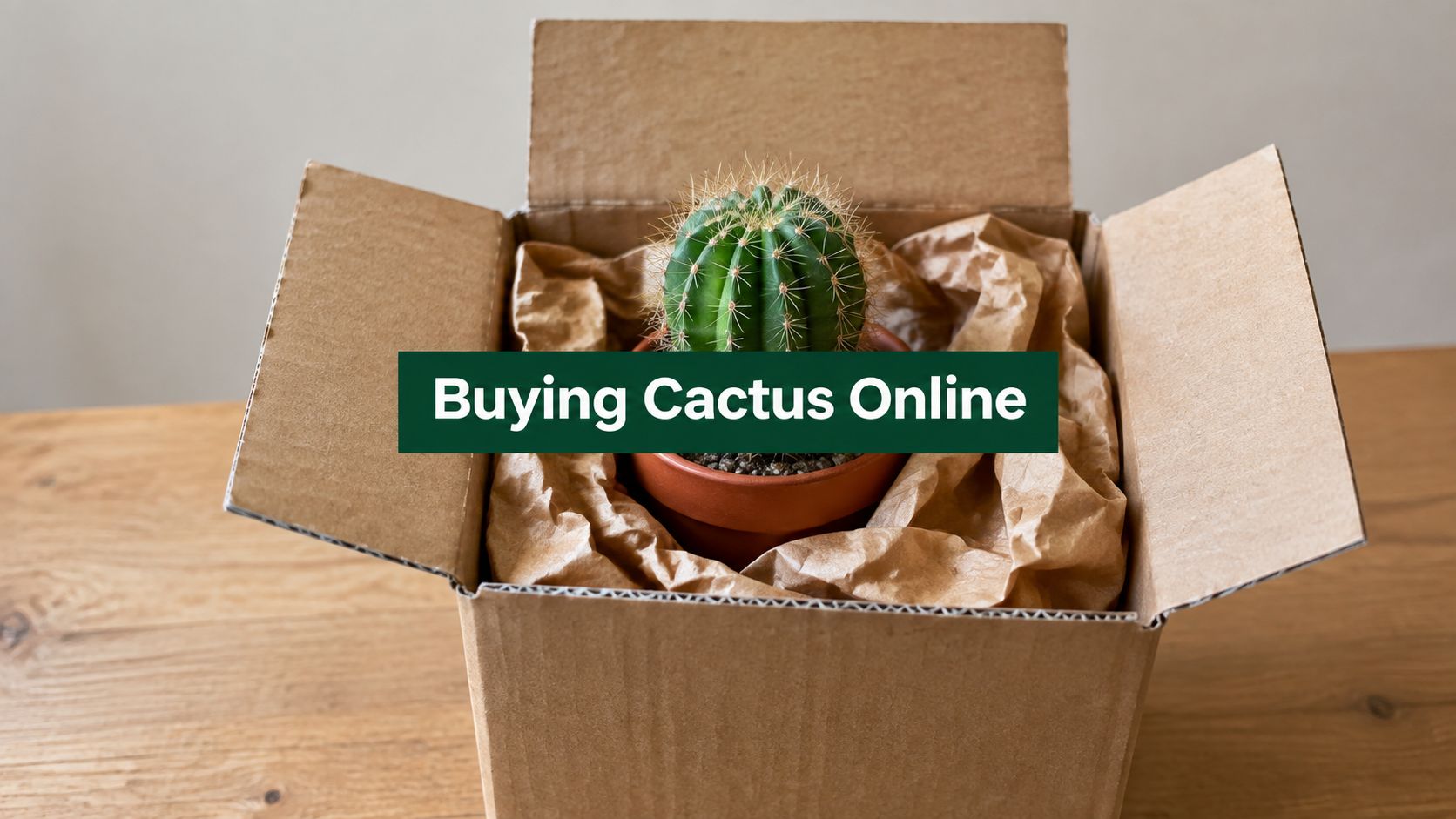


You've found the right specimen for your patio, entryway, privacy screen, or project. It's tall, heavy, covered in spines, and possibly branching. Then one practical question appears: how can a large cactus travel from a nursery to your door without arriving broken, crushed, or soaked?
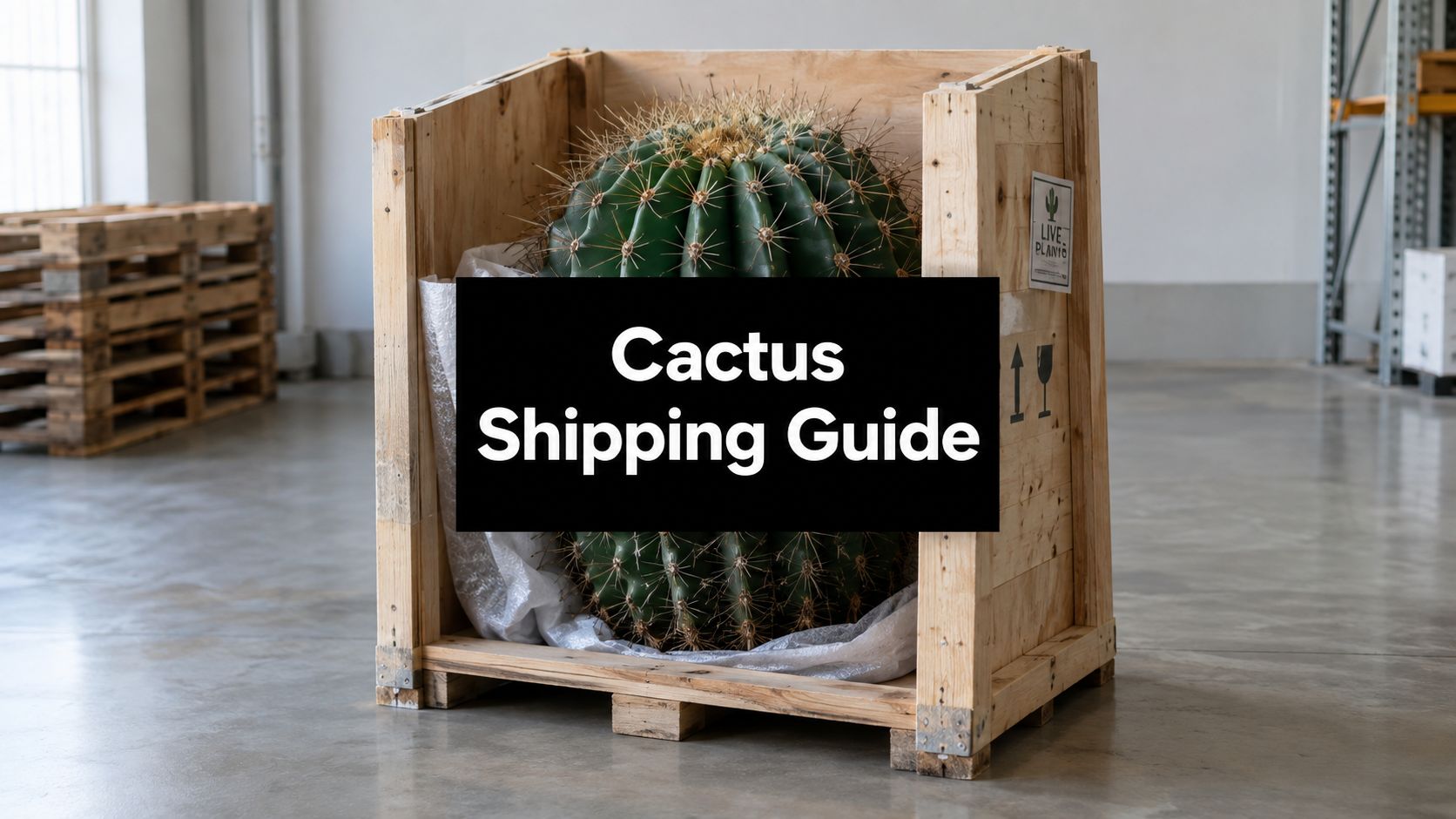
Large cactus shipping isn't handled like sending a small succulent in a loose pot. The nursery has to manage the plant's height, weight, root ball, spines, arms, and exposure to heat or cold. Depending on the specimen, it may arrive in a reinforced parcel box, a custom crate, or on a pallet through freight service. It may also arrive bare root and dry, with little or no soil around the roots.
A successful delivery doesn't mean the plant looks exactly as it did on the growing bench the moment you open the package. It means the cactus has stayed secure, dry, ventilated, and structurally sound throughout transit. Afterward, you'll need to unpack it carefully, position it appropriately, and allow the roots to acclimate before watering.
This is the practical journey described in what to expect when buying a cactus online, from nursery preparation to delivery at a residential or commercial site.

Introduction What to Expect When You Buy a Large Cactus Online
The first step happens before a box is taped shut. The nursery evaluates the cactus as a shipping object, not only as a living plant. A compact, upright specimen may fit a reinforced carton, while a tall, top-heavy or branching cactus may require more internal bracing or a crate that travels on a pallet.
That distinction matters for buyers shopping mature plants for landscaping, patios, containers, and designer installations. Size affects handling, and the shipping method has to match the plant's physical shape. A cactus with long arms creates different risks from a straight column. A specimen with a heavy root ball behaves differently from one that can travel bare root.
What the delivery may look like
Small large-format specimens may move through a parcel carrier in a rigid, double-walled box. Bigger plants can require a wooden crate, palletized freight, or a delivery setup with equipment that can move the load safely from a truck. The right format depends on dimensions, weight, stability, and the destination's access.
The plant may not travel in its familiar nursery container. Large cacti are commonly shipped bare root, with most or all soil removed. That reduces moisture, weight, and the chance that shifting soil will scrape or destabilize the plant. It also means you should have a suitable planting area or container ready before delivery.
Buyer expectation: A dry, carefully secured cactus is often a sign of deliberate shipping preparation, not neglect.
When the shipment arrives, inspect the box or crate before moving it. Look for crushed panels, punctures, broken braces, or evidence that the package shifted. Photograph the exterior before opening, then remove packing material slowly and keep your hands away from hidden spines. The nursery's work protects the cactus, but careful unboxing protects you and the plant during the final step.
How Large Cactus Shipping Works at a High Level
The central idea is simple: large cacti travel dry, ventilated, and immobilized. CITES guidance for live plant specimens says packaging should minimize desiccation, movement, and damage, allow adequate ventilation, and avoid airtight containers. That guidance explains why a large cactus shouldn't be sealed in a damp, airtight box.
Think of the difference between shipping a pillow and shipping a piece of fine art. A pillow can shift and still arrive usable. A valuable, rigid object with fragile projecting parts needs supports that hold it in place. Large cacti need the second approach. The packaging absorbs impacts and controls movement while allowing air to circulate.
The basic preparation sequence
Water is withheld before shipment so the plant enters transit dry. Industry guidance for succulents and cacti recommends withholding water for about 7 to 10 days before shipping, with breathable wrapping and shock-absorbing filler used to keep the plant protected without trapping moisture. Succulent shipping guidance provides the practical basis for this dry-transit approach.
The nursery then removes soil or growing media when the shipping plan calls for bare-root delivery. Cactus roots remain attached, but excess wet material isn't carried inside a warm, dark package. That helps lower the risk of rot and reduces the force created when a heavy pot or root ball moves inside the carton.
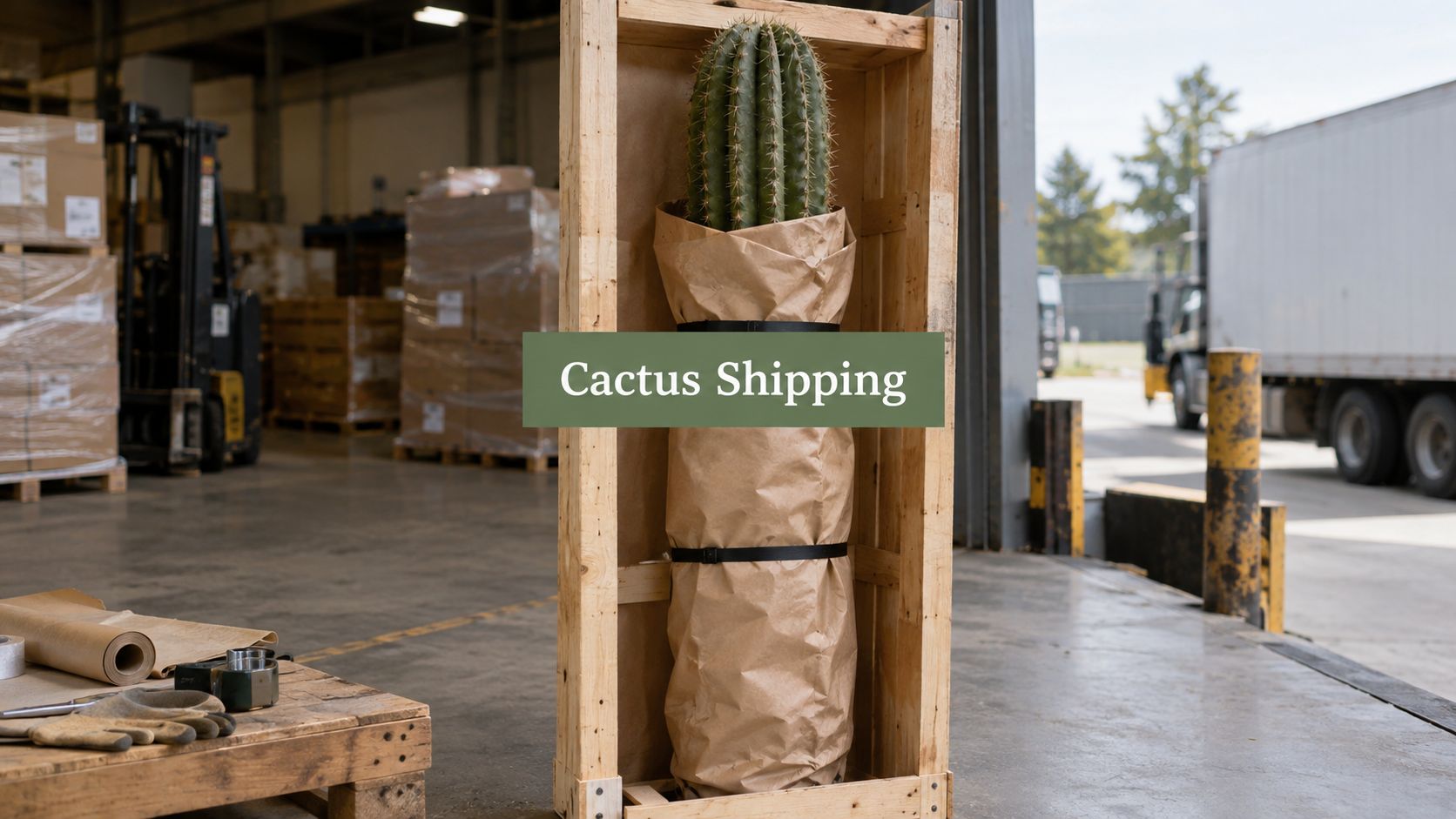
Next, the team wraps the plant with breathable material and adds cushioning around vulnerable areas. The cactus must remain still without being squeezed. Ventilation openings support air exchange, while rigid panels, collars, blocks, and braces prevent the stem, arms, and spines from contacting the outer walls.
Why movement control matters
Every uncontrolled shift gives the plant another chance to strike the box, bend at a weak point, or transfer force to an arm. Large specimens create more mechanical advantage because their upper growth sits farther from the base. That's why a package can look padded and still be unsafe if the cactus can move inside it.
The three essentials are:
- Dry: Moisture stays low during transit to reduce rot risk.
- Braced: Internal supports prevent sliding, bending, and crushing.
- Ventilated: The package protects the plant without creating an airtight chamber.
This system also protects handlers. Thorny plants require puncture-resistant packaging and careful labeling so people moving the package aren't exposed to spines through cardboard or loose wrapping.
Parcel Versus Freight When Each Shipping Method Makes Sense
The parcel-to-freight decision comes down to whether a reinforced box can control the cactus safely. Parcel shipping works well for specimens that can be enclosed, cushioned, labeled, and handled as one stable package. Freight becomes more practical when the plant's height, weight, branching, or crate requirements make ordinary carrier handling too risky.
A double-walled box may be approximately 4 to 6 inches larger than the plant, leaving enough room for wrapping and bracing without creating a large empty cavity. Tall or top-heavy cacti need upright support, cardboard collars, and enough structure to pass a shake test with no internal movement. Guidance for shipping tall plants by parcel carrier explains why the package must control both crushing pressure and bending force.
A practical comparison
| Factor | Parcel Shipping | Freight LTL and Palletized Crate |
|---|---|---|
| Best fit | Enclosed specimens that can be stabilized in a reinforced box | Oversized, heavy, branching, or unusually fragile specimens |
| Packaging | Double-walled carton, collars, breathable wrap, filler, internal braces | Custom crate, rigid supports, pallet, protective wrapping |
| Handling | Multiple carrier transfers and parcel sorting | Palletized movement with freight handling |
| Delivery setting | Usually suited to ordinary package access | May require driveway, loading access, or liftgate service |
| Main concern | Shifting, punctures, compression, dimensional bulk | Access, scheduling, equipment, and higher transport complexity |
These categories aren't determined by height alone. A shorter cactus with a wide branching crown can be harder to pack than a taller, narrow column. A stable plant may fit a box, while an unstable root ball or projecting arm may justify a custom crate.
Decision point: Choose the smallest shipping format that immobilizes the plant without compressing it.
Freight also changes the cost conversation. The carrier prices the palletized load according to its physical footprint, handling requirements, route, and delivery conditions. Buyers comparing heavy-item transport can use this LTL freight cost per pound guide to understand why a freight quote doesn't behave like a standard parcel rate.
For a large cactus order, confirm the delivery surface and access before purchase. A pallet may need a liftgate, a firm driveway, and enough clearance for the truck and unloading equipment. The nursery should explain the expected method rather than leaving you to discover the difference at delivery.
A visual overview can help clarify the contrast between the two formats.
Packaging and Crating Techniques That Keep Large Cacti Intact
Good packaging begins with moisture control. Large cactus shipments are commonly prepared dry and bare root because wet media inside a warm, dark package creates a poor environment for the roots and lower stem. The plant is handled gently, wrapped in breathable material, and positioned so the packaging supports the plant instead of pressing against its spines.
A professional packer works from the base outward. First, the roots are protected. Then the trunk or stem is stabilized. Finally, the upper growth, arms, and spine-bearing surfaces are isolated from the box or crate walls.
The packing system
Water is normally withheld for about 7 to 10 days before shipment, following guidance for shipping cacti and succulents. The dry period helps prevent excess moisture from remaining around the roots during transit. If the plant has fresh root cuts after bare-root preparation, those cuts may need time to dry before planting.
The roots are wrapped so they don't scrape against the package or become trapped in loose filler. The stem receives a breathable wrap, while cardboard collars or similar guards create a protective zone around the cactus. For thorny specimens, puncture-resistant outer packaging matters because spines can pierce ordinary cardboard and create a hazard for handlers.
Tall columnar plants may need a support stake. The stake doesn't replace proper bracing. It works with the other supports to reduce bending and stem snapping while the package is lifted, tilted, and moved.
The shake test and unboxing
A box should be filled with shock-absorbing material, but filler alone isn't enough. If the cactus can slide from side to side, the filler will compress and the plant will gain room to move. Rigid blocks, collars, stakes, and braces create the actual restraint.
Before dispatch, the packer should perform a shake test. The goal is straightforward: the cactus shouldn't move inside the package. If it does, the team adds support or changes the packaging format.
The same principle guides unboxing. Put the package on a stable surface, open the top carefully, and identify where the stem and arms are supported before pulling anything. Don't drag a cactus by its trunk, and don't reach blindly into filler. Cut away outer wrapping in stages, keeping your face, arms, and hands clear of the spine-bearing surfaces.
For buyers comparing mature specimens, large cactus plants for sale can help frame the difference between purchasing a small container plant and arranging delivery for a substantial feature. The larger the plant, the more important the packaging plan becomes.
Temperature Seasonality and Compliance Rules That Affect Delivery
A cactus can be packed perfectly and still face a delivery problem if the weather or paperwork is unsuitable. Heat, freezing conditions, delays, and inspection holds all change the risk profile. A nursery may need to adjust the shipping window, protect ventilation, or pause dispatch when conditions could harm the plant.
Heat is especially concerning inside enclosed packaging. Ventilation helps, but it doesn't make a sealed vehicle or hot delivery location harmless. Cold can injure tissue as well, particularly when a plant spends extended time in an unheated transport environment. Buyers should ask about weather handling before ordering a premium specimen, especially for a cross-country shipment.
Why destination rules come first
International buyers need to check the destination country's quarantine and import requirements before packing. CITES guidance says destination-country requirements must be checked, and soil or certain growing media are prohibited in many countries because they can carry pests or pathogens. That's one reason bare-root shipping often supports both plant health and customs compliance.
The entire cactus family, Cactaceae, is CITES-listed, with Pereskia, Pereskiopsis, and Quiabentia excluded. Artificially propagated hybrids and cultivars can be exempt in some cases, but buyers shouldn't assume an exemption applies to a particular plant or shipment.
The United Kingdom requires careful document handling. UK plant-health guidance states that shipments using a joint CITES-phytosanitary certificate still need a UK CITES import permit, and the original certificate must travel with the shipment for border endorsement. Missing or incomplete documents can delay release even when the physical packaging is sound.
Phytosanitary certificates and transit
In the United States, APHIS requires phytosanitary certification for plants and plant products exported from the country. Transit permits are required when plants, plant products, pests, or soil move through U.S. ports on the way to another country. Buyers can review APHIS guidance for shipping plants and agricultural items when planning a cross-border order.
These rules don't apply uniformly to every destination or every species. Ask the seller whether the exact cactus can ship to your state or country, whether soil must be removed, which certificates are needed, and whether the original documents must accompany the package. A compliance check before purchase is far easier than resolving a shipment held at the border.
Transit Timelines Costs Insurance and What Happens If Damage Occurs
Transit time depends on the shipping format, route, weather, carrier network, and whether the plant moves as a parcel or palletized freight. Parcel delivery usually follows a standard residential delivery process. Freight may involve scheduling, a delivery appointment, a larger vehicle, and unloading equipment.
The price also reflects more than distance. A large cactus takes up physical space, requires stronger packaging, and may need custom crating. Freight costs can rise with dimensional size, actual weight, crate construction, residential service, liftgate use, and limited site access. A tall Saguaro and a mature branching cactus may require very different handling even if their listed plant category sounds similar.
What buyers should confirm before checkout
Ask for the shipping method, expected delivery arrangement, and any site requirements. A parcel may arrive at the door without an appointment. A palletized shipment may require someone to receive it and may not be suitable for a narrow lane, steep driveway, or location without unloading space.
Ask before ordering: “Will this arrive in a box, crate, or pallet, and what do I need ready at delivery?”
Insurance and claims depend on the carrier, seller, service terms, and declared coverage. Buyers who want background on cargo protection can review this explanation of Florida cargo insurance and all-risk coverage. It's still essential to confirm which policy applies to your specific order rather than assuming general cargo coverage includes every type of live plant damage.
If the shipment arrives damaged
Document the package before opening it. Take clear photos of crushed corners, punctures, broken braces, wet areas, labels, and the pallet or crate. After opening, photograph the cactus in place before removing every support, then capture broken arms, scraped tissue, crushed roots, or other visible damage.
Keep the packaging and shipping label until the seller or carrier tells you what to do. Don't discard evidence, repot immediately, or cut damaged tissue unless the seller provides direction. A detailed record gives the nursery the information it needs to assess whether the damage occurred during transit, unloading, or unpacking.
Review the seller's shipping and returns information before purchase. Pay attention to notification windows, required photos, live-arrival terms, and the process for reporting damage. Clear policies help both sides respond quickly when a large specimen doesn't arrive as planned.
Final Checklist for Buyers and Seller Best Practices Before You Order
A large cactus order goes smoothly when the nursery and buyer prepare for the same physical realities. Before checkout, measure the delivery route, not only the planting area. Check gates, doorways, patio turns, stairs, driveway width, and the place where a box or pallet can safely rest.
Your buyer checklist
- Confirm the format: Ask whether the cactus will arrive by parcel, freight, crate, or pallet.
- Prepare the site: Have the container, planting location, tools, and handling help ready before delivery.
- Expect bare roots: Plan for a dry, soil-free root system rather than a plant sitting in a wet nursery pot.
- Inspect first: Photograph the package, label, crate, and plant before removing supports.
- Plan acclimation: If fresh root cuts need drying, allow 1 to 3 days before planting or handling them further, following the bare-root re-rooting guidance from The Pioneer Nursery. For most cacti, wait 5 to 7 days before the first watering, while more sensitive plants may need 7 to 14 days.
What a careful seller should explain
A trustworthy nursery can describe the shipping format, moisture plan, bracing method, weather considerations, delivery access, and damage-reporting process. The packaging should keep the cactus dry and ventilated while preventing movement, crushing, punctures, and handler injuries.
For a designer or homeowner, those details are part of the purchase decision. A mature cactus can become a strong patio focal point, container feature, privacy screen component, or drought-tolerant anchor, but only if the delivery plan suits the specimen and the destination.
Before you place the order, confirm the exact plant, shipping method, access conditions, and acclimation plan with the seller. That short conversation can prevent a costly mismatch between the cactus you want and the delivery setup your property can handle.
The Cactus Outlet offers large cacti along with agaves, aloes, euphorbias, and other succulents for online patio, container, and collector purchases. Visit The Cactus Outlet to review available specimens and choose a cactus whose size and delivery requirements fit your space.