

You've found the tall columnar cactus that could anchor your patio, frame an entryway, or give a project the architectural shape it's missing. The photos look convincing, the plant is available, and the checkout button is ready. Then a practical concern interrupts the excitement: will the cactus arrive firm and healthy, or will it spend days in a box and need careful recovery?
That uncertainty is reasonable. Online plant buyers have reported concerns about shipping damage and the inability to inspect plants before purchase, while a consumer houseplant study found that many buyers had limited prior experience purchasing live plants online even as they expected online buying to increase by 53% into 2021 and beyond (Consumer Houseplant Purchasing Report). Knowing what to expect when buying cactus online means treating the order as a living shipment with three separate windows, before delivery, during transit, and after arrival.
The Three Stages of Buying a Cactus Online
A buyer spots a mature Trichocereus on an online nursery, compares the photos with a patio corner, and clicks buy. The next few days can feel strangely passive. The order is confirmed, but the cactus is still somewhere between the nursery and the front door, and the buyer doesn't yet know whether a slightly wrinkled plant will be normal or whether a damaged box will signal a serious problem.
That uncertainty becomes easier to manage when the purchase is divided into three stages:
- Before delivery, you choose the seller, species, size, shipping form, destination eligibility, and intended use. You decide whether the cactus fits a container, privacy screen, patio, or garden design.
- During delivery, the nursery prepares, packs, and dispatches the plant. Weather decisions, bare-root handling, courier scans, and communication matter more than a fast label creation.
- After delivery, you document the package, inspect the plant, pot it appropriately, quarantine it, and introduce it to stronger light gradually.

A cactus order isn't finished when the courier leaves. The first days after arrival can determine whether minor dehydration resolves normally or whether rushed watering creates a preventable rot problem. The strongest sellers recognize this and provide planting instructions, arrival guidance, and a clear way to report damage.
Practical rule: Judge the purchase by the complete journey, not by the product photo alone.
This three-stage approach also helps commercial buyers. A designer ordering large specimens needs reliable dimensions and destination rules before checkout, while a patio buyer may care more about container stability and acclimation. Both buyers benefit from knowing which decisions belong before, during, and after delivery.
Choosing the Right Seller and Plant Listing
A reputable online nursery makes it possible to answer practical questions before payment. Start with the business itself, then evaluate the individual listing. A polished storefront isn't enough if the seller hides its location, gives no direct contact method, or uses vague stock language.
Verify the seller before comparing plants
Look for a visible business identity, a working email or phone contact, dated customer feedback, and unboxing photographs that show real deliveries. Reviews are most useful when they discuss packaging, plant condition, size, and the seller's response to problems, rather than praising appearance.
The seller should also explain how it handles weather-sensitive orders and arrival claims. A clear process signals that the nursery understands live-plant logistics. You can use this guide to finding the best place to buy cactus online as one comparison point, then apply the same questions to any nursery you're considering.
Read the listing as a specification sheet
A trustworthy listing names the plant with a Latin binomial, provides current or representative photos, states measurements, and explains whether the specimen ships potted or bare-root. It should also identify the plant's growing origin when that information affects compliance or buyer expectations, such as nursery propagation versus field collection.
Check stock language carefully. “Available,” “pre-order,” and “out of stock” with a restock explanation are more useful than a permanent purchase button attached to a plant that may not be ready to ship. If the page lacks dimensions, a shipping policy, or a description of the actual specimen, pause before ordering.
The intended use should shape your questions. For a large cactus in a container, confirm the plant's height, stem width, container footprint, and stability. For landscaping or a privacy screen, verify mature growth habit, local hardiness, delivery access, and whether the seller can legally ship to your address.
Reading Product Photos, Sizes, and Hardiness Ratings
An honest product page gives you enough information to imagine the plant outside the photograph. Four details carry most of the decision-making weight: species identity, actual dimensions, shipping form, and hardiness information.
A Latin name helps distinguish a genuine listing from a generic “rare cactus” label. The seller's own photo of the actual plant is stronger evidence than a stock image, especially when you're buying a mature specimen with natural scars, branching, corking, or individual spine patterns.
Dimensions need context. Pot diameter describes the container, not necessarily the plant's maturity. Height describes visible growth, but it doesn't tell you whether the cactus is narrow, broad, branching, top-heavy, or suitable for the space you have. A ruler, tape measure, or hand in the frame gives the buyer a more reliable sense of scale.
Compare the information that changes the purchase
Shipping form matters because bare-root and potted arrivals require different handling. Large cacti and many succulents are commonly shipped bare-root, and one nursery states that plants in 4-inch-or-larger pots are shipped bare-root (Succulents Depot shipping information). That isn't a defect. It reduces soil weight and moisture-related transit risk, but it means the buyer should prepare a dry, well-draining medium before arrival.
Hardiness must be tied to the species, not to the word “cactus.” Plant listings show examples ranging from USDA Zone 4–11 for Opuntia basilaris to Zone 9a–10b, with 15°F tolerance, for a red torch cactus (Boething Treeland plant listing). Those examples show why buyers need the exact species and local conditions before choosing a specimen.
| Listing Element | What a Transparent Listing Shows | Common Red Flag |
|---|---|---|
| Species | Latin binomial and clear plant identity | Common nickname only |
| Dimensions | Pot size plus height, width, or stem diameter | “Large specimen” with no measurement |
| Photography | Current seller photos and multiple angles | One generic stock image |
| Shipping form | Bare-root or potted, with arrival expectations | Method omitted |
| Hardiness | USDA zone range and relevant conditions | No cold information |
| Origin | Nursery-grown, propagated, or field-collected status | Sourcing concealed |
Shipping Windows, Packaging, and Tracking Expectations
Order confirmation starts a preparation period, not immediate delivery. For large specimens, the nursery may need to select the right plant, dry or stabilize the root system, choose a box, account for route conditions, and wait for safer weather. A reliable seller communicates those decisions instead of treating every order as an automatic same-day dispatch.
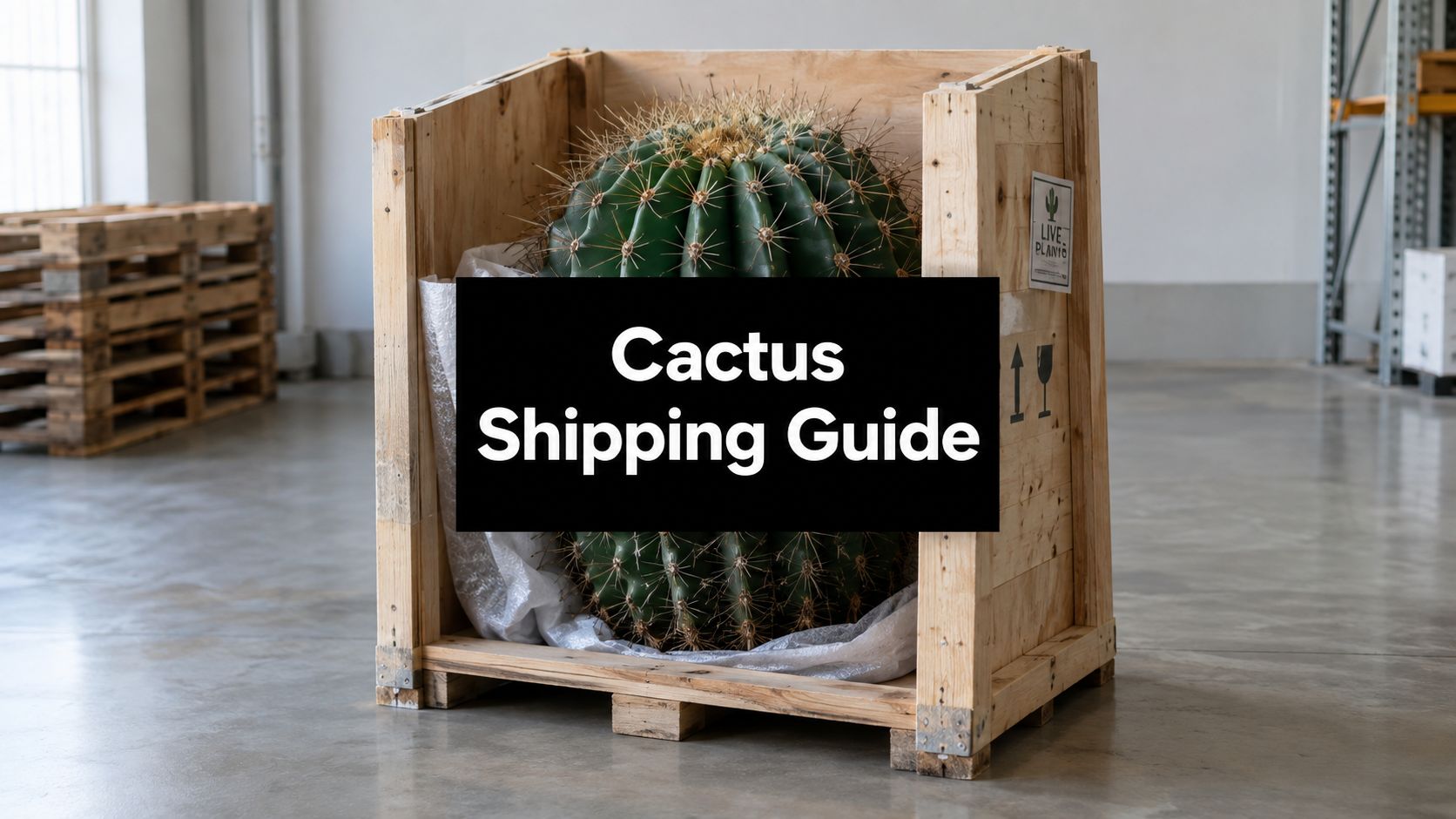
Large cacti often travel more safely with movement controlled and moisture limited. Look for sturdy boxes, protective wrapping, root cushioning, and enough internal support to prevent a heavy stem from shifting. Bare-root packing is common for larger plants because wet soil can add weight and create a harsher environment inside a sealed box.

What tracking does and doesn't tell you
Tracking commonly moves through label creation, the first origin scan, in-transit updates, and an out-for-delivery alert. A gap between scans doesn't automatically mean the plant is lost, particularly when a heavy box travels through ground-freight hubs. If tracking stalls beyond the seller's stated delivery window, contact the nursery first, provide the order number, and ask whether the courier has recorded an exception.
Weather holds are a quality decision, not necessarily a service failure. A responsible nursery may delay a shipment during unsafe heat or freezing conditions and explain the revised dispatch date. That delay can protect a large or premium cactus from sitting in an overheated vehicle, a freezing warehouse, or on an exposed porch.
Read the seller's shipping terms before ordering, especially if you're purchasing a large specimen for a scheduled installation. The large cactus shipping and delivery guide provides a useful reference for the questions buyers should ask about packing and delivery expectations.
For a visual overview of how a cactus is prepared and handled, review this shipping demonstration before placing an order.
Normal Transit Stress Versus Real Damage on Arrival
A cactus can look different after travel without being unhealthy. Mild dehydration often causes slight wrinkling, minor color fading, or dry roots, particularly when the plant has been shipped bare-root. These signs usually reflect water loss during transit rather than irreversible injury (shipping stress signs from The Pioneer Nursery).
Small scuffs can also occur where the plant was braced or wrapped. Surface marks deserve documentation, but they aren't automatically a reason to water, cut, or return the plant. The important question is whether the tissue remains firm and dry.
Use location and firmness to judge the problem
Mushy tissue, black or wet spots, a foul odor, slimy roots, or a collapsed stem are different signals. They may indicate cold or heat injury, decay, or rot and should prompt photographs, isolation, and immediate contact with the seller.
Don't press hard on spines or scrape healthy skin to prove a point. Gently test suspicious tissue for firmness, inspect the base closely, and avoid cutting into the plant before you've documented the condition and checked the seller's policy. A clean blade nick may help an experienced grower assess hidden rot, but it can also complicate a damage claim if performed too early.
| Signal | Normal Transit Stress | Real Damage |
|---|---|---|
| Body texture | Firm, slightly wrinkled tissue | Soft, collapsing, or watery tissue |
| Color | Mild fading after darkness | Spreading black, brown, or translucent areas |
| Roots | Dry or slightly shriveled bare roots | Slimy roots or a foul smell |
| Surface | Minor dry scuffs | Wet lesions or rapidly worsening areas |
| Stem | Stable and intact | Split, collapsed, or soft at the base |
Keep the plant dry initially, place it in bright shade or filtered light, and pot a bare-root cactus into dry, well-draining material. Don't panic-water a firm, wrinkled plant. Do quarantine a soft or foul-smelling one.
Legal and Seasonal Restrictions Worth Knowing
A product appearing in an online catalog doesn't guarantee that it can be shipped to every state or country. International cactus purchases can involve phytosanitary certificates, species restrictions, export documentation, and CITES controls. The UK's plant-health guidance explains that the Family Cactaceae is CITES-listed, with limited exemptions for some genera and specific exclusions for certain artificially propagated hybrids or cultivars in relevant jurisdictions (UK CITES guidance for plant imports).
For international buyers, the seller should be able to explain the plant's origin, propagation status, and required documents before payment. In the EU, live plants arriving from non-EU countries may require a phytosanitary certificate confirming inspection and freedom from quarantine pests. Requirements vary by destination, so a seller's compliance page matters as much as its product page.
Treat destination rules as part of plant selection
U.S. buyers also carry practical responsibilities. U.S. Customs states that the importer is responsible for duties on internet purchases, while USDA APHIS warns that plants from quarantine areas can spread invasive pests. The U.S. Customs guidance on internet purchases shows why checkout availability isn't the same as unrestricted delivery.
Some orders also face seasonal decisions. Nurseries may pause dispatch during route-specific heat or cold, particularly when a box could sit outdoors or in a vehicle. A weather hold is preferable to forcing a vulnerable shipment into unsafe conditions.
Before checkout, confirm:
- Destination eligibility: Ask whether the seller ships to your state, territory, or country.
- Documentation: Determine whether phytosanitary or CITES paperwork applies.
- Plant status: Confirm nursery propagation and lawful origin for premium or rare specimens.
- Weather timing: Check whether the nursery will hold orders during hazardous conditions.
First Two Weeks of Acclimation and Quarantine
The first 14 days should be treated as a controlled recovery window, not a normal growth period. Open the package on a clean, dry surface in shade, photograph the box and plant before removing the wrapping, and keep the cactus away from your existing collection.
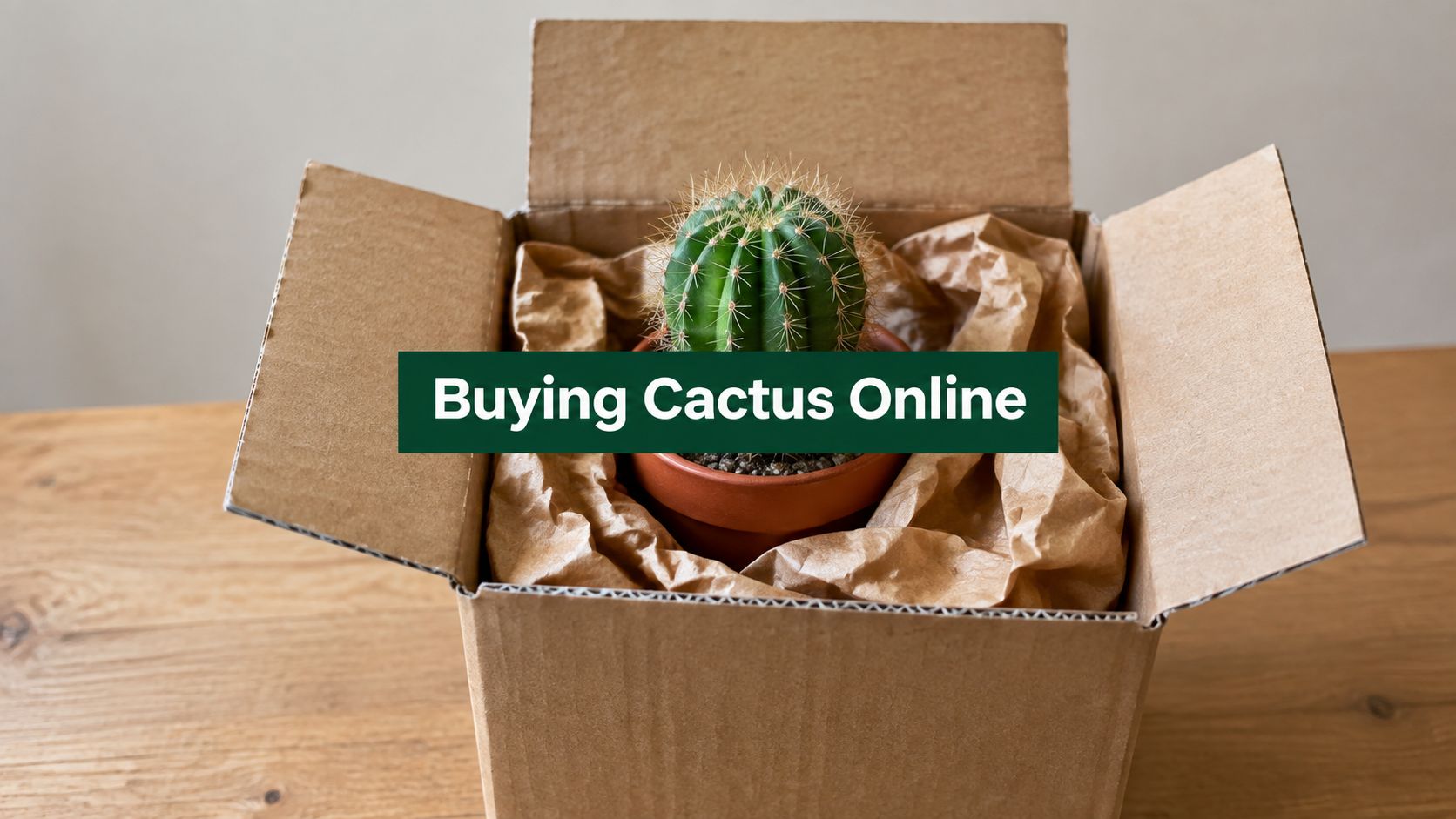
Brush away loose old soil carefully. Don't pull at dry roots or force wrapping off spines. If the plant arrives bare-root, place it in a dry, fast-draining mineral mix and a container with a drainage hole. The handling guidance from The Pioneer Nursery recommends bright shade or filtered light after shipment and gradual reintroduction to stronger exposure (light acclimation after shipping).
A calm arrival protocol
- Document first: Photograph the outer box, inner packing, roots, base, and all sides of the plant.
- Pot dry: Use a stable container and well-draining material without adding moisture immediately.
- Hold water: Wait 5–7 days before watering so shipping wounds and disturbed roots can callus.
- Use filtered light: Keep the cactus in bright shade initially, then increase morning sun gradually over the following 1–2 weeks, as recommended in the shipping-care guidance.
- Skip fertilizer: Don't fertilize during the first month while the plant is settling.
- Quarantine separately: Keep the arrival away from other plants for at least two weeks and inspect it weekly.
Slight shriveling, faded color, and temporarily slowed growth can be normal during this period. Black tissue spreading from the base, foul odor, soft rot, or active pest movement isn't normal. Isolate the cactus and contact the seller before cutting, watering, or applying treatments.
Independent seller guidance notes that plants may remain boxed for about 2 to 4 days and that buyers should open them the same day they arrive, then wait several days before watering (Cactus en Ligne FAQ). For a broader watering refresher after the recovery period, happy plants with Little Green Leaf offers practical succulent-care guidance.

Returns, Damage Documentation, and a Final Checklist
The first photographs often determine how easily a delivery problem gets resolved. Document the package before watering, repotting into moisture-retaining soil, or moving the cactus into full sun. A seller can assess transit damage much more accurately when the original box, wrapping, plant position, and unaltered tissue are visible.
Build an arrival record
Take photographs in sequence:
- Outer package: Capture crushed corners, punctures, wet cardboard, labels, and tracking information.
- Internal packing: Show how the cactus was braced, wrapped, and protected.
- Plant condition: Photograph every side, the base, roots, spines, and any marks.
- Scale and comparison: Measure the plant against the listing's stated dimensions.
- Damage evidence: Take close-ups and a short video showing whether suspect tissue is firm or soft.
Save the tracking record and note route weather if extreme conditions may have contributed. Don't discard the packaging until the seller confirms that it isn't needed for the claim.
A fair policy should state its damage-reporting window, explain whether photos are required before repotting, separate seller transit damage from acclimation problems, and offer a sensible resolution. Replacement, store credit, or a refund may all be appropriate, but a one-of-a-kind specimen shouldn't be handled as though an identical reshipment is always possible. Review the shipping and returns policy before checkout so you understand the process while the order is still easy to change.
Arrival checklist: Confirm the seller, species, dimensions, shipping form, hardiness, destination eligibility, weather plan, unboxing procedure, quarantine space, and documentation process before you buy.
For a large cactus, the best purchase isn't the one with the most impressive photograph. It's the plant whose identity, size, delivery method, legal status, and first-week handling all make sense together.
The Cactus Outlet offers online access to large cacti, agaves, aloes, euphorbias, and other succulents, with product information and planting guidance for buyers planning patio containers or other outdoor installations. Visit The Cactus Outlet to compare available specimens, review delivery details, and choose a plant you can receive and acclimate with confidence.