

You've just ordered a large Mexican fence post cactus online. The delivery arrives, the box is taller than expected, and you're standing over cardboard, packing material, and sharp spines with no clear answer about what to do first. Nobody warned you about bare-root shock, transit heat, or whether your winter temperatures are safe.
That's the challenge when you buy Mexican fence post cactus online. Choosing the plant is only half the purchase. You also need to match the specimen to your site, confirm how it'll be shipped, understand regional restrictions, and give it a sensible acclimation period after delivery. The species, scientifically known as Stenocereus marginatus, is native to central Mexico and is widely recognized for its columnar form and historical use as a living fence. Cactus Art's species reference notes that its stems are often used to make live fences.
This guide takes a no-nonsense approach to the purchase. You'll learn how to choose size, compare seller types, inspect a listing, prepare for freight delivery, acclimate a bare-root specimen, and decide between a patio container and an in-ground installation.
Why Buying Mexican Fence Post Cactus Online Is Worth Thinking Through
Mexican fence post cactus earns its place in modern xeriscapes because it provides strong vertical structure without a wide footprint. Its upright, ridged stems work as a focal point, privacy accent, entry feature, or repeated planting in a dry garden. It's also drought-tolerant once established, which makes it practical for low-water garden designs in regions such as the U.S. Southwest and Mexico. Civanon Nursery's reference sheet lists mature dimensions of about 6 to 12 feet tall, with individual canes about 3 to 8 inches wide, and hardiness to 25°F in USDA Zone 9.
The online buying advantage is access. Local garden centers may carry small, familiar succulents while rarely stocking tall, narrow specimens with the scale needed for a finished outdoor space. Online nurseries can offer plants suited to patio displays, collector settings, commercial designs, and large residential installations. The price can also make more sense when you compare the immediate visual impact of a mature column with the time required to grow a small starter.
But size changes the logistics. A tall cactus needs more careful bracing, a larger delivery area, and a buyer who understands how to handle it safely. A large specimen may also recover more slowly from transplant stress than a smaller plant. If your design goal involves a living boundary, measure the site and check local rules rather than relying on informal assumptions. For general fence-planning context, this guide to maximum fence height in the UK is useful, although a cactus installation still needs to comply with your local planting and property regulations.
Before clicking checkout, settle four questions:
- What size fits the site? Measure mature height, width, access points, and overhead clearance.
- Can the plant travel safely? Large cacti commonly ship bare-root, with moisture control and protective packing required.
- Will the climate support it? This is a frost-tender cactus, not a universal outdoor plant.
- Can you manage the first weeks? The post-arrival period is where many otherwise healthy specimens fail.
Practical rule: Buy the plant your site can support, not the largest specimen a listing makes tempting.
Choosing the Right Size, Variety, and Growth Profile
Start with the installation, then choose the cactus. A patio buyer needs a manageable column that can be positioned, rotated, and protected from cold. A garden designer may need a tall architectural trunk for immediate scale. Height matters, but the plant's final form, delivery route, and acclimation plan matter just as much.
Published descriptions consistently show a tall, narrow cactus. Star Nursery lists examples around 10 feet tall with a spread of about 2 feet, while other nursery descriptions place mature plants around 10 to 15 feet tall and 3 to 6 feet wide. A gardening source lists plants reaching 15 to 20 feet, and the University of Arizona Arboretum provides broader botanical context, noting stems can reach 4 m in cultivation and 15 m in the wild.
Choose the growth profile according to the job:
- Single straight column: Best for a clean entry accent, narrow side yard, or formal xeriscape.
- Branched multi-stem form: Better for a broader focal point or informal screen, provided the planting area can handle the extra width.
- Crested or unusual specimen: A collector choice that prioritizes form over uniformity and requires more careful handling.
Match the specimen to the job
| Size Bracket | Typical Height | Shipping Weight | Best Use Case | Climate Fit |
|---|---|---|---|---|
| Starter | 1 to 2 feet | Lower and easier to handle | Patio container or limited budget | Better for gradual acclimation in marginal areas |
| Mid-size | 3 to 5 feet | Moderate, with more packing needs | Immediate garden presence | Suitable for protected outdoor sites where temperatures remain appropriate |
| Statement | 6 to 10 feet | Heavy and may require special delivery handling | Designer installation or mature focal point | Best for established in-ground sites in suitable climates |
Container buyers should not buy by height alone. One size reference says a plant in a large container may reach only 1 to 2 m after several years, while in-ground growth can become much larger. GetGrowli's container-size guidance explains that the container restricts growth. Choose the pot, drainage, and plant size as one system.
Regional availability also affects the right purchase. A smaller plant is easier to protect and move during acclimation, while a large bare-root column needs a clear delivery route, secure placement, and time to recover after shipping. Plan for a gradual transition after arrival rather than expecting immediate outdoor exposure.
My matching rule is simple: patio buyers should generally stop at 3 feet. In-ground buyers in USDA Zone 9 can consider specimens around 8 feet or more when access, support, and winter protection are already solved. If those conditions are missing, buy smaller and build size over time.
Comparing the Seller Tiers You Will Find
A large cactus can be available online and still be impractical to ship to your property. Compare sellers by plant size, packing method, delivery coordination, and recovery support before comparing prices. A low listing price may represent a starter plant, while a higher one may cover field handling and freight preparation.
A mass-market small nursery or marketplace seller usually offers rooted cuttings and smaller starters. Terms such as “well-rooted cutting” or “young plant” mean you are buying establishment time, not mature scale. This tier suits patio buyers and patient collectors. Confirm whether the photos show the exact plant or a representative example, then read the packaging and replacement terms carefully.
A premium nursery generally handles larger columns for residential and commercial installations. Phrases such as “field-grown,” “large size,” or “professionally packed” point to more involved fulfillment. Ask whether the cactus ships potted or bare-root, who manages freight-damage claims, and whether delivery can be scheduled around weather. For a large specimen, clear communication is part of the purchase.
A collector or wholesale specialist sells statement trunks, multi-branched forms, and unusual specimens. Labels such as “hand-selected,” “crested specimen,” and “mature field-grown” describe the plant's form and history, but they do not replace current photos or written shipping terms. Expect specialized packing, additional coordination, and a delivery plan suited to the cactus's dimensions.

Match the tier to the project
Choose the mass-market tier for a budget starter, especially for a container plant and a longer path to mature size. Choose the premium garden tier for a planned installation where plant condition, packing, and communication justify paying more than the lowest listed price. Choose the collector tier when the specimen's shape and maturity are the design feature.
The practical trade-off is clear. Smaller plants are easier to move and acclimate. Larger plants create immediate structure but demand better handling, transport access, and post-arrival planning. Select the seller whose fulfillment process matches the cactus you can safely receive and establish.
Vetting a Listing Before You Check Out
A polished product page doesn't prove that the seller can ship a large columnar cactus safely. Before paying, request information that applies to the exact plant, not a generic product category.
Start with the photos. You want current, unfiltered images of the plant being sold, including the base, spine color, ribs, and any scarring. A ruler, person, pallet, or other scale reference helps confirm that “large” means something measurable. Stock images reused across several sizes are a warning that the listing may not represent your specimen.
Bare-root handling deserves direct questions. Ask how long the cactus has been out of soil, whether roots were trimmed, and whether cuts have callused. A sound shipping protocol keeps the plant dry and removes nearly all soil, as described in this bare-root Mexican fence post cactus shipping reference. Moisture trapped around roots or inside packaging raises the risk of rot during transit.

Read the guarantee literally
Look for a defined arrival window, the process for filing a damage claim, and exclusions for weather delays. Confirm whether the buyer must provide photographs on arrival and whether cold or heat exposure voids coverage. A guarantee that sounds generous but gives no procedure is difficult to use when a large plant arrives damaged.
Independent reviews are more useful when you filter them by specimen size. Check Google, Dave's Garden, or the BBB for comments about large-plant packing, freight communication, and damage resolution. Reviews about small succulents don't tell you much about a six-foot cactus.
Walk away when the seller has no business address, refuses to discuss phytosanitary paperwork, reuses identical stock images across sizes, or pressures you to pay by wire or gift card. Before checkout, ask three direct questions:
- Where was the mother plant grown?
- What USDA zone is the nursery in?
- Can the seller hold the order for unsuitable weather?
Specific answers signal a seller who understands the difference between mailing a small pot and shipping a large columnar cactus. For broader buying criteria, use this guide to the best online cactus store as a reference point for evaluating product information and support.
Shipping, Packaging, and Regional Availability
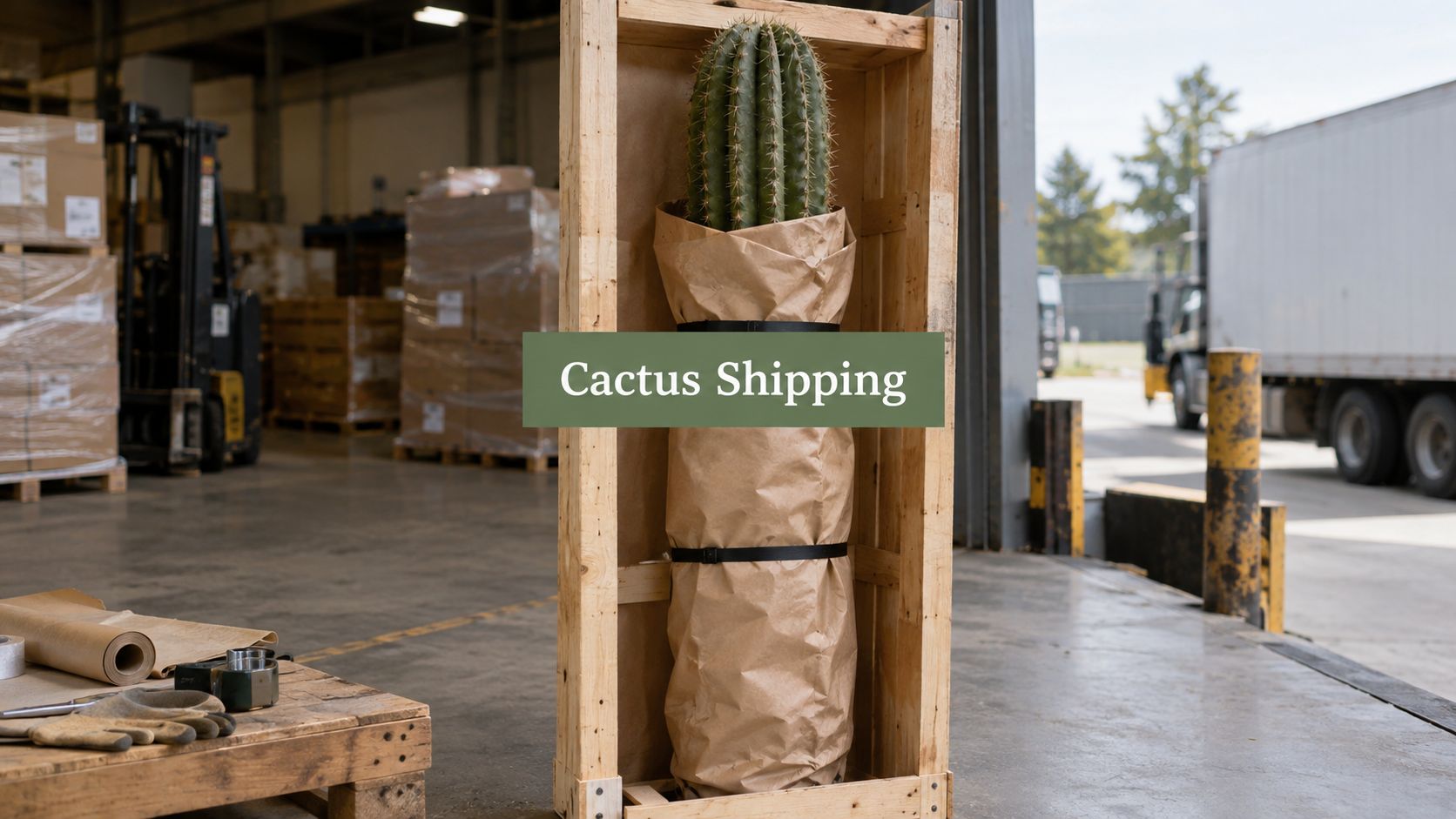
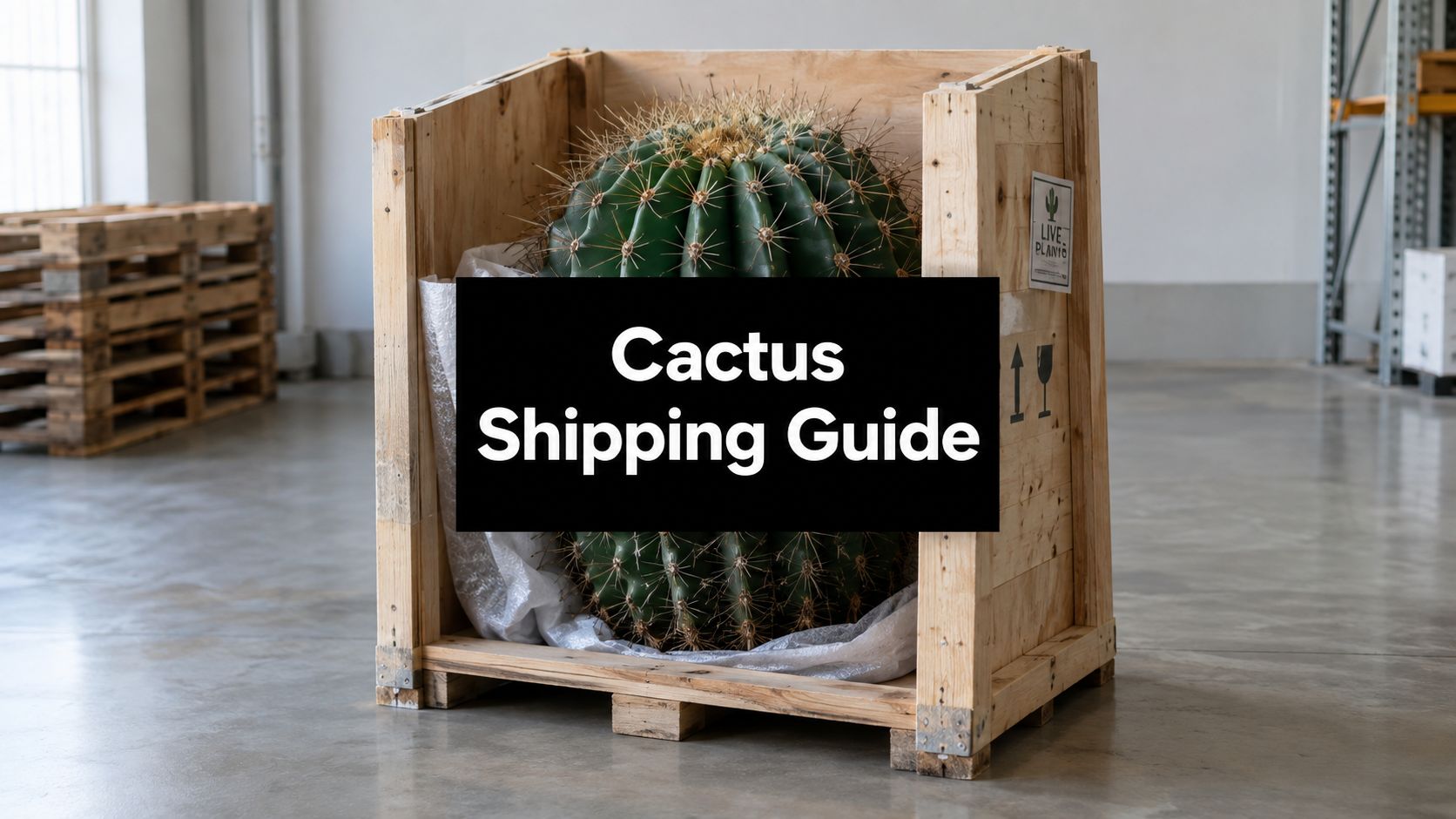
Buying a large Mexican fence post cactus online is a freight decision as much as a plant decision. These specimens often ship bare-root because soil adds weight, holds moisture, and raises the risk of breakage or rot. A competent nursery dries the plant before packing, wraps it in breathable material, immobilizes it without crushing the ribs, and prevents the trunk from rubbing against the crate.
Use The Cactus Outlet's guide to how large cactus plants are shipped to compare a seller's packing description. Ask whether the quoted price includes crating, residential liftgate service, and delivery appointment coordination. Confirm who must sign, whether the carrier can leave the plant unattended, and how an oversized delivery reaches your property.
Properly dehydrated cacti can tolerate roughly 7 to 14 days in transit when moisture stays controlled and temperatures remain stable. Alibaba's cactus shipping guide recommends preparing shipments at about 55°F to 85°F, or 13°C to 29°C, for at least 48 hours before boxing. Treat those figures as preparation benchmarks. Do not authorize shipment during a severe heat wave or freeze.
Availability depends heavily on location. Some nurseries deliver only within their region. Others ship smaller plants broadly and arrange premium freight for oversized specimens. Destination rules may restrict soil because of pests or pathogens. Before paying, ask whether the cactus ships soil-free, whether inspection paperwork applies, and whether the destination accepts the shipment.
| Region / Scenario | Typical Transit Time | Safe Temperature Window | Special Requirements |
|---|---|---|---|
| Nearby regional delivery | Shorter route | Stable, moderate temperatures | Confirm delivery access and unloading |
| Domestic long-distance freight | May extend toward the broader transit window | Avoid sustained heat or cold | Crating, tracking, and damage protocol |
| Cold-weather destination | Depends on weather hold | Protect from temperatures near the plant's cold limit | Request a weather delay |
| International order | Longer and less predictable | Stable conditions throughout the route | Confirm inspection and destination documentation |
Do not water immediately before shipment. Excess moisture, sealed non-breathable packaging, and weak immobilization create avoidable damage. Get the tracking number, bill of lading when applicable, delivery terms, and written damage procedure before the nursery releases the order. If the seller cannot explain those logistics clearly, choose a regional source or a smaller specimen instead.
Unboxing and Acclimating a Bare-Root Specimen
Delivery day is a handling and recovery job, especially for a large bare-root columnar cactus. Prepare a covered patio or garage, clear the floor, and arrange help if one person cannot control the crate safely. Wear thick gloves, long sleeves, and eye protection. Use lifting support that holds the plant without crushing its ribs.
Lay the crate on its side before opening it. Remove the bracing slowly, then inspect the column before moving it. Check for broken spines, soft tissue, split ribs, and crushing near the base. Photograph the plant, packaging, labels, and every concern with timestamps. Keep all materials until the carrier or seller confirms that you may discard them.

The first two weeks
Day one: Do not water, repot, or expose the cactus to direct sun. Set it in bright shade with steady airflow. Keep the temperature between 60°F and 85°F during its initial recovery.
Days two through five: Keep the roots dry and inspect the plant once daily. Minor spine loss and superficial rub marks can result from transit. Soft tissue, spreading discoloration, or a foul odor requires immediate photographs and contact with the seller.
Days five through seven: Maintain bright shade. The receiving instructions for Mexican fence post cactus recommend waiting about 5 to 7 days before the first watering, with a longer delay for freshly trimmed or sensitive specimens. The receiving instructions for Mexican fence post cactus outline that same recovery schedule.
Days seven through fourteen: Add morning sun gradually. Start with about one hour, then increase exposure while checking for yellowing, bleaching, or sunburn. A cactus coming from a dark shipping box needs a gradual transition, not immediate afternoon sun.
After the second week, move the cactus into its permanent container or prepared ground. Use dry, sharply draining mix, set it at its original root-collar depth, and give the first light watering directly to the root zone. Hold fertilizer for at least 60 days. Some shrinkage at the apex and along the ribs is normal after bare-root handling and does not by itself indicate disease.
Planting, Long-Term Care, and Cold Protection
Your installation plan should match the reason for buying the cactus. A focal point needs open sightlines and fast drainage. A patio specimen needs a heavy, stable pot that will not tip as the column gains height. A windbreak row needs consistent alignment, enough spacing for each plant, and a service path that keeps maintenance crews away from the spines.
Use a wide, shallow planting hole rather than a deep pocket that traps water around the root collar. Set the cactus at the same collar depth it had before shipping. Build the backfill around mostly mineral material, such as pumice or lava rock, with coarse sand and limited organic matter. The infographic below gives a practical planting framework. Follow the nursery's supplied mix instructions if they better suit your local soil.

Match the plant to the installation
For container culture, select a pot with drainage holes and enough mass to resist tipping. Container growth remains restricted, with plants reaching only 1 to 2 m in a large container after several years, as described in GetGrowli's size guidance. That makes pots practical for patios and marginal climates, but a small container will not create the same scale as an in-ground planting.
Prepare the root zone before a garden specimen arrives. A column taller than 4 feet may require temporary staking while its roots reestablish, particularly in exposed sites or loose soil. Use broad, soft ties, inspect them regularly, and remove or loosen them before they rub the ribs or constrict the settling plant.
For a row, choose access and spacing before density. Mexican fence post cactus suits xeriscapes, rock beds, and accent plantings because its upright form occupies a narrow footprint. Tree-Land's placement guidance recommends full sun, well-drained soil, and deep, infrequent watering. Leave enough room for inspection, pruning, and eventual removal of a damaged column.
Water, sun, and winter decisions
Water at the root zone, then wait until the soil dries thoroughly. Check the drainage and current weather instead of watering by calendar. If compacted soil stays wet, correct the root zone. More frequent watering will worsen the problem.
Full sun is the long-term destination, but greenhouse-grown or heavily shaded plants need a controlled transition. Use the acclimation schedule above to prevent sudden light shock. After the roots establish, drought tolerance becomes useful only when excess water leaves the root zone quickly.
Cold protection determines whether the cactus belongs permanently in the ground or should remain mobile. Mexican fence post cactus is commonly listed for USDA Zones 9 through 11. Gardenia's hardiness reference notes short-term cold tolerance to about 24°F, or -4°C, and warns that temperatures below 25°F can cause cold damage. Treat those temperatures as limits, not planting targets.
In a marginal climate, use a movable container, position it beside a protected wall, and cover it with frost cloth during brief cold events. An in-ground plant is harder to rescue or relocate, so permanent planting requires a predictable winter site.
Buyer questions answered directly
Is Mexican fence post cactus legal to ship to every U.S. state? No single rule covers every shipment. Destination, soil status, inspection requirements, and seller policy can affect availability. Ask the nursery to confirm your state before payment, especially if the specimen ships bare-root or crosses a regulated boundary.
How long can a bare-root plant survive in transit? Properly dehydrated cacti can tolerate roughly 7 to 14 days when moisture is controlled and temperatures remain stable, according to the technical shipping guidance. That range does not make every route safe. Avoid weather extremes and request a carrier hold when conditions are unsuitable.
Are refund guarantees standard? No. Policies vary. Many require prompt photographs, a defined arrival window, and documentation of carrier damage. Read the exact terms before ordering, and keep the box, labels, and packing material until the plant has been checked.
What is the expected acclimation timeline? Keep the cactus in bright shade for the first 5 to 7 days, introduce morning sun gradually through days 7 to 14, and move it into its permanent pot or planting site after about two weeks. Delay watering and fertilizer until the plant has settled under the receiving protocol.
Is a container or the ground better? Containers provide mobility and winter control, but they restrict final size and need stable support. In-ground planting gives the roots more room and creates a stronger visual presence, but it commits the cactus to the site and exposes it to local cold.
How quickly will I see growth? Visible growth begins after rooting and active establishment. Light, temperature, drainage, plant size, and the choice of container or ground all affect timing. Do not evaluate the plant by immediate vertical extension during its initial recovery period.
For a focused care and product reference, review Mexican fence post cactus guidance from The Cactus Outlet. Choose the specimen size, seller, shipping plan, and installation site as one decision. That approach reduces the risk of turning a large cactus purchase into a preventable delivery or planting failure.
The Cactus Outlet offers Mexican fence post cactus alongside large cacti, agaves, aloes, euphorbias, and other succulents for patio and garden projects. Review the product details, prepare the delivery conditions, and visit The Cactus Outlet to select a specimen that fits the site and installation plan.