
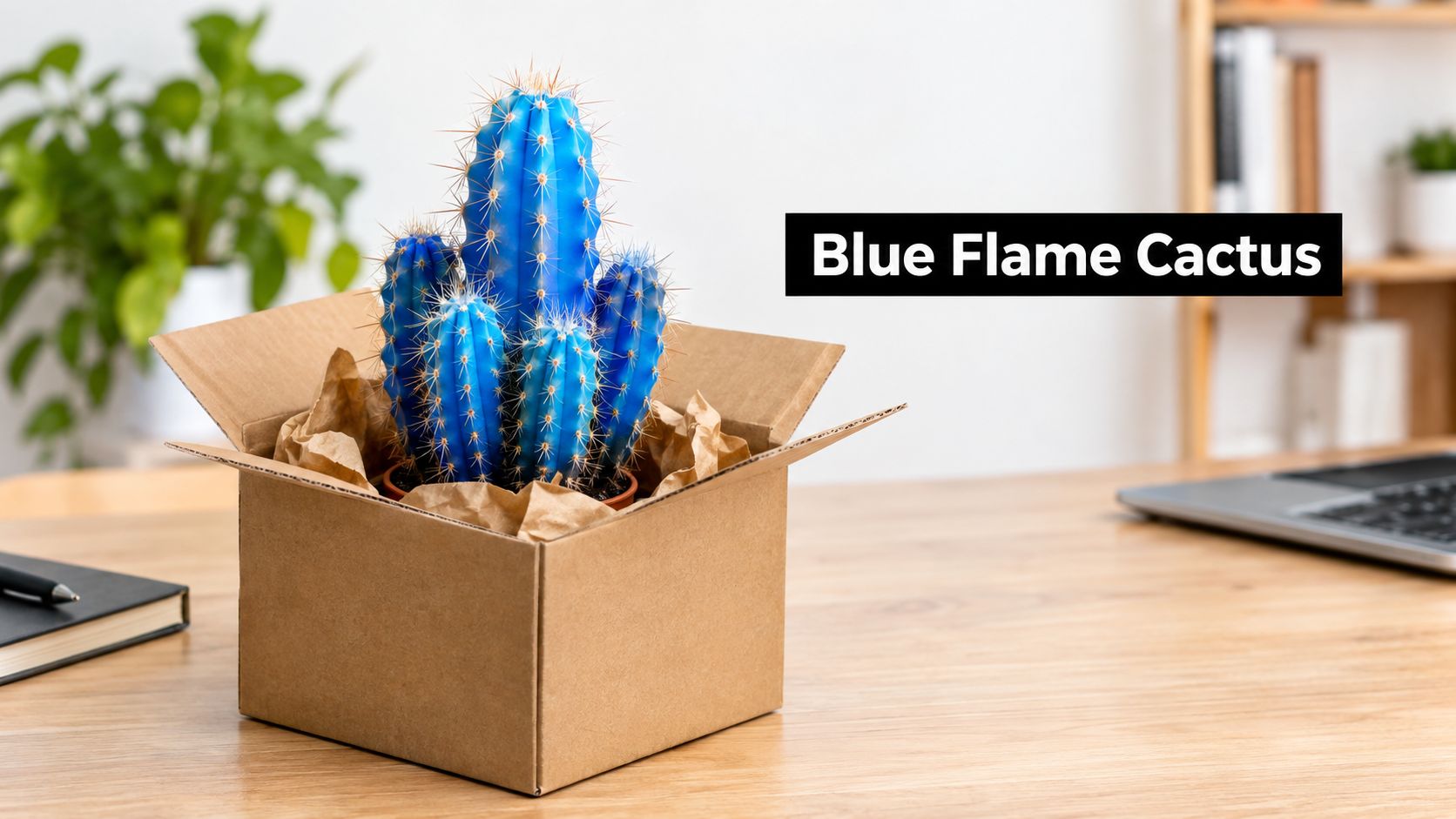

You've found a blue flame cactus listing with the right color, the right silhouette, and a price that looks tempting. Then the practical questions arrive. Will the seller ship a healthy, rooted specimen? Can the carrier move a tall, spiny plant through your local weather without damage? Do you have a safe place to unpack it, and can you handle the plant when it arrives?
Buying blue flame cactus online is less about clicking the cheapest listing and more about controlling the transaction. Online plant shopping is now a familiar purchasing channel. A peer-reviewed study found that online plant sales rose from about 5% before 2017 to an estimated 17.5% in 2021, then settled at 11% in 2023. The same research reported average online spending of $222.05 on plants and flowers over the prior six months, compared with $150.53 in-store, while 87% of respondents said they were satisfied with online purchases. Read the peer-reviewed analysis of online plant buying.
Those figures don't remove the risks of buying a large cactus. They show that shoppers are comfortable purchasing living plants remotely, but the seller still controls the most important variables: plant condition, root preparation, packaging, weather timing, and the arrival policy. Use the checklist below before you authorize payment.
What You Should Know Before You Start Shopping
A large, spiny blue flame cactus isn't a casual impulse purchase. Before you browse listings, decide where the plant will live, how much space it can occupy, and whether someone can safely receive and move it from the delivery point.

Lock down the planting site first
Start with the final location, not the product photo. Measure the patio corner, entry bed, container position, or privacy planting area. Confirm how much direct sun reaches the site, whether irrigation overspray can reach the plant, and whether the cactus can remain outdoors through your local winter.
The name blue flame cactus can refer to different blue-toned plants in commerce, so ask for the botanical name before comparing hardiness or mature size. Myrtillocactus geometrizans, commonly sold as blue candle or blue myrtle cactus, can reach up to 20 feet tall in cultivation and is commonly listed for USDA zones 9–11. Review the published blue myrtle cactus profile. Agave ‘Blue Flame' is a different plant, typically 2–3 feet tall and 3–4 feet wide, with a published hardiness range of USDA zones 8–11. Compare the published Agave ‘Blue Flame' information.
Use a local planting reference, such as the Vistancia community plant list, if you're matching the purchase to neighborhood landscaping expectations or regional plant choices.
Answer the logistics questions
Before checkout, confirm:
- Who receives the box: A tall cactus shouldn't sit unattended in direct heat, freezing weather, or a busy walkway.
- How it gets moved: Decide whether you need a second person, a hand truck, gloves, or a temporary sheltered staging area.
- What the budget includes: A heavy specimen may require reinforced packaging or specialized handling. Treat delivery as part of the plant's cost, not an afterthought.
- What happens after arrival: Have a dry, bright, sheltered location ready before the carrier arrives.
If you can't answer those questions, don't order yet. A trustworthy listing can't compensate for an unsuitable site, unsafe handling plan, or weather that makes delivery unreasonable. The rest of this guide turns those pre-checks into specific questions for the seller and concrete decisions at checkout.
How to Read Seller Listings and Spot Trust Signals
A reliable blue flame cactus listing gives you enough information to picture the actual transaction. It identifies the nursery, describes the plant's origin, explains root preparation, and states how the seller handles weather, damage, and live-arrival claims.
Start with the business itself. Look for a full nursery name, physical business address, named staff, operating history, and independent reviews on platforms such as Google and Trustpilot. Those details don't prove that every plant will arrive perfectly, but they give you accountable people to contact when a delivery problem occurs.
Test the plant description
A useful listing should identify the botanical name, current size, container status, root condition, and whether the photograph shows the actual plant. Ask whether the specimen is tissue-cultured, nursery-grown, or field-grown. Those terms describe different production histories, and the seller should be able to explain which applies.
A stock image isn't automatically dishonest, but it isn't evidence of current inventory. Reverse-search the image if it looks unusually polished, repeated across multiple stores, or possibly AI-generated. Then request a time-stamped photograph of the actual rooted plant in its pot, ideally with a ruler or familiar object for scale.
Staff rule: If the seller can't show the plant you're buying, assume you're choosing a type, not a specimen.
The answer about roots matters just as much as the answer about color. Ask whether the cactus ships in soil, bare-root with dry roots, or as a fresh unrooted cutting. A seller who gives vague replies about root preparation may be avoiding a material condition of the sale.
Look for a real shipping policy
A credible policy explains carrier selection, dispatch timing, weather holds, insulation, damage documentation, and the live-arrival process. It should tell you what the seller does when temperatures become unsafe, rather than promising that every order ships immediately.
Be cautious with listings that omit age or source, use prices far below comparable nursery stock, rely only on generic photos, or refuse an unboxing video request. The refusal alone doesn't establish fraud, but combined with missing business details and vague rooting information, it's a strong reason to leave the listing.
For broader context on evaluating online nurseries, use this guide to choosing an online cactus store. My decision rule is simple: walk away when the seller can't verify the actual plant, explain its root condition, and provide written shipping and arrival terms.
Comparing Blue Flame Cactus Size, Specimen Quality, and Price Tiers
Size labels are often too vague to support a serious purchase. “Small,” “medium,” and “large” should translate into a measurable plant, a realistic use, and a clear root condition. If the listing doesn't provide those details, you can't compare value.
| Price Tier | Typical Size | Root Prep | Expected Health Cues |
|---|---|---|---|
| Starter | Under 8 inches | Prefer a rooted plant in a stable container. Avoid an unexplained fresh cut. | Strong blue epidermis, firm base, and no unexplained soft tissue. |
| Patio feature | 8–18 inches | Established soil-rooted stock is convenient. Bare-root preparation can work when explained clearly. | Even color, intact terminal growth, and a root system appropriate to the container. |
| Landscape anchor | 18 inches and up | Expect careful handling, substantial root preparation, and packaging designed around the plant's height and weight. | Strong blue color, firm base, intact pads or branches, and no suspicious damage. |
These size bands are buying categories, not verified facts about every seller's inventory. Ask for exact measurements from the soil line to the growing tip, and ask whether the quoted size includes the pot. A starter plant suits a collection or smaller container. A mid-sized specimen can become a patio focal point. A mature plant belongs in a plan that already accounts for access, visibility, and lifting.
Plant quality should justify the price. Look for a strong blue epidermis, intact terminal pads, a firm base, and visible new growth during the active season. Some basal corking can occur with age, but extensive corking, unexplained scarring, or soft tissue deserves a direct question before purchase.
Root preparation changes the risk. Fully rooted soil stock is usually the easiest choice for a buyer who wants a plant ready to stabilize after delivery. Bare-root plants can ship efficiently when the roots stay dry and the seller explains the process. A freshly cut, unrooted specimen is a different purchase and should never be presented as equivalent to an established plant.
Use this blue flame cactus versus Peruvian apple cactus comparison when the brief could support either form. My rule is firm: if the listing can't explain the price through size, roots, health, and handling, it's the wrong price to pay.
Shipping, Packaging, and the Temperature Window That Protects Your Plant
Shipping is the highest-risk phase of buying a blue flame cactus online. The plant may be healthy at dispatch and still arrive damaged if the roots are wet, the stems are loose, the box is poorly braced, or the route exposes it to unsafe temperatures.
Many sellers work within a 40°F to 85°F transit window, but responsible shipping decisions depend on the entire route, not just the temperature at the nursery. Neutral shipping guidance recommends keeping cactus roots relatively dry, using durable corrugated packaging, and controlling moisture during preparation. DHL also notes that silica gel shipments require an MSDS and that water-saturated packing materials are prohibited. Review the cactus shipping guidance from DHL.

Ask before the label is printed
Message the seller with three direct questions:
- What ship date are you targeting? You need to compare it with the forecast along the full route.
- Which carrier will handle the package? Tracking quality and delivery timing affect the plant's exposure.
- What is your weather-hold policy? A responsible nursery should be willing to delay dispatch when conditions are unsafe.
Shipping guidance commonly advises holding cactus orders when ambient temperatures fall below 40°F or rise above 95°F, while broader recommendations call for caution below about 35–40°F because prolonged cold increases frost risk, even for cold-tolerant succulents. Review the temperature and shipping guidance for online cactus purchases. Add insulation or a heat pack when transit sits around 35–45°F, and don't dispatch when forecast lows drop below freezing.
Packaging should immobilize the plant. Look for newspaper or tissue wrap around spines and stems, rigid cardboard or wooden crating for tall specimens, dry root preparation where appropriate, and no loose soil rolling around inside the box. “This side up” labeling helps, but internal bracing matters more.
Bare-root shipping is common for columnar cacti because it reduces weight and soil movement. For a plant over 18 inches tall, signature confirmation is worth considering so the box doesn't remain outside unattended. The Cactus Outlet explains the practical considerations in its large cactus shipping and delivery guide.
Watch the embedded shipping demonstration before ordering a tall specimen:
Pricing, Payment, Returns, and Warranty Reality Check
Price comparisons only work when the plants are comparable. A rooted cutting, an established single column, and a mature branched specimen are different products with different handling requirements.
| Size Range | Typical Price (USD) | Root Prep | Packaging | Guarantees |
|---|---|---|---|---|
| Rooted cutting under 8 inches | $25–$60 | Usually a small rooted plant. Confirm that it isn't an unrooted cut. | Standard protective packing. | Confirm the written live-arrival terms. |
| Established single column, 8–18 inches | $80–$250 | More developed root system, often container-grown. | More cushioning and stem protection. | Ask whether replacement or refund applies. |
| Mature branched specimen, 18 inches and up | $300–$900+ | Larger root mass or carefully prepared bare roots. | Reinforced packaging, possibly a crate. | Confirm damage reporting deadlines and exclusions. |
| Landscape-grade multi-column clump | Over $1,500 | Substantial established specimen. | Specialized handling and heavy protection. | Require written terms before paying. |
These 2024–2025 price bands are the purchasing ranges specified for this guide, not a promise of current availability. Shipping is usually separate and can add $40–$150 for a crated tall plant, so request a delivered total before comparing sellers.
The guarantee language deserves close reading. A live-arrival guarantee typically gives the buyer 24–72 hours from delivery to report a problem, often with photographs or an unboxing video. That isn't the same as a long-term warranty. Many sellers replace a damaged plant rather than issue a refund, and replacement may depend on available stock.
Payment method affects recourse. PayPal, credit card, and Shop Pay generally offer stronger buyer-protection mechanisms than wire transfer or Zelle. For international purchases, ask whether a custom phytosanitary certificate is required. Certificates add cost and can affect the final landed price, especially when the destination country has plant-import restrictions.
Don't choose a suspiciously cheap listing merely because the headline price looks attractive. Compare the actual plant, root status, packaging, shipping, documentation, and remedy if the order arrives damaged.
Unboxing and Acclimating Your Blue Flame Cactus
A cactus that spent days in darkness and motion shouldn't go straight from a box into harsh outdoor sun. Treat arrival as a controlled transition, and document the condition before you remove evidence that may support a claim.
Day 1 through Day 4
Day 1: Photograph the unopened box, the packing material, and the cactus before moving anything. Remove every strap, wrap, and loose packing piece, then inspect the stem, base, growing tip, and any cut or callused ends. Set the plant upright in bright indirect light and keep it dry.
Days 2–4: Continue the dry rest. Move the cactus gradually closer to its intended outdoor position, but don't expose recently shipped tissue to strong midday sun. Check the base and any cut end for soft spots, blackening, or oozing.
Independent shipped-plant guidance recommends immediate unpacking, bright shade without direct sun for several days, waiting 2–5 days before repotting when a plant is bare-root or recently removed from its pot, and avoiding immediate watering. Review the shipped cactus acclimation guidance.
A dry, firm cactus can recover from a journey. A wet cactus trapped in a dark box can deteriorate quickly.
Day 5 through Day 14
Days 5–10: Pot the plant in a fast-draining mineral mix such as pumice and lava rock with a small fraction of organic material. Use a container with drainage and keep the plant stable without burying the stem too deep. Once potted, wait another week before the first light watering.
Days 11–14: If the base remains firm and the substrate is dry, begin a normal soak-and-dry routine. Increase sun exposure gradually rather than making a single jump from shade to full exposure. Post-transport protocols recommend avoiding strong fertilizer for the first 2–3 weeks, watering only after the plant is firm and the substrate is dry, and increasing sun over roughly 1–2 weeks. Follow the post-transport cactus-care protocol.
The exact infographic presents a five-day light sequence, from indirect light to morning sun, extended exposure, and full sun. Use it as a progression, not a reason to force a stressed plant outdoors. If sunburn appears, move back to the earlier stage.
Slow down if the base blackens, the plant stays soft, shrivels persistently without signs of recovery, or any tissue oozes. During the first month in a new location, keep a blue flame cactus underpotted and underwatered rather than giving it a large wet container and frequent irrigation.
Bringing It All Together Before You Buy
A confident online purchase passes seven checks before payment: the site suits the plant, the botanical identity is clear, the size is measurable, the specimen photo is credible, the price reflects the plant, the shipping window is workable, and the buyer has a sheltered arrival plan.
Run that test against the actual listing. Can the seller explain origin and rooting? Does the photograph show current inventory? Is the size stated without hiding the pot? Are weather holds written into the policy? Does the guarantee specify the reporting window and required evidence? Can someone receive and move the box safely?
Pause the order if any of these answers is unclear:
- Ambiguous photos: Request a current, time-stamped image of the actual plant.
- Vague rooting notes: Ask whether it is soil-rooted, bare-root, freshly cut, or recently repotted.
- Cold-chain gaps: Confirm the route, temperature plan, insulation, and weather-hold policy.
- Missing return terms: Get the live-arrival remedy in writing before payment.
- No acclimation location: Don't order until you have bright shelter away from immediate harsh sun, freezing exposure, and unattended delivery.
For an international order, ask about phytosanitary documentation, destination exclusions, and possible customs delays before you compare prices. Existing specialty listings show that bare-root preparation, dispatch timing, winter delays, heat protection, and certificates can all shape the transaction. Review an example of international blue-toned cactus shipping information.
Send one clear message before checkout: ask for the plant's origin, current growing medium, last repot, exact measured height, and heat-pack or cold-pack policy. Confirm that tracking will be provided and monitored through delivery. Buy when the seller's standards match your climate, schedule, handling ability, and garden plan, not when the price is lowest.
The Cactus Outlet offers online access to large cacti, agaves, aloes, euphorbias, and succulents, including a Blue Flame Cactus product page for buyers planning a patio or garden feature. Visit The Cactus Outlet to review current plant details, compare related specimens, and contact the nursery before placing an order.