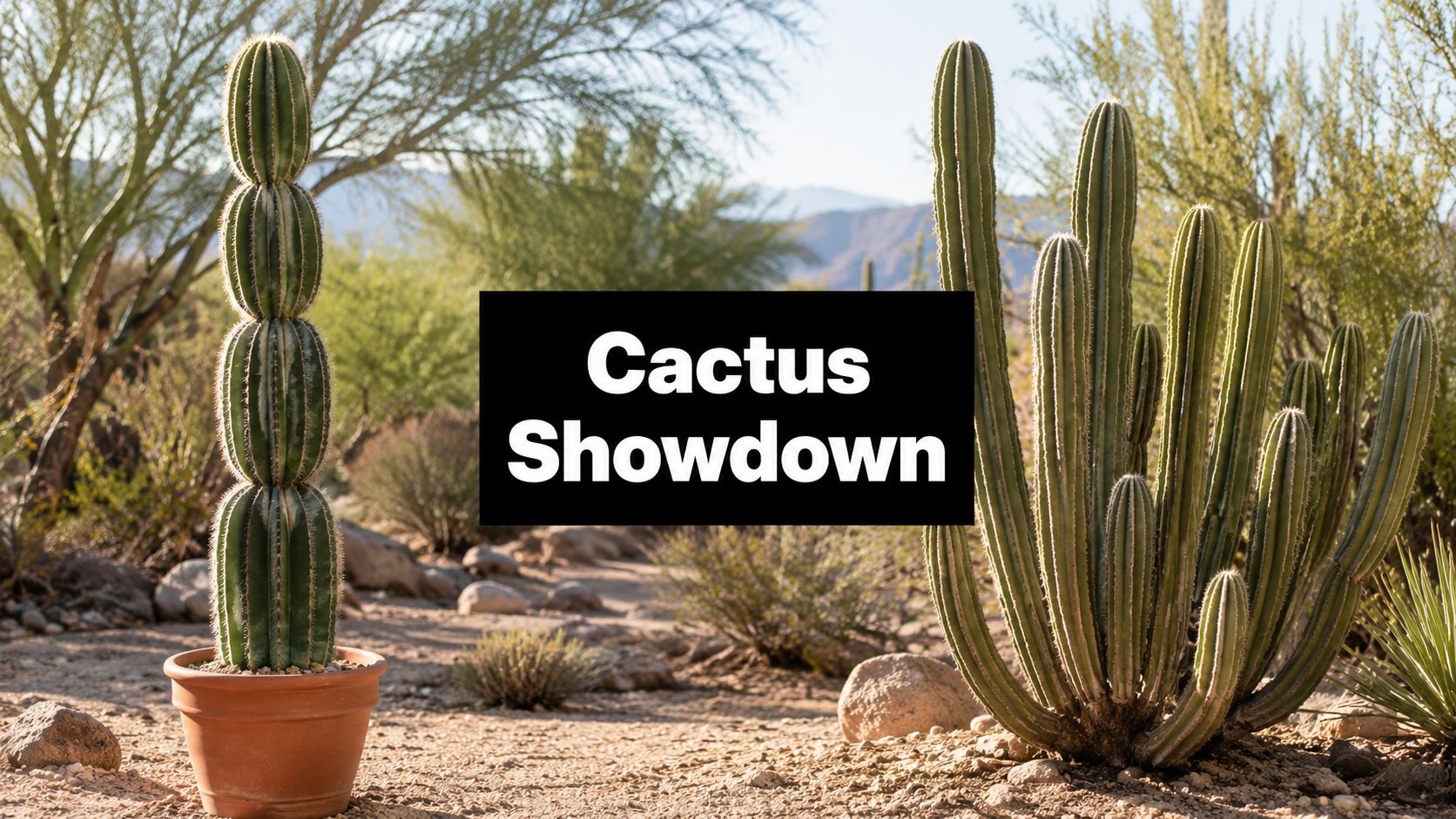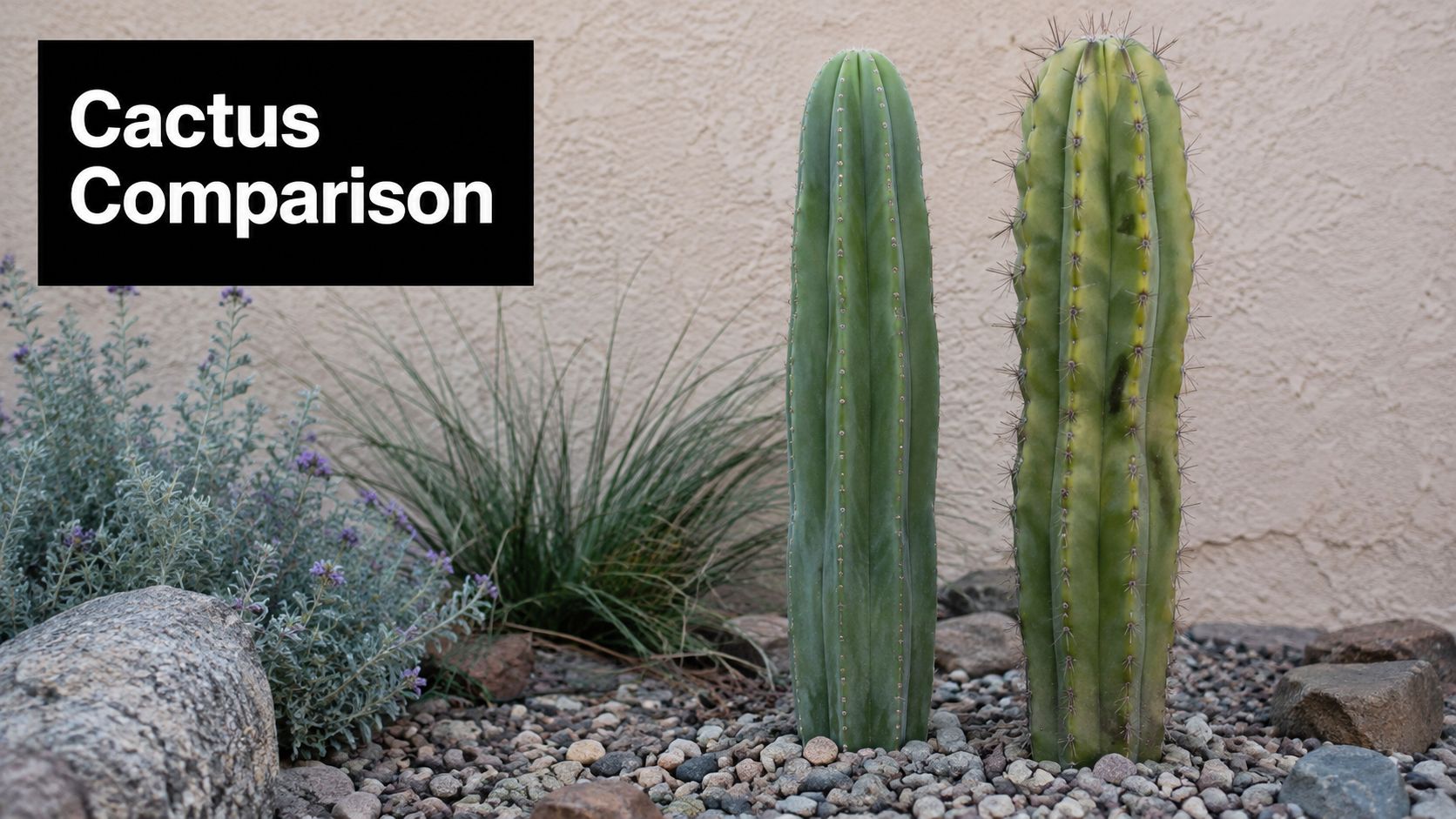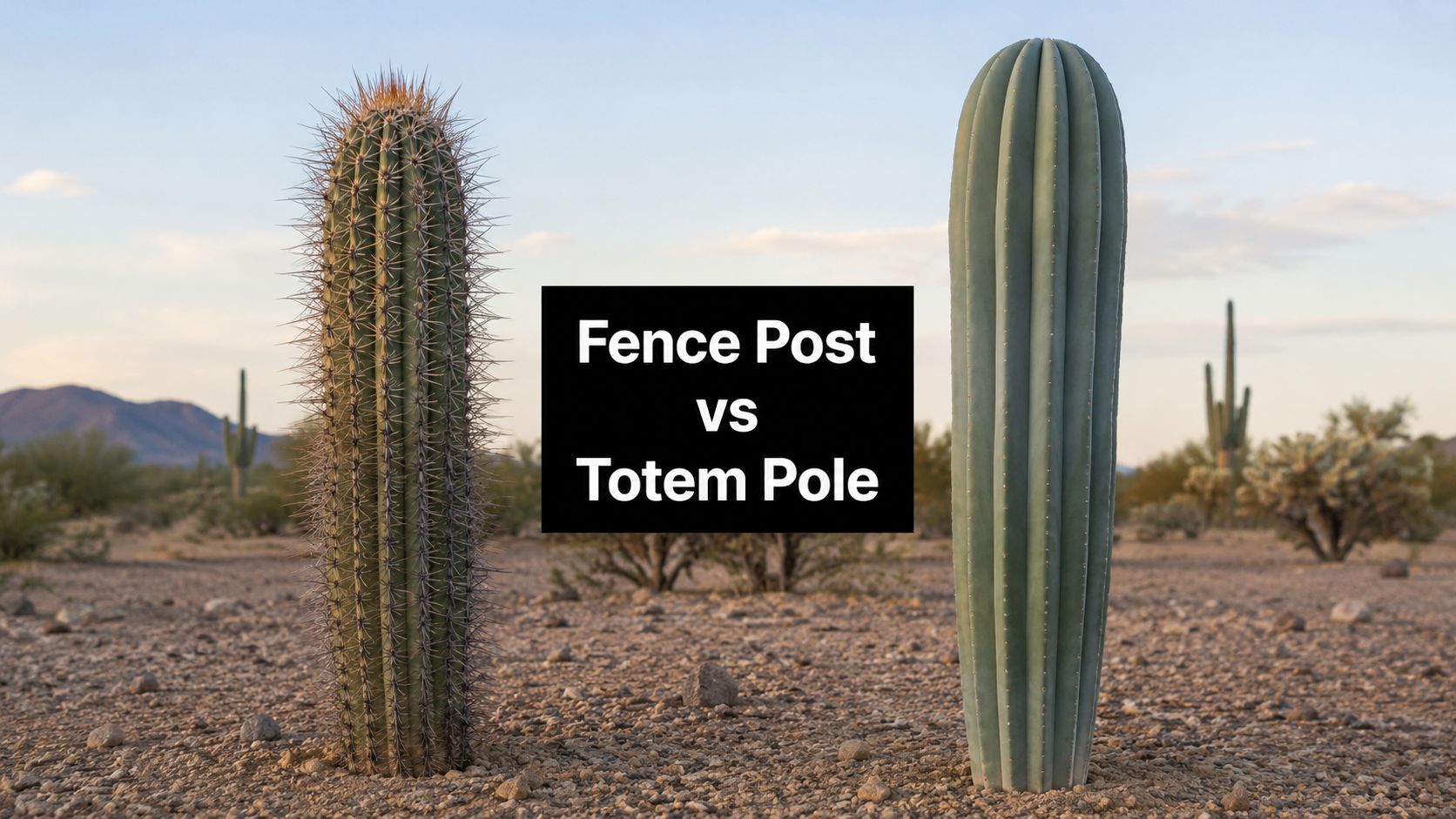

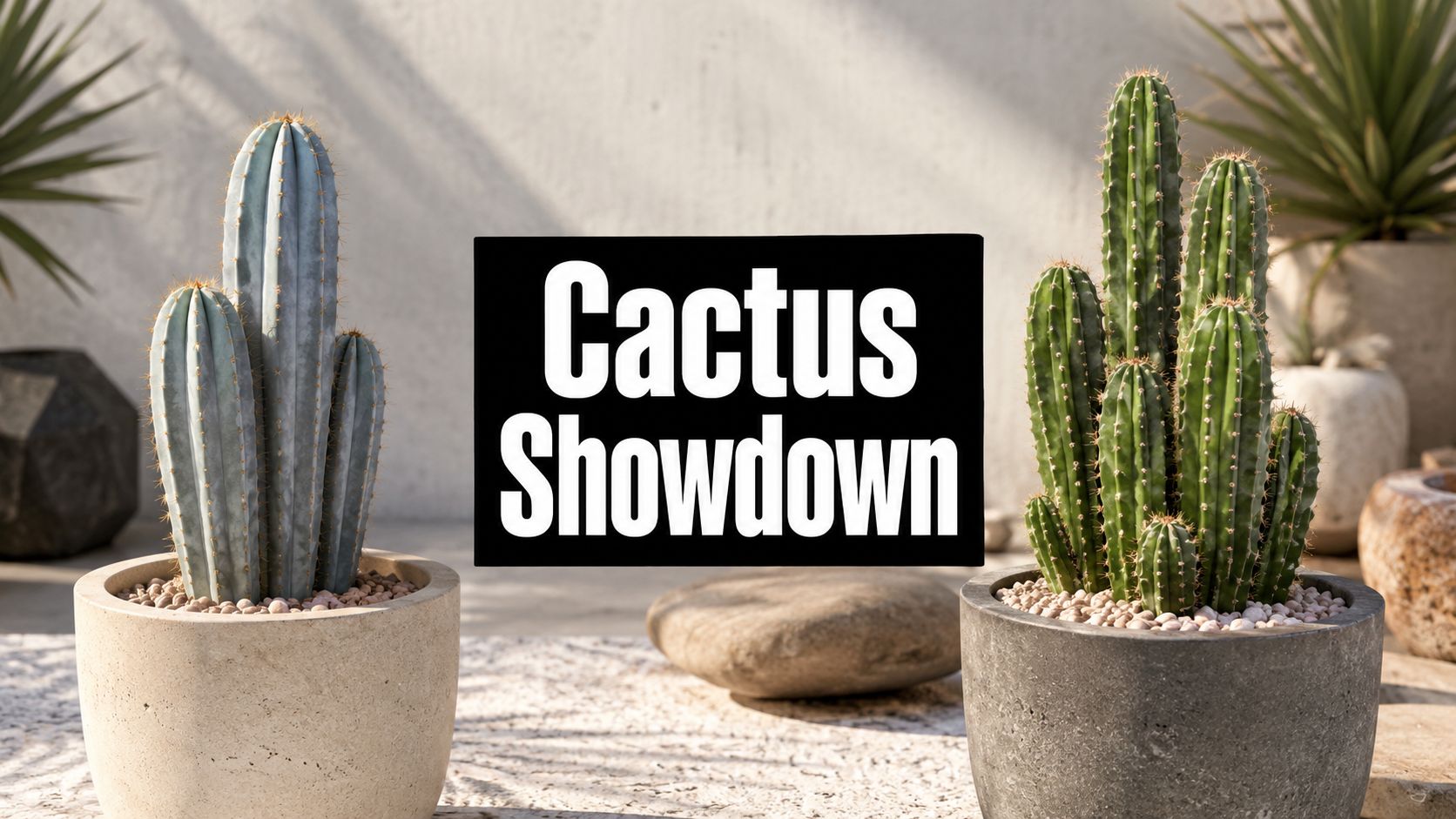

You're standing at the edge of a hot patio with two very different plants competing for the same spot. One is a blue-green Blue Flame Cactus with a controlled, sculptural outline. The other is a branching Peruvian Apple Cactus that promises height, flowers, and edible fruit, but also demands more room and a heavier planting plan. The right choice depends less on which cactus looks impressive at the nursery and more on what your site can support.
This Blue Flame Cactus vs Peruvian Apple Cactus comparison focuses on the buyer's real constraints: frost exposure and climate, container weight and overhead clearance, mature spread, and whether you want fruit or form. It also matters whether you're buying a small cutting or a substantial field-grown specimen, because shipping, stability, and acclimation change dramatically as a cactus gets larger.
Two Big Cacti, One Patio Decision
A homeowner measuring a 4-foot space beside a pool may assume either cactus will fit. That measurement covers today's pot, not tomorrow's branches, container diameter, or delivery access. Choose the plant for the space it will occupy at maturity, especially when the patio has fixed walls, pool equipment, or narrow gates.
For a controlled patio display, I would choose the Blue Flame Cactus. Its blue-green color works against concrete, gravel, stucco, and dark containers, while its branching structure creates a defined focal point without quickly taking over the area. The Peruvian Apple Cactus makes the stronger vertical statement, but it suits a buyer ready for a taller, heavier plant with greater demands on clearance and support.
Frost exposure should decide the purchase before appearance does. Both cacti belong in warm climates, and neither should be treated as a frost-proof outdoor cactus. Container stability matters just as much. Tall columns become pivot points in wind, particularly on balconies and exposed terraces.
Fruit changes the choice. Peruvian Apple provides edible fruit and nocturnal flowers. Blue Flame earns its place through blue color and restrained form.
A second-story balcony in USDA zone 8b presents a different problem from a protected Southern California courtyard. A lightweight pot may work for a small plant, but mature growth in wet soil can create a structural and handling problem. Delivery access also deserves attention before ordering a large specimen. A $40 cutting and a $220 field-grown specimen are different purchases, even when the plant name is identical.

Practical rule: Buy for the plant's mature role in the garden, not the footprint it has on the nursery bench.
Blue Flame Cactus and Peruvian Apple Cactus at a Glance
At a nursery, these cacti are easy to separate once you know what to look for. Myrtillocactus geometrizans, commonly sold as Blue Flame Cactus or Blue Myrtle Cactus, has blue-green stems and a branching habit. Cereus repandus, the Peruvian Apple Cactus, has gray-green ribbed stems and a more overtly tree-like structure.
| Trait | Blue Flame, Myrtillocactus geometrizans | Peruvian Apple, Cereus repandus |
|---|---|---|
| Common names | Blue Flame Cactus, Blue Myrtle Cactus | Peruvian Apple Cactus |
| Growth habit | Single blue-white column with short candelabra branches | Multi-stem tree cactus with branching arms |
| Mature silhouette | Broad but comparatively controlled | Tall, vertical, and increasingly architectural |
| Stem color | Blue-green to blue-white | Gray-green |
| Surface and spines | Columnar stems with short spines | Ribbed stems with cactus spines |
| Flowers | Less commonly seen in cultivation | White flowers that open at night |
| Fruit | Edible berry-like fruit | Edible fruit with white pulp and small seeds |
The Blue Flame's color is its selling point. On a nursery bench, it reads as cool, powdery, and ornamental, especially beside warm stone or pale walls. Its branches tend to form a candelabra outline rather than the looser, more sprawling look of a mature Peruvian Apple.
The Peruvian Apple's defining feature is its performance as a fruiting columnar cactus. Its large white flowers open for only one night, and the fruit develops into an edible crop. Buyers who want a dramatic upright plant with a seasonal payoff should study the Peruvian Apple Cactus care guide before ordering.
For identification, look at the silhouette first, then the color. Blue-green and compactly branched points toward Blue Flame. Gray-green, ribbed, and tree-like points toward Peruvian Apple.
Mature Size, Growth Rate, and Space Planning
Size claims for these plants vary by growing conditions, age, and whether a source describes a cultivated specimen or a plant growing in nature. The reliable buying conclusion is simple: both are large cacti, but Peruvian Apple generally carries the greater long-term height risk.
A major botanical collection record documents Blue Flame Cactus at 11 to 15 feet tall and 6 to 10 feet wide (botanical size reference). Another botanical source describes it reaching about 4 meters in nature and forming cactus forests in semi-arid areas at 1,000 to 2,000 meters elevation (Myrtillocactus reference). That's a substantial plant, but its footprint is usually easier to manage than a sprawling tree cactus.
Peruvian Apple Cactus is listed at mature heights of 15 to 30 feet, with spread around 1 to 3 meters, and another database records specimens reaching 10 meters (Peruvian Apple size and care reference). A research-based growth reference reports Cereus peruvianus adding about 9.2 centimeters per month under study conditions, showing why good irrigation and light management can turn it into a demanding garden anchor (growth and pollination reference).
What changes as the plant gets older
A young Blue Flame can work in a substantial patio container, but its height eventually creates a tipping hazard. Use a heavy, wide-based pot and account for wind, wet soil, and the reach of the branches. Peruvian Apple should be treated as an in-ground or large-container plant sooner, especially if you want it to become a visible garden specimen rather than a permanently stunted patio plant.
Think about:
- Ceiling clearance: Indoor and covered patios can restrict both vertical columns and emerging arms.
- Rooting space: In-ground planting gives a large cactus more room to establish than a decorative pot.
- Access: Leave enough clearance for pruning, inspection, and eventual removal.
- Container support: A narrow pot can turn a tall cactus into a top-heavy load.
Light, Water, Soil, and Cold Hardiness Requirements
Your patio space, climate zone, and willingness to move a heavy pot should decide this pairing. Blue Flame handles strong light with a little more flexibility, while Peruvian Apple demands brighter exposure and more room for its root zone. Both need fast drainage. Neither belongs in a dim corner or dense, water-holding soil.
| Requirement | Blue Flame Cactus | Peruvian Apple Cactus |
|---|---|---|
| Light | Bright light, with gradual adjustment when exposure changes | Very high light, with partial shade possible for older plants during peak summer |
| Water | Let the mix dry before watering again | Let the root zone dry thoroughly between waterings |
| Soil | Sharp drainage and a mineral-forward cactus mix | Sharp drainage, with slightly more organic content acceptable |
| Cold | Short exposure near 25°F (-4°C) is reported, with warm-climate placement preferred | Reported hardiness from USDA zones 9a to 11b, with short-period tolerance near 20 to 25°F (-7 to -4°C) |
| Winter risk | Cold, wet soil is a serious concern | Wet roots combined with cold air can cause more damage than cold air alone |
Blue Flame suits a bright east-facing patio when it receives strong morning light consistently. If you move it into harsher afternoon sun, increase exposure gradually to reduce scorching. Peruvian Apple needs stronger direct light, although older plants may benefit from partial shade during peak summer to reduce sunburn risk, according to University of Arizona Arboretum guidance.
Follow a cactus care guide when setting up either plant, but focus on the container details buyers often overlook. Use a sharply draining cactus mix instead of dense garden soil. Choose a pot with open drainage holes, and empty the saucer after irrigation. Water only once the mix has dried sufficiently, then allow excess water to escape fully. In cool weather, water less often. Cold moisture around the roots creates greater risk than a brief dry spell.
Cold protection depends on your local conditions. Blue Flame is generally placed in USDA zones 9 to 11, with short-period tolerance near 25°F (-4°C) (Blue Flame hardiness reference). Peruvian Apple is also associated with USDA zones 9 to 11, with one reference specifying 9a to 11b and short-period tolerance around 20 to 25°F (Peruvian Apple temperature reference). In zone 8b, keep either cactus in a movable container and arrange protection before the first freeze.
Cold-weather rule: Keep the roots as dry as practical before a cold event, and use a heavy container that can be moved without risking the plant or the handler.
For a covered patio or indoor winter location, pot weight becomes part of the purchase decision. A container that stays stable outdoors may still be too difficult to move through a doorway. Choose the final route and storage spot before filling it.
Best Landscape, Patio, and Indoor Use Cases
The Blue Flame Cactus is my pick for a designed accent. Its blue-green stems create contrast against gravel, pale stucco, corten-colored stone, or warm-toned walls. It also works well where the homeowner wants a recognizable cactus without allowing the plant to dominate every nearby bed.
Peruvian Apple wins as a vertical anchor. Its branching, gray-green form gives a yard more height and a stronger tree-cactus silhouette. Choose it beside a wall, at the end of a path, or in a broad planting area where the eventual structure can develop without crowding a pool deck or walkway.
Backyard specimen planting
For in-ground planting, choose based on the visual job. Blue Flame is the better accent, especially when color and controlled branching matter more than fruit. Peruvian Apple is the better statement plant when height, flowers, and fruit justify its larger commitment.
Both can handle reflected heat when the soil drains well and the plants are acclimated to the site. A south-facing wall can amplify heat, so inspect the stems during the hottest part of the season rather than assuming every bright location is automatically safe.
Patio container centerpiece
Blue Flame is the clear winner for most patios. Its size is easier to coordinate with furniture, pool circulation, and sight lines, although the pot still needs enough mass to prevent tipping. Peruvian Apple belongs in a container only when the buyer has room for a large, stable base and accepts that the plant may eventually need in-ground placement.
On a terrace, confirm the surface's load limits before ordering a large specimen. The plant, pot, soil, and irrigation water all contribute to the final load.
Indoor architectural planting
Peruvian Apple delivers a stronger architectural column, but it's also the less forgiving indoor purchase if light and ceiling height are limited. Blue Flame is usually easier to place as a sculptural plant near a bright window, provided the container remains stable and the plant receives enough direct or very bright light.
For buyers comparing indoor options, best indoor cacti for beginners offers useful context on choosing a cactus for interior conditions. Still, neither of these species should be bought as a casual low-light houseplant.
Which Cactus Wins for Your Situation
Your site decides the winner. Patio width, climate, pot weight, and your interest in fruit matter more than a generic pros-and-cons list.
Coastal California homeowner: Choose Blue Flame for a blue-green specimen beside stucco, gravel, or a pool, especially where planting width is limited. Coastal conditions can be mild, yet winter rain and wind still demand fast drainage and a stable pot. Choose Peruvian Apple only with room for a taller, branching form and a clear goal of flowers or fruit.
Arizona backyard: Choose Peruvian Apple for a broad in-ground site and a strong vertical statement. Blue Flame fits a controlled accent or a planting scheme built around blue-green color. Both tolerate desert heat, but set irrigation carefully after planting rather than treating heat as permission for constant watering.
Florida patio: Choose Peruvian Apple when fruit matters enough to justify strong light, cross-pollination, and a heavy container. Its flowers are not self-compatible, so fruit set needs pollen from another compatible plant, as explained in this pollination and fruiting reference. Select Blue Flame when the patio needs shape and color without turning fruit production into a project.
Apartment with a south window: Choose a younger Blue Flame only when you can provide strong light and a pot that will not tip. Peruvian Apple makes a striking indoor column, but its upright growth and eventual size complicate ceiling clearance, moving, and repotting.
Collector wanting fruit: Peruvian Apple wins. Its flowers open for one night, and fruit may need roughly 40 to 50 days to ripen. Mature fruit has also been reported to split as it ripens. That short harvest window makes daily observation part of the appeal, not a minor detail.
If the plant must remain container-grown, choose Blue Flame unless you have space for a heavy base and a plan for future size. If fruit is the deciding factor, accept the extra plant, pot, and pollination demands of Peruvian Apple.
Buying, Shipping, and First-Season Care
Start with the destination, then select the plant size. A small Blue Flame suits a 16 to 20-inch patio pot when you want a manageable starting point. A 2 to 4-foot Peruvian Apple creates more immediate visual impact, but it also demands a more serious container or an in-ground plan.
Before checkout, ask how the plant will be prepared for transit. Large cacti may require wooden crating, wrapped root balls, bare-root handling, freight delivery, or parcel shipment depending on their size and packaging. Custom foam and rigid support can reduce spine breakage, but the buyer should still inspect the plant promptly after delivery.
The guide to buying a cactus online is useful for checking the questions that matter before ordering, especially plant dimensions, delivery access, and the receiving plan.
Prepare the site before delivery
Use full sun where the species and local conditions support it, and build drainage into the planting location. Mounded or raised soil helps move water away from the root zone, while a container needs drainage holes large enough for the root mass and enough open space beneath the pot for runoff.
Plan support before the plant arrives. A tall specimen may need staking through its first winter, particularly in a windy patio location. Don't bury the trunk deeper than it was grown, because excess moisture around the stem base can create avoidable problems.
Handle the first month carefully
Unpack the cactus promptly. Leaving it sealed in a hot shipping box overnight can turn transport stress into heat damage. Place a summer delivery in bright but filtered conditions for about two weeks before increasing direct exposure, and rotate it gradually if the plant arrives from a lower-light nursery environment.
Skip fertilizer during the first 30 days. Water lightly only if the trunk begins to wrinkle, and wait for signs of new growth before resuming heavier irrigation. The most common first-season mistake is treating a freshly potted cactus like a thirsty tropical plant.
- Keep the soil restrained: Fresh roots need air as much as moisture.
- Check the planting depth: The stem base should remain at the intended soil line.
- Use the final container wisely: Repotting a tall, spined plant adds handling risk.
Choosing the Right Cactus for Your Home
Choose by four constraints: climate, available space, container weight, and whether fruit matters.
In USDA zones 9 to 11, a large, in-ground site can support either species. Pick Peruvian Apple if edible fruit and night-blooming flowers justify its size. Pick Blue Flame if blue color, a more controlled form, and strong garden contrast matter more than fruit.
Gardeners in zones 7 and 8 need a protected, movable setup for either cactus. Blue Flame is the more workable choice when you can bring the pot under cover. In colder markets, container culture provides that escape route only when the pot can be moved and the winter location receives enough light. Do not leave either plant exposed to a winter pattern it cannot tolerate.
For a patio with weight limits, start with a younger Blue Flame in a stable container. Renters and small-space owners should buy only if they can commit to a heavy permanent pot, adequate light, and a plan for the plant's eventual height and spread. A tall cactus in a narrow decorative planter becomes unstable, regardless of how good it looks on arrival.
Fruit is not the only buying trap. Small grafted Blue Flame plants may never develop the true blue form the buyer expected. A Peruvian Apple starter can also disappoint buyers who expect quick fruit in a marginal climate.
The Cactus Outlet carries both Blue Flame Cactus and Peruvian Apple Cactus options. Compare each specimen's listed dimensions and delivery requirements with your patio, planting space, climate, and pot-handling limits.
Visit The Cactus Outlet to compare the specific Blue Flame and Peruvian Apple plants available, then match their listed size and delivery requirements to your site. Choose the cactus that fits your climate, mature footprint, container weight, and fruit goals before ordering.