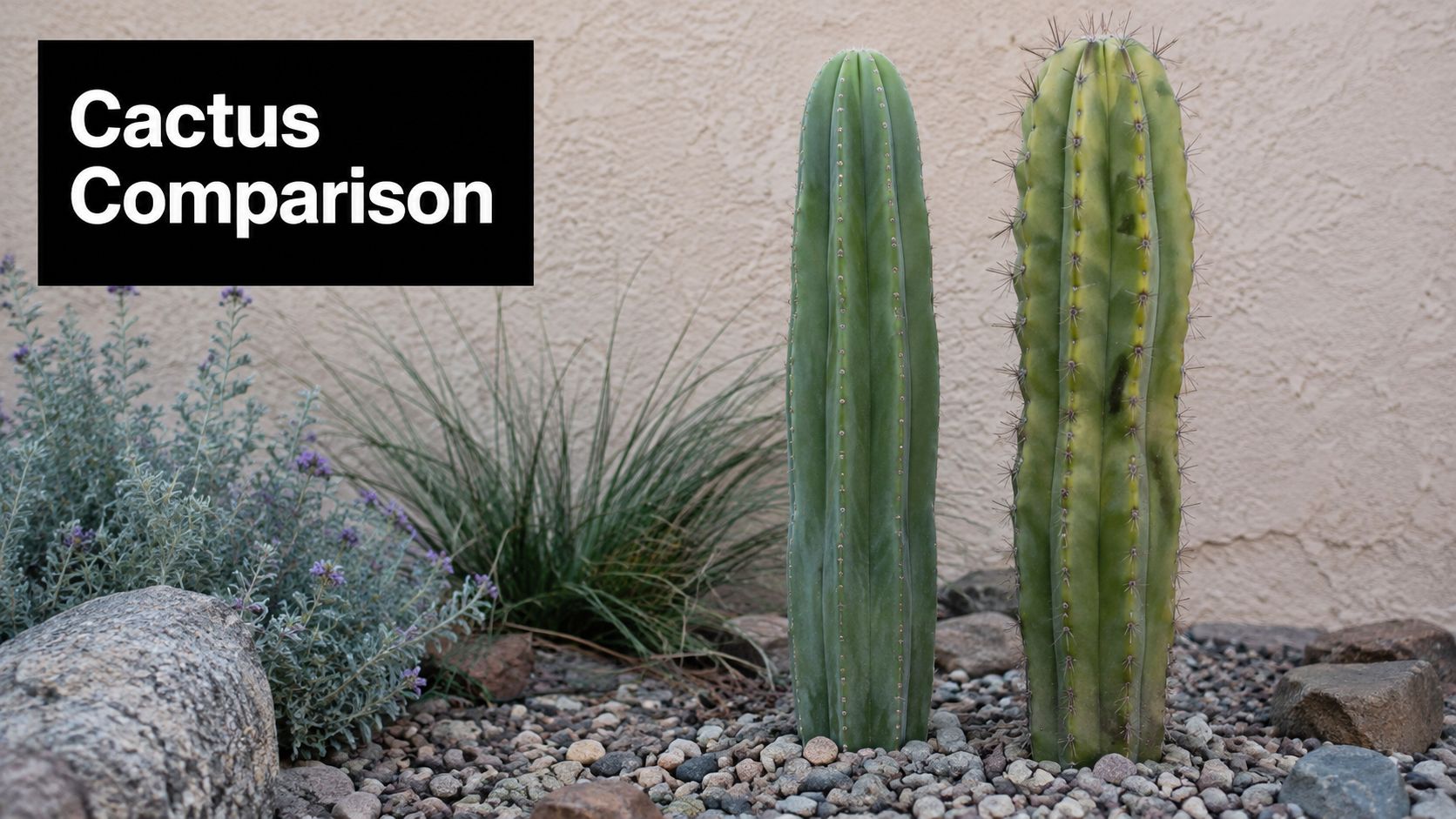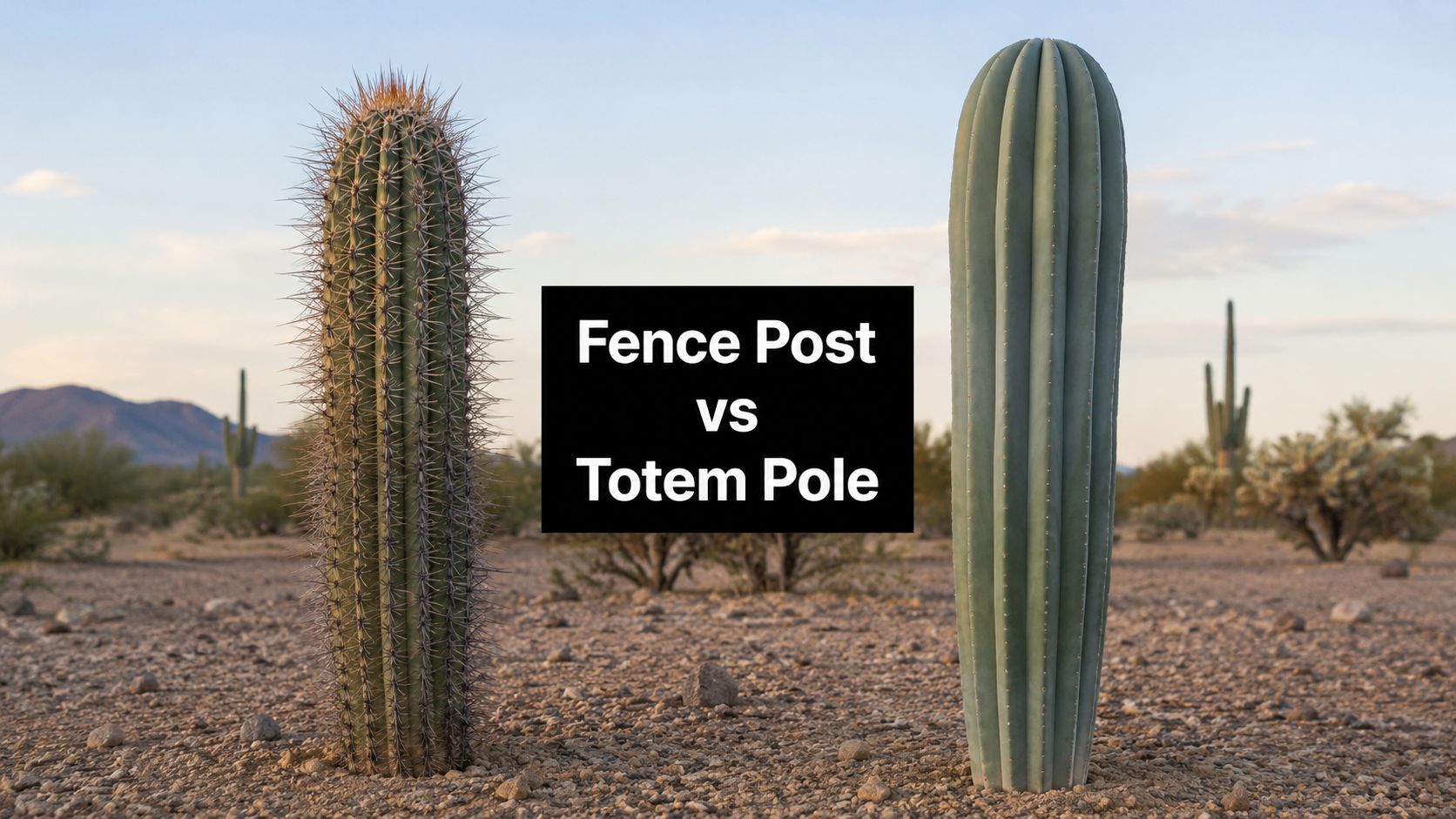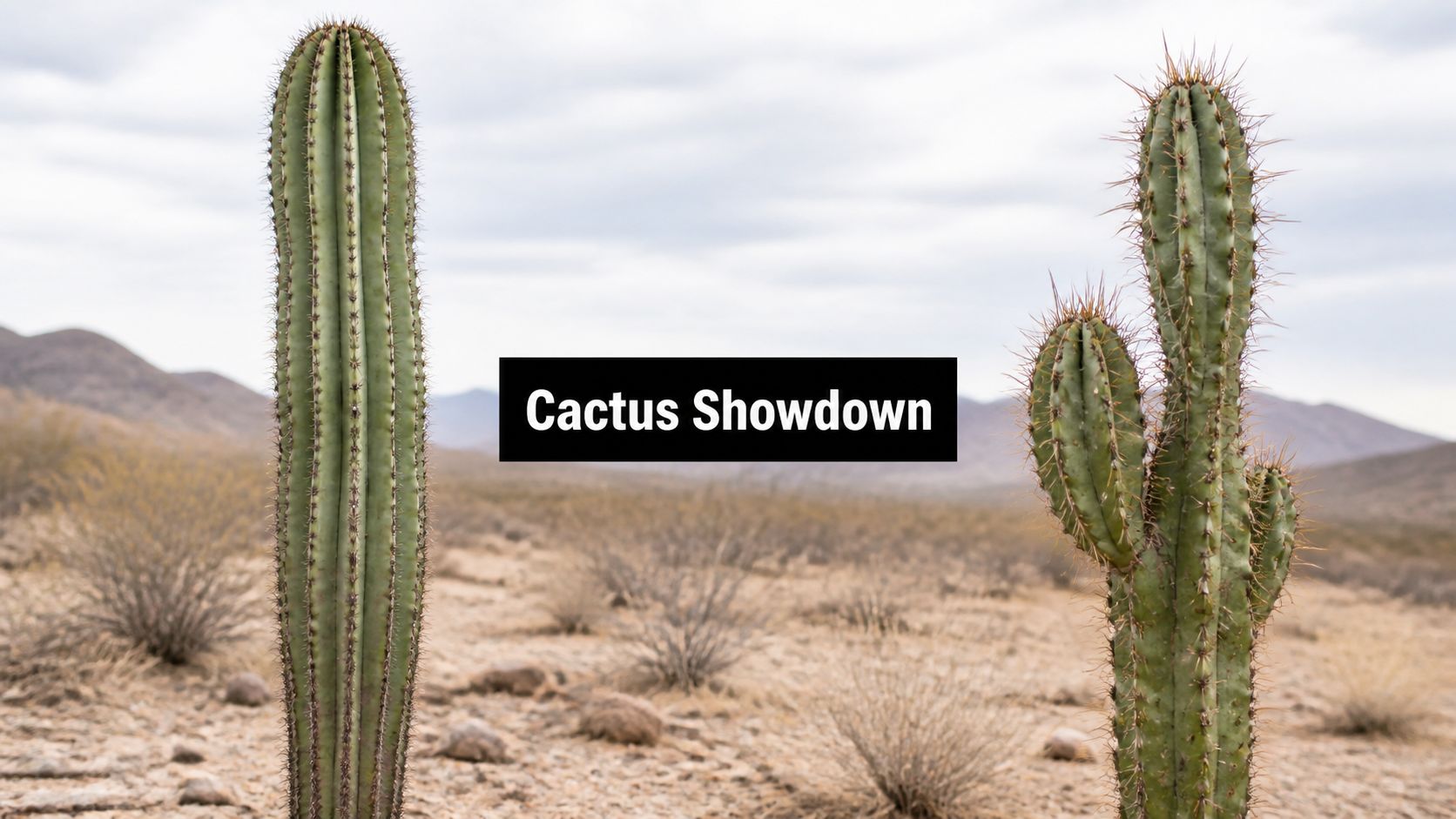

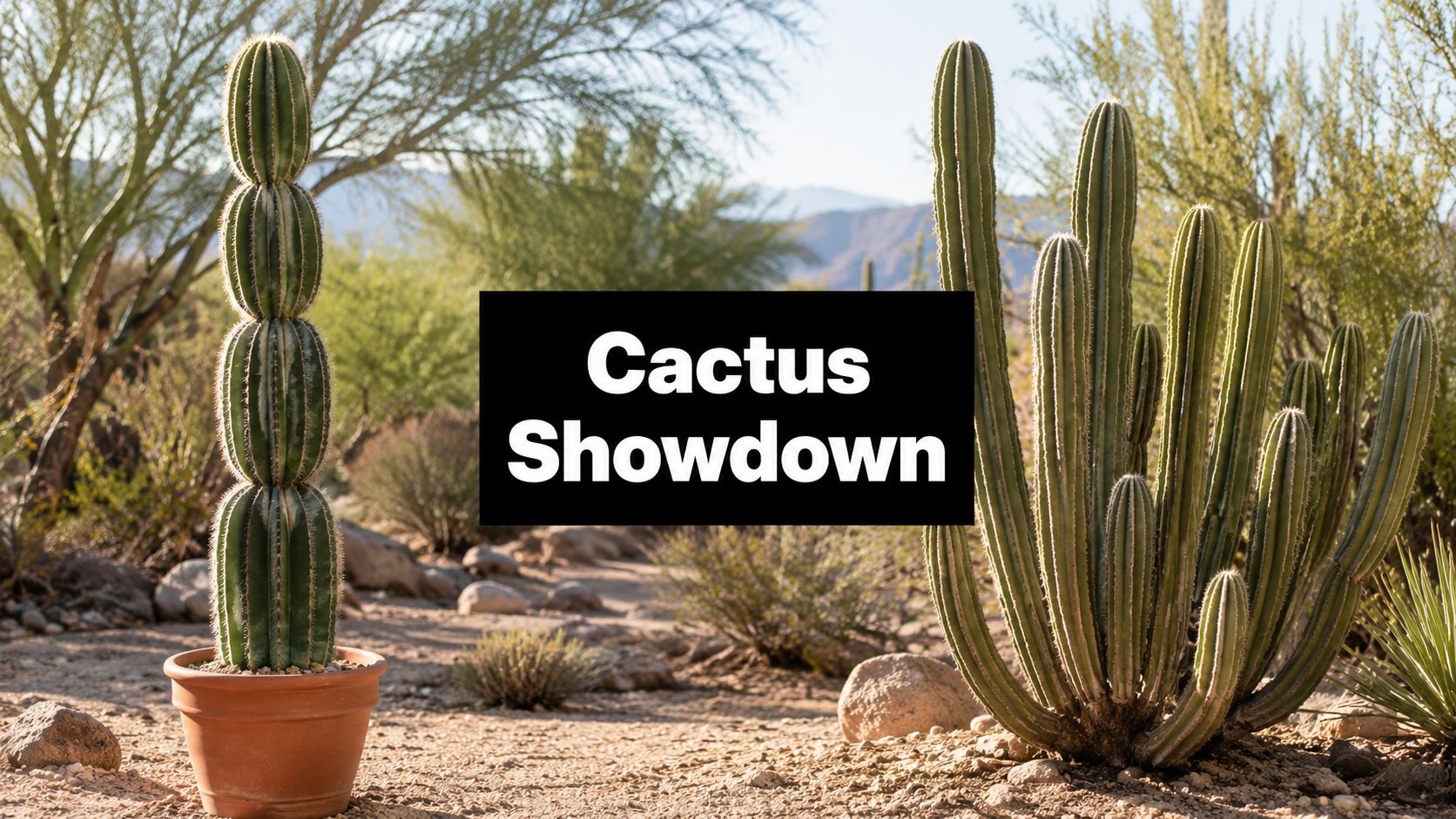

You're standing in a nursery aisle, or scrolling through an online cactus collection, trying to decide which tall column belongs beside your house. One plant promises sculptural, spineless character in a pot. The other grows into a branching desert statement that can eventually define an entire garden. In the Totem Pole cactus vs Organ Pipe cactus decision, the right choice depends less on which plant looks better and more on your winter temperatures, available footprint, and intended use.
The short version is simple. Choose Totem Pole cactus for a patio container, narrow courtyard, or portable specimen. Choose Organ Pipe cactus for open ground in a mild Sonoran-style climate, especially when you want a broad, multi-stemmed planting rather than one architectural column.
Which Column Cactus Fits Your Yard
Start with the site, not the plant name. A Totem Pole cactus, commonly identified as Lophocereus schottii f. monstrosus, suits buyers who want one sculptural column with minimal visual clutter. Its spineless, knobby surface works beside a modern patio, in a raised bed, or in a tight courtyard where a branching cactus would quickly feel oversized.
Organ Pipe cactus, Stenocereus thurberi, is a garden plant first. It forms a many-limbed columnar stand and needs open ground, strong sun, and room for its branches to develop. The species is strongly associated with the Sonoran Desert, and the National Park Service identifies it as the namesake cactus of Organ Pipe Cactus National Monument, established on April 13, 1937 to protect more than 330,000 acres of habitat in the United States. The National Park Service's plant profile also places its natural range in southwestern Arizona and northern Mexico, including Sonora, Sinaloa, and Baja California.
Match the plant to your winter
Use this practical filter:
- Choose Totem Pole if you need a container plant you can move under cover during a freeze.
- Choose Organ Pipe if your soil stays warm and unfrozen through winter and you have room for a permanent colony.
- Lean Totem Pole when your lowest winter temperature falls below the mid-20s Fahrenheit or your soil freezes.
- Lean Organ Pipe when you garden in a true Sonoran-style setting and want a living screen or broad focal planting.
Both cacti prefer full sun and sharply draining soil. Totem Pole handles bright filtered light better during acclimation, while Organ Pipe makes the strongest long-term showing in unobstructed exposure.
Nursery rule: If you're unsure whether the ground will freeze, buy the container-friendly Totem Pole rather than gambling on a permanent Organ Pipe planting.
For a deeper look at how columnar forms function in outdoor settings, see this guide to columnar cacti for landscaping. For shipping, choose a size that matches your climate and handling plan. Smaller rooted Totem Pole specimens are easier to move in cold regions, while larger plants belong in protected containers or warm, open-ground sites. Organ Pipe is best shipped and planted when you already have a permanent location prepared.
Totem Pole vs Organ Pipe at a Glance
Choosing between these cacti starts with the space you can offer. Totem Pole fits a specimen pot, courtyard, raised bed, or narrow side yard. Organ Pipe earns its place in open ground, where several upright stems can form a broad focal planting or screen.
Totem Pole is the unusual option, a spineless monstrose form of the senita cactus identified as Pachycereus schottii or Lophocereus schottii. Its ribless stems develop irregular knobs and bulges, giving the plant a melted, sculpted appearance. Choose it for texture and novelty rather than flowers.
Organ Pipe is the classic branching column cactus. Its ribbed stems rise from the base into multiple upright arms, creating the familiar Sonoran Desert silhouette. Its official nature profile distinguishes it from Pachycereus schottii through its taller, more branched form and ribbed stems.
| Trait | Totem Pole Cactus | Organ Pipe Cactus |
|---|---|---|
| Botanical identity | Spineless monstrose form of Pachycereus schottii or Lophocereus schottii | Stenocereus thurberi |
| Growth habit | Usually a single sculptural column, with limited branching | Multi-stemmed, upright colony branching from the base |
| Surface | Knobby, irregular, ribless, and spineless | Ribbed stems with sharper surface structure and spine clusters |
| Mature height | Commonly listed around 10 to 15 feet in cultivation, according to the University of Arizona Arboretum | Can reach about 23 feet, with some references documenting taller mature forms |
| Mature footprint | Often around 4 to 8 feet of spread, depending on form and planting | Broad clumps commonly reaching about 10 to 15 feet wide |
| Best placement | Specimen pot, courtyard, raised bed, or narrow side yard | Open ground, desert grouping, privacy screen, or acreage |
| Flowering | Rarely flowers in the totem pole form and doesn't produce fertile seeds | Tip-flowering column cactus that can produce flowers and fruit |
| Buying profile | Ornamental novelty and architectural specimen | Multi-stemmed desert statement and habitat-oriented plant |
Totem Pole is easier to position beside a walkway or pool because its form stays narrow and its surface lacks obvious spines. Leave room for its eventual width, and keep it where people will not repeatedly brush against the stems.
Organ Pipe needs a permanent site with more breathing room. Its branching base and expanding clump can overwhelm a small bed, so reserve it for an open planting rather than a forgotten corner.
The surface tells you which experience you're buying
Buy Totem Pole when year-round texture matters more than flowers. Its knobby stems provide strong structure in a container or specimen planting, while the absence of obvious spines suits entertaining areas. The Arizona-Sonora Desert Museum reference describes Totem Pole as a genetically stable monstrose mutation with irregular, knobby stems.
Buy Organ Pipe when you want a bold silhouette that reads from a distance. Its branching form creates vertical rhythm and works best as part of a larger open-ground composition. Choose Totem Pole for one sculptural statement. Choose Organ Pipe for a multi-stemmed stand.
Cold Hardiness and Climate Needs
Cold is the deciding factor for most buyers. Totem Pole is the safer selection when winter conditions are uncertain because a container gives you an escape route. You can place it outdoors through the growing season, then move it to a covered porch, bright indoor area, or protected structure when a hard freeze threatens.
Organ Pipe belongs in climates where the root zone remains reliably frost-free. Its natural association with the Sonoran Desert tells you what it wants: intense light, lean soil, and warm winter ground. A plant may tolerate a brief cold event above freezing soil, but a permanent outdoor installation becomes a poor bet when winter regularly brings hard frost.
Light, water, and soil
Give both plants strong light. Totem Pole accepts bright filtered light better than Organ Pipe, especially while a newly delivered specimen adjusts to your property. Organ Pipe should ultimately receive full sun so its upright stems retain the dense, strong growth that makes it valuable in an open-ground design.
Use a gritty mineral planting mix. Pumice, crushed granite, and a modest amount of organic cactus soil create the fast drainage these plants need. A slightly acidic to alkaline range around pH 6.5 to 8 is suitable for the soil blend, but drainage matters more than chasing a precise reading.
Water thoroughly, then let the soil dry completely. Organ Pipe becomes especially drought-adapted after establishment, while Totem Pole's container gives you tighter control over moisture. Neither plant belongs in persistently damp soil.
A winter rule you can follow
If temperatures can fall below about 25°F, protect the plant rather than relying on a guess. Totem Pole earns the edge because you can move it. Organ Pipe needs a warm, well-drained ground site and winter protection in marginal areas.
Use the recommendations in this cold-hardy cactus guide when comparing a column cactus with plants better suited to your local winter. Don't treat a warm-climate cactus as permanently hardy just because it handles summer heat. Heat tolerance and freeze tolerance are separate buying decisions.
Best Uses for Each Cactus
Totem Pole wins wherever you need a controlled vertical accent. Its irregular stems look deliberate against concrete, gravel, steel, or a brightly glazed container. Because it usually stays more columnar than Organ Pipe, it works in narrow side yards, raised beds, entry courts, and patio corners where every foot of spread matters.
A large Totem Pole also makes a strong poolside accent. Keep it far enough from active traffic that nobody bumps the stem, and choose a heavy container that won't tip as the plant grows. Its surface is spineless, but spineless doesn't mean indestructible. Position still matters.
Organ Pipe earns its place in open areas. Its branching habit creates a stronger visual screen than a single Totem Pole, although it should be treated as a long-term structural planting rather than an instant hedge. Use it beside gravel drives, around large desert gardens, or as an anchor among agaves, yuccas, barrels, and native shrubs.
Match the plant to the job
| Buyer Situation | Totem Pole Cactus | Organ Pipe Cactus |
|---|---|---|
| Small patio | Best pick. One sculptural column stays visually controlled in a large pot. | Usually too broad once branching develops. |
| Open desert yard | Strong as a specimen or repeated accent. | Best pick. Its multi-stemmed form fills open ground and creates a larger desert silhouette. |
| Cold-climate container | Best pick. Move it under cover during freezing weather. | Only practical with serious winter protection and a suitable container plan. |
| Poolside accent | Best pick. Spineless, sculptural, and easy to frame as a focal point. | Suitable only where the site has generous clearance and warm winters. |
| Privacy screen | Better as a repeated ornamental accent than a screen. | Best pick. Multiple upright stems create stronger visual mass over time. |
| Collector specimen | Best pick. The monstrose texture is the attraction. | Better for buyers who value branching habit and landscape presence. |
Organ Pipe can also support a habitat-oriented garden. Its flowers and fruit contribute more ecological interest than the rarely flowering totem pole form, but you should still select companion plants that provide the nectar, shelter, and seasonal resources local wildlife needs.
The commercial choice is straightforward. Buy Totem Pole for specimen value and placement control. Buy Organ Pipe for scale, branching, and open-ground impact.
Planting, Containers, and Acclimation
Arrival day is about stability, drainage, and light. Don't rush a newly shipped cactus directly into intense afternoon sun or water it immediately because the soil looks dry. Give the plant time to settle, inspect the stems for shipping stress, and prepare the final container or planting site before you disturb the root ball.
Totem Pole needs a tall, stable container with several drain holes. Deep unglazed terracotta or concrete works well for a top-heavy specimen because the container adds weight and allows moisture to escape. Use pumice, crushed granite, and a small amount of organic cactus soil. The guide to planting cactus in pots covers the container logic that matters most here, especially drainage and planting depth.
Organ Pipe can begin in a wider-footprint container or go directly into the ground when the climate is appropriate. In a planting bed, mound the backfill slightly so water moves away from the crown and roots. Both plants resent wet feet, so drainage should be designed before planting, not corrected afterward.

The first 90 days
- Arrival day: Keep the plant protected from harsh exposure while you check its condition and prepare the site.
- Soil preparation: Use a fast-draining mineral blend rather than moisture-retentive garden soil.
- First watering: Wait until the plant has settled, then water thoroughly only when the soil is fully dry.
- Sun acclimation: Increase exposure gradually over roughly two to three weeks to reduce the risk of epidermis burn.
- Fertilizer: Skip fertilizer during the first growing season while the plant establishes.
- Freeze protection: Cover new plants with frost cloth during events below about 25°F, especially before the stems have hardened to their new conditions.
The first season should feel conservative. A dry cactus can recover from delayed watering more easily than a wet cactus can recover from poor drainage.
Two Buyers, Two Right Choices
One buyer has a half-acre desert property in Tucson and wants a cactus that will become a nighttime-blooming anchor. She has open ground, full sun, and enough space for a multi-stemmed planting to develop into a substantial thicket. Organ Pipe is the clear choice because its branching structure fits her design goal, and its flowers and fruit offer more habitat value than a rarely flowering Totem Pole.
She orders a 15-gallon Organ Pipe cactus and plans a cluster of three plants spaced eight feet apart. That spacing gives each plant room to develop while preserving the visual relationship between the stems. She isn't buying a patio accent. She's buying the beginning of a permanent desert composition.

The second buyer gardens in a Zone 7 patio in Albuquerque. His side courtyard is narrow, the afternoon heat reflects from nearby walls, and his winter temperatures can reach 15°F. He wants one sculptural column in a glazed blue pot, not a spreading hedge.
Totem Pole is the responsible purchase. He selects a three-foot Totem Pole cactus, sets it in a heavy container, covers the soil surface with gravel, and moves it beside the wall during cold weather. When a freeze arrives, he drapes frost cloth over the plant. The container gives him control that an in-ground Organ Pipe wouldn't have.
The decision behind both purchases
Neither buyer chose the cactus with the more dramatic catalog photograph. Each matched the plant to climate, footprint, and intent. The Tucson buyer needed a permanent multi-stemmed garden anchor. The Albuquerque buyer needed a portable specimen that could handle a protected patio routine.
That's the useful lesson in this comparison. A cactus can be beautiful and still be wrong for your site. If you buy for the role first, the species choice becomes much easier.
Making the Final Call
Use three filters before you place an order: mature size, winter climate, and intended use. Ignore any one of them and you can end up with a plant that outgrows its space, suffers through winter, or fails to provide the effect you wanted.
Choose Totem Pole when you want a sculptural, spineless column for a patio pot, bright indoor corner, raised bed, or low-risk focal point in a warm desert setting. It's the better purchase for tight courtyards and buyers who need the option to move a plant during freezing weather.
Choose Organ Pipe when you have open ground, room for a multi-stemmed cluster, and a mild-winter site. It's the right answer for a long-term Sonoran-style setting, a broad desert grouping, or a privacy-oriented planting where one narrow column won't create enough visual mass.
Final buyer recommendation
| Your Situation | Best Pick | Why | Typical Price | Watch Out For |
|---|---|---|---|---|
| Patio specimen | Totem Pole | Sculptural, spineless, and easier to manage in a container | Verify current pricing with the nursery | Don't place it where people will brush against the stems |
| Narrow courtyard | Totem Pole | Its irregular column creates height without demanding a broad footprint | Verify current pricing with the nursery | Avoid planting it in poorly drained soil |
| Open warm-climate landscape | Organ Pipe | Multi-stemmed growth gives the yard stronger scale and structure | Verify current pricing with the nursery | Allow room for long-term spread |
| Privacy-oriented desert planting | Organ Pipe | Branching stems create more visual mass than one Totem Pole | Verify current pricing with the nursery | Don't treat it as a small patio plant |
| Freeze-prone region | Totem Pole in a movable container | Portability reduces winter risk | Verify current pricing with the nursery | Have a protected winter location ready |
| Collector specimen | Totem Pole | The monstrose, knobby surface is the main attraction | Verify current pricing with the nursery | Growth is slow and highly sculptural |
Avoid the two most common mismatches. Buyers choose Organ Pipe for a small patio, then discover that its eventual branching habit needs more room. Others choose Totem Pole for a privacy hedge, then realize that a single sculptural column won't provide the multi-stemmed mass they wanted.
Price varies by plant size, form, and current availability. Don't rely on unverified price bands for a large, heavy cactus. Tall specimens also require more careful delivery planning than small plants, so confirm the listed dimensions, container status, and shipping terms before checkout.
For the most direct purchase path, compare the Totem Pole cactus collection with the available Organ Pipe listing and select the plant that matches your site. If you need winter flexibility, prioritize a container-sized Totem Pole. If you have warm open ground and a long planting horizon, select Organ Pipe.
Shop The Cactus Outlet to compare large columnar cacti, including Totem Pole and Organ Pipe options, alongside other desert plants for patios and outdoor spaces. Choose your cactus by mature footprint and winter exposure first, then contact the nursery if you need help matching a specimen to your container or planting site.