

You're tired of replacing thirsty ornamentals, adjusting irrigation timers, and watching plants fail after the first brutal heat wave. A cactus planting can remove much of that routine, but only if you buy the right species for the site. The toughest-looking cactus isn't automatically the easiest one to establish beside a walkway, foundation, patio, or privacy boundary.
For most buyers, prickly pear, Opuntia spp., is the best low maintenance cactus for landscaping. It has a long record of use in public, commercial, private, and residential settings across Mexico and the southwestern United States, and its CAM photosynthesis helps reduce transpiration and improve water-use efficiency compared with conventional crops, as discussed in this research on Opuntia ficus-indica. The rest of the decision comes down to hardiness, mature footprint, drainage, spine placement, and whether you can buy a plant large enough to perform immediately.
Why a Cactus Might Be the Easiest Plant in Your Yard
A well-chosen cactus can cut routine work to occasional watering, inspection, and cleanup. For homeowners, prickly pear, Opuntia spp., is the safest starting point when the site has strong sun and fast drainage. Designers can use larger columnar forms as fixed architectural accents, while builders should favor durable, site-matched specimens that establish without constant correction. The Cactus Outlet's collections make it possible to shop by plant type and buy a specimen sized for the finished setting.
Start with the site, not the photograph. Cacti handle heat, lean soil, and extended dry periods, but wet roots, unsuitable cold, and misplaced spines create avoidable maintenance. Use these five filters before ordering:
- Climate: Match cold tolerance to local winter conditions. Cold-hardy Opuntia and Echinocereus varieties suit regions where tender desert columns would need protection.
- Mature size: Measure the planting bed and nearby circulation routes. Pads, arms, and offsets can extend into paths even when the original plant fits comfortably.
- Drainage: Avoid low spots and heavy soil unless you can rebuild the bed. Cactus roots need air as much as water.
- Spine exposure: Keep heavily armed plants away from doors, play areas, pet routes, and narrow walkways. A spineless or lightly spined selection often makes the better household purchase.
- Available size: Choose between an instant focal point, a developing screen, and smaller accents. Larger specimens cost more than starters, but they provide structure sooner.
Nursery rule: Buy for the plant's mature silhouette and site conditions, not for the photograph that first caught your eye.
Prickly pear remains the strongest general recommendation because it combines recognizable form, drought adaptation, and broad use in residential and commercial plantings. If you want the biological background, read this guide to how cacti survive in the desert. Then select from The Cactus Outlet collection according to the buyer's priority: Opuntia for a homeowner-friendly, adaptable focal plant, structured columns for a designer's composition, or substantial specimens for a builder who needs immediate visual weight.
The easiest cactus is the one that fits its site from the start. Choose mature form, drainage, climate fit, and safe placement before choosing color or drama.
What Low Maintenance Really Means for a Cactus in Your Yard

“Low maintenance” describes the work a plant demands after installation, not merely its ability to survive a dry photograph. An easy cactus needs infrequent irrigation after establishment, little or no shaping, a realistic climate match, and a mature form that stays clear of paths and structures.
Water and drainage come first
Cacti and succulents suit low-water plantings, and conservation guidance notes that many cacti can receive water about every two weeks in summer under independent conservation guidance. Treat that interval as a starting point, not a fixed prescription. Soil, rainfall, humidity, plant size, season, and drainage determine the actual schedule.
Wet soil turns an easy plant into a recurring problem. During establishment, water thoroughly, then let the soil dry completely before watering again. After roots develop, shift to deep, infrequent irrigation. Colorado State University's winter-hardy cactus guidance reinforces the same priority for cold sites: build drainage into the planting area before relying on a species label.
Pruning, climate, and form
Choose a cactus that holds its shape without annual sculpting. Nevada Extension describes desert cacti and similar succulents as requiring minimal pruning, usually limited to dead or damaged tissue, spent flower stems, or hazardous spines. Its pruning guidance also warns that topping columnar cacti damages their natural form and may create entry points for disease.
Use this checklist before buying:
- Hardiness: For cold sites, select plants rated for the local conditions rather than assuming every cactus tolerates winter.
- Sun: Most outdoor cacti need full sun. Acclimate plants moved from shade before exposing them to intense light.
- Humidity: Fast drainage matters more where summer humidity or rainfall persists.
- Form: Match barrels, upright columns, or clumping pads to the plant's mature spread.
- Traffic: Spines beside paths create a safety and maintenance problem, even when the plant grows easily.
Homeowners should favor forgiving forms and safe placement. Designers can prioritize a clean silhouette, while builders should choose specimens that tolerate the site without repeated reshaping. For winter exposure, loose soil, full sun, and excellent drainage remain the deciding setup details, often mattering more than a dramatic species with poor cold performance.
Top Picks at a Glance for Low Maintenance Cacti for Your Yard
Choose by buyer and project, not by a generic winner. Homeowners need forgiving plants and manageable placement. Designers need repeatable form and strong visual structure. Builders need specimens that install predictably and do not require regular reshaping.
Use this shortlist to decide where to shop at The Cactus Outlet. Confirm the current product listing before ordering, especially for mature dimensions, cold tolerance, and available specimen size.
Quick Buyer Guide
| Species | Ideal Outdoor Use | Buyer Type |
|---|---|---|
| Prickly Pear, Opuntia spp. | Xeric beds, slopes, mass planting, or informal barriers | Homeowner |
| Texas Barrel, Ferocactus hamatacanthus | Cold-tolerant barrel accent or rock garden feature | Homeowner |
| Golden Barrel, Echinocactus grusonii | Courtyard, entry bed, or geometric accent | Designer |
| Argentine Giant, Echinopsis candicans | Large sculptural focal point | Designer or homeowner |
| Mexican Fence Post, Pachycereus marginatus | Repeated boundary planting or privacy screen | Builder |
| Saguaro, Carnegiea gigantea | Signature vertical focal point | Designer |
| Blue Myrtle, Myrtillocactus geometrizans | Blue-toned columnar composition | Designer |
| San Pedro, Trichocereus or Echinopsis pachanoi | Tall accent for a suitable warm-climate site | Homeowner or designer |
Homeowners: Start with the Prickly Pear collection when you need durable spread and seasonal flowers. Choose Golden Barrel for a contained accent with a formal outline, or Texas Barrel when the site calls for a barrel form with broader climate utility. Use the desert plant care guide from Planet Desert to review general care considerations before purchase.
Designers: Argentine Giant and Golden Barrel provide the clearest sculptural presence. Blue Myrtle adds a cooler color note, while Saguaro or San Pedro supplies height where the climate and site allow it. Check the large cactus collection when the composition depends on a substantial specimen.
Builders: Mexican Fence Post is the practical starting point for repeated vertical structure. Prickly Pear suits broader, lower installations where mass matters more than a strict line.
For the least ongoing shaping, select a mature form that already fits the intended placement. Confirm the exact listing, then buy from the collection that matches the project rather than forcing one species into every setting.
Detailed Profiles of the Best Low Maintenance Cactus Species
Choose the cactus around the buyer and the site, not around a generic drought-tolerance label. Homeowners need forgiving placement and manageable upkeep. Designers need form, color, and scale. Builders need repeatable structure that establishes cleanly across a project. The Cactus Outlet collections make that match straightforward.
Prickly Pear, Opuntia spp.
Best overall choice. Prickly Pear is the dependable pick for homeowners who want broad coverage and for designers building layered beds. Its pads create horizontal mass, while flowers and seasonal color changes keep a large planting from looking static. It also fills slopes and open ground without demanding formal shaping.
The main placement issue is spine and glochid exposure. Keep it away from narrow walkways, children's play areas, and locations that require frequent pruning. Give it room to spread, then confirm the exact species because cold tolerance varies widely within Opuntia. Shop the Prickly Pear collection when the project needs durable mass rather than a single focal specimen.
Argentine Giant, Echinopsis candicans
Argentine Giant fits a homeowner or designer seeking a substantial sculptural plant with a pale, clumping profile. It anchors gravel beds, frames a modern wall, and provides strong form without the visual density of a shrub. Use it where the plant can be viewed from a distance, because its scale carries more impact than its individual stems.
Reserve a position with full sun, fast drainage, and enough clearance for clumping. Do not squeeze it beside a foundation or narrow service route. Confirm the current product information for the listed specimen before ordering, especially when the project depends on a particular mature form. The large cactus collection is the practical place to compare substantial options.
Golden Barrel, Echinocactus grusonii
Golden Barrel is my first recommendation for formal courtyards, entry beds, and compact rock gardens. Its rounded geometry gives a planting immediate order and pairs well with tall columns, blue-gray foliage, dark stone, and angular boulders. It suits homeowners who want a contained accent and designers who need repeated units with a consistent visual rhythm.
The spines determine its placement. Set it where visitors can appreciate the form without brushing against it, and avoid tight turns beside paths. The reference lists Golden Barrel for zones 9, 10, 11, and 12, with a mature size of about 2 feet tall and 2 feet wide in its Golden Barrel profile. Use the Golden Barrel cactus collection to compare available specimens.
Saguaro, Carnegiea gigantea
Saguaro is a statement specimen for a designer, collector, or homeowner with a warm climate, open ground, and a long-term plan. Its branching silhouette supplies unmistakable desert architecture against an uncluttered wall, broad gravel field, or generous entry approach. It should stand alone or with restrained companions so its outline remains the focal point.
This is a poor choice for cramped yards and marginal climates. Place it where future access, lighting, and utilities will not force relocation. The referenced profile places it in zones 10 and 11 and describes a mature form capable of major height over a very long life in the Saguaro reference. Shop Saguaro cacti for sale only after confirming local conditions and the installation position.
Mexican Fence Post, Pachycereus marginatus
Mexican Fence Post is the builder's most useful repeated column. Plant several in a deliberate line to create a boundary, entry rhythm, or privacy screen with a clean architectural character. It also works for homeowners who want vertical structure without the spread of a shrub mass.
Spacing is the detail that prevents future trouble. Leave room for mature stems and keep maintenance access outside the planting line, rather than placing columns directly against walls or gates. The same plant reference lists it for zones 9 to 11 and describes mature plants reaching up to 15 feet in its Mexican Fence Post profile. Compare specimens in the Mexican Fence Post collection when the project requires multiple matching plants.
Blue Myrtle Cactus, Myrtillocactus geometrizans
Blue Myrtle earns a place in designer palettes because its blue-gray color changes the composition as much as its height. Set it beside Golden Barrels, agaves, dark stone, or warm-toned walls to introduce contrast without adding flowers or decorative structures. Its columnar form is particularly effective in modern planting schemes with repeated shapes.
Choose it for a warm, well-drained site rather than for uncertain winter conditions. Wet-season exposure deserves the same attention as cold, since poor drainage can undermine an otherwise simple planting. Confirm the current listing before purchase, then start with the Blue Myrtle cactus collection.
San Pedro, Trichocereus or Echinopsis pachanoi
San Pedro gives homeowners and designers a clean upright accent for warm-climate yards, courtyards, and large containers. It supplies height without the branching complexity of a Saguaro and works well against walls, beside broad steps, or within a restrained gravel composition. Builders can use it as a single architectural accent where a repeated fence line would feel too rigid.
Keep it away from busy paths and locations where falling objects or routine access could cause contact. Strong light, drainage, and careful establishment support matter more than decorative gravel around the base. Verify the current product details for the specific specimen, including mature size and climate suitability, before ordering. Review the San Pedro cactus collection.
Detailed Cactus Species Comparison
| Species | Mature Size | Cold Hardiness | Best Yard Use | Cactus Outlet Collection |
|---|---|---|---|---|
| Opuntia spp. | Species-dependent | Species-dependent | Massing, slopes, xeric beds | Prickly Pear |
| Echinopsis candicans | Listing-dependent | Listing-dependent | Sculptural anchor | Large Cactus |
| Echinocactus grusonii | About 2 feet tall and 2 feet wide | Zones 9 to 12 | Formal accent | Golden Barrel |
| Carnegiea gigantea | Listing-dependent | Zones 10 to 11 | Vertical focal point | Saguaro |
| Pachycereus marginatus | Up to 15 feet tall | Zones 9 to 11 | Privacy boundary | Mexican Fence Post |
| Myrtillocactus geometrizans | Listing-dependent | Listing-dependent | Blue-toned composition | Blue Myrtle |
| Trichocereus pachanoi | Listing-dependent | Listing-dependent | Warm-climate column | San Pedro |
Planting and Establishing Your Yard Cactus

A cactus can arrive healthy and still fail if its planting hole stays wet or the plant moves straight from protected shipping conditions into severe afternoon sun. Handle delivery, planting, and acclimation as one process.
Prepare before delivery
Choose full sun, with protection from intense reflected heat where needed. A raised bed or mound is safer than a flat depression, especially in clay soil or rainy climates. Build drainage through the entire planting area. Decorative gravel cannot correct compacted soil underneath.
University of California guidance calls for very limited watering immediately after planting, followed by thorough watering after active roots form at about 4 to 6 weeks. Let the soil dry completely before the next irrigation, as explained in its cactus establishment guidance. Nevada Extension recommends placing cacti in low-water irrigation zones, where established plants can live without extra water, in its landscape placement guidance.
Handle the plant on arrival
Inspect the specimen before moving it. Firm tissue, natural coloration, callused cuts where applicable, and roots free of slime or collapse indicate a sound arrival. Photograph the box, plant, roots, and any damage immediately if something looks wrong.
Set tall columns securely. Use temporary support only when the plant needs help staying upright. Do not bury the stem to straighten a leaning specimen. Keep the root flare at the correct level, so the roots receive support without trapping moisture around the stem.
For a broader outdoor routine, follow this guide to plant succulents outside. If the cactus sits beside turf or adjoining beds, The Green Advantage post care guide helps coordinate irrigation, inspection, and care across the installation.
Watch the planting demonstration before the delivery truck arrives:
Common Problems and How to Prevent Them
“Plant it and forget it” is how costly specimens fail. Cacti need less care than thirsty ornamentals, but poor drainage, abrupt sun, and unsuitable cold can damage a plant quickly.
Rot starts below the soil line. Shallow planting, buried stems, organic mulch, and sprinklers aimed at the trunk keep the root zone wet. Set the root flare above grade, top-dress with inorganic material, and wait until the soil is fully dry before deep watering. Do not correct a leaning column by burying more stem.
Sunburn often appears after a nursery-grown cactus moves into intense western light. White or bleached patches signal exposure stress. Start the plant in filtered light, then increase direct sun gradually. Temporary shade protects valuable specimens during that adjustment.
Cold injury follows a mismatch between species and site. Choose a cactus suited to the property's winter conditions, give it fast drainage, and protect marginal plantings with frost cloth or a sheltered wall. Cold tolerance does not protect roots sitting in wet soil.
Inspect pad joints, dense growth, and the stem base for mealybugs and scale. Remove isolated pests before they spread, and keep affected plants apart from clean specimens. Stem splitting usually follows uneven watering, especially after a long dry period ends with a heavy soak. Resume watering gradually and keep the trunk dry.

Document problems early: Photograph discoloration, soft tissue, pests, broken stems, damage, and packaging before discarding shipping materials. Clear records make acclimation and guarantee questions easier to resolve.
Design Ideas and Placement Tips for a Cactus Landscape
A cactus layout looks expensive when each plant has a job. Use low, spreading forms to hold the foreground, rounded barrels to provide punctuation, and columns to establish height or privacy.
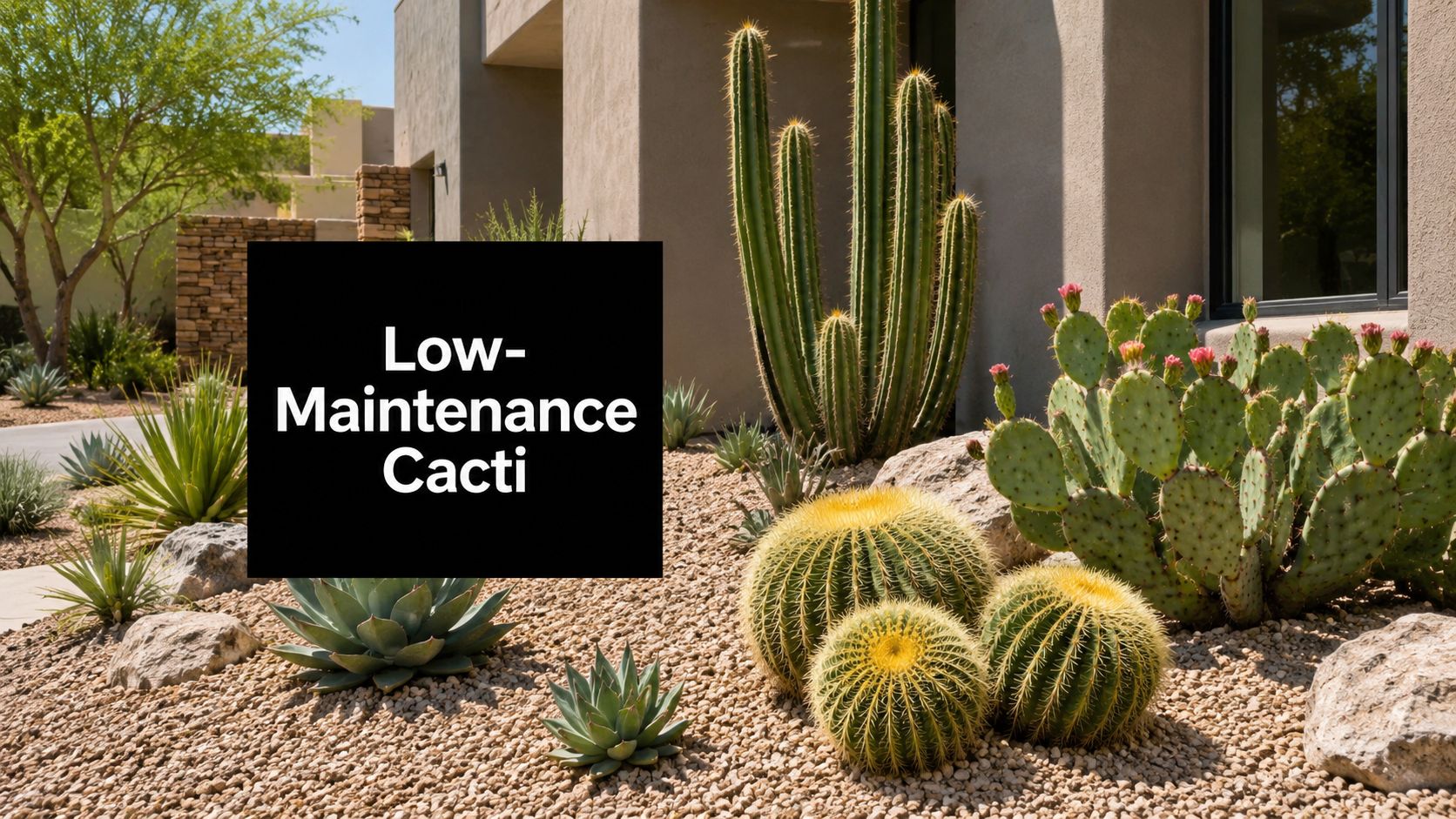
For a front-yard xeric bed, combine prickly pear with Golden Barrel. The pads create broad texture while the barrel supplies a compact geometric counterpoint. Keep heavily spined plants away from the front door and narrow access routes, and leave room for mature spread rather than filling every open patch on installation day.
A Saguaro or Cardon works as a sculptural anchor against a blank wall or open gravel field. Mexican Fence Post is the better selection when the goal is a living boundary. A staggered row can define a side yard, but spacing must follow the specimen's mature form and the site's access requirements. Don't treat a thorny line as a substitute for a code-compliant fence where local rules require one.
Cold-hardy Opuntia can work behind boulder retaining walls and on slopes where its clumping habit helps visually connect soil and stone. In cold regions, raised terrain and loose soil improve winter prospects, while placement near a south- or west-facing wall may increase reflected heat and sunscald risk. Move the planting line far enough from the wall to avoid prolonged scorching.
Keep cactus at least two feet from foundations, walkways, and play areas as a practical placement buffer. For a deeper business-oriented look at turning planting and maintenance knowledge into services, see find landscaping business ideas.
Use this final design check before ordering:
- Define the purpose: Accent, privacy screen, erosion control, or container display.
- Confirm mature spread: Measure the available bed and access route.
- Verify exposure: Check sun, reflected heat, wind, humidity, and winter cold.
- Match the plant: Choose a specimen whose mature form won't require annual pruning.
- Plan maintenance access: Leave room to inspect, irrigate, and remove damaged tissue safely.
Sourcing and Buying Large Cacti for Your Yard Online
Buying a large cactus online starts with the planting site. Measure the space, confirm the local climate, check county rules for shipping live cacti, and prepare the planting hole before delivery.
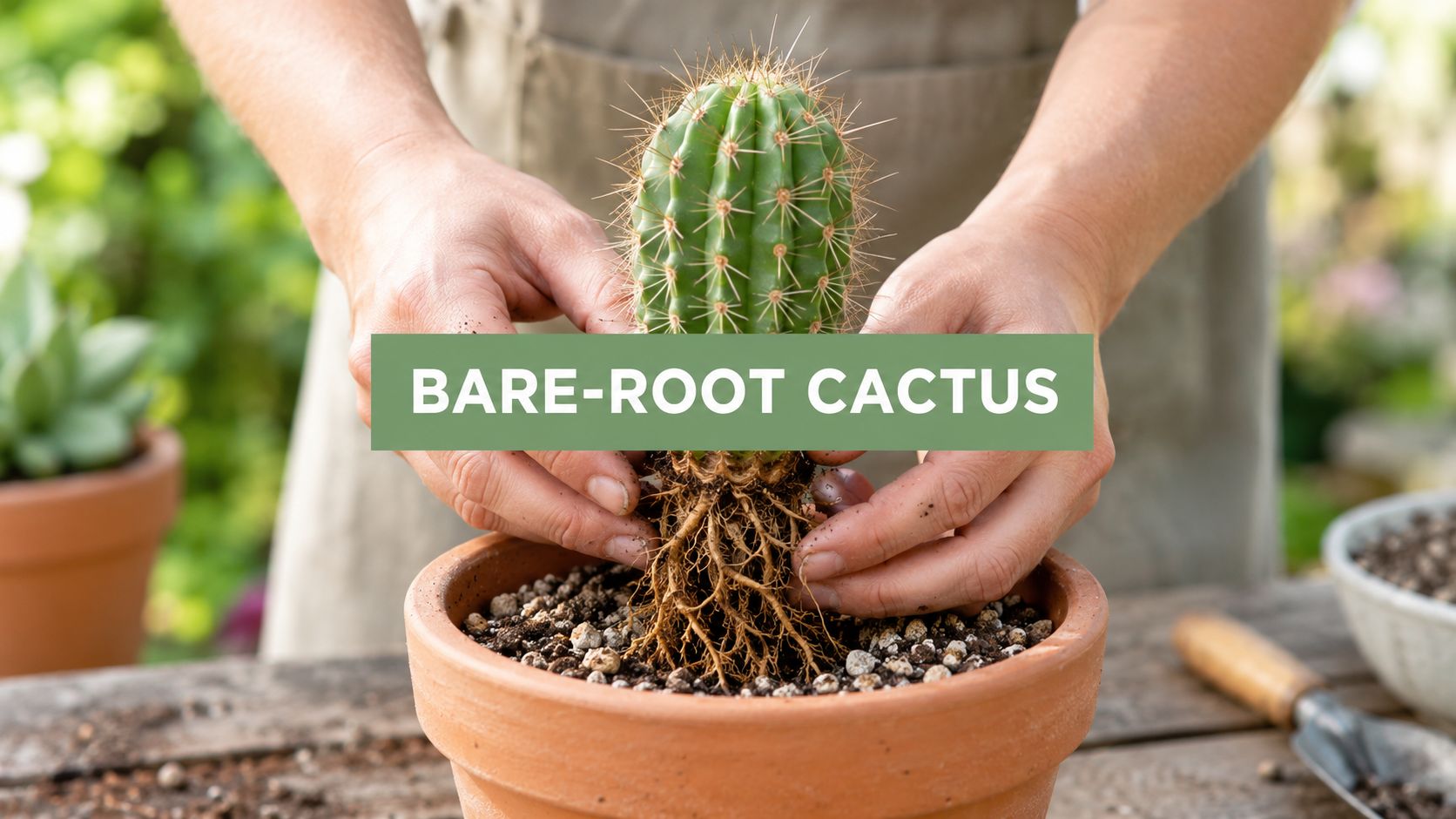
Ask whether the specimen ships bare-root or in another ready-to-plant format. Confirm how tall columns are protected during transit and what planting instructions accompany the order. Product pages should provide current height, trunk caliper where relevant, mature footprint, and USDA hardiness so you can compare specimens accurately. Review this large cactus buying guide before comparing individual listings.
Delivery requires planning. Arrange help for tall plants, clear the route from the truck to the planting area, and prevent rolling, dragging, or prolonged exposure. Patio buyers should select a container with a drainage hole and keep the pot out of saturated runoff. Container-grown cacti may need more regular fertilization than plants in the ground, as noted in this container guidance for cacti.
Before checkout, verify the exact plant, current dimensions, destination restrictions, drainage plan, planting location, and supplied care information.
The Cactus Outlet offers large cacti and yard-ready specimens for xeric beds, privacy screens, focal points, patios, and containers. Visit The Cactus Outlet to compare Prickly Pear, Golden Barrel, Saguaro, Mexican Fence Post, and other collections, then select a plant that suits your site rather than settling for a starter specimen.