

You're probably standing in a half-finished patio, a bare side yard, or a front entry that needs something with real presence, not another forgettable nursery pot. That's the right moment to buy large cactus online, because the purchase isn't really about a plant. It's about choosing a living architectural asset that has to survive shipping, fit the space, and settle into the right climate window without turning into a refund conversation.
The mistake most buyers make is treating a big cactus like a small impulse buy. It isn't. A tall specimen has weight, height, root mass, and shipping stress, and those details matter more than the hero photo on the listing page. The good news is that the decision gets much easier when you judge every listing by four things, species fit, seller credibility, packaging method, and post-delivery establishment.
What You're Really Buying When You Order a Large Cactus
A homeowner usually starts here: one empty corner, one finished patio, and a phone full of cactus listings. The pictures all look clean, the plants all look sculptural, and the temptation is to compare them like decorative objects. That's the wrong frame.
A large cactus is closer to shipped furniture than a 4-inch nursery pickup. You're paying for a specimen that has to travel with its structure intact, survive a change in environment, and still look good once it's installed. The Cactus Outlet describes the plant-commerce market itself as having been valued at about USD 5.18 billion in 2023, rising to USD 6.85 billion in 2024 and projected to reach USD 15.08 billion by 2031. That growth matters because it explains why large cacti are no longer an offline-only specialty item, and why better listings now need precise dimensions, pot size, plant age, and multiple photos to make sense of what's being sold. The retailer's own example is blunt, a 10-year-old Saguaro and a 2-year-old Peruvian Apple cactus can look similar in size while representing very different horticultural investments. The Cactus Outlet's buying guidance is useful for that reason.
What the listing is really selling
The photo is the least important part. The product is the combination of size, origin, shipping method, and survivability. If a seller won't tell you how the plant will be packed or where it's coming from, you're not evaluating a specimen, you're gambling on a box.
Practical rule: if the listing doesn't explain what happens between the nursery and your driveway, it's not a serious large-cactus offer.
That's why the rest of this guide stays practical. Every smart purchase should answer the same four questions, does the species suit the site, does the seller look legitimate, can the plant survive the trip, and can you establish it after delivery without forcing it into shock. If a listing fails on any one of those, keep scrolling.
Choosing the Right Species and Mature Size
Start with the site, not the cactus. An indoor statement plant, a patio container specimen, and an in-ground focal point are three different jobs, and they do not need the same plant size or shape at delivery. A cactus that looks dramatic in a search result can be wildly wrong for the place you want it to live.
Match form to use case
For indoor spaces, look for compact vertical growth that can hold a corner or foyer without swallowing the room. For patio containers, you want a bold focal point that still reads as a container plant, not a miniature tree. For in-ground landscaping, the plant needs room to spread and enough sun and heat to perform over time. Columnar cacti work when you want height and a narrow footprint. Barrel types read as heavy, architectural anchors. Pad-forming types make more sense when you want width, texture, and a more sprawling desert look.
The delivery size and the mature size are not the same thing, and buyers get burned when they confuse them. A plant that arrives at a manageable shipment height may eventually become a much larger outdoor feature, which is exactly what you want if you're planning ahead. If you're buying for a colder region, the hard rule is simple, match the plant's cold tolerance to your USDA zone and your planting method, and don't assume a cactus that survives in a sheltered container will handle the same conditions in open ground.

Use the space, not the photo
A good listing should help you decide whether the plant belongs in a room, on a terrace, or in a bed. If the seller only shows the cactus in one glamorous angle, assume the rest is missing. If they show dimensions, pot size, and multiple angles, you can start matching the plant to your site instead of guessing.
A decent decision rule is straightforward.
- Indoor statement plant: choose a specimen that gives you presence without blocking circulation or light.
- Patio container specimen: choose one that will look deliberate in a pot and won't dominate the whole deck.
- In-ground anchor: choose the plant for long-term structure, not for immediate visual payoff alone.
That logic keeps you from overbuying a giant body with no place to go, or underbuying something that disappears once it's installed. If you're also planning the rest of the garden layout, the plant has to work with paving, seating, wind exposure, and irrigation, not just with a listing photo. For broader composition choices across cacti, agaves, aloes, and succulents, AI templates for home garden brands can be useful if you're building a visual concept board before you commit.
Comparing Total Landed Value Instead of Sticker Price
A cheap listing can cost more once the box arrives. A low sticker price may hide weak inventory, inflated shipping, or a cactus that shows up too small, too stressed, or too different from the photos to use. Buy on total landed value, which means the plant, the freight, and the odds that it survives long enough to earn its place.
The cleanest buying lesson comes from That audit. In a 2024 multi-state audit of plant retailers, only 11 of 32 nurseries and retailers consistently offered large indoor cactus specimens under USD 20, and 7 of those 11 were brick-and-mortar only, which shows how thin the online bargain bin is. The same audit found that 18% of sampled Dollar Tree stores in Arizona, Texas, New Mexico, and Florida carried 12 to 16 inch golden barrel cacti priced at USD 12.99, while 92% of 217 Amazon listings tagged “large cactus under $20” were misrepresented seedlings, stock-image listings, or low-credibility sellers. Etsy did better on size and health, but 81% still ended up at USD 24 to USD 38 after shipping or handling fees. Sticker price is a lure. Landed value is the actual number.
Sticker price vs total landed value
| Listing | Plant Price | Shipping | Realistic Arrival Condition | Effective Cost If Replaced |
|---|---|---|---|---|
| Marketplace bargain | Low on the page | Often added later | Frequently undersized or misrepresented | High, because you may replace it |
| Specialist listing | Higher upfront | Usually easier to evaluate | More likely to match the listing | Lower, if the plant arrives usable |
| Local retail pickup | Usually visible before purchase | Minimal or none | You inspect it yourself | Lowest risk of surprise |
The question is simple. Which listing leaves you with a usable cactus after freight, handling, and failure risk are counted? A slightly larger specimen from a specialist usually wins because you are paying for less uncertainty. The listing page may be louder, but the better buy is the one that still makes sense after the box is opened.
If you are building product pages or comparing sellers for a garden client, use a structure that forces the numbers to stay honest. These cactus buying guides help keep the discussion on size, shipping, and placement instead of vague marketing copy. For broader layout work, AI templates for home garden brands can help you organize the comparison before you commit to a purchase.
Checking Seller Credibility Before You Pay
Trust signals beat pretty photos every time. If you're buying a large cactus online, you need proof that the seller handles live plants at scale, not just resale inventory with a nice website. The quickest filter is documentation.
A reliable seller should be willing to share a public nursery or license record, a physical address that matches a state business registry, species-specific photos, and propagation or compliance paperwork. Sellers who refuse any of those are higher risk for mislabeled stock, rot, and pest introduction in live-plant shipping. That isn't a soft preference, it's the basic gatekeeping you want before money changes hands. The seller checklist guidance is direct on that point.
Three questions worth sending before checkout
Ask these before you pay.
- Can you send your nursery or license record? If they can't produce it, you're dealing with a weaker paper trail.
- Does your physical address match a state registry? If the address is vague or inconsistent, pause.
- Can you send species-specific photos and origin paperwork? If they only send generic photos, you still don't know what you're buying.
Walk-away rule: if the seller won't disclose propagation dates, soil composition, or origin documentation, don't force the sale.
That last point matters because evasive answers usually show up before bad plants do. A seller who acts defensive about paperwork often acts the same way when there's a claim. If you want a fuller breakdown of how reputable cactus sellers present themselves, the page on where to buy cactus online is worth a look because it frames the question around total value, not just product pages.
Understanding Shipping and Packaging for Tall Plants
A tall cactus can look fine on a listing and still arrive damaged if the seller treats it like a normal parcel. Once a plant gets heavy and top-biased, shipping becomes a stability problem, not a box problem. You are buying a living plant asset that has to survive transit and still establish after delivery, so packaging quality affects the value of the order.
Bad weather makes that risk worse fast. Buyer guidance says to avoid shipping windows below 25°F or above 95°F ambient, because extreme temperatures are a common reason large cactus shipments fail before they reach the porch. That shipping guidance matches what experienced operators already know. Cold shock and heat stress can ruin a cactus before you even cut the tape.
What good packaging requires
A seller has to keep the plant from shifting, tipping, rubbing, or overheating in transit. For tall columnar specimens, that means strong bracing and a box that blocks side-to-side impact. For broader or pad-forming plants, the packaging has to protect edges, spines, and joints from crushing.
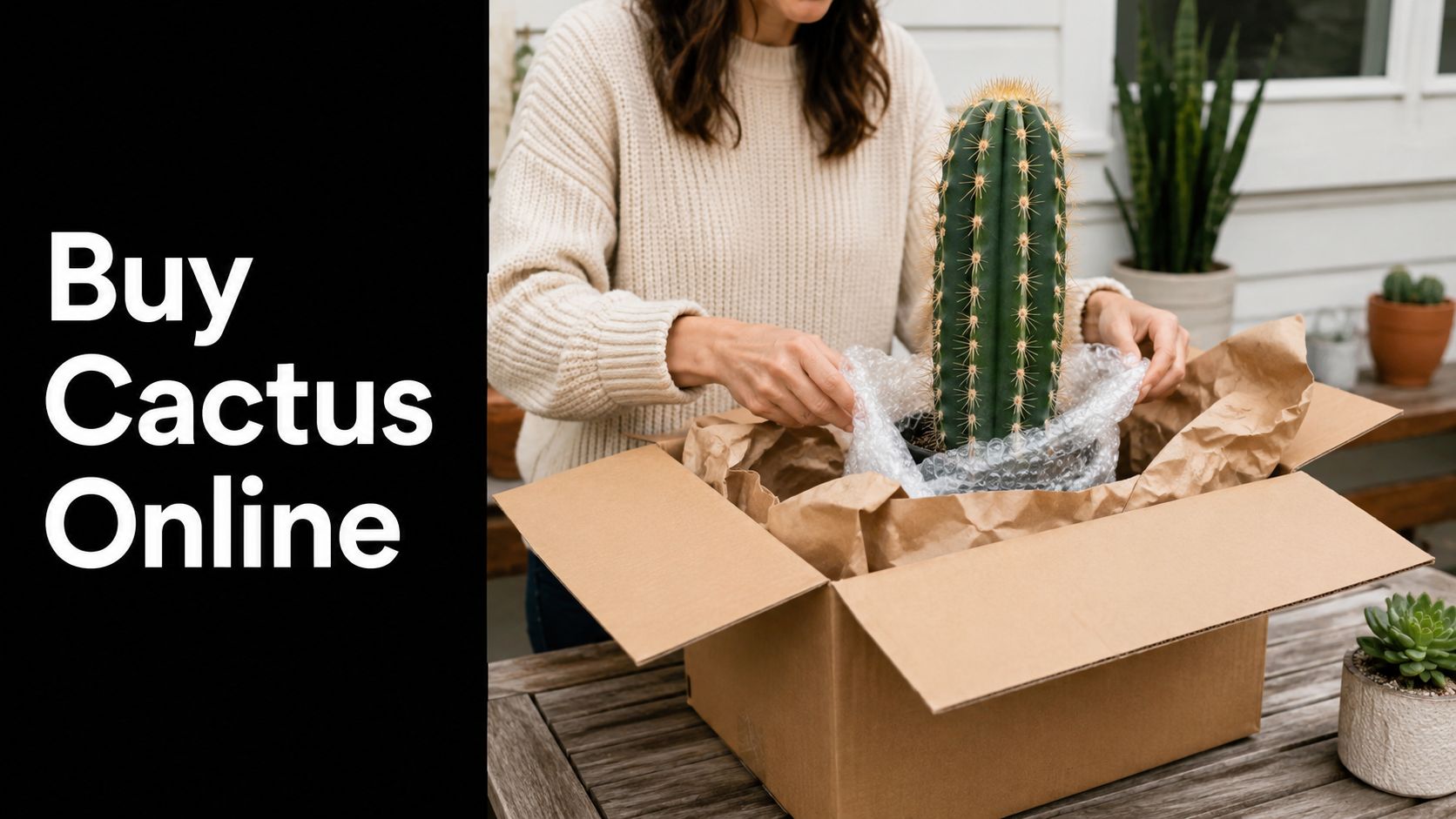
Ask how they pack it. You want a clear answer on whether the plant ships in a reinforced box, whether the pot is stabilized, and whether the crown is shielded from abrasion. If the seller gives you a vague answer, treat the shipping policy as weak too.
The right buying move is to match the order to your weather window, not your excitement level. If your region is heading into a heat spike or freeze risk, wait. A cactus that arrives intact after a clean shipping window is a better asset than one forced through ugly conditions because the listing looked appealing that week. For policy details, check The Cactus Outlet shipping and returns page before you buy.
Inspecting Your Cactus on Arrival
The moment the box lands is not the time to celebrate. It's the time to inspect. Large cactus claims are won or lost in the first hour, and if you document the plant properly, you'll know whether you received a healthy specimen or a problem you need to report.
Open the package, set the plant in good light, and check the roots, stem base, and hidden crevices in that order. The technical workflow is simple, roots should be white-to-tan and firm, the stem base should be solid rather than spongy, and the soil should be dry. Then inspect crevices and spine bases with magnification for pests like mealybugs or scale. Sellers that refuse to disclose propagation dates, soil composition, or paperwork tend to create trouble before the plant is even unboxed, so this check matters.

Run the receipt check like a claims folder
Take timestamped photos of the box, the packing materials, the entire plant, and any obvious damage before you move it. If there's a crushed pad, a split rib, or a torn root ball, photograph it immediately from multiple angles. That record is what protects you if the seller's guarantee or return policy comes into play.
The important part is to stay clinical. Don't water the plant because you feel sorry for it. Don't bury a soft base to hide it. Don't assume it'll “perk up” if the stem is already compromised. The plant should pass the inspection first, then enter establishment. For a visual example of arrival handling, the embedded delivery-check workflow below is the kind of process buyers should mimic in their own yard.
Establishing the Plant After Delivery
A large cactus can look perfect on arrival and still fail in the next few weeks if you rush the setup. The plant is stressed, the roots need time to settle, and eager watering or an early repot can do more harm than the shipment itself. The first month is about restraint and clean decisions.
If the cactus has any cut surfaces, let them callus for at least 2 weeks in a bright, ventilated, dry location. After potting, keep it completely dry for about 4 to 8 weeks until roots begin to form. Water only when the cutting resists a gentle tug or shows new top growth. That is the signal that matters, not the calendar. For the setup sequence, the post on how to repot cacti gives the right repotting order and aftercare.
Light and water need a slow ramp
A newly delivered cactus should not go straight from a shipping box into harsh sun. Bright light helps it recover, but sudden exposure is how you get scorch on a plant that has not settled yet. Start it in a protected spot, then increase exposure gradually until it matches the final site.
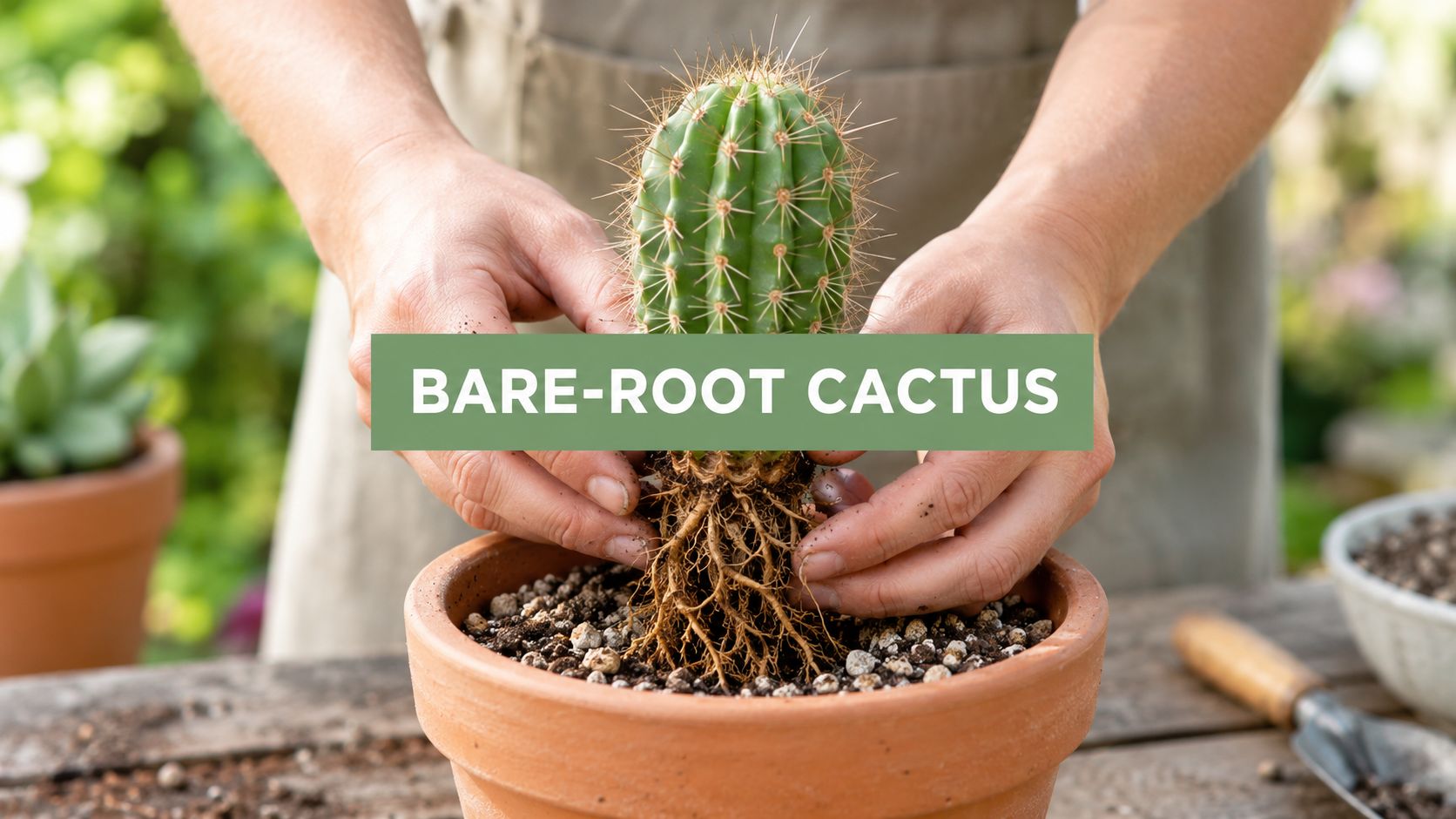
Water should follow the same logic. Dry roots handle transport better than wet ones, and a cactus that has just been moved needs time before it can use moisture well. If the root system is intact, wait for clear signs of recovery before watering. If the plant was bare-rooted or has fresh cuts, be stricter and keep it dry longer.
Once the plant is stable, place it where the mature size, climate, and visual role all make sense together. A bad site turns a healthy cactus into a maintenance headache. A good site gives you a living structure that earns its keep. That is the true value of buying a large cactus for the yard, not just a plant that looks impressive in the box.