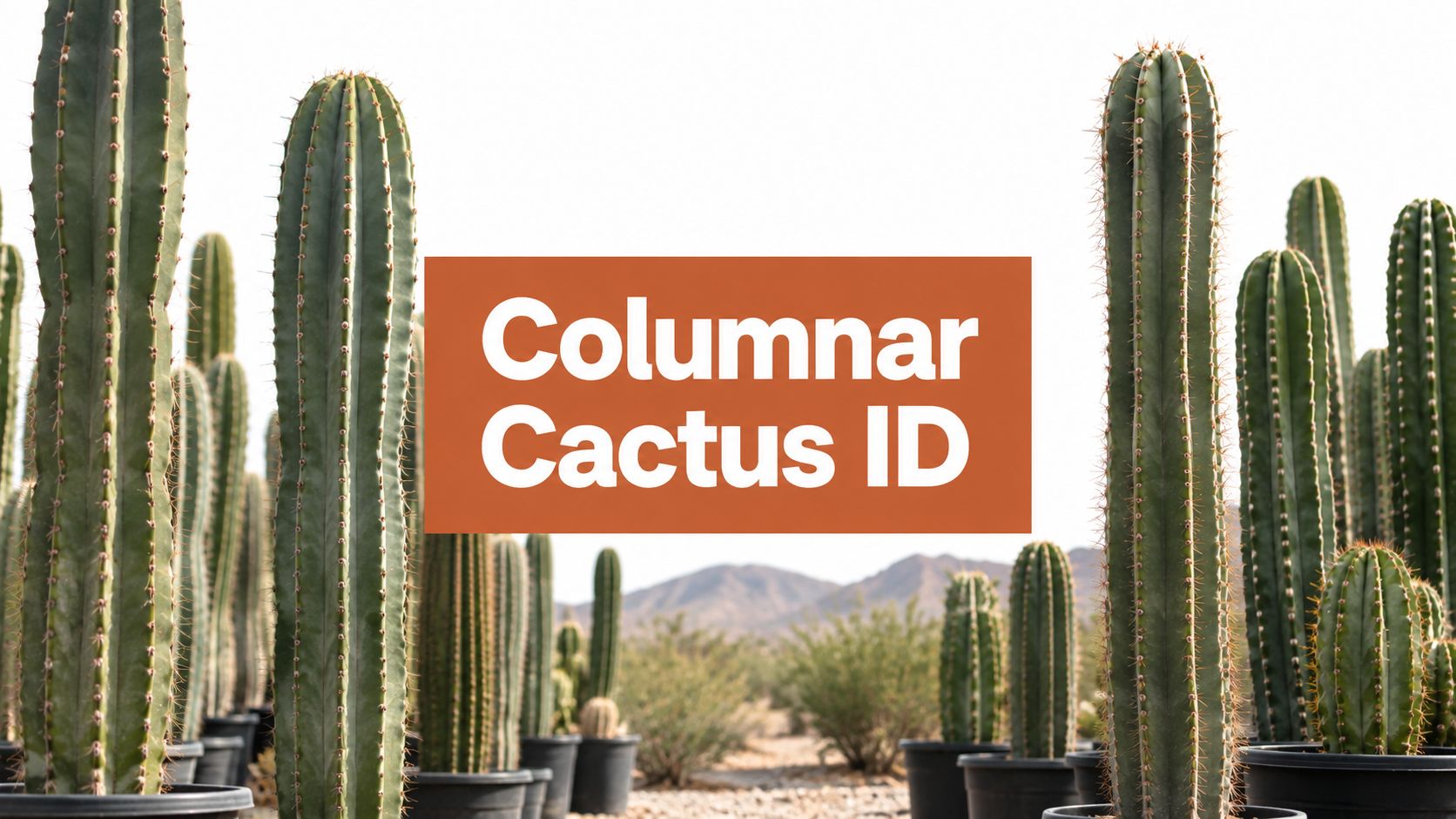

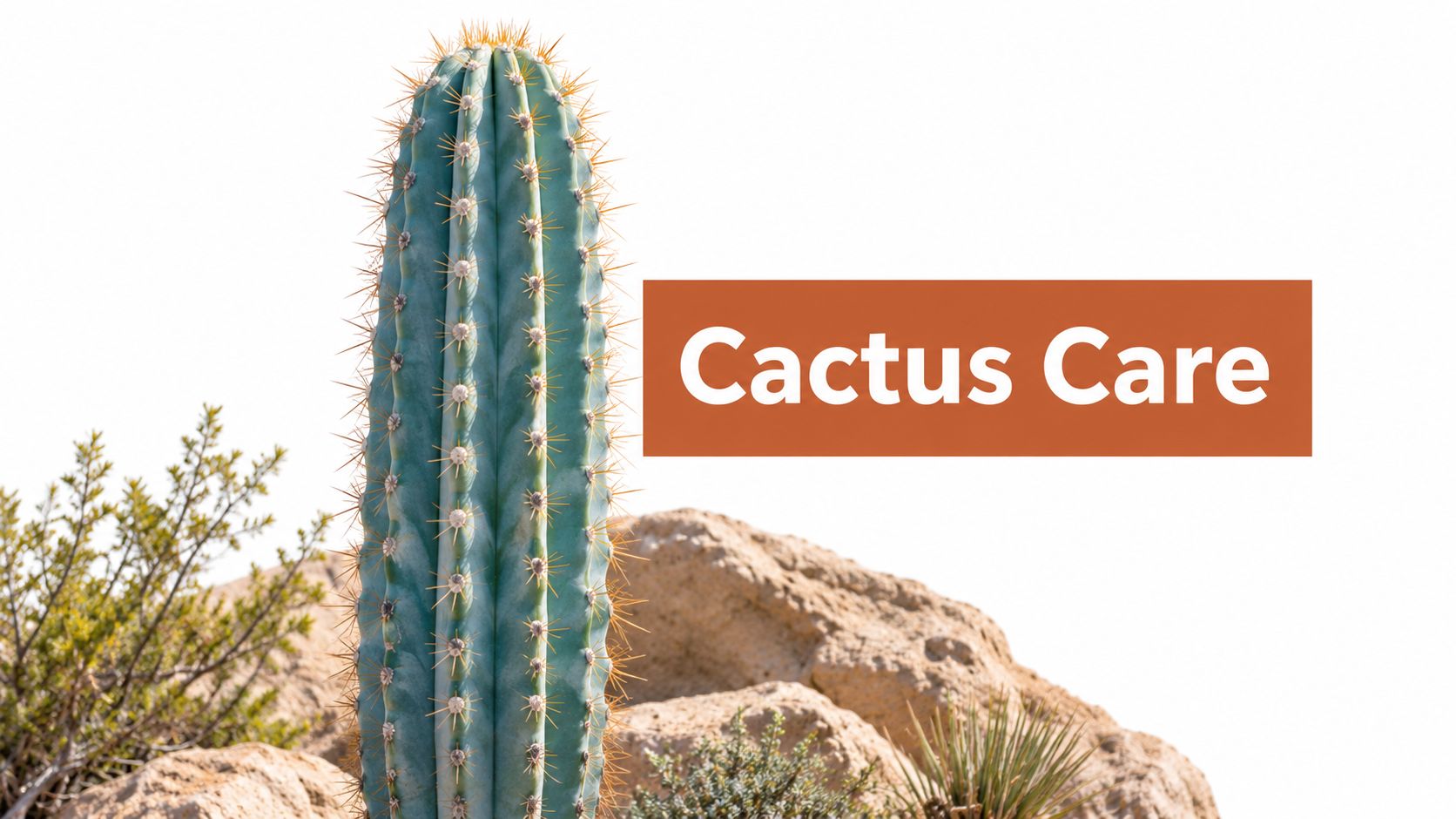

Blue columnar cactus is most commonly Pilosocereus pachycladus or Pilosocereus azureus, and it can reach about 30 ft in the wild. It earns its place in dry garden design because its tall, upright form and wax-protected blue stems only stay impressive when you match the plant's full sun needs and fast-draining soil to the space you have.
A lot of buyers run into the same problem. They want one dramatic cactus for a patio, entryway, or xeriscape bed, then discover that several blue columnar plants are sold under overlapping names, with very different mature scale and placement needs. That's where selection matters as much as care.
Why Blue Columnar Cactus Identification Matters
A homeowner walks into a nursery looking for a tall blue cactus to anchor a front yard, and the tag says one thing while the salesperson says another. That's common with blue columnar plants, because the trade often uses Pilosocereus pachycladus, Pilosocereus azureus, and other blue-tinged names loosely. If the buyer skips verification, the plant can end up in a bed, pot, or climate it was never really suited for.
Start with the plant in front of you
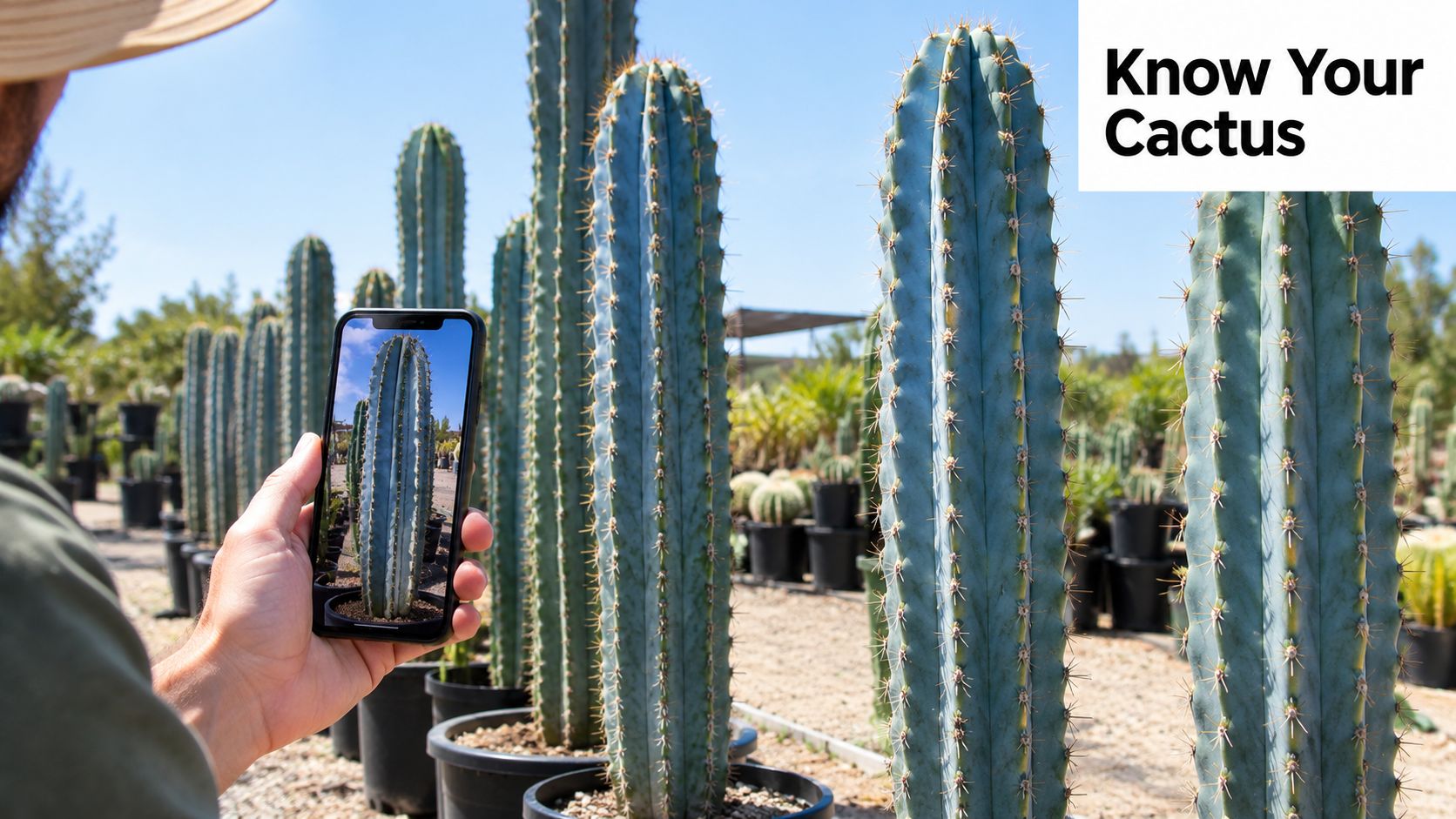
The first check is visual, not sentimental. A true blue columnar cactus should have the upright, pillar-like habit buyers want for vertical accent planting, and the stems should read blue-green rather than just green with a dusty cast. The blue color matters because it helps signal how much light the plant has received and how much handling stress it's been through.
The practical issue is that common names hide real differences. The same tag can lead to a small container plant, an outdoor specimen, or a plant that gets much taller than the buyer expected. That's why experienced landscapers ask for the botanical name before they commit to placement.
Practical rule: if the name on the label doesn't match the name in the listing or care sheet, pause and verify before you plant.
Match identity to site, not just aesthetics
This cactus is often sold as a statement plant, but the statement only works if the scale fits the site. One specimen can eventually read as a vertical anchor in a large bed, while the same plant in a narrow courtyard can quickly feel oversized. That's especially important when the buyer is working with a patio edge, driveway line, or a space that needs long-term structure instead of a temporary accent.
For readers who also need a broader way to verify cacti before choosing, the cactus identification guide is worth using alongside any nursery tag. Identity isn't just taxonomy, it's the starting point for whether the plant belongs in the ground, in a container, or somewhere else entirely.
Understanding Species and Common Names
The blue columnar cactus sits inside a large botanical family, Cactaceae, which has more than 2,000 recognized species. Its genus, Pilosocereus, includes roughly 30 species of columnar cacti native to the Americas, so there's real diversity behind the common blue-columnar label. That matters because a shopper is often buying a look, but the look may come from more than one taxon. Botanico Hub's naming overview is a useful reminder that horticultural names have been treated differently across sources.
Why the accepted name matters
Authoritative naming reduces avoidable mistakes. The Royal Horticultural Society currently lists Pilosocereus pachycladus as the correct name for the blue torch cactus, even though some nursery material still uses Pilosocereus azureus. That synonymy can look minor on paper, but in practice it affects sourcing, care instructions, and even how a customer reads mature size expectations. RHS details are especially useful when a buyer wants a name tied to an accepted horticultural reference.
A good rule is to treat the common name as a conversation starter, not the final identifier. If a seller can't say which taxon they're offering, the buyer should assume the care information might be generic or incomplete. That's where confusion turns into mismatched placement.
Size expectations should be read carefully
This is one of the biggest traps in the category. Some sources describe the plant as a relatively manageable ornamental cactus, while others place it in much larger mature territory in the wild. The gap isn't a contradiction so much as a reminder that container culture and open-ground growth are not the same thing.
A plant can be small in a pot and still be a long-term structural cactus in the landscape.
For homeowners, that means the name on the tag should shape the plan before the hole is dug or the pot is chosen. For designers, it means one blue columnar specimen can work as a focal point in a broad bed, while another may be better reserved for controlled container use until its identity and eventual scale are clear.
What Makes Blue Columnar Cacti Distinctive
The appeal is obvious the first time you see a good specimen. The stems stand upright like living pillars, and the blue-green surface gives the plant a colder, more architectural look than many desert cacti. Outdoors, that combination reads as structure, not just ornament.
Why the blue color looks the way it does
The blue tone isn't just a decorative trait, it's part of how the plant protects itself. Neutral sources describe the color as coming from a protective wax layer that reflects light rather than from pigment, which helps explain why the stems can look greener indoors, after handling, or after rain. That also explains why shipping scuffs or transplant marks can dull the visual impact without automatically hurting the plant's health. MediFlora's cactus note gives a clear explanation of that waxy surface.
The upright habit also matters for design. A blue columnar cactus can serve as a vertical counterpoint to mounded agaves, low prickly pears, or gravel mulch. It's the kind of plant you use when you want height without a broad canopy.
What the form means in real landscapes
The same traits that make it dramatic also make it selective. Blue coloration tends to show best in stronger light, and the tall stems need room to read properly from a distance. If the plant is pushed into a narrow spot or shaded by structures, the silhouette loses its purpose and the stem color often loses intensity.
That's why this cactus works best where architecture is part of the design language. Think open courtyard beds, low-water front foundations, broad driveway corners, and other spaces where a single upright specimen can act as a marker. It's less convincing when it's crowded or treated like a filler plant.
Core Care Requirements for Healthy Growth
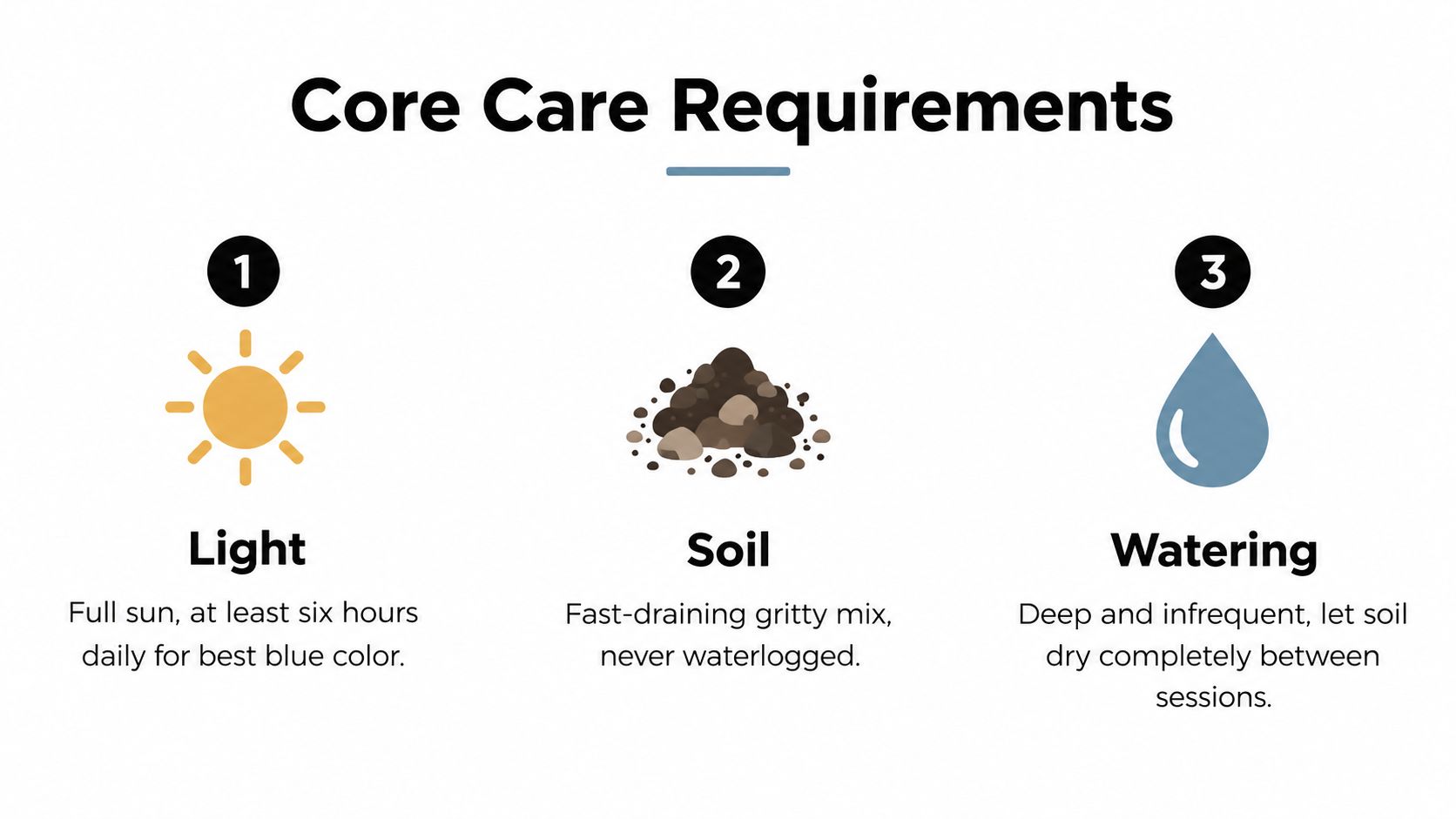
Blue columnar cactus care gets simpler once you stop chasing fixed schedules and start reading the site. The plant wants strong light, lean soil, and careful watering, but the exact timing changes with climate, pot size, season, and airflow. Forward Plant's care guide is aligned with that basic framework.
Light and placement
These plants perform best in full sun, with roughly 6 to 12 hours of direct light. If light is too weak, the stems can stretch, weaken, and lose some of their blue color. For outdoor planting, that usually means an open site with very little overhead shade.
Soil and water
The soil has to move water away fast. A porous cactus mix is safer than general garden soil, and waterlogged media sharply raises the risk of root rot. Water only after complete dry-down, not on a calendar that ignores weather, pot size, or season.
In-ground versus container use
In-ground planting gives the cactus room to become a larger outdoor specimen, but it also commits you to the site's drainage and winter exposure. Containers give more control over soil and relocation, but they also dry unevenly and usually limit mature scale. The right choice depends on whether you need a long-term anchor or a movable specimen.
Practical rule: if you can't keep the mix airy and the roots dry between waterings, don't force the plant into a prettier pot.
For growers choosing a substrate, our best soil for potted cactus guide fits this plant well because the same drainage logic applies.
Outdoor Planting and Container Use
Blue columnar cactus can work beautifully in the ground, but only in the right site. It wants sun, air movement, and soil that doesn't stay wet. That's why a sandy, gravelly, or rocky bed is far safer than a heavy clay pocket that traps moisture after rain.
Where in-ground planting succeeds
Large specimens do well where drainage is naturally strong and cold air doesn't settle. Low spots are a problem in any yard, but they become a bigger issue when a columnar cactus is asked to stay dry through cool periods. If the yard holds water after irrigation or rain, the plant pays for it at the roots first.
The same logic helps explain why well-drained soils are so often recommended for desert plantings. A cactus root system needs oxygen as much as it needs moisture, so the planting site has to support both. Clay-heavy soil usually works against that balance.
How containers change the equation
Containers give homeowners more control. They make it easier to adjust soil, move the plant for winter protection, and use the cactus as a patio feature rather than a permanent garden anchor. That's especially useful when the design needs flexibility, or when the local climate doesn't reliably support year-round outdoor planting.
If a patio or deck layout needs a related container strategy, how to install railing deck planters is a helpful design reference for thinking about spacing, drainage, and weight before you place any large succulent nearby.
Bare-root shipments need a calm landing
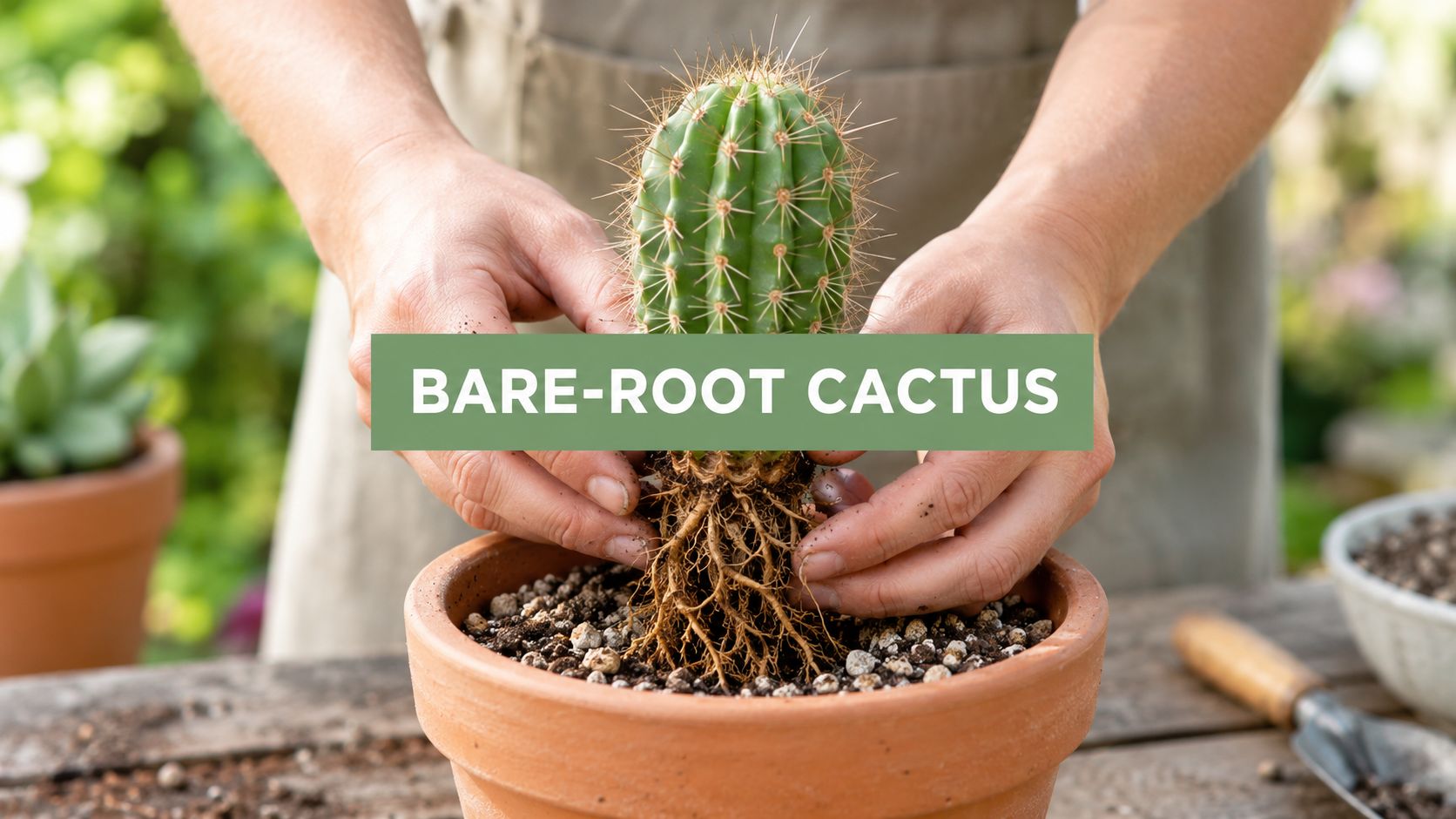
The first weeks after delivery matter more than is commonly thought. Bare-root cactus should be set into a dry, well-draining setup, then given time to settle before the first watering. Rushing water into a stressed root system is one of the fastest ways to turn shipping stress into rot.
Buying and Shipping Bare-Root Cactus
Premium cactus nurseries commonly ship large plants bare root, carefully packed for nationwide delivery. That means the plant does not arrive in a standard nursery pot, and the buyer needs to plan for unpacking, inspection, and recovery before the first watering. For a large specimen, that's normal logistics, not a warning sign.
What to expect on arrival
The box is meant to protect the cactus during transit, not to provide long-term housing. A good delivery should be handled gently, unpacked promptly, and checked for any broken or softened areas before it goes into its new setup. The plant may look a little dusty, flat in color, or stressed from handling, and that doesn't automatically mean it's failing.
The bigger mistake is watering too soon. Bare-root plants need a dry interval after arrival so any small wounds or abrasion points can settle. That is especially important for columnar cacti, where a hidden wet pocket can linger inside the root zone and spread fast.
What actually helps recovery
Keep the plant out of harsh midday sun for a short adjustment period if it has been shipped through heat or cold. Use dry, porous soil, stabilize the stem so it doesn't wobble, and wait to water until the roots are ready to take moisture cleanly. After that, shift to normal soak-and-dry logic rather than trying to rescue the plant with frequent drinks.
Buy Columnar Cactus Online is a useful companion read for buyers who want to understand how specimen plants are typically listed and shipped. The core idea stays the same, though, a shipped cactus needs patience more than pampering.
Sizing, Maturity, and Landscape Placement
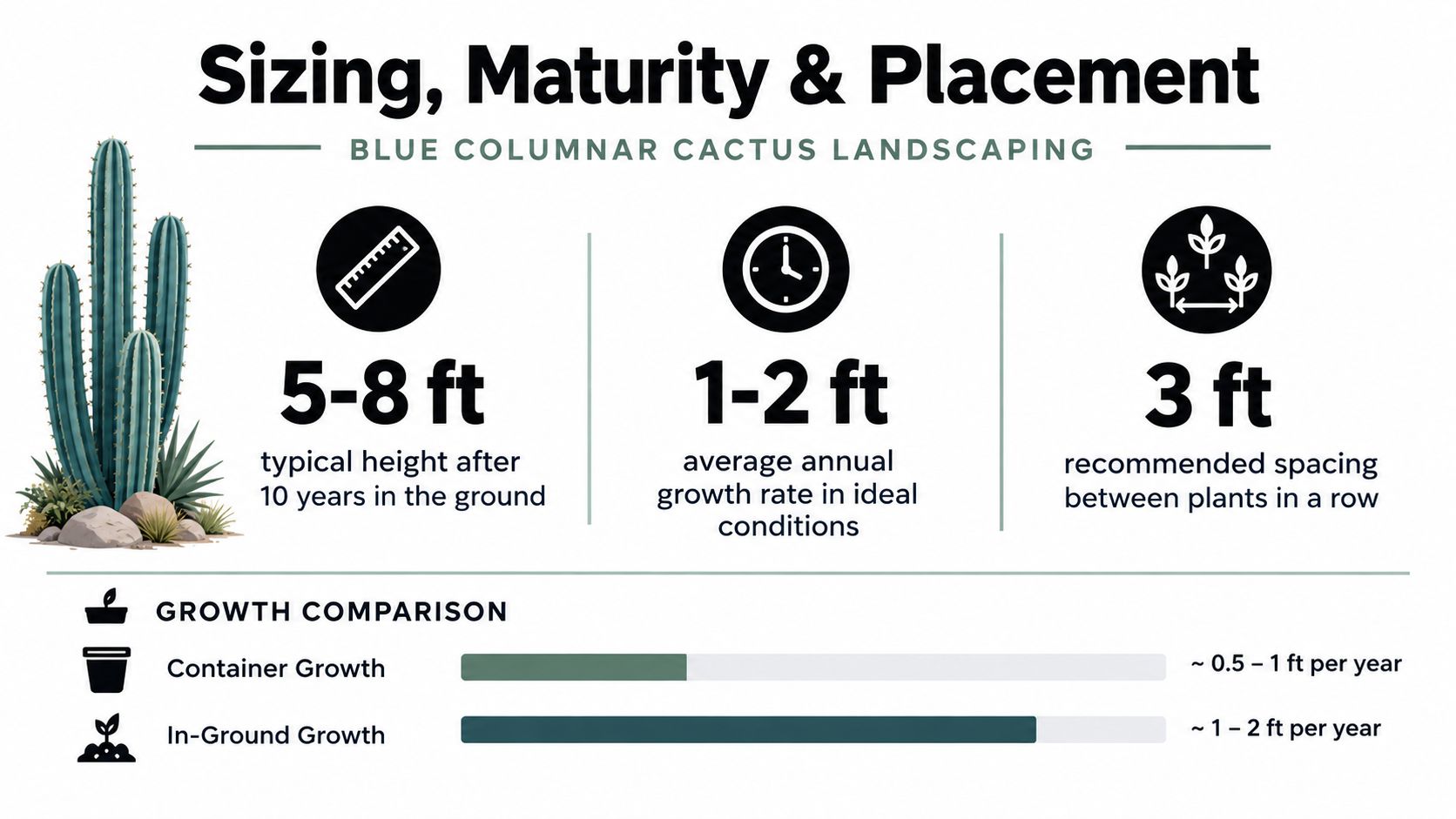
The plant's size is what gives it design value, and it's also what catches buyers off guard. A blue columnar cactus can become a true vertical anchor in the garden, but only if the site can absorb that scale over time. In a small pot, the same plant may stay visually restrained for years, but that's a container effect, not a promise of permanent small size.
Use the mature frame, not the nursery frame
That is where many designs go wrong. A young specimen can look harmless beside a walkway, then become the tallest object in the bed a few years later. If the cactus is going near a foundation, driveway, or patio edge, leave room for its eventual posture, not just its present width.
The climate story matters here too. In its native Brazilian dry regions, the plant is tied to inland terrain and elevation ranges from 50 to 1,550 m above sea level. That context helps explain why it performs well in dry, open settings and why it's valued for drought-tolerant garden design. The clearest species note on those conditions is useful when you're matching plant habit to site character.
Where it belongs
For designers, the plant works best as a solitary accent or in a spaced row where each stem can be read individually. For homeowners, that usually means placing it where height is useful, not where it creates maintenance problems. A specimen that frames a view can feel elegant, while the same cactus jammed against a path just becomes a barrier.
The smartest sizing decision is to buy for the layout you have, not the one you wish you had later.
Final Checklist for Buyers and Growers
Start with the name, then check the site. Confirm whether the plant is being sold as Pilosocereus pachycladus or under another blue columnar label, then make sure the placement gives it full sun, fast drainage, and enough room to hold its mature form.
Treat watering as a response to conditions, not a ritual. Soil should dry fully between sessions, bare-root arrivals should settle before they're watered, and containers should be chosen for drainage first, style second. If the bed holds water or the climate stays cool and wet, rethink the placement before you plant.
For planning a larger desert layout, a tool like AI garden design can help you visualize where a tall cactus fits among paths, patios, and companion plants. The right layout makes a blue columnar cactus look intentional from day one and easier to maintain for years.
The Cactus Outlet carries large outdoor cacti, agaves, aloes, prickly pears, barrel cacti, columnar cacti, and saguaros that suit this type of design. If you're choosing a blue columnar cactus or a companion plant for a dry garden, visit The Cactus Outlet to see what's available and plan your next planting with a specimen that matches your space.