

You're standing in the garden center with a tiny cactus in one hand and a bottle in the other, trying to decode a wall of labels. One says “all-purpose.” Another says “bloom booster.” A third promises “organic goodness” with a picture of a cheerful succulent on the front. It's easy to feel like one wrong choice will turn your neat little cactus into a yellow, stretched, unhappy lump.
I've watched this happen for years at the nursery counter. Cacti aren't killed due to a lack of care. They die because the advice is too broad. “Use succulent fertilizer” sounds simple, but it skips the part that matters most. A true desert cactus does not eat like every other succulent.
That's the key to organic cactus fertilizer. It isn't about buying the fanciest bottle. It's about matching the plant's natural rhythm. Cacti come from lean conditions, so they do best with light, controlled feeding in a fast-draining mix. If your soil stays heavy or soggy, fertilizer becomes part of the problem instead of the solution. A good starting point is learning how a gritty mix supports healthy roots, which is why this guide on making cactus soil is worth reading alongside your feeding routine.
Your Guide to Feeding Cacti Naturally
Organic cactus fertilizer sounds like a narrow topic, but it really answers a bigger question. What does your plant need from you? Most cactus owners assume fertilizer is the secret to fast growth. Usually, the secret is restraint.
Think of feeding a cactus like feeding a person who thrives on simple, steady meals. If you give that person an oversized buffet after weeks of nothing, they won't feel better. They'll feel overwhelmed. Cacti react in a similar way. They're built for modest intake, not feast-or-famine care.
Why people get confused
Part of the confusion comes from the word organic. Some gardeners hear it and think “gentle and always safe.” Others hear it and assume “weak and not useful.” Neither idea is fully right. Organic fertilizers can be very helpful, but only when the product, plant type, potting mix, and timing all line up.
The second problem is lumping all fleshy plants together. Aloe, Euphorbia, jade, haworthia, holiday cactus, and desert cactus don't all respond the same way. That's why one person swears by a rich organic feed while another says organic fertilizer ruined their cactus. They may both be telling the truth about very different plants.
Practical rule: Before you ask what fertilizer to use, ask whether your plant is a true desert cactus or another kind of succulent.
What you'll notice once this clicks
When you understand the “why,” fertilizer labels stop looking mysterious. You start noticing simple things:
- Growth habit matters. A slow, round desert cactus won't want the same feeding pattern as a vigorous columnar grower.
- Pot culture changes everything. Plants in containers depend on you for every drop of water and every bit of nutrition.
- Gentle feeding wins. With cacti, steady and light almost always beats strong and occasional.
That shift makes cactus care feel less like chemistry homework and more like good observation.
Why Cacti Have a Unique Nutrient Diet
Cacti aren't small houseplants with spines. They're specialists. They evolved in nutrient-poor environments, and decades of horticultural practice reflect that. One technical reference used by growers describes professional feeding at roughly 150 to 200 parts per million nitrogen with continual feeding and cites an ideal cactus and succulent NPK ratio of about 1:0.4:1.1-1.7, which points to modest, controlled nutrition rather than heavy doses, as summarized in this cactus fertilizing reference.

Why low feeding makes sense
A cactus is a bit like a desert tortoise. You wouldn't feed a desert tortoise the same diet you'd give a growing lion. The tortoise is built for a slower, sparer life. A cactus is the plant version of that idea.
Rich fertilizer, especially high nitrogen, can push soft growth that looks exciting at first. Then trouble starts. The plant may swell too quickly, grow weak tissue, lose its compact shape, or become more vulnerable to rot and stress.
What NPK means in plain English
The three numbers on a fertilizer label represent the big nutrients plants use most.
| Nutrient | What it does | Why cactus growers watch it closely |
|---|---|---|
| Nitrogen | Drives green growth | Too much can lead to weak, overly soft growth |
| Phosphorus | Supports roots and flowering | Useful, but still needs balance |
| Potassium | Helps overall resilience | Important for steadier, tougher growth |
For a leafy tropical plant, a stronger nitrogen push can make sense. For a desert cactus, that same push can act like junk food. Fast growth isn't always healthy growth.
Why the plant's body matters
Cacti store water in their tissues. They grow in pulses, not in a constant rush. They also have much less leafy surface than many common houseplants. That changes how they use nutrients.
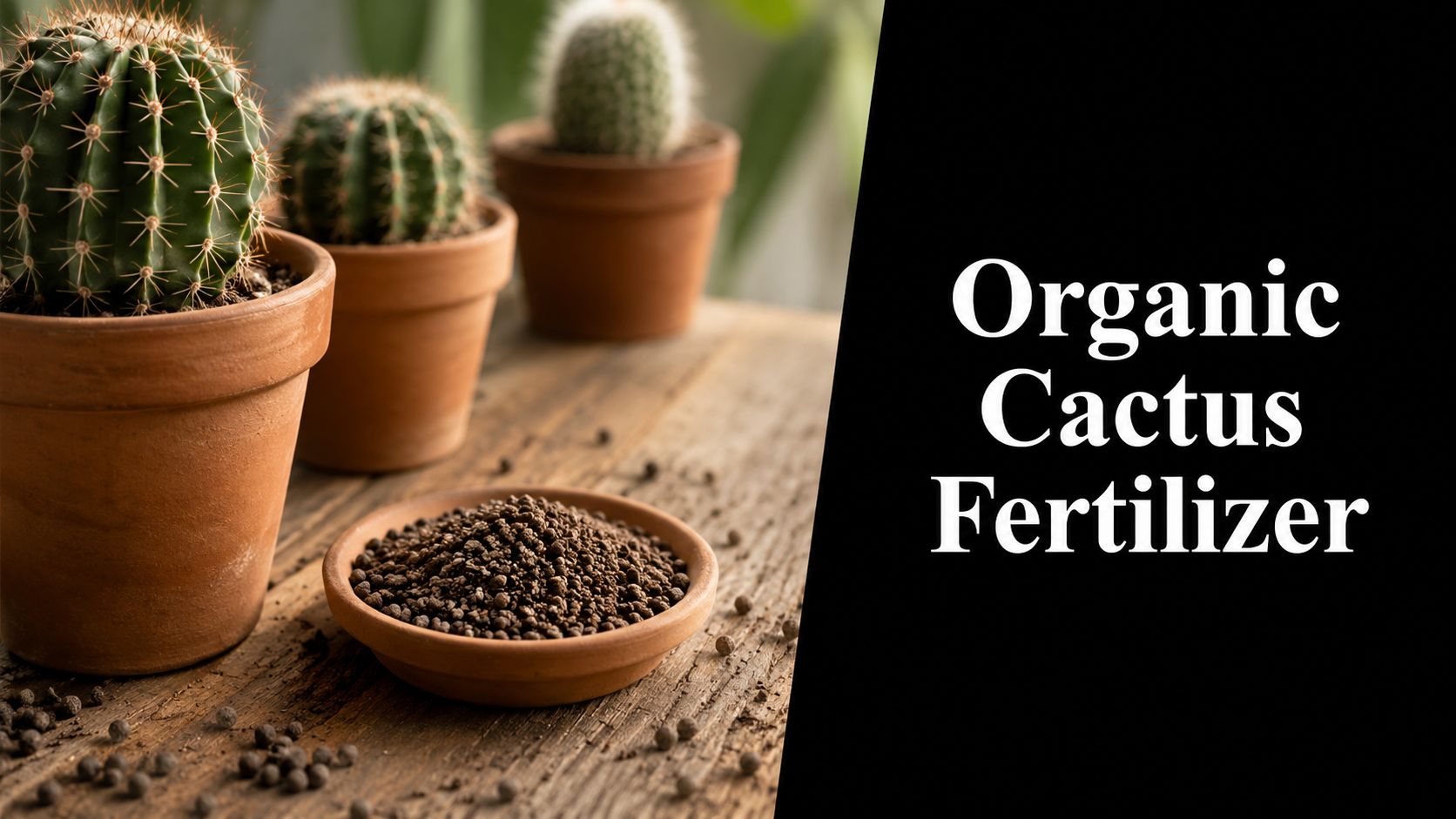
An organic cactus fertilizer should respect that slower metabolism. The best products for true cacti are usually mild and repeatable. They're not trying to force a dramatic reaction. They're supporting gradual, durable growth.
Feed for structure, not speed. That's how you keep a cactus stout, steady, and closer to its natural form.
The hidden role of the pot
Even a perfectly chosen fertilizer won't help if the roots stay wet too long. In a container, roots have nowhere else to go. If the mix is dense and waterlogged, nutrients sit around the root zone longer than they should. That's one reason feeding cacti lightly works better than pouring on more and hoping for the best.
Organic Versus Synthetic Fertilizers for Cacti
Gardeners often treat this like a moral debate. It isn't. Organic and synthetic fertilizers are two different tools. Either one can work badly in the wrong hands, and either one can work well when matched to the plant.

The simple comparison
Synthetic fertilizer is like a multivitamin. It's precise, concentrated, and predictable. You know what you're delivering.
Organic fertilizer is more like a whole-food meal. It tends to work more gently, often supports soil life, and fits gardeners who prefer a less aggressive feeding style.
Where organic fertilizer shines
For many home growers, organic cactus fertilizer feels more forgiving. It usually suits the slow-and-steady pace that cacti prefer. Some organic products are also built for easy dilution and regular use, which helps avoid the “too much at once” mistake.
Organic options can also be appealing if you want your potting mix to stay biologically active instead of feeling like an inert medium that only gets fed by bottled salts.
Here's the tradeoff. Organic feeding can be less exact. If you're the type of grower who wants total precision, synthetic formulas may feel easier to control.
Side-by-side decision guide
- Choose organic if you want a gentler approach, prefer gradual feeding, and don't mind watching your plants closely rather than chasing exact inputs.
- Choose synthetic if you want very specific nutrient control and you're disciplined about dilution and application.
- Be cautious with either if your potting mix drains poorly. No fertilizer can fix suffocated roots.
- Use less than your instincts suggest if the plant is a slow, compact desert cactus in a small container.
A fertilizer isn't “safe” because it's organic, and it isn't “dangerous” because it's synthetic. The dose, timing, and plant type decide that.
What experienced growers usually notice
Organic feeding often produces a more natural pace of growth. Synthetic feeding often gives clearer short-term response. For cacti, short-term response can be misleading. A quick flush of growth may not mean the plant is stronger.
That's why many cactus growers lean toward mild products and conservative schedules. They're not trying to make a cactus behave like a tomato plant. They're trying to keep it healthy in a pot for years.
How to Choose or Make an Organic Fertilizer
If you want a shortcut, buy a product made specifically for cacti and succulents. If you enjoy hands-on gardening, you can also make a very gentle homemade feeding routine. Both paths can work.
A commercial option has one clear advantage. It removes guesswork. For example, Espoma's cactus product is positioned as a 100% natural and organic-approved fertilizer for succulents and cacti, and the company says an 8 oz bottle makes up to 24 quarts of feed solution in this Espoma cactus product guide. That kind of dilution tells you the product is meant to be used as a mild, repeatable feed rather than a heavy blast.
What to look for on the label
Start with restraint. You want a product that signals moderation, not maximum growth.
Look for these cues:
- Cactus or succulent use listed clearly. That tells you the product is at least intended for slower-growing plants.
- Low-nitrogen positioning. Desert cacti usually do better when nitrogen isn't the star of the show.
- Liquid dilution instructions. This gives you better control in containers.
- Soil drench use. Products meant to move through the whole root zone are often easier to apply evenly.
If you want a broader product roundup for related plants, this guide to the best fertilizer for succulents can help you compare your options with the right plant category in mind.
A good buyer mindset
Don't shop for the “strongest” bottle. Shop for the bottle that makes it easy to stay gentle. That usually means a liquid or concentrate you can dilute well and use during active growth without forcing the plant.
A mild formula is especially useful if you grow several different plants and want room to adjust. It's much easier to slightly increase a gentle routine than to undo a fertilizer burn problem.
A simple homemade route
You don't need a complicated recipe. The goal is a soft nudge, not a lab experiment. Many home growers use small amounts of worm castings or a light compost tea approach for occasional feeding.
Keep these guardrails in mind:
- Use clean, mature inputs. Fresh, hot, or partially broken-down materials are a poor fit for cactus roots.
- Keep the mix weak. If you're unsure, go lighter.
- Apply only to active plants. A dormant cactus doesn't need a snack.
- Watch the plant, not your calendar. If growth looks natural and firm, don't chase more.
Commercial versus DIY
A store-bought product is best if you want consistency. A homemade organic feed is best if you like experimenting and you understand that mildness matters more than richness.
For beginners, I usually suggest starting with a commercial organic cactus fertilizer. Once you've learned how your plants respond, then it's easier to explore homemade methods without overdoing it.
Applying Fertilizer for Optimal Growth
Application is where good intentions go off track. Most cactus problems don't start with the wrong bottle. They start with too much enthusiasm.

Feed only when the plant is growing
A cactus that's actively growing can use a light meal. A cactus sitting still, especially in cool or low-light conditions, usually can't. Feeding a dormant plant is like serving dinner to someone who's asleep. It just sits there.
For most growers, that means feeding during the active growing season and backing off when growth slows or stops. Keep the routine tied to the plant's behavior, not your urge to “do something.”
How to apply it without trouble
The safest pattern is simple:
- Water thoughtfully. Apply fertilizer to a plant with a functioning, healthy root system, not a bone-dry, stressed root ball.
- Use a diluted feed. Gentle beats strong.
- Drench the root zone evenly. Espoma's guidance recommends thoroughly drenching the soil until some runoff exits the bottom of the pot, which shows the feed is meant for full-root-zone delivery, not a sprinkle on top.
- Let the mix drain well. Cacti hate sitting in leftover solution.
If you want a practical walkthrough of technique, this guide on fertilizer application is a useful companion.
Don't treat all succulents the same
Most care guides often get sloppy. A true desert cactus and a leafy succulent from a more humid habitat are not on the same menu. One expert source notes that true desert cacti generally prefer a low-nitrogen mineral fertilizer, while some non-desert succulents, including certain Euphorbias from more humid regions, can handle richer organic feeding, as discussed in this expert video on cactus versus succulent feeding.
That means your plant ID matters. A barrel cactus, saguaro seedling, or prickly pear calls for a more conservative hand than a fast, leafy succulent that naturally grows in richer conditions.
If you can't identify the plant, don't choose the richest feeding plan. Choose the gentlest one.
Adjust for plant type and container size
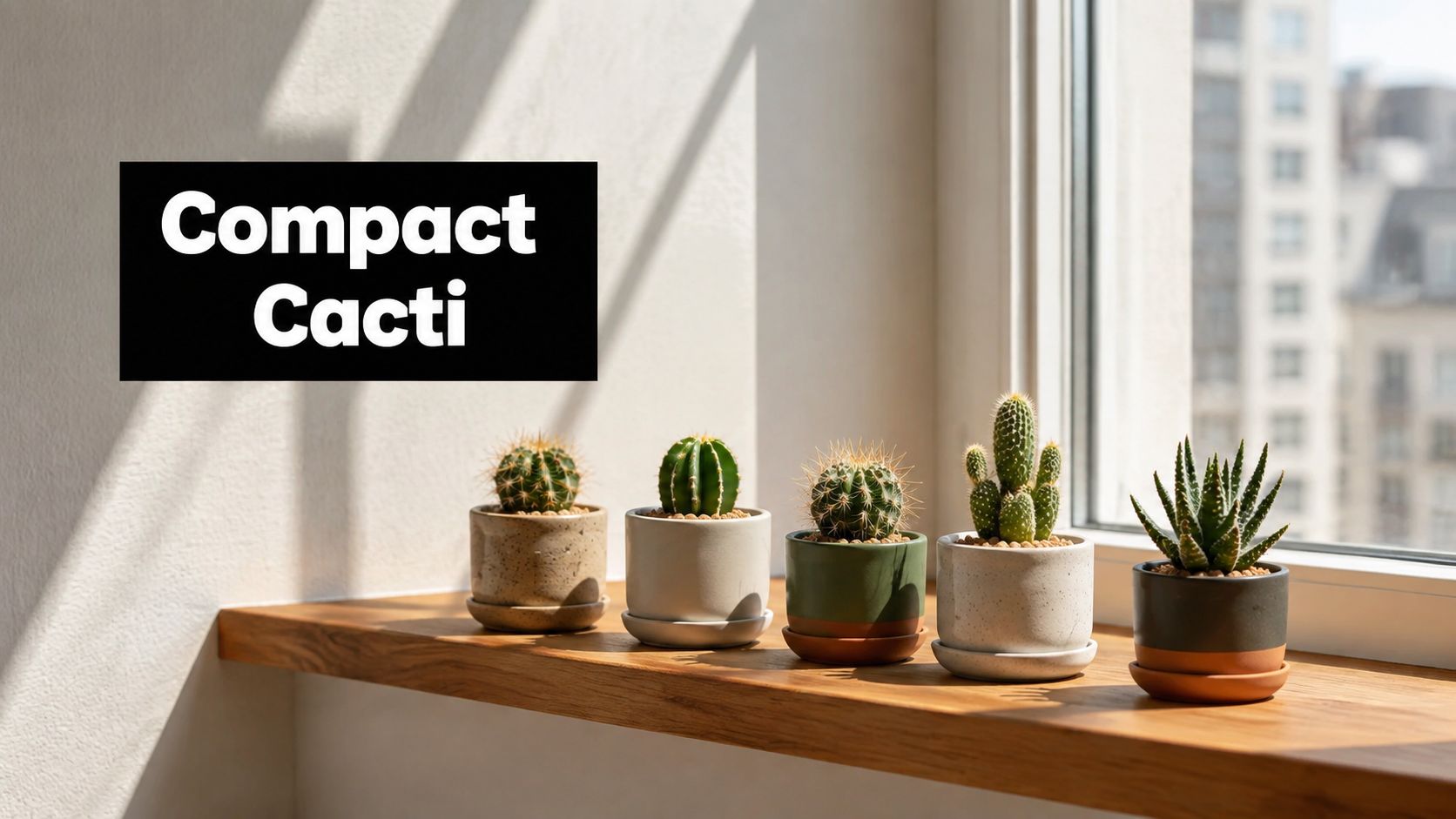
A small desert cactus in a tight pot needs less than a large, active grower with room to root. The smaller and slower the plant, the easier it is to overdo feeding.
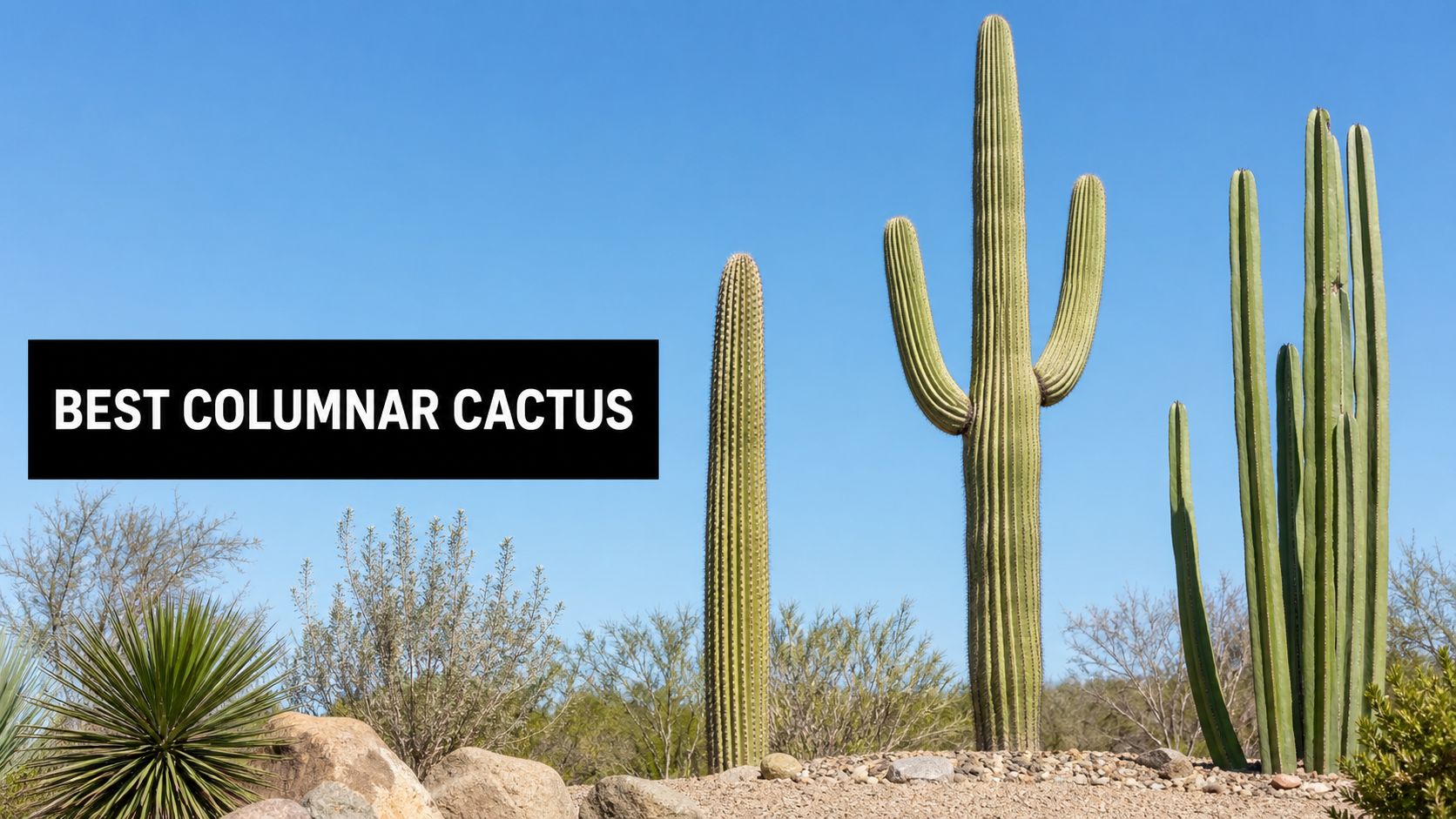
Fast-growing columnar cacti need special attention. They can use nutrients, but they still don't benefit from random heavy doses. Growth should stay controlled and sturdy.
Here's a helpful visual refresher before you mix your next batch:
The rhythm that works best
Think of cactus feeding like seasoning soup. You can always add a little more later. It's much harder to fix a pot that has become salty, soggy, and overloaded. Feed lightly, watch the plant, and let firm growth be your sign that you're on track.
Reading the Signs of Over or Under Fertilizing
Your cactus will tell you when the feeding routine is off. The trick is learning the language. Most of the signs are visual, and once you know them, they're easy to spot.

Signs you may be overfeeding
Overfed cacti often look stressed in ways people don't expect. Instead of “too healthy,” they often look distorted or unstable.
Watch for:
- Soft or mushy tissue. This is especially concerning near the base.
- Odd, stretched new growth. If the shape looks unnatural, fertilizer may be part of the issue.
- Yellowing or weak pads. Excess nutrition can still produce poor growth.
- White crust on the soil or pot rim. That often points to buildup from repeated feeding.
- A sudden decline after feeding. If trouble follows quickly, stop and reassess.
Corrective action is usually straightforward. Flush with plain water if the mix drains well, pause fertilizing, and let the plant recover in bright conditions with proper airflow.
Signs the plant may be underfed
Underfeeding is usually less dramatic. The cactus just seems to stall.
Common clues include:
| Sign | What it can mean | What to do |
|---|---|---|
| Very slow growth | The plant may need a little support during active season | Resume a mild feeding routine |
| Pale color | Nutrition may be running low | Check light first, then feed lightly |
| Poor flowering | The plant may lack the energy or maturity to bloom well | Improve overall care, not just feeding |
| Weak spine development | Growth may be underpowered | Use a gentle, balanced schedule |
The fast-grower trap
Some columnar cacti confuse growers because they grow quickly when conditions are good. That can lead people to pour on more fertilizer than the plant can handle. An eight-month test discussion noted that you can't “dump nitrogen on them” and expect good results. Fast growers need a more carefully managed nitrogen release, as explained in this discussion of nitrogen management in columnar cacti.
That's an important lesson. A faster cactus isn't a hungry annual flower. It still needs controlled feeding.
Healthy cactus growth should look firm, proportionate, and natural. If growth looks inflated, stretched, or oddly tender, step back.
One more troubleshooting habit
Before you blame fertilizer, check the basics. Light, drainage, pot size, and watering often create symptoms that look like nutrition problems. A cactus in poor light may stretch no matter what you feed it. A cactus in wet soil may rot even with a gentle organic fertilizer.
That's why the best growers don't just feed plants. They read them.
Your Path to a Thriving Cactus Collection
Good cactus feeding comes down to a few steady habits. Feed lightly. Feed only during active growth. Match the fertilizer to the actual plant, not just the word “succulent” on the tag. If you remember those three rules, you'll avoid most of the common mistakes.
Organic cactus fertilizer works best when you use it as a gentle support, not a growth hack. Think of it as offering a small, well-timed meal to a plant that was built for lean living. The reward is better structure, steadier growth, and fewer surprises.
Trust your eyes. A firm, balanced cactus is your best proof that the routine is working.
If you're ready to put this into practice, explore the healthy cactus and succulent selection at The Cactus Outlet. It's a great place to start building a collection you can care for with confidence, whether you're growing your first prickly pear or adding a statement columnar cactus to your space.