

The Old Man of the Andes cactus, or Oreocereus celsianus if you want to get scientific, is one of those plants that just stops you in your tracks. It’s a striking columnar cactus, but what truly sets it apart is the thick, woolly white hair that makes it look like it's wearing a fuzzy coat—a brilliant defense against the harsh life of its mountain home. That unique look is exactly why it's become such a prized specimen for collectors.
A Survivor from the High Andes

Imagine a plant so tough it doesn't just survive, but thrives where most other life gives up. That's the Old Man of the Andes for you. This isn't your typical desert cactus; it's a high-altitude specialist from the rugged mountains of South America, perfectly engineered for a life of extremes.
Its most famous feature, that dense white hair, isn't just for show. Think of it as a custom-made, all-weather survival suit.
- Built-in Sunscreen: At high elevations, the sun's UV radiation is incredibly intense. The white hairs reflect this harsh light, preventing the cactus's green skin from getting a nasty sunburn.
- Frost Armor: The woolly layer traps a pocket of air around the stem, acting as insulation against freezing nighttime temperatures and sudden frosts common in the mountains.
- Windbreaker: It also slows down moisture loss from the dry, whipping winds, helping the cactus conserve every precious drop of water.
This incredible adaptation is a masterclass in survival, allowing the cactus to flourish in an environment that would kill most other plants. It’s a huge part of what makes this species such a standout in any collection.
Built for the Mountains
The Old Man of the Andes is native to the high-altitude regions of the Andes Mountains, happily growing at elevations between 2,500 to 3,500 meters. Up there, temperatures can easily dip below freezing at night. While a cultivated plant might eventually reach an impressive 10 feet, wild specimens can form massive, towering colonies over time. You can learn more about its growth and origins over on Planet Desert's product page for Oreocereus celsianus.
This is a slow-growing cactus, which makes it a fantastic choice for patient gardeners who really appreciate watching a plant's journey unfold over the years. Here at The Cactus Outlet, we love how its commanding presence and unique texture become a living sculpture, whether it's an indoor centerpiece or a highlight in an outdoor rock garden.
To give you a quick snapshot before we dive deeper into its care, here’s a summary of its key characteristics.
Old Man of the Andes At a Glance
This table breaks down the essential features of Oreocereus celsianus so you know exactly what to look for.
| Characteristic | Description |
|---|---|
| Common Name | Old Man of the Andes, Old Man of the Mountain |
| Scientific Name | Oreocereus celsianus |
| Growth Habit | Slow-growing, columnar, often branching from the base |
| Key Feature | Dense, white, woolly hair covering the green stems |
| Spines | Sharp, reddish-brown central spines hidden within the hair |
| Flowers | Bright, reddish-pink tubular flowers on mature plants |
| Native Habitat | High-altitude regions of the Andes (Peru, Bolivia, Argentina) |
These traits combine to create a truly unique and resilient cactus that's as tough as it is beautiful. Now, let's get into how to help it thrive in your own home or garden.
Replicating High-Altitude Sunlight Requirements
To get your Old Man of the Andes looking its best, you have to think about where it comes from. These guys are native to the high Andes Mountains, where the sun is incredibly bright and relentless. Your job is to give them a taste of home with at least 6 to 8 hours of direct, bright sunlight every single day.
That intense light does more than just feed the plant; it's the secret to its signature look. The dense, shaggy white "hair" is actually a natural sunscreen that the cactus produces to protect its skin. The more sun it gets, the thicker and whiter the hair becomes—the plant’s built-in defense against sunburn, just like it would use at 3,000 meters up in the mountains.
Finding the Perfect Indoor Spot
If you're keeping your cactus indoors, it's all about location, location, location. A south-facing window is prime real estate, as it gets the strongest and most consistent light all day long. If you don't have one, a west-facing window is the next best thing, catching all that powerful afternoon sun.
Without enough light, you'll start to see a sad phenomenon known as etiolation. The cactus will literally stretch and lean toward the window, becoming thin, pale, and weak. It’s a desperate search for energy, and unfortunately, the lanky growth is permanent.
To avoid this, don't be afraid to supplement with a grow light, especially if your home is on the shadier side. It’s the best way to ensure your Old Man of the Andes keeps its proud, columnar shape and that amazing woolly coat. For a deeper dive, check out our general guide on how much sun a cactus needs.
Outdoor Placement and Acclimation
When planting outdoors, you have to strike a bit of a balance. Your cactus will absolutely love a spot that’s drenched in morning sun. But in really hot climates, the brutal afternoon sun can sometimes be a little too much, even for this sun-worshipper.
A great strategy is to give it some partial shade during the hottest hours of the day. Planting it near a larger shrub or a wall that casts a shadow in the late afternoon works perfectly.
One crucial thing to remember: the plants we ship from The Cactus Outlet have been living the good life in a greenhouse. Tossing your new cactus straight into direct, blazing sun is a recipe for sunburn. You need to introduce it to its new home slowly over a week or two.
- Days 1-3: Start it off easy with just 2-3 hours of direct morning sun.
- Days 4-7: You can start increasing the exposure, pushing it to 4-5 hours.
- Week 2: Gradually let it experience the more intense midday sun until it’s fully adjusted to its permanent spot.
This slow and steady process helps the cactus toughen up without getting stressed, keeping it healthy and happy from day one.
Mastering Watering and Soil for Your Cactus
If there’s one place where new cactus parents trip up, it’s with the watering can. When it comes to the old man of the andes cactus, the goal is to recreate the infrequent, drenching rains of its high-altitude home. It all comes down to a simple but crucial mantra: "soak and dry." When you water, do it thoroughly until it runs from the drainage holes, but only after the soil has gone completely bone-dry.
Think of your cactus's stem as its personal canteen. It's built to store water for long stretches, making constantly damp soil its absolute worst enemy. Letting the pot dry out completely between waterings is vital; it allows the roots to breathe and prevents the dreaded root rot, which is hands-down the biggest killer of these otherwise tough plants.
A Schedule for the Seasons
Your Oreocereus celsianus doesn't operate on the same schedule year-round, and your watering habits shouldn't either. It has clear active and dormant periods that you need to respect.
- Spring and Summer (Growing Season): This is when your cactus is actively growing, so it's thirsty. A deep watering every three to four weeks is a good starting point. The key is to always, always check the soil first. If it's not dry to the touch all the way through, wait.
- Fall and Winter (Dormancy): As the days shorten and cool down, your cactus enters a deep sleep. You'll need to cut back on watering dramatically. For most plants kept indoors, this means you might not water at all from late fall until spring finally returns.
Following this seasonal cycle is one of the most important things you can do for its long-term health. In fact, our own data here at The Cactus Outlet shows that a monthly soak during the growing season and a near-complete stop in winter aligns with the 80% survival rate we see in succulents from even the most neglectful homes. You can get a better feel for its natural environment by exploring the iNaturalist page for Oreocereus celsianus.
Crafting the Perfect Soil Foundation
The right soil is every bit as critical as your watering technique. Standard potting mix is a death sentence; it holds far too much water and will quickly suffocate the roots of an old man of the andes. What you need is a gritty, fast-draining mix that won't turn into a solid brick over time.
Think of the perfect cactus soil as being more like gravel than garden dirt. It should offer stability but let water rush right through, leaving the roots with just a bit of moisture before drying out quickly.
While you can certainly buy a pre-made cactus and succulent mix, making your own is surprisingly easy and often gives better results. A fantastic, no-fuss recipe is one part potting soil, one part coarse sand, and one part a gritty amendment like perlite or pumice. This simple blend guarantees the sharp drainage your cactus is counting on. For a deeper dive into soil recipes, don't miss our complete guide on how to create the perfect cactus and succulent soil mix.
Proper sun exposure is just as important as watering and soil. This infographic breaks down our simple, three-step process for getting it right.

As you can see, great care isn’t about a single task. It’s a continuous cycle of acclimating your plant, giving it the right amount of light, and paying attention to how it responds.
How to Pot, Fertilize, and Encourage Growth
Getting the potting and feeding right for your Old Man of the Andes is where the real long-term success happens. These aren't tricky tasks, but paying attention to the details is what will keep your cactus happy for decades to come.
Think of the pot as more than just a container; it's your cactus's entire support system. The absolute, non-negotiable rule here is drainage. A pot without a drainage hole is a guaranteed recipe for root rot, so don't even consider it. Your best bet is always an unglazed terracotta or clay pot. Their porous nature lets the soil breathe and dry out evenly, perfectly mimicking the dry, rocky slopes of its Andean home.
Repotting Your Slow-Growing Cactus
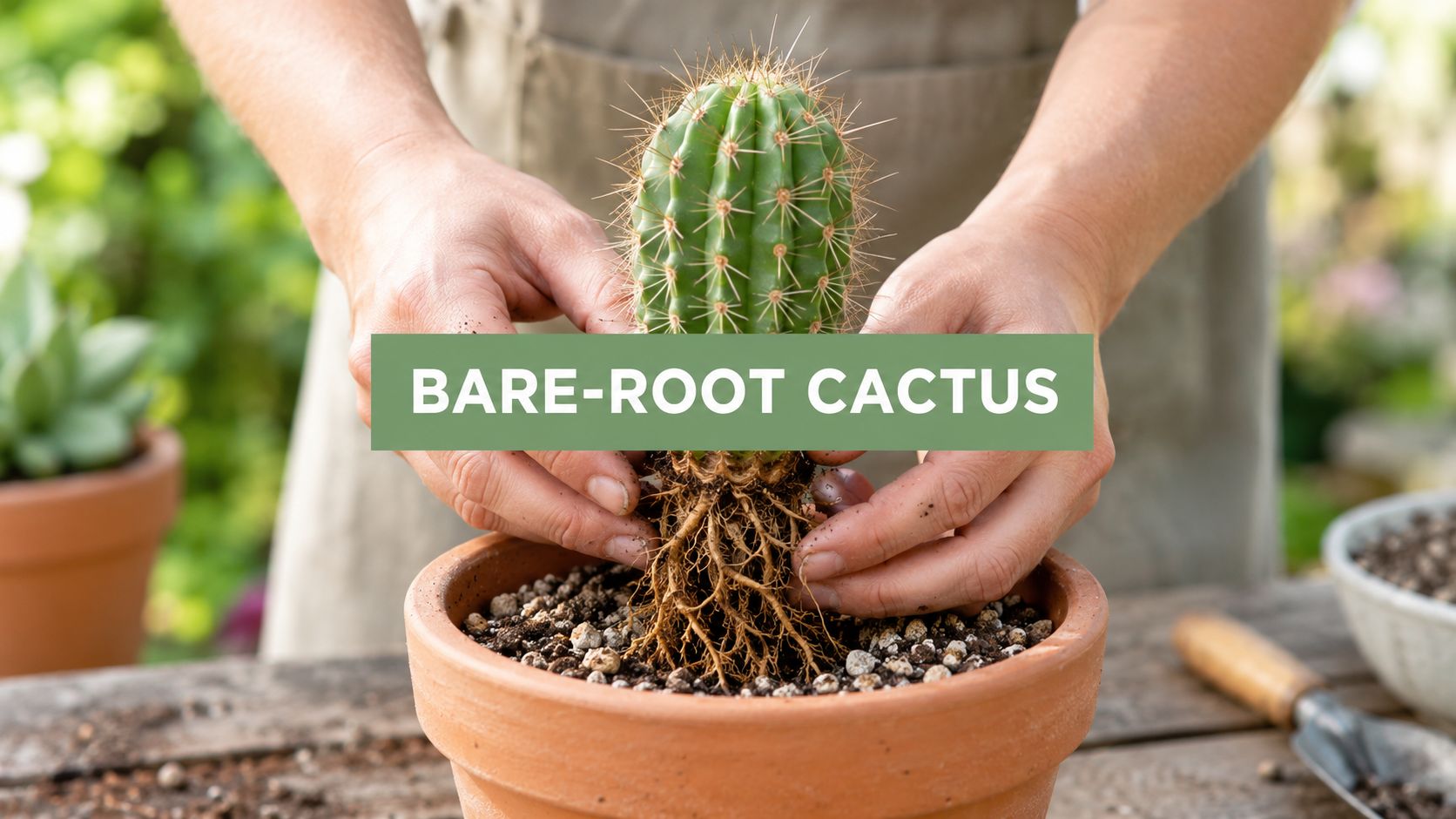
Oreocereus celsianus is a slow-and-steady kind of plant that really doesn’t like having its roots disturbed. It actually prefers to be a little bit snug in its pot, so you’ll only need to think about repotting every two to four years. The main sign is seeing roots start to sneak out of the drainage holes.
When it's time to move it, be ready for those spines. The beautiful white hair does a great job of hiding some surprisingly sharp, reddish-brown spines underneath. A fantastic pro-tip is to wrap the cactus body in a thick, folded-up newspaper or an old towel. This gives you a safe way to grip it while you gently work it out of its old home. Pop it into a new pot that’s only about one to two inches wider in diameter.
After repotting, hold off on watering for at least a week. This short dry spell is crucial. It gives any roots that were bruised or broken during the move time to callous over, which prevents rot from setting in when you do water again.
Feeding for Healthy, Steady Growth
When it comes to fertilizer, think of it as a rare treat, not a regular meal. These cacti have evolved in nutrient-poor soil, so they are not heavy feeders. In fact, one of the most common mistakes is over-fertilizing, which can burn the roots and cause weak, stretched-out growth.
During the active growing season—spring and summer—you can give it a boost.
- Use a specialized, low-nitrogen cactus fertilizer.
- Always dilute it to half the recommended strength.
- Apply it just once a month with a regular watering.
Once fall rolls around, stop feeding completely. This signals to the plant that it's time to wind down for its winter rest.
Patience truly is a virtue with this species. It’s important to know that even under perfect conditions, they grow at a snail's pace—just 10-15 cm per year. That means a 12-inch starter plant from us here at The Cactus Outlet might take a full two or three decades to hit ten feet tall. For many collectors, that incredible longevity is exactly the appeal. You can learn more about its fascinating life cycle in this detailed botanical overview.
Styling and Landscaping With Your Cactus
The Old Man of the Andes is far more than just another cactus for your collection. Think of it as a living sculpture. Its strong vertical lines and one-of-a-kind woolly texture give it a powerful architectural presence that can transform a space, whether you're decorating a living room or designing a garden.

It’s this versatility that makes it a favorite among home gardeners and professional landscape designers alike. Let’s get into how you can make this plant the star of your show.
Creating Striking Indoor Displays
Indoors, the Old Man of the Andes cactus is a game-changer, especially when you want a single, dramatic statement piece. Its tall, fuzzy column immediately draws the eye upward, making it a fantastic vertical accent for minimalist, modern, or bohemian interiors.
The key is to let the cactus itself do the talking. Plant it in a simple, understated pot that doesn't compete with its unique texture. If you want to create a small vignette, pair it with plants that offer a complete contrast in form.
- Complementary Shapes: Place it alongside low, mounding succulents. Rosette-forming Echeverias or the cascading tendrils of a String of Pearls create a beautiful counterpoint to the cactus’s towering form.
- Color Harmony: For a calm and cohesive look, stick to a palette of greens, silvers, and grays. This muted backdrop really makes the cactus’s white hair pop.
This approach gives you a dynamic, multi-layered display that feels sophisticated and thoughtfully curated.
Designing a Water-Wise Outdoor Oasis
Out in the garden, this cactus is a champion of smart, sustainable style. Because it needs so little water, it's a perfect fit for xeriscaping and rock gardens, especially in drier climates. It’s born for the role of a dramatic centerpiece in a drought-tolerant landscape.
Grouping several Old Man of the Andes cacti of varying heights creates a powerful focal point that mimics their natural, colony-forming growth. This clustering technique adds instant drama and gives the garden a sense of established maturity.
To build on this, pair them with other architectural plants. The sharp, bold leaves of agaves or the classic spherical shape of Golden Barrel cacti create a garden full of interesting textures and forms. It's a tough, resilient, and beautiful choice for any modern landscape design. For more inspiration, take a look at our guide to cactus garden landscaping ideas and get your creativity flowing.
Propagating Your Cactus and Solving Common Problems
One of the most satisfying parts of owning an Old Man of the Andes is making more of them. Propagating from cuttings is the way to go, giving you a perfect clone of the parent plant with all its wonderful, woolly hair.
First, grab a clean, sharp knife and take a cutting from a healthy, mature stem. The next step is the most important one: you have to let the cut end dry out and form a callous. Think of it like a scab that forms over a wound—it seals the raw flesh and is absolutely essential for preventing rot and fungal infections later on.
Just set the cutting in a dry, shady spot with plenty of airflow for about 7-10 days. You'll know it's ready when the cut surface is completely dry and hard to the touch. Once you have a good callous, plant the cutting about an inch deep in a pot of gritty, fast-draining cactus mix. Here's a pro tip: don't water it! Keep the soil bone dry for the first few weeks to encourage roots to search for moisture, which prevents rot.
When you let the cutting callous properly, your success rate can be as high as 85%. It's a surprisingly reliable method for building your collection or even for landscapers looking to create a striking display. You can learn more about the impressive growth habits of the old man of the andes cactus and see why it’s such a favorite.
Solving Common Care Problems
Even the most seasoned growers run into trouble now and then. The good news is that most issues with this cactus are easy to fix by just getting back to the basics.
The most common headaches are pests, especially mealybugs and scale. These little critters just love to burrow into the cactus’s dense, protective hair, making them hard to spot. If you find them, just dip a cotton swab in 70% isopropyl alcohol and touch it directly to the pests. It’s a simple and effective way to remove them on the spot.
Beyond pests, two other problems pop up frequently, and both are tied directly to your care routine:
-
Root Rot: This is the number one killer of these cacti. You’ll know it by a soft, mushy, or dark-colored base. It is always—without exception—caused by too much water or soil that doesn’t drain well. Prevention is the only real cure, so stick with that gritty soil mix and always let it dry out completely before watering again.
-
Etiolation (Stretching): If you notice your cactus getting skinny, pale, and leaning over like it's looking for something, it is. It's desperately searching for more light. Move it to a sunnier spot right away. While you can't reverse the stretched-out growth, giving it enough light will ensure all new growth is healthy, compact, and strong.
Frequently Asked Questions
Even after reading a full guide, you're bound to have a few more questions. That's a great sign—it means you're really thinking about your plant's needs! Let's go over some of the most common things people ask us about the magnificent Old Man of the Andes cactus.
How Fast Does It Actually Grow?
This is probably the number one question we get, and it comes from a place of pure excitement. The short answer? Patience is key. Oreocereus celsianus is a very slow grower, often adding just a few inches of height per year, even when it's perfectly happy.
Think of this cactus not as a sprint, but as a marathon. Its slow, steady pace is part of what makes it so special. You get to watch it mature over decades, becoming a true heirloom plant in your collection.
Is the Old Man of the Andes Cactus Safe for Pets?
An important question for any home with four-legged friends. The cactus itself is generally considered non-toxic if nibbled, so you don't have to worry about poisoning. The real issue, however, is the spines.
That soft, woolly hair is brilliant camouflage for some surprisingly sharp, reddish-brown spines hidden underneath. A curious cat or dog could easily get a painful poke. The best strategy is simple prevention: place your cactus on a high shelf or a sturdy plant stand where pets and small children can't reach it.
That dense white hair isn't just for looks—it's a clever shield. When it's time to repot or move your cactus, always protect your hands. Use thick gardening gloves or wrap the column in several layers of folded newspaper to get a good grip without getting stuck.
When Will My Cactus Flower?
Seeing an Old Man of the Andes bloom is a real treat, but it's a reward that comes with time and great care. These cacti typically don't start flowering until they are mature, which can take around 15-20 years.
For a mature plant to produce flowers, it needs a lot of direct sun—at least six hours a day is a good benchmark. When the conditions are right, you'll be rewarded with stunning, pinkish-magenta blossoms. These flowers are nocturnal, opening at night and lasting for several days, creating a spectacular, if brief, show. To dive deeper into its flowering cycle, the University of Arizona has some great botanical resources.
Ready to begin a decades-long journey with one of the most remarkable survivors in the cactus world? At The Cactus Outlet, we hand-pick healthy, gorgeous specimens that are ready to thrive in a new home. Find your perfect Old Man of the Andes today and welcome a living sculpture into your life.