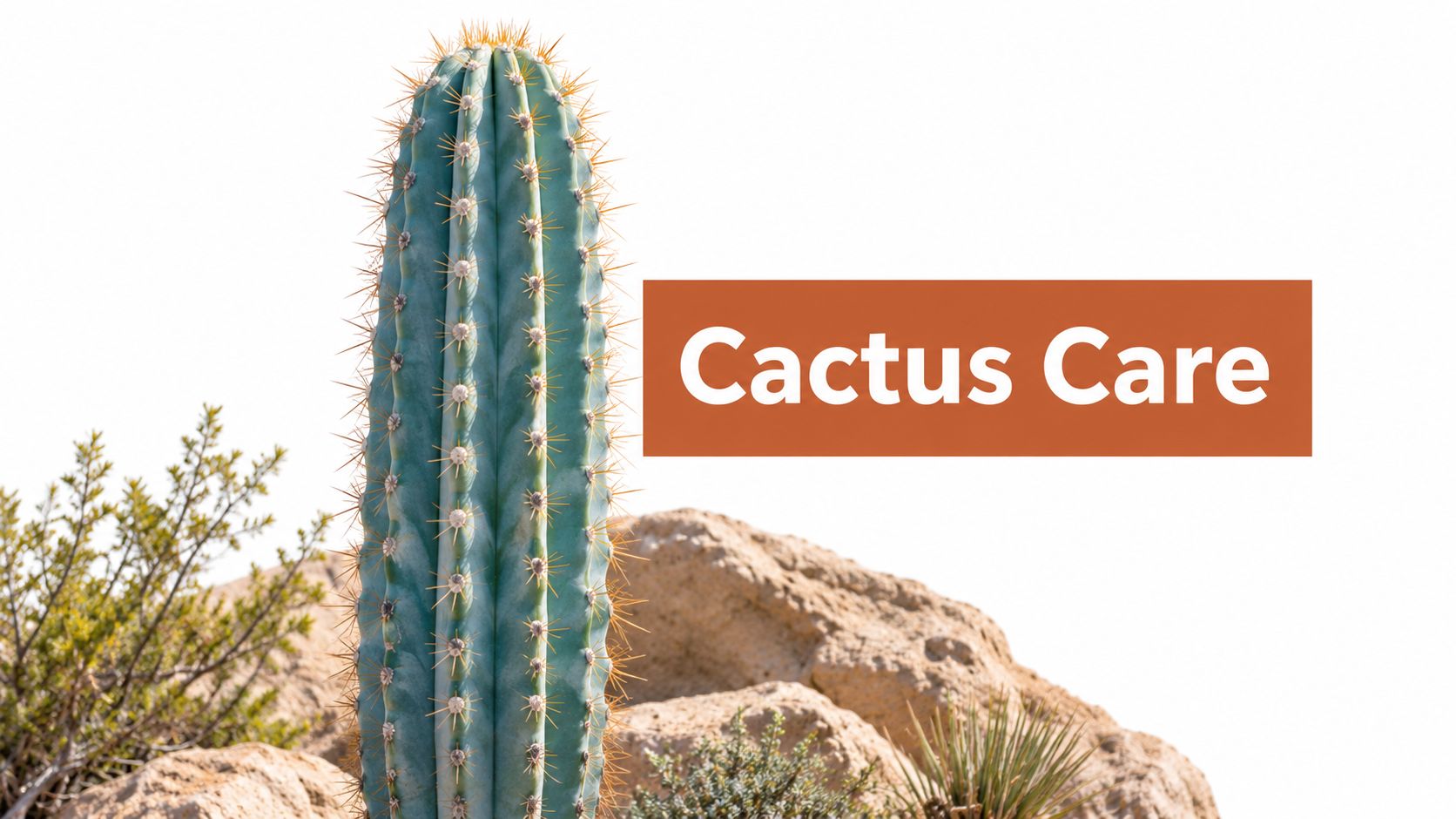

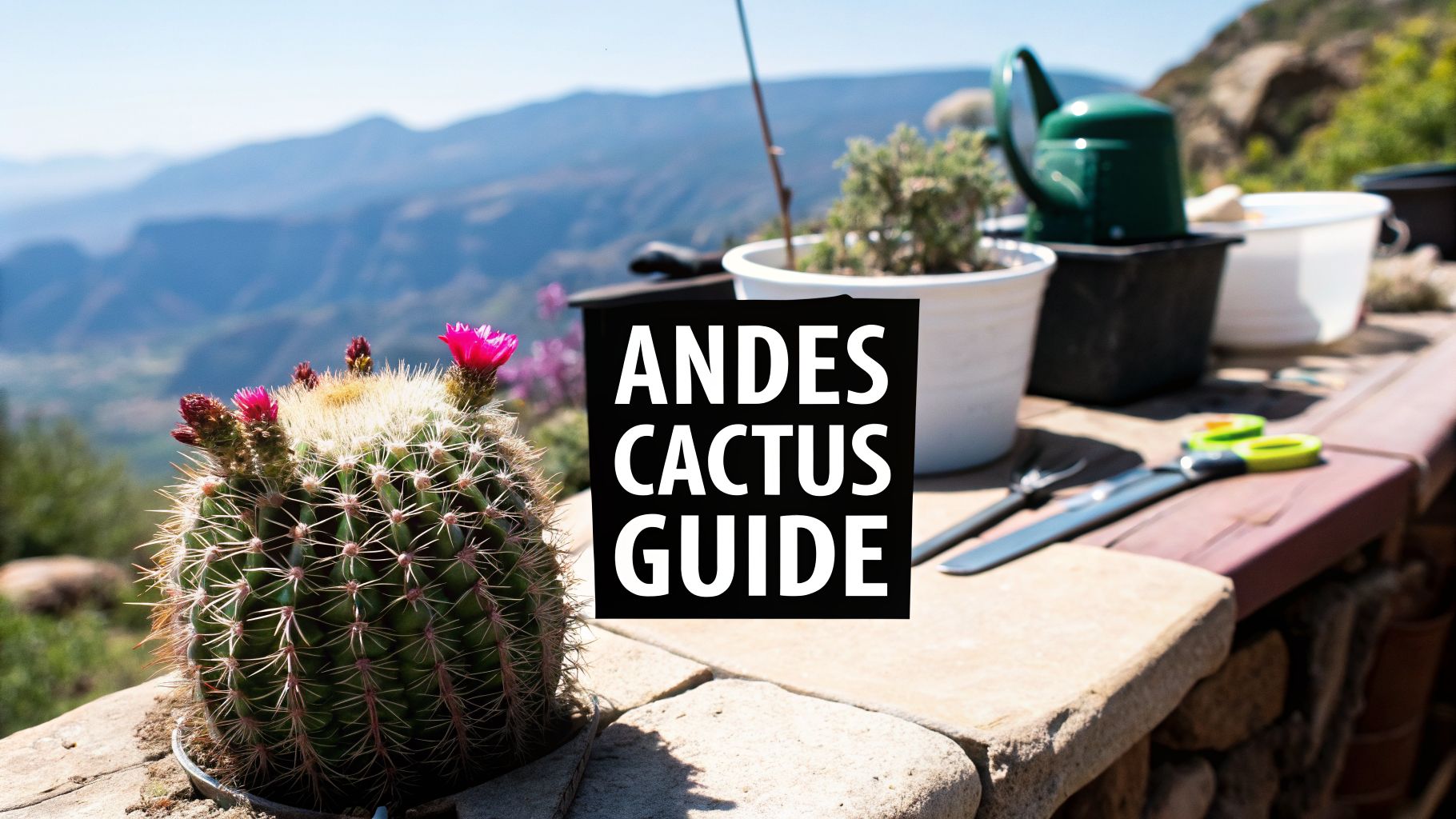

Picture a cactus so tough it bundles up in a fuzzy white coat to brave freezing mountain nights. That’s exactly what you get with the Old Man of the Andes (Oreocereus celsianus), a striking column cactus hailing from the high peaks of South America. Its most famous feature is a thick, snowy-white coat of hair, which isn't just for looks—it's a brilliant survival tool.
A Mountain Dweller's Story

Don't confuse this tough mountaineer with its more famous Mexican cousin, the "Old Man Cactus" (Cephalocereus senilis). Our Andean native is a high-altitude specialist, shaped by an environment of intense sun and wild temperature swings. This has made it an incredibly resilient and visually unique plant, coveted by cactus collectors and gardeners.
The entire appearance of the Old Man of the Andes is a masterclass in adaptation. Those long, hair-like spines are more than just decoration; they're the cactus's personal all-weather jacket.
This natural coat serves two critical functions:
- Built-in Sunscreen: It reflects the harsh ultraviolet rays found at high elevations, preventing the cactus’s green stem from getting scorched.
- Natural Insulation: The woolly layer traps air, creating a protective buffer against nighttime temperatures that can plummet well below freezing.
To get a quick overview of this cactus, here's a handy table summarizing its key features.
Old Man of the Andes Quick Facts
| Characteristic | Detail |
|---|---|
| Common Name | Old Man of the Andes, Old Man of the Mountain |
| Scientific Name | Oreocereus celsianus |
| Family | Cactaceae |
| Native Habitat | Andes Mountains (Bolivia, Argentina) |
| Elevation | 10,000 to 15,000 feet |
| Growth Habit | Slow-growing columnar cactus |
| Mature Height | Up to 10 feet tall |
| Key Feature | Dense, white, hair-like spines and sharp red central spines |
These details give you a snapshot of why this cactus is so special and what makes it tick.
From the High Peaks to Your Home
Understanding where Oreocereus celsianus comes from gives us all the clues we need for its care. It’s native to the arid, rocky slopes of the Andes Mountains in southern Bolivia and northern Argentina. Here, these amazing plants thrive at elevations between 10,000 and 15,000 feet, an altitude where few other plants can survive.
This high-mountain origin is the secret to its care. The cactus is hardwired for bright, intense light, fantastic drainage, and big temperature drops between day and night. If you can mimic these conditions, you'll have a happy plant.
This is a slow-growing cactus. A towering, mature specimen you might see in a botanical garden is the result of many, many years of steady growth. Your small plant from The Cactus Outlet could take a decade or more to become a truly impressive column, making the journey of growing one incredibly rewarding.
Its unique origin story firmly places it among the most fascinating diverse cacti of South America. In the sections ahead, we’ll dive into exactly how you can provide the best care for this woolly wonder.
Why This Cactus Wears a Woolly Coat

The famous white hair of the Old Man of the Andes isn't just for show—it's a brilliant survival tool crafted by millions of years of evolution. This dense, woolly fleece is exactly how Oreocereus celsianus manages to thrive in the brutal, high-altitude conditions of its homeland, making it one of the toughest cacti you can bring into your collection.
Just picture its home environment: a mountain peak soaring over 10,000 feet. Up there, the sun is punishingly intense by day, but the moment it sets, temperatures can plunge below freezing. The hair on this cactus is like a built-in, all-weather jacket, perfectly designed for these extremes. It’s a physical trait that tells a fascinating story of adaptation and raw resilience.
This natural coat serves two critical functions. First, it's a personal climate control system. And second, it’s a powerful shield against the sun's most damaging rays.
A Natural Sunscreen
One of the biggest threats in the high Andes is the relentless ultraviolet (UV) radiation. With a thinner atmosphere offering less protection, the sun is incredibly harsh. The cactus's dense, white hairs act like a million tiny mirrors, reflecting a huge amount of that sunlight away from the plant's sensitive green skin (its epidermis).
This is absolutely crucial. Just like our own skin can burn, a cactus can get scorched by too much UV light, which shuts down photosynthesis and damages its cells. That woolly coat is its permanent, built-in sunblock.
And this isn't just a minor benefit. Research shows the hair reflects about 30-40% of the sun's intense rays while also insulating the plant from wild temperature swings. You can dig deeper into these incredible adaptive traits over at the University of Arizona's arboretum website.
Insulating Against the Cold
Beyond sun protection, that woolly coat is a fantastic insulator. The hair traps a layer of air right against the cactus's stem, creating a thermal buffer. Think of it like a down jacket or a thick wool blanket—the trapped air slows down heat loss, protecting the plant when nighttime temperatures plummet.
This insulation is especially important for the most vulnerable part of the cactus: its apex, or growing tip. This is where all the new, tender cell growth happens. Any damage here could stunt the plant or even prove fatal.
You'll probably notice the hair is always thickest right at the very top of the cactus. That's no accident. The plant puts its energy into protecting the newest, most delicate growth from both bitter cold and intense sun, making sure it can keep growing, season after season.
It’s an incredibly efficient design. As the cactus gets taller, the lower parts of the stem mature and toughen up, and you might see the hair become a bit thinner there. The plant is smart, focusing its resources where they're needed most.
A Hidden Surprise of Color
For all its shaggy, white appearance, the Old Man of the Andes is hiding a pretty stunning secret. When mature plants are happy and healthy, they produce breathtaking flowers in the spring and summer. The blooms are a vibrant magenta or a deep reddish-pink, creating a spectacular contrast against all that white wool.
These flowers usually pop out from the sides of the stem near the top. Their tubular shape is another clever adaptation, designed to attract specific pollinators like the hummingbirds of the Andes. It's a beautiful pop of color that reminds us that even the toughest-looking plants have a delicate side.
Creating the Perfect High-Altitude Habitat at Home

Growing a healthy cactus old man of the andes doesn't mean you need a mountain in your backyard. It's really just about understanding its native environment and translating that into simple, practical care. Think about where it comes from: the Andes mountains, a world of intense sun, rocky soil, and clear-cut wet and dry seasons.
If you can nail a few key areas, you'll have a thriving cactus with a magnificent woolly coat and strong, upright growth. Get these right, and you're bringing a genuine piece of the Andes right into your home or garden.
Let There Be Light, and Lots of It
For Oreocereus celsianus, light isn't just a preference; it's the most critical ingredient. Up in the mountains, these cacti are absolutely blasted with unfiltered, high-altitude sun all day long. To keep them happy, you have to provide at least six hours of direct, bright sunlight daily.
If you're growing your cactus indoors, a south-facing window is your best friend. That's where you'll get the most powerful and consistent light. If your home just doesn't have a spot that sunny, a good quality grow light is a fantastic substitute. Without enough light, your cactus will stretch out and look pale, a condition called etiolation.
For those planting outdoors, find a spot that gets full morning sun. In extremely hot climates, a little light afternoon shade can be a good thing, preventing the cactus from getting scorched. Remember, that bright sun is what fuels its growth and encourages that dense, white hair that makes this species so iconic.
The Right Soil Foundation
I've seen more desert plants fail from the wrong soil than from almost any other cause. The cactus old man of the andes is native to rocky, gravelly slopes where water vanishes almost instantly. Its roots simply can't handle sitting in moisture, which is a fast track to the dreaded problem of root rot.
Your potting mix absolutely must be gritty and fast-draining. Forget about using standard potting soil on its own—it's far too dense and holds on to water for way too long.
Think of your pot as a mini mountain slope. Water should rush right through, not hang around. A great way to test your soil is to water the pot and watch the drainage hole. If water flows out within a few seconds, you've got it just right.
Here's a simple recipe that works beautifully:
- 50% Pumice or Perlite: These lightweight volcanic rocks create air pockets and ensure drainage is sharp and immediate.
- 30% Coarse Sand: This adds some grit and weight, which helps anchor the cactus securely in its pot.
- 20% Standard Cactus Mix: This little bit of organic matter provides just enough nutrients to get started.
This blend guarantees that water never pools, keeping the roots dry and healthy.
A Smart Watering Strategy
When it's time to water, the rule is "soak and dry." This means you give the plant a thorough drink, letting water run freely out of the drainage holes. Then, and this is the important part, you let the soil dry out entirely before you even think about watering again. During the active growing season in spring and summer, this usually works out to watering every 2-4 weeks.
In winter, the cactus goes dormant and its needs change dramatically. Cut back on watering to just a light drink every 6-8 weeks. This is just enough to keep the roots from completely desiccating. So many people make the mistake of overwatering in the winter, and it's almost always fatal.
Feeding for Slow and Steady Growth
These cacti are not heavy feeders. In their natural habitat, they survive on the sparse nutrients found in rocky soil. When you do fertilize, use a specialized low-nitrogen cactus fertilizer and dilute it to half the recommended strength.
Feed it only once or twice during the entire spring and summer growing season. Once fall arrives, stop fertilizing completely until the next spring.
Temperature and Hardiness
Coming from the mountains, Oreocereus celsianus is surprisingly tough when it comes to cold. It is generally hardy in USDA zones 9-11. While it can handle a light, brief frost, it needs to be protected from hard freezes, with its absolute minimum temperature being 10°F (-12.2°C). Of course, it also needs that 6 hours of daily sun to truly thrive. This unique combination of cold tolerance and sun worship has made it a popular plant in warmer regions and for indoor growers with grow lights. You can learn more about how its needs influence its popularity and its expanding market.
If you live in a colder zone, your best bet is to grow it in a pot. That way, you can easily move it into a garage, a shed, or indoors when a deep freeze is in the forecast. Taking that one simple step will ensure your woolly wonder survives the winter to greet the spring.
How to Propagate and Grow Your Cactus Collection
One of the best parts of keeping the Old Man of the Andes is making more of them. Seeing new plants take root from your own collection is a fantastic experience. While this cactus isn't known for its speed, propagating it yourself really connects you to its entire life cycle.
You essentially have two paths to choose from: the patient, long-term journey of growing from seed, or the much faster route of taking cuttings. Each has its own rhythm and rewards, so the right choice really just depends on what you're looking for as a grower.
Propagating from Seed
Growing Oreocereus celsianus from seed is the ultimate test of patience. I'm not going to lie—it's slow. But there is nothing quite like watching a tiny, almost dust-like seed transform over the years into one of these magnificent, woolly giants.
You can get your seeds by harvesting the fruit after your cactus flowers, or you can buy high-quality seeds from a trusted supplier if you don't have a mature plant yet. The key to getting them started is absolute cleanliness.
- Prep Your Soil: Start by making a sterile mix. I like to use equal parts fine sand and a good cactus mix. To sterilize it, just bake the slightly damp soil in your oven at 300°F (150°C) for about 30 minutes. Make sure it cools down completely before you use it.
- Sow the Seeds: Spread your sterile mix in a shallow tray and just sprinkle the seeds on top. Don't cover them with soil! They need light to get the signal to germinate.
- Lock in Humidity: Give the soil a light misting with water, then cover the tray with a clear plastic dome or some plastic wrap. This creates a mini-greenhouse that keeps the humidity high, which is exactly what they need.
- Keep it Warm and Bright: Find a warm spot that gets plenty of bright, indirect sunlight. Now comes the waiting game. Germination can take anywhere from a few weeks to several months, so just be patient.
Once your tiny seedlings are big enough to handle without crushing them, you can gently transplant them into their own little pots.
Propagating from Cuttings
If you want a new plant that looks like a cactus this year, propagating from cuttings is your best bet. This technique is perfect for creating a clone of a plant you love or even saving a piece of a cactus that has been damaged. You’re simply taking a piece of a mature plant and convincing it to grow its own roots.
The single most important step here is allowing the cutting to callus over. If you skip this, you’re setting yourself up for failure. A fresh, wet cut will just soak up water and rot long before it has a chance to sprout any roots.
Here’s how to do it right:
- Take a Clean Cut: Grab a sharp, sterilized knife and remove a piece from the top or a side arm of a healthy cactus. Aim for a section that's at least 4-5 inches long.
- Let It Heal: This is the callusing part. Place the cutting somewhere dry with good air circulation, out of direct sun. You need to let it sit for a few weeks—sometimes even a month—until the cut end is totally dry, hard, and looks sealed over.
- Plant the Cutting: Once it's calloused, you can plant it. Just push the cutting about an inch deep into a pot filled with a dry, gritty cactus mix. If it’s a bit wobbly, use some bamboo stakes or chopsticks to hold it upright.
- Wait to Water: Resist the urge to water it immediately! Let it sit in the dry soil for at least two weeks. This forces the cutting to send out new roots in search of moisture. After that, you can start watering very lightly.
This method works like a charm and is so much faster than starting from seed. For a more detailed walkthrough, be sure to check out our complete guide on how to propagate cactus from cuttings.
Styling and Designing with Your Woolly Cactus

Once you've nailed the basic care, the real fun begins. A cactus old man of the andes isn't just a plant; it's a living sculpture, and its strong vertical lines and snowy white hair make it a natural masterpiece. Whether it's destined for your garden or a sunny spot indoors, this cactus is born to be a showstopper.
Think of its tall, columnar shape as a powerful accent. It's perfect for breaking up the monotony of flat garden beds or the horizontal lines of shelves and tables. The idea is to let its unique texture and form take center stage, making it the undeniable focal point of your design.
Designing a Desert Oasis Outdoors
If you're lucky enough to live in USDA zones 9-11, this cactus can become a magnificent permanent fixture in your landscape. Its love for sun and impressive drought tolerance make it a perfect fit for a xeriscape or rock garden, where it provides both striking height and a soft, fuzzy texture.
When laying out your garden, think about companion plants that enjoy the same conditions. You want to create a scene that looks cohesive and natural. Some great partners include:
- Agaves: The broad, architectural rosettes of an agave offer a fantastic visual contrast to the tall, slender column of the cactus.
- Aloes: Many aloe varieties bring their own striking foliage to the party, plus they often produce colorful blooms in the winter.
- Low-Growing Succulents: Spreading plants like sedums and echeverias work beautifully as a "living mulch," softening the base of the cactus and filling in the gaps.
A common mistake I see is planting everything too close together. The secret to a high-impact desert landscape is giving each plant enough room to be appreciated. Grouping different shapes and heights is what creates that dynamic, professionally designed look.
Crafting the Perfect Indoor Display
Bringing your woolly cactus indoors? The right pot and placement can transform it from a simple houseplant into a piece of living art. This plant craves light, so the best spot is almost always directly in front of a south-facing window. A spot like this will give it the all-day sun it needs to thrive.
As a bonus, when the sun shines through the window, it will backlight the cactus's fuzzy hair, making it practically glow.
Just as crucial is the container you choose. Your pot should complement the cactus, not compete with it for attention.
Pot Selection Tips:
- Go for Earthy Textures: Think unglazed terracotta, concrete, or stone planters. Their rustic, natural feel just works, echoing the cactus’s rugged mountain home.
- Play with Contrast: A dark charcoal or even a black pot will make the brilliant white hair pop. If you prefer a more classic, understated vibe, a simple tan or clay-colored pot is always a great choice.
- Drainage is Non-Negotiable: Whatever pot you fall in love with, it absolutely must have drainage holes. This is the single most important factor in preventing root rot and keeping your cactus healthy long-term.
To finish the look, check out the fantastic curated planters at The Cactus Outlet. Finding that perfect pot is the final, rewarding step in creating a beautiful home for your unique specimen.
Troubleshooting Common Cactus Pests and Problems
Even a cactus as tough as the Old Man of the Andes can run into trouble. While this is an incredibly hardy species, most problems you'll encounter are a direct result of its environment—usually a simple mistake in care or a few unwelcome pests. Let's walk through how to spot and fix these common issues to keep your woolly cactus in prime condition.
By far, the biggest threat to this cactus is overwatering. It's an easy mistake to make. These plants evolved in dry, rocky terrain, and their roots simply can't handle sitting in wet soil. If the base of your cactus feels soft and mushy or the plant just looks unwell, root rot is the likely culprit. You have to act fast.
Tackling Root Rot
First, gently slide the cactus out of its pot and clear away all the old soil from the roots. Take a good look at the root system. You'll need to trim off any roots that are black, mushy, or smell foul, leaving only the healthy, firm ones behind.
Once the surgery is done, let the cactus air-dry in a shady spot for a few days. This allows the cuts to heal and form a callus. Then, repot it into a new pot with fresh, completely dry, gritty cactus mix. The most important part? Do not water it for at least two weeks. This forces the plant to push out new roots in search of moisture, which is exactly what you want.
Dealing with Unwanted Pests
That beautiful, dense wool that gives the Old Man of the Andes its charm is also a five-star hotel for pests. The two you're most likely to see are mealybugs and spider mites. These tiny insects feed on the plant's sap, and a full-blown infestation can cause serious damage.
-
Mealybugs: These pests look like tiny, fuzzy bits of white cotton. You'll usually spot them tucked deep in the plant's woolly coat or clustered near the base. A strong jet of water can knock them off, but for a more precise attack, dip a cotton swab in isopropyl alcohol and dab each bug individually.
-
Spider Mites: These minuscule arachnids are tough to see with the naked eye, but their signature fine webbing is a dead giveaway. They love dry, stagnant air, so boosting the humidity around the plant and spraying with an insecticidal soap is a great way to get them under control.
When you're treating for pests, try to be targeted. Soaking the plant’s entire woolly coat can lead to discoloration or even fungal growth. If you find yourself fighting a persistent battle, learning some general pest control strategies can give you a better long-term plan for keeping all your plants healthy.
Sometimes, you might notice the cactus's hair turning a bit yellow or brownish. This is often just an accumulation of dust or mineral deposits from hard water. However, if you see a new fluffy white substance that looks different from the plant's natural wool, it's worth investigating. Our guide can help you figure out if that white fuzz on your cactus is a pest, a fungus, or something else entirely.
Frequently Asked Questions About the Old Man of the Andes
As you get to know this one-of-a-kind high-altitude cactus, you're bound to have some questions. It's a plant with a lot of personality, after all! To help you feel confident in your care, we've put together answers for the most common things people wonder about the cactus old man of the andes.
Think of this as the final piece of the puzzle, clearing up any lingering confusion so you can get growing.
Is It the Same as the Old Man Cactus?
This is probably the number one question we get, and it's a great one! The short answer is no, they aren't the same plant. Their similar names cause a lot of mix-ups, but they come from completely different parts of the world.
- Old Man of the Andes (Oreocereus celsianus): This is our guy, hailing from the cold, high mountains of South America. His hair is coarse and woolly, and he's built to withstand frost.
- Old Man Cactus (Cephalocereus senilis): This cactus is from the warmer climates of Mexico. Its hair is much finer and softer, almost silky, and it wouldn't last long in a cold mountain environment.
While they both rock the woolly look, their care needs are worlds apart. It's crucial to know which one you're bringing home!
How Fast Does This Cactus Grow?
If you're looking for instant gratification, this isn't the plant for you. The Old Man of the Andes is a very slow-growing cactus. That's not an exaggeration—patience truly is a virtue here.
Even in perfect conditions with blazing sun and ideal watering, you might only see a few inches of growth in a year. More often, it’s even less than that. This incredibly slow pace is exactly why seeing a large, mature specimen is so awe-inspiring. You're looking at decades of slow, steady progress.
Can I Grow It Indoors?
You absolutely can! Oreocereus celsianus makes for a stunning indoor specimen, but it has one non-negotiable demand: light. Its happiness indoors is completely dependent on getting enough sun.
Find the sunniest window in your house, which is almost always a south-facing one. It needs at least six hours of direct sunlight every single day to stay healthy and compact. If your home is on the darker side, a good quality grow light is a fantastic investment to keep it from stretching out.
A tell-tale sign of not enough light is "etiolation." This is when the cactus starts to look pale and stretched, losing its thick, columnar shape and dense wool. Bright light is the only cure.
Why Is My Cactus Hair Turning Yellow or Brown?
It can be alarming to see that beautiful white wool start to look discolored. The good news is that it's usually an easy fix related to its environment, not a disease.
The most common culprit is how you're watering. Splashing water on the stem, especially hard water full of minerals, can stain the wool over time. Worse, lingering moisture can invite fungal growth. The solution is simple: always water the soil directly at the base of the plant and do your best to keep the stem dry. Dust and airborne debris can also dull the color, but you can gently clean it off with a very soft-bristled brush.
Ready to bring this magnificent, woolly wonder into your collection? The Cactus Outlet has healthy, beautiful Old Man of the Andes specimens, all carefully grown and ready to become the star of your home or garden.