

When people ask me how much sun their cactus needs, the answer I usually start with is simple: a lot. Most of the classic desert cacti we all love need a solid 6-8 hours of direct sunlight every day to really be happy. Think of it this way—sunlight is their main course. Without a full meal, they just can't power the growth we want to see.
Your Essential Guide to Cactus Sunlight
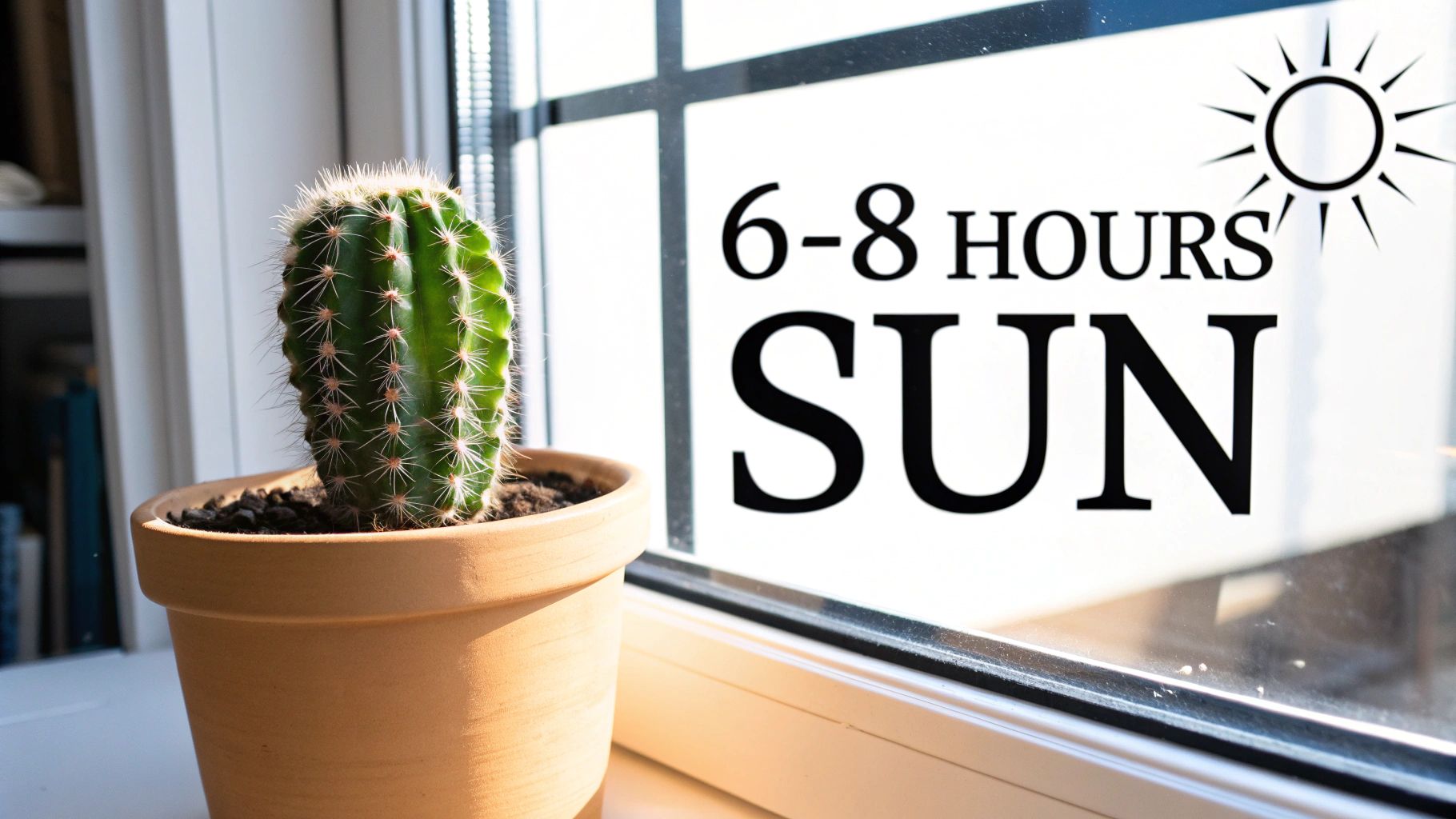
Figuring out the right kind of sunlight can feel a little tricky at first, but it really comes down to one key idea: not all light is the same. The difference between sitting in a softly lit room and standing directly under a theatrical spotlight is huge, and it's the same for your plants. That's the core difference between direct and indirect sun.
- Direct Sun: This is the strong, unfiltered sunlight your cactus gets when it's right in the path of the sun's rays, like in a clear south-facing window or out in the yard. It’s the power-packed light most desert species crave.
- Indirect Sun: This is that softer, more diffused light you find in a spot that’s bright but not in the sun's direct glare—maybe a few feet back from a sunny window or on a porch with an overhang. It’s perfect for cacti that evolved under a forest canopy.
The General Rule of Thumb
For those iconic desert cacti—the kind that probably pop into your head first, like the majestic Saguaro or a sturdy Barrel cactus you'd find at The Cactus Outlet—the rule is pretty straightforward. They are built for the intense sun of places like the Sonoran Desert and need 6-8 hours of direct sunlight to feel at home. You can get a deeper dive into how different cacti have adapted to their unique environments.
But—and this is a big but—that rule doesn't apply to every single one of the 2,000+ cactus species out there. Some, like the ever-popular Christmas Cactus, are actually tropical plants that grow in forests. They prefer bright but indirect light and can easily get scorched by the same sun a desert cactus loves.
Key Takeaway: The 6-8 hour rule is a fantastic starting point for desert cacti. Just remember to think about where your specific plant comes from. A sun-worshipping Barrel Cactus has completely different light requirements than a shade-loving jungle cactus.
To help you get started on the right track, I’ve put together this quick reference table. It’s a great way to see the general needs at a glance.
Cactus Sunlight At a Glance
| Cactus Type | Ideal Daily Sunlight | Best Location |
|---|---|---|
| Desert Cacti (e.g., Saguaro, Barrel) | 6-8+ hours of direct sun | South-facing window, outdoor garden |
| Forest Cacti (e.g., Christmas Cactus) | 4-6 hours of bright, indirect sun | East-facing window, shaded patio |
Think of this table as your cheat sheet. It helps simplify things, but always be ready to observe your plant and make small adjustments.
Why Your Cactus Is a Solar-Powered Wonder
To really get a handle on how much sun a cactus needs, it helps to stop thinking of it as just another houseplant. Instead, picture it as a perfectly engineered, solar-powered survival machine. When sunlight hits your cactus, it’s not just warming it up; it's delivering the raw fuel for life itself through photosynthesis.
Forget the dry, high-school-biology definition. Just think of photosynthesis as your cactus eating sunlight. It soaks up sunlight through its skin, breathes in carbon dioxide, and draws up water from its roots to cook up sugars—its own personal energy drink. This isn't just a daily meal; it’s a critical energy-stockpiling operation for the long haul.
A Living Solar Battery
The best way to think about a cactus is like a living, breathing solar battery. All day long, it soaks up as much solar energy as it can, converting it into chemical energy (those sugars we just talked about) and storing it right inside its thick, fleshy body. That stored power is what gets it through long, brutal stretches of drought when resources are nowhere to be found.
This energy reserve is the fuel for everything it does:
- Growing Strong: Powering the development of new pads, arms, or roots.
- Staying Vibrant: Producing the deep greens and rich pigments that also act as a natural sunblock.
- Flowering: Saving up enough energy to put on a spectacular floral show, which takes a massive amount of power.
A cactus doesn’t just live in the sun; it strategically harvests it. The energy it stores today is what ensures its survival and beauty tomorrow, turning fleeting sunlight into long-term resilience. This makes understanding light not just a care tip, but the key to unlocking your plant's full potential.
It's Not Just How Long, But How Strong
This "solar battery" idea perfectly explains why both the duration (how many hours of light) and the intensity (how strong that light is) are so crucial. A few hours of weak, filtered light is like trying to charge your phone with one of those tiny, pocket-sized solar panels. You might get a little juice, but you'll never get a full charge.
On the other hand, 6-8 hours of strong, direct sunlight is like plugging your cactus into a high-powered solar farm. This is what allows it to fully charge its reserves, giving it all the power it needs to not just survive, but to truly thrive, grow strong, and eventually flower. When you give your cactus the right light, you're giving this little solar-powered wonder the exact fuel it was designed to run on.
Not All Cacti Are Sun-Worshippers: Decoding by Species
It’s one of the biggest myths in the plant world: all cacti crave scorching, non-stop sun. But when you’re talking about a family with over 2,000 different species, one-size-fits-all rules just don't work. The real key to happy cacti is understanding where they came from.
Think about it. A Golden Barrel from the Sonoran Desert and a Christmas Cactus from a Brazilian rainforest couldn't be more different. One evolved to thrive under a blazing open sky, while the other adapted to the soft, dappled light filtering through a jungle canopy. Their native habitat is the ultimate instruction manual.
A cactus's origin story tells you everything you need to know about its sunlight needs. Desert natives crave the intense, direct sun they grew up with. Jungle dwellers prefer the gentle, filtered light of their forest home.
Giving your cactus the right light is all about recreating a tiny piece of its natural home, right in your own space.
The Sun Lovers: Desert Dwellers
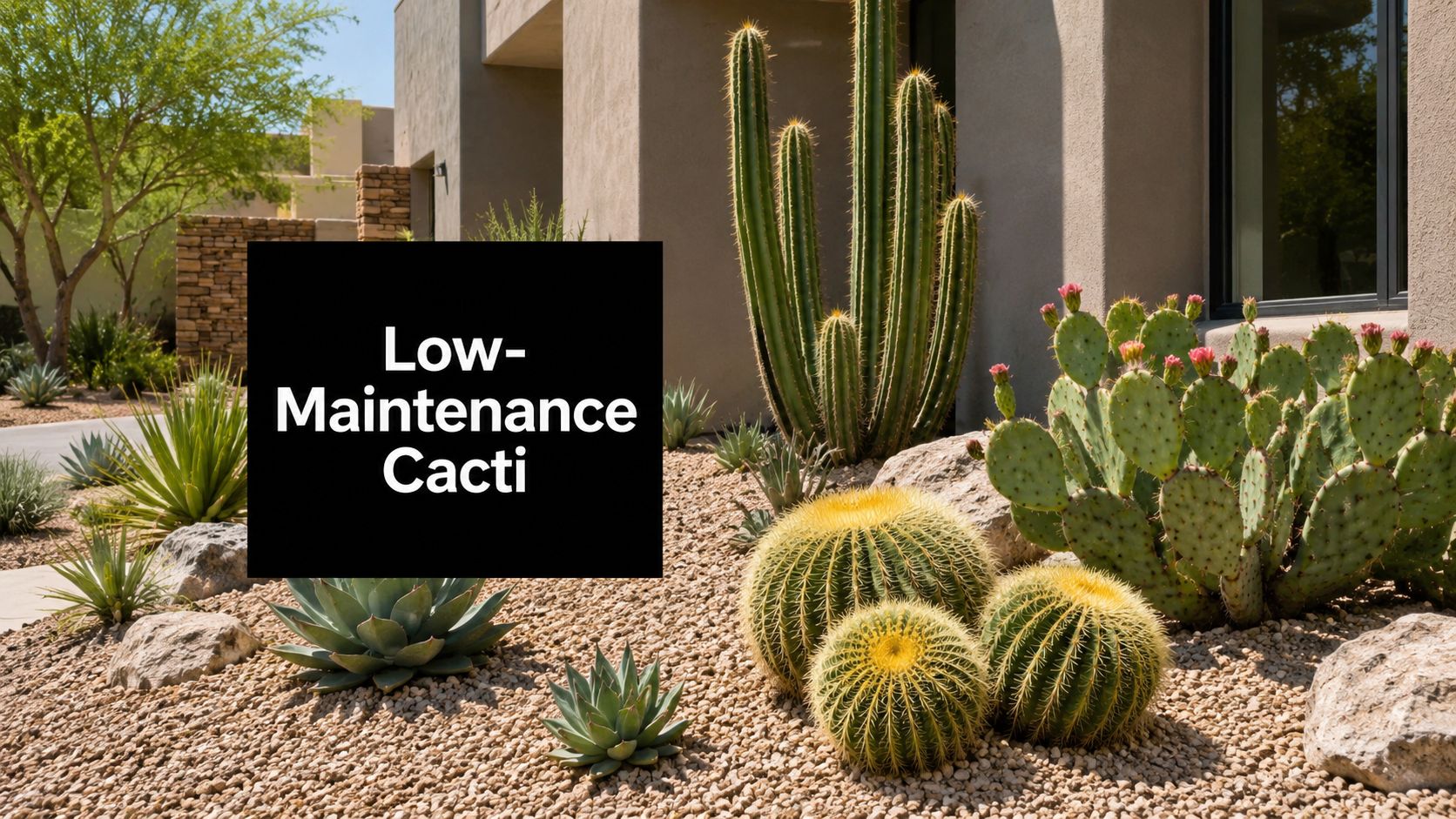
These are the cacti you probably picture first. The classics—like the iconic Saguaro, the stout Golden Barrel, and many types of Prickly Pear—are built to take a beating from the sun. They don't just tolerate intense light; they thrive on it.
To keep these guys happy, you need to give them at least six to eight hours of direct, unfiltered sunlight every single day. This is their fuel. It powers their slow, methodical growth and gives them the energy needed to produce those spectacular, vibrant flowers. Without it, they can become weak, pale, and might never bloom.
If you're aiming for that classic desert vibe, our guide on succulent plants that love full sun has a ton of great information to get you started.
The Shade Seekers: Jungle Natives
On the flip side, you have the jungle, or epiphytic, cacti. These are the outliers. Species like the much-loved Christmas Cactus, Thanksgiving Cactus, and the stringy Rhipsalis naturally grow on other trees in tropical rainforests, never even touching the ground. They’re used to bright light, but it’s always filtered through the leaves above them.
Here's a quick rundown of what they like:
- Light Duration: They're happy with about 4-6 hours of bright light each day.
- Light Intensity: Indirect is the name of the game. They can handle a bit of gentle, direct morning sun, but the harsh afternoon sun will scorch their delicate, leaf-like stems.
- Placement: An east-facing window is often the sweet spot. It provides that soft morning light without the blistering heat that comes later in the day.
At home, you might find that desert cacti do best right next to a glass door to soak up every last ray, which often results in more colorful spines and better blooms. For our bulk buyers, we've seen amazing results from setups that use reflective walls to mimic intense desert conditions. Nailing these key differences is the first real step to becoming a cactus pro.
How to Read the Signs of Sun Stress
Your cactus is a master of subtle communication, sending out quiet signals long before a real problem takes hold. Learning to read these signs is like becoming a plant detective, letting you catch lighting issues early and make corrections. The key is knowing what to look for when your cactus gets either too much or too little sun.
Too Little Sun: The Desperate Stretch
If your cactus isn't getting enough light, it will literally start searching for more. This process, called etiolation, is its most obvious cry for help. You'll notice the plant looks stretched out and thin, often turning a pale green or yellowish color as it reaches desperately toward the nearest window or light source.
Instead of its normal compact, robust shape, it will appear lanky and weak. It’s a clear sign your cactus is starving for light and needs a brighter spot, fast.
This handy flowchart shows a simple way to think about your cactus's original habitat and how that translates to its sunlight needs at home.
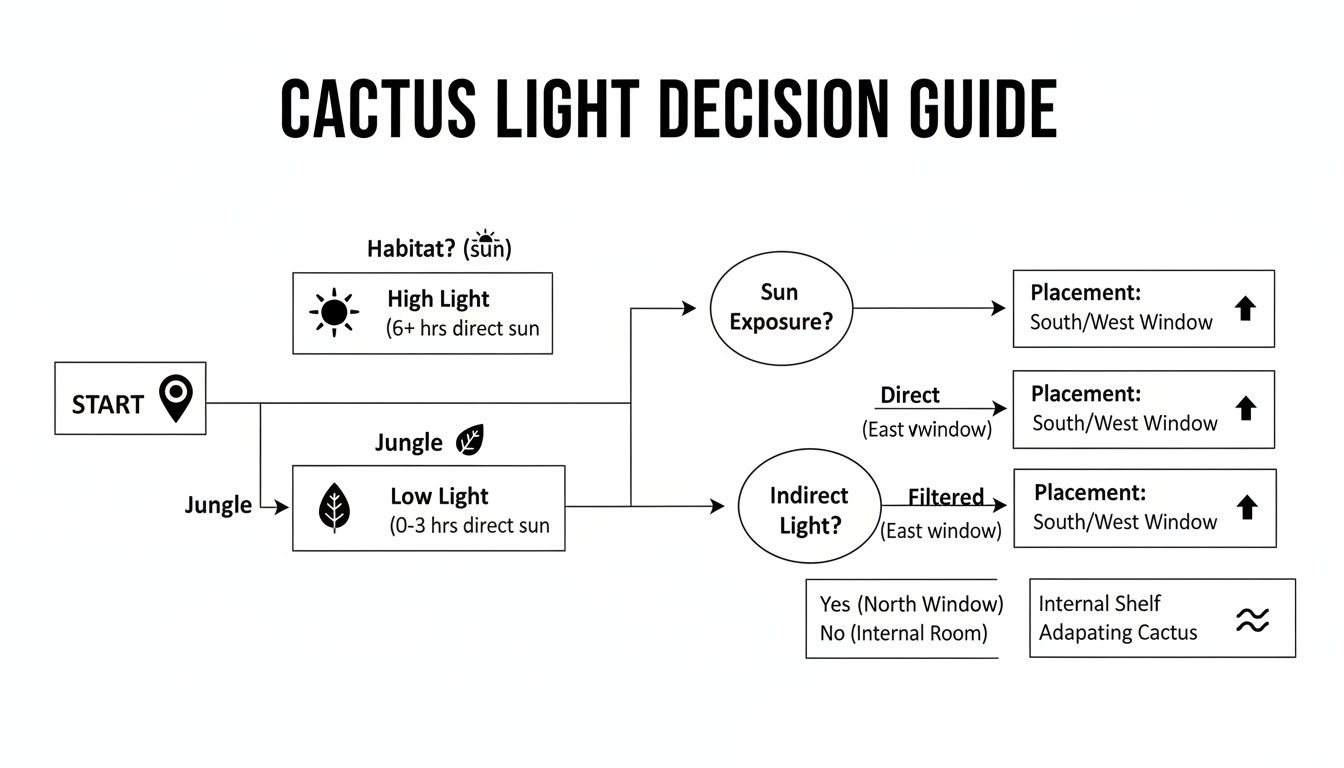
As you can see, a cactus's native environment—whether it's a sun-drenched desert or a shaded forest floor—is the biggest clue to giving it the right light.
Too Much of a Good Thing: Cactus Sunburn
On the flip side, even the most sun-loving desert cacti can get sunburned. This usually happens when the light is just too intense—think scorching afternoon sun—or when a plant is moved into direct sunlight too quickly without time to adjust.
Sunburn on a cactus isn’t a temporary red mark; it's permanent tissue damage. The risk is real: excessive direct sun scorches an estimated 25-40% of unprotected plants each year, especially those new to an environment. Yet, providing a balanced 6-8 hours of appropriate sun exposure is the sweet spot for over 90% of the species we carry here at The Cactus Outlet.
What does this damage look like? You’ll see discolored patches, usually on the side of the cactus getting the most sun.
- White or pale yellow spots are the first sign of bleached tissue.
- Brown and crispy areas indicate severe, irreversible scorching.
Unlike etiolation, which can be corrected over time with better light, sunburned spots are scars that will not heal. The best you can do is move the plant to prevent more damage. For a deeper dive, check out our guide on whether cacti need direct sunlight to find that perfect balance.
To make it easier, here's a quick reference table to help you diagnose what your cactus is trying to tell you.
Diagnosing Cactus Light Problems
| Symptom | Too Much Sun (Sunburn) | Too Little Sun (Etiolation) |
|---|---|---|
| Color | White, yellow, or brown/black patches (scorch marks) | Pale green, washed-out, or yellowish overall color |
| Shape | No change in shape, but has localized, scarred patches | Stretched, thin, and lanky; appears weak |
| Growth Pattern | Growth may stop near the damaged area | Growing leaned or bent toward a light source |
| Texture | Can feel dry, crispy, or mushy at the burn site | Soft, weak, and fragile stem or pads |
| Permanence | Damaged spots are permanent scars | Can be corrected with more light, but stretched growth remains |
Paying attention to these signs allows you to fine-tune its environment and keep it healthy. A happy cactus has a deep, uniform color and a compact, sturdy shape. Any stretching, fading, or scorching is a direct message that its lighting needs an adjustment.
And while light is critical, sometimes other issues can cause confusing symptoms. For instance, understanding why your plants are turning yellow can help you rule out problems like overwatering. By staying observant, you can ensure your cactus stays vibrant and strong for years to come.
Mastering Light for Indoor and Outdoor Cacti
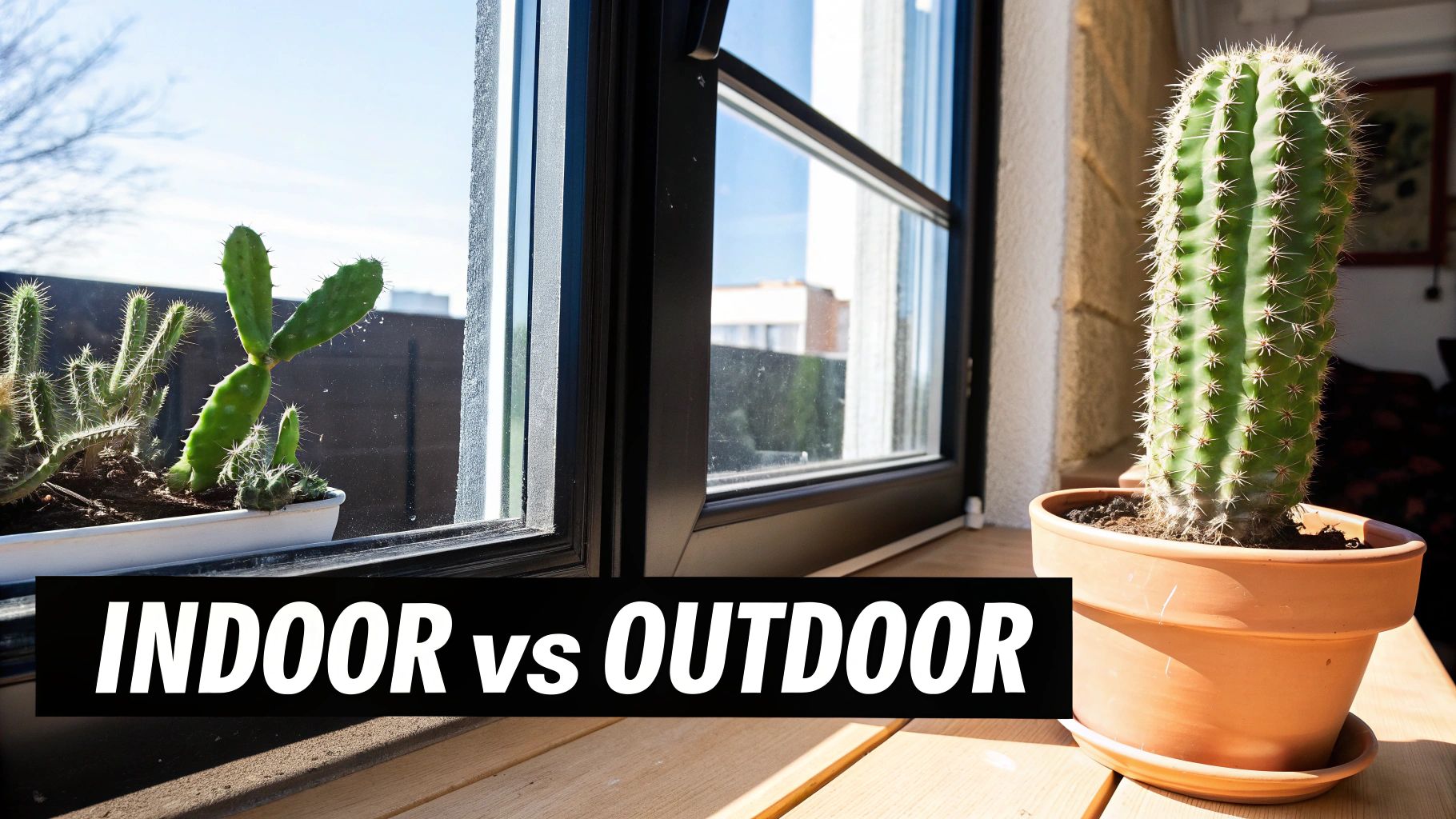
The rules of the game for sunlight change a bit depending on whether your cactus is a houseplant or a garden fixture. The trick is to mimic its native environment as best you can, but the way you do that is different inside versus out.
A cactus sitting on your windowsill is completely at your mercy for light. It can't get the benefit of the sun arcing across the sky, which makes your placement choices absolutely critical.
Perfecting Your Indoor Cactus Setup
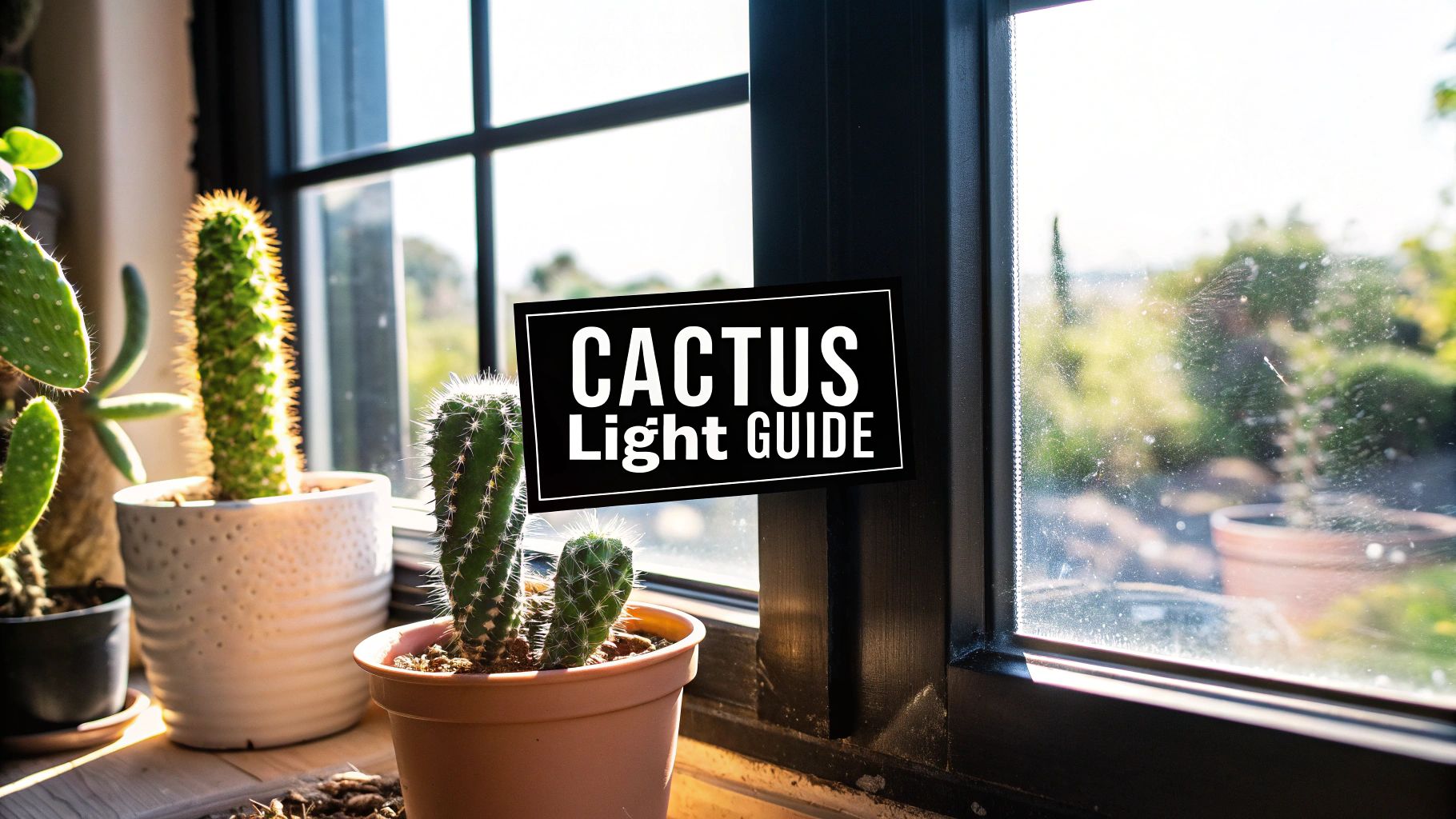
For those classic desert cacti that adore the sun, a south-facing window is prime real estate. This spot gets the most direct, intense sunlight for the longest part of the day, which is exactly what they're built for. If you don't have a south-facing window, an east-facing one is a good runner-up, providing bright but gentler morning sun. A west-facing window works too, but be aware that the afternoon sun can be particularly harsh.
Remember, the light coming through a window is hitting your cactus from only one direction. To keep it from leaning and reaching for the sun, give the pot a simple quarter-turn every week or so. It’s a small habit that makes a huge difference in encouraging straight, healthy growth.
Don't have a sunny enough spot? Don't despair. A good full-spectrum LED grow light can be a total game-changer. It'll fill in the gaps on cloudy days or in a darker room, ensuring your cactus gets the energy it needs to thrive.
If you want to dive deeper into finding the perfect spot, our guide on where to put a cactus in the house has plenty of room-by-room advice.
Thriving in the Great Outdoors
Outdoor cacti get to bask in the full, unfiltered power of the sun. But with great power comes great responsibility! You can't just take a cactus from a sheltered nursery and plop it into the most sun-blasted spot in your yard—that's a surefire way to give it a nasty sunburn.
The magic word here is acclimation. You have to ease it into its new, intense environment. Established cacti can take the summer heat in stride, but a new plant needs to be introduced slowly. Gardeners often find that increasing direct sun exposure by just 30 minutes each week is a safe way to prevent sunburn, which can damage 20-30% of plants that are moved too quickly.
Even the toughest, most seasoned desert cacti can appreciate a little relief during the peak of summer. A 30% shade cloth can be a lifesaver during the hottest hours of the day, filtering out the most damaging rays without starving the plant of light. A bit of strategic garden planning goes a long way, too—try placing more delicate species where they'll get some afternoon shade from a wall or a larger, tougher plant.
Your Year-Round Cactus Sunlight Strategy
Figuring out how much sun your cactus needs isn't a "set it and forget it" task. You have to think like the seasons. A cactus's needs change throughout the year, mirroring the cycles it would experience in the wild. A good strategy is all about anticipating those changes so your plant can thrive.
Think of it this way: in winter, the sun hangs lower in the sky and the days are short. Your job is to maximize whatever light you can get to prevent your cactus from getting pale and stretchy—a problem we call etiolation.
But here’s a little secret: that cooler, dimmer winter period isn't necessarily a bad thing. For many desert cacti, this seasonal shift is a crucial signal. It tells them to slow down, conserve energy, and prepare for a big show of flowers once spring arrives.
How to Acclimate a Cactus to New Light
One of the most common mistakes I see is moving a cactus too quickly. You can't just take a plant from a low-light shelf and plop it into a blistering south-facing window. That's a recipe for disaster and the number one cause of cactus sunburn, which leaves permanent, ugly scars.
The key is acclimation. You have to introduce your cactus to its bright new home slowly, over time.
Here's a simple, foolproof process to follow:
- Start with an Hour: On the first day, let the cactus sit in its new sunny spot for just one hour. Then, move it back to its old, shadier home.
- Increase Slowly: Every couple of days, add another 30-60 minutes of direct sun. Don't rush it.
- Watch for Signals: Keep a close eye on your plant. If you see any pale, yellow, or whitish patches starting to form, that's a sign of stress. Pull it back into the shade for a bit.
- Take a Week or Two: A full acclimation process should take about 1 to 2 weeks. This gives the cactus time to build up a "tan" and protect itself from the intense light.
Proper acclimation is non-negotiable. It's the difference between a resilient, sun-hardened cactus and one that's permanently scarred by sunburn. Taking it slow is always the right move.
When winter light dips below 12-14 hours a day, many cacti naturally go dormant. While this is normal, you can always supplement with grow lights to maintain more vigorous health and color. A consistent, thoughtful approach helps your collection thrive all year long, respecting the millions of years of evolution that you can learn more about in this article on how cacti have adapted to various sun conditions.
Common Questions About Cactus Sunlight
Even with a solid plan, you're bound to run into specific situations that make you wonder if you're doing things right. Let's walk through some of the most frequent questions I hear from fellow cactus owners, so you can solve problems with confidence.
Can a Cactus Survive with No Windows?
I get this one a lot. The short answer is no, not really. A cactus simply can't survive long-term without light. If you're set on keeping one in a windowless room, a high-quality, full-spectrum LED grow light isn't just a nice-to-have; it's essential.
Think of it as life support. You'll need to run that light for a good 10-14 hours every day to give the cactus enough energy to photosynthesize. This artificial sun is its only source of power, and without it, the plant will unfortunately weaken and fade fast.
Is My Grow Light Strong Enough?
The best way to know for sure is to watch your cactus. It will tell you everything you need to know. If you see it getting thin and stretchy as it reaches for the light (a classic sign called etiolation) or if its vibrant color starts to look pale, your light probably isn't strong enough or it's too far away.
Here’s a good starting point for setting up your grow light:
- Distance: Position the light about 6 to 12 inches above the top of your cactus.
- Duration: Set a timer and keep it on for a consistent 10-14 hours per day.
- Observation: Check on it weekly. If you spot any stretching, lower the light a bit.
What If My South-Facing Window Is Too Hot?
This is a classic problem. It seems like the perfect spot, but sometimes it's just too much of a good thing. Even desert cacti can get scorched, especially if they haven't been slowly introduced to that intense heat. Window glass can act like a magnifying glass, creating a hotspot that can literally cook your plant.
If you start seeing white or yellowish, bleached-out patches on your cactus, that's sunburn. The plant is getting fried. The easiest fix is to diffuse that intense light.
Just move the plant a couple of feet back from the window. Another great option is to hang a sheer curtain. This simple trick filters the harsh midday sun, turning it into the bright, indirect light your cactus can actually enjoy without getting burned.
Ready to find the perfect sun-loving specimen for your home or garden? Explore the incredible variety of healthy, vibrant plants at The Cactus Outlet and get expert advice to help your collection thrive. Find your next favorite cactus today at https://www.cactusoutlet.com.