

You're probably at the point where the yard needs one strong focal plant, not another small pot that disappears in the yard. Maybe you've measured the patio, maybe the designer wants a vertical anchor, or maybe you've already learned that a “large” cactus can mean anything from a manageable container plant to a freight delivery with a crane day attached. The smart move is to treat large cactus plants for sale like a real purchase category, because that's exactly what it is.
The cactus market backs that up. One market study places the global cactus plants market at USD 6.85 billion in 2024 and projects USD 23.84 billion by 2034 at about 16.24% CAGR from 2025 to 2034, while another puts it at USD 5.18 billion in 2024 and USD 15.08 billion by 2032 at 16.37% CAGR (Zion Market Research). For buyers, that means large cacti aren't novelty stock anymore, they're part of a serious landscaping and decorative market with real logistics behind them.
What Large Cactus Plants Actually Mean
A buyer can get burned fast by the word large. One person sees a 15-gallon container and thinks they're buying a statement piece, while the contractor on the same job needs a crate-sized specimen that arrives ready for placement, not a shelf accent. The only way to shop cleanly is to separate height, container size, and actual mass.
The size tier that matters
In practice, the market reads in three tiers. Tabletop plants sit under 2 feet and behave like ordinary nursery inventory. Statement plants run from 2 to 5 feet and start to affect transport, loading, and placement. Specimen plants are 5 feet and above, and that's where shipping becomes a project instead of a box.
Practical rule: height alone lies. A thin column at 4 feet and a mature, rooted specimen at 4 feet can belong to completely different logistics categories.
| Size Tiers for Large Cactus Plants | Height Range | Container Size | Approximate Weight |
|---|---|---|---|
| Tabletop | Under 2 feet | Small nursery pot | Light enough for parcel handling |
| Statement | 2 to 5 feet | 15-gallon to larger nursery container | Heavy enough to need careful unloading |
| Specimen | 5 feet and above | Crated or oversized container | Freight-level handling |
Photos can mislead here. A plant photographed in a wide ceramic pot looks bigger than one in a plain grow pot, and a wide-angle phone shot can make a modest cactus seem like a giant. If you're unsure, read the product page for the container size, not just the height.
If you want more context before you compare listings, discover our latest stories for broader outdoor buying ideas that help frame large plant purchases without the marketing fluff.
Best Large Cactus Species to Consider
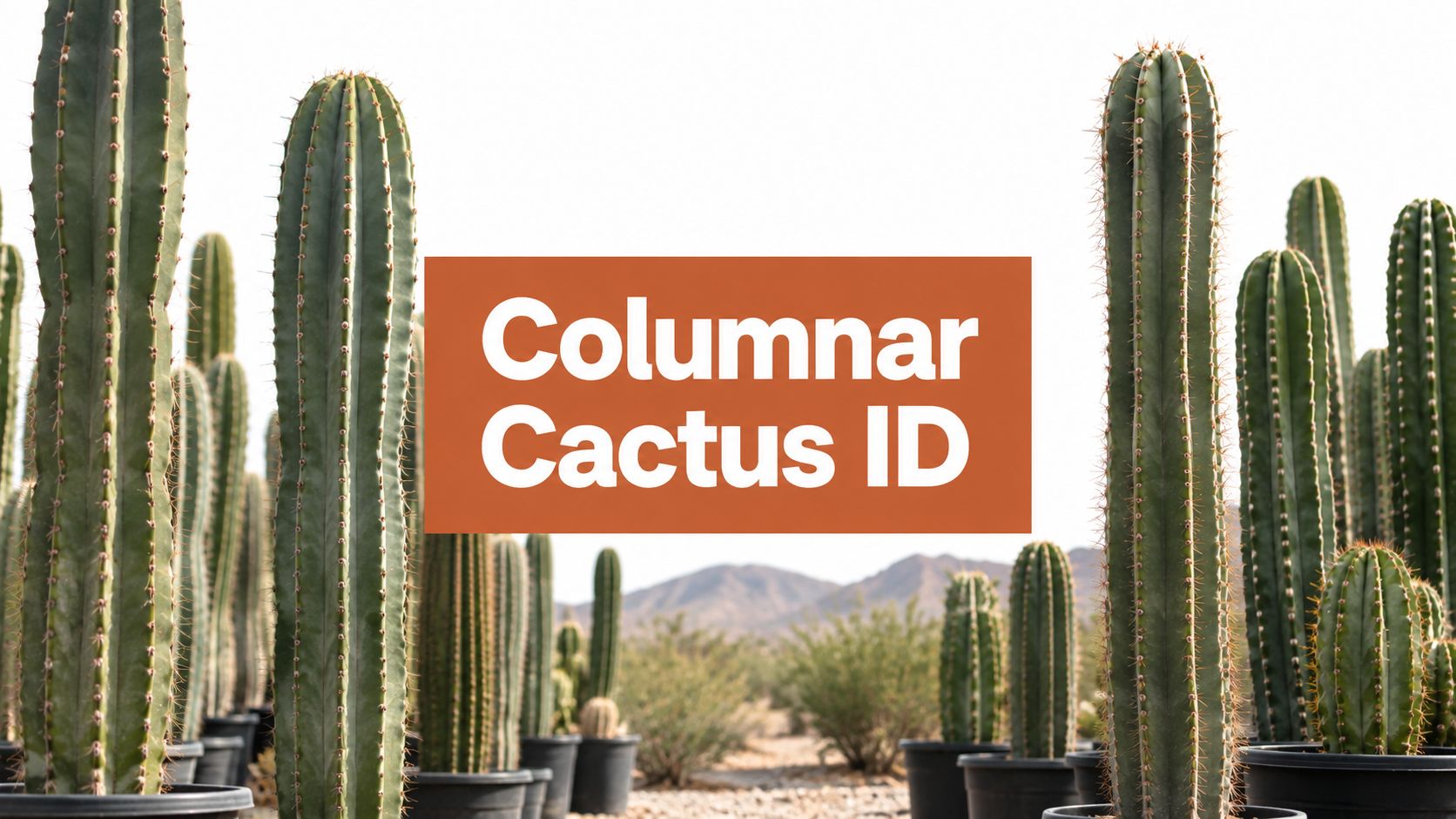
Not every big cactus belongs in every yard. The right pick depends on whether you need a patio focal point, a drought-tolerant anchor, a privacy screen, or a collector specimen with real presence. For most U.S. buyers, the answer is usually not a true Saguaro, it's a look-alike or a structurally similar columnar plant that fits the climate better.

Match the plant to the job
Saguaro (Carnegiea gigantea) is the classic patio focal point. It's iconic, slow-growing, and demands space. Use it when the design brief is visual impact and you're willing to pay for a mature specimen rather than wait years for one.
Euphorbia ingens gives you tree-like structure with a softer, architectural read. It's a strong choice for a drought-tolerant garden anchor when the goal is desert drama without the exact silhouette of a true cactus.
Mexican Fencepost (Pachycereus marginatus) is the practical privacy-screen plant. Dense, columnar, and easy to plant in rows, it solves the “I need a living wall” problem better than many flashy specimens.
For scale, the cardón, Pachycereus pringlei, is documented as the world's largest cactus, reaching up to 19 metres and 25 tonnes, with about 12 ribs on average and thick columnar stems (Nieuwkoop Europe). That's not a casual patio plant, it's a structural specimen that changes how you plan transport and site prep.
If you're shopping for indoor display or smaller accent pieces, selecting indoor cactus varieties is a useful starting point, but it's a different buying category from outdoor-scale stock. For a broader category view, the internal guide on types of large cactus is the right companion page.
For buyers who care about provenance, some nursery stock is grown from seeds and cuttings rather than wild-collected, which matters when you're paying for a specimen that should be legal, stable, and long-lived (High Country Gardens). If your yard is in a colder region, choose for climate fit first and silhouette second. A plant that survives beats a prettier plant that fails in its first winter.
Size, Weight, and What Shipping Actually Looks Like
Shipping is where a lot of cactus buyers get reality checked. A plant doesn't move from parcel box to freight because it looks impressive, it moves because weight, height, and handling risk cross a line. That's why sellers increasingly talk about crate size, lift-gate service, and site access instead of just listing dimensions.

A mature specimen is a different class of purchase altogether. Mature Carnegiea gigantea and Pachycereus pringlei specimens commonly measure 4 to 12 feet tall, are often 25+ years old, and sell for $1,200 to $14,500, reflecting crane-assisted transport and root-ball preservation (Alibaba product insights).
Read the product page like a freight buyer
A 3-foot potted columnar cactus can often ship in reinforced packaging. A 6-foot specimen usually needs a wooden crate, and if it's heavy enough, freight instead of parcel. Once you're dealing with tall columnar stock, the question isn't “Will it ship?” It's “What equipment unloads it?”
Freight buyers should care about access before checkout. If a truck can't reach the drop point, the delivery plan is wrong.
Use this simple filter when you browse:
- Container size: Bigger pot, more media, more total mass.
- Plant form: Thick columnar stems are harder to manage than leaner young plants.
- Delivery point: Curbside, driveway, or final placement changes the whole job.
- Site access: Narrow gates and soft ground can shut down an otherwise easy install.
If you're comparing freight expectations, the shipping and returns page is the place to check before you buy. A clean delivery plan is part of the product. It's not an afterthought.
How The Cactus Outlet Handles Safe Delivery
A good delivery process starts before the truck moves. The plant gets checked for stability, the root zone is protected, and the packaging is chosen for the plant's shape, not just its height. Columnar cacti need bracing. Barrel forms need a different hold. The point is to keep the plant upright and intact, not just enclosed.
What happens before it leaves the nursery
The buyer's job begins at checkout, but the nursery's job begins long before that. A strong shipper inspects for secure roots, intact stems, and a stable top-to-bottom balance, then chooses the right packing method for the specimen. If a plant is too large for standard freight handling, it should be treated as a scheduled delivery, not a parcel.
The Cactus Outlet offers online purchasing for large cacti, agaves, aloes, euphorbias, and succulents, with support that's built around live-plant handling rather than generic box shipping. That matters most when a plant is too heavy to risk improvisation.
What you should do on delivery day
Unload with the right equipment, and don't rush the inspection. Photograph the crate or box before opening it, then check the stem, pot, and visible root area before signing off if anything looks wrong. If the plant needs a second look, the best photos are the ones taken immediately, not after it's been moved twice.
Practical rule: if you need two people to lift the box, you probably need a plan for where the plant lands before the driver leaves.
Use one hand on the container, not the spines. Cut packing carefully. Once you've unboxed it, set the plant where it can rest without being jolted around the yard. That's how you turn a risky shipment into a controlled install, and that's the key difference between a normal plant order and a large cactus delivery.
Pricing, Budgeting, and the Per-Foot Reality
A serious cactus purchase starts with landed cost, not sticker price. A mature specimen is priced like a valuable asset, and the number reflects age, condition, handling, and the work required to move it without damage. For saguaros, one nursery source says the average is about $100 per foot, with a typical range of $80 to $120 per foot, and older or arming specimens can cost more depending on age and condition (AP Nursery).

Why the per-foot model matters
A 6-foot plant can cost far more than three 2-foot plants because the price is not linear. Age, trunk caliber, and the burden of handling stack fast, and by the time a specimen is mature enough for a premium yard, the grower has already carried years of space, water, and care. That is why a large cactus belongs in the same planning bucket as a permanent site feature, not a casual purchase.
Buyers who compare projects by total spend should read cactus pricing the same way they read the cost of hiring tree planters. The plant line is only one part of the bill. Freight, unloading, soil, and on-site placement belong in the budget too.
Build the budget backwards
Start with the site, then the plant, then the logistics. If the delivery needs lift-gate service, if the specimen has to be set in a narrow courtyard, or if the crew needs extra hands to place it, those costs belong in the decision before checkout. A cheap plant that arrives wrong is expensive the moment it hits the curb.
A useful pricing reference for buyers is the internal guide on how much does a saguaro cactus cost. Use that kind of pricing logic to compare specimens by age and condition, not by photo appeal alone.
Planting, Watering, and Acclimating After Arrival
The first 90 days decide whether your cactus settles in or slowly declines. Most buyers hurt the plant by caring too hard, especially with water. Large columnar cacti are usually more vulnerable to rot from wet roots than to drought stress, so the fastest way to damage a premium specimen is to water on a fixed schedule instead of watching the substrate.

Day one to day ninety
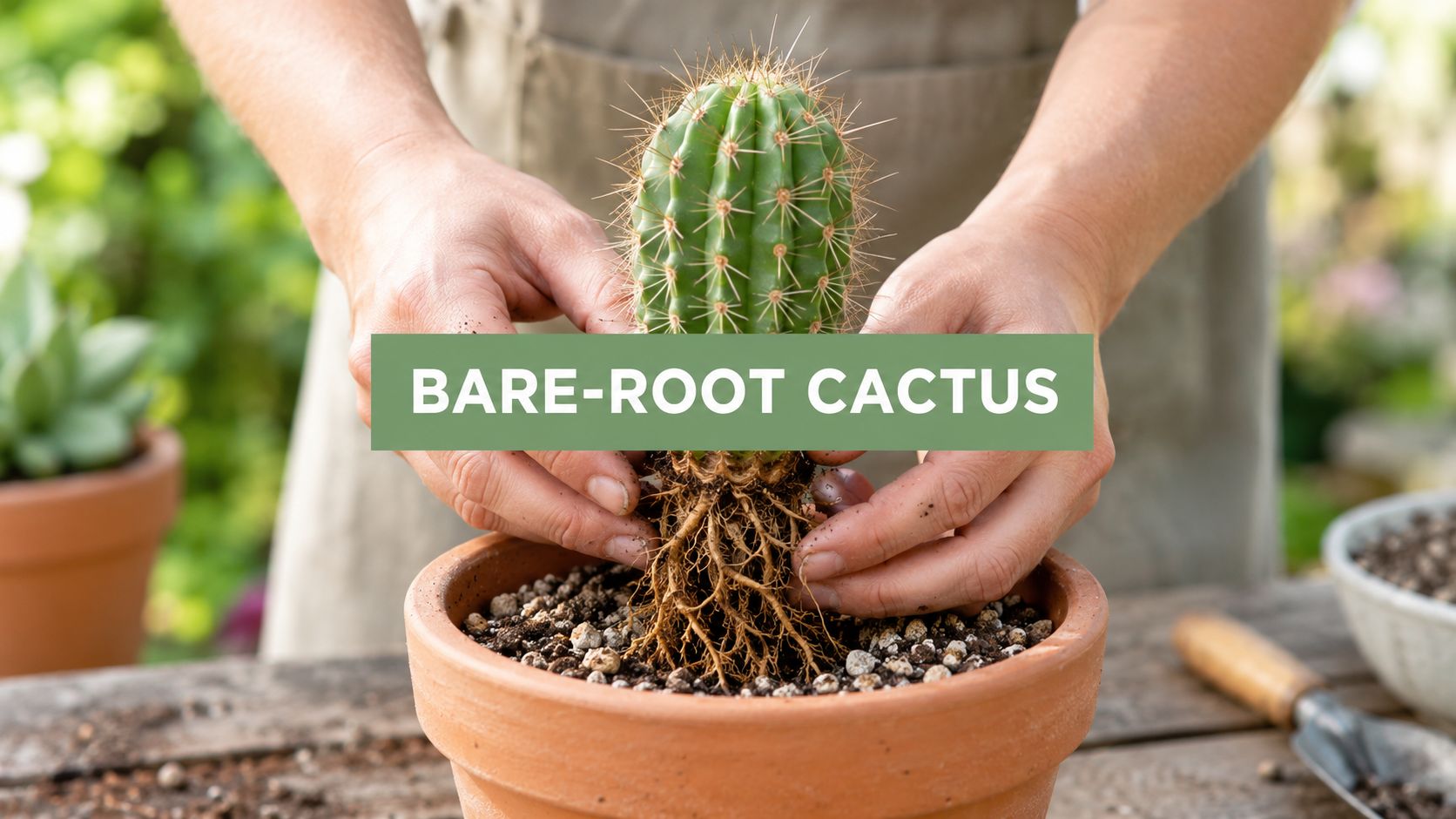
Place the plant in shade first if it arrives from a different exposure level, and let it settle without a sudden sun shock. Unbox it gently, keep the stem protected from pressure points, and move it into a pot or planting hole with a well-draining, mineral-rich mix. The root zone should dry down fully before the first watering.
A useful watering benchmark for Peruvian apple cactus is to water based on substrate dryness, with irrigation only when the top 2 to 3 inches of soil are fully dry (Dahing Plants). That's the kind of rule that prevents the classic overwatering mistake. It also forces you to look at the soil instead of the calendar.
What to do, and what to skip
- Shade first: Let the plant acclimate before full exposure.
- Check dry-down: Water only after the mix has thoroughly dried.
- Increase light slowly: Move into more sun in stages, not all at once.
- Skip fertilizer: Don't push growth before the roots settle.
One independent retail source says outdoor Peruvian apple cactus can reach 20 to 30 feet tall and may add 1 to 2 feet per year under suitable conditions (Dahing Plants). That kind of growth only matters if the plant survives establishment cleanly. A mineral-forward mix, real drainage, and restraint with water are the three things that keep a delivery from becoming a replacement job.
Buying Checklists for Homeowners and Designers
Homeowners and designers should shop the same way, but they're solving different problems. The homeowner wants a strong focal point that won't overwhelm the patio. The designer wants a plant that survives transport, fits the plan, and doesn't collapse the budget once freight and placement are added.
Homeowner checklist
- Species fit: Choose a plant that matches your climate and the amount of sun the site gets.
- Size tier: Buy for the finished look, not the smallest plant that seems “large” in a photo.
- Container reality: Make sure the pot or root ball can physically move through gates, doors, and walkways.
- Placement: Decide where the plant lands before the driver arrives.
Designer and contractor checklist
- Provenance: Prefer nursery-grown stock with clear sourcing.
- Shipping method: Confirm whether the plant moves by parcel, pallet, or freight.
- Total cost: Include delivery, placement labor, and any equipment needed on site.
- Long-term fit: Match the plant's mature form to the design intent, not just the render.
The easiest mistakes are predictable. Buyers underbuy the size, ignore cold limits, and forget to verify the site before delivery. That's how a visually perfect specimen becomes an expensive mismatch. If the plant can't live there, it doesn't belong in the cart.
Bulk Orders, Provenance, and Common Buyer Questions
Bulk orders make sense when a project needs repeat form, especially for rows, screens, or a coordinated outdoor design. Ask for consistency in height range and stem caliber, because a mixed batch can look sloppy once planted. For provenance, ask whether the stock is nursery-grown and how the seller verifies it before shipment.
Cold-hardiness for container plants is a different question from in-ground survival, so don't assume a pot behaves like open soil. If the listing doesn't explain returns or live-plant guarantees clearly, get that answer before ordering, not after a truck has already left. For large specimens, freight rules and return handling matter more than the checkout page design.
If you're ready to buy, The Cactus Outlet carries large cacti and other succulents for nationwide delivery, with the kind of stock that fits patio installs, privacy screens, and specimen projects. Visit The Cactus Outlet and choose the plant that fits your site, your climate, and your delivery plan before you spend money on the wrong size.