
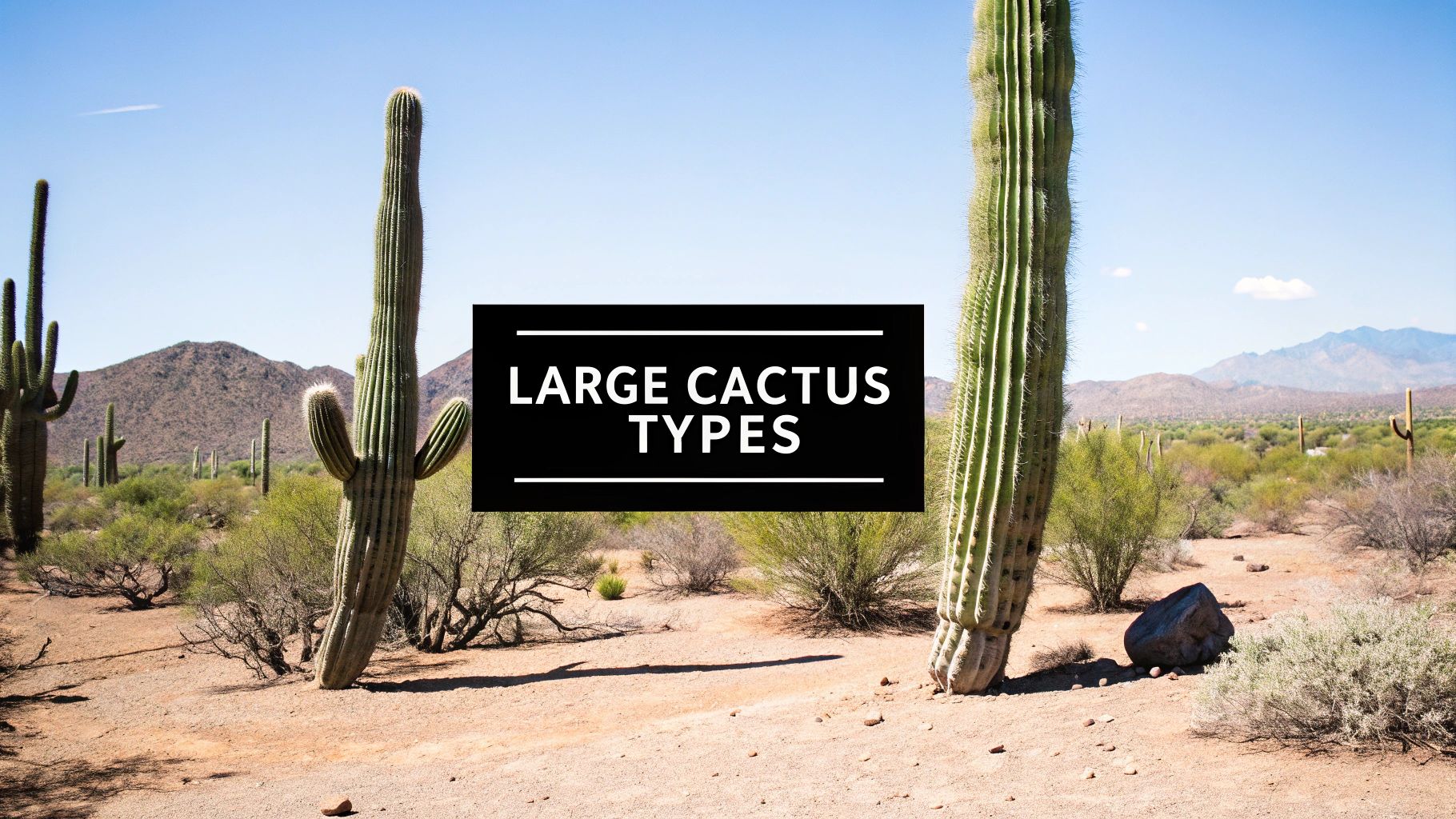

From the sculpted arms of Saguaro standing tall against the crimson sky to the sprawling, tree-like form of Cardon, large cactus species showcase some of the most dramatic silhouettes in the plant world. Their architectural presence ranges from solitary columns to sprawling clusters that demand your attention.
Each one tells a story of endurance—surviving blistering days and freezing nights to become living monuments in desert ecosystems.
The Allure Of Giant Cacti
When most of us picture a cactus, we think of a small pot on a windowsill. It’s a surprise, then, to learn that some cacti tower higher than many trees and can live for centuries. In essence, these giants are nature’s own sculptures, crafted by time and the harshest of conditions.
Moreover, large cacti have found a second life in modern xeriscaping and drought-tolerant gardens. Their bold forms create instant focal points, while their low-water needs make them champions of sustainable landscaping.
“A cactus that’s stood in one spot for 150 Years reminds us that patience pays off. It’s a living link to a time scale far beyond our own.”
In the wild, these desert titans play a pivotal role. Their night-blooming flowers feed pollinators like bats and birds, and their vast trunks and branches provide shelter for lizards, rodents, and countless insects.
Defining A Giant Cactus
So, what exactly earns a cactus the “giant” label? While there’s no single rule, most species in this category share one or more of the following traits:
- Significant Height: Easily surpassing 15 Feet, with some, such as Cardon, stretching beyond 60 Feet.
- Substantial Mass: Thick, weighty stems and arms that can weigh several tons when fully hydrated.
- Tree-Like Structure: Wood-hard trunks and branching patterns that rival trees in complexity.
Recognizing these characteristics helps us appreciate the sheer diversity of large cactus species—and sets the stage for exploring their unique care needs and ecological roles.
How Giant Cacti Thrive in Harsh Environments
Before we jump into specific types of large cacti, it’s worth taking a moment to appreciate the incredible survival tactics that connect them all. These botanical giants are true masters of adaptation, having developed some seriously clever features to thrive where most other plants would simply give up. Their entire existence boils down to three core principles: storing water, soaking up sunlight, and growing at a slow, deliberate pace.
Picture a large cactus stem as more than just a trunk—it's a living, breathing water tank. Its skin is thick and waxy to prevent precious moisture from evaporating under a blazing sun, while the fleshy pulp inside is built to hold an incredible amount of water. Those classic accordion-like ribs you see on a Saguaro? That’s pure engineering genius. They expand to soak up every drop of a rare downpour and then shrink during long droughts, keeping the plant from splitting open or drying out.
Mastering the Desert Elements
If you want to successfully grow a large cactus, your mission is to recreate its native habitat. This means you have to get comfortable with conditions that might feel neglectful for other plants but are absolutely vital for a cactus. A cactus sitting in soggy soil is a recipe for disaster; it's a fast track to root rot, the number one killer of these plants.
Excellent drainage is completely non-negotiable. The perfect soil for these desert dwellers is gritty and porous, something that lets water rush through instead of hanging around the roots. They've perfected a delicate dance with water, preferring deep but very infrequent soakings. Your goal is to completely drench the soil and then let it dry out 100%, mimicking a desert cloudburst followed by a long, hot dry spell.
If there's one thing every cactus owner needs to remember, it's this: overwatering is far more dangerous than underwatering. A cactus is built from the ground up to handle drought, not to sit in a puddle.
On top of that, these plants are serious sun-worshippers. They absolutely need a minimum of six to eight hours of direct, bright sunlight every single day. This is what fuels their photosynthesis and keeps their structure strong. Without enough light, a cactus will get weak and stretched out—a condition known as etiolation—and its color will fade.
The Bigger Picture of Cactus Conservation
The amazing adaptations of cacti have allowed them to evolve into a massive plant family, with somewhere between 1,438 and 1,750 species found across the globe. While we often picture them in the Americas, their story of resilience is a global one. But being tough doesn't make them invincible.
Worryingly, a worldwide study found that about 18% of all cactus species have no formal protection within conserved areas. That number is shockingly high, especially when you compare it to the protection rates for mammals (9.7%) and birds (5.6%). It's a clear sign that these iconic plants are falling through the cracks of our conservation efforts. You can read more about this global gap analysis and its findings on cactus conservation priorities to see the full scope of the challenge.
Meet the Iconic Saguaro Cactus
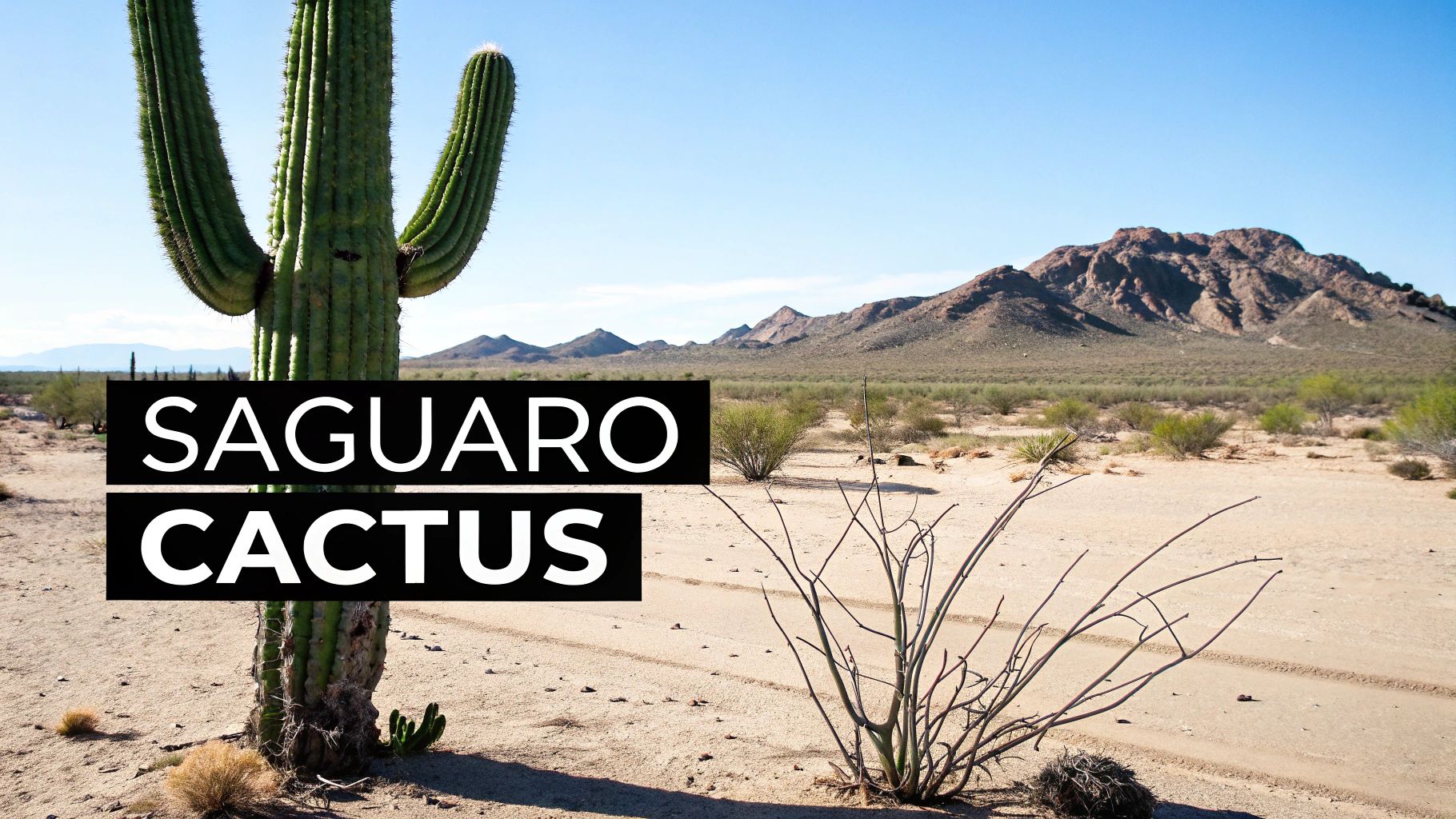
When you picture a classic desert scene, chances are you’re thinking of the Saguaro cactus (Carnegiea gigantea). It’s the undisputed symbol of the American West, but it’s so much more than that. This majestic plant is a living monument and a testament to the power of patience.
Its life begins with a tiny seed, often nestled under the protective shade of a “nurse plant” like a palo verde tree. This shelter is crucial for surviving its incredibly vulnerable early years.
This slow start is a theme that continues throughout its long life. Saguaros grow at a famously unhurried pace—a pace that commands respect. In fact, it can take a full decade for a young Saguaro to reach just one inch in height.
The Anatomy of a Desert Giant
The Saguaro’s entire structure is a masterclass in desert survival. Its thick, waxy skin is the first line of defense against water loss, but the real genius is in its accordion-like ribs. These pleats allow the cactus to expand like a sponge after a rare desert downpour, soaking up and storing hundreds of gallons of water.
This incredible water storage is what allows a mature Saguaro to weigh several tons. And those famous arms? They don't show up overnight.
A Saguaro cactus typically won't grow its first arm until it is between 50 and 75 years old. Each new arm is a sign of a healthy, mature plant that has successfully weathered decades of harsh desert life.
This timeline is a powerful reminder of the long-term commitment involved in growing these magnificent cacti.
A Keystone Species and Growing Your Own
Beyond its commanding presence, the Saguaro is the heart and soul of its ecosystem. Its creamy-white flowers bloom at night, providing a critical meal for bats and moths. Gila woodpeckers carve out nests in its fleshy trunk, which later become homes for elf owls, cactus wrens, and other desert dwellers.
The Saguaro is perhaps the most iconic large cactus native to the Sonoran Desert, reaching heights between 10 and 52 feet. It’s a very slow-growing plant; a two-year-old seedling may only be a quarter-inch tall. With a lifespan of 150 to 200 years, these giants can develop numerous arms—one specimen even had 78. Discover more about the incredible life of the Saguaro on Wikipedia.
Thinking of growing one yourself? It’s a rewarding journey but a serious undertaking. Because they grow so slowly and are a protected species in many areas, purchasing a nursery-grown specimen is the only ethical and legal way to go. To help it thrive, you'll need to mimic its native Sonoran Desert conditions as closely as possible.
For a deep dive into soil, sunlight, and watering, check out our comprehensive https://www.cactusoutlet.com/blogs/blog/saguaro-cactus-care-guide to help your desert titan flourish.
Discovering the Towering Cardon Cactus
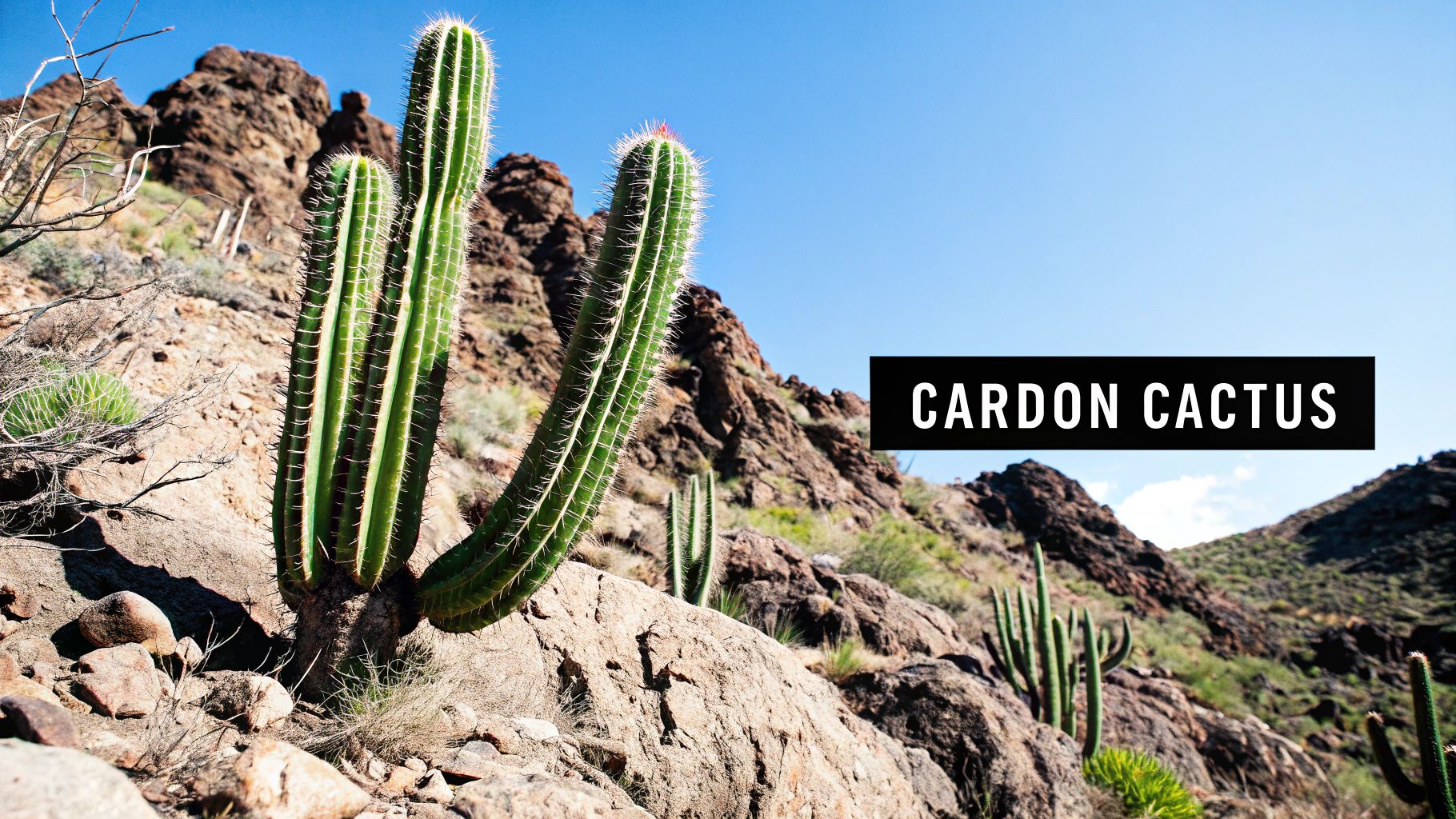
While the Saguaro usually grabs all the attention, another desert giant quietly holds the title for the world’s tallest cactus. Let me introduce you to the Cardon cactus (Pachycereus pringlei), the true king of the cactus world in terms of sheer height.
It’s easy to mistake a Cardon for its more famous cousin at first glance, but once you know what to look for, the differences become obvious. The biggest giveaway is where its arms begin. A Saguaro's arms tend to reach for the sky from high up on the main trunk. The Cardon, on the other hand, often sprouts its massive branches much lower down, giving it a dense, candelabra-like silhouette that feels more like a towering tree.
This unique structure gives the Cardon an incredibly heavy and robust presence, making it one of the most awe-inspiring large cactus plants you could ever hope to see.
A Master of Survival in Baja California
Hailing from the arid landscapes of Baja California and Sonora, Mexico, the Cardon has some incredible tricks up its sleeve for surviving where most plants would instantly give up. It has a fascinating partnership with nitrogen-fixing bacteria living on its roots. This symbiotic relationship is like having a personal, built-in fertilizer factory, allowing the Cardon to pull nutrients straight from bare rock.
This amazing adaptation lets the Cardon grow in places that seem completely impossible, slowly turning barren, rocky slopes into thriving habitats.
The Cardon is a true heavyweight, and its gigantic size is proof of its incredible resilience. It can reach a jaw-dropping 63 feet tall with a trunk that can be more than 3 feet thick. This incredible scale, combined with its low-branching form, makes it an unforgettable sight.
Like other desert giants, the Cardon is also a cornerstone of its ecosystem. Its big, white flowers open up at night, offering a critical source of nectar for bats, which are its main pollinators. It's a beautiful nocturnal dance that keeps the species going while supporting the local wildlife.
The Cardon Versus Other Cacti
When you start comparing different types of large cactus plants, the Cardon really stands out because of its sheer mass and tree-like form. While it shares that classic columnar shape with the Saguaro, its unique branching pattern creates a much denser, more sprawling canopy.
This makes it totally different from other cactus shapes, like the stout, cylindrical form of barrel cacti. While the Cardon is all about reaching for the sky, barrel cacti stay low to the ground. If you're curious about this contrast, you might want to explore the different types of barrel cacti in our detailed guide.
For anyone thinking about landscaping, understanding these structural differences is everything. A barrel cactus can fit into a smaller garden bed, but a Cardon? It demands a vast, open space to truly show off its grandeur.
Beyond the Giants: Exploring Other Remarkable Large Cacti
The Saguaro and Cardon get a lot of attention, and for good reason—they're true desert titans. But the world of large cacti is packed with other spectacular species that can bring incredible architectural beauty to a landscape. Let's look beyond the usual suspects at a couple of my personal favorites: the Organ Pipe and the Blue Myrtle.
Organ Pipe Cactus (Stenocereus thurberi)
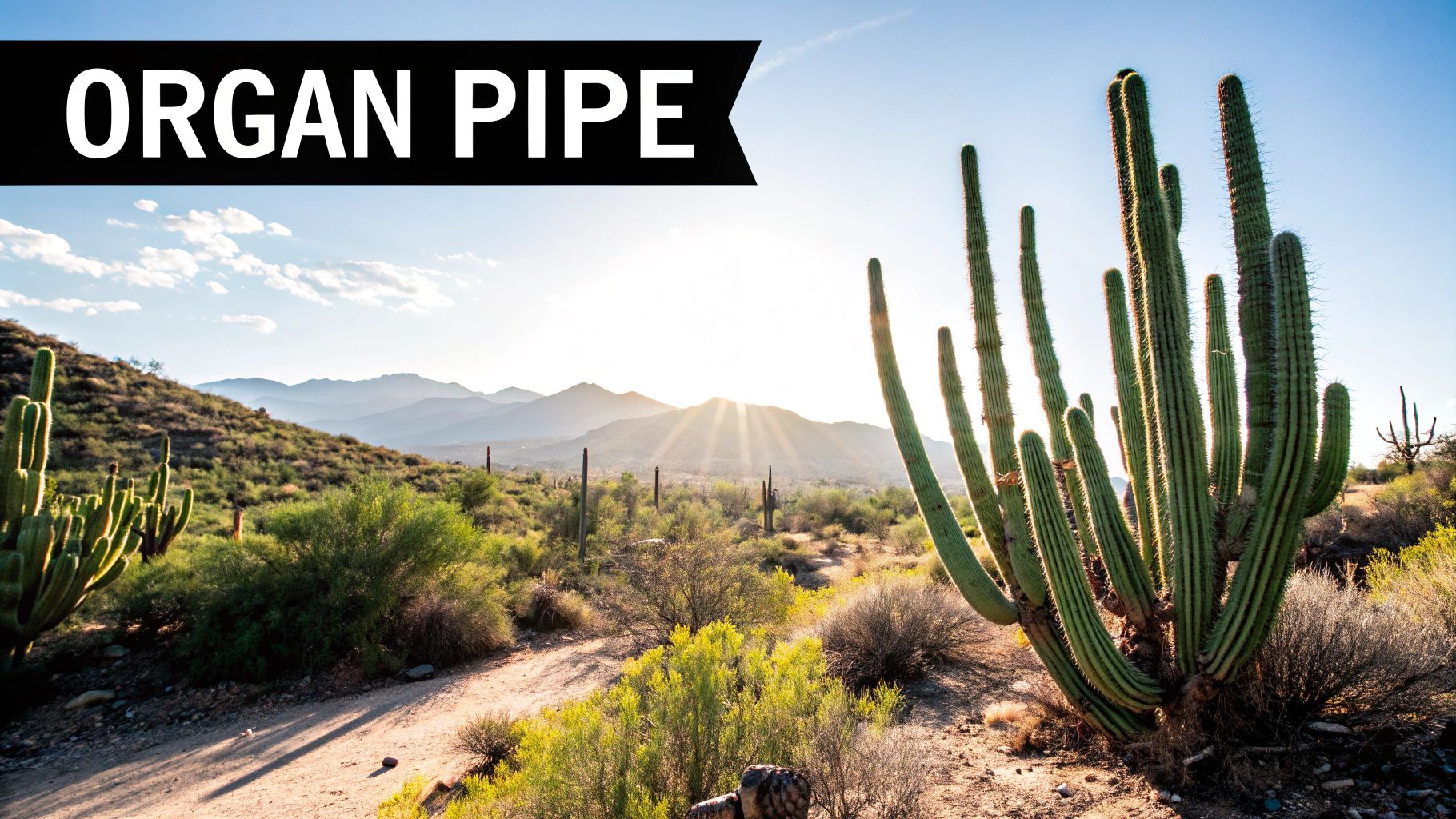
You can probably guess how this one got its name. The Organ Pipe cactus grows just like its musical namesake, with dozens of slender, upright stems rising from a single base. It doesn’t have the single, commanding trunk of a Saguaro. Instead, it forms a massive, dense cluster that can reach an impressive 26 feet in height.
This unique, multi-stemmed growth makes it a fantastic natural privacy screen. Plant a few of these, and you have a living wall that creates a dramatic, formidable backdrop for any desert garden, complete with sharp, dark spines that add to its character.
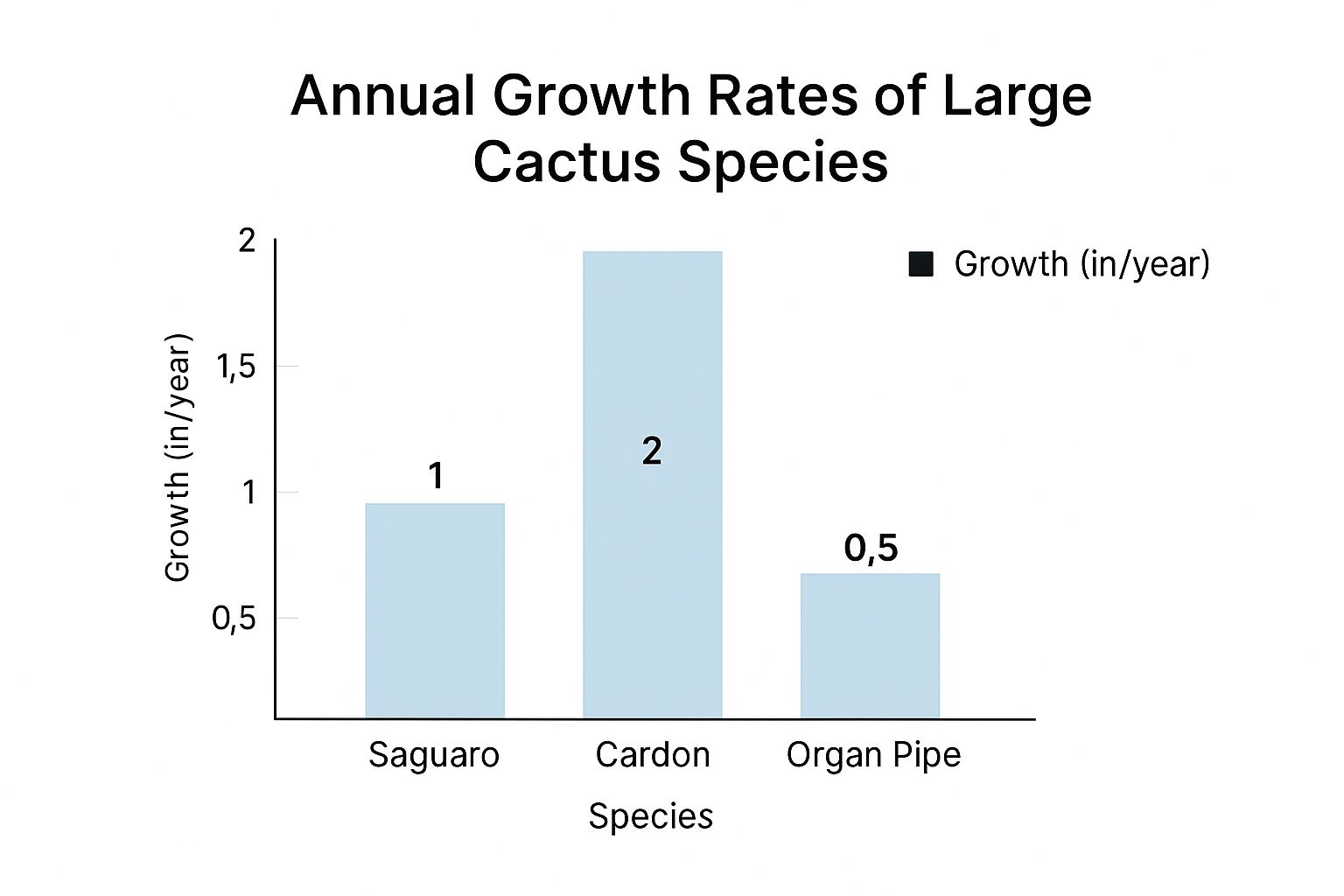
As you can see from the comparison above, all these giants take their sweet time growing. The Cardon puts on a bit more height each year than the Saguaro, but the Organ Pipe is the most patient of them all, reminding us that good things truly do come to those who wait.
Blue Myrtle Cactus (Myrtillocactus geometrizans)
If you’re looking for a cactus that breaks the mold, you have to meet the Blue Myrtle. Its claim to fame is its stunning blue-green, almost powdery skin that seems to glow in the sunlight. It’s a real showstopper.
This cactus branches out into a beautiful candelabra shape, eventually forming a dense, tree-like silhouette that can get up to 15 feet tall. It's a much faster grower than its columnar cousins, making it a rewarding choice for those who want to see results a bit sooner.
But the appeal doesn't stop with its looks. The Blue Myrtle also produces small, sweet, dark purple fruits that taste a lot like blueberries. They're a delicious little bonus!
To help you get a better sense of these cacti at a glance, here’s a quick comparison.
Quick Comparison of Popular Large Cacti
This table gives you a side-by-side look at the key features of the species we've discussed, making it easier to see how they stack up against each other.
| Cactus Species | Mature Height | Growth Habit | Native Region |
|---|---|---|---|
| Saguaro | Up to 60 ft | Single trunk with arms | Sonoran Desert |
| Cardon | Up to 60 ft | Single trunk, branching low | Baja California, Sonora |
| Organ Pipe | Up to 26 ft | Multi-stemmed clump | Sonoran & Chihuahuan Deserts |
| Blue Myrtle | Up to 15 ft | Candelabra-like tree | Central & Southern Mexico |
Each of these plants brings something completely different to the table, from the towering presence of a Saguaro to the unique color of a Blue Myrtle.
The variety among large cacti is simply incredible, and we've only scratched the surface here. If your curiosity is piqued, you can dive much deeper into just how many types of cacti are there in our detailed guide and explore the amazing diversity of the entire cactus family.
Landscaping with Large Cactus Plants
Bringing one of these massive botanical sculptures into your garden is more than just planting; it’s a major landscaping decision. Think of it less like adding a shrub and more like installing a permanent piece of living art that will define your outdoor space for decades to come.
Before you even browse for a specific cactus, you need to do a serious reality check on your environment. Do you live in the right climate? Most of these giants are built for arid or semi-arid regions and a hard freeze can be a death sentence. The first step is always to check your USDA Plant Hardiness Zone and make sure it aligns with the cactus you have in mind.
Now, think about the future. That cute five-foot cactus you see at the nursery has big plans. It might eventually stretch up to 40 feet tall with a spread of several feet. Get out a measuring tape and actually map out its full adult size in your yard. You have to be sure it won't one day tangle with power lines, crowd your home's foundation, or block a critical pathway.
Planning Your Planting Strategy
Once you've cleared your climate and your space for a giant, it's time to look down at the ground. As we've mentioned, the single most critical factor for these plants is excellent drainage. It's completely non-negotiable. If your yard is full of heavy clay soil, you’ll need to do some serious work, amending it with sand and gravel to mimic the gritty, fast-draining soil these desert dwellers need to survive.
Getting a large cactus from the nursery to your yard is not a weekend DIY job. These plants are monstrously heavy and armed with thousands of spines. A mature Saguaro, for example, can easily weigh several tons.
Always hire professionals who specialize in moving and planting large cacti. They have the proper equipment, like cranes and custom padding, to get your investment into the ground safely, without injuring you, themselves, or the cactus.
Designing with Desert Giants
With the tough logistics sorted out, you can get to the creative part: the design. Large cacti are natural superstars in a xeriscape garden, creating instant drama and structure.
Here are a few ways to think about incorporating them:
- Create a Centerpiece: Place a single, majestic Saguaro or Cardon where it commands attention. It will act as a living sculpture, casting dramatic shadows and creating a stunning silhouette against a plain wall or the open sky.
- Build a Natural Screen: For a bit more privacy, turn to clumping species like the Organ Pipe Cactus. A row of them can form a beautiful, unique barrier that adds incredible texture and height to your property line.
- Choose the Right Friends: Surround your giant with companion plants that enjoy the same conditions. Smaller succulents, agaves, and desert-friendly ornamental grasses will complete the look, creating a cohesive, low-water garden that feels intentional and harmonious.
Got Questions About Growing Giant Cacti?
Even seasoned gardeners can feel a little intimidated when thinking about adding one of these botanical giants to their landscape. The sheer size and incredibly long lifespan of a large cactus can seem daunting, but you might be surprised at how straightforward their care really is. Let's tackle some of the most common questions people have.
Seriously, How Fast Do These Things Grow?
If you're going to grow a large cactus, patience isn't just a virtue—it's a necessity. These plants are legendary for their slow growth, a survival mechanism honed over millennia in harsh, resource-scarce deserts.
To put it in perspective, a Saguaro might only be a quarter-inch tall after two full years. It won't even think about growing its first iconic arm for 50 to 75 years. Other species might put on a few inches a year if they're living in absolute paradise, but that's about it. You're not just planting a plant; you're cultivating a living sculpture that will likely outlive you.
The biggest mistake you can make is expecting quick results. These plants operate on a different timescale, and their slow, deliberate pace is a huge part of what makes them so majestic.
Can I Keep a Large Cactus in a Pot?
You can, but with some big caveats. A young cactus will be perfectly happy in a container for several years, but to reach its true, towering potential, it almost always needs to be in the ground. A pot, by its very nature, limits the root system, which acts as a brake on the plant's overall size.
If you're committed to container growing, you'll need an enormous, heavy pot that won't tip over as the cactus gets top-heavy. Excellent drainage is non-negotiable. Also, be ready for the thorny challenge of repotting—it's a difficult, and sometimes dangerous, job that only gets harder as the plant grows.
Are Giant Cacti a Ton of Work?
Actually, no! Once they're settled into the right spot, they are remarkably self-sufficient. Their needs are simple, but you have to get them right.
- Tons of Sun: Think at least six to eight hours of direct, unfiltered sunlight every day.
- Perfect Drainage: This is the golden rule. Their roots will rot in a heartbeat if left in soggy soil.
- Smart Watering: Water deeply, then let the soil dry out completely before you even think about watering again.
The hardest parts are the initial planting and, depending on where you live, protecting them from a hard frost. The single most common killer of large cacti is overwatering. When in doubt, just don't water. These desert survivors are built for drought.
Ready to find the perfect architectural giant for your garden? The Cactus Outlet has a stunning selection of healthy, nursery-grown large cactus plants ready to make a statement. Browse our collection today.