
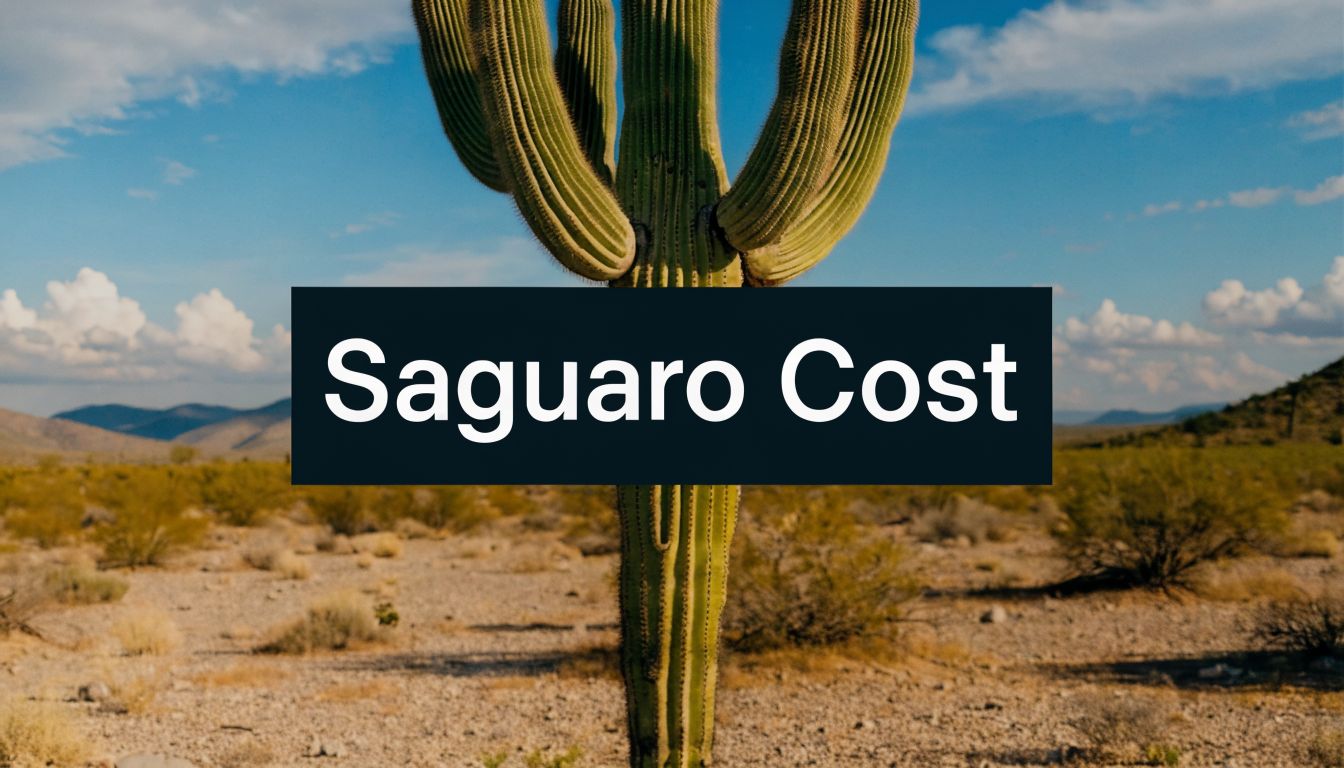

Most nursery saguaros start around $80 to $120 per foot. That's only the sticker price, though. Once you factor in delivery, permits, professional installation, and site prep, the total project budget can be much higher.
A lot of buyers arrive at this question in the same place. They've picked out the corner of the yard, they can already see that classic Sonoran silhouette against the wall or gravel bed, and they want one clear number. The problem is that how much does a saguaro cactus cost isn't a one-number purchase.
A saguaro is closer to an extensive outdoor installation than a simple nursery buy. Small specimens can be modestly priced. Large, mature plants with arms can become a serious investment. The gap between those two outcomes is where most online guides fall short.
The practical way to budget for a saguaro is to separate the plant price from the ownership cost. The plant has a market value based on size, age, and form. The ownership cost comes from what it takes to move it legally, plant it safely, and get it established without damaging a slow-growing cactus that may outlive everyone involved in the purchase.
Your Dream Saguaro and Its Starting Price
The appeal is easy to understand. A saguaro transforms an outdoor setting immediately. It gives a yard a focal point that smaller cacti and shrubs just don't create in the same way.
But the first price you hear usually isn't the final bill. The nursery price tells you what the cactus itself costs. It doesn't tell you what it takes to get that cactus from the seller's yard into your ground, upright, oriented properly, and legally documented.
What buyers usually expect
Inquiries often start by asking about a medium plant. They don't want a seedling in a pot, and they don't necessarily want a towering multi-armed specimen either. That's where the per-foot model makes sense as a first filter.
At the low end of the market, seedlings under 1 foot cost $25 to $75, while mature 10+ foot multi-armed specimens can range from $2,000 to over $10,000 according to the Arizona-Sonora Desert Museum saguaro fact sheet. That spread tells you something important right away. You're not just paying for a plant. You're paying for decades of growth and a very different level of handling.
A saguaro purchase gets expensive when buyers budget for the cactus and forget to budget for the move.
Why the first quote can mislead you
A nursery can quote a fair plant price and still leave you underbudgeted if you haven't asked the next questions. Is the cactus small enough to self-install? Does it need equipment? Is there documentation attached? Does your site have access issues?
Those details matter more than many first-time buyers expect. If you're still deciding where to shop, this guide on where to buy a saguaro cactus is useful because seller type affects everything from paperwork to transport logistics.
The right expectation is simple. The nursery tag starts the conversation. It doesn't finish it.
Deconstructing Saguaro Price Tiers by Size
Most saguaro pricing follows a height-based model, but it doesn't scale evenly forever. Smaller plants are priced one way, medium-sized specimens settle into a more predictable per-foot range, and larger specimens jump because handling gets harder.
The per-foot model in real terms
According to A&P Nurseries' saguaro cactus cost guide, most nursery specimens average $80 to $120 per foot. Their breakdown gives more detail: 6-inch plants run about $20 per foot, 12-inch plants about $40 per foot, 18-inch plants about $75 per foot, and 24-inch plants about $150 per foot. For 3 to 7 foot saguaros, pricing stabilizes around $80 per foot, while 8 to 20 foot specimens can reach about $100 per foot.
That pattern matters. Tiny plants don't always follow the same logic as larger-scale plants, and large ones carry handling costs that basic per-foot math can hide.

Estimated Saguaro Cactus Price by Size 2026
| Size / Height | Estimated Age | Average Price Range |
|---|---|---|
| Under 1 foot | 10 to 20 years | $25 to $75 |
| 1 to 4 feet | 30 to 50 years | $100 to $600 |
| 5 to 8 feet | 50 to 75 years | $500 to $2,500 |
| 10+ feet with arms | 120+ years | $2,000 to $10,000+ |
The table above combines verified size and age ranges from the Desert Museum and market pricing summarized in the verified data set. The takeaway is practical. Once you move from young armless plants into mature specimens, the price curve steepens fast.
What size actually works for most buyers
A smaller saguaro is often the cleanest buy. It's easier to transport, easier to place, and far less risky to establish. A mature specimen gives instant visual impact, but it also raises the stakes on every part of the project.
For buyers trying to line up budget with patience, understanding saguaro cactus growth rate helps. Some people pay for immediate size. Others intentionally buy smaller and let time do the work.
Practical rule: Buy the largest saguaro your site and installation plan can support comfortably, not the largest one your eyes want on day one.
That usually leads to better outcomes than stretching for a giant specimen without planning access, equipment, and aftercare.
Key Factors That Influence the Final Price Tag
Two saguaros can stand the same height and sell for very different prices. Height gets you into the right category. After that, value comes from form, condition, rarity, and the cost of handling.

Arms, shape, and visual character
Arms change the price because they change the plant's visual and historical value. A plain spear can be elegant, but a multi-armed saguaro reads as a finished statement piece. Buyers pay for that silhouette.
Form matters too. A clean, symmetrical plant with strong rib definition usually commands more interest than a scarred or awkward specimen. That's true even when the height is identical.
Condition and transplant readiness
Buyers should inspect the cactus, not just the dimensions. Firm tissue, healthy color, and an absence of obvious soft spots matter more than an extra foot of height. A discounted plant can become an expensive headache if the condition is weak going into transplant.
Hidden project variables
This is the part many guides skip. According to Desert Foothills Gardens, most online pricing discussions focus too narrowly on per-foot cost and miss hidden expenses like excavation, professional installation, soil preparation, and permits. They note that these overlooked costs can potentially double the total investment for a large specimen.
That's exactly why buyers get surprised after the nursery quote.
If you've ever priced another outdoor project, the pattern is familiar. The material cost is only one layer. The full job cost includes access, labor, equipment, and site conditions, much like Georgia metal building pricing per square foot only tells part of the story until foundation, delivery, and installation are added.
What tends to push price up
- Arm development: Mature arms add rarity and visual appeal.
- Site difficulty: Tight access, walls, slopes, or finished hardscape complicate the install.
- Health and finish: Clean skin, good form, and strong condition increase market value.
- Legal handling: Permits and proper documentation are part of a legitimate purchase path.
- Large-cactus logistics: Oversize specimens cost more because they're harder to move and plant safely.
For a deeper look at why size changes the economics so much, this article on why large cacti and succulents are so expensive gives useful context.
Calculating the Total Cost of Saguaro Ownership
A buyer gets quoted one price for the cactus, then the actual project starts. Delivery, access, planting labor, paperwork, and aftercare are the costs that usually decide whether the purchase still fits the budget.

The main cost buckets
Start with a full project budget, not a plant budget. For a larger specimen, these are the line items that matter:
- Purchase price: The nursery price for the saguaro itself.
- Delivery: Transport gets more expensive as size, weight, and distance increase.
- Installation labor: Crews may need to unload, orient, brace, and plant the cactus correctly.
- Permits or documentation: Legal transfer and movement paperwork can add time and cost.
- Site prep: Excavation, soil work, and access protection often show up here.
- Equipment: Dollies, lifts, or a crane may be required on difficult sites.
- Initial care: Watering, stabilization checks, and transplant monitoring belong in the budget too.
A realistic example for larger plants
Earlier pricing examples showed why mature saguaros shift from plant purchase to installation project. Once a specimen reaches a size that needs special handling, the job cost rises because the crew is no longer just dropping off a plant. They are managing weight, orientation, safety, and site access at the same time.
A straightforward yard with wide gate access costs less than a courtyard install behind walls or finished hardscape. I tell buyers to price the route from truck to planting hole before they commit to the cactus. If that path is tight, sloped, or fragile, expect higher labor and equipment charges.
Budget in layers: plant, transport, set, and establish.
Simple budget worksheet
| Cost item | Smaller self-managed project | Larger professionally installed project |
|---|---|---|
| Cactus | lower entry cost within small-size market ranges | higher due to size and maturity |
| Delivery | may be minimal or bundled | often a separate charge |
| Installation | may be self-managed on small plants | commonly requires a professional crew |
| Equipment | usually not needed | may include lift or crane access |
| Site prep | basic hole prep | can include excavation and access protection |
| Paperwork | limited | may require added documentation |
| Total working budget | flexible, depends on buyer involvement | usually much higher than the plant price alone |
Small plants give buyers more control. A homeowner can often handle placement and planting with basic help. Large saguaros are different. One access problem or equipment requirement can change the budget quickly.
A short look at live handling helps make that obvious:
What works and what doesn't
What works is getting answers before purchase. Measure gate openings, check overhead clearance, mark the planting spot, and ask who is responsible for permits, unloading, and cleanup.
What also works is asking for an itemized quote. Buyers should be able to see the plant price, delivery charge, installation labor, equipment fees, and any aftercare recommendations separately. That makes comparisons far more accurate.
What causes trouble is treating a mature saguaro like a standard nursery item. The plant may be the centerpiece, but the total cost of ownership comes from the full chain of work required to get it home and established properly.
Smart Alternatives to a Mature Saguaro
Once buyers see the full ownership cost, some decide the classic large saguaro isn't the right move right now. That doesn't mean the desert look is out of reach.

Start smaller and grow into it
A young saguaro is the most direct alternative because it still gives you an authentic plant, just without the mature silhouette on day one. That path works well for buyers who want authenticity more than instant scale.
The trade-off is patience. You save money upfront, but you're committing to a long timeline.
Choose a different columnar cactus
If the goal is vertical structure and desert character, another columnar species may fit better. Many buyers end up happier with a plant that delivers height and drama sooner, especially when climate, budget, or access make a mature saguaro impractical.
This route often works well for:
- Design-first buyers: They want the look more than the species.
- Tighter budgets: They need impact without the full installation burden.
- Non-desert climates: They need a plant that's easier to manage in a container or protected setting.
Use replicas where maintenance must stay low
Verified market data also notes that fiberglass replicas can range from $200 to $1,000. That's a practical option for commercial displays, staged spaces, or decorative installs where zero maintenance matters more than owning a living cactus.
If your budget doesn't support a mature saguaro today, buy a solution that still fits the space. A bad fit is more expensive than a compromise.
The wrong alternative is forcing a large live specimen into a project that can't support the install, long-term care, or legal sourcing. The right alternative is the one you can place properly and keep looking intentional for years.
Essential Saguaro Buying Tips and FAQs
A saguaro purchase usually goes well when the buyer prices the whole job before reserving the plant. The buyers who avoid surprises are the ones who ask about paperwork, access, delivery method, planting labor, and aftercare up front. The buyers who focus only on height often end up paying more than they expected.
Buying tips that save trouble
Check the paperwork before the payment
If the cactus needs documentation, ask to see it before you commit. Paperwork is part of the purchase, not an afterthought.
A legitimate sale should be clear on origin, tags, and transport requirements. If the seller gets vague, walk away.
Inspect condition before you admire shape
Good form can distract from real problems. Start with firmness, skin condition, scarring, rot, pest damage, and whether the plant stands true.
I would rather buy a healthy, simpler specimen than a showier cactus with stress issues. Shape affects price. Condition affects whether the plant has a fair chance after installation.
Match the plant to the site, not the nursery view
A saguaro can look manageable in an open yard and become a difficult install at home. Side-gate width, overhead lines, roof overhangs, hardscape removal, and turning radius for equipment all matter.
Total cost often jumps. A plant that fits easily may need basic delivery and planting. A plant that barely fits can trigger extra labor, crane time, or a different placement plan.
Ask who handles delivery and planting
Do not assume the quoted price includes setting the cactus in the ground. Ask who transports it, what equipment is included, whether the hole is part of the job, and who is responsible if access problems delay the install.
Those details change the actual budget fast.
FAQ
How much does a saguaro cactus cost for a typical home property?
A per-foot price gives you a starting point, but it does not give you a project budget. For a typical home purchase, the final number depends on plant size, legal documentation, delivery distance, access, equipment, planting labor, and early care after installation.
Why do mature saguaros cost so much more than small ones?
Height is only part of the price. Mature specimens bring age, form, arm development, limited availability, and more difficult handling. Transport and installation also get more expensive as the plant gets larger and heavier.
Are arms worth paying extra for?
If the goal is the classic saguaro profile, many buyers decide they are worth it. If the goal is owning a healthy real saguaro on a more controlled budget, a sound single-column plant often makes better financial sense.
Is a cheaper large saguaro always a good deal?
Usually no. A low number can mean weaker condition, poor form, missing services, or logistics the seller has not priced yet. I tell buyers to be suspicious of any quote that sounds good until delivery and planting are discussed.
Can I install a saguaro myself?
Small specimens are more manageable. Large ones usually need professional handling because of weight, spines, orientation, and stabilization after planting. If moving it safely feels uncertain, hire the crew and budget for it.
What hidden costs do buyers miss most often?
Delivery is a common one. Planting labor, site prep, permits where required, equipment access, and stabilization materials also get missed. That is why total cost of ownership is a better planning method than a simple plant price.
Should I buy nursery-grown or salvaged?
Either can be a good choice if the plant is legal and healthy. What matters is documentation, condition, and whether the seller can explain exactly what you are getting, including any handling or establishment considerations.
What should I expect right after planting?
Expect an establishment period. The first goal is stability, root adjustment, and avoiding stress, not visible growth. Watering, support, and placement need to match the season and the plant's condition.
Is a saguaro a good long-term addition to my property?
In the right climate and with the right placement, yes. A saguaro can be a long-lived plant with real presence, but it rewards careful buying. Legal sourcing, proper installation, and realistic care expectations matter more than impulse.
What's the single best way to avoid overspending?
Price the entire project before choosing the exact cactus. That means plant cost, paperwork, delivery, equipment, planting, and early care. Once those numbers are clear, the right size usually becomes obvious.
If you're comparing sizes, budgeting a project, or deciding whether a mature specimen makes sense, The Cactus Outlet is a practical place to start. You can review cactus categories, compare options for property scale, and get a clearer sense of what fits your space before you commit.