

The box is already on your porch when you realize this wasn't a normal plant order. It's tall, heavy, packed like freight, and the whole thing feels a lot closer to moving a sculpture than buying a houseplant. That's the right instinct. Large cactus plants for sale are a different purchase category, and the people who do well with them treat delivery, root mass, and aftercare as the essential product, not just the spine-covered stem.
A big cactus can be a smart buy, but only if you know what you're paying for. Market context matters here, because cactus demand is commonly estimated in the billions of dollars, with one 2024 estimate at USD 5.18 billion and a projection to USD 15.08 billion by 2032 at 16.37% CAGR Verified Market Research. Another forecast puts the market at about USD 6.85 billion in 2024 and USD 23.84 billion by 2034 Verified Market Research. The point isn't which forecast wins, it's that sellers who understand this category can support better stock, better packing, and better service.
If you're comparing options right now, use a real outdoor resource like Outdoorbrite for context on outdoor placement, then judge the listing like a contractor would. I've shipped enough large cacti to say this plainly, the right question is never just “Which species do I like?” It's “Will this thing arrive upright, rooted, and alive enough to establish?”
What Buying a Large Cactus Online Feels Like
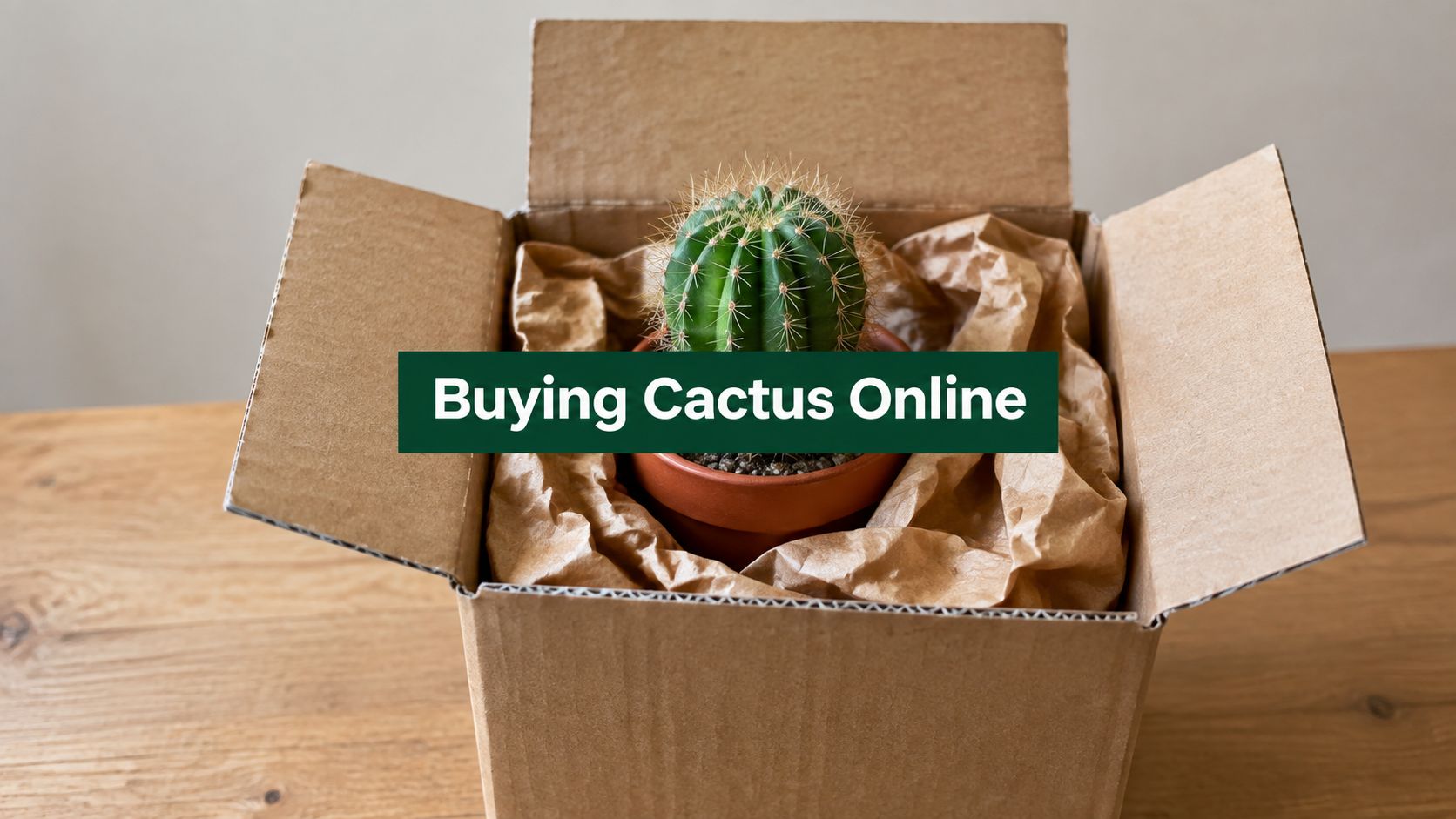
The first thing buyers notice is weight and packing. A tall cactus does not open like a small houseplant. It shows up with bracing, filler, and enough mass to make you hesitate before you tilt the carton, because one bad angle can snap a spine, bruise the root collar, or let the plant shift inside the box.
That is why buying a large cactus online feels closer to arranging a garden feature than ordering decor. The value sits in maturity, transport stability, and post-arrival survival. Small plants can survive sloppy handling. Large ones usually cannot, especially when the seller has to protect a thick root ball, keep a column straight, and control temperature in transit.
A tiny cactus is easy to replace if it fails. A large one is not. The cost of failure is higher because the seller already put years into growth, larger containers, and freight protection. That is also why the price ladder rises fast at the top end, as noted in the cactus cost guide from Alibaba's plant-care reference, which shows starter cacti near the low end and larger specimens priced materially higher Alibaba plant-care guide.
The best buyers treat the listing like a logistics sheet. They want height, pot size, shipping method, and aftercare instructions, not just a pretty photo. If a seller makes that information hard to find, that is a warning sign.
Practical rule: If the seller does not say how the cactus will be supported in transit, assume you will be solving that problem when the box opens.
If you want a grounded reference point for species and large-form options, the The Cactus Outlet blog is useful because it stays focused on large stock and care guidance. That is the right frame. You are buying a living structure, not a novelty item.
Outdoor placement still matters, and Outdoorbrite is a useful place to compare how a cactus will sit in a yard, patio, or entryway. Buyers who think only about the stem usually miss the core issue, which is whether the root mass, container, and shipping setup can support the plant once it lands.
Defining Large Cactus Sizes the Way Sellers Do

Sellers use the word “large” loosely, so buyers need a tighter standard. Height matters, but container size and root ball weight tell you far more about how the plant will arrive and how it will behave after arrival. A tall cactus in a cramped pot can look impressive and still tip easily, while a slightly shorter plant in a deeper, heavier container usually establishes better and travels with less risk.
The four size bands that actually help you buy
Tabletop means under 12 inches. These plants usually sit in small decorative pots and work as entry-level purchases or accent pieces. They are easy to move and cheap to ship, but they do not create the immediate outdoor presence most buyers want.
Floor-standing covers roughly 1 to 3 feet. This is the first range that starts to feel deliberate in a room or on a patio. The container usually becomes larger here, and the root system has enough mass to matter during transit and establishment.
Statement piece is the 3 to 6 foot range. Buyers often underestimate the logistics at this size. A cactus this tall can dominate a corner or entryway, and the pot size often says more about value than the advertised height does.
Specimen means over 6 feet. These are the high-stakes plants. The handling burden rises fast because the top weight, root mass, and tipping risk all increase together. A seller who knows the trade will talk about bracing, palletization, and delivery timing.
Here is the rule I use when reading listings: do not buy by height alone. A 4-foot Peruvian Apple in a 3-gallon pot is a different plant from a 4-foot cactus in a deeper, heavier container. For a seller's shorthand on how the trade groups these plants, the internal guide on types of large cactus is useful because it reflects how sellers classify large stock in practice.
A larger pot gives you more than visual presence, it gives you stability, and stability is what keeps a shipped cactus from turning into a repair job.
Headline Species Worth Considering
A large cactus listing only works if the species matches the job. Some plants are meant to create instant height. Some are better when you want structure without a lot of fuss. Some look impressive online and disappoint once the freight truck pulls away. Buyers who focus on delivery, root mass, and how the plant will sit in a yard make better choices than buyers chasing a name.
Species worth considering
Saguaro is the long-game choice. It is iconic, slow, and best treated as a future landmark rather than a quick fix. If you want a plant that signals desert maturity, this is the one, but only if the climate and your patience line up.
For buyers who want presence without waiting forever, Peruvian Apple cactus is the practical statement piece. It grows quickly under good conditions, and one seller notes established plants can add roughly 1 to 2 feet per year, with outdoor specimens reaching 20 to 30 feet Dahing Plants. That speed is exactly why it gets overused and why buyers underestimate how much room it will claim later.
Euphorbia species are the architectural alternative. They often read like cacti in outdoor designs without always carrying the same spine load. That makes them useful where you want strong form and less handling anxiety.
Agave and Aloe work as rosette companions. They do not replace tall columns, but they anchor a planting with shape and lower visual noise. Aloe also has a wide price spread depending on size and maturity, so buyers should compare finished plant form, not just sticker price The Cactus Outlet aloe cost guide.
For buyers who want a broader species breakdown, the internal guide on large cactus types is useful because it reflects how sellers group large stock in practice.
| Species | Typical Mature Height | Growth Rate | Cold Tolerance | Best Online Use Case |
|---|---|---|---|---|
| Saguaro | Very tall, yard scale | Slow | Climate-sensitive | Landmark planting, long-term desert design |
| Peruvian Apple | Tall columnar form | Fast under good conditions | Better as a warm-climate choice | Instant height, privacy, patio focal point |
| Euphorbia | Varies by species | Moderate | Species-dependent | Architectural look, lower-maintenance styling |
| Agave | Low to medium rosette | Slow to moderate | Species-dependent | Ground anchor, drought-tolerant structure |
| Aloe | Low to medium rosette | Moderate | Species-dependent | Entry planting, decorative container, softer form |
If you want the blunt version, Peruvian Apple is the most forgiving of the headline options for buyers who want visible size now. Saguaro is the most over-romanticized, because many shoppers want the look without the patience or climate match. Euphorbia and agave make more sense when your real goal is structure, not cactus theater.
How to Read a Listing Before You Pay
A good listing tells you what the plant is, what it weighs, and what happens if it arrives damaged. A weak one hides behind photos. When I scan a product page, I'm looking for specific proof that the seller understands shipping a living object, not just moving inventory.
The checklist I'd run before checkout
- Height reference: Check whether the measurement starts at the soil line or the pot rim, because that changes the size a lot.
- Container detail: Look for the actual pot volume or at least a clear container description. A vague “large pot” isn't enough.
- Root condition: Scan for phrases like root-bound, established, or recently potted. Those clues tell you whether the plant is likely to hold together in transit.
- Photo consistency: Every size option should not use the same stock photo. That's a classic red flag.
- Damage disclosure: Honest sellers mention scarring, branch asymmetry, or shipping wear before you buy.
- Policy clarity: Look for replacement terms, live-arrival language, and any exclusions in plain English.

The biggest trap is assuming all large cacti are comparable because the photo looks similar. They aren't. The seller's best online cactus store content only matters if it translates into listing clarity, clean photos, and explicit shipping standards.
My rule: If I can't tell how the plant is rooted, I assume the seller doesn't want me to know.
Shipping Large Cacti Without Disaster
Large cacti ship safely when the nursery does boring, disciplined work. That means bracing the stem, stabilizing the root ball, and choosing a ship date that doesn't invite weather damage. The box itself matters less than what's inside it.
What competent shipping looks like
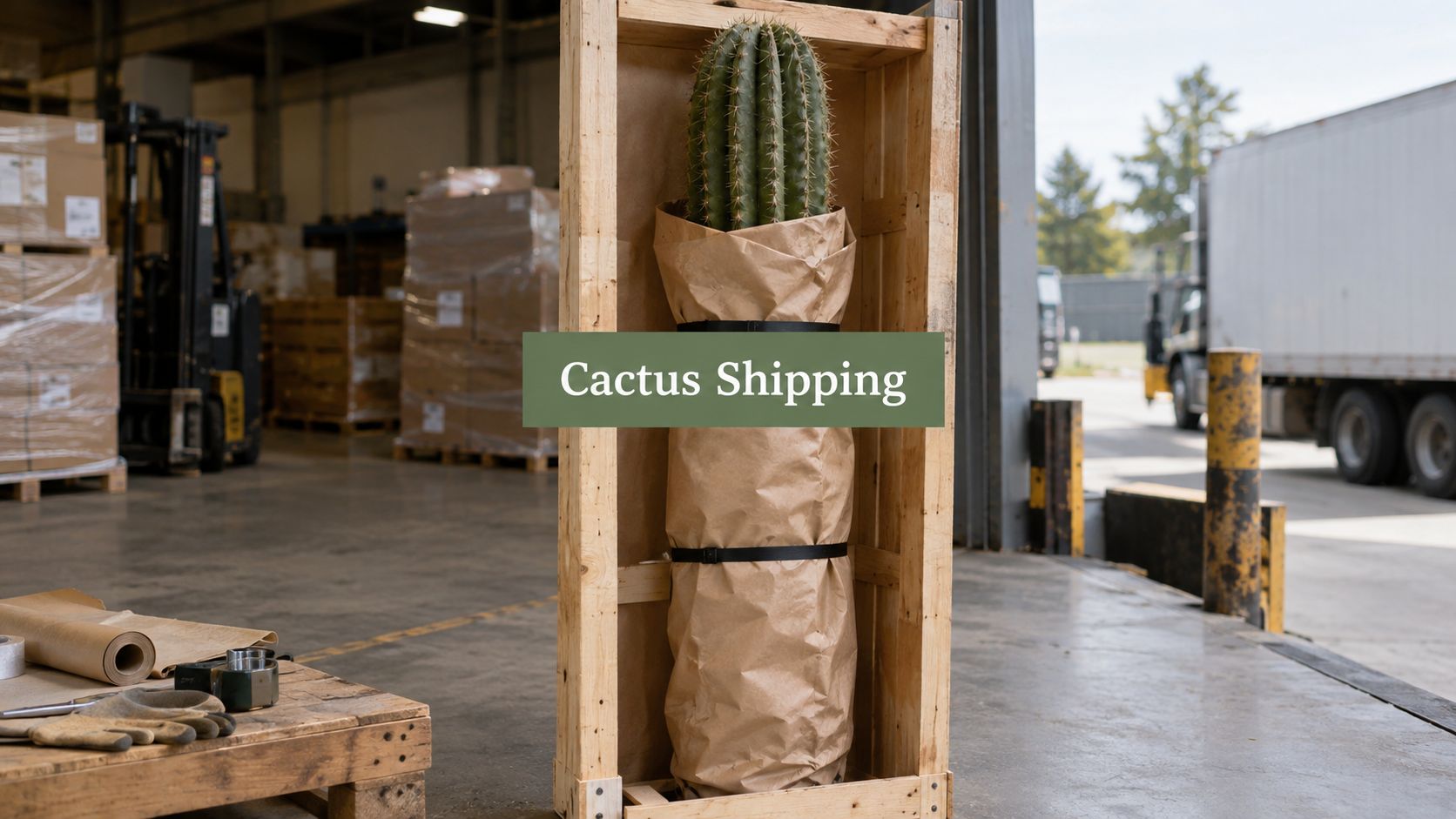
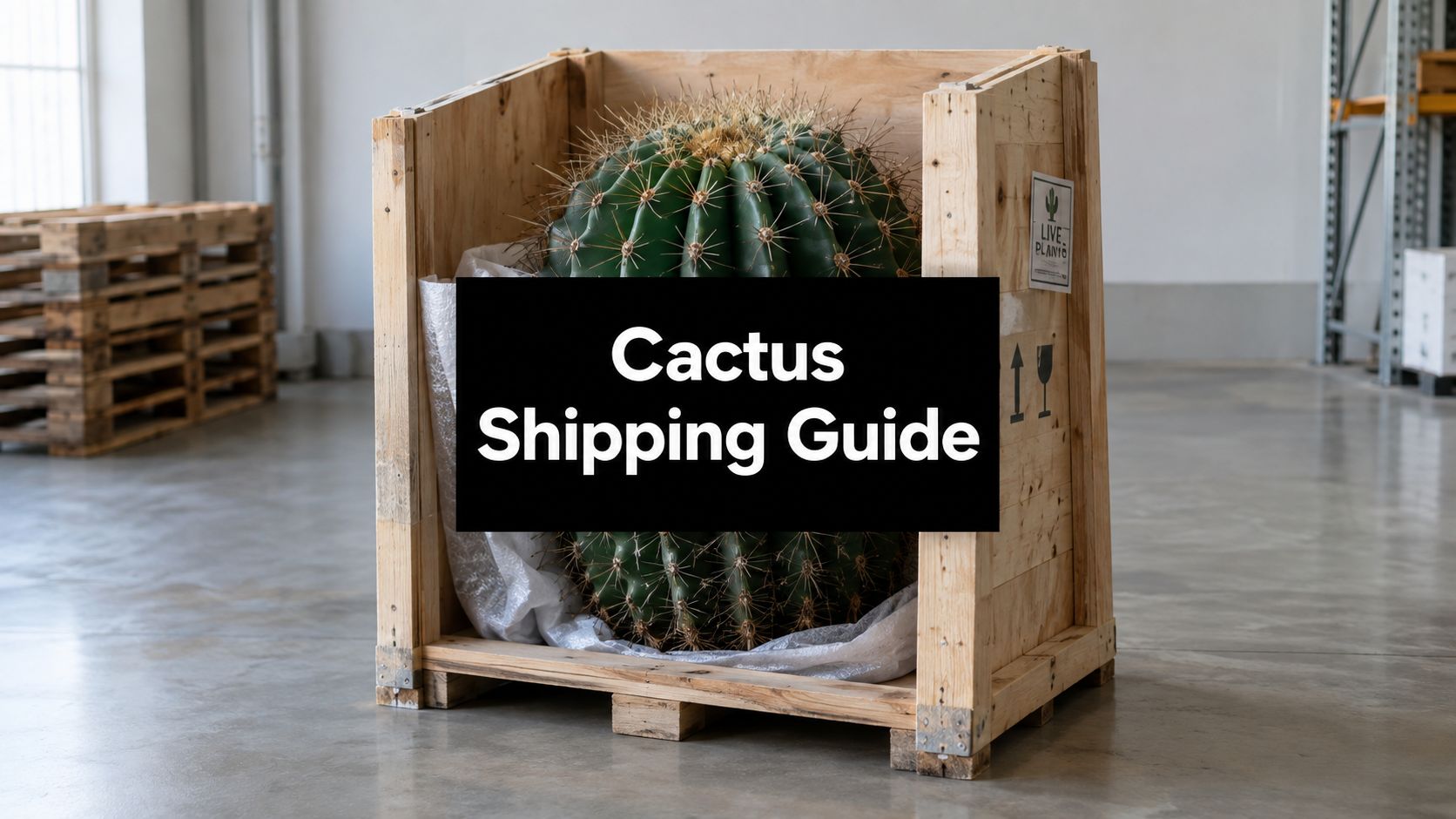
A serious seller will secure tall plants with stakes or internal supports so the column doesn't swing inside the carton. The root ball should be held tight in a reinforced container or wrapped so it doesn't shear loose if the box gets turned. Very tall specimens often need double-boxing or pallet-style handling, especially when the plant has a heavy top and a narrow base.
Carrier choice matters too. Fewer handoffs usually mean less abuse. Scheduled delivery is better than a vague window, because the longer the plant sits in a truck or depot, the worse the odds get. Signature delivery can be worth it on high-value specimens because it keeps the box from being left in the sun, rain, or freezing air.
Live-arrival promises are useful, but don't misread them. They usually come with temperature exclusions, and heat or freeze damage can void the guarantee. That's not a loophole, it's the practical challenge of shipping living tissue.
The buyer-side move is simple, order in mild weather if you can, ask for delayed shipment when temperatures spike, and open the box as soon as it lands. If the plant looks stressed, document it immediately and follow the seller's claim process within the window they give you.
The First 2 to 8 Weeks in a New Home

A large cactus can arrive looking perfect and still fail in the first few weeks. Buyers usually blame the shipper, but the break point is what happens after delivery. Too much sun too fast, watering before the roots settle, or repotting on impulse can turn a healthy specimen into a slow decline.
What to do after the box opens
Give the plant a quiet recovery period after unboxing, especially if it just came through hot or cold weather. Keep light controlled at first, then increase exposure gradually instead of putting it straight into full sun. That small adjustment matters more than a lot of first-time buyers expect.
Hold off on watering until the plant needs it. The seller guidance for large Peruvian cactus plants says established plants should be watered only when the top 2 to 3 inches of soil are fully dry, with deeper watering in spring and summer and much less in winter Dahing Plants. That advice is plain, and it stops the most common mistake, which is soaking a stressed root system before it has resumed normal activity.
If the cactus arrived stable in its container, leave it alone unless the pot is cracked, badly undersized, or clearly wrong for the plant. Buyers like to repot early because they want to do something useful. That instinct usually causes the problem. A settled shipping container is safer than a premature upgrade.
One nursery reference on post-shipping handling notes that cacti sold at shipping size are typically already years old, which is exactly why the first weeks matter so much High Country Gardens. A plant that has taken years to build its shape can lose ground fast if the first aftercare is sloppy.
If you want a useful benchmark for the whole experience, compare attic mold cleanup expenses with the true cost of a bad recovery period, because both can look minor until the fix gets messy. The practical rule is simple. Don't repot because you're excited. Repot because the plant has outgrown the container or the container is failing.
Pricing, Bulk Buys, and Collector Strategy
A large cactus gets expensive for reasons buyers can see and reasons they miss. Species, age and height, container and root ball size, and shipping logistics all shape the final number. The plant itself gets the attention, but freight, crating, and handling can push a clean-looking listing into a very different price band once the cactus gets tall and awkward.
What you pay for
Species affects price because some cacti are easier to grow, easier to source, or more desired in design work. Age and height add nursery time, and nursery time is part of the value. Container and root health matter because a cactus that is well-set in its pot is far less likely to struggle after delivery. Shipping complexity matters because tall cactus freight is its own job, not just a bigger version of mailing a small plant.
For the low end, common small cacti in 2.5- to 4-inch pots typically retail for $5.99 to $14.99 Alibaba plant-care guide. Large specimens belong in a different category entirely, because the buyer is paying for maturity, mass, and the work needed to get the plant home without breaking it.
Bulk buying changes the strategy. Contractors and serious collectors usually want consistency, not a one-time bargain. Mixed pallets, repeat shipments, and matching sizes matter more than a single flashy specimen. If you want a useful mental model, compare attic mold cleanup expenses, where the sticker price never tells the full story. The same pattern shows up in plant buying. The listed number is only part of the cost, because the handling, recovery, and replacement risk sit underneath it.
If your budget is tight, buy a slightly shorter cactus in a better pot before you chase height in a weak container. Value comes from an established plant structure and a stable root ball, not from buying the biggest thing you can barely afford. The oversized bargain usually costs more in the end.
Buyer Questions Worth Answering Up Front
What should I expect from a warranty? Expect a live-arrival policy, not a blank check. Read the exclusions first, especially weather limits, photo requirements, and claim timing. If the seller hides those terms, keep shopping.
Can I plant it outdoors right away? Not without checking climate fit first. Large cacti can be impressive in a setting, but only if your site matches the plant's needs and winter exposure won't punish it. If the seller doesn't give outdoor guidance, that's a sign the listing is meant for impulse buyers.
Is repotting cheaper than replacing the plant? Sometimes, but not when the root system is already stressed. A good shipped cactus that arrives stable often costs less to keep than a damaged one costs to save. If you're unsure, leave it in the shipped pot until it shows clean new growth.
How do I verify seller experience? Look for detailed product pages, clear care instructions, and a track record that matches the size of the plants they sell. Established online nurseries with years in business usually disclose more because they've had to solve more shipping problems. That's worth paying for.
If you're ready to buy, start with the seller's listing details, not the photos, then choose the plant that fits your climate, your container, and your patience. The Cactus Outlet is one option to review alongside other nurseries, especially if you want large stock, care guidance, and bulk-oriented ordering in one place. A good purchase should arrive with a clear plan for the first month, not just a dramatic silhouette.