

You're probably staring at a search results page, trying to figure out why “large cactus for sale near me” keeps turning up distant nurseries, shipping pages, and listings that don't feel local at all. That mismatch is real, and it's the first thing to understand before you spend money on a specimen that weighs more than you expected and arrives with more problems than you can see in photos.
A large cactus isn't a standard retail plant. In practice, it's a specialty item that sits in a regional supply chain, especially in the U.S. Southwest, where sourcing, pickup, and delivery are handled very differently than a basic garden-center purchase. If you know how the market works, you can save yourself from overpaying for a weak cutting, a misidentified plant, or a shipping setup that was never meant for a heavy specimen.
Why “Near Me” Rarely Means What You Think
A search for “large cactus for sale near me” usually returns a regional sourcing problem, not a true neighborhood inventory. One nursery may serve buyers from Tucson, Arizona, while another real storefront sits in Cave Creek, Arizona at 33840 N. Cave Creek Rd. Those examples show how concentrated this market is around desert-growing hubs, not around every city where a buyer happens to live. Tucson-based nursery example

What the search result is really telling you
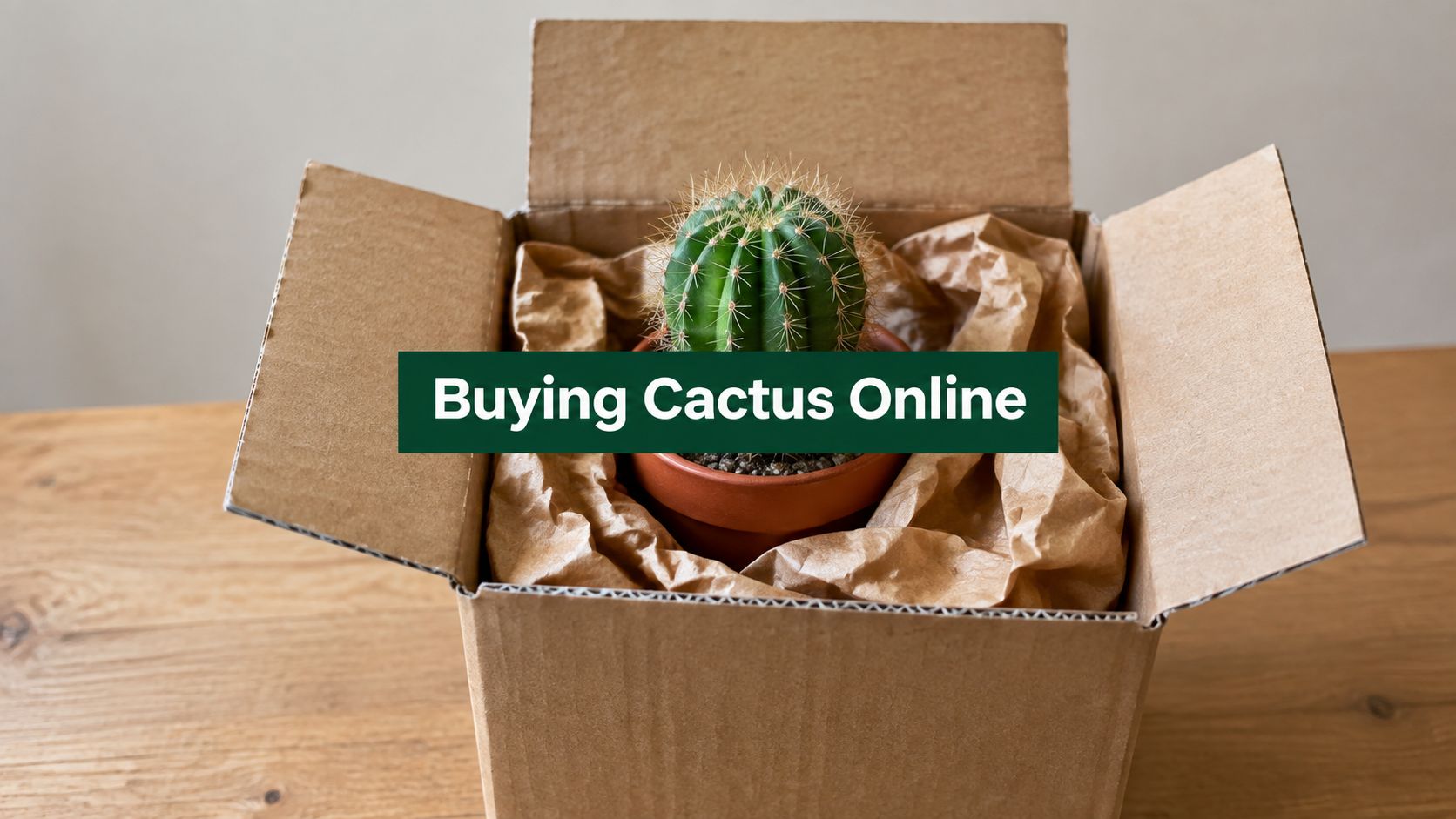
A lot of the inventory that ranks for large cactus for sale near me is online-only or built around regional delivery, not walk-in stock. That matters because large cacti are costly to move, easy to damage, and often sold by nurseries that expect you to pick up locally or arrange careful shipping. Some sellers handle this better than others, but the listing itself does not always tell you which model you are looking at. Online-only large cactus assortments
Practical rule: if the listing does not clearly say the plant is on-site, assume it may be coming from a grower, not sitting at the nearest store.
The market also leans heavily on established growers and larger sellers. A retail listing for ready-to-display cactus notes that some large specimens are sold as premium plants, and another market reference describes an established seller with long experience, which is the kind of nursery presence that tends to dominate the top end of the trade. Market context on cactus pricing and established sellers
How to reset your expectations
Do not search like you are buying a flat of annuals. Search like you are sourcing a specialty plant that may be physically close, regionally available, or only shippable from a nursery with the right packaging and pickup setup. If your goal is to inspect the plant before you buy, your real target is not the broad internet. It is a nursery cluster, a regional greenhouse, or a seller that explicitly offers pickup.
The Cactus Outlet's own catalog is a useful example of how this market works, because it mixes online access with large-specimen inventory instead of pretending every item is street-corner local. Their internal guide to types of large cactus plants is a good reminder that species choice matters before you start comparing sellers. If transport is part of the plan, Lounge Wagon's sand-ready wagon is the kind of tool that can make pickup realistic for a heavy specimen, especially when the pot and soil mass are bigger than they look in photos.
Where to Find Large Cacti in Your Area
The best place to find a big cactus depends on what you value most, inspection access, selection, or lower transport risk. In practice, buyers usually want all three, but the market rarely gives them all three at once. The primary job is choosing the trade-off you can live with.

Specialty nurseries
Specialty nurseries give you the best chance to see a plant in person, check the base, and compare several specimens side by side. They also tend to understand root condition, acclimation, and regional climate fit better than general retailers. The trade-off is inventory. Large pieces turn over unevenly, so a nursery can look excellent one week and thin the next.
If you are buying by hand, ask whether the seller can stage the cactus for pickup and whether they fill orders often enough to keep plants moving. A large nursery that fills orders 6 days a week is signaling handling capacity, not just marketing polish. Order frequency benchmark
Online retailers with pickup or regional delivery
Online sellers are often the widest route to mature plants, especially when the inventory is already boxed for shipment or organized around regional delivery. Careful vetting matters here. You want clear species names, photos of the exact plant or a representative specimen, and plain language about how the cactus is grown and packed.
A seller that explicitly says its plants are not wild-collected and are two or more years old before shipping gives you a meaningful clue about establishment. Older, nursery-grown material is usually more resilient after transplant than a flashy but weak cutting. Nursery-grown benchmark
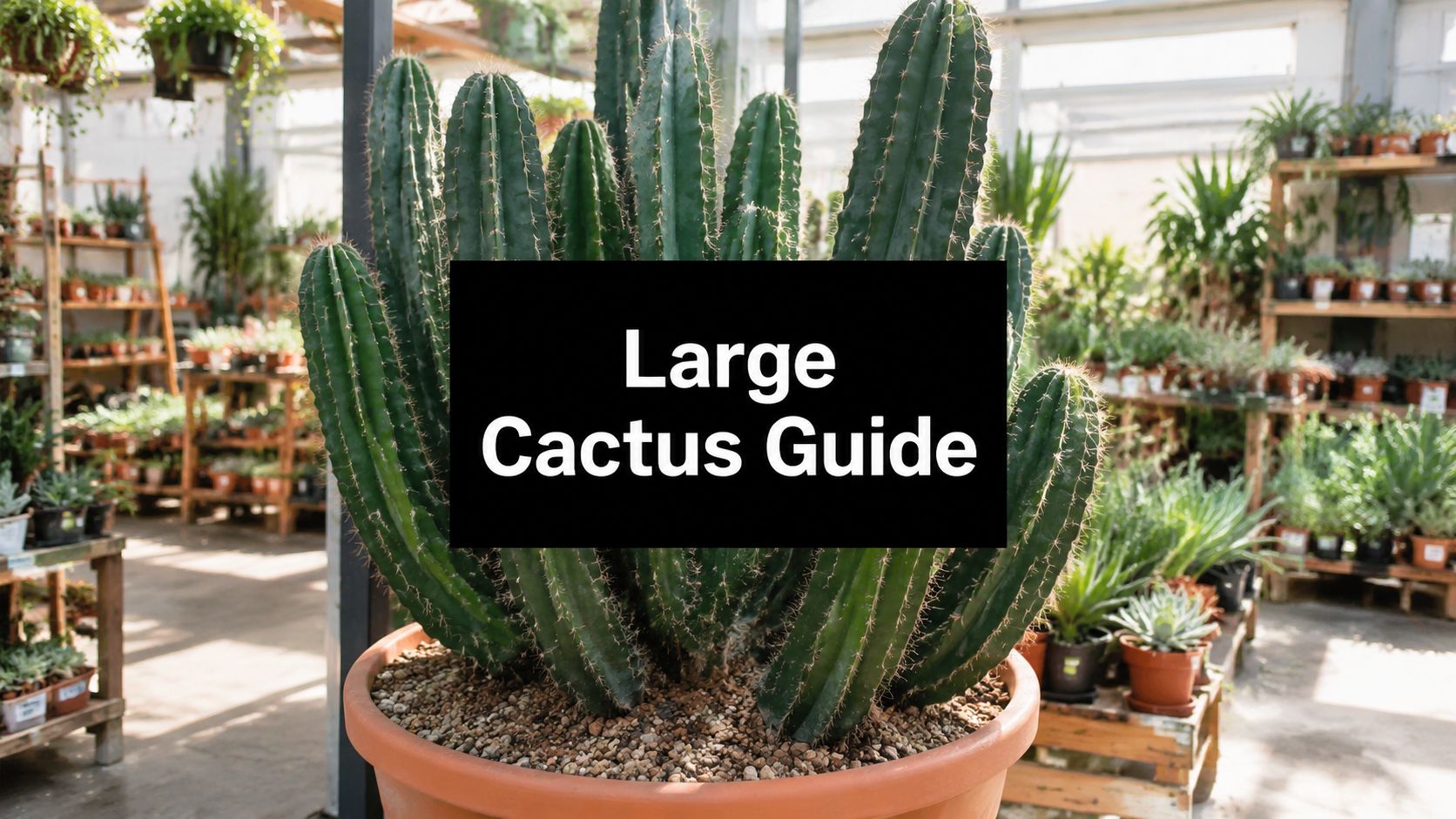
The other useful filter is plant type. Columnar, clumping, and specimen plants each create different transport problems, so a buyer comparing listings should start with types of large cactus plants before judging price or pickup convenience.
Classifieds and marketplaces
Classifieds can produce the occasional deal, but they are the riskiest channel for large cacti. Identity is easier to get wrong, condition is harder to verify, and transport often becomes the buyer's problem the second money changes hands. I only treat this route as workable when the seller can show the plant in context, at the base, and from multiple angles.
For buyers who need to move an oversized specimen after pickup, a sand-ready wagon like Lounge Wagon's sand-ready wagon can be a practical support tool for the short haul from vehicle to yard. It will not replace a proper lift plan, but it can keep you from dragging the pot across gravel or turf.
Quick comparison
| Channel | Best for | Main weakness |
|---|---|---|
| Specialty nursery | In-person inspection | Limited stock |
| Online retailer with pickup | Broad selection | Needs careful vetting |
| Classifieds or marketplace | Occasional bargains | Highest uncertainty |
How to Inspect a Large Cactus Before You Buy
A tall cactus can look sturdy and still be a weak, recent cutting with little useful root mass. Height is a poor shortcut for quality. The plant may survive in the seller's pot, then fail weeks later after you have already paid for transport and planting.
Start with the base, not the top
Look at the point where the stem meets the soil. You want a firm transition, no mushy tissue, no collapse, and no darkening around the base. If the seller will not let you see that area, treat it as a red flag.
A cactus that has been grown and propagated in nursery conditions usually gives you a better starting point than one that just looks impressive on the lot. Age, rooting, and handling matter more than size alone, and that is one reason why large cacti and succulents cost what they do. A plant that feels heavy for its size usually tells a better story than one that only looks tall.
Ask about propagation and acclimation
A responsible seller should be able to tell you whether the plant came from seed or a cutting, how long it has been rooted, and whether it has been grown in shade-house or outdoor conditions. That last point matters because abrupt exposure changes trigger sun-scorch just as easily as excess water triggers rot. If the seller cannot answer those questions, you are buying blind.
I also ask where the plant has been sitting recently. A cactus that has been shaded, watered on a loose schedule, and handled carefully is a different risk than one that has been dragged in and out of sun, moved repeatedly, or left crowded with other stock. The more stable the growing setup, the less guesswork you carry home.
Use a simple inspection checklist
- Root development: Ask for the root-ball size and whether roots are visible or well established.
- Stem firmness: Press lightly. Healthy tissue should feel firm, not hollow or spongy.
- Spine integrity: Broken spines and scraped ribs often mean rough handling.
- Soil condition: Wet, sour, or compacted mix is a warning sign.
- Photo proof for online orders: Request a clear shot of the base and the full side profile.
For an online or remote purchase, the best photos are the ones that show what a showroom shot hides. You want the lower stem, the pot line, any scars near the base, and the whole plant in one frame if possible. That is where bruising, rot, and a too-small root system usually show up first.
A clean inspection does not guarantee success, but it narrows the odds. The buyer who checks the base, asks about acclimation, and looks for honest photos is the buyer who avoids the expensive surprises.
Understanding Pricing and Negotiating Fair Deals
A quote on a large cactus is never just about the plant sitting in the pot. Size, age, species, root establishment, and the work needed to move it all affect the number you hear. Local pickup can look cheaper on paper, while a shipped specimen may cost more because the seller has to pack, secure, and protect a plant that can't be treated like ordinary freight.
A useful baseline is the market for common small cacti, which independent retail reporting places at $5.99–$14.99 in 2.5–4 inch pots. That low end helps explain why mature outdoor plants move into a completely different category, especially once handling and transport enter the deal. Cactus pricing baseline
Large Cactus Price Range by Species and Size
| Species | Typical Height Range | Approximate Price Range | Key Cost Drivers |
|---|---|---|---|
| Common nursery cacti | Small starter size | Low retail baseline | Fast turnover, easy shipping |
| Landscape-ready cactus | Mature specimen | Higher than starter plants | Age, girth, transport risk |
| Premium specimen cactus | Large, established plant | Highest tier in the market | Rarity, visual impact, handling difficulty |
What changes the price
Species is the first filter. After that come height, girth, root establishment, and whether the plant has already been acclimated for outdoor use. A cactus that has been grown well, hardened properly, and boxed by a professional nursery costs more for a reason, since the failure rate is lower once it leaves the bench. For a wider look at the factors behind those price jumps, see why large cacti and succulents cost more.
Seller experience can show up in the quote as well. The market note about a nursery with 20 years of experience is a reminder that long-running operations often sit at the premium end because they have already built the infrastructure needed for large plants. Established nursery context
Where you can negotiate
Negotiation works best on multiple plants, slow-moving inventory, or pickup orders that save the nursery labor. It is weaker on rare species, freshly staged specimens, and plants that already require special loading. If the nursery has to pull three people off the floor to wrap and move your cactus, there may not be much room to haggle.
Contractors and designers should ask about seasonal offers and bulk purchase terms directly, especially when buying several specimens for the same site. Local pricing also shifts when a seller has to coordinate white-glove handling, which is why the logistics side of the quote can matter as much as the plant itself. TLC Moving & Storage white glove
Transport Logistics and Legal Considerations
Moving a big cactus starts with logistics, not planting. If the plant is top-heavy, the pot is unstable, or the spine structure is easy to crush, the sale can go wrong before it leaves the nursery yard. I ask about weight, access, and loading support before I commit, because that is where the deal usually breaks.

Plan the move before the sale
Ask whether the cactus needs a two-person lift, whether the seller can load oversized plants, and whether delivery is available if the specimen is too awkward for a normal pickup. One large nursery says it fills orders 6 days a week, and that kind of pace usually means the plant is handled often enough to avoid sitting in poor staging conditions for too long. Frequent fulfillment benchmark
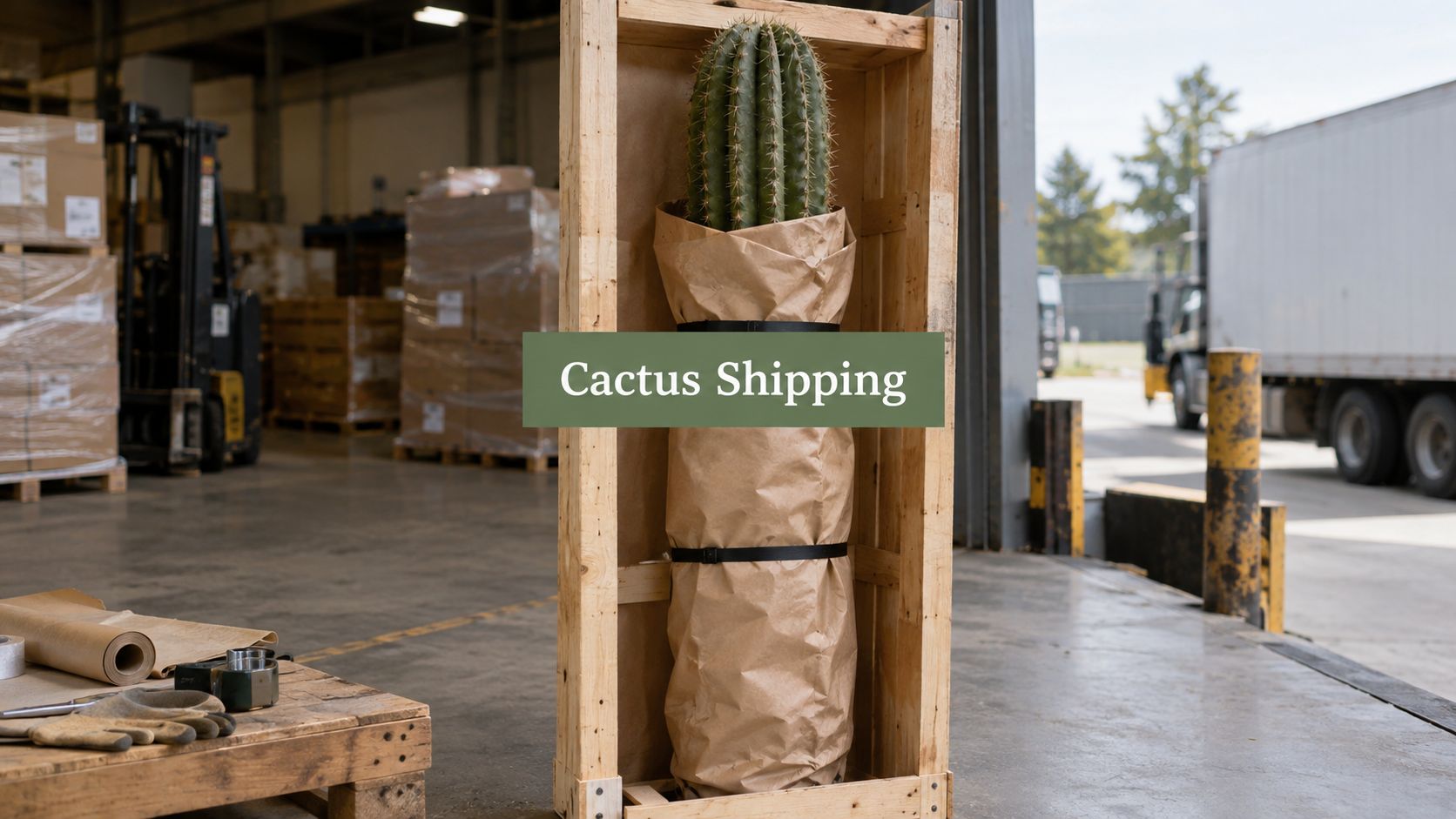
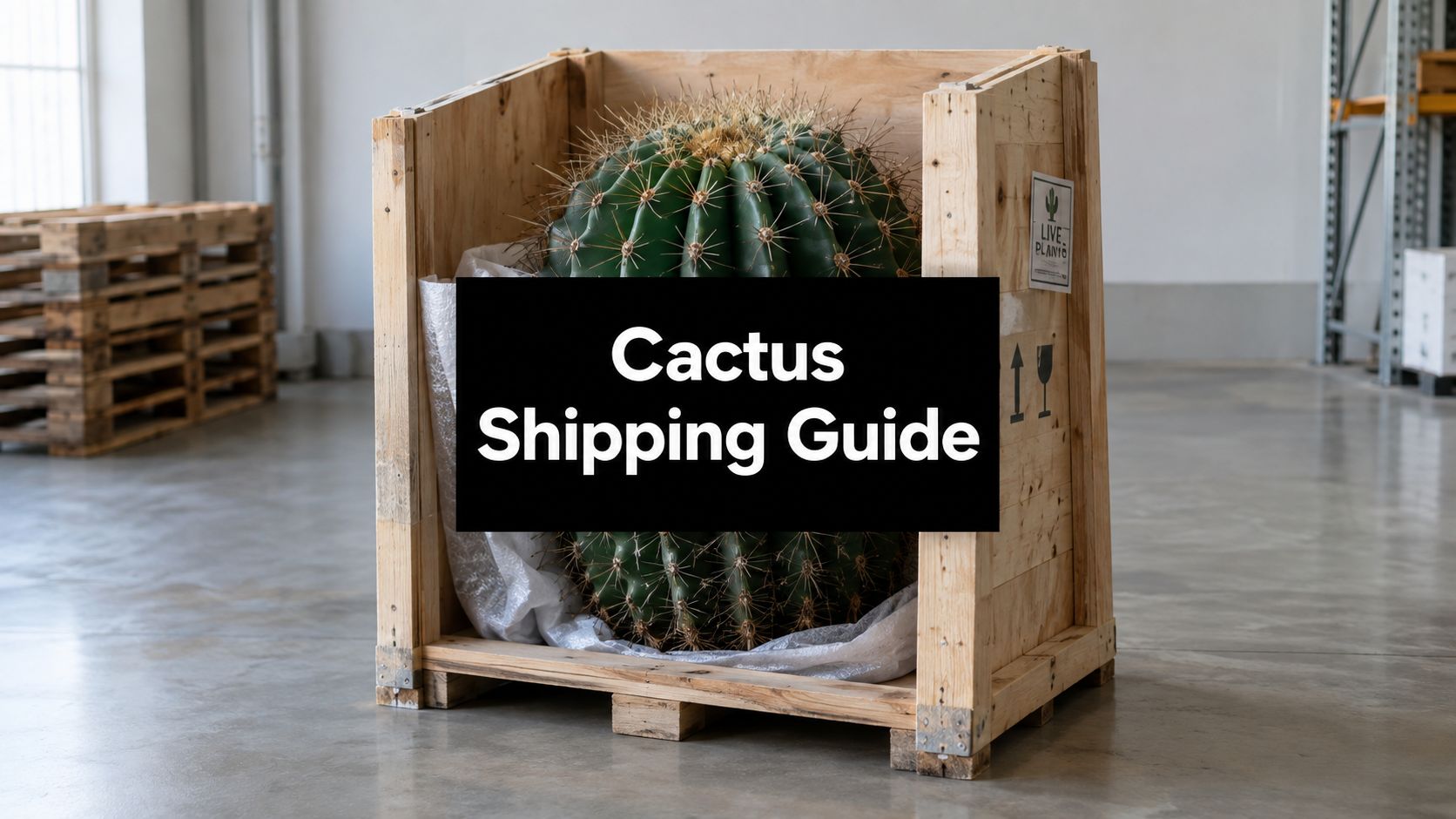
The vehicle matters just as much as the plant. A short, heavy cactus may fit in a truck bed or larger SUV, but taller pieces can tip, rub, or break under their own weight if they are not secured correctly. If the specimen will not stay steady in a standard container, do not improvise with towels and guesswork. Choose delivery or bring in professional help.
Protect the plant itself
Wrap the pot so it cannot slide. Put padding between the cactus and any hard edge, and keep the spines away from upholstery, rails, or tie-down points. If the seller helps you secure the plant, watch the method closely, because careful loading often reflects careful handling from start to finish.
If the plant is too large or awkward for a casual pickup, TLC Moving & Storage white glove is the kind of service category worth checking for controlled handling and placement.
Don't ignore legal and sourcing questions
Some cactus species can have transport restrictions, and wild-collected material may require documentation. Ask whether the plant is nursery-grown, whether the seller can show its source, and whether your state or local rules affect transport. I do not assume a big cactus is simple to move just because it is legal to own where it is headed.
If you are buying a saguaro, the paperwork and handling questions matter even more, which is why it helps to read up on buying a saguaro cactus before you agree to transport terms. The more difficult the plant is to move, the more careful the packing, loading, and delivery plan needs to be.
First 30 Days After Bringing Your Cactus Home
The transport is stressful, but the first month is where most mistakes show up. People either water too soon or place the cactus into full exposure too fast, and both decisions can undo a good purchase. A strong plant can still decline quickly if the new site doesn't match what it was used to.
Week one is about restraint
Set the cactus in its final position before you touch the watering can. If it came from a shaded nursery and you put it straight into harsh sun, you're asking for sun-scorch. If it arrived from a dry, well-rooted bench and you flood the soil immediately, you're inviting rot.
For an outdoor install, I'd keep the root zone dry until the plant has settled and the soil around it has stabilized. For a decorator piece indoors, keep it in bright light without direct midday blast and avoid moving it from room to room. Stability matters more than fussing.
Match the aftercare to the environment
In warm climates, a large cactus can often be planted or staged outdoors sooner, but only if the plant was already acclimated. In cooler or wetter climates, container culture is safer until you know how the space behaves. That is especially true for newly shipped plants that haven't yet recovered from transit.
Don't “help” a cactus by watering it on a schedule you use for other houseplants.
A useful comparison point is the same transplant caution used in tree relocation, where the aftercare plan matters as much as the move itself. The tree-moving guidance at Treecorp Solutions on tree relocation is relevant because large plants fail when the root zone is disturbed and then overhandled.
Watch for stress signals
The first signs of trouble are usually subtle. Soft spots near the base, color fading, leaning, or a sudden change in firmness are warnings. If the plant looks fine but the soil stays wet too long, treat that as a problem before symptoms appear.
If you're handling an indoor specimen for décor, give it bright light, airflow, and very limited watering until you're confident it's stable. If it's going into a garden setting, resist the urge to “feed” it into recovery. Good placement and dry-down usually solve more than fertilizer does.
Frequently Asked Questions About Local Cactus Purchases
Is it safe to buy a large cactus in winter?
Yes, if the plant is handled carefully and the seller can keep cold exposure short. The primary risk isn't the calendar, it's transport shock, wet soil, and a sudden move from protected nursery conditions into a cold yard. If local temperatures are rough, pickup and immediate staging matter more than a bargain.
How do I know an online seller's local pickup option is near me?
Check for a real retail address or a clearly stated pickup zone, not just a shipping page with “local” in the wording. A true local option usually gives you a physical location, a pickup process, or region-specific fulfillment details, not vague geography.
What if the nursery won't let me inspect the root ball?
Walk away unless the seller can show you enough of the base, the soil line, and the plant's condition to make a rational call. A refusal usually means the seller knows the plant wouldn't pass a close look.
Can contractors negotiate on large specimen orders?
Usually, yes, especially when the order involves multiple plants or pickup that reduces labor for the nursery. The advantage comes from volume and operational simplicity, not from asking for a discount on a single rare specimen.
If you want a cleaner way to shop for a large cactus for sale near me without guessing whether the plant is local, regional, or boxed for shipping, visit The Cactus Outlet and compare mature specimens, pickup realities, and shipping options in one place. Their large-cactus inventory is built for buyers who care about plant condition first and marketing language second.