

You've found the kind of plant that can make a courtyard, patio, foyer, or entry bed look designed on purpose instead of assembled by accident. A large cactus plant for sale isn't just a purchase, it's a commitment to scale, patience, and logistics, which is why the right specimen can feel exciting and a little intimidating at the same time.
That reaction makes sense. Mature cacti are bold, sculptural, and long-lived, and the category is still expanding, with the global cactus plants market estimated at USD 1.2 billion in 2024 and projected to reach USD 2.5 billion by 2033, a path that reflects 8.9% CAGR from 2025 to 2033 in one market estimate, while another places the category at USD 5.18 billion in 2023 with 16.37% CAGR through 2033 (DataHorizzon Research). That growth tells you something simple: buyers aren't treating cactus as a novelty anymore, they're choosing mature, decorative plants as permanent design features.
Why a Large Cactus Is the Ultimate Statement Plant
A small plant can fill a corner. A large cactus changes the room.
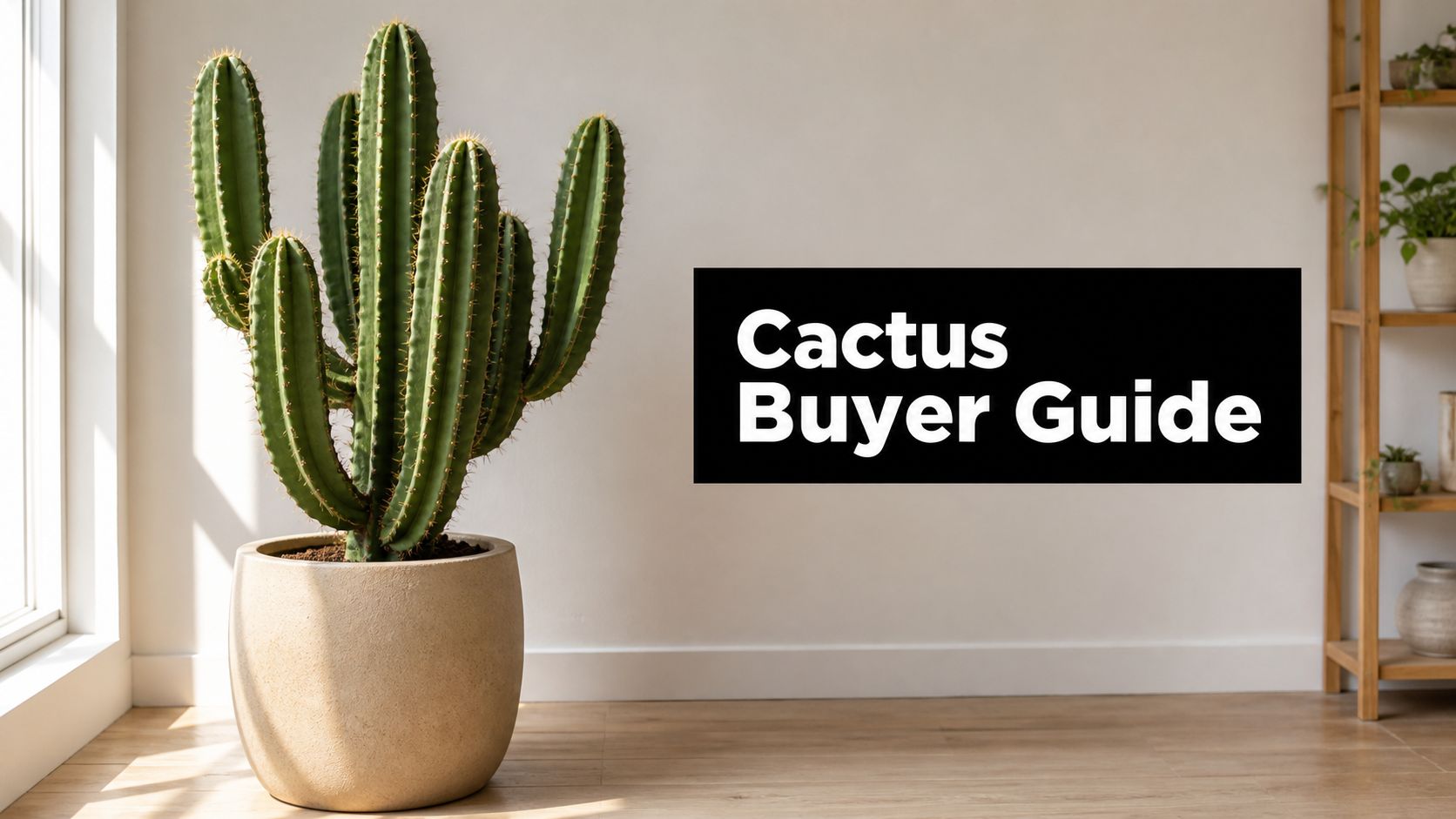
That difference is the reason buyers keep coming back to mature specimens. A big cactus brings a clear shape, strong shadows, rough texture, and the quiet feeling of age that softer plants rarely create. In a modern interior, it reads like a living sculpture. In a desert-style yard, it becomes the anchor that makes the rest of the design feel deliberate. Either way, the plant does more than decorate, it sets the tone.
The appeal is easy to understand once you see how a statement cactus works in a space. It gives you height without clutter, character without busy foliage, and presence without asking for a lot of visual support. For someone choosing a first specimen, that can be reassuring, because the plant carries the design instead of waiting for the rest of the setting to catch up.
Why the visual impact feels different
A large cactus registers immediately, even from across a yard or through a front window. It does not need flowers, seasonal color, or a dense canopy to earn attention. The outline alone does the work, much like a bold frame around a photograph.
That is why homeowners, interior decorators, and outdoor design contractors keep searching for mature specimens. They want something that looks established on day one. They also want a plant that can hold a composition without needing a long list of companion plants to make the space feel finished.
Practical rule: If you want a focal point, choose the silhouette first and the size second. A cactus that matches the proportions of the space will usually look better than one that is only impressive on paper.
If you are trying to picture the right kind of statement plant for your own space, it helps to compare forms before you buy. Our guide to popular large cactus species can help you narrow that down. Once you understand shape, growth habit, and how the plant will arrive, the decision feels much less overwhelming.
For many buyers, that is the comfort in choosing a large cactus. You are not buying a plant, you are choosing a permanent visual anchor. With the right specimen, the room, patio, or yard starts to feel finished in a way that smaller plants rarely achieve.
Exploring Popular Large Cactus Species

A buyer may start with a simple question. Which large cactus will fit the space, the style, and the amount of effort the site can support? The answer becomes easier once you look at the plants as different kinds of structures, not just different kinds of decoration.
The Saguaro is the classic tall icon, with a vertical trunk and branching arms that create an unmistakable silhouette. It suits dramatic entry settings and open desert plantings where height matters. The Peruvian Apple cactus is another strong choice for buyers who want an upright form with faster visual payoff, especially in contemporary or Mediterranean-inspired designs. The Golden Barrel is compact by comparison, but its spherical shape and ribbed body make it useful for grouped plantings, rock gardens, and container displays. The Cardon is the giant of the group, and its scale changes the conversation entirely.
To understand just how large that conversation can get, the Cardon, Pachycereus pringlei, is described as the world's largest cactus and can reach up to 19 metres in height and around 25 tonnes in mass (Nieuwkoop Europe). That is not just a plant size issue, it is a site-planning issue.
Large Cactus Species At-a-Glance
| Species | Max Height | Growth Rate | Best For | Light Needs |
|---|---|---|---|---|
| Saguaro | Very tall, branching specimen | Slow, long-lived | Desert-style yards, landmark plantings | Full sun |
| Peruvian Apple cactus | Tall columnar cactus | About 1 to 2 feet per year in favorable conditions | Gardens needing quick structure, screening | Bright light to full sun |
| Golden Barrel | Low, rounded form | Slow | Rock gardens, containers, grouped accents | Full sun |
| Cardon | Up to 19 metres | Large mature specimen over time | Large properties, collector plantings | Full sun |
If you're still narrowing choices, the types of large cactus guide can help you compare form and habit before you commit to a purchase.
Matching species to style
A saguaro reads as iconic and Western. A golden barrel feels tidy and designed. A Peruvian Apple cactus can bridge both worlds, especially when the goal is quick structure without giving up the desert look.
Choose the plant that suits the way you live with it. A specimen that fits the site will look more expensive, more settled, and more intentional than one chosen only because it sounded impressive.
For buyers who plan to place a cactus near a patio, the practical details matter too. A raised bed or custom container can simplify installation, which is why the right planter box designs for Guelph decks can be useful when you want the plant and the structure to work together.
How to Choose the Right Cactus for Your Space
A large cactus can look perfect in a photo and still be the wrong fit for your home. The main question is where it will live, how it will arrive, and what it will need once it is in place.
That matters because a cactus is not a small accent you can shift around later without much thought. Indoors, you are planning for window light, ceiling height, pot weight, and how people move through the room. Outdoors, you have to account for sun exposure, wind, planting depth, drainage, and the way the plant will look after it settles in and grows beyond its first season.
Start with light and climate
Most large cacti want strong light, but strong light is not the same in every setting. A bright south-facing window can work for a smaller indoor specimen, while outdoor plants usually need real sun exposure and room to breathe. If the species does not suit your climate, the cactus may stay alive for a while and still never settle in properly.
Growth rate matters too. A large Peruvian Apple cactus can add about 1 to 2 feet per year in favorable conditions. That kind of pace helps when you want a fast screen or a quick focal point, but it also means you need to plan for support and spacing early, before the plant begins to lean or crowd nearby features.
A good rule is simple. Measure for the cactus you want in three years, not the one that only fits today.
Think through placement before you buy
Large cacti are tolerant of dry conditions, but they are not forgiving about a poor site. Narrow walkways, low eaves, crowded patios, and undersized planters can create problems quickly, especially once the plant begins to mature.
Start with the destination and work backward. If the cactus is going on a deck, a planter or raised container may be easier to manage than in-ground placement, and the planter box designs for Guelph decks can help you think through structure, drainage, and footprint. If it belongs in a patio corner, make sure it will not block movement as it spreads. If it is meant to stand in the front yard, check how it reads from the street, not only from the front door.
Height alone is the easy trap. A better choice matches light, space, and long-term form, so the cactus stays impressive without turning into a placement problem.
A Buyer's Guide to Cactus Health and Condition

A big cactus can still be the wrong cactus if the plant is stressed before it ever reaches you. Healthy structure matters, but so does the condition of the skin, the base, and the roots hidden below the surface.
What healthy growth looks like
A strong specimen usually has firm tissue, good color, and a shape that looks balanced rather than stretched. If the plant is columnar, the stems should look sturdy, not thin and reaching. If it's a barrel or globe form, the body should be symmetrical and free of soft collapse. Sun scorch and etiolation are both worth watching for because they tell you the plant has already struggled with light.
Look closely at the base. Soft spots, dark discoloration, or any area that feels unstable can suggest rot. That's a major red flag in a large cactus, because problems at the base are harder to recover from than cosmetic damage higher up.
What to inspect before you buy
- Check for pests: Scale and mealybugs often hide in crevices, along ribs, and near the crown.
- Look for firmness: Healthy tissue should feel solid, not spongy.
- Study the color: Uneven bleaching or sunburned patches can point to stress.
- Watch for stretching: Long gaps between growth points can signal poor light.
- Examine the pot and root zone: A plant should sit securely, not wobble as if it was recently forced into a container too small or too shallow.
A healthy root system won't usually be visible in a retail listing, which is why reputable sellers need to provide clear photos and accurate descriptions. If the plant is sold online, look for images that show the full specimen, not just a flattering angle of the best side. That kind of transparency matters more with large plants than with small tabletop stock.
A good cactus should look like it can handle the move. If it looks fragile before shipping, it probably won't improve in transit.
Demystifying Shipping and Delivery of Large Cacti

This is the part most buyers worry about, and they're right to ask questions. A large cactus is not a regular parcel item, and the delivery method matters just as much as the plant itself.
What the shipping process should look like
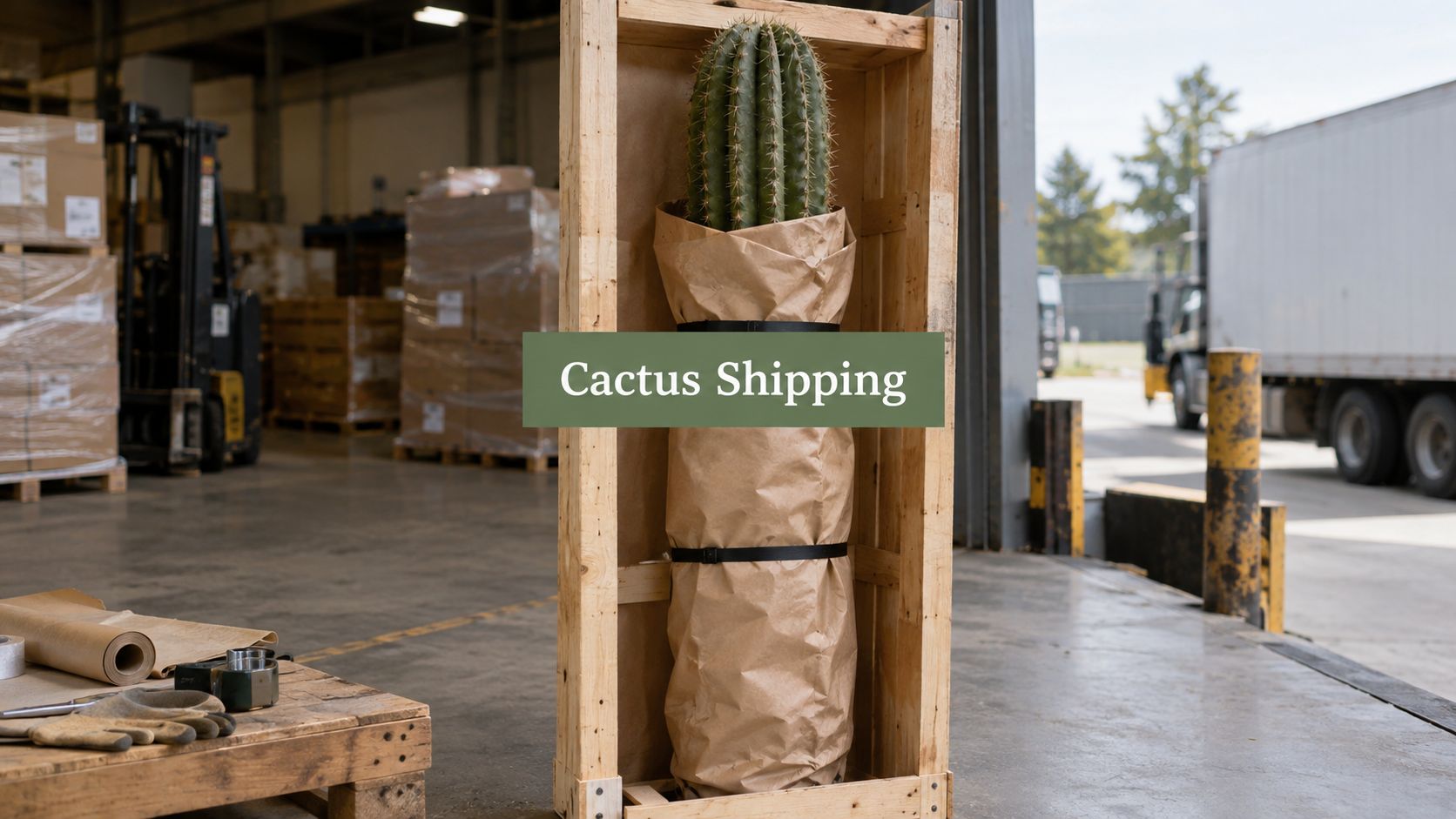
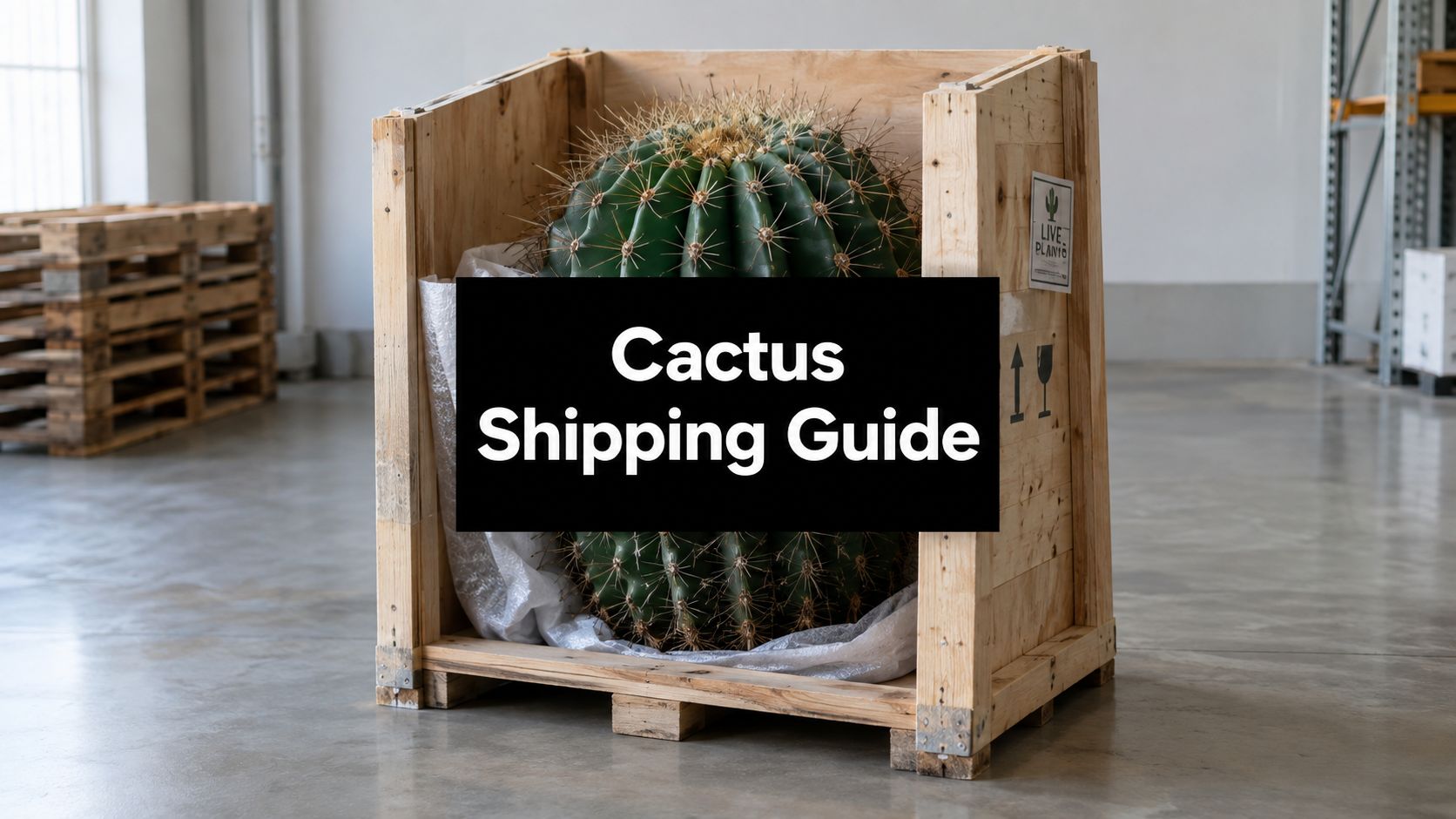
The logistics usually start with order confirmation and careful preparation. Large specimens need protective wrapping, stable support, and the right shipping method, which may be parcel for smaller plants or freight for heavier ones. The plant should then be tracked in transit, delivered with enough notice for safe receipt, and unpacked carefully so spines, stems, and roots stay protected.
That's exactly why shipping is such an underserved topic in this category. Sellers often focus on availability, while buyers are left wondering about freight costs, residential delivery requirements, and how to prepare a site for a heavy plant (High Country Gardens). For first-time buyers, that uncertainty can be the biggest obstacle.
What to do before delivery day
- Measure every access point: Gates, side yards, doorways, and tight corners all matter.
- Choose the final spot early: Once the plant arrives, you don't want to improvise a landing zone.
- Check the surface: Make sure the ground or planter is ready to support the weight.
- Plan the lift: Large plants often need two people or specialized handling.
- Open immediately and inspect calmly: Don't rush, but don't let the plant sit packed longer than necessary.
If you've ever moved delicate items, the process feels familiar. The difference is scale. For broader advice on moving living plants with care, relocating your houseplants successfully is a useful reference for the same mindset, careful prep, gentle handling, and quick placement.
Practical rule: Buy the plant only after you know how it enters the property, where it lands, and who is helping on delivery day.
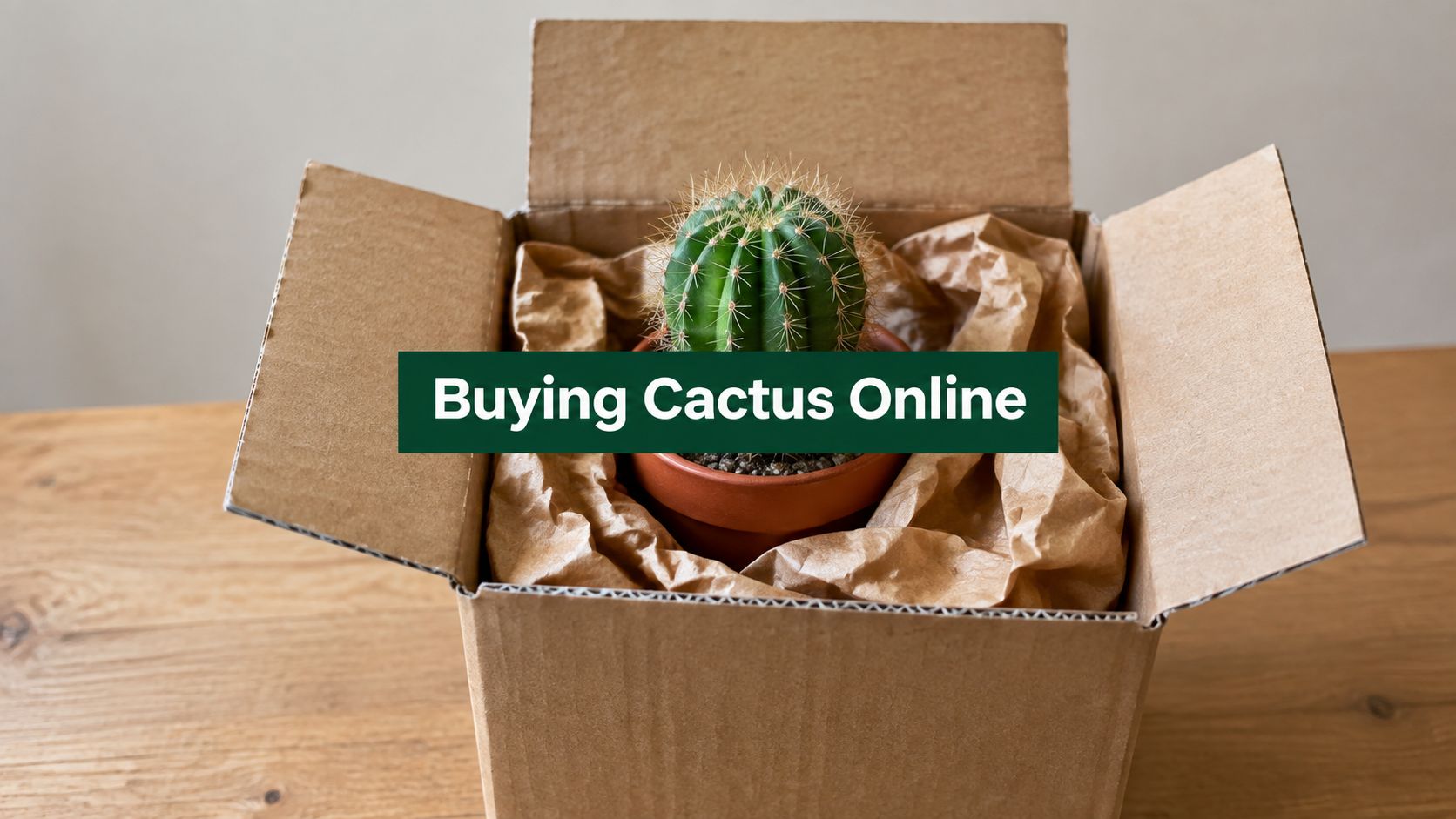
For buyers comparing online options, the buy cactus online guide is worth reading before checkout. The goal is simple, remove surprise from the process and turn delivery into a planned step instead of a leap of faith.
Understanding Pricing and Finding the Best Value
A large cactus can seem costly at first because you are not only paying for a plant in a pot. You are paying for years of slow growth, careful handling, and the rarity that comes with a mature specimen that is much harder to replace than smaller stock.
Size and maturity push the price up quickly. A 12-inch Saguaro might cost around $40, while specimens from 8 to 20 feet were said to average about $100 per foot in one market guide. Mature multi-arm plants can cost over $3,500, and a 21-foot, six-arm specimen could be valued at over $4,150 (ThePricer). That range shows how strongly age and branching affect value.
What actually drives value
Height matters, but branching matters too. A single trunk is simpler to grow and move than a mature, multi-arm specimen. Age matters because slow growth creates scarcity. Rarity matters because no two specimens look exactly alike, and not every plant fits the same outdoor design.
A buyer looking for one showpiece plant may care most about shape and maturity. A contractor may care more about consistency, delivery timing, and how well the cactus fills a space right away. If you are comparing options, remember that the lowest listing is not always the best value once shipping, handling, and replacement risk are included.
If you want a practical way to compare sizes and forms, the cactus for sale guide is a useful starting point for sorting through large-specimen options.
Value tip: Pay for the plant that solves your design problem, not the one that simply looks biggest in the photo.
For many buyers, a key question is whether the cactus earns the ground it occupies. If it arrives healthy, fits the site, and will not outgrow the space too quickly, the price is easier to justify because the plant is doing a specific job from day one.
Frequently Asked Questions About Large Cacti
A few questions come up again and again before people buy a specimen this size.
Are large cacti hard to care for after delivery?
Usually not, if they're matched to the right site and handled carefully at arrival. The main risk is overcomplication, too much water, too little light, or a cramped container. Keep the first days simple and let the plant settle.
Are they safe around pets?
The main concern is physical injury from spines, not casual handling. Keep placement in mind if dogs, cats, or children move through the area often.
Do big cacti need special permits?
Some protected species can carry restrictions, especially when they're collected or relocated. It's smart to check local rules before buying any specimen with legal protections.
Can you repot a giant cactus yourself?
Sometimes, but the bigger the plant, the more realistic the handling needs become. Weight, spines, and balance all matter, so many buyers plan for help rather than trying to muscle it alone.
The best first purchase is the one that fits your space, your climate, and your delivery plan. If you've reached the point where the plant, the site, and the logistics all make sense, browse The Cactus Outlet and choose a specimen that matches the scale you want to live with.