



When it comes to watering succulents, you need to think like a desert storm. These plants aren't looking for a light sprinkle every few days; they thrive on a "drought and flood" cycle. This means giving them a thorough drenching and then letting the soil dry out completely. Depending on your home’s climate, that could mean watering every 2 to 4 weeks.
The Single Most Important Succulent Watering Technique
If you walk away with just one thing today, let it be the “soak-and-dry” method. Seriously. This isn't about following a strict calendar or measuring out water in a cup. It's about understanding how these plants actually want to be treated. Get this right, and you've solved 90% of succulent care.
Succulents come from places where it might not rain for months, but when it does, it pours. They’re built to suck up all that water fast and store it in their plump leaves for the next dry spell. The soak-and-dry technique is our way of recreating that natural rhythm right in your living room.
How the Soak and Dry Method Works
It’s a simple two-act play: the soak, and the dry.
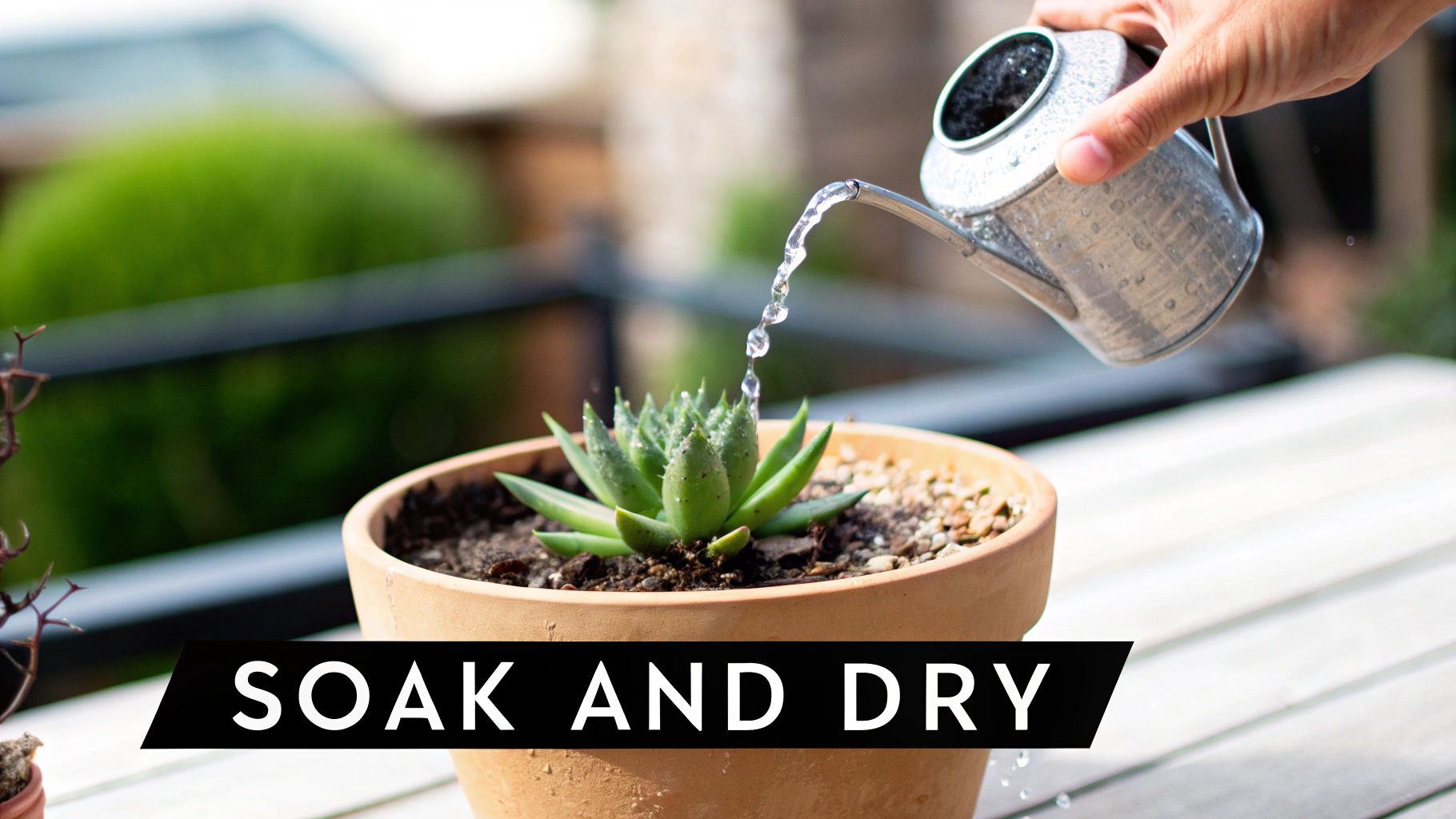
First comes the “soak.” You’ll want to drench the soil completely. Water the plant until you see a generous amount running out of the pot’s drainage hole. This isn't a light misting; it’s a full-on downpour that ensures every single root gets a chance to drink, promoting a deep, healthy root system.
Next, and this is the part people often get wrong, is the “dry” phase. You absolutely must let the soil become bone-dry before you even consider watering again. This dry-out period is non-negotiable. It allows the roots to breathe and prevents them from sitting in a boggy mess, which is a one-way ticket to root rot.
Here’s a simple visual breakdown of how this process flows.
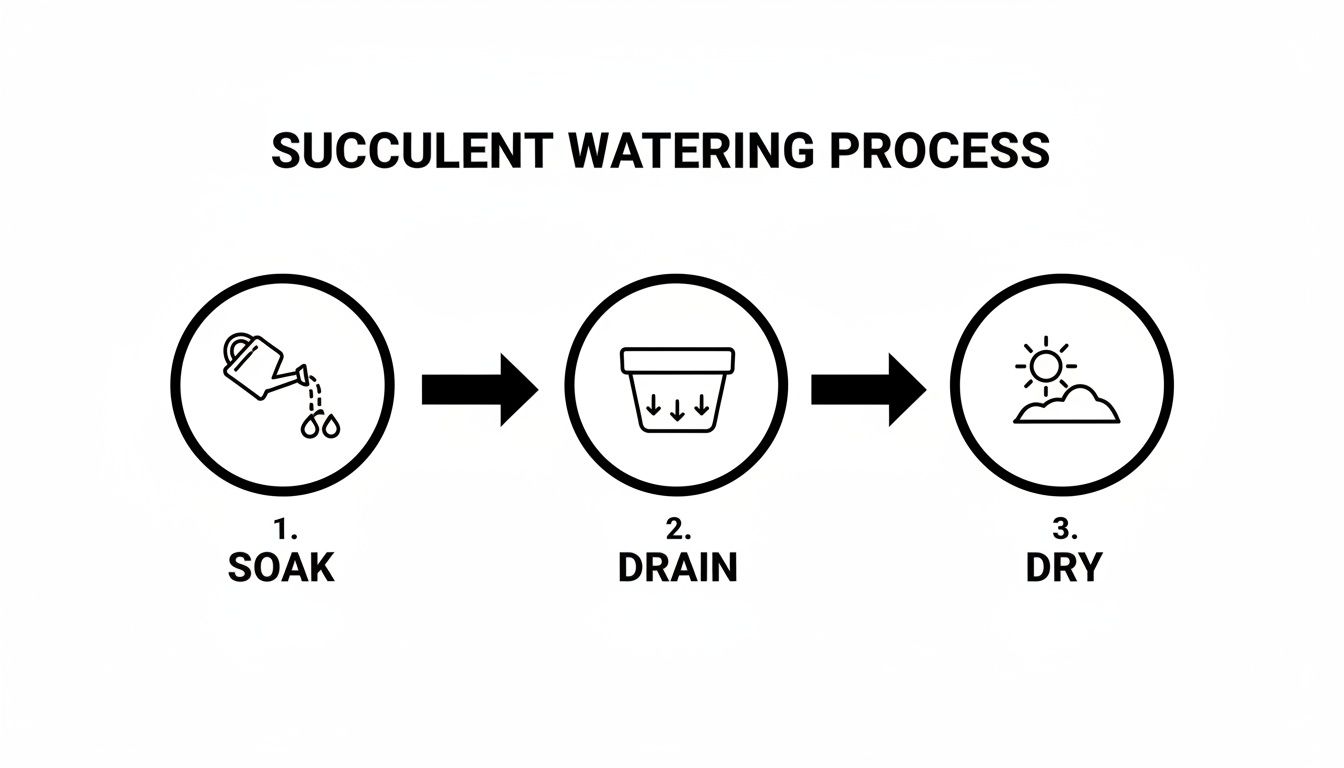
The real magic happens when you complete the entire cycle. Soaking is great, but without letting the soil dry out completely, you're just setting your plant up for failure.
A Quick Guide to the Soak-and-Dry Method
This simple table summarizes the core steps and what to look for when using the soak-and-dry method. Think of it as your cheat sheet for perfect succulent watering.
| Step | Action | Key Indicator |
|---|---|---|
| Check | Test the soil for dryness before watering. | Soil is completely dry 1-2 inches down; the pot feels light. |
| Soak | Pour water evenly over the soil until it flows freely out of the drainage hole. | Water is visibly draining from the bottom of the pot. |
| Drain | Let the pot sit for a few minutes to allow all excess water to drain away completely. | No more water is dripping from the pot. |
| Dry | Place the succulent back and wait for the soil to dry out completely. | The soil is dusty/crumbly and pulls away from the pot's edge. |
By following these simple cues, you take the guesswork out of watering and give your plants exactly what they need to thrive.
Checking for Dryness Before You Water
So, how can you be sure the soil is dry enough? Don't just guess. Get your hands a little dirty and use one of these foolproof methods:
- The Finger Test: This is the classic for a reason. Stick your finger about two inches into the soil. If you feel even a hint of moisture or coolness, put the watering can down and walk away. It’s not time yet.
- The Weight Test: This becomes second nature after a while. Pick up your potted succulent right after you’ve watered it and feel its weight. Now, pick it up a week or two later. A bone-dry pot is surprisingly lightweight. You'll quickly get a feel for the difference.
- The Wooden Skewer Method: If you don't want to get soil under your nails, grab a wooden chopstick or a bamboo skewer. Push it deep into the soil, leave it for a moment, and pull it out. If it comes out clean, it's time to water. If it has damp soil stuck to it, wait a few more days.
There’s a reason succulent experts sound like a broken record about overwatering—it is, without a doubt, the number one killer of these plants. It's easy to forget that these plants are tough by nature. Horticultural research suggests that a staggering 70% of succulent deaths in homes are from drowning them with kindness.
While succulents have their unique rhythm, the fundamental principle of checking soil moisture is universal in gardening. For a look at how this applies more broadly, you can find helpful advice on how often to water new plants in different settings.
Spotting the Signs of a Thirsty or Drowning Succulent
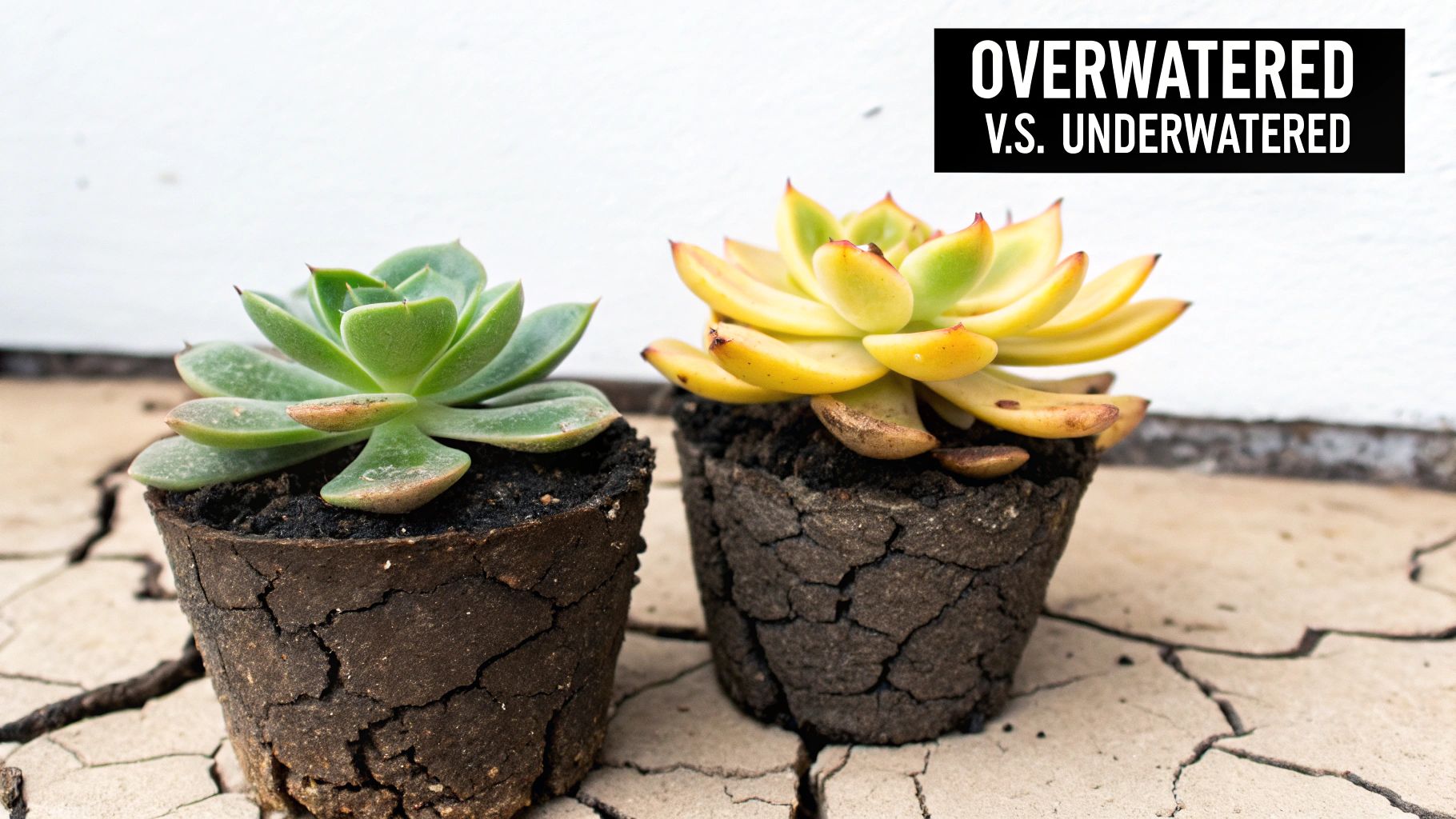
Your succulents will tell you exactly what they need—if you know how to listen. Learning to distinguish between the signs of an overwatered plant and an underwatered one is probably the most critical skill you can develop. Get it right, and you'll go from just keeping succulents alive to helping them truly thrive.
This isn't about guesswork. The clues are written all over their leaves and stems. By catching these early warning signs, you can adjust your watering schedule long before any real damage sets in.
The Telltale Signs of an Overwatered Succulent
More succulents meet their end from too much water than from any other cause. It's the number one mistake I see people make. The signs can pop up fast, turning a beautiful plant into a mushy mess seemingly overnight.
Keep an eye out for these classic symptoms of overwatering:
- Mushy or Translucent Leaves: A healthy succulent leaf is firm. If yours feels squishy or looks see-through, its internal cell walls have burst from too much water.
- Yellowing Leaves: This isn't a healthy, vibrant yellow. It's a sickly, pale color that usually starts with the bottom leaves closest to the waterlogged soil.
- Leaves Dropping Easily: If leaves fall off at the slightest touch, it’s a huge red flag. The connection to the stem has become weak and saturated with water.
- Black or Dark Stem: This is the most alarming sign. A dark, soft stem or base means root rot has taken hold. Saving the plant at this stage is tough, but not always impossible.
A Quick Note from Experience: Don't panic if you see old, bottom leaves shriveling up and falling off. That’s a natural part of the plant's growth cycle. Those leaves will look dry and crispy, not yellow and mushy.
Decoding the Cries of an Underwatered Succulent
While not as immediately fatal as overwatering, chronic thirst will stress your plant and stop it from growing. A thirsty succulent is focused on one thing: conserving every last drop of moisture it has stored.
Here's how to tell if your plant needs a drink:
- Wrinkled or Deflated Leaves: This is the most obvious cue. The once-plump leaves will look shriveled, like a raisin, because the plant is using up its internal water supply.
- Soft, Bendy Leaves: Instead of feeling firm, the leaves will be pliable. You'll be able to gently fold a leaf without it snapping.
- Dry, Crispy Tips: Some succulents, especially Aloes and Haworthias, show their thirst with brown, crispy leaf tips and edges.
- No New Growth: If it's the growing season (usually spring and summer) and your plant isn't getting any bigger, it might not have enough water to fuel its development.
The problem is more common than you'd think. One USDA report found that overwatered succulents yellowed five times faster and had a staggering 55% mortality rate within their first year. This is a big deal, especially in places like the Asia-Pacific succulent market, where a boom in houseplant popularity clashes with common (and incorrect) weekly watering advice. For a deeper look at industry trends, check out the global succulent plant market analysis from businessresearchinsights.com.
Overwatering vs Underwatering Symptoms
At a glance, a struggling succulent can be confusing. Is it too wet or too dry? This table breaks down the key differences to help you make the right diagnosis.
| Symptom | Sign of Overwatering | Sign of Underwatering |
|---|---|---|
| Leaf Feel | Mushy, soft, squishy | Soft, but pliable and bendy |
| Leaf Color | Yellowing, translucent | Dull, sometimes losing vibrant color |
| Leaf Appearance | Swollen, plump to the point of bursting | Wrinkled, shriveled, deflated |
| Leaf Drop | Leaves fall off easily, even healthy ones | Lower leaves dry to a crisp and fall off |
| Stem/Roots | Dark, black, mushy, rotten | Dry, brittle, aerial roots may appear |
Knowing these distinctions is the first step. Once you've identified the problem, you can take action to fix it.
Your Plant Rescue Plan
Okay, you’ve spotted a problem. Don’t panic! Quick action can turn things around.
For an Overwatered Succulent:
- First, stop watering immediately. That's non-negotiable.
- Move the plant somewhere with good air circulation to help the soil dry out more quickly.
- If it’s really soaked, you may need to perform "surgery." Carefully slide the plant out of its pot. Gently knock off the wet soil and check the roots. Snip off any that are black, brown, or mushy using clean scissors.
- Let the plant and its healthy roots air-dry out of direct sun for 2-3 days. This allows the cuts to callous over, preventing more rot.
- Finally, repot it in fresh, completely dry succulent soil. Don't even think about watering it for at least another week.
For an Underwatered Succulent:
- It's time for a deep drink. Use the "soak-and-dry" method. Give it a thorough watering from the top until water runs out the bottom.
- Be patient. The leaves won't plump back up in an hour. It can take a few days, or even a week, for the plant to fully rehydrate.
- Resist the urge to water it again too soon. After this big drink, go back to your normal routine and wait for the soil to dry out completely before the next watering. This avoids shocking the delicate, recovering roots.
How Light and Seasons Change Your Watering Routine
If you want to master watering your succulents, throw the calendar out the window. Seriously. The perfect schedule you figured out in the humid heat of summer will spell disaster come winter. Succulents live and breathe by their environment, and the real secret is learning to read the cues they get from changing light and seasons.
Think of sunlight as the engine driving your succulent's thirst. A plant soaking up the rays in a bright, south-facing window is working hard, photosynthesizing and using up water way faster than one tucked away in a shadier corner. That intense light and heat also bake the moisture right out of the soil.
This direct link between light and water is probably the most important lesson in succulent care. If you're struggling to find the right spot for your plants, we have a whole guide on the topic—you can check it out here: https://www.cactusoutlet.com/blogs/blog/do-cactus-need-direct-sunlight. Nail the lighting, and you’re halfway to nailing the watering.
Adjusting for the Active Growing Season
Spring and summer are prime time for most succulents. Longer days and stronger sun kick them into high gear, and you'll see them pushing out new leaves, getting taller, and just looking more alive.
This growth spurt takes a lot of energy, which means they need more water. A plant that was happy with a drink once a month in winter might now be thirsty every 10 to 14 days.
Let’s look at a real-world example:
- An Echeveria in a terracotta pot on a sunny windowsill in July might have bone-dry soil in just one week.
- That same Echeveria, in the same spot during a cloudy, overcast week, might take 12 days to dry out completely.
This is exactly why you have to check the soil before you water, even in summer. Temperature, humidity, and even a bit of a breeze all play a role, making a fixed schedule a total gamble.
Embracing Winter Dormancy
Once the days shorten and the light gets weaker in fall and winter, most succulents put on the brakes and go dormant. Their growth slows to a crawl, and they barely use any water. This is when overwatering becomes a huge risk.
A dormant succulent’s roots aren’t actively pulling in moisture. If you water it like you did in summer, its roots will be left sitting in cold, damp soil—a perfect recipe for rot. For many of the succulents we grow indoors, this means you might only need to water once every 4 to 6 weeks.
Pro Tip: When in doubt during winter, don't water. A thirsty succulent will just get a little wrinkly, and it’ll bounce right back after a good drink. An overwatered one in winter might not recover.
Some horticultural data really drives this point home. A 2022 study found that a staggering 62% of succulents watered on a fixed bi-weekly schedule developed root rot. That number dropped to just 8% for plants watered on an adaptive schedule that accounted for the changing seasons. The same research noted that full sun can dry soil 30% faster and that watering frequency should be cut in half when temps fall below 60°F (15°C).
Environmental Factors Beyond Light
While sunlight is the main event, a few other things in your home’s microclimate will tweak your watering routine.
- Temperature: Warm rooms mean faster evaporation. A plant near a heating vent in winter will dry out much faster than one in a cool basement.
- Humidity: If you live in a dry climate (or have the heat blasting), soil will dry out quickly. But a succulent in a humid bathroom will hold onto that moisture for much longer.
- Airflow: Good air circulation from a fan or an open window is a succulent's best friend. It helps the soil dry out evenly and more quickly, which is one of the best ways to prevent root rot.
By keeping an eye on all these interconnected factors, you'll start to develop a real feel for when your plants are actually thirsty. You'll move beyond the schedule and start watering intuitively, which is the key to keeping them healthy and vibrant all year long.
Choosing the Right Pot and Soil for Better Hydration
How much you water your succulent is only half the battle. The other half—and it’s just as critical—is fought in the pot and soil. You can have the most perfect watering technique, but it won’t matter one bit if your plant is sitting in a dense, soggy mess with nowhere for the extra water to go.
Think of your pot and soil mix as your plant's life support system. Get this foundation right, and you create a forgiving environment that can save your succulent from an accidental overwatering. Get it wrong, and you'll be constantly fighting an uphill battle against root rot.
The Unbreakable Rule of Drainage Holes
Let’s get one thing straight: if a pot doesn't have a drainage hole, it’s not a pot—it’s a trap. Those cute ceramic mugs and glass bowls might look stylish on the shelf, but for a succulent, they’re a death sentence. Without a hole, excess water just pools at the bottom, creating a swamp that will quickly drown the roots.
Proper drainage is the single most important feature of any container you choose. It's the key that makes the "soak-and-dry" method work. When you give your plant a thorough drenching, that hole lets all the excess moisture escape immediately, keeping the soil from turning into a waterlogged brick.
There is simply no substitute for good drainage. If you fall in love with a pot that has no hole, your only option is to carefully drill one yourself. This is a non-negotiable step for the health of your plant.
How Pot Material Affects Your Watering Schedule
The type of pot you use has a direct impact on how quickly the soil dries out, which in turn dictates how often you’ll need to water. Different materials have completely different properties.
- Terracotta: This is the gold standard, especially if you're just starting out. Terracotta is porous, meaning it "breathes" by allowing water and air to pass right through its walls. This wicking action helps the soil dry out much faster and more evenly, giving you a huge buffer against overwatering.
- Glazed Ceramic or Plastic: These materials are non-porous, so they don’t allow for any evaporation through the sides. The soil inside will hold onto moisture for a much longer time. They’re perfectly fine for experienced growers, but they demand a more careful watering hand and an exceptionally well-draining soil mix to make up for the lack of airflow.
Do yourself a favor and start with terracotta. It's a forgiving choice that works with you, not against you, to keep your succulents happy.
Why Standard Potting Soil Is a Succulent's Worst Enemy
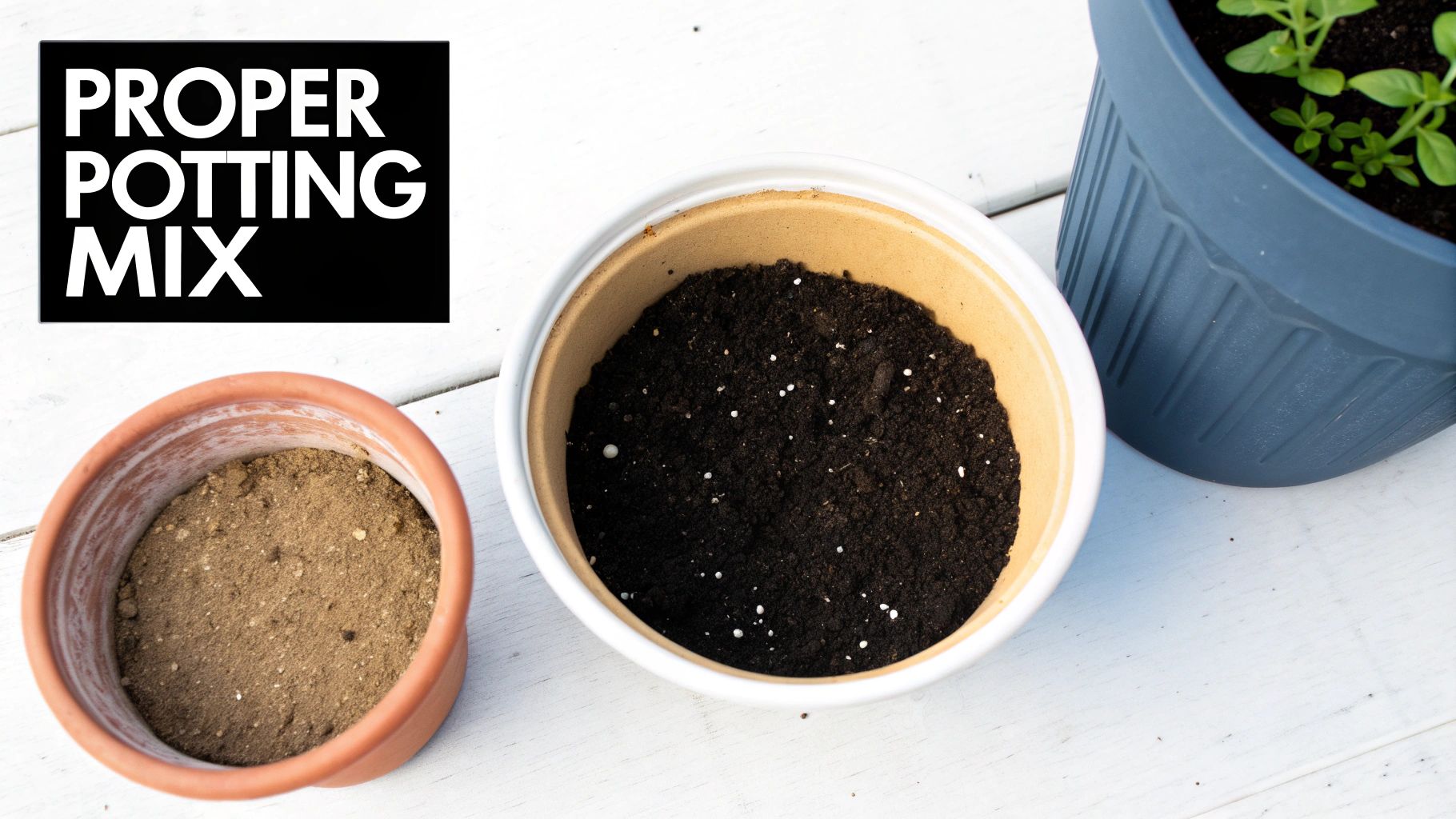
Grabbing a bag of generic, all-purpose potting soil is one of the fastest ways to kill a succulent. That stuff is designed to retain moisture for thirsty houseplants and garden annuals. For a succulent, its dense, peaty composition holds water for far too long, effectively suffocating the roots.
Succulents need a soil mix that mimics the gritty, sandy, and rocky conditions of their native deserts. A proper succulent soil should feel light and airy and drain almost instantly. This ensures that even after a deep soak, the roots have access to the oxygen they need and the soil dries out quickly.
For a deep dive, you can learn more about creating the perfect soil for succulent plants that encourages strong root growth. A good mix will always include ingredients like pumice, perlite, or coarse sand to boost aeration and drainage.
Watering Succulents in Special Situations
Your regular watering routine will keep your succulents happy most of the time, but what happens when life throws a curveball? Bringing home a new plant, starting cuttings, or even just going on vacation calls for a slightly different approach.
Think of these as unique scenarios where you need to tweak your technique. A small adjustment can be the difference between a thriving plant and one that's struggling with rot or dehydration. Let’s walk through how to handle these common situations like a pro.
Caring for a Newly Arrived Succulent
When you unbox a succulent that just arrived in the mail or bring one home from the nursery, fight the urge to water it immediately. The plant is stressed from its journey, and its delicate roots might be bruised or slightly damaged.
Give it a one-week "acclimation period" before you even think about watering. This pause gives any tiny root wounds time to heal and callous over, which is your best defense against rot. Just set it up in its new home, let it get used to the light, and then give it a good, thorough soak after the week is up.
Watering Propagations and Young Plants
Getting propagations and baby succulents to root is all about balance. They need moisture to sprout new roots, but they're incredibly susceptible to rot. Unlike their established parents, they simply can't handle a full "soak-and-dry" watering because their root systems are either brand new or haven't even formed yet.
Here’s how I handle different types of props:
- Leaf Cuttings: Wait until you see tiny pink roots and the start of a new rosette. At that point, use a spray bottle to lightly mist the soil right around the new roots every few days. You just want to keep those new roots from drying out, not soak the whole leaf.
- Stem Cuttings: After the cut end has calloused over for a few days, stick the cutting in completely dry soil. Don't water it yet! Wait for roots to form. You can check by giving the cutting a very gentle tug—if you feel resistance, you have roots. Now you can start with a light watering.
Remember, tiny succulents in small pots dry out way faster than big ones. You'll need to check on them more often, maybe even weekly, but the rule still stands: only water when the soil is bone dry.
Expert Insight: When watering propagations, the goal is to target only the new roots. Drenching the entire pot creates a swampy mess that tiny, developing roots just can't survive.
Adjusting for Large and Mature Succulents
On the other end of the spectrum, you have those big, established succulents—maybe a towering cactus or a huge, branching jade plant. With their massive root systems, they can store an incredible amount of water and are extremely drought-tolerant. A large plant in a 10-inch pot might only need a deep watering once every 4-8 weeks, even in the summer.
For these giants, the weight of the pot is your best friend. A pot that's ready for water will feel significantly lighter than one that's full of moisture. The classic "finger test" often won't work here because you can't reach deep enough. A long wooden dowel or a moisture meter can be a lifesaver for checking the soil at the bottom.
Watering Before You Go on Vacation
This is probably the easiest "special situation" you'll face. Succulents are built for neglect, so a vacation is no big deal. If you're heading out for one to three weeks, your plants will be perfectly fine on their own.
Just give them a normal, thorough watering about 3-5 days before you leave. This timing allows the top layer of soil to dry out, which helps prevent pests or fungus from showing up while you're gone. Whatever you do, don't give them an "extra" drink right before you head out the door. That’s a classic mistake that often leads to a rotten mess when you get back.
Watering Plants with Pest Issues
If you're in the middle of a battle with pests like mealybugs or aphids, you'll likely need to modify your watering schedule. Many treatments, like insecticidal soap or neem oil, work best when applied to dry leaves. Plus, most pests love damp, humid conditions.
While dealing with an outbreak, be extra careful about letting the soil dry completely between waterings. Boosting air circulation with a small fan can help both the soil and the plant's leaves dry faster after treatment, making the environment less friendly to bugs. Excellent drainage is non-negotiable here, as waterlogged soil weakens a plant's natural defenses. To make sure your pot is working with you, not against you, check out our guide on why succulents need drainage to stay healthy.
Your Top Succulent Watering Questions, Answered
Even when you've got the basics down, there are always a few "what if" scenarios that pop up. Knowing how to water succulents is one thing, but troubleshooting the tricky situations is what really builds confidence. Let's tackle some of the most common questions I hear from fellow growers.
Getting these details right is what separates a thriving succulent from a struggling one. Think of this as your go-to reference for those moments you're standing over your plant, watering can in hand, and just aren't sure what to do next.
Should I Be Misting My Succulents?
To put it simply: no. Misting is probably one of the biggest and most stubborn myths in succulent care, and it almost always does more harm than good. These plants come from arid, dry climates, not steamy rainforests, so spraying their leaves is completely unnatural for them.
Misting creates a damp environment on the leaf surface, which is an open invitation for fungal issues like powdery mildew. But more importantly, it doesn't get water where the plant actually needs it—the roots. Always stick with the soak-and-dry method, giving the soil a good drenching and letting the roots do their job.
A common mistake is treating succulents like tropical houseplants. While misting might benefit a fern, for a succulent, it's like putting a raincoat on someone who needs a drink of water—it misses the point entirely and can create new problems.
What’s the Best Kind of Water for Succulents?
The type of water you use can really make a difference, especially over the long haul. Succulents are pretty tough, but giving them the right kind of water helps them take up nutrients and avoids unwanted buildup in the soil.
- Rainwater: This is the absolute best. It's naturally soft, slightly acidic, and doesn't have the chemicals and hard minerals found in tap water. If you have a way to collect it, your succulents will love you for it.
- Filtered or Distilled Water: These are your next-best options. Since most of the minerals and chemicals are removed, you won't get that white, crusty buildup on your soil or pots.
- Tap Water: While it's the easiest to grab, tap water often contains chlorine and high levels of minerals like calcium and magnesium. Over time, these can accumulate in the soil, messing with the pH and making it harder for your plant to absorb nutrients.
If tap water is your only option, here’s a pro tip: let it sit out in an open container for at least 24 hours before using it. This lets most of the chlorine evaporate, making it much gentler on your plant's roots.
How Long Should I Wait to Water After Repotting?
This is where a little patience goes a long way. Repotting is a big deal for a plant, and no matter how gentle you are, its delicate roots will likely get a little bruised or broken in the process. Watering right away is asking for trouble.
You’ll want to wait at least 3 to 7 days before watering a newly repotted succulent. This dry spell gives any tiny wounds on the roots a chance to heal over and callous. If you water too soon, you’re basically pouring water into open cuts, which is a fast track to root rot caused by fungal and bacterial infections.
By letting the roots recover in dry soil for a few days, you're setting the plant up for a successful transition. It's a simple step that drastically improves its odds of not just surviving, but truly thriving in its new home.
Ready to find the perfect, low-maintenance succulent for your home? At The Cactus Outlet, we offer a wide variety of healthy, beautiful cacti and succulents that are ready to thrive with the right care. Explore our collection today and bring home a new plant that will last for years to come.