

It’s a classic image, right? A lone saguaro baking under a scorching desert sun. That picture has led to the common belief that all cacti need as much direct, intense sunlight as you can possibly give them. And while it's true that most cacti do need a lot of light, including some direct sun, the real story is far more interesting.
Treating every cactus like it’s destined for the hottest, sunniest spot in your house can actually do more harm than good.
The Surprising Truth About Cacti and Sunlight

That iconic desert image is a bit of a myth when it comes to home care. Out in their native habitats, many cacti are actually protected from the harshest midday sun. They nestle under the shade of larger plants, find refuge in the shadow of a rock formation, or grow on slopes that shield them from the most intense afternoon rays.
The key takeaway isn't that they avoid the sun, but that they get the right kind of light for the right amount of time.
Think of sunlight as a meal for your plant. Some sun is like a light, healthy snack, while intense afternoon sun is a heavy, five-course meal. Forcing a cactus that prefers bright, filtered light into hours of direct sun is like force-feeding it a meal it can't digest. The result? A stressed-out, sunburned plant.
Direct Sun vs. Bright Indirect Light
Getting this one right is the first major step to becoming a cactus care pro. It's the foundation for giving your plant an environment where it can truly flourish, not just hang on.
-
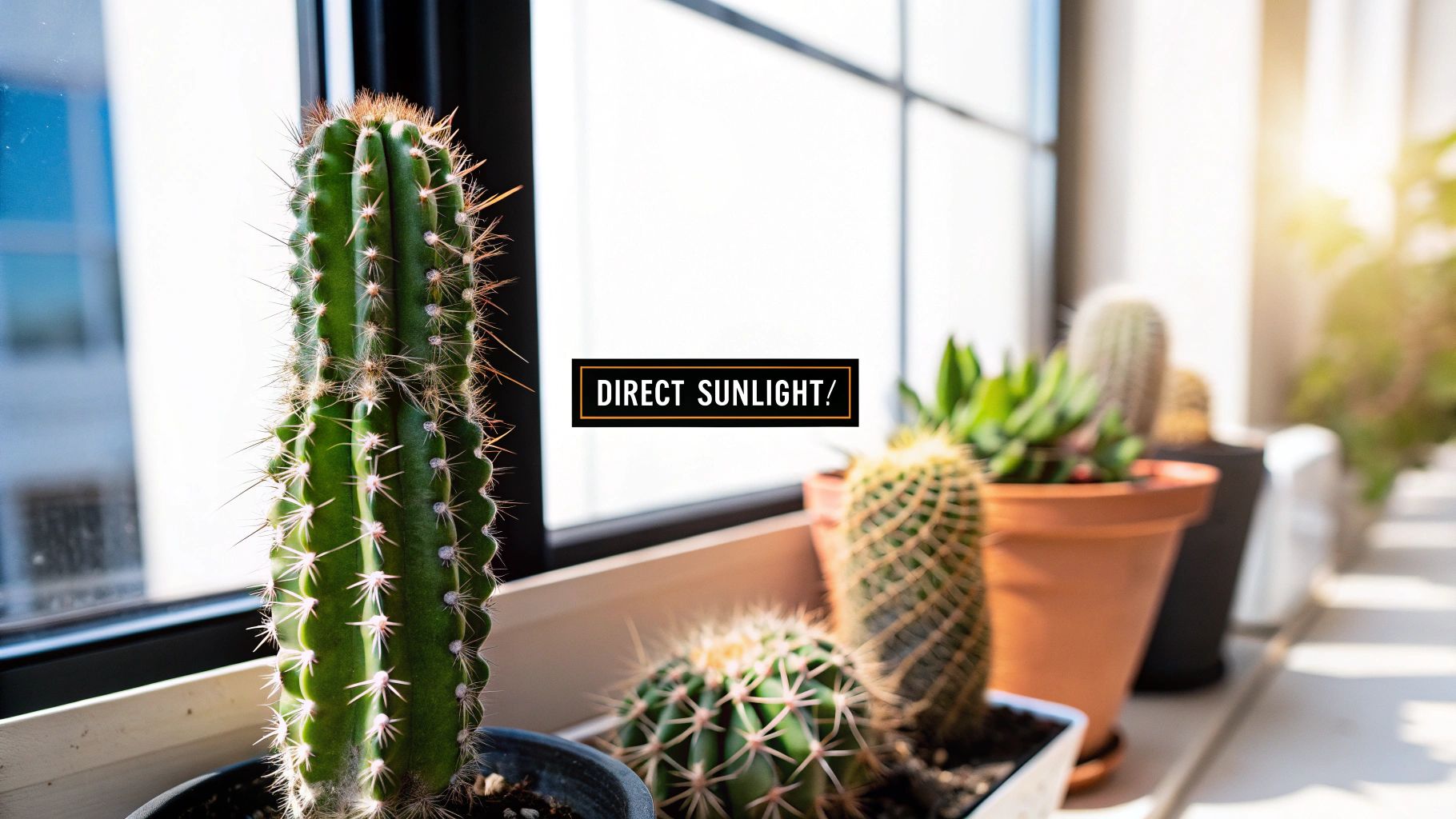
Direct Sunlight: This is the real deal—unfiltered, intense light that beams straight down. In a home, it’s what you get from a south-facing or west-facing window. It casts sharp, well-defined shadows and feels noticeably warm on your skin. Many desert cacti love this, but even the toughest ones have their limits.
-
Bright, Indirect Light: This is the kind of light that fills a room, making it bright and cheerful, but without the sun's rays hitting the plant directly. It casts soft, blurry shadows. A spot near an east-facing window that gets gentle morning sun is a perfect example, as is a location a few feet away from a sunnier window.
The goal is to give your cactus a long, steady "charge" of light throughout the day, not a short, intense blast. The total volume of light a cactus gets over a 12-hour period is often more important than a few hours of extreme exposure.
Once you learn to see the different kinds of light in your home, you can pick the perfect spot for your plant. This knowledge helps you choose a cactus from The Cactus Outlet that is perfectly suited to thrive in the light you can provide.
Cactus Light Needs At a Glance
To make it even easier, here’s a quick guide to understanding different light conditions and which types of cacti generally do best in them. Use this to take a quick inventory of the spots you have available.
| Light Condition | Description | Best Suited For |
|---|---|---|
| Full, Direct Sun | 6+ hours of direct, unfiltered sunlight per day. Typically from a south-facing window or an unobstructed outdoor spot. | Sun-loving desert species like Saguaro, Barrel Cactus, and most Opuntia (Prickly Pear). |
| Partial Sun | 4-6 hours of direct sunlight, often gentler morning sun (east-facing window) or late afternoon sun (west-facing). | Many common cacti, including Mammillaria and Echinopsis. A good starting point for most species. |
| Bright, Indirect Light | No direct sunbeams hit the plant, but the area is very bright for most of the day. A few feet from a sunny window. | Jungle cacti like Rhipsalis and Epiphyllum (Orchid Cactus), and some understory desert cacti. |
| Low Light | North-facing windows or spots deep inside a room. Not ideal for most cacti. | Very few cacti thrive here. Some jungle cacti like Schlumbergera (Christmas Cactus) can tolerate it but may not bloom. |
This table is a great starting point, but always remember to observe your specific plant. It will give you signs if it's getting too much or too little light, which we'll cover next.
Understanding Light: What Your Cactus Actually Sees
To get a handle on what your cactus needs, we first have to learn to speak its language—the language of light. We toss around terms like "direct sun" and "bright light" as if they're the same thing, but to a plant, they’re worlds apart. Nailing this difference is the secret to a happy, thriving cactus.
Think of direct sun as a laser beam. It's an intense, unfiltered blast of energy hitting the plant's skin. This is the kind of light you get right in front of a south-facing or west-facing window, where you see those sharp, crisp shadows on the floor. While many desert cacti evolved to take a beating like this, too much can easily scorch them.
Now, think of bright, indirect light as the glow filling a room on a sunny day. The space is illuminated, but there's no harsh spotlight. The light is diffused, casting soft, blurry shadows. This is the environment you'll find a few feet back from a sunny window or near an east-facing one.
It's About the Full Day's "Meal," Not a Quick Snack
What really matters isn't just how bright the light is, but for how long. Your cactus is essentially a living solar panel, working all day to collect enough energy to power itself through photosynthesis. This is why a nice, long stretch of bright, steady light is often far better than a few hours of punishing, direct sun.
As you figure out the best spot, consider how you can control that light. Window treatments can be a cactus owner's best friend. Options like light filtering or blackout shades give you the power to dial in the perfect conditions.
Most cacti really need a full day's worth of light—we're talking 10 to 14 hours—to do their best. That doesn't mean they need to be baking in the sun that whole time. The goal is to give them a long period of brightness while shielding them from the most brutal midday rays, which can cause serious stress. For more on finding this sweet spot, check out what other expert grower guides have to say.
Different Kinds of Light in Your Home
Let’s break this down into practical terms so you can scout the perfect locations in your own space.
-
Direct Sun: This is the unfiltered, straight-shot sunlight you get from a south or west-facing window. It’s great for tough, sun-loving species like Golden Barrels, but only after they’ve been slowly introduced to it.
-
Filtered or Dappled Light: This is sunlight that’s been softened, maybe by passing through a sheer curtain or the leaves of another plant. It has the energy of direct sun but without the harshness.
-
Bright, Indirect Light: This is the light that fills a room near an east-facing window or a few feet back from a south-facing one. It’s the safe zone for a huge number of cacti, especially forest or jungle species.
Instead of just focusing on a few hours of intense sun, start thinking about the total daily "light meal" your cactus gets. This simple shift in perspective is what separates just keeping a plant alive from helping it truly flourish.
Finding the Perfect Indoor Spot for Your Cactus
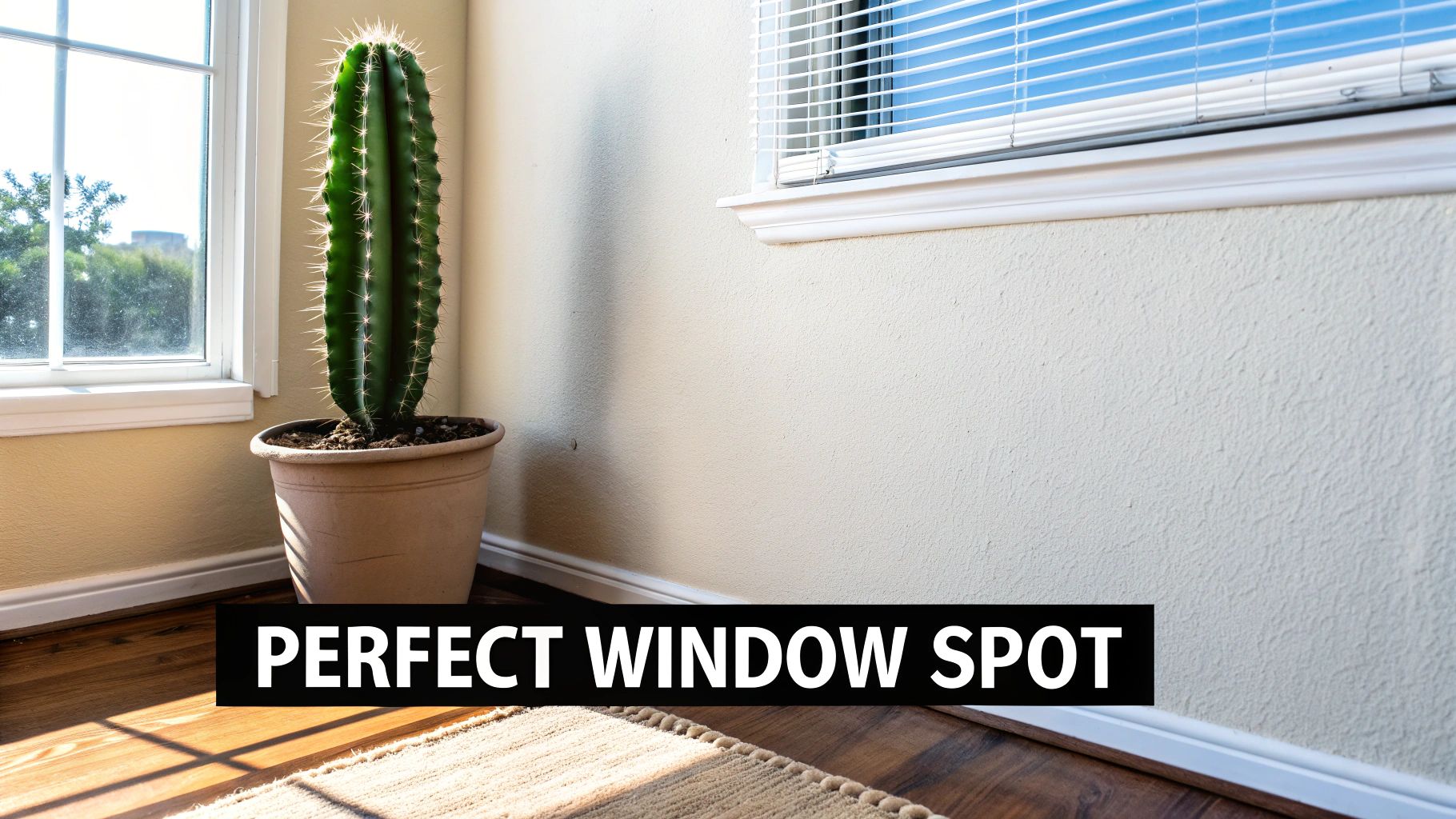
Finding the right spot for your cactus indoors is a bit like real estate—it’s all about location, location, location. Your windows are the gateways to the sun, but each one has a totally different personality. Getting to know them is the secret to a happy cactus.
A south-facing window is the beachfront property of the plant world. It gets the most intense, direct sun for most of the day. This spot is reserved for the true sun lovers, like your classic desert cacti, but only after they've had time to adjust. An east-facing window, on the other hand, is like a cozy breakfast nook with gentle morning light. It serves up a few hours of bright sun that isn't scorching, making it a fantastic and safe bet for a huge range of cacti.
Decoding Your Windows
What about the other directions? A west-facing window gets blasted with hot afternoon sun, which can be way too much for many species. And a north-facing window? It offers the weakest light, mostly just indirect brightness. That's a no-go for most cacti, though a few jungle types that are used to shadier spots might tolerate it. For a more detailed room-by-room breakdown, check out our guide on where to place a cactus in your house.
The best way to know for sure is to become a light detective for a day. Pick a spot you have in mind and just watch it.
- When does direct sun actually hit that spot?
- How many hours does it stick around?
- Is anything blocking the light, like a big tree or the building next door?
Doing this little bit of homework will tell you more about your space than any general rule ever could.
What to Do When Natural Light Isn't Enough
Live in a home that's a bit short on sunny windows? Don't stress. You can still give your cactus the light it craves with a little help from technology. Grow lights are a lifesaver, especially during those long, dark winters or in rooms that just don't get much sun.
For most cacti living indoors, the sweet spot is 4 to 6 hours of direct or very bright, filtered sunlight every day. When you can't hit that number naturally, it's time to bring in reinforcements. Place a full-spectrum LED or fluorescent light about 6 to 12 inches above your plant and leave it on for 14 to 16 hours a day. This effectively mimics the long, sunny days these plants evolved to love.
Key Takeaway: Match the window to the cactus. An east-facing window is a safe and excellent starting point for most, while a south-facing window is prime real estate for sun-hardened desert species. When in doubt, provide supplemental light.
How to Read the Signs of Light Stress
Your cactus is always talking to you—the trick is learning its language. Think of yourself as a plant detective, on the lookout for subtle clues that tell you whether it's happy with its lighting situation. Spotting these visual cues early lets you make simple adjustments before a small stress becomes a big problem.
What Happens With Too Much Light?
When a cactus gets blasted with more intense sun than it can handle, it gets a sunburn. It's really not that different from our own skin reacting to too much UV exposure. The plant’s tissues literally get scorched.
The first sign is usually a color change. You might notice the vibrant green starting to fade, turning a washed-out yellow or even stark white in spots. Some cacti show stress by flushing with a reddish or purplish hue. This isn't always a bad sign, but it's definitely a signal to pay attention.
If you don't move it, those discolored patches can become permanent scars. They'll turn brown or tan and develop a hard, cork-like texture. This is called corking, and it means the cells in that area have died. That damage is irreversible, so catching the problem at the color-change stage is the real goal.
What Happens With Too Little Light?
On the flip side, a cactus that’s starved for light will start to look desperate. This condition is called etiolation, and it’s the plant's all-out effort to stretch and find more sun.
Instead of its usual compact, robust shape, the cactus will start growing thin and lanky as it reaches for the nearest window. This new growth is weak, spindly, and often a pale, sickly green because it can't produce enough chlorophyll. You’ll often see a healthy, thick base with a weak, tapered point growing out of the top—a dead giveaway.
Etiolation is your cactus waving a white flag, telling you it desperately needs more energy to survive. While you can't undo the stretched-out growth, you can fix the problem. Moving it to a brighter spot will ensure all new growth from that point on is healthy and compact.
It can be tough to remember which symptom means what, especially when you're first starting out. Here’s a quick guide to help you figure out what your cactus is trying to tell you.
Diagnosing Light Stress in Cacti
Use this side-by-side comparison to quickly determine if your cactus is getting too much or too little light based on its symptoms.
| Symptom | Too Much Light (Sunburn) | Too Little Light (Etiolation) |
|---|---|---|
| Color | Yellow, white, or reddish-purple patches; can turn brown or black. | Pale, washed-out green or yellowish new growth. |
| Shape | The overall shape remains the same, but with scarred areas. | Unnatural, thin stretching towards a light source; weak and spindly. |
| Texture | Affected areas may feel crispy, dry, or corky to the touch. | New growth is soft and fragile. |
| Location | Typically appears on the side of the plant facing the strongest sun. | The entire top portion of the plant shows signs of stretching. |
By checking in on your cactus every so often and keeping an eye out for these signs, you'll get a feel for what it needs. You’ll be able to answer the question, "Do cacti need direct sunlight?" for your specific plant, simply by letting it show you the answer.
Safely Introducing Your Cactus to More Sunlight
Think about how your skin feels after spending the first sunny day of spring outdoors after a long winter. You'd probably get a nasty sunburn without easing into it. Cacti are no different. Throwing a cactus from a dimly lit spot straight into intense, direct sun is a recipe for shock, stress, and sunburn.
This careful process of getting a plant used to a new environment is called hardening off, and it's absolutely crucial for its health.
Whether you're welcoming a new plant from The Cactus Outlet or just moving your favorite cactus outside for the summer, the rule is the same: go slow. A sudden blast of intense sunlight can cause permanent damage, turning your beautiful green cactus into a sad, yellow, or scarred version of its former self.
The whole point is to give the plant time to build up a tolerance. You're slowly letting it adjust its internal processes to handle the much higher levels of UV radiation and energy.
The Art of Gradual Acclimation
I like to think of it like a training regimen for an athlete. You wouldn’t just wake up one day and decide to run a marathon, would you? Your cactus can’t handle a full day of sun without some prep work, either. The secret is to start small, with just a little bit of gentle morning sun, and gradually increase the time and intensity over a few weeks.
The difference between indoor and outdoor light is staggering. Indoors, even a bright spot might only get up to 5,000 lux. Step outside into full sun, and that number can skyrocket past 100,000 lux.
Experts at the University of Minnesota Extension often say that while cacti love a "summer vacation" outdoors, they need to be moved out slowly. They also recommend protecting them from the most brutal sun, typically between 11 a.m. and 3 p.m., to prevent serious damage.
Pro-Tip: Morning sun is your best friend here. It's much gentler than the harsh afternoon rays, which makes it the perfect starting block for getting your cactus acclimated.
A Simple Hardening-Off Schedule
Ready to get started? Here’s a straightforward weekly plan to transition your cactus safely.
- Week 1: A Gentle Start. Find a spot where your cactus gets just 1-2 hours of direct morning sunlight. That's it. Pull it back into the shade before the sun gets too strong.
- Week 2: Increasing Exposure. Now, bump it up to 3-4 hours of morning sun each day. Pay close attention to its color—any hints of yellowing are a sign to back off a bit.
- Week 3: Building Tolerance. Let's add another hour or two, aiming for around 5-6 hours of sun. You can start letting it get some of the later morning light now.
- Week 4: Full Adaptation. By now, your cactus should be ready for its new, sunnier home. Many full-sun succulents and cacti can happily take six or more hours of direct sun once they're fully adjusted.
This simple flowchart is a great visual guide for figuring out what your cactus needs. Is it stretching toward the window or looking a bit scorched?

As you can see, a stretched-out, gangly look means it's begging for more light. But if it's turning yellow or getting crispy spots, it’s waving a white flag and needs a break from the sun.
Light Needs for Different Types of Cacti
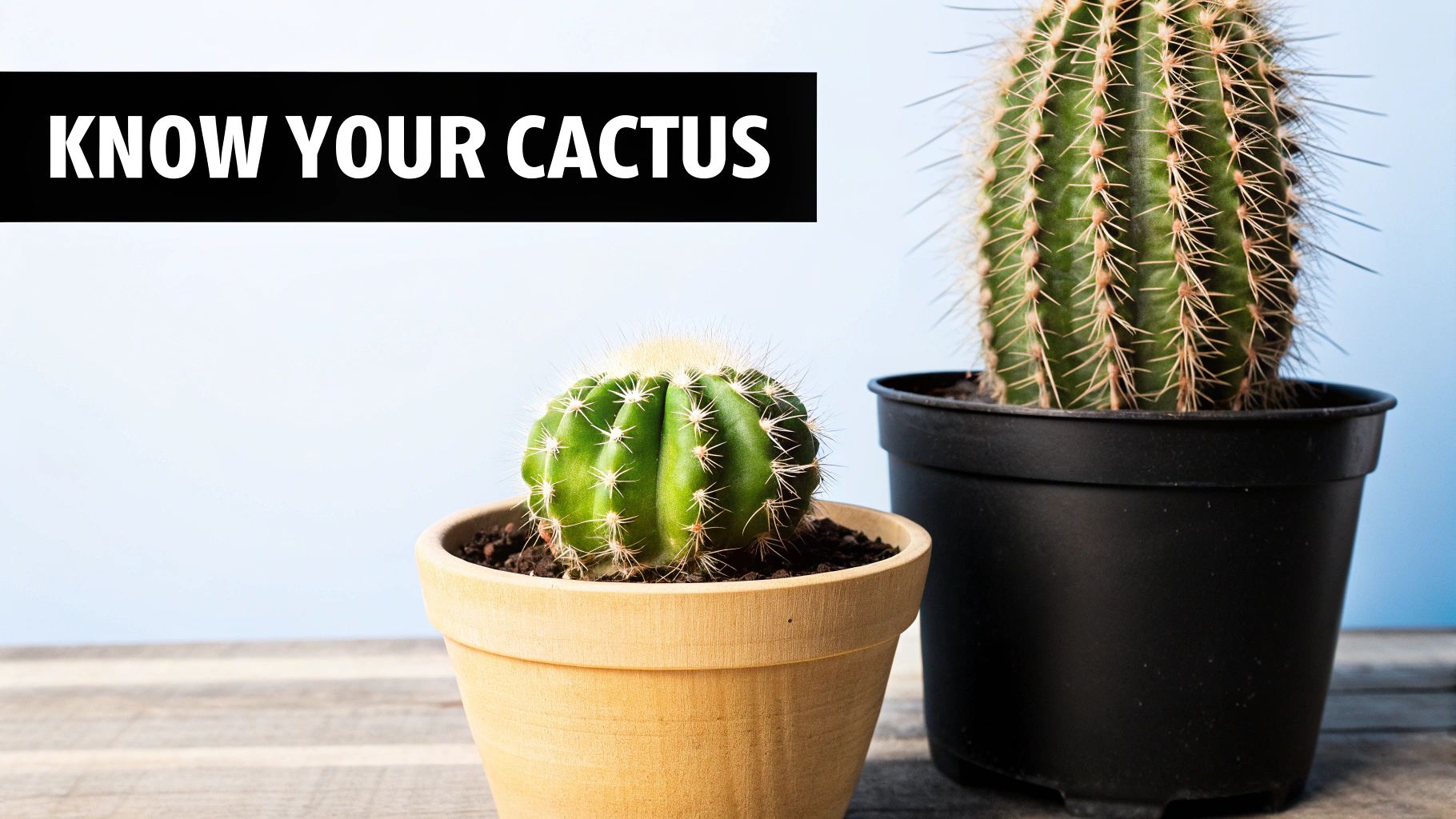
When it comes to light, not all cacti are created equal. The single best clue to how much sun your specific cactus wants lies in its origin story—where it grew up in the wild. Asking "do cactus need direct sunlight?" is a bit like asking if all people like hot weather. The answer really depends on where they're from.
To make things simple, we can group most cacti into two major categories: desert cacti and jungle cacti. Each one evolved in a totally different world, and that has shaped everything about them, especially their needs for sunlight, water, and even humidity. The real secret to a happy cactus is matching your home’s lighting to your plant’s native habitat.
Sun-Loving Desert Cacti
Picture a classic cactus in your mind. You're probably thinking of something spiny, tough, and built to survive the harshest conditions, right? That's a desert cactus. Species like the iconic Saguaro, the popular Prickly Pear (Opuntia), and the Golden Barrel all come from arid regions where the sun is relentless and shade is a luxury.
These guys are the true sun-worshippers of the plant world. They're genetically programmed to not just tolerate, but thrive on six or more hours of direct sunlight every day. Their thick, waxy skin and spines act like a built-in sunscreen, reflecting intense UV rays. If you have one of these, a bright, south-facing window is usually prime real estate.
Shade-Tolerant Jungle Cacti
Now, let's head to the other side of the spectrum. Meet the jungle cacti. Plants like the well-known Christmas Cactus (Schlumbergera) and the fascinating Rhipsalis grow in tropical rainforests. Forget sandy dunes; their natural homes are perched on tree branches or tucked into rocky crevices, living life under a lush, green canopy.
In the wild, these cacti get dappled, filtered light that peeks through the leaves above—never harsh, direct sun. They absolutely love bright, indirect light and can get seriously sunburned by the same intense afternoon rays their desert cousins crave. An east-facing window that gets gentle morning light is often their happy place.
Getting this distinction right is everything. For example, if you own a Christmas Cactus, you can dive deeper into its specific requirements in our guide on how much sunlight a Christmas Cactus needs. Knowing your plant's background helps you sidestep common mistakes and provide the perfect environment for it to flourish.
Answering Your Cactus Light Questions
Even with a solid game plan, you're bound to have questions as you go. Let's tackle some of the most common ones we hear from fellow cactus lovers, so you can solve problems like a pro and keep your plants happy.
Can a Cactus Really Survive in a Room with No Windows?
Honestly, no—at least not without a little help. A cactus can't live long-term without some kind of light, but you can absolutely grow a beautiful one in a windowless room if you use a full-spectrum grow light.
The trick is making it a reliable substitute for the sun. You'll need to run a powerful enough light for about 14-16 hours every day to give your cactus the energy it needs to photosynthesize. Without that consistent light source, it will stretch out looking for light (a process called etiolation), weaken, and eventually give up.
Is Morning Sun or Afternoon Sun Better for My Cactus?
If you have the choice, morning sun is the hands-down winner. The light from an east-facing window is bright and energizing but lacks the harsh intensity of the afternoon sun. It's the perfect gentle wake-up call for most indoor cacti.
Afternoon sun, coming from a west-facing window, is a whole different beast. It's incredibly intense and can easily scorch your plants, especially during the summer. If a west-facing spot is your only option, just pull the cactus back a few feet from the glass or hang a sheer curtain to act as a buffer.
Why Did My Cactus Suddenly Turn Red or Purple?
Seeing your cactus change color can be alarming, but this is usually just "sun stress," and it’s often a good thing! For many types of cacti, developing these beautiful reddish or purplish hues is a totally natural response to getting lots of bright light. Think of it as a tan.
The key is to know the difference between a healthy tan and a dangerous sunburn. If you see those vibrant colors alongside bleached-out white spots, crispy brown patches, or a dry, shriveled texture, your plant is getting burned. If that happens, move it to a spot with less direct sun right away.
How Do I Know if My Grow Light Is Strong Enough?
If you want to get technical, a light meter is the best way to know for sure. You’d be looking for a PPFD (Photosynthetic Photon Flux Density) reading between 500-1000 µmol/m²/s for most desert cacti.
For a more practical, less-gadgety approach, look for full-spectrum LED grow lights that are advertised for "flowering" or "fruiting" plants—they're built to put out more intense light. Place the light about 6-12 inches above your cactus and then just observe. If it stays compact, colorful, and healthy, your setup is working. If it starts to look pale or stretch upwards, the light is probably too weak or too far away.
At The Cactus Outlet, our goal is to give you the confidence and know-how to make your plants thrive. Take a look through our huge collection of healthy, unique cacti to find the perfect one for your home’s light. https://www.cactusoutlet.com