

The real secret to making succulents thrive isn't some magical "green thumb"—it's all about what's happening beneath the surface. The very best soil for succulent plants is a gritty, fast-draining mix that’s a dead ringer for their native arid environments. It's all about top-notch drainage and airflow, not rich, dense soil.
Why The Right Soil Is A Game-Changer For Succulents
Trying to grow a succulent in generic potting soil is like asking a desert lizard to go for a swim in a muddy pond. It's an incredibly common mistake, and sadly, it’s the fast track to the #1 killer of these stunning plants: root rot.
Succulents evolved in places where rain is a rare event and vanishes quickly. Their roots simply can't handle sitting in heavy, waterlogged soil for days on end. It’s just not in their DNA.
This is exactly why a specialized "gritty mix" is the gold standard for succulent lovers. A good succulent soil creates the perfect home for roots, letting water rush through freely and allowing plenty of air to circulate. Shifting your mindset from simply 'potting a plant' to 'creating a habitat' is the single most important thing you can do for its health.
Succulent Soil Vs Standard Potting Soil
The difference between what a succulent needs and what standard potting soil provides is night and day. One is designed to hold onto moisture for thirsty plants like ferns, while the other is engineered to get rid of that moisture as fast as possible. Getting this right is everything.
To put it simply, using a specialized mix is non-negotiable for succulent health. This quick comparison shows you exactly why.
| Feature | Ideal Succulent Soil | Standard Potting Soil |
|---|---|---|
| Drainage | Excellent; water flows through almost instantly. | Poor; holds water for long periods, becoming soggy. |
| Aeration | High; large particles create essential air pockets for roots. | Low; fine particles compact over time, suffocating roots. |
| Composition | Mostly inorganic grit like pumice, perlite, and sand. | Mostly organic material like peat moss and compost. |
| Moisture Level | Dries out completely and quickly between waterings. | Stays damp for days, creating a risk of rot. |
This isn't just a matter of opinion; the difference in composition is a matter of life and death for the plant. Studies have shown that the right soil is critical for preventing root rot, which can affect up to 70% of succulents potted in the wrong medium.
Experienced gardeners often report up to an 85% higher survival rate just by switching to a proper cactus and succulent mix. A well-balanced pH is also a huge benefit, as it prevents the kind of nutrient lockout that can plague plants in standard soils.
Of course, once you’ve got the soil right, it’s fun to think about how your plants fit into your home's decor. For some great ideas on that front, you can find inspiration from these trendy houseplants to complement new furniture. By starting with the right foundation, you're setting your succulents up to not only survive but to become beautiful living accents in your space.
Understanding the Core Components of Succulent Soil
Think of creating the perfect soil mix for your succulents like baking a cake from a family recipe. Each ingredient has a specific job, and the final result depends on getting the balance just right. Great succulent soil isn't just "dirt"; it's a carefully engineered environment designed to give your plant's roots exactly what they need to thrive. Once you understand the role of each component, you can move beyond just buying a bag of soil and start creating the perfect foundation for your plants.
The main goal is to replicate the arid, gritty soil where succulents grow in the wild. This means we need ingredients that promote lightning-fast drainage and plenty of aeration. Getting this wrong is the fastest way to get root rot, which is the number one killer of succulents.
This diagram perfectly illustrates the two paths your succulent can take. It all comes down to the soil.
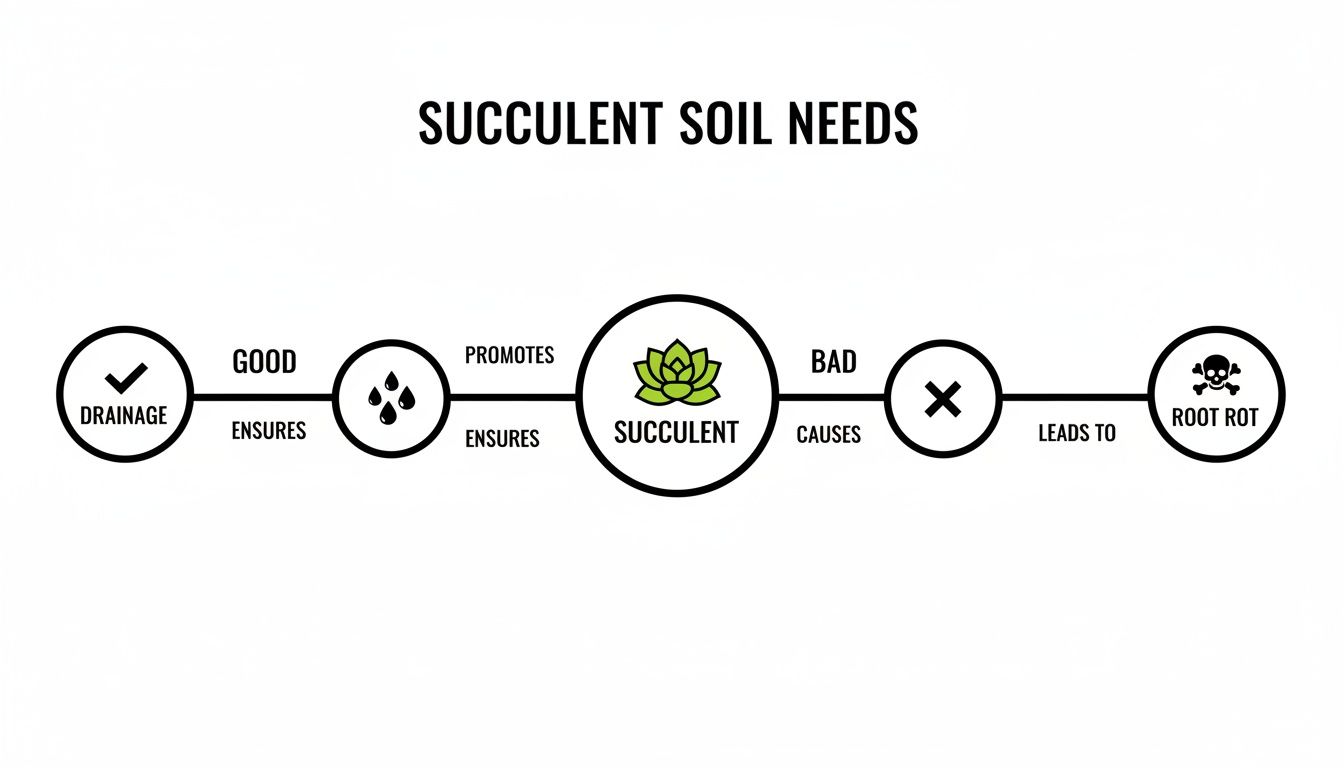
The takeaway is simple: your soil's structure directly impacts your plant's chance of survival by either preventing or inviting root rot.
The Gritty Trio: Aeration and Structure
The backbone of any good succulent soil is its inorganic, or "gritty," material. These are the ingredients that don't break down and are responsible for creating the air pockets and quick-draining texture that succulent roots absolutely love. Think of them as the rebar and foundation of your soil mix.
There are three main players here, and each brings something unique to the table:
- Pumice: This is a lightweight, porous volcanic rock that acts like a collection of tiny, natural sponges. Its surface holds just enough moisture and nutrients to release them slowly to the roots, but it never gets soggy. This makes pumice a top-tier choice for adding structure without holding onto excess water.
- Perlite: Another volcanic wonder, perlite looks like little white Styrofoam balls. It's made by heating volcanic glass until it pops like popcorn. Perlite's main job is aeration. It’s fantastic at creating air channels throughout the soil, which prevents compaction and lets the roots breathe.
- Coarse Sand: Be careful here—not just any sand will do. Fine-grained play sand is a disaster, as it compacts and turns your soil into concrete. You need coarse sand, which has larger, irregular particles that help water drain through and add a bit of weight to the pot, keeping top-heavy cacti and succulents stable.
A well-structured gritty mix is the difference between a thriving root system and a suffocating one. These inorganic materials ensure water drains away quickly, a principle that is fundamental to succulent health. For a deeper dive into this concept, our guide explains exactly why succulents need drainage to survive.
The Organic Elements: Moisture and Nutrients
While the gritty stuff provides the structure, the organic matter provides the food and a little bit of moisture. These are materials from once-living things, and they're responsible for holding the small amount of water and nutrients succulents need to grow. The trick is to use them sparingly.
Two of the most common organic options have their own distinct advantages:
- Coconut Coir: Made from the fibrous husks of coconuts, coco coir is a sustainable and fantastic choice. It holds moisture well, has a neutral pH, and—unlike some other organics—it re-wets easily even after it has completely dried out.
- Peat Moss: For years, peat moss was the standard in most potting mixes because it’s great at holding moisture. The downside is that it can become hydrophobic (water-repellent) when it gets bone dry, making it a pain to rehydrate. It's also slightly acidic and is a less sustainable resource than coco coir.
Balancing these two types of ingredients—the inorganic grit and the organic matter—is the secret to happy succulents. This isn't just a gardener's opinion; the science backs it up. In fact, studies have shown that succulent-specific blends with 40-60% inorganic matter like perlite can boost growth rates by 30% compared to regular potting soil. For you, that means healthier plants with less fuss. This data-driven approach takes the guesswork out of succulent care and turns it into a simple formula for success.
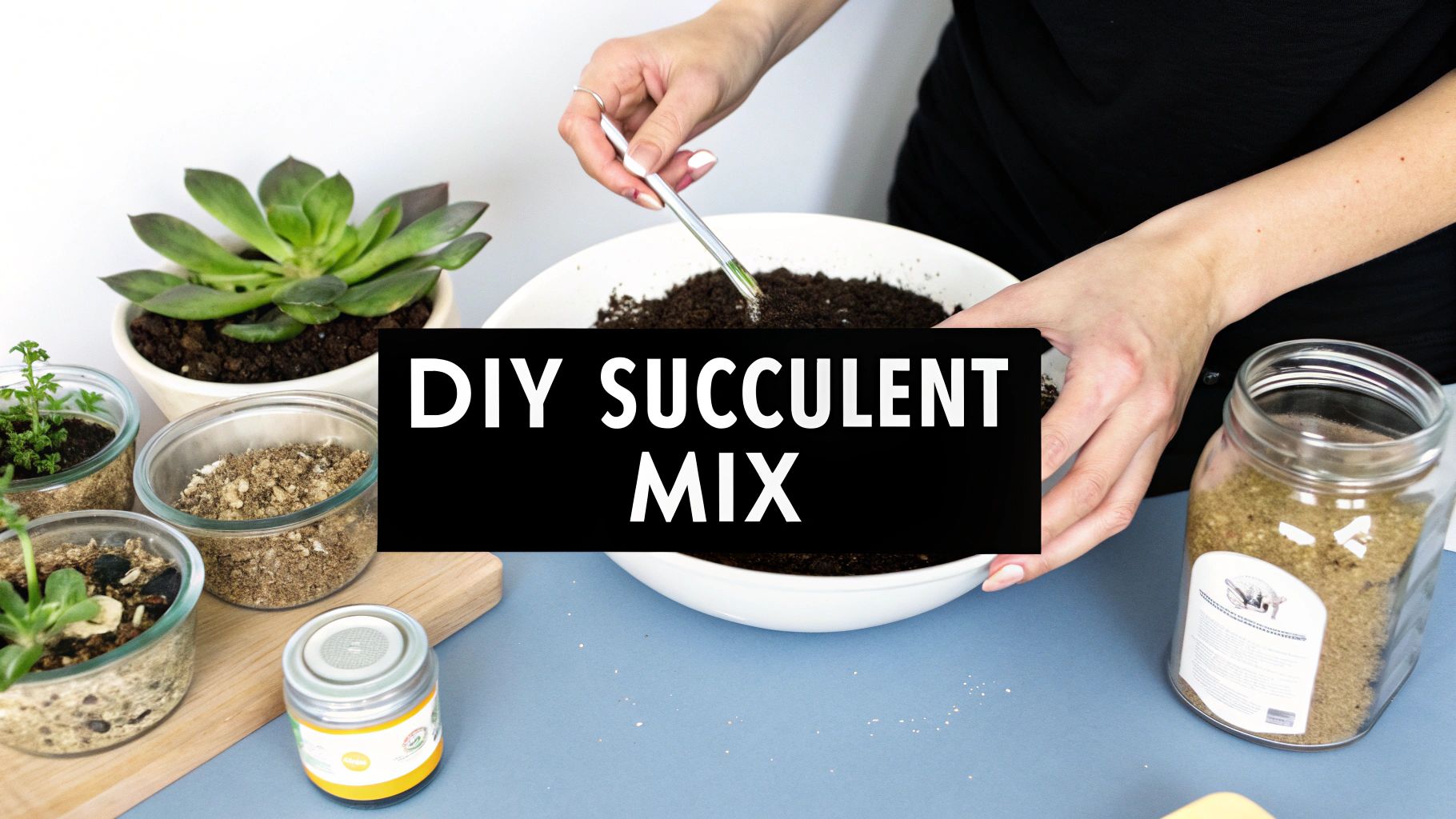
How to Create Your Own DIY Succulent Soil
Mixing your own soil is a rite of passage for any serious succulent enthusiast. It's the moment you go from just owning plants to truly understanding what they need to thrive. When you take control of what goes into the pot, you can create the perfect foundation for your plants' roots, dialing in the ideal balance of drainage, aeration, and moisture for your specific environment.
This isn't about following a one-size-fits-all formula. It’s about tailoring the soil to the unique needs of a delicate Echeveria, a tough-as-nails Agave, or a stunning specimen from our collection at The Cactus Outlet. The process is surprisingly simple, often cheaper in the long run, and gives you a much deeper connection to your plants.
Classic Gritty Mix for Beginners
This recipe is the perfect place to start. Think of it as the go-to, all-purpose blend that works beautifully for the vast majority of succulents. It’s a tried-and-true mix that puts excellent drainage first while still offering just enough organic material to fuel healthy growth.
It’s incredibly versatile, making it a great match for popular varieties like Sedums, Sempervivums, and most Haworthias. This mix really shines in moderate climates where you don't have to battle extreme humidity or bone-dry air.
Getting this mix right is as easy as gathering three simple ingredients. Just toss them in a bucket or on a tarp and use a small trowel to combine everything until it’s evenly distributed.
- 2 parts pumice or perlite: This is the heart of your mix. It creates the all-important air pockets that allow water to drain away quickly, which is your number one defense against root rot.
- 1 part coconut coir or peat moss: This is the organic touch. It holds onto just a tiny bit of moisture and nutrients for the roots to sip on between waterings.
- 1 part coarse sand: Sand adds a bit of weight to anchor the plant and further improves drainage, making sure no soggy spots are left behind.
Enriched Blend for Thirstier Succulents
Not every succulent comes from the desert. Some plants, like jungle cacti (Schlumbergera or Rhipsalis), or other soft-leaved varieties, actually appreciate a little more moisture than their arid cousins. This enriched blend is for them. It’s designed to hold a bit more water without ever becoming swampy.
By bumping up the organic component, this recipe allows the soil to stay lightly moist for longer. It’s the ideal choice for plants that tend to look thirsty more often or for growers living in very hot, dry climates where pots can dry out in a flash.
Mixing this blend is about finding a delicate balance. The goal is to retain a little more water, but the soil should still feel light and airy, never heavy or muddy. If it clumps together when squeezed, add a bit more pumice to lighten it up.
Here’s how to adjust the ratio for this richer formula:
- Combine your inorganic base: Start with 2 parts pumice or perlite and 1 part coarse sand.
- Add the organic material: Now, thoroughly mix in 2 parts coconut coir. This creates a 3:2 ratio of inorganic to organic material, giving you that extra moisture-holding power.
Chunky Cactus Formula for Large Specimens
Big, mature cacti and succulents play by a different set of rules. Their massive root systems need a soil that’s not just fast-draining but also incredibly stable and resistant to compacting over time. For these veterans, a chunky, super porous mix is the secret to long-term health, as it prevents the soil from turning into a dense brick at the bottom of a heavy pot.
This formula uses larger inorganic particles to create huge air gaps, promoting the kind of robust root health you want for a showstopper like a Peruvian Apple Cactus or a mature Golden Barrel. It’s the ultimate recipe for growers committed to giving their prized plants the best possible foundation for decades to come.
- 3 parts pumice: As the dominant ingredient, this guarantees maximum aeration.
- 1 part coarse sand: This adds weight and fills in some of the larger gaps between the pumice.
- 1 part coconut coir: Provides just enough organic matter to bind the mix and offer a minimal amount of moisture.
To make it even easier, here’s a quick guide to help you pick the right starting point for your plants.
DIY Succulent Soil Recipe Guide
| Recipe Name | Best For | Component Ratios (Inorganic/Organic) |
|---|---|---|
| Classic Gritty Mix | Most common succulents, beginners | 3 parts inorganic to 1 part organic |
| Enriched Blend | Jungle cacti, thin-leaved succulents | 3 parts inorganic to 2 parts organic |
| Chunky Cactus Formula | Large, mature cacti and succulents | 4 parts inorganic to 1 part organic |
Remember, these recipes are fantastic guidelines, not rigid rules. The real magic happens when you start tweaking them. If you live somewhere humid and rainy, don’t be afraid to add another scoop of pumice. Or, if you’re in a scorching-hot desert, a little extra coir can help your plants stay hydrated without risking rot.
Choosing the Best Pre-Made Succulent Soil
Mixing your own soil is a great way to go, but let's be honest, sometimes you just need to grab a bag and get planting. The problem is, walking into a garden center can be a bit overwhelming. You're faced with a wall of bags all promising to be the perfect home for your plants. So, how do you pick a winner and avoid bringing home a bag of future root rot?
The trick is to learn how to read the soil itself, not just the marketing on the bag. You need to become a bit of a soil detective, looking past the flashy packaging to see what’s really inside. It all comes down to spotting the difference between a genuinely gritty, fast-draining mix and what's essentially just regular potting soil with a "succulent" label slapped on it.
What to Look for When Buying Succulent Soil
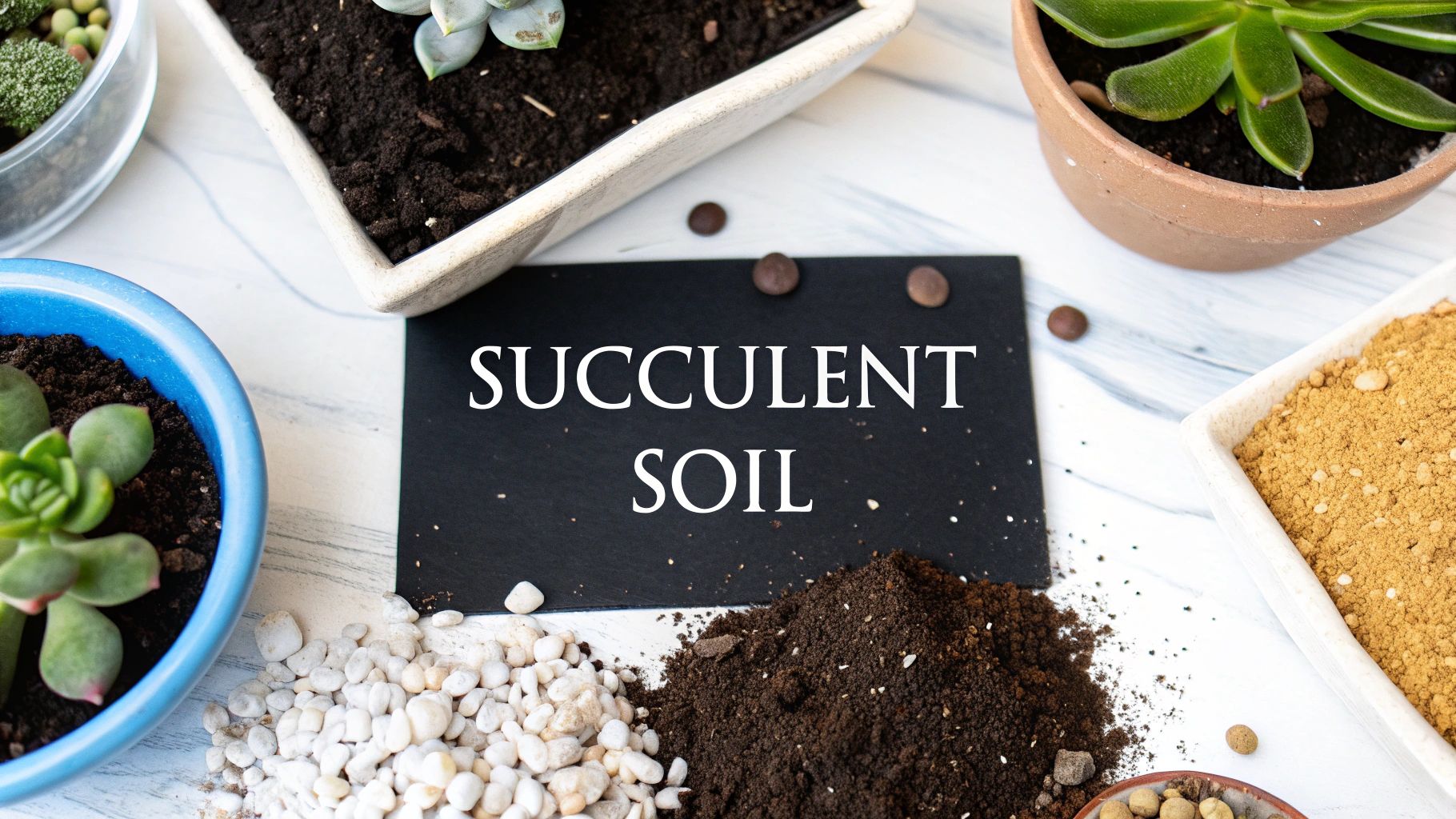
A top-notch pre-made succulent mix should look less like soil and more like gravel with a little bit of dirt sprinkled in. Seriously. The best blends are visibly chunky, with plenty of light-colored inorganic bits standing out against the darker organic stuff. That structure is absolutely critical for keeping your succulents happy.
When you're out shopping, here are the "green flags" to look for:
- Visible Grit: You should be able to clearly see particles of pumice or perlite—those little white or grey rocky bits. If you can see them, it means the people who made the mix were serious about aeration.
- Lightweight Feel: Pick up the bag. A good succulent mix should feel surprisingly light for its volume. If it feels heavy and dense like a bag of standard garden soil, it’s going to hold way too much water.
- Coarse Texture: Give the bag a gentle squeeze. It shouldn’t feel soft, fine, or spongy. You want to feel a coarse, almost sandy texture, which tells you water will move through it quickly.
On the flip side, some things are immediate red flags. A lot of the generic "Cactus & Succulent" soils you find at big-box stores are packed with fine peat moss, which is a disaster. It compacts over time and stays soggy for way too long.
A common trap is grabbing a mix that looks dark, rich, and uniform. While that might sound good, it usually means the soil is heavy on decomposed organic matter—the sworn enemy of healthy succulent roots. A great mix will be closer to 50% inorganic material.
How to Improve a Store-Bought Mix
Even if you get home and realize your new soil is a bit on the dense side, don't panic. It's an easy fix. You can dramatically improve its performance by simply amending it with more inorganic grit. Just mix in a generous amount of extra pumice or perlite until you've got a much chunkier, looser texture.
Getting this right is a bigger deal than most people think. The numbers don't lie: improper soil is the culprit behind a staggering 75% of succulent failures in the first year. Even on a larger scale, using optimized mixes has helped boost the indoor plant market to an incredible $21.4 billion. You can discover more insights about the succulent plant market and its growth.
Once you know what to look for, you can confidently pick the best soil for your plants, ensuring they have the well-draining home they need to truly thrive—whether you buy it pre-made or mix it up yourself.
A Step-by-Step Guide to Repotting Succulents
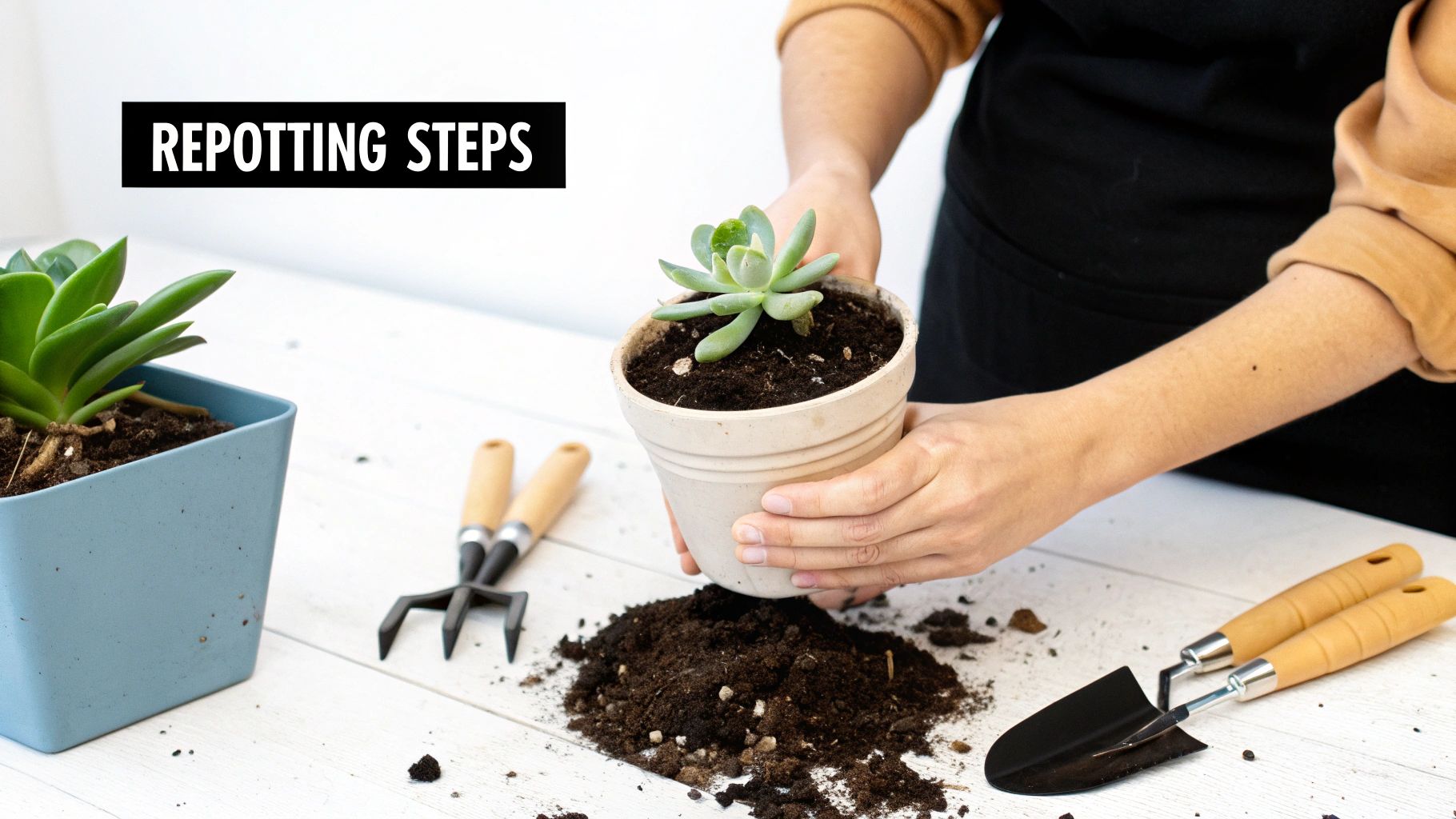
You’ve got the perfect succulent and you’ve mixed up the ideal soil—now it's time to put them together. Repotting can feel like a big step, but it’s one of the best things you can do for your plant. It gives the roots fresh soil to explore and more room to grow, setting the stage for a happy, healthy succulent.
Don't worry, it's a straightforward process when you know what to do. We'll cover everything from figuring out when your plant is ready for a new pot to settling it into its new home.
Recognizing the Signs It Is Time to Repot
The good news is that succulents are pretty clear when they need a change of scenery. Since they're slow growers, you generally only have to think about repotting every 2-4 years. But sometimes, they'll ask for it sooner.
Here are the tell-tale signs to watch for:
- Roots are making a break for it. If you see roots sneaking out of the drainage hole, your succulent is officially root-bound and screaming for more space.
- The plant looks wobbly or top-heavy. Is your succulent starting to look like it could topple over its pot? That’s a clear signal it needs a wider, more stable foundation.
- Water runs straight through. When you water, does it seem to gush out the bottom almost immediately? Old, depleted soil can become hydrophobic, meaning it actually repels water instead of absorbing it.
- It’s just been a long time. Even the best soil for succulent plants breaks down over the years. The organic bits decompose, the soil compacts, and aeration suffers. A fresh start is in order.
The Repotting Process Step by Step
Ready to go? Grab your supplies: a new pot that's just 1-2 inches wider than the current one, your fresh soil mix, and maybe some gloves if you're dealing with a prickly character.
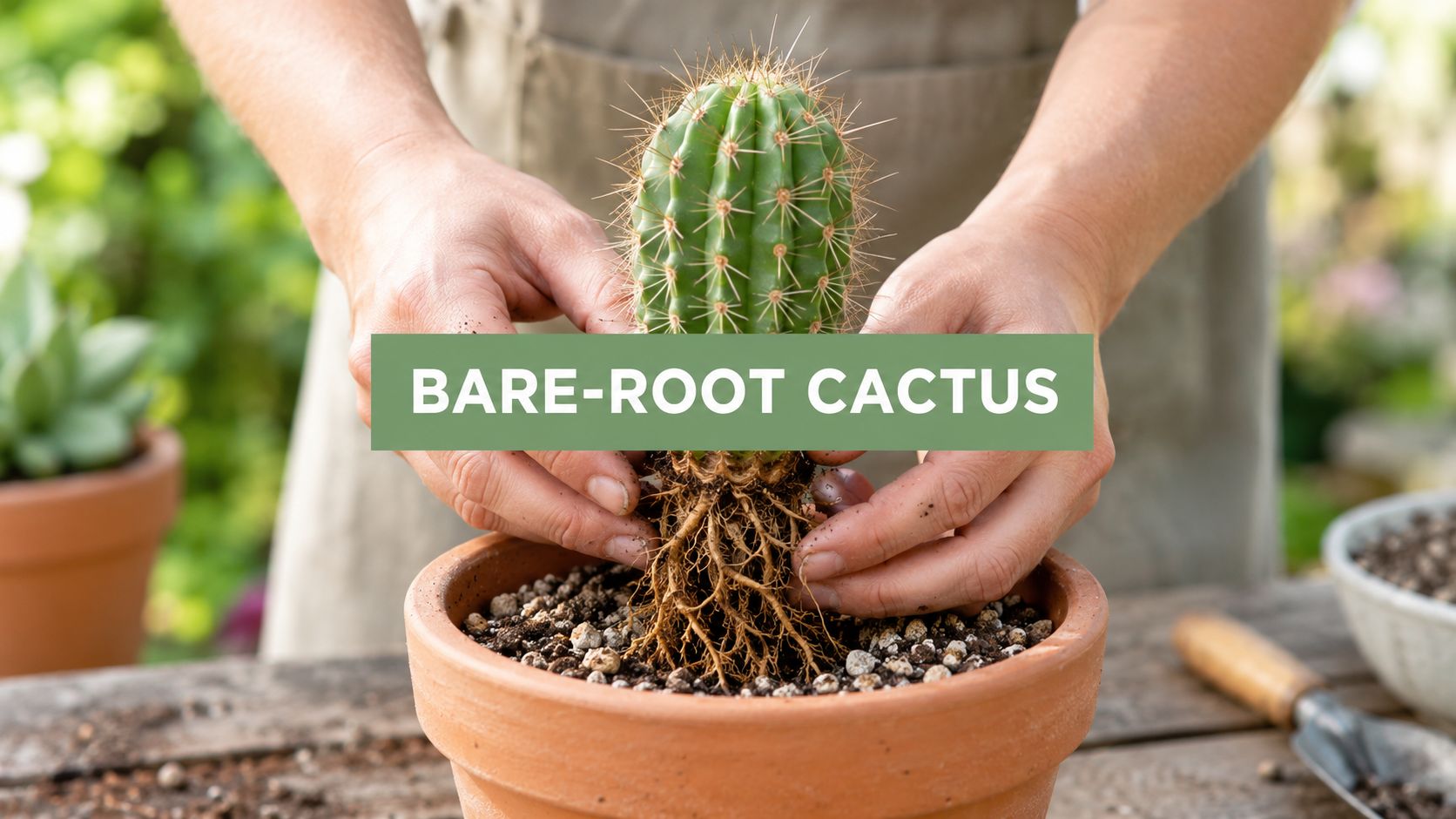
- Ease the Plant Out. Don't just yank it! Tip the pot on its side and give the bottom and sides a few gentle taps. This should loosen the soil enough for you to slide the whole root ball out. Always support the base of the plant, never pull on its leaves.
- Check Out the Roots. Gently shake off the old, tired soil. Take a good look at the roots—healthy ones are firm and white or light tan. If you see anything black, mushy, or smelly, that's rot. Snip those sad sections off with clean scissors.
- Prep the New Pot. Scoop a layer of your fresh, gritty soil mix into the bottom of the new pot. This gives the roots something to sit on.
- Position Your Plant. Place your succulent in the center of the pot. You want the top of its root ball to sit about an inch below the pot's rim. This little bit of headspace keeps soil from washing out when you water.
- Fill 'er Up. Backfill around the plant with your new soil. Gently pat the soil down to get rid of any major air pockets and make sure the plant feels secure. Just don't pack it in too tight—remember, those roots need to breathe!
Pro Tip: Wait Before You Water. This is the golden rule of repotting succulents. Hold off on watering for 3-5 days. This waiting period gives any tiny nicks or breaks on the roots time to heal and form a callus, which is your best defense against root rot.
This simple pause is the secret to helping your succulent settle in without any drama. If you're tackling something spikier, our guide on how to repot cacti has some extra pointers. By following these steps, you’ll give your succulent the perfect fresh start it needs to thrive.
Troubleshooting Common Soil-Related Problems
Even when you start with the perfect soil mix, succulents can still send out distress signals. Don't worry, it happens to everyone. Think of this as your troubleshooting guide to figure out what your plant is trying to tell you and trace the problem back to its roots—literally.
Most of the time, the issue isn't just the soil or just your watering; it's the relationship between the two. The biggest challenge you'll face is almost always moisture-related. Is it getting too much water, or not enough? Learning to spot the difference will make you a far more confident plant parent.
Overwatering vs Underwatering Symptoms
At first glance, the signs can look surprisingly similar, but there are some key differences between a succulent that's drowning and one that's dying of thirst. A quick look at the leaves is usually all you need to diagnose the problem.
Signs of Overwatering (Too Much Moisture):
- Mushy, Translucent Leaves: The leaves look bloated, feel soft and squishy, and might even turn yellowish or semi-transparent.
- Easy Leaf Drop: Healthy leaves shouldn't fall off at the slightest touch. If they do, it’s a bad sign.
- Black or Brown Stem: This is the most serious red flag. If the base of the plant is dark and soft, root rot has set in.
Signs of Underwatering (Not Enough Moisture):
- Wrinkled or Shriveling Leaves: The leaves look deflated and puckered, a bit like a raisin, as the plant pulls water from them to survive.
- Crispy, Dry Leaf Tips: You might notice the very ends of the leaves turning brown and brittle.
- Limp or Droopy Appearance: The whole plant just looks tired and lacks its usual turgid, firm structure.
Here’s the critical part: you have to connect these symptoms back to your soil for succulent plants. If you see signs of overwatering and the soil is still soggy days after you last watered, your mix isn't draining fast enough. It needs more grit—more pumice or perlite—to open it up.
On the other hand, if your plant looks thirsty and the soil is bone-dry a day after watering, your mix might be too gritty and draining too quickly, especially in hot, dry weather. In that case, adding just a small amount of coco coir can help it hold onto moisture a little longer for the roots.
Tackling Soil Compaction and Nutrient Issues
Over time, even the best soil can get tired and compacted. The smaller particles settle and get packed down, squeezing out the air pockets that your succulent's roots desperately need to breathe. You'll know it's compacted if water pools on the surface for a while before finally sinking in.
The fix is pretty straightforward. You can gently poke some holes in the soil with a chopstick to aerate it, but the best long-term solution is to repot the plant into a fresh batch of airy mix.
Nutrient issues are less common, but they can pop up if a plant has been in the same old soil for years. Slow or stunted growth and leaves that look pale or washed-out are classic signs. While repotting in fresh soil is a great start, a little boost might be needed. Knowing about the best fertilizer for succulents can help you give your plants the right food without overdoing it. By learning to read these signs, you can make small, precise tweaks to your soil and care routine to keep your succulents thriving.
Your Succulent Soil Questions Answered
Even after you get the hang of what makes a great succulent soil, a few questions always seem to pop up. Getting straight answers to these common head-scratchers can make all the difference, helping you sidestep problems before they even start. Let's dig into some of the most frequent questions we hear from fellow plant lovers.
Can I Just Add Sand to Regular Potting Soil for My Succulents?
This is a classic rookie mistake, and unfortunately, it usually does more harm than good. Just tossing some sand into a bag of standard potting mix often creates a heavy, cement-like substance. The fine particles of the soil and the fine particles of sand just pack together, squeezing out all the air and making drainage worse.
The key is to use coarse sand, the kind with larger, grittier particles. Even then, it’s not a one-ingredient fix. You need to combine it with other chunky materials like pumice or perlite to create those essential air pockets that allow water to flow freely and prevent roots from suffocating.
How Often Should I Actually Replace the Soil?
Since most succulents are pretty slow growers, you generally only need to worry about refreshing their soil every 2-4 years. Over time, the organic bits in the mix (like peat or coco coir) decompose and break down. This causes the soil to become compacted, which kills aeration and drainage.
That said, you might need to repot sooner if you spot any of these tell-tale signs:
- The plant is root-bound. You'll see roots circling the pot's bottom or even sneaking out of the drainage holes.
- The soil isn't draining. Water sits on top for ages instead of soaking through quickly.
- The plant just looks "off." If your succulent seems unhappy despite good care, the soil might be depleted or too compacted for the roots to thrive.
Do All My Succulents and Cacti Need the Exact Same Dirt?
While nearly all of them need fantastic drainage, their perfect soil recipe can differ a bit. Think about where they come from. True desert cacti, like a mighty Saguaro, are happiest in an extremely gritty mix that's mostly inorganic material—sometimes as high as 70-80%. It’s the closest you can get to the lean, arid ground they call home.
On the other hand, "soft" succulents or jungle cacti (like a Christmas Cactus) actually prefer a little more organic matter to hold moisture for a slightly longer period. A 50/50 blend of inorganic and organic materials is a fantastic starting point for almost any succulent, which you can easily tweak based on the specific plant and the conditions in your home.
At The Cactus Outlet, we know that a great plant starts with a great foundation. Explore our stunning collection of healthy, established succulents and cacti, all ready to flourish in the perfect soil you now know how to mix. Find your next centerpiece at https://www.cactusoutlet.com.