



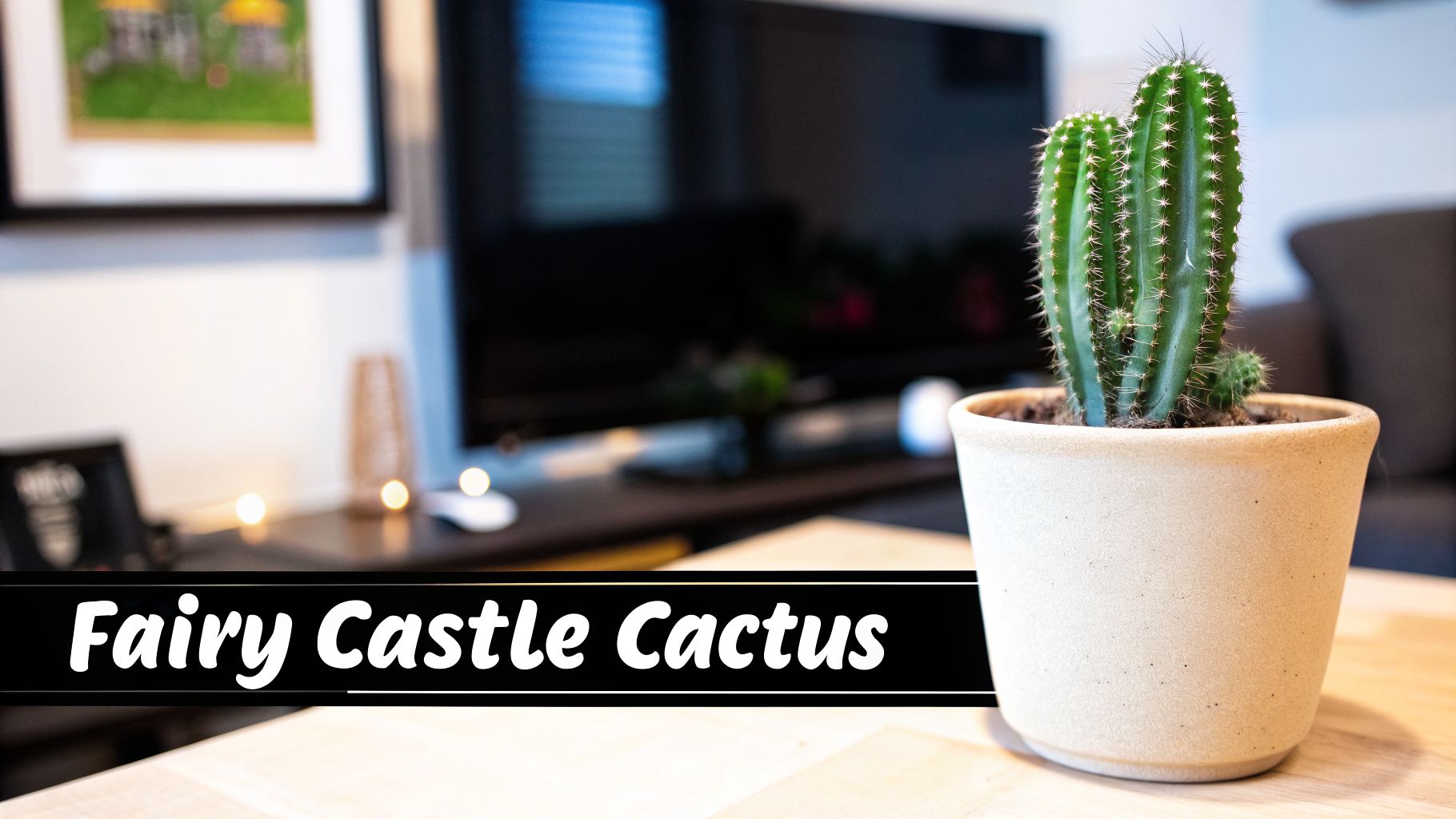
Picture a living sculpture sitting on your windowsill—a cluster of miniature green spires and turrets that look like they belong in a fairytale. That's the undeniable charm of the Fairy Castle Cactus, a whimsical plant that’s an instant conversation starter for any room.
Meet the Storybook Cactus
The Fairy Castle Cactus, known to botanists as Acanthocereus tetragonus 'Fairy Castle', is famous for its one-of-a-kind structure. Over time, its main stem sends up a flurry of new vertical shoots, all at different heights. The result is a dense, architectural cluster that looks just like the turrets of an enchanted fortress.
But don't let its fantastical looks fool you. This cactus is wonderfully easy to care for, making it a fantastic pick whether you're a seasoned collector or just starting your plant journey. It asks for so little but gives back so much, slowly building its intricate silhouette year after year.
Here's a quick rundown of what makes this cactus special:
Fairy Castle Cactus at a Glance
| Characteristic | Description |
|---|---|
| Common Name | Fairy Castle Cactus, Storybook Cactus |
| Scientific Name | Acanthocereus tetragonus 'Fairy Castle' |
| Plant Type | Cactus (Cactaceae family) |
| Growth Habit | Slow-growing, clumping, columnar |
| Native To | Cultivar; parent plant is from North & Central America |
| Sunlight | Bright, indirect light to full sun |
| Water | Low; allow soil to dry out completely |
| Toxicity | Non-toxic to humans and pets |
It's a plant that acts more like a slow-growing piece of living art for your home.
From Wild Thickets to Your Windowsill
While the charming 'Fairy Castle' is a dwarfed variety perfect for our homes, its parent plant has a much wilder, bigger story. The original species, Acanthocereus tetragonus, is a massive, thicket-forming cactus native to a huge swath of land from Florida and Texas down through Mexico and the Caribbean. Out in its natural habitat of hot, sandy coastal areas, it can reach a staggering 10 feet or more, forming dense, prickly barriers.
This plant's lineage goes back centuries. It was first officially documented by the legendary botanist Carl Linnaeus in 1753 as Cactus tetragonus. It wasn't until 1938 that it was reclassified into the Acanthocereus genus, where it remains today. You can dive deeper into its history and native range in the detailed overview of Acanthocereus tetragonus on Wikipedia.
The 'Fairy Castle' we know and love is what's called a monstrose form. This just means it has a genetic quirk that causes it to grow in an abnormal, compact, and heavily branched way—creating that signature castle look. This quirk makes it the ideal houseplant, bringing a touch of that rugged, wild landscape indoors in a much more manageable and delightful package.
Why This Cactus Is a True Standout
What really makes the Fairy Castle Cactus special is that it offers such a unique look without being a diva. It delivers a big visual impact without demanding constant fuss.
Here’s why it’s a favorite in our collection:
- Architectural Shape: Its upright, clustered stems add a structural element that’s hard to find in other small houseplants. It’s got personality!
- Perfect for Beginners: This is one forgiving cactus. It handles infrequent watering and even a bit of neglect like a champ, which is great news for new plant owners.
- Slow and Steady: You won't have to worry about this one outgrowing its pot overnight. It grows at a leisurely pace, so you can enjoy its shape for years while watching the "castle" gradually expand.
In this guide, we'll cover everything you need to know to keep your little fortress thriving, from getting the light just right to handling any common problems that might pop up.
Creating the Perfect Environment for Your Cactus
Getting your Fairy Castle Cactus to thrive isn't about some secret, complicated routine. Honestly, it just comes down to nailing a few basics that mimic its natural home. When you get the environment right, this little cactus will practically take care of itself.
Think of it as setting your plant up for success. If you provide the right light, water, soil, and the occasional snack, you'll be rewarded with a beautiful, architectural cactus that will be with you for years to come. Let's walk through what that looks like.
The Right Amount of Sunlight
Your Fairy Castle Cactus is a sun-worshipper at heart. It needs plenty of bright light to fuel its growth and keep those stems that classic, deep green color. A good rule of thumb is to aim for at least six hours of bright light every day.
The ideal spot indoors is usually near a south-facing or west-facing window, where it can soak up the best rays of the day. An east-facing window can work too, giving it gentle but consistent morning light. You're looking for a bright, sun-drenched spot, not a dark corner.
Now, while it loves sun, it's not invincible. Intense, direct summer sun, especially during the hottest part of the afternoon, can actually scorch its stems. You'll know it's happening if you see dry, tan, or brown patches appearing. Unfortunately, these sunburn spots are permanent, so prevention is key. A simple sheer curtain or just moving the plant a foot or two back from the glass is all it takes to diffuse that harsh light.
On the flip side, not enough light will cause the cactus to stretch out and look pale and weak as it desperately reaches for the sun—a process called etiolation. If you're having trouble finding that "just right" spot, our guide on how much sun a cactus needs can help you fine-tune its placement.
Mastering the Art of Watering
Watering is, without a doubt, the biggest hurdle for most new cactus parents. The secret is to stop thinking like you're watering a normal houseplant and start thinking like a desert rainstorm. This cactus is built to handle long periods of drought by storing water in its stems.
The only watering method you need is the “soak and dry” method. When it's time to water, do it thoroughly. Let water run through the pot until it pours out of the drainage holes. This ensures all the roots get a deep drink. Then, the most important part: let the soil dry out completely before you even think about watering it again.
An easy way to check is to stick a wooden skewer or your finger an inch or two into the soil. If it comes out with any damp soil on it, wait. It's not ready.
Overwatering is the number one killer of a Fairy Castle Cactus, bar none. When the roots are stuck in soggy soil, they can't breathe and will quickly begin to rot. This leads to mushy, yellow stems and, eventually, a collapsed plant. If you're ever unsure, it is always safer to wait another few days.
During the spring and summer growing season, you might water every 2-4 weeks, depending on how hot and bright your home is. But in the fall and winter, the plant goes dormant. You'll want to cut back drastically, maybe watering just once a month or even every other month, just enough to keep the stems from shriveling.
Choosing the Perfect Soil Mix
The soil you choose is the foundation of your cactus's health. It needs something loose, gritty, and fast-draining, which allows water to flow right through and prevents the roots from sitting in a puddle. Using a heavy, standard potting mix is a recipe for root rot.
The soil needs to provide stability but also plenty of air for the roots to breathe. A soil pH that’s slightly acidic to neutral, somewhere between 5.6 and 6.5, is the sweet spot.
You've got a couple of great options here:
- Pre-Made Cactus/Succulent Mix: This is the easiest route. A good quality commercial mix designed for cacti is formulated for the excellent drainage these plants need.
- DIY Cactus Soil: For the hands-on plant owner, you can easily mix your own. A fantastic, reliable recipe is one part potting soil, one part coarse sand, and one part perlite or pumice to add that crucial aeration.
For long-term success, improving soil drainage is a skill every cactus owner should have. No matter what soil you use, make sure your pot has a drainage hole. Terracotta pots are a fantastic choice because the unglazed clay naturally pulls excess moisture out of the soil, acting as a great buffer against overwatering.
A Gentle Approach to Feeding
Think of fertilizer as a light vitamin supplement for your cactus, not a three-course meal. These plants are native to soils that aren't very rich, so their needs are modest. In fact, over-fertilizing is a common mistake that can burn the roots and cause weak, stretched-out growth.
The only time you should think about feeding is during the active growing season in spring and summer. For most Fairy Castle Cacti, a single feeding in the spring is plenty for the whole year.
Look for a balanced fertilizer made specifically for cacti and succulents, which will be lower in nitrogen. A ratio like 5-10-5 is perfect. The most important step? Always dilute it to half or even a quarter of the recommended strength on the label. This gentle dose is all it needs. Don't even think about fertilizing in the fall or winter when the plant is resting.
Making More: Propagating Your Fairy Castle Cactus
One of the best parts about owning a Fairy Castle Cactus is just how easy it is to make more of them. If you’ve ever wanted to fill out a pot or share a piece of your collection with a friend, this is for you. We’re simply going to take a small trim, called a cutting, and grow a whole new plant from it.
It’s a fantastic way to multiply your cacti without spending a dime. By snipping off a healthy "arm," you can create a brand new, genetically identical plant. It's that simple.
How to Take Cuttings
First things first, you need to choose the right piece to start with. Look over your cactus for a healthy, vibrant green stem that’s firm to the touch. You’ll want to pick one that is at least 2-4 inches long and free of any blemishes or soft spots.
-
Prep Your Tool. Before you even think about cutting, grab a sharp knife or a pair of pruning shears and wipe the blade down with rubbing alcohol. This is a crucial step that keeps nasty bacteria from infecting your parent plant or your new cutting.
-
Make the Cut. Once your tool is clean, confidently snip the arm off the main stem. Try to make it one clean, decisive cut—this will heal much more nicely than a jagged tear.
-
Let It Heal. Now for the most important part: patience. You need to let the cut end dry out and form a callus. Just place the cutting in a dry spot away from direct sun for a few days, maybe even a week. The raw, green end will harden and seal itself off. This protective seal is what prevents the cutting from rotting in the soil. Whatever you do, don't skip this step!
Once you see that dry, calloused end, your new cactus is ready for its home. Gently push the calloused tip about an inch deep into a pot of dry, well-draining cactus soil. Don't water it right away! Give it a very light sprinkle of water every few weeks to encourage roots to search for moisture. In a few weeks to a couple of months, you'll have a brand-new, rooted Fairy Castle Cactus.
If you really want to get this technique down, our full guide on how to propagate cactus from cuttings offers even more in-depth advice to get you growing.
The basics of good cactus care are the foundation for everything, from mature plants to new cuttings, as you can see below.

Remembering these three pillars—light, water, and soil—is the key to success, whether you're nurturing a single plant or starting a whole new family of them.
Troubleshooting Common Cactus Problems
Even with the best care, your Fairy Castle Cactus might hit a rough patch. Don't worry—it happens to all of us! Think of your cactus's appearance as its way of communicating. A change in color or texture is simply a signal that it needs a little help.
Most of the time, the fix is surprisingly simple and just involves a small tweak to its watering schedule or location. Let's walk through the most common issues so you can spot them early and get your cactus back to looking its best.
Diagnosing Stem Discoloration
One of the first things you'll likely notice when your cactus is unhappy is a change in color. This is your cue to play detective and figure out what’s wrong.
If the stems are turning yellow, especially near the soil line, your first suspect should always be overwatering. Give the stem a gentle squeeze. If it feels soft or mushy, you’re likely looking at the beginnings of root rot. This happens when the soil stays soggy for too long, essentially drowning the roots and preventing them from breathing.
On the flip side, what if you see dry, tan, or brownish patches on the stems? That’s a classic case of cactus sunburn. Just like our skin, too much intense, direct sunlight can scorch the plant. Unfortunately, these burn marks are permanent scars. A reddish or purplish tint can also be a sign of stress, often from too much sun or even a sudden cold snap.
Key Takeaway: Your cactus's color tells a story. Yellow and mushy almost always means too much water. Brown and crispy usually points to too much sun. Always investigate the cause before you react.
Common Pests and How to Banish Them
While Fairy Castle Cacti are pretty tough, they aren't completely immune to pests. Catching these tiny intruders early is the key to preventing a full-blown infestation that can weaken your plant.
Keep an eye out for these usual suspects:
- Mealybugs: These look like little bits of white cotton, usually tucked away in the tight spaces between the cactus stems. They feed on the plant's sap, which can stunt its growth and cause yellowing.
- Scale Insects: These pests look like small, brown bumps that don't move. They latch onto the stems and, like mealybugs, feed on sap. Their hard, armor-like shell makes them a bit trickier to handle.
- Spider Mites: You'll need to look closely for these, as they are incredibly tiny. The tell-tale sign is the fine, silky webbing they spin between the cactus arms. They thrive in dry conditions and cause a dusty, stippled look on the plant's surface.
For a few isolated pests, the easiest fix is to dip a cotton swab in 70% isopropyl alcohol and dab them off directly. If you're dealing with a bigger problem, a spray bottle filled with insecticidal soap or a neem oil solution works wonders. Just be sure to spray the entire cactus, getting into all the nooks and crannies.
A Quick Diagnostic Guide
When your Fairy Castle Cactus seems unwell, it's sending you signals. This table will help you quickly translate those symptoms into solutions, acting as your go-to reference for getting your plant back to its majestic self.
Fairy Castle Cactus Troubleshooting Guide
| Symptom | Potential Cause | Solution |
|---|---|---|
| Yellow, Mushy Stems | Overwatering / Root Rot | Stop watering immediately. Check the roots; trim any that are brown and mushy. Repot in fresh, dry cactus soil. |
| Shriveled, Wrinkled Stems | Underwatering | Give the plant a good, deep drink. Water until it runs out the bottom, then let it drain completely. |
| Stems Stretching and Pale | Insufficient Light | Gradually move the cactus to a brighter spot where it gets at least six hours of indirect sun each day. |
| Dry, Brown, or Tan Patches | Sunburn (Too much direct sun) | Move the plant to a location with bright but indirect light, or use a sheer curtain to filter the harsh afternoon sun. |
| White Cottony Spots | Mealybugs | Isolate the plant. Dab individual pests with rubbing alcohol. For larger issues, spray with insecticidal soap. |
Think of this table as your first-aid cheat sheet. By paying attention to these signs, you'll be able to confidently nurse your Fairy Castle Cactus back to health in no time.
Styling Ideas for Your Fairy Castle Cactus
Think of your Fairy Castle Cactus as a living sculpture. Its whimsical, turret-like shape is more than just a plant—it’s an architectural statement waiting to happen. With a little creative thinking, you can turn it from a simple houseplant into a genuine centerpiece that brings any room to life.

The trick is all in the presentation. The right pot and the perfect spot can make all the difference, highlighting its unique form and fitting it right into your home's vibe. Let’s dive into a few ways to show off its enchanting shape.
The Lone Tower: A Minimalist Approach
Sometimes, less is absolutely more. Placing a single Fairy Castle Cactus on a clean, uncluttered surface lets its intricate form become the star of the show. This works especially well in minimalist, modern, or Scandinavian-style homes.
Imagine your cactus on a floating shelf, at the corner of a tidy desk, or on a simple side table. The idea is to create plenty of "negative space" around it. This naturally draws the eye straight to its fascinating silhouette without any visual noise.
To really tie the room together, think about how your plant can play off your decor. Check out some ideas for trendy houseplants to complement your furniture to get inspired and create a cohesive, stylish look.
Creating Dynamic Succulent Bowls
Your Fairy Castle Cactus also makes a fantastic "thriller" in a mixed succulent arrangement. Its tall, spiky spires create a dramatic focal point that contrasts wonderfully with low-growing, rosette-shaped succulents like echeverias or trailing sedums.
When I’m building a succulent bowl, I always aim for variety:
- Height: Use the Fairy Castle Cactus as the tallest "main event" in the pot.
- Texture: Pair its spiny, ribbed stems with the smooth, fleshy leaves of a jade plant or the fuzzy texture of a Panda Plant (Kalanchoe tomentosa).
- Color: Let its deep green pop by adding succulents in shades of blue, purple, or even silver for a rich, multi-toned display.
This approach turns a pot of plants into a self-contained miniature landscape. It’s a great project that gives you a ton of room for creativity.
Design Tip: Don't underestimate the power of the pot. A rustic, unglazed terracotta pot gives off a natural, earthy feel. On the other hand, a smooth ceramic planter in a neutral color (like white, gray, or black) will give you a more modern and sophisticated look.
Outdoor Landscaping and Garden Design
If you live in a warmer climate, the Fairy Castle Cactus is a brilliant choice for your outdoor spaces. It’s tough enough for USDA zones 9-11, handling temperatures down to 30°F (-1°C), which makes it perfect for drought-tolerant landscaping. For anyone in an area where water conservation is a priority, this is a huge plus—gardens like these can cut water bills by up to 50%. You can dig deeper into its hardiness on sites like Gardenia.net.
Try grouping several Fairy Castle Cacti together in a garden bed or a large outdoor container to create a dense, "fortress" effect. They look amazing next to other low-water plants like agaves, aloes, and ornamental grasses in a rock garden or xeriscape. The strong vertical lines of the cactus provide a striking contrast to the round shapes of boulders and the soft, feathery textures of grasses, adding real depth and structure to your garden.
Your First Steps After Unboxing Your Cactus
Unboxing day is always a thrill! We put a ton of love into carefully packing your Fairy Castle Cactus at The Cactus Outlet, but even with the best care, a trip in a dark box is a big deal for a plant. Your job now is to help it gently transition from its journey to its new home.
Think of your cactus like a traveler coming home after a long, bumpy flight. It doesn't want a huge meal or a big party right away—it just needs a quiet corner to decompress. Giving your plant this "settling in" period is the key to helping it recover from shipping stress and get used to the unique light, temperature, and humidity of your space.
Inspect and Let It Rest
First things first, gently unwrap your new cactus. Our packaging is designed to protect every one of those delicate turrets, so take your time and don't rush the process.
Once it’s free, give it a quick once-over. Check for any minor bumps or bruises from the trip, like a bent arm or some loose soil. Don't worry if it's not absolutely perfect; these plants are tougher than they look.
Now for the most critical step: find a spot with bright, indirect light and simply let it be. Do not water it yet! Let your cactus acclimate for at least 3-5 days before even thinking about giving it a drink. This pause allows any tiny, invisible root bruises from being jostled in transit to heal.
Resisting the urge to water right away is the single best thing you can do for your new cactus. Watering a stressed plant can shock its delicate root system and may lead to rot before it even has a chance to settle in.
The First Watering and Beyond
After the 3-5 day waiting period is over, your cactus is ready for its first real drink. Water it thoroughly using the “soak and dry” method—give it enough water that you see it flow freely from the pot's drainage holes. After that, let the soil dry out completely before you water it again.
Be patient during these first couple of weeks. Your Fairy Castle Cactus is still getting used to its new environment. If you notice its nursery pot is a bit tight or was damaged during shipping, you can start planning to repot it. However, it's best to wait at least another week or two to avoid adding more stress.
When you're ready, our complete guide on how to repot cacti will walk you through every step. A little patience now ensures your new cactus gets the strongest, healthiest start to its life with you.
Your Fairy Castle Cactus Questions, Answered
Even the most seasoned cactus collectors run into new questions. Here are some of the most common things we get asked about the Fairy Castle Cactus, with straightforward answers to help you feel confident in your care routine.
Why Are My Cactus Stems Turning Brown?
When you see brown on your cactus, the first thing to do is check the texture. This will tell you almost everything you need to know.
Is the brown spot at the base of the plant, and does it feel soft or mushy to the touch? This is a classic sign of overwatering, which has likely led to root rot. On the other hand, if you’re seeing dry, crispy, or tan-colored patches on the upper stems, your cactus is probably getting a sunburn from too much direct, intense sunlight.
- For mushy stems: Stop watering immediately. You’ll need to check the roots and probably repot the entire plant in fresh, dry soil to save it.
- For dry patches: Simply move your cactus to a spot with the same bright light, but less direct intensity. Filtering the sun with a sheer curtain is a perfect fix.
Is the Fairy Castle Cactus Toxic to Pets?
Great news for pet owners: the Fairy Castle Cactus is considered non-toxic to cats, dogs, and people.
The real risk isn’t from poisoning, but from the plant’s tiny spines. They are sharp and can be a painful nuisance if a curious pet decides to chew on it or a child grabs it. It's always a good idea to place your cactus on a high shelf or in a room where pets and small children won't be tempted.
Though non-toxic, the physical hazard of the spines is the main concern. Always handle your cactus with care—using thick gloves or a folded-up newspaper is a great pro-tip for protecting your hands when you move or repot it.
Will My Fairy Castle Cactus Flower?
This is a question we hear all the time! The honest answer is: probably not. Flowering on this specific cactus is incredibly rare, especially for one living indoors.
While its parent plant flowers beautifully, the 'Fairy Castle' is a special cultivar that was developed for its whimsical, turret-like shape, not for its blooms. So, if your plant never produces a flower, don’t take it personally. It's completely normal, and it means your plant is focusing all its energy on building its amazing structure.
How Fast Does This Cactus Grow?
The Fairy Castle Cactus is a notoriously slow grower, and that’s one of the best things about it! In a perfect environment, you might only see a few inches of new growth each year.
This leisurely pace means it won’t outgrow its spot on your desk or bookshelf anytime soon. It’s the perfect plant for someone who wants a living sculpture that stays compact and beautiful for years without demanding a new pot every season.
Ready to add this enchanting, low-maintenance sculpture to your collection? At The Cactus Outlet, we hand-select and carefully ship beautiful, healthy Fairy Castle Cacti directly to your door. Explore our full collection of unique cacti and start building your own fairytale garden today!