

Picture a living sculpture in your garden, one that seems to hold the sunset in its edges while offering strong, architectural beauty all year long. That’s the Blue Glow Agave. It's a true statement piece, bringing a modern, low-fuss elegance wherever you plant it.
What Makes Blue Glow Agave a Garden Showstopper

The Blue Glow Agave isn’t a plant you’d stumble upon in the wild; it’s a brilliant piece of horticultural matchmaking. This hybrid is the result of a careful cross between two very different parent plants: Agave attenuata and Agave ocahui. This intentional pairing pulled the best traits from both, creating a succulent that’s as tough as it is beautiful.
From its Agave attenuata parent, it gets its smooth, spineless leaves and a more contained, manageable size. From Agave ocahui, it inherited its sturdy form, that sharp terminal spine, and a hardiness that stands up to the elements. This genetic lottery win resulted in a plant that feels tailor-made for today’s gardens.
The Signature 'Glow' Explained
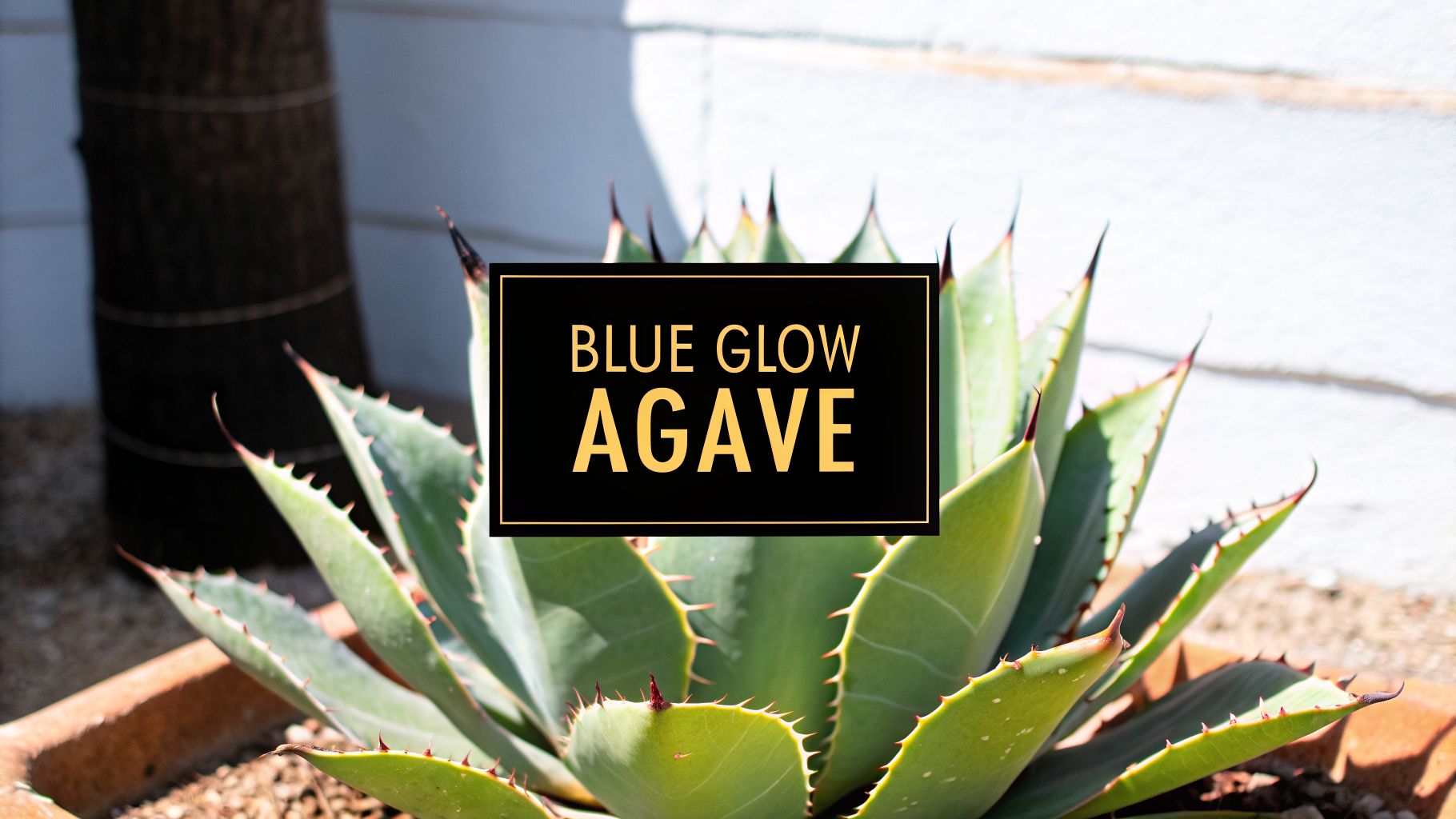
The most enchanting quality of this agave is right in its name—that famous "glow." It's not an optical illusion, but a stunning bit of natural artistry. The magic happens right on the edges of the leaves.
Each powdery blue-green leaf is framed by a razor-thin, deep red margin. Nestled just inside that red ribbon is a line of vibrant yellow. When the sun hits it just right—especially during the golden hour of sunrise or sunset—these edges light up as if from within, casting a warm, otherworldly glow.
This is what really elevates the plant. It's not just a static succulent; it's a dynamic focal point that interacts with the light, putting on a slightly different show as the sun moves across the sky.
A Model of Self-Contained Beauty
While many agaves are known for aggressively sending out offsets (or "pups") to form sprawling colonies, Blue Glow is prized for keeping to itself. It grows as a solitary, perfectly symmetrical rosette, which means it looks neat and tidy its entire life without much help from you.
This well-behaved habit makes it an incredibly versatile plant for any design. Here’s what makes it so special:
- Compact Rosette: It forms a tight, spherical rosette that typically stays around 2 feet tall and 3 feet wide. This makes it an ideal fit for smaller garden spaces or as a spectacular container specimen.
- Solitary Growth: You won't have to worry about it sending out runners and taking over a garden bed. Its growth is predictable, and it stays put.
- Architectural Form: The clean lines and flawless symmetry offer a strong structural element that looks fantastic next to softer, more billowy plants.
This trifecta of a mesmerizing glow, a tidy habit, and a striking architectural form has made it a darling of landscape designers and home gardeners alike. It's a living work of art that asks for very little but gives back a huge visual punch, making it a guaranteed showstopper.
Creating the Perfect Habitat for Your Agave

To get that stunning, backlit glow from your agave, you have to think like a desert. It’s not about just sticking it in the ground; it’s about recreating the specific environment where this plant truly comes alive.
Getting this right is what separates a plant that’s just surviving from one that becomes a living work of art. It all comes down to nailing three key things: sunlight, soil, and temperature.
Finding the Sunlight Sweet Spot
Most agaves are sun-worshippers, but the blue glow agave is a little more particular. While it needs plenty of sun to power its growth and "charge up" those glowing red and yellow edges, its smooth blue-green leaves can and will scorch if the light is too brutal. This is especially true in really hot climates like Arizona or inland California.
Your goal is to give it enough direct light without causing sunburn, which shows up as ugly bleached or brown patches on the leaves. It's a balancing act.
- Morning Sun is Best: The perfect setup is a spot that gets at least six hours of direct morning sun. This gives it all the energy it needs for fantastic color without the stress of peak afternoon heat.
- Offer Some Afternoon Shade: If you live somewhere with punishing afternoon sun, try to site it where it gets some filtered light during the hottest hours. Under the light shade of a high-canopy tree is a great option.
- Know Your Climate: Gardeners in cooler, coastal areas can often let it bake in the sun all day with no issues. If you’re inland where temperatures soar, that afternoon break is non-negotiable.
Building a Foundation with the Right Soil
If sunlight is the fuel, soil is the entire support system. The single biggest mistake I see people make with agaves—and succulents in general—is using standard potting or garden soil. It just holds on to way too much water.
Letting a blue glow agave sit in soggy soil is a death sentence. Its roots simply aren't built for it and will quickly fall victim to root rot, a fungal disease that can kill the plant before you even know there's a problem.
The perfect soil acts less like a sponge and more like a sieve. It should allow water to flush right through, giving the roots a quick drink before drying out completely.
You can find pre-made cactus and succulent mixes at most nurseries, but whipping up your own is just as easy and often works better. I swear by a simple 1:1:1 ratio: one part potting soil, one part coarse sand or pumice, and one part perlite. This blend provides just enough substance for the roots while ensuring the fast drainage these plants demand.
Understanding Temperature and Frost Protection
For a desert plant, the blue glow agave is surprisingly tough. It’s rated for USDA zones 8b to 11, which means it can typically handle a brief dip down to 15-20°F (-9°C). The key word there is brief. A prolonged, hard freeze will cause serious damage and can even be fatal.
If you're in a climate with frosty winters, you have a couple of solid options for protecting your plant.
- Plant in a Pot: This is the easiest strategy by far. Keeping your agave in a container allows you to simply move it to a sheltered spot—a covered patio, a garage, or even indoors near a bright window—when a freeze is in the forecast.
- Protect In-Ground Plants: If your agave is in the landscape, be ready to cover it. A frost cloth or even an old blanket works well. Just be sure to use stakes or a frame to keep the material from touching the agave’s leaves, as this can transfer the cold right to the plant. Remember to uncover it in the morning so it can breathe and soak up the sun.
Getting Watering and Feeding Just Right
Let's be honest—watering is where most new succulent parents get tripped up. The secret isn't a rigid schedule; it's learning to think like a desert rainstorm. For your Blue Glow Agave, this means a deep, thorough drenching followed by a period where the soil dries out completely.
This "soak and dry" method is a perfect imitation of the environment these plants evolved in. Deserts get infrequent but intense downpours, not a light sprinkle every few days. I can't stress this enough: overwatering is far more dangerous than underwatering. It's the fastest way to invite root rot, which is almost always a death sentence for agaves. To build your confidence, getting a good handle on how to water succulents in general is a fantastic starting point.
Forget the calendar. Your plant will tell you when it's thirsty. The leaves might look a little deflated or feel less firm to the touch. Learning to spot these subtle cues is a much more reliable approach than watering every Saturday just because it's on the to-do list.
A Seasonal Watering Rhythm
Like any living thing, your agave’s needs shift with the seasons. Its growth cycle is most active during the warmer, brighter months, and that's when it gets thirsty.
- Spring and Summer (Active Growth): During its peak growing season, you can expect to water your agave more often. Give it a deep soak every 2-4 weeks, but only after the soil has gone completely dry.
- Fall and Winter (Dormancy): As the days shorten and cool down, the plant hits the brakes and goes dormant. Its metabolism slows way down, and it needs very little water to get by. Cut back watering to once every 4-6 weeks or even less.
The easiest way to check soil moisture is the good old-fashioned "finger test." Just stick your finger about two inches deep into the soil. If you feel any moisture at all, wait. If it's completely dry, it's time to water.
The 'Less Is More' Rule for Feeding
When it comes to fertilizer, less is definitely more for a Blue Glow Agave. These plants are built for nutrient-poor desert soils, so they're not heavy feeders at all. In fact, over-fertilizing can quickly ruin its stunning, compact shape, causing weak, stretched-out growth.
A single feeding in early spring, right as you see signs of new growth, is plenty for the entire year. Think of it as a small snack to wake it up for the growing season, not a five-course meal.
The type of fertilizer matters, too. I always recommend a balanced liquid fertilizer made for cacti and succulents, diluted to half-strength. The most critical thing to look for is a low-nitrogen formula. Too much nitrogen promotes soft, leafy growth, which will spoil the tight, symmetrical rosette that makes this agave so special. We cover this in much more detail in our guide to the best fertilizer for succulents.
Designing With Blue Glow Agave in Landscapes and Pots
The real beauty of the Blue Glow Agave is just how versatile it is. It's a living sculpture you can drop into almost any garden style, from a sprawling desert landscape to a minimalist patio pot. Whether you plant it in the ground or feature it in a container, it brings a clean, architectural vibe that's hard to beat.
This adaptability has made it a go-to for landscape designers and home gardeners who want serious visual impact without a lot of fuss. It’s no surprise that the demand for striking, water-wise plants is booming. In fact, the global market for blue agave is on track to hit USD 6.02 billion by 2030, partly driven by the high value placed on unique ornamental plants like this one. You can dig deeper into these numbers in the full blue agave market report.
Using Blue Glow Agave in the Landscape
When you plant a Blue Glow Agave directly in the garden, it immediately becomes a focal point. Its perfect, solitary rosette provides a sense of structure and calm that beautifully offsets softer, more free-form plants.
Think of it as the star of the show. You can build an entire scene around it, pairing it with other plants that also thrive in sun and well-draining soil.
- Rock Gardens: The agave's sharp, defined leaves look incredible against the rugged texture of natural stone and gravel. It's a classic, high-contrast pairing that always works.
- Xeriscapes and Drought-Tolerant Beds: This is its natural habitat. As a cornerstone of a water-wise garden, its low water needs make it an obvious and stunning choice. For more ideas, take a look at our guide on drought-tolerant landscape design.
- Minimalist and Modern Designs: The simple, powerful geometry of a Blue Glow Agave is a perfect match for modern architecture. A single specimen or a small, repeating group can deliver a bold statement without any visual clutter.
When choosing companions, look for plants that offer a different shape or texture. Feathery grasses like Blue Fescue or airy perennials like Gaura create a lovely, soft contrast to the agave's rigid form. You can also tuck other succulents like Echeverias or low-growing Sedums around the base for a rich, layered effect.
Shining in a Container Garden
As great as it looks in the ground, the Blue Glow Agave is arguably even more spectacular in a pot. Container gardening literally puts the plant on a pedestal, letting you admire its form and glowing edges up close.
Keeping your agave in a pot gives you ultimate control over its environment. You can perfect the soil mix, dial in the watering schedule, and easily move it to a protected spot if a hard frost is on the way.
A potted agave becomes a portable piece of art. Use one to frame an entryway, add a pop of modern style to a patio, or create a living centerpiece for your outdoor table. The right container can make it shine even brighter—a simple, dark gray cylinder will make the blue-green leaves pop, while classic terracotta offers a timeless, earthy feel.
Blue Glow Agave Placement: Landscape vs. Container
So, should you plant your agave in the garden or keep it in a pot? It really comes down to your climate, available space, and what you want to achieve with your design. This quick comparison should help you decide.
| Aspect | Landscape Planting | Container Gardening |
|---|---|---|
| Growth | Allows the agave to reach its full mature size of about 2-3 feet wide. | Naturally constrains growth, keeping the plant slightly more compact. |
| Control | Less control over soil moisture and exposure to pests or harsh weather. | Full control over soil, watering, and location for frost protection. |
| Design | Acts as a permanent, structural anchor in a garden bed or rockery. | A versatile, mobile design element that can be moved and rearranged seasonally. |
| Effort | Low-maintenance once established, but requires initial ground preparation. | Requires more frequent watering and periodic repotting every few years. |
Ultimately, whether you plant it in a sprawling rock garden or a sleek pot on your deck, the Blue Glow Agave is guaranteed to deliver year-round beauty. Its unique combination of striking color, architectural form, and easy-going nature makes it one of the most rewarding succulents you can grow.
Solving Common Agave Pests and Problems
Your blue glow agave is a tough customer, but it's not invincible. While these plants are remarkably self-sufficient, a few issues can pop up. The good news? Problems are usually straightforward, stemming from either pests or, more frequently, watering mistakes.
Think of it as being a plant detective. When something looks off, it's time to investigate the scene, pinpoint the culprit, and apply the right fix. A little watchfulness goes a long way in keeping your agave healthy and vibrant.
Identifying and Treating Common Pests
Two main pests tend to bother agaves: the dreaded agave snout weevil and the more common scale insects. Knowing which one you're dealing with is the critical first step, as the treatments are completely different.
Agave Snout Weevil (Scyphophorus acupunctatus)
This is the stuff of nightmares for agave collectors. An infestation by the agave snout weevil is almost always a death sentence for the plant. The culprit is a black, half-inch-long beetle with a prominent snout. It drills into the base of the agave, injects a tissue-dissolving toxin, and lays its eggs inside.
- Symptom: The most obvious sign is a sudden, shocking collapse. The agave will look like it's rotting from the inside out, often tilting over or turning to mush at its core while the outer leaves still look fine.
- Cause: The weevil's grubs hatch and literally eat the plant from within. By the time you see the damage, it's usually too late.
- Solution: Prevention is your only real weapon. Drenching the soil around your blue glow agave with a systemic insecticide in the spring, before the weevils get active, can offer protection. If you confirm an infestation, the plant is a lost cause. You must remove and destroy it immediately to stop the weevils from marching on to your other agaves.
Scale Insects
Scale is a much less dramatic problem but can still sap the energy from your plant. These tiny pests look like little brown or gray bumps stuck firmly to the leaves, usually hiding on the undersides or deep in the plant's center.
- Symptom: You'll spot clusters of these small, immobile, shell-like bumps. A bad infestation might cause yellowing leaves or stunted growth as they suck the life out of the plant.
- Cause: The insects attach themselves and feed on the plant's sap.
- Solution: If you only see a few, you can just scrape them off with your fingernail or dab each one with a cotton swab soaked in 70% isopropyl alcohol. For a bigger problem, a thorough spray-down with horticultural oil or insecticidal soap is effective. Make sure you get into all the nooks and crannies.

Preventing and Reversing Root Rot
Root rot is, by far, the most common killer of agaves. This isn't a disease you can catch; it's a condition you create, almost always through overwatering.
The golden rule of agave care is to never let them have "wet feet." Their roots are built for arid soil and will quickly suffocate and rot if they sit in soggy, airless muck.
Ironically, the signs of root rot can look a lot like underwatering—the dying roots can't pull up moisture, so the plant starts to wilt. The clue is in the soil. If it's damp and the plant is wilting, you're likely dealing with rot.
- Symptom: Look for lower leaves that are turning yellow, soft, or mushy. The whole plant might seem deflated, and the base may feel wobbly if you gently push it.
- Cause: It all comes down to too much water, poor drainage, or a potting mix that holds moisture for too long.
- Solution: Act fast. Pull the plant out of its pot and examine the roots. Using a clean knife, cut off any roots that are black, mushy, or smell foul. Let the entire plant air-dry in a shady spot for a few days to let the wounds callous over. Then, repot it in fresh, fast-draining cactus soil and be much, much stingier with water going forward.
When planning your garden, integrating gopher-resistant plants can also help protect your agave's root systems from these burrowing pests.
Potting, Repotting, and the Solitary Nature of Blue Glow
A lot of people fall in love with the Blue Glow and immediately ask how they can make more. It's a natural instinct when you find a plant you adore, but this particular agave plays by its own rules. While many agaves are famous for sending out little offsets, or "pups," the Blue Glow Agave is famously solitary.
This isn't a flaw; it's a defining feature. It means the plant maintains its stunning, single-rosette form for its entire life, looking like a perfect living sculpture. It won't get messy or crowded. The flip side is that you can't simply divide it to make new plants. Nearly every Blue Glow Agave you find has been professionally grown from seed or created in a lab through tissue culture, making the one you bring home a truly unique specimen.
How to Pot Your Blue Glow Agave
Since your focus won't be on propagation, you can pour all your energy into giving your agave the perfect home. Getting the initial potting right is the single most important thing you can do to ensure a long, healthy life. It all comes down to the right pot and the right soil.
Think of it like finding the right-sized shoes—a little room to grow is good, but too much space is just asking for trouble.
-
Find the Sweet Spot: Choose a pot that is only 1-2 inches wider than the plant's current root ball. A pot that’s too big will hold onto excess water, creating a perfect storm for root rot, the number one enemy of agaves.
-
Drainage Is Not Optional: If there's one rule you can't ever break, it's this: your pot must have a drainage hole. Without an escape route for water, your agave’s roots will sit in a puddle and rot, no matter how great your soil is.
-
Material Matters: We're big fans of classic terracotta pots. Their porous clay helps pull moisture out of the soil, which gives you a great buffer against overwatering. That said, any material from ceramic to plastic will work just fine as long as that drainage hole is present.
A Step-by-Step Guide to Repotting
Your agave will eventually need a new home, either because it has outgrown its current one or just to refresh its soil. This is typically done every 2-3 years. The best time for the move is in the spring, right as the plant is waking up and entering its growing season.
-
Prep the New Home: Start by adding a few inches of a fast-draining cactus and succulent mix to the new pot. This creates a base for the agave to sit on so it's not too low in the container.
-
Ease It Out: Gently turn the plant on its side and try to slide it out. If it’s a bit stuck, a few firm taps on the side of the pot usually does the trick. Try not to pull on the agave's leaves, as they can be damaged.
-
Give the Roots a Check-Up: This is the perfect time to play plant doctor. Gently shake off the old, compacted soil and take a look at the roots. You want to see firm, light-colored roots. Go ahead and trim off any that look black, feel mushy, or are papery and dead.
-
Settle It In: Position the agave in the center of the new pot. The goal is to have the base of the plant sit at the same soil level it was at before. Fill in around the sides with fresh soil, gently pressing it down to get rid of any major air pockets.
-
Hold Off on the Water! This is the hardest part for many people, but it's crucial. Let the newly repotted agave sit dry for about a week. This gives any roots that were bruised or broken during the process time to heal and callous over, which prevents them from rotting when you water. After a week, you can give it a good, thorough drink.
While making new Blue Glows at home isn't really on the table, mastering its care is just as rewarding. If you're itching to try your hand at propagation with other plants, our guide to propagating succulents from cuttings is a great place to start.
Your Blue Glow Agave Questions, Answered
Even after covering the basics, a few questions always seem to come up. Let's tackle some of the most common things people ask us about growing a happy and healthy Blue Glow Agave.
How Fast Will My Blue Glow Agave Grow?
This agave is definitely a marathon runner, not a sprinter. It’s a slow and steady grower, which is exactly why so many people love it. You won't find it shooting up and getting leggy over a single season.
Think of its growth in years, not months. A young plant in a one-gallon pot might take a good 5-7 years to fill out to its mature size of roughly two feet tall by three feet wide. This incredibly deliberate pace means it holds its tight, sculptural form for a very long time, making it a predictable and reliable feature in your garden or on your patio.
Is It Really Deer Resistant?
Good news for those of you battling neighborhood deer: yes, this agave is highly deer-resistant. The combination of tough, fibrous leaves and a sharp spine at the tip of each one makes it a very unappetizing target.
While you can never say never—a starving or very bold deer might try a nibble—they almost never do any real damage. You can plant Blue Glow Agave with confidence, knowing it won't become a late-night snack for local wildlife. It's one of the most dependable choices for creating a deer-proof garden.
What Does Monocarpic Mean for My Plant?
This is a fascinating part of the agave life cycle. "Monocarpic" means the plant flowers only once, puts all its energy into that single bloom, and then dies. For the Blue Glow Agave, this grand finale usually happens after 7-15 years.
When the time comes, the plant will send up a massive flower stalk that can soar over ten feet high. It's truly a spectacular sight. Once the flowering is over, the parent plant that produced it will slowly fade away.
While this might sound a bit sad, it's a completely natural process. Think of it as the plant’s final, magnificent gift. Because this is a hybrid, some have been known to survive after flowering, but you should always plan for the monocarpic outcome.
Can I Grow a Blue Glow Agave Indoors?
Honestly, this is a tough one. While you can technically keep it indoors, it's very challenging to keep it looking good. These plants are sun worshippers and need at least six hours of direct, intense sunlight every day to maintain their form and color.
Most homes simply don't have a spot that gets enough light, even in a bright, south-facing window. Without it, the agave will etiolate (stretch), losing its compact rosette shape and vibrant color. The signature red and yellow "glow" on its edges will also fade. We almost always recommend it as an outdoor plant, but if you must bring it in for a harsh winter, a powerful grow light is your best bet.
Ready to add this living sculpture to your garden? At The Cactus Outlet, we offer healthy, perfectly formed Blue Glow Agaves that are ready to make a statement. Find your perfect specimen at https://www.cactusoutlet.com.