
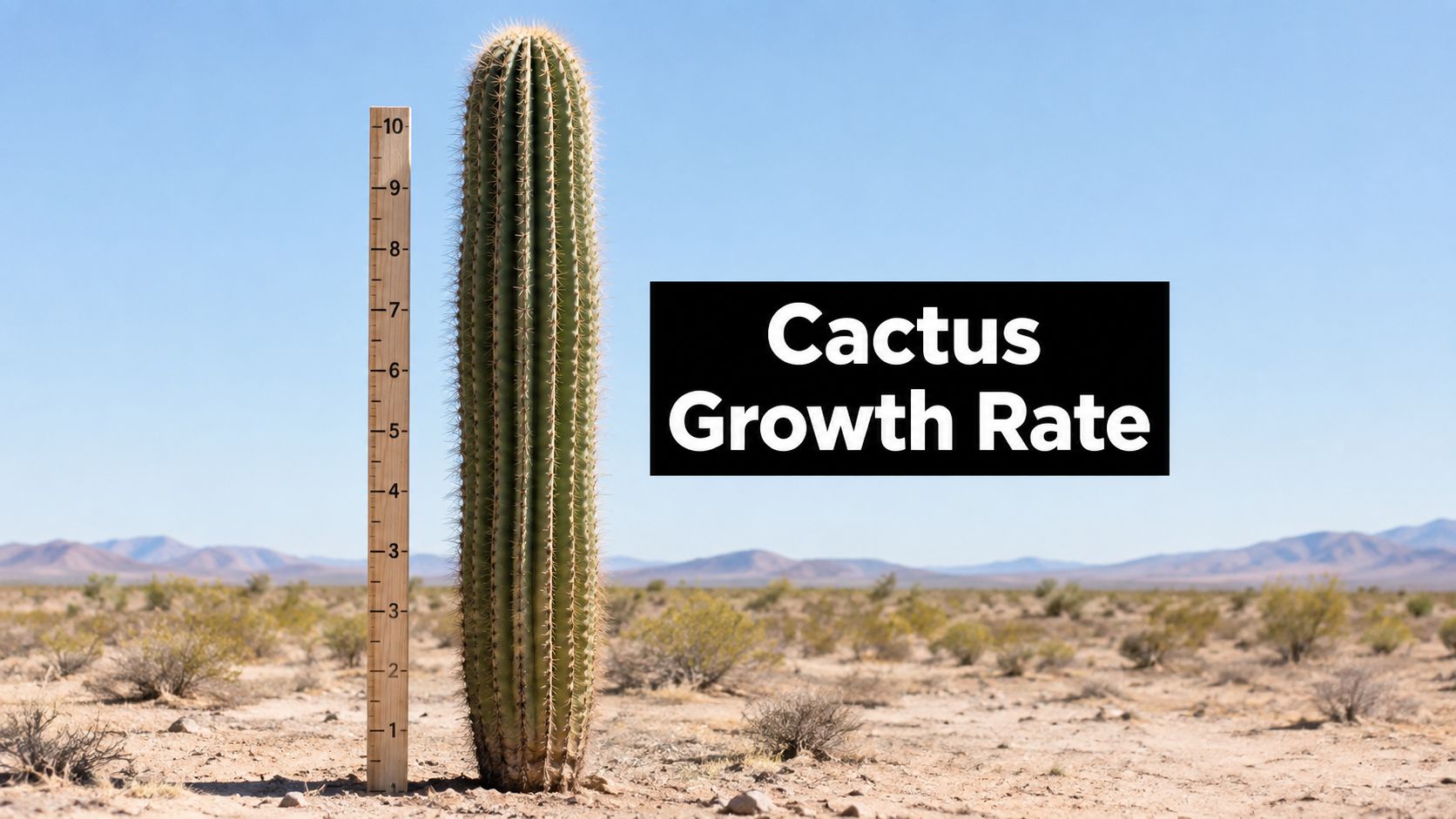

Mature columnar cacti typically add 5–11 centimeters per year under good conditions, while seedlings may take a decade to grow just 2 centimeters. Growth is not one speed.
That range sounds modest until you consider what it represents. A large specimen cactus sold for outdoor planting may embody decades of biological development, and moving it to a new site won't suddenly turn it into a fast-growing nursery crop. The practical question isn't just, “How fast does this species grow?” It's, “How fast should this plant grow at its current age, in this soil, under this climate, after transplanting?”
Why Cactus Growth Rate Defies Simple Answers
A single annual number gives buyers a poor forecast. A saguaro's growth rate can vary by roughly 100 times across its lifetime. The U.S. Forest Service reports that a seedling may need up to 10 years to reach only 2 centimeters, while a 2–4-meter plant can grow roughly 100 times faster. During the faster 20-to-50-year period, saguaros may add 5–10 centimeters per year, with rainfall, habitat, competition for water, temperature, and site conditions shifting the result (U.S. Forest Service saguaro research).
That age shift changes how a large cactus should be evaluated. A seedling spends years building roots, water storage, and the structure needed to support visible growth. A mature specimen has already completed much of that work, but its next phase may prioritize flowering, fruit, seeds, or branches over steady height.
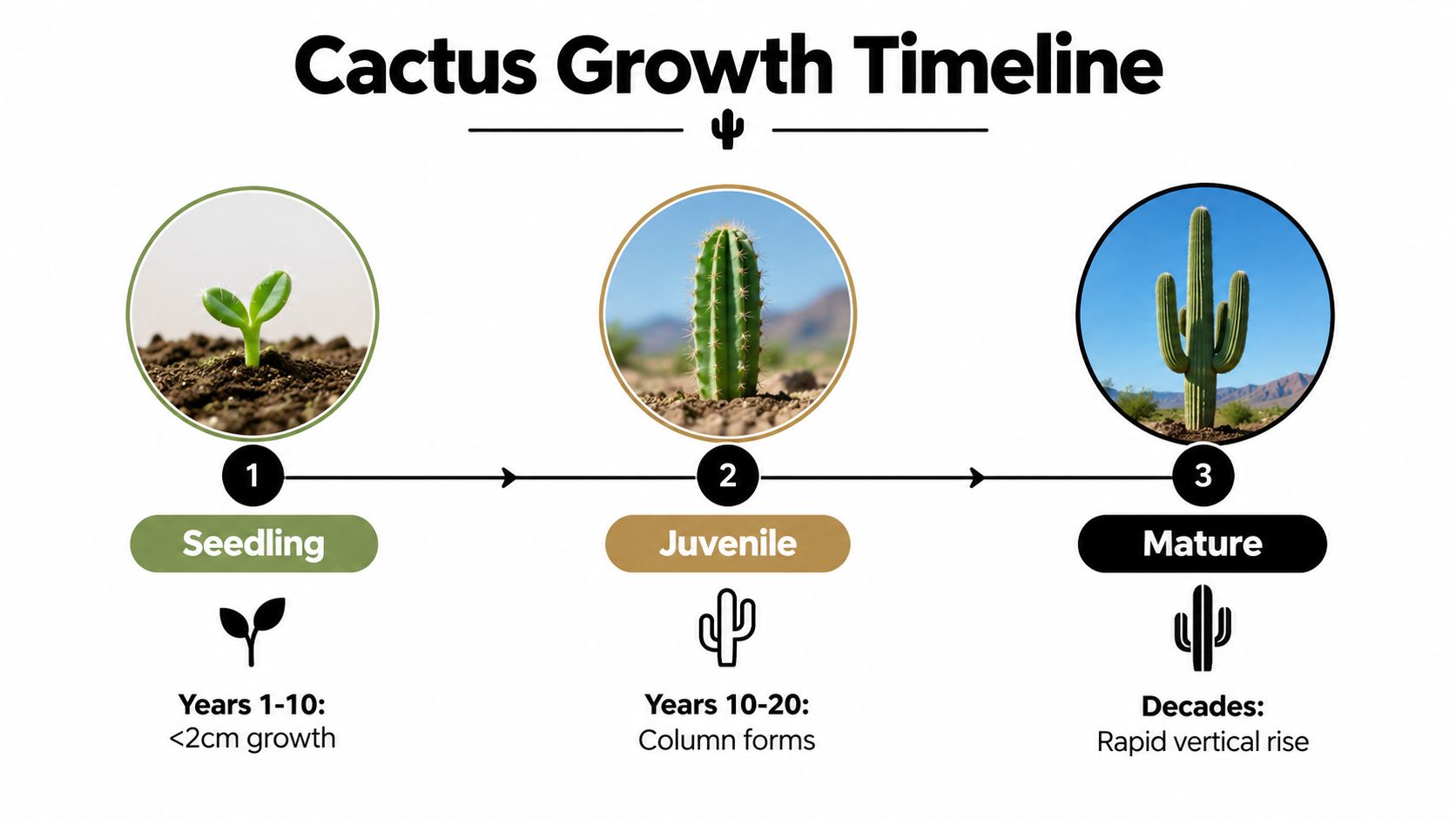
Age changes the forecast
Saguaros reach reproductive maturity after decades of development, and estimates vary with the population and conditions being considered. Once mature, energy increasingly supports flowers, fruit, seeds, and branching rather than uninterrupted vertical growth.
For buyers selecting a premium specimen, size represents time that fertilizer, extra irrigation, or a larger container cannot quickly recreate. A useful forecast combines starting size, plant age, species, root condition, water availability, and local weather. Those variables also help set expectations after shipping, when a plant may spend time re-establishing before it shows obvious new growth.
Practical rule: Forecast cactus growth by life stage, starting size, and site conditions rather than a single annual number.
Growth Patterns Across Major Cactus Species
A cactus's species sets the growth pattern, but it does not produce one reliable annual figure. Saguaro cactus, San Pedro cactus, Peruvian Apple cactus, Mexican Fence Post cactus, and Blue Flame cactus are usually judged by vertical development. Prickly pear adds size through pads, while barrel cactus often becomes broader before its height changes noticeably. For buyers planning a specimen garden, the useful forecast is size over time, not a single yearly number.
A peer-reviewed study of the threatened columnar cactus Echinopsis atacamensis recorded annual growth of 5.8 and 8.3 centimeters. Some individuals reached up to 430 years of age. The same study compared those results with reported saguaro growth near Tucson, estimated at 7.3–11.5 centimeters per year during roughly the first 80 years (Comparative Physiology study).
Cactus Species Growth Comparison
| Species | Annual Growth Rate | Mature Height Range | Time to Maturity |
|---|---|---|---|
| Saguaro cactus | Often around 5–10 cm during a faster 20–50-year period, with Tucson estimates of 7.3–11.5 cm during roughly the first 80 years | Up to 12 m or more in habitat; 2–4 m marks the established-size reference in the cited data | About 30–50 years, with broader estimates of 35–65 years |
| Echinopsis atacamensis | 5.8–8.3 cm per year in the cited study | A tall columnar form; the verified study data here do not establish a mature-height range | Some individuals reached up to 430 years of age; a specific maturity age was not established |
| San Pedro cactus | Commonly reported around 30–45 cm per year in cultivation, based on nursery experience rather than the cited study | Often develops into a tall, multi-column specimen; final height depends on cultivar, climate, and support | Reaches a substantial landscape form over several growing seasons, with timing shaped by site conditions |
| Peruvian Apple cactus | Usually assessed by column development and branching rather than a fixed verified rate | A large columnar plant that can occupy considerable vertical and lateral space in warm climates | Mature form develops progressively as branching increases; timing varies by growing conditions |
| Prickly pear and barrel cactus | Pad production and outward thickening make one height rate unsuitable for both forms | Prickly pear spreads through pads, while barrel cactus builds a rounded body; mature dimensions vary widely | Both can look established before reaching their largest possible footprint |
Source note: saguaro growth and size references are summarized from U.S. Forest Service research.
A young plant and a large columnar specimen should not receive the same forecast. A substantial plant has already passed much of its slowest developmental period, while a recently shipped specimen may spend time producing roots before visible growth resumes. Use saguaro growth rate information as a planning reference, then adjust expectations for starting size, species, root condition, water availability, and the planting site.
Environmental Factors That Control Growth Speed
Site conditions can change a cactus growth forecast as much as species does. Temperature, humidity, wind, and solar radiation determine how efficiently the plant captures carbon and turns it into new tissue, so a cactus in a hot, exposed position may grow differently from the same plant in a moderated site.
For CAM cacti such as cactus pear, photosynthetic productivity is optimized near 25°C during the day and 15°C at night. Warmer nights above roughly 25–30°C can reduce carbon assimilation because CAM plants depend on cooler nighttime conditions for efficient carbon dioxide uptake (Embrapa environmental variables research).
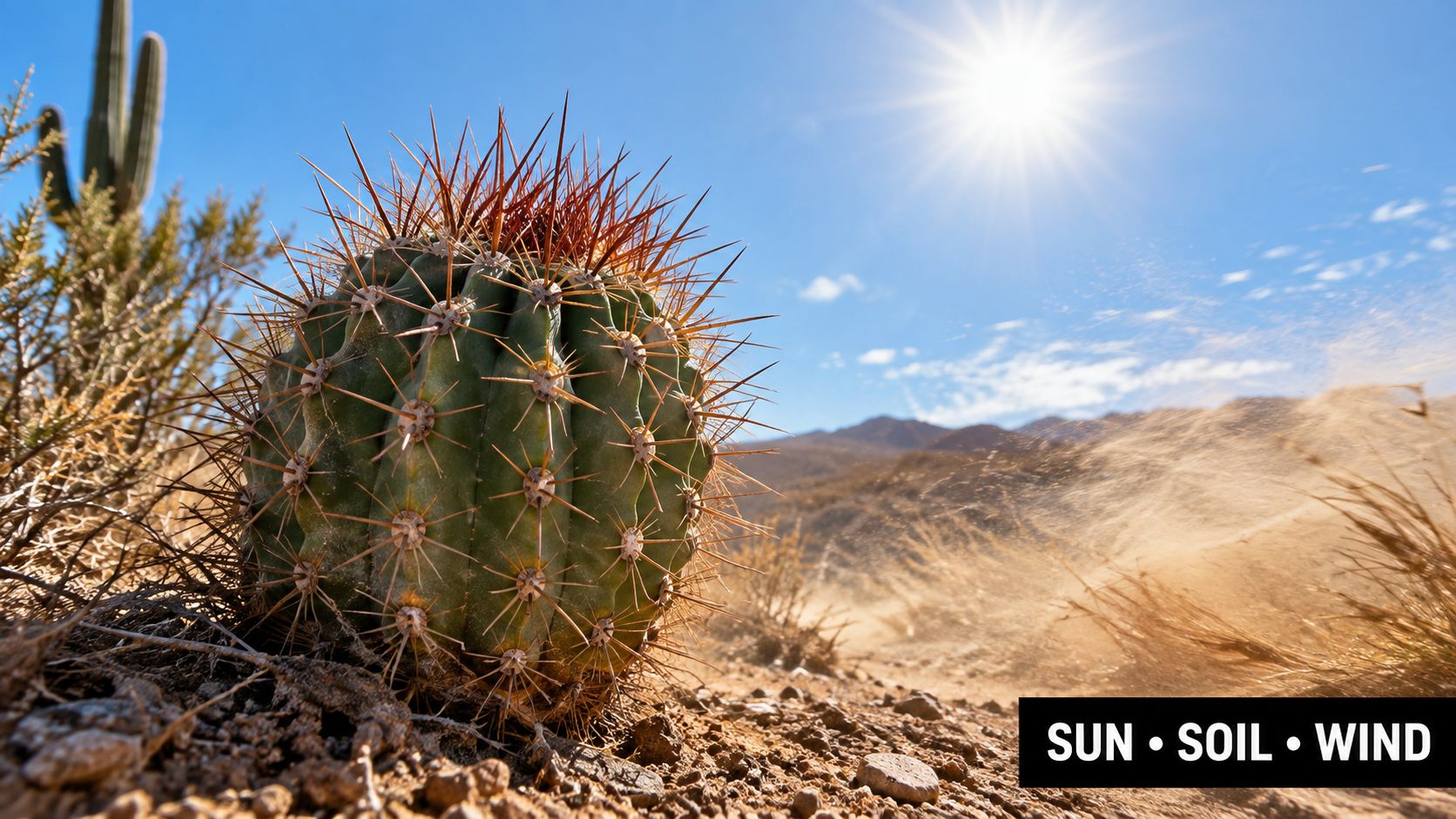
Place plants for the whole temperature cycle
A cactus can tolerate intense daytime heat yet add little growth if nights remain hot. Container plants beside dark masonry, asphalt, or heat-retaining walls face this problem because those surfaces continue radiating warmth after sunset. Strong light alone does not guarantee efficient carbon gain.
Use these placement checks:
- Give strong daytime light: Most outdoor specimens need substantial sunlight to maintain a compact, healthy form.
- Avoid unnecessary heat retention: Leave space between containers and surfaces that radiate heat after sunset.
- Time irrigation with active growth: Water supports growth only when the plant can use it. Irrigation cannot override temperatures that suppress photosynthesis.
- Watch wind exposure: Wind increases drying stress and affects how quickly the root zone loses moisture.
These conditions matter when estimating how quickly a newly purchased cactus will reach its planned size. The fastest-looking result isn't always the healthiest; the next section explains why more water often produces less growth.
Establishment Phase: What Happens After Shipping
Shipping and replanting can pause visible growth while a cactus rebuilds its root system. During the first one to two years after transplanting, prioritize firm anchoring, healthy tissue, and root recovery rather than immediate height gain. A newly purchased specimen may therefore deliver a slower size increase than its mature growth pattern suggests.
Begin with a fast-draining, properly prepared root zone. Water thoroughly enough to wet the surrounding soil, then allow it to dry before watering again. The right interval depends on soil, temperature, rainfall, plant size, and whether the cactus is growing in a container or in the ground.
For saguaros, USDA Natural Resources Conservation Service guidance recommends hand-watering during establishment and adjusting frequency through observation. Let water penetrate approximately 4 inches into the soil, keep it away from the fleshy base, and allow drainage rather than leaving moisture against the stem. Large barrel cacti can receive comparable treatment. A separate maintenance recommendation suggests watering saguaros about once every three weeks, particularly during the first summer, because surrounding soil may dry within 7 to 14 days. Treat that timing as an observation point, not a permanent calendar rule, and check the soil before repeating the soak (USDA NRCS cactus guidance).
A planted cactus may look unchanged while its roots establish the support needed for later growth.
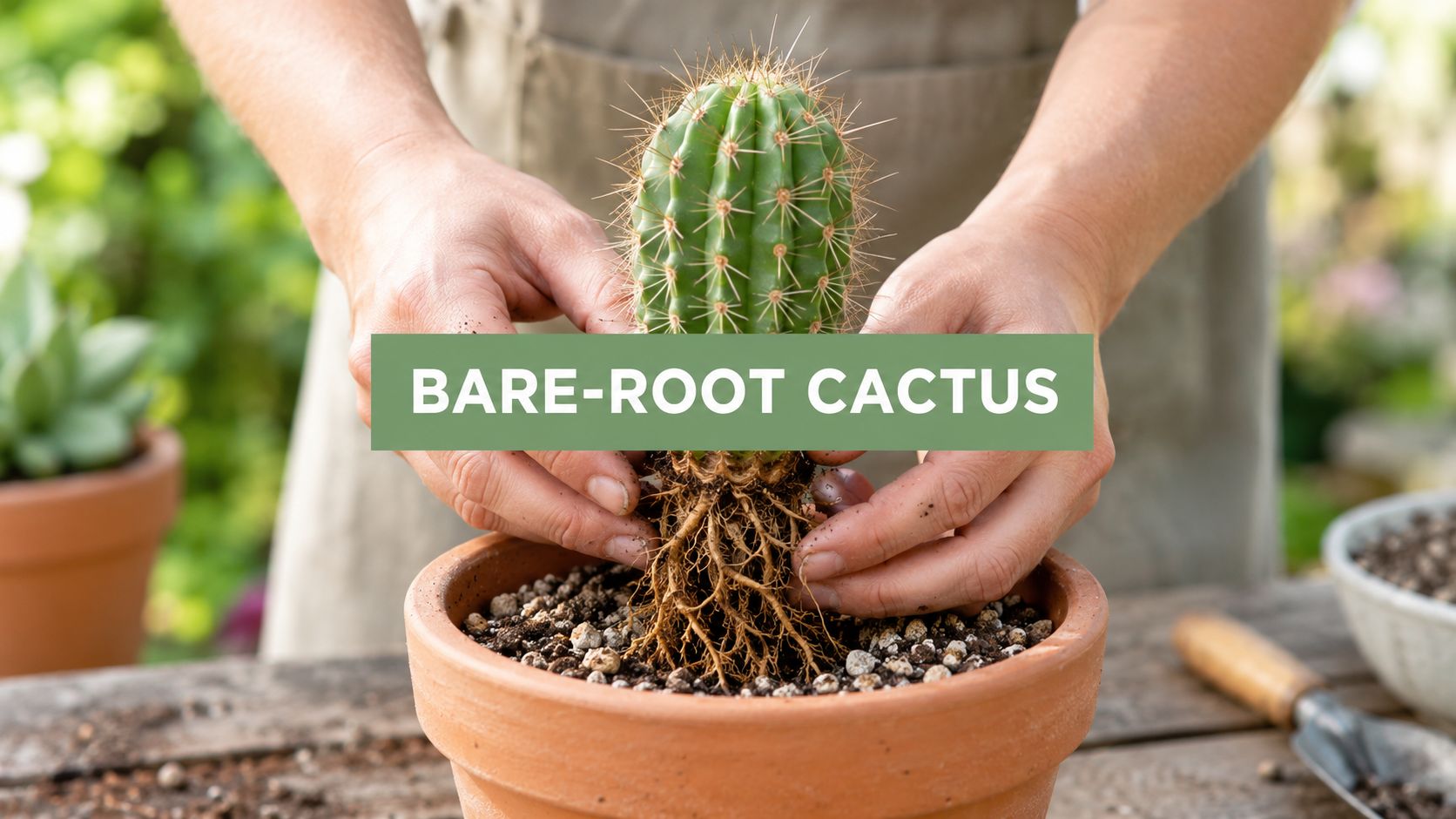
Monitor stability, color, drainage, and tissue firmness before judging performance. A temporary pause is expected after relocation, but soft tissue, persistent water around the stem, or poor anchoring calls for attention. This new plant settling-in advice explains why plants may need an adjustment period after a move. For bare-root specimens, follow the nursery's bare-root cactus planting guidance for handling and installation. These early observations make a size forecast more useful than applying one annual growth figure to every cactus.
How to Measure and Track Your Cactus Growth
A useful cactus growth forecast comes from repeated measurements at the planting site, not from one annual figure. Age, species, and conditions can change the result, so track the plant's actual size before planning around a future height or spread.
Take a photograph from the same location and angle each year. Place a measured stake beside the plant, or use a fixed wall, fence, or paving edge as a reference. Keep the camera distance and season as consistent as practical.
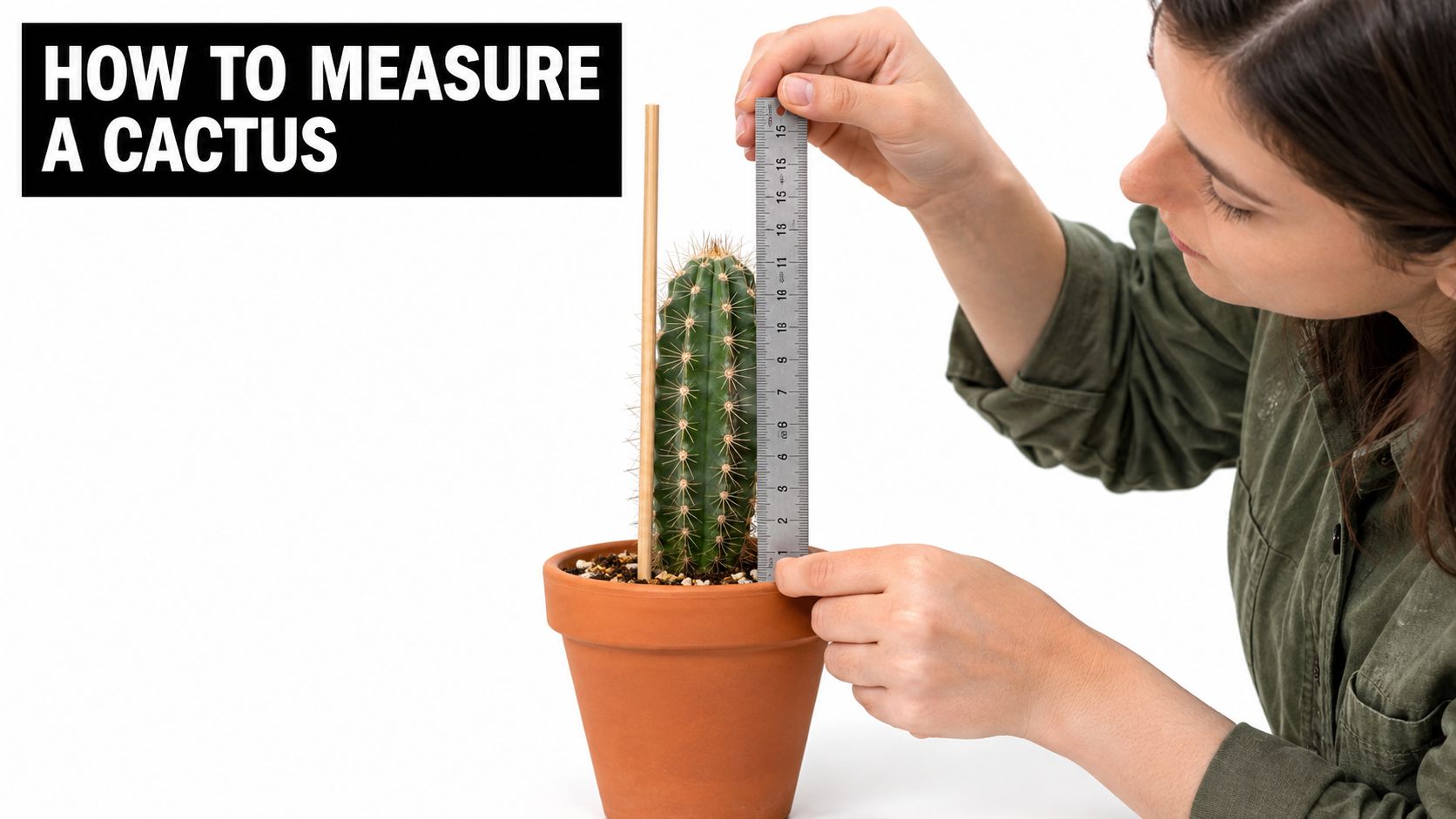
A simple annual record
Measure from the same point at the soil line to the highest stable point. For branching or pad-forming cacti, record the main height separately from the widest spread. Count new pads or branches, but do not treat every temporary swelling as permanent growth.
Keep five details in each record:
- Date and season: Compare similar points in the growing cycle.
- Plant location: Note whether the cactus is container-grown, in-ground, sheltered, or exposed.
- Watering conditions: Record major changes in irrigation, rainfall, or drainage.
- Height and spread: Use the same measurement points every time.
- Photographs: Include the full plant and a close view of the growing tip.
Hydration can temporarily change a cactus's fullness after rain or irrigation. Compare measurements after similar drying conditions, rather than immediately after watering. A single season may show little or misleading change. Several consistent records reveal whether the plant is establishing, holding its size, or producing new tissue.
For broader context, The Cactus Outlet's guide to how long succulents take to grow helps frame timelines without assigning one fixed rate to every species.
Optimizing Growth for Container and Landscape Plants
Once roots are established, optimization means removing obstacles rather than trying to overpower the plant. Drainage comes first. A container should let excess water escape quickly, and an in-ground site should prevent water from collecting around the base.
Container plants need closer observation because their root zones heat and dry faster than broad garden beds. During active growth, a container may need watering sooner than an established in-ground specimen, but the principle remains soak and dry. Water thoroughly, then wait until the mix has dried appropriately before watering again.
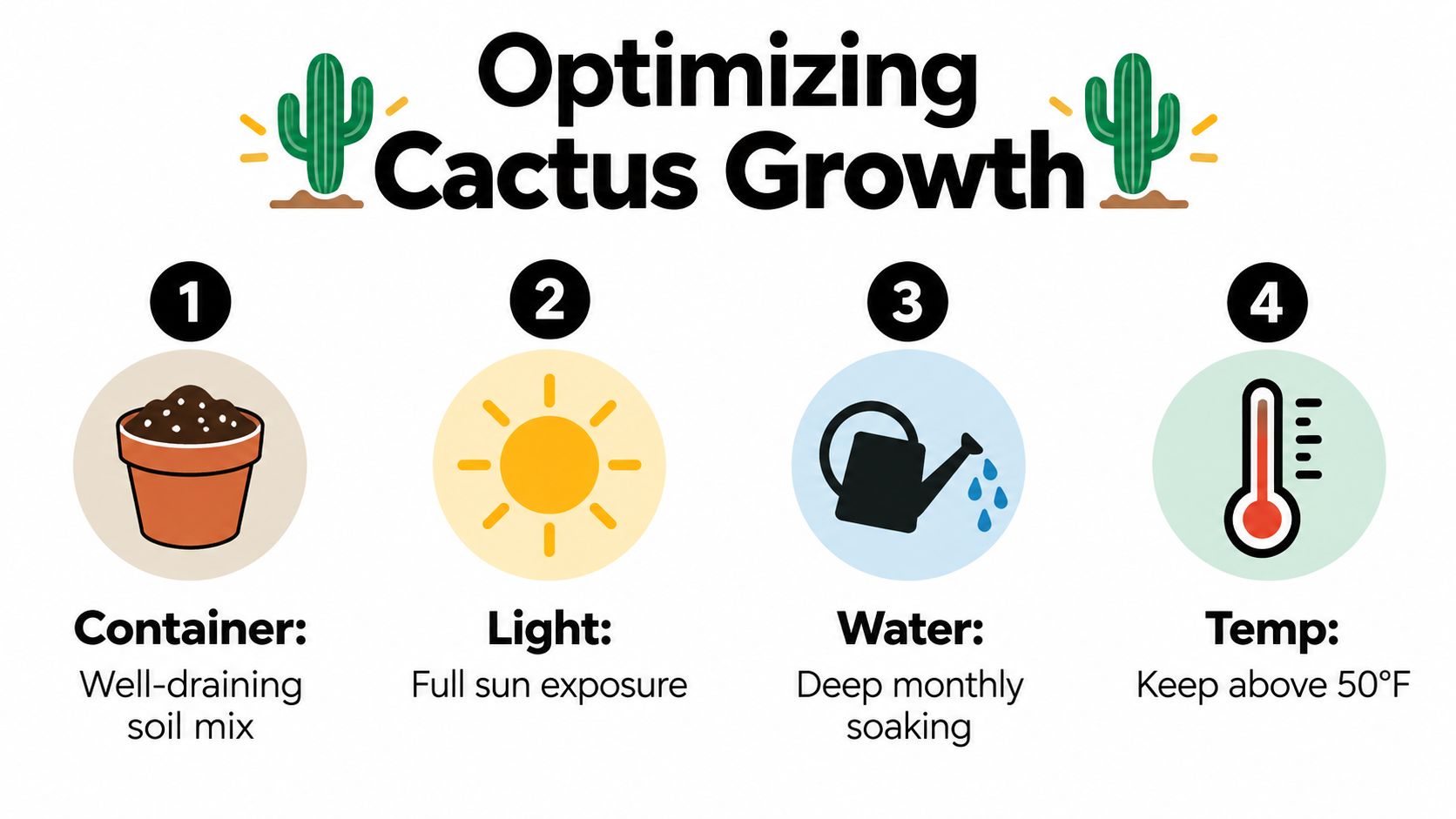
Match the site to the plant
- Container: Use a coarse, well-draining cactus mix and choose a container that supports the plant without trapping excess moisture.
- Ground Preparation: Grade the planting area so irrigation and rainfall move away from the stem base.
- Light: Provide strong outdoor light, while acclimating plants that have recently been sheltered or shipped.
- Season: Concentrate watering during active growth and reduce intervention when temperatures or light conditions limit use of water.
Cold protection requires species-level judgment. For example, the University of Arizona Campus Arboretum lists Agave americana for USDA hardiness zones 8a through 11b and classifies its growth rate as slow (University of Arizona Agave americana profile). An independent experimental finding summarized in an Ohio University thesis reported a minimum cold tolerance of −7.4°C, defined as the temperature associated with 50 percent cell death, while also noting that acclimation changes with day and night temperature reductions (University of Arizona Agave americana profile).
Don't treat a hardiness zone as an absolute guarantee. Exposure, moisture, acclimation, frost duration, and local shelter all matter. Containers, protected microclimates, and temporary frost protection can be sensible in marginal locations.
The Myth of More Sun and More Water Equals Faster Growth
More water doesn't automatically produce faster growth in a mature cactus. Long-term National Park Service observations associate saguaro growth with wetter decades and report slower growth during recent drought, but a separate analysis found no statistically significant relationship between growth and summer precipitation. A 2025 population study also found that modeled saguaro growth wasn't clearly associated with drought indices or saturated soil water (2025 saguaro population study).
Those findings don't mean water is irrelevant. Water can be especially important during seedling establishment and transplant recovery, when roots are vulnerable and the plant has less reserve capacity. They do mean that mature-plant height gain may respond weakly or with a delay to short-term irrigation changes.
Why extra irrigation can backfire
A cactus needs both water and oxygen in its root zone. Frequent shallow watering can keep the surface damp without encouraging a deep, stable root system. Heavy irrigation in slow-draining soil can also keep the base wet, increasing the risk of decay rather than creating useful new growth.
Temperature adds another limit. As discussed earlier, CAM photosynthesis depends on cool nighttime conditions for efficient carbon uptake, so a hot site can remain survivable without being ideal for rapid growth. Wind, soil structure, slope, shelter, and competition from nearby plants can further change the result.
Climate projections also raise a separate concern. The 2025 study reported declines in all modeled saguaro populations under future climate scenarios, largely because increasing drought impaired recruitment, or the successful establishment of new plants (2025 saguaro population study). For buyers working outdoors, establishment probability may matter more than chasing a few extra centimeters from an already mature specimen.
Making Smart Specimen Choices for Your Landscape
Choose plant size by asking how soon you need the outdoor space to reach its intended form. Starting with a young cactus costs less biological time but requires patience, careful establishment, and tolerance for an unfinished design. A large specimen delivers immediate structure, yet it still needs a suitable root zone and a period of recovery after planting.
A 2-meter saguaro represents decades of development, not a plant that was rapidly produced in a nursery (U.S. Forest Service saguaro research). That makes size selection a planning decision. Measure mature clearance, account for access around spines, and decide whether the plant's existing form already matches the garden's long-term purpose.
A practical selection framework
- Choose a large specimen when immediate vertical presence, architectural form, or a finished focal point matters more than watching the plant develop.
- Choose a younger cactus when you have space, time, and a willingness to monitor establishment over several seasons.
- Choose a columnar form when height and strong vertical lines matter, such as a privacy screen or a structured xeric composition.
- Choose a prickly pear or barrel form when pad development, rounded mass, or low structural emphasis fits the planting plan better.
- Check cold exposure first: Match the species and planting method to the local climate instead of assuming every cactus handles winter the same way.
- Plan safety clearance: Agave americana can reach approximately 5–7 feet in height and spread 8–12 feet wide, with terminal spines and sharply toothed margins, so it belongs away from foot traffic (University of California Cooperative Extension Agave guidance).
Premium specimen plants make sense when you value time, established form, and immediate visual scale. Younger plants make sense when the site allows patience. In both cases, the best cactus growth rate is the one the plant can sustain without weak tissue, damaged roots, or repeated replacement.
The Cactus Outlet offers large outdoor cacti, specimen columnar forms, saguaros, prickly pears, barrel cacti, agaves, aloes, and selected Euphorbia specimens shipped bare root for planting in containers or outdoor settings. Visit The Cactus Outlet to compare available plants and choose a starting size that fits your climate, space, and long-term growth plan.