

You've probably done this already. You open a cactus listing, zoom into the photo, check the price, then pause and wonder whether the plant that arrives will look anything like the one on screen. That hesitation makes sense. A cactus can survive drought, but a bad seller, rushed packing, or poor timing can still ruin the order.
Online cactus shopping has grown far beyond a niche hobby. The global cactus plants market was valued at approximately $3,860.3 million in 2021 and is forecast to reach $7,014.2 million by 2025, with a 16.1% CAGR projected through 2033, according to Cognitive Market Research's cactus plants market report. More choice is great for buyers, but it also means more uneven listings, more impulse purchases, and more sellers who look similar at first glance.
A good cactus buy online decision usually comes down to a simple idea. Don't shop by photo alone. Shop by fit, seller quality, shipping method, and what happens after the box lands on your porch.
Introduction to Buying Cacti Online
Buying cacti online solves one obvious problem. Local nurseries often carry a narrow mix of common plants, usually in smaller sizes, and rarely the exact form you had in mind for a windowsill, patio, entryway, or garden project.
Online stores give you range. You can compare a compact Mammillaria for a desk, a Golden Barrel for a bright patio, or a tall Peruvian Apple cactus for a strong architectural look in one sitting. That convenience is part of why more buyers now treat plant shopping like any other careful online purchase.
Still, cacti aren't like ordering a lamp or a rug. A listing can look clean and convincing while hiding the details that matter most, such as whether the plant was propagated responsibly, whether it was watered too close to shipment, or whether the seller knows how to pack spiny, heavy, fragile stems.
Practical rule: Treat a cactus order as a living shipment, not a decor purchase.
That mindset changes your questions. Instead of asking only, “Do I like this cactus?” start asking:
- Will it fit my light? A beautiful plant in the wrong spot becomes a care problem fast.
- Does the seller show real evidence? Multiple photos, clear naming, and sourcing details matter more than polished branding.
- Can it travel safely right now? Heat, cold, and moisture matter before you ever click buy.
- Do I know what to do on arrival? Many losses happen after delivery, not during checkout.
New buyers often get confused because all these factors blend together on a product page. A species choice affects shipping. Shipping affects recovery. Recovery affects long-term success.
That's why the strongest cactus buy online approach is stepwise. Pick the right species and size first. Vet the seller second. Confirm shipping and legal details third. Then handle the first few days after delivery with patience instead of panic.
Choosing the Right Cactus Species and Size
The most common online buying mistake happens before shipping starts. People buy a silhouette, not a match.
A cactus may look perfect in a styled photo and still be wrong for your room, your climate, or the amount of space you have. Start with the plant's job. Is it meant to sit on a bright desk, anchor a patio, fill an entry corner, or become a garden focal point?

Match the plant to the place
Think of cactus sizes the same way you'd think about furniture.
A small cactus works like a side table. It fills a spot without taking over. A medium plant works like an accent chair. It adds structure and interest. A tall columnar cactus works more like a floor lamp or sculpture. It changes the whole room.
Use this quick filter when you browse:
| Space or goal | Better cactus direction | Why it helps |
|---|---|---|
| Bright desk or shelf | Small clustering or compact forms | Easier to place and monitor |
| Sunny window with limited width | Upright columnar types | Height adds impact without broad spread |
| Patio or courtyard | Barrel or columnar forms | Strong shape and outdoor presence |
| Large indoor statement area | Mature columnar cactus | Acts as a visual anchor |
If you want a broad overview of forms before narrowing your list, this guide to different types of cacti is useful for comparing shapes and growth habits.
Read listings like a grower
A pot size tells you container volume. It doesn't always tell you how thick, mature, or established the cactus is. Height tells you visible top growth. It doesn't tell you how wide that plant may become or how much light it will demand to stay sturdy.
That's where beginners often get tripped up. A tall cactus in a small nursery pot may still be in an early stage. A shorter barrel cactus may need more floor space over time because width becomes the limiting factor.
Before ordering, check for these three details:
-
Light needs
Some cacti want long periods of direct sun. Others tolerate bright conditions better than harsh midday exposure indoors. -
Growth habit
Ask whether the plant grows upward, outward, branches, or pups over time. -
Mature footprint
Don't just picture today's plant. Picture it after it settles in.
Later in your search, it can help to watch a visual walkthrough so the differences between forms become easier to spot.
A simple shortlist method
If you're overwhelmed by options, narrow the page fast:
- For beginners indoors: Choose compact plants that won't outgrow the windowsill quickly.
- For visual drama: Choose a columnar cactus with enough vertical clearance and strong direct light.
- For outdoor design: Favor species that match your local conditions and available sun exposure.
- For gifting: Choose a manageable size that won't create immediate repotting pressure.
A cactus should fit your real conditions, not the room you wish you had.
Evaluating Vendor Quality and Plant Health
A polished storefront doesn't prove much. Some sellers are careful growers with transparent listings. Others are skilled photographers with weak plant handling. The difference often shows up in the details they choose to publish.

Only 12% of major online cactus listings explicitly state seed-collection records or CSSA verification, according to this guide on where to buy a cactus. That same verified data also notes these trust markers can reduce losses of $50 to $200 per plant and relate to 6+ month survival rates. In plain terms, most listings don't give buyers enough sourcing information.
Lesser-known trust signals
Many guides stop at “look for healthy color” or “read reviews.” That's not enough for cacti, especially larger or rarer ones.
Here are stronger quality signals:
- Propagation transparency: If a seller states whether the plant is seed-grown, rooted from cuttings, grafted, or field collected, you have a better sense of what you're buying.
- Botanical specificity: A Latin name is more useful than a vague label like “rare desert cactus.”
- Collection or propagation records: These details show process, not just marketing.
- Greenhouse evidence: Current nursery photos or videos help confirm the seller grows and handles plants.
A listing with those signals usually reflects a seller who expects informed questions.
What you can judge from photos
You can't inspect a cactus in person, but you can still inspect the listing critically.
Look for multiple angles, including the base and lower stem. If every image is taken from above or from one flattering side, you may miss corking, scars, instability, or signs of stress near the soil line.
Here's a useful comparison:
| Listing detail | What it helps reveal | What it may hide |
|---|---|---|
| Close stem photo | Surface texture, scarring, spine pattern | Root condition |
| Base photo | Stability, discoloration, soil line issues | Top symmetry |
| Styled room photo | General scale and look | Current plant condition |
| Fresh nursery photo | Real-time appearance | Decorative context |
For anyone who writes or evaluates plant listings, strong detail matters. This article on Shopify product descriptions that convert is a helpful reference because it shows how clear product information reduces buyer confusion, which matters even more when the product is alive.
Questions worth sending before checkout
A short message to the seller can save you a disappointing order. Ask:
- Was this cactus recently watered?
- Is it shipped bare root or in its pot?
- Is the photo representative of the exact plant or a similar specimen?
- Can you confirm whether it is seed-grown, grafted, or otherwise propagated?
Seller response quality matters. A careful seller usually answers directly. A weak seller often replies with generic reassurance and little substance.
If a seller can't explain where the cactus came from and how it was propagated, you're buying on trust alone.
Shipping and Packaging Considerations
Shipping is where a healthy cactus either keeps its advantage or loses it. Cacti are hardy, but shipping toughness is specific. Dry tissue is safer than wet tissue. Stability is safer than pretty packaging. Timing is safer than speed at any cost.

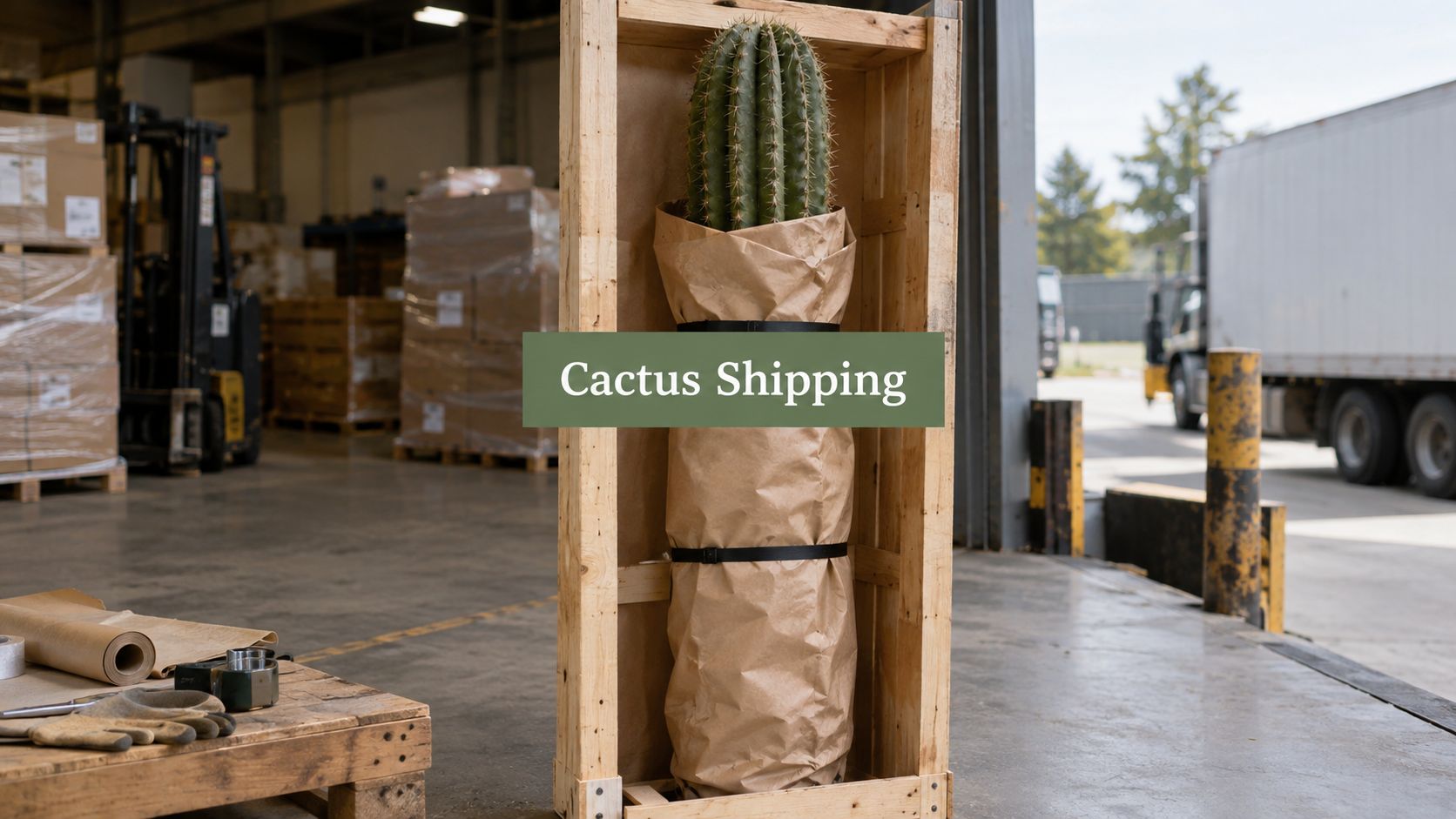
One verified shipping fact matters more than most buyers realize. Cacti must be withheld water for 10 days prior to shipping, and that dry-down reduces plant weight by 20% to 30% while helping prevent transit rot, according to Alibaba's cactus plant shipping guidance.
Why dry shipping works
New buyers often assume a thirsty-looking cactus should be watered right before travel. For cacti, the opposite is safer.
A dry cactus enters transit in a more dormant state. Its roots are less prone to damage from damp soil movement, and the plant is less likely to sit warm and wet inside a dark box. Moisture plus heat is where trouble starts.
Shipping a sponge versus shipping a dry brush illustrates this point. The sponge holds water and can sour in a sealed space. The dry brush handles storage much better.
Packaging details that matter
Good cactus packing has one goal. Stop movement without trapping harmful moisture.
A serious seller should have a plan for:
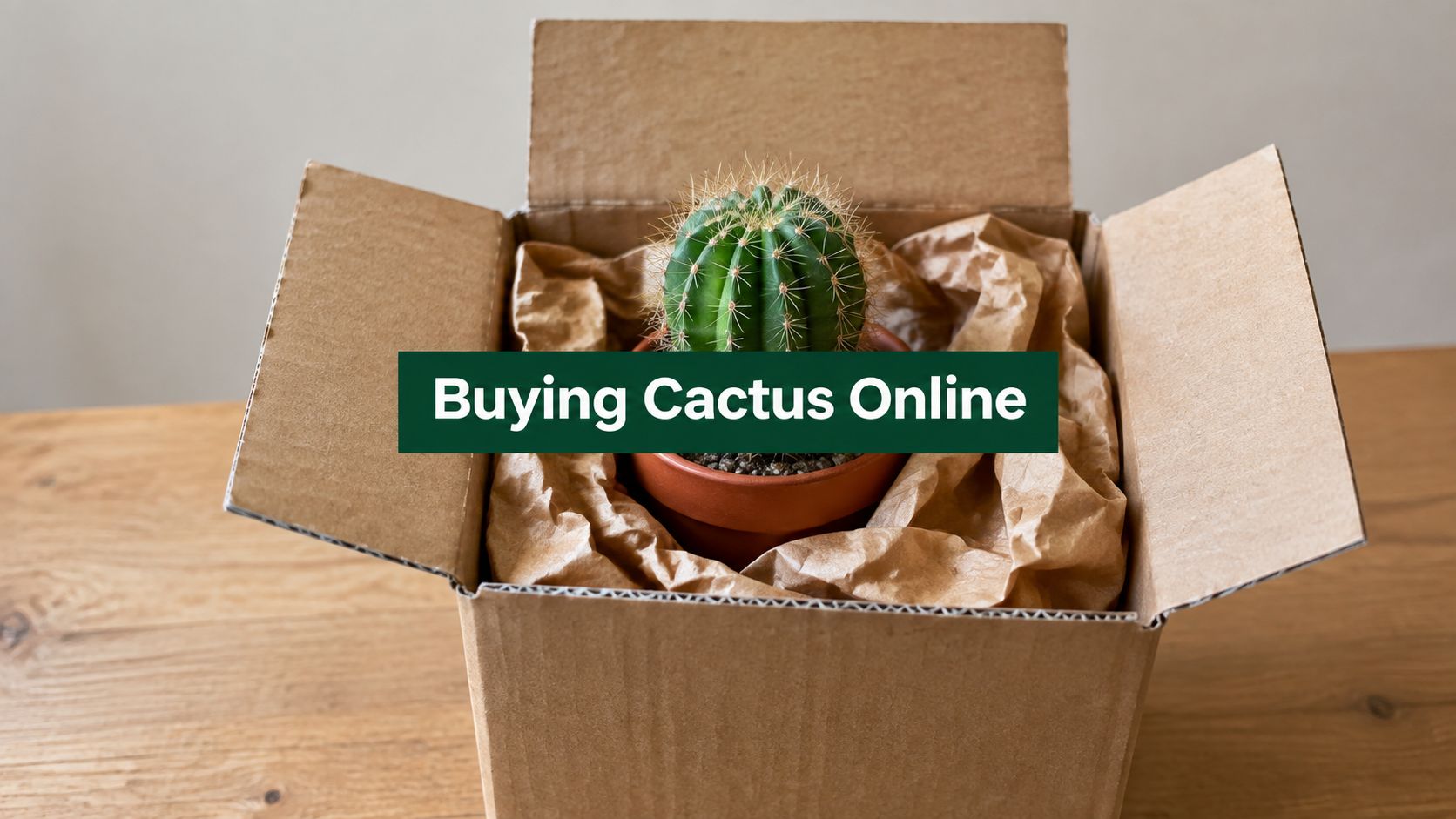
- Root protection: Bare roots should stay dry and cushioned.
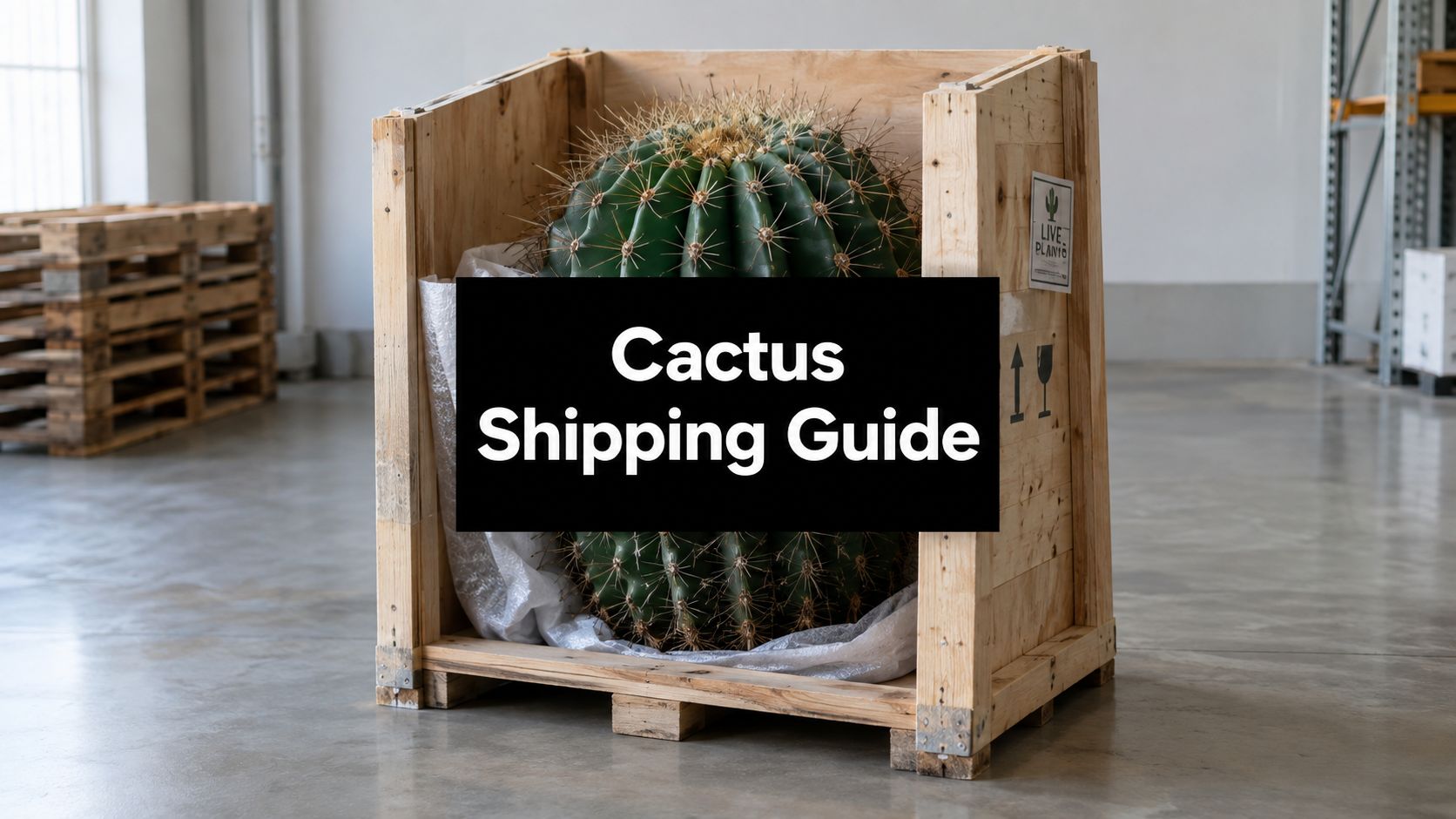
- Stem stability: Heavy or tall cacti shouldn't sway inside the box.
- Spine-safe wrapping: Material should shield both plant and handler without crushing tissue.
- Weather judgment: Sellers should pause shipments during unsafe conditions rather than force a dispatch.
If you want to compare a seller's formal policies before purchase, review the shipping and returns information and look for the same kind of clarity elsewhere.
What to ask before an order ships
Don't ask only, “When will it arrive?” Ask how it will travel.
Good questions include:
- Has the cactus been kept dry before packing?
- Will it ship bare root or potted?
- How is the stem secured inside the box?
- Will the seller delay shipment for severe weather?
For larger-scale planting projects or multi-box plant shipments, the logistics side matters even more than many hobby buyers expect. This overview of managing e-commerce supply chain freight gives useful context on why packaging, handling transitions, and transit planning influence outcomes.
Fast shipping doesn't help if the plant was packed wet, loose, or at the wrong temperature.
Navigating Legal and Seasonal Shipping Factors
Many buyers think the main risks are breakage and rot. Legal restrictions can stop an order before either of those happen. Seasonal timing can also turn a healthy shipment into a stressed one, even when the seller packed it correctly.
Legal limits buyers often miss
Some cacti and plant materials face shipping restrictions based on destination rules, protected species concerns, or agricultural controls. Sellers may also limit where they send bare-root plants, potted plants, seeds, or certain genera.
Beginners often find this confusing. They assume that if a product page is visible, the item can ship everywhere. That's not always true. A listing can exist nationally while the checkout or fulfillment team applies location-based limits later.
Before ordering, check three things:
- Destination rules: Your state or local area may have restrictions.
- Plant category: Seeds, rooted plants, and mature specimens may be treated differently.
- Protected status: Some species raise sourcing and transport questions that ethical buyers should verify before purchase.
For a practical overview of the compliance side, this article on shipping compliance for live plant seeds helps explain why plant shipments can involve more regulation than buyers expect.
Seasonal timing matters as much as legality
Even when a plant is legal to ship, the season may still be wrong.
A cactus in a box faces a very different trip than a cactus in a greenhouse. Summer heat can build fast in delivery vehicles and on porches. Cold snaps can damage tissue before the buyer even opens the package. A good seller will sometimes hold a shipment rather than send it into obvious weather stress.
Use this mental checklist before you order:
| Factor | Better question to ask |
|---|---|
| Heat | Will the box sit in extreme temperatures en route or on delivery day? |
| Cold | Are nights too cold for safe transit? |
| Timing | Can you receive and open the box right away? |
| Species sensitivity | Is this cactus sturdy in transit or more vulnerable than average? |
Waiting for a safer shipping window is often the smartest part of the purchase.
Care Basics After Delivery
The box is finally on your doorstep. This is the moment when many buyers make their first avoidable mistake. They rush.

A shipped cactus needs a calm first day, not a dramatic makeover. It has spent time in darkness, changed temperatures, and been moved around repeatedly. Think of arrival like the first day at a new job. The plant needs time to adjust before being asked to perform.
What to do in the first hour
Open the box promptly. Then inspect before you intervene.
Start in this order:
-
Take photos first
Capture the outer box, packing, plant body, base, and any visible damage. -
Check firmness
Slight wrinkling can happen after transit. Mushy or wet-looking tissue is more concerning. -
Keep it out of hard sun immediately
A boxed plant can scorch if moved straight into intense exposure. -
Hold off on watering
Shipping stress and fresh watering don't mix well.
Repotting and settling in
Not every cactus should be repotted on arrival day. If the plant arrived stable and healthy in its container, leaving it alone briefly is often the gentler choice. If it arrived bare root, pot it into a fast-draining cactus mix and let it settle before doing anything else.
A beginner-friendly setup usually includes:
- Fast-draining soil: Avoid heavy, water-retentive mixes.
- A container with drainage: Decorative pots without drainage create risk fast.
- A stable location: Bright light, good airflow, and no constant shuffling.
Here's a simple guide:
| Situation on arrival | Better response |
|---|---|
| Bare root and firm | Pot into dry or barely moist cactus mix, then let it rest |
| Potted and stable | Wait before repotting unless there's a clear problem |
| Slightly wrinkled but firm | Observe calmly, don't rush to water |
| Soft, dark, or foul-smelling areas | Isolate and contact the seller with photos |
Sun and water after transit
Don't treat delivered light-starved tissue like greenhouse-hardened tissue. Reintroduce stronger light gradually. Start bright, then increase direct exposure over time if the species calls for it.
Watering is where people overcorrect. They see a dry plant and assume it needs immediate rescue. Usually, what it needs first is stability, warmth, airflow, and time to re-establish.
A cactus can recover from travel stress more easily than it can recover from panic watering.
Strategies for Bulk Orders and Customer Support
Bulk buying changes the stakes. A single cactus order can be an experiment. A multi-plant order for an outdoor planting project, event, retail display, or gifting program needs a system.
How to approach bulk orders
The smartest bulk buyers don't start with a giant order. They start with clarity.
Ask for specifics on plant grade, size consistency, packing format, substitutions, and how mixed orders are grouped. An outdoor design professional ordering columnar cacti for a courtyard has different needs than a gift retailer ordering small mixed succulents.
Before committing, consider:
- Sample first: A small test order reveals packing quality and plant consistency.
- Clarify substitutions: Similar species or forms may not work in a design plan.
- Ask about staging: Larger projects may need split shipments rather than one delivery drop.
- Confirm claim procedures: If damage happens, you need a practical path, not vague policy language.
If your purchase is commercial or high volume, it helps to review a supplier's wholesale cactus and succulent options so you can compare ordering structure and support expectations.
Customer support is part of plant quality
Two vendors can sell similar cacti. The one that answers technical questions clearly is usually the safer choice.
Strong support looks like this:
| Support signal | Why it matters |
|---|---|
| Direct answers to plant questions | Shows actual handling knowledge |
| Clear shipping windows | Reduces timing mistakes |
| Written damage process | Makes problem resolution faster |
| Honest stock guidance | Helps avoid poor substitutions |
This is one place where The Cactus Outlet can be considered alongside other online nurseries, since it offers online ordering for individual and bulk cactus purchases with product details and support information available on-site.
A responsive seller lowers risk before checkout and after delivery. That's especially important when your order involves multiple boxes, event deadlines, or a coordinated install.
Conclusion and Next Steps
A successful cactus buy online process is less about luck than commonly assumed. The strongest results usually come from a handful of careful decisions. Pick a species that matches your real light and space. Judge listings by their details, not just their beauty. Ask how the plant is sourced and packed. Check legal and seasonal timing before you order. Then give the cactus a quiet, steady landing once it arrives.
That discipline matters because online cactus buying now sits inside a much larger category. Alternative analyses estimate the global cactus and succulent market at about $4.95 billion in 2023, growing at an 18% CAGR to reach approximately $25.92 billion by 2033, according to DataHorizzon Research's cactus and succulent market analysis. More online demand means more options, but also more need for informed buyers.
The overlooked edge is this. Healthy cactus buying doesn't stop at checkout. Vendor transparency, dry shipping practices, legal compliance, and patient aftercare all work together. Miss one part, and the whole purchase gets shakier.
If you're ready to shop, use these signals like a checklist, not a suggestion list.
If you want to put this process into practice, browse The Cactus Outlet for individual plants or larger orders, compare listings carefully, and contact the support team with any shipping, sizing, or sourcing questions before you buy.