
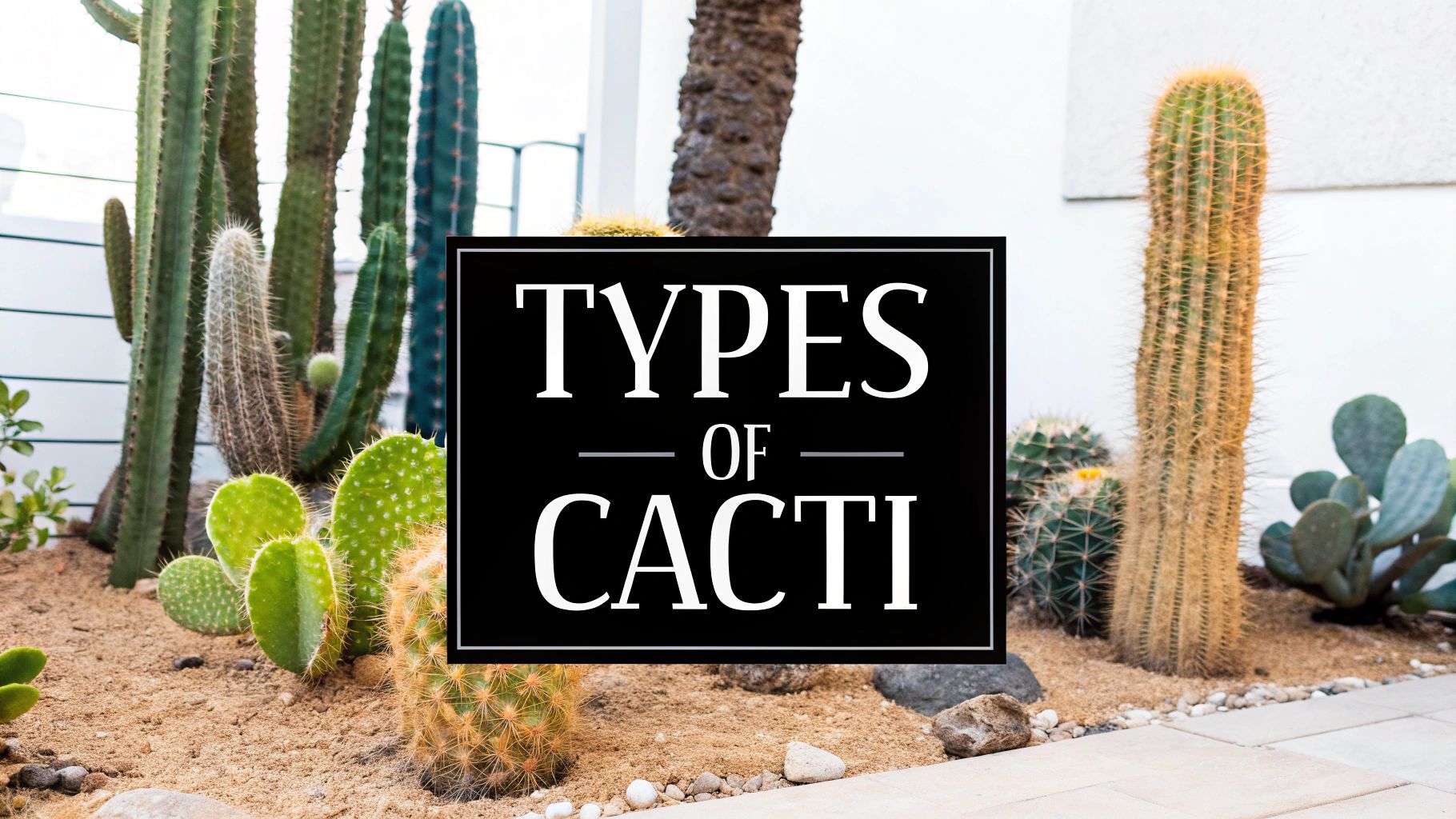

When you think of a cactus, what pops into your head? For most people, it's that classic Saguaro, arms stretched high against a desert sunset. But that iconic image is just the tip of the iceberg. The world of cacti is a wild and wonderful place, filled with an incredible variety of shapes and sizes. Getting to know the main types is the best first step to picking the perfect one for your space.
A Visual Guide to Cactus Shapes and Forms
The cactus family, Cactaceae, is a true marvel of adaptation. Every unique shape tells a story about where it comes from and how it survives. While they make fantastic, low-maintenance decor, this plant family is unbelievably diverse, with somewhere between 1,438 and 1,870 known species stretching from Canada all the way down to Patagonia. Mexico is the cactus capital of the world, home to about a third of all species!
That's a lot to take in, I know. But the good news is that most cacti fall into just a few key growth patterns. The easiest way to get your bearings is to start by looking at their basic shape.
Core Cactus Growth Styles
To keep things simple, let's group cacti into three main forms: columnar, globular, and paddle. Each has its own distinct look and feels right at home in different kinds of settings. This is a great starting point, and if you're curious about the nitty-gritty of what makes a cactus a cactus, you can dive deeper into the differences between them and other succulents in our detailed guide.
This visual breaks down the three fundamental shapes you'll come across most often.

As you can see, these shapes create totally different vibes. You've got the towering, dramatic presence of columnar cacti, the charming, compact look of globular ones, and the unique, segmented style of paddles.
Think of these basic categories as the alphabet of the cactus world. Once you can spot these core shapes, you'll start to notice all the fascinating little details and variations that make each species unique—and you'll be able to find just the right one for your home or garden.
To help you get started, here is a quick cheat sheet summarizing these main growth forms.
Quick Overview of Common Cactus Types
| Cactus Type | Key Feature | Best For |
|---|---|---|
| Columnar | Tall, upright, pillar-like growth | Outdoor landscaping, creating vertical accents, large pots |
| Globular | Round, ball-shaped, or barrel-like | Windowsills, small pots, rock gardens, container arrangements |
| Paddle | Flat, segmented pads that grow in clusters | Sprawling garden beds, unique container specimens, hedges |
This table gives you a quick reference, but from here, we'll dive into the specific types and popular species that fit into each of these groups. With this foundation, you’ll be able to browse with confidence, whether you're planning a full-on desert landscape or just looking for a new friend for your desk.
Understanding Columnar Cacti for Dramatic Landscapes
When you think of a classic desert skyline, you're almost certainly picturing a columnar cactus. These are the architectural titans of the succulent world, defined by their tall, ribbed, pillar-like stems. Think of them as nature's sculptures; they provide the strong vertical lines that create dramatic focal points and add a real sense of grandeur to any landscape.
Some of these giants rise as single, majestic columns. Others branch out over time, forming intricate candelabra shapes that really command attention. Their ribbed structure is a clever evolutionary trick—it lets the stem expand like an accordion to store water after a rare desert downpour and then contract during long periods of drought.
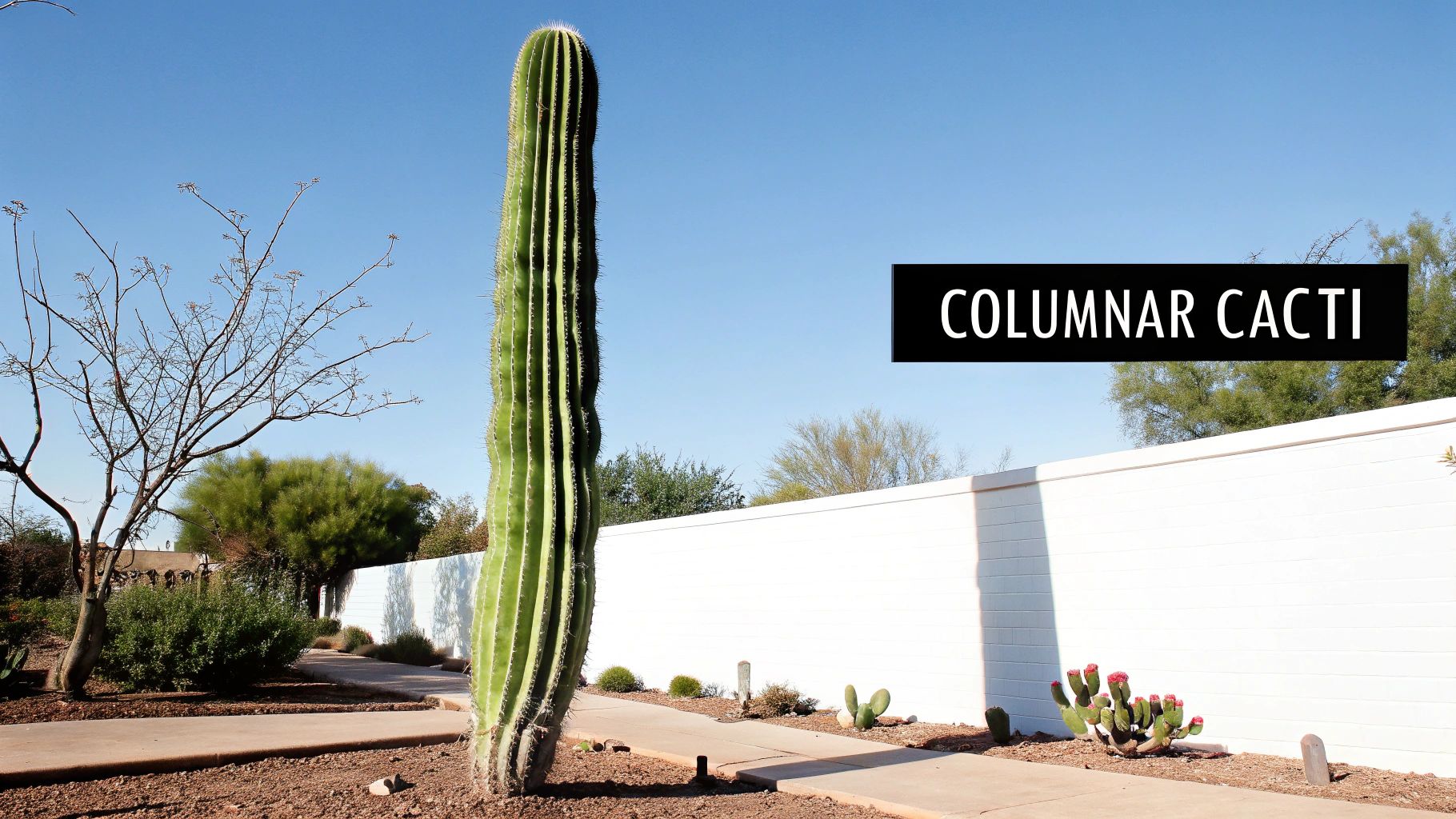
This classic shape is one of the most recognizable among all types of cacti. It's no wonder they're such a popular choice for both outdoor gardens and as stunning statement pieces for bright indoor spaces.
Iconic Columnar Species
While tons of species fit this description, a few really stand out for their popularity and distinct personalities. Each one brings something unique to a garden or home, from the fast growers to the slow, patient legends.
- Peruvian Apple Cactus (Cereus peruvianus): A true landscaper's favorite, this species is known for growing relatively quickly. It often branches into a beautiful candelabra shape and produces large, night-blooming white flowers that later turn into edible, apple-like fruit.
- Saguaro (Carnegiea gigantea): This is it—the undisputed symbol of the American Southwest. The Saguaro is a slow-growing legend. It can take 50-75 years just to grow its first arm and can live for well over 150 years. Planting one is like starting a legacy.
- Mexican Fence Post (Pachycereus marginatus): Just like its name suggests, this cactus grows multiple clean, straight stems with sharp, well-defined ribs. It’s an excellent choice for creating living fences or adding structured, linear elements to a design.
These are just a few examples that show the incredible variety you can find. If you're looking to add some vertical drama to your collection, check out the full range of columnar cacti available from The Cactus Outlet to discover even more fascinating options.
Landscaping and Placement Tips
The secret to successfully growing columnar cacti is pretty simple: give them what they're used to in their native arid homes. They are absolute sun-worshippers, needing at least six hours of direct, bright sunlight every day to truly thrive.
Think of a columnar cactus as a living solar panel. Its entire vertical surface is built to soak up intense sunlight. Not enough light, and you'll get weak, stretched-out growth, which robs it of that classic robust shape.
When planting outdoors, put them in a spot where they’ll get plenty of southern or western sun. For an indoor cactus, a south-facing window is your best bet. If you notice the side facing away from the light looking pale or thin, that's a dead giveaway it needs more sun.
The right soil is just as important. These plants are incredibly susceptible to root rot if their feet stay wet.
Essential Soil & Potting Checklist:
- Use a specialized cactus mix: These blends are made with sand, perlite, or pumice to make sure water drains away quickly.
- Ensure excellent drainage holes: It doesn't matter how good your soil is if the water has nowhere to go. Make sure the pot can drain freely.
- Don't overwater: Let the soil dry out completely between waterings. In the winter, you can even cut back to watering as little as once a month.
By meeting these simple but non-negotiable needs, your columnar cactus will build a strong root system and reward you with steady, healthy growth. You'll have a piece of that majestic desert landscape right in your own space.
Globular & Barrel Cacti: Perfect for Patios and Windowsills
While the tall, columnar cacti certainly make a statement, not every cactus is trying to scrape the sky. Enter the globular cacti—often called ball or barrel cacti—the compact, charismatic gems of the cactus world. Their round, ribbed bodies are a masterclass in desert survival, designed to hold the maximum amount of water while exposing the least amount of surface area to the blistering sun. It’s nature’s perfect design for dry climates.
This efficient, tidy shape makes them absolutely perfect for indoor growing, container gardens, and fitting into those smaller spots in your landscape. They bring so much visual interest with their intricate ribs, wild spine patterns, and pleasing symmetry. A good barrel cactus can turn a simple windowsill or rock garden into a stunning miniature desert scene. For anyone collecting or just starting out, these round wonders pack a whole lot of personality into a very manageable package.
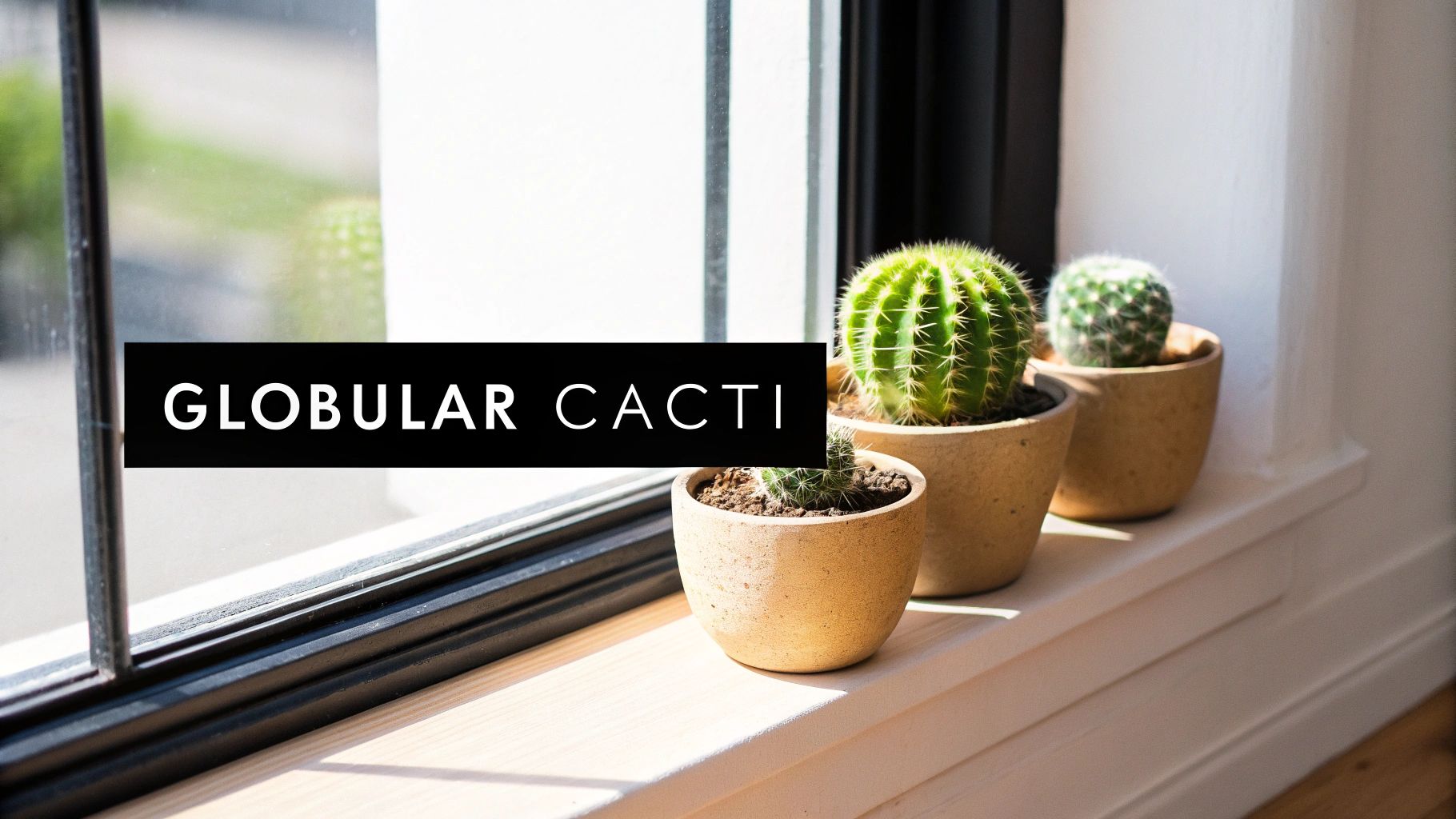
Unlike their lanky cousins, globular cacti put all their energy into growing outwards, not upwards, giving them that classic ball or barrel look. They grow slowly and steadily, which means they can live happily in the same pot for years. This makes them a fantastic, low-maintenance choice that will be with you for a long time.
Popular Globular and Barrel Species to Know
The world of round cacti is incredibly diverse, with a huge range of sizes, spine colors, and flowering habits. You can find everything from ferociously spined barrels to soft, woolly little balls. There's really a globular cactus for every taste.
Here are a few standouts you'll see often:
- Golden Barrel Cactus (Echinocactus grusonii): This is the rockstar of barrel cacti. Its bright yellow spines create a beautiful golden halo effect that's impossible to miss. It's a slow grower but can eventually get up to three feet across, making for a jaw-dropping centerpiece.
- Pincushion Cacti (Mammillaria): This is a massive genus with hundreds of small, round, and easy-to-grow species. Pincushions are famous for producing a delicate crown of pink or white flowers and often form lovely, clumping mounds over time.
- Domino Cactus (Echinopsis subdenudata): A fantastic, nearly spineless option. The Domino Cactus has a deep green body dotted with fuzzy white areoles that look just like domino pips. People love it for the enormous, fragrant white flowers that open at night—a real showstopper.
From the iconic Golden Barrel to the more subtle and floral Domino Cactus, these species give you just a peek into the variety you can find.
Care and Placement Tips for Round Cacti
Looking after globular cacti isn't all that different from caring for columnar types, but there are a few nuances to keep in mind, mostly related to their shape and size. Their compact form makes them ideal for pots, where you have total control over their environment.
The key to a happy barrel cactus is treating it like a tiny, self-contained reservoir. It wants to fill up on water and then dry out completely. Consistent dampness is its worst enemy, leading quickly to root rot from the bottom up.
When you're potting, pick a container that’s just a little bigger than the cactus itself. A snug fit helps the soil dry out faster and prevents the roots from sitting in a bog of wet soil. And, of course, always use a fast-draining cactus mix.
Placement Best Practices:
- Give It Sun: Most barrel and globular types need a ton of direct sun to keep their shape tight and their spine color bright. Indoors, a south-facing windowsill is your best bet.
- Rotate for Symmetry: To keep your cactus from leaning towards the light, give the pot a quarter turn every few weeks. This ensures all sides get equal sun, preserving that perfect round shape.
- Show Off Its Shape: These cacti look best in simple, shallow pots or tucked into rock gardens where their spherical form is the star of the show. Grouping a few different globular species together can create a wonderful display of different textures and patterns.
Discovering Unique Opuntia and Epiphytic Cacti
When we move beyond the classic towering pillars and round barrels, we find some of the most unique and fascinating characters in the cactus family. These groups completely shatter the typical "desert" stereotype, showing off the incredible adaptability of these plants. First, we’ll get to know the Opuntia genus, famous for its flat, paddle-like stems, before taking a trip to the rainforest to meet the surprising world of epiphytic cacti.
These two couldn't be more different from one another. One is a sun-worshipping icon of arid landscapes, known to most as the Prickly Pear. The other is a jungle native that literally grows on trees, thriving in humidity and dappled light. Getting to know them both reveals just how amazingly versatile the cactus family truly is.
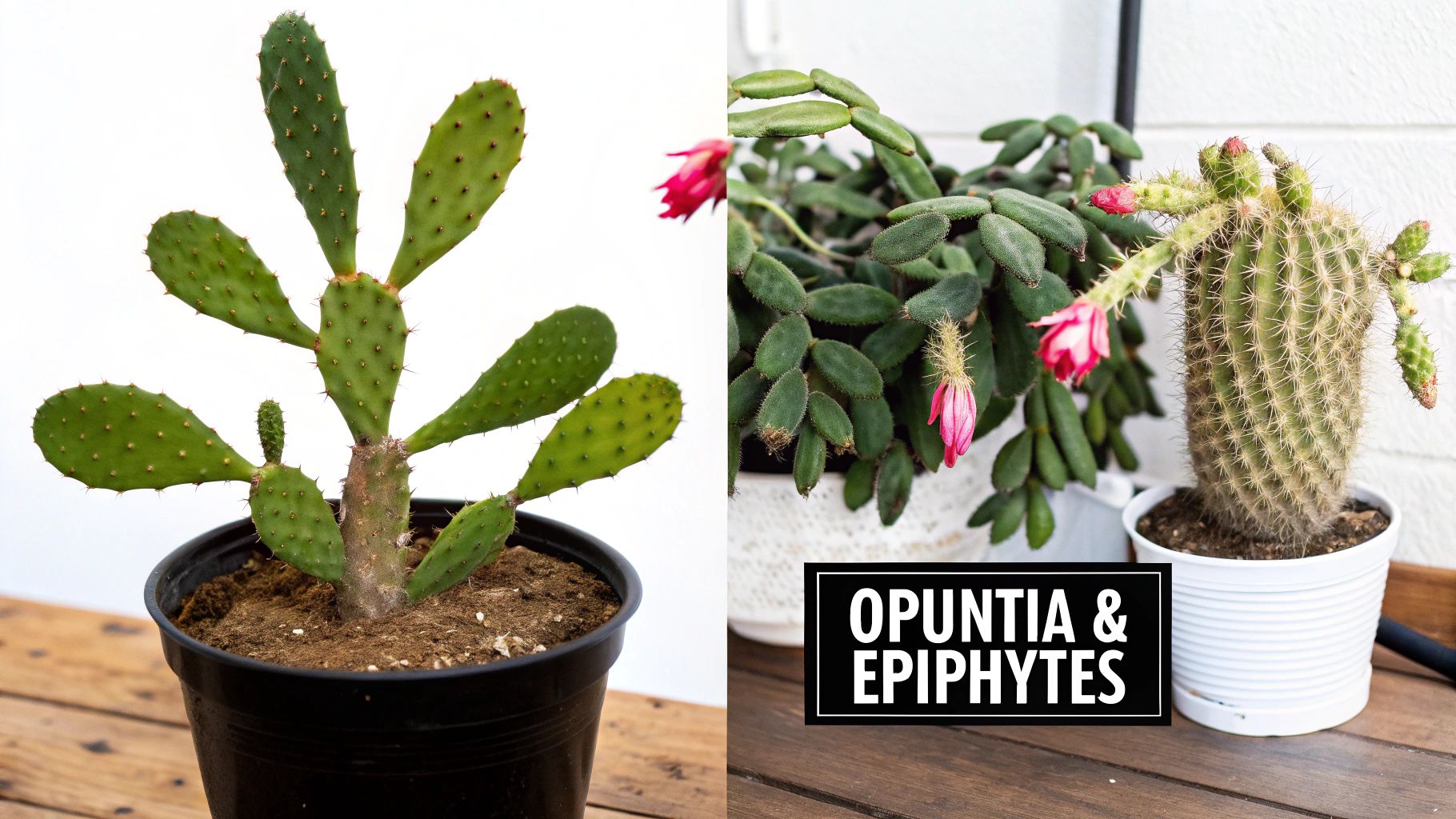
Putting these two side-by-side is the perfect way to appreciate the full spectrum of cactus evolution and learn how to care for plants with wildly different needs.
Opuntia: The Iconic Paddle Cactus
If you've ever seen a cactus with big, flat, beaver-tail-like pads, you're looking at an Opuntia. This massive and diverse group includes the quintessential Prickly Pear and the nearly spineless (but still poky!) Bunny Ears Cactus (Opuntia microdasys). Those jointed pads, technically called cladodes, act like leaves, handling all the photosynthesis while storing huge amounts of water.
The pads are the plant's engine. New ones sprout right from the edges of old ones, allowing the plant to spread out and form dense, shrubby colonies or even grow into a tree-sized specimen over many years. This growth style makes them fantastic for creating natural fences or filling up a big, sunny spot in the yard.
Think of Opuntia pads as modular building blocks. The plant can add new segments wherever conditions are favorable, making it incredibly resilient and capable of covering large areas. This is why you often see them thriving in tough, sun-baked environments where other plants struggle.
Many species produce gorgeous, cup-shaped flowers in stunning yellows, oranges, and magentas. These blooms eventually turn into the edible fruits known as "tunas," a staple food in many cultures.
Common Opuntia Species:
- Santa Rita Prickly Pear (Opuntia violacea santa-rita): Famous for its incredible gray-blue pads that flush a deep purple when stressed by cold or drought. The color change adds unbelievable visual drama to a landscape.
- Bunny Ears Cactus (Opuntia microdasys): A charming and popular houseplant with small, paired pads covered in clusters of tiny, fuzzy glochids instead of intimidating spines. It's much friendlier to keep indoors, but trust me, those little glochids can be a real pain!
- Beavertail Cactus (Opuntia basilaris): A low-growing species with distinct blue-gray pads shaped just like a beaver's tail. In the spring, it erupts with brilliant magenta flowers.
Epiphytic Cacti: The Jungle Dwellers
Now, let's take a hard left turn into the humid, shaded canopies of the rainforest. This is where we find epiphytic cacti, often called "jungle cacti." Unlike their desert relatives, these plants don't grow in the ground at all. They anchor themselves to tree branches, using them for support to reach the filtered sunlight peeking through the leaves.
Their whole look is a complete departure from what most people picture a cactus to be. They typically have long, trailing, segmented stems that are either spineless or have soft, bristle-like spines. This cascading form is perfect for hanging baskets or draping over shelves, where they can mimic their natural treetop home.
As you might guess, their care needs are a world away from desert types. They need bright, indirect light, as direct sun will easily scorch their delicate stems. They also love higher humidity and more regular watering than any desert cactus would ever want.
Popular Epiphytic Cacti:
- Christmas Cactus (Schlumbergera bridgesii): A holiday favorite loved for its vibrant, tubular flowers that bloom right around Christmastime. Its flattened, segmented stems create a beautiful trailing effect.
- Orchid Cactus (Epiphyllum species): These are the true divas of the jungle cactus world, producing some of the largest and most breathtaking flowers in the entire cactus family. Blooms can be over 8 inches wide and come in a dazzling array of colors.
- Mistletoe Cactus (Rhipsalis baccifera): This is the only cactus species found growing naturally outside of the Americas! It has thin, cylindrical, branching stems that create a delicate, hair-like cascade, making it an incredibly unique and elegant houseplant.
By exploring these two very different types of cacti, you can really start to see the amazing range of forms and survival strategies within this plant family. Whether you fall for the rugged, sun-loving Opuntia or the graceful, shade-dwelling Epiphyllum, there’s a cactus out there for every kind of environment and every kind of grower.
Identifying Common Cactus Lookalikes
Wandering through the succulent world can sometimes feel like you’re in a hall of mirrors. You’ll see plant after plant that looks remarkably like a cactus, right down to the spines and fleshy stems. This isn't a coincidence; it's a fascinating case of convergent evolution, where unrelated plants in similar harsh environments develop the same survival tools.
But here’s the thing: these doppelgängers don't belong to the cactus family. Getting the identification right isn't just for plant trivia night—it's absolutely critical for proper care. A Euphorbia’s needs are a world away from a true cactus, and knowing the difference is what will make your plants thrive. To really nail this, you'll need to train your eye for the little details. You can even find helpful visual discrimination activities to sharpen observation skills that apply just as well to plants as anything else.
Euphorbia: The Great Imposter
The most notorious cactus mimic is, without a doubt, the Euphorbia genus. Species like the African Milk Tree (Euphorbia trigona) are masters of deception. They grow in tall, columnar shapes and are covered in sharp points, making them a dead ringer for many cacti. At a glance, it's almost impossible to tell them apart.
Luckily, there’s one surefire test.
If a piece of the plant breaks, a Euphorbia will bleed a sticky, milky-white latex sap. This stuff is often an irritant, so you'll want to wear gloves. True cacti, on the other hand, have clear, watery sap. This is the single most reliable way to tell them apart, period.
The spines are another dead giveaway if you look closely. A true cactus spine always grows from an areole—a small, fuzzy bump that looks like a dot of felt. Euphorbia "spines" are technically thorns, and they poke directly out of the stem. There's no areole in sight. Want to see more of these tricky lookalikes? Dive into our guide on the diverse world of Euphorbia cactus lookalikes.
Agave and Aloe: Not Even Close Relatives
Agave and Aloe are two other succulents that often get lumped in with cacti, thanks to their spiky edges and architectural shapes. But they aren't even distant cousins; they belong to the Asparagaceae and Asphodelaceae families.
The biggest difference is where they keep their water. Cacti are stem succulents, meaning that big, green body is a modified stem. Agaves and Aloes are leaf succulents. Their water is stored in those thick, fleshy leaves that fan out from a central point. You won't find a cactus growing in a leafy rosette like that.
Here’s a simple cheat sheet to keep them straight:
| Plant Type | Key Feature | Sap Type | Spine Origin |
|---|---|---|---|
| True Cactus | Has areoles (fuzzy bumps) | Clear, watery | Spines grow from areoles |
| Euphorbia | No areoles | Milky, white latex | Thorns grow from the stem |
| Agave/Aloe | Leafy rosette shape | Clear, often gel-like | Spines are part of the leaf edge |
It’s interesting to think about how these plants travel, too. While we're sorting them out in our homes and gardens, a global review found that very few cacti ever become a problem in the wild. Of the 1,922 recognized species, only 57 (that’s just 3%) are recorded as being invasive anywhere outside their native lands. You can learn more about these specific invasive cactus species on PMC.
How to Choose a Healthy and Sustainable Cactus
Alright, so you’ve got a handle on the different cactus families and can tell a Ferocactus from a Euphorbia. That’s a huge step! Now comes the fun part: picking out the perfect plant to bring home.
Choosing a healthy specimen is about more than just looks. It’s about setting your new plant up for success from day one. Whether you’re standing in a nursery aisle or browsing online, there are a few tell-tale signs that separate a thriving cactus from one that's just hanging on.
A healthy cactus should feel firm and solid when you gently squeeze it. Anything soft or mushy is a huge red flag for rot, a problem that often starts at the base near the soil. Also, look at the color—it should be a vibrant, even green, blue-gray, or whatever is normal for that species. Washed-out, yellowing, or scarred tissue usually signals stress or disease.
What to Look For When Buying a Cactus
Think of yourself as a plant detective when you're inspecting a potential purchase. The little details can tell you everything you need to know about its history and current health. A great place to start is the areoles—those small, fuzzy tufts where the spines grow.
- Pest-Free Areoles: Get up close and personal. Do you see any tiny webs, white cottony fluff, or little brown bumps? Those are the classic signs of spider mites, mealybugs, and scale. You don't want to bring those pests home.
- A Strong Root System: If you can, give the cactus a gentle wiggle in its pot. A plant with a solid root system will feel secure and anchored. If it feels loose and wobbly, it might be a new cutting that hasn't established itself yet, which can be a riskier buy.
- Good Form and Symmetry: Look for a plant that has a nice, balanced shape that’s typical for its species. Steer clear of cacti that are leaning dramatically to one side or look stretched out and pale—a condition called etiolation, caused by a lack of light.
If you’re interested in general tips that apply to all sorts of houseplants, not just cacti, you might find a broader plant selection guide helpful for rounding out your knowledge.
Choosing a Sustainable and Ethical Plant
Beyond just the health of the individual plant, it's really important to think about where it came from. Cacti are more popular than ever, and that demand has unfortunately created a black market for plants poached from the wild. This puts a massive strain on fragile desert ecosystems and native plant populations. The best thing you can do is always choose nursery-propagated cacti.
By purchasing a plant grown in a nursery, you are supporting sustainable horticulture and helping to protect wild species from illegal poaching. This conscious choice ensures your hobby doesn't harm the very environments these plants come from.
This isn’t just a feel-good choice; it has a real impact. The story behind these fascinating plants has a serious conservation side. Of the roughly 1,480 known cactus species, an incredible 30–31% are threatened with extinction. That makes cacti one of the most endangered major plant groups in the world.
When you buy common species grown responsibly by nurseries, you help reduce the demand that fuels the poaching of rare, wild plants. You get a beautiful new friend for your collection, and you do it in a way that helps protect these amazing plants for generations to come.
Answering Your Top Cactus Questions
To help you get started on the right foot, let's walk through some of the most common questions growers have. We'll clear up the confusion around identifying cacti, picking the right one for your space, and understanding their basic needs.
Think of this as a quick-start guide to build your confidence. Whether you're bringing home your first plant or adding to a growing collection, these answers will help.
What Is the Easiest Type of Cactus to Grow Indoors?
If you're just starting out, you can't go wrong with Pincushion Cacti (Mammillaria). They are the classic desert cacti you probably picture—tough, forgiving, and perfectly happy with a sunny windowsill and a little bit of neglect.
Don't have a spot with intense, direct sun? No problem. Look for Holiday Cacti (Schlumbergera). These are actually jungle cacti, so they prefer bright but indirect light and appreciate a bit more humidity, which makes them a perfect fit for the average home environment. Both are easy to find and reward you with beautiful blooms without much fuss.
How Can I Tell if a Plant Is a Real Cactus?
Here's the secret: look for areoles. These are the small, fuzzy, cushion-like bumps on the stem. Every single spine, flower, and new branch on a true cactus grows from one of these.
An areole is the tell-tale sign that you're looking at a member of the Cactaceae family. It's their unique biological signature. If you see spines popping straight out of a plant's stem without those little felted pads, you've probably got a cactus look-alike, like a Euphorbia.
Many succulents, especially Euphorbias, have spines, but they grow directly from the main stem tissue. Finding the areole is the surefire way to know you have the real deal.
Can I Grow a Large Columnar Cactus in a Pot?
Absolutely. You can keep a big columnar cactus happy in a pot for years, especially when it's young. The container itself will naturally slow down its growth and keep it at a more manageable size.
While a true giant like the Saguaro will eventually need to be in the ground (and grows incredibly slowly anyway), many faster-growing species do great in containers. A perfect example is the Peruvian Apple Cactus (Cereus peruvianus), which adapts beautifully to pot life. The trick is to use a gritty, well-draining cactus mix and a pot with plenty of drainage holes to keep its roots healthy.
What Is the Main Difference Between Desert and Jungle Cacti?
It all comes down to where they came from. Their native habitats shaped everything about them, from how they look to what they need from you. It's a fantastic lesson in how plants adapt to their surroundings.
- Desert Cacti: Think Barrel Cactus. These guys are built for dry, harsh regions. They have thick, waxy stems to store water, and their signature spines are there for protection and even a bit of shade. They need lots of sun and very little water.
- Jungle Cacti: Think Rhipsalis or Holiday Cactus. These are epiphytes, meaning they grow on other trees in rainforests, not in the ground. They have spineless, often trailing stems and need filtered light, more humidity, and more regular waterings than their desert relatives.
Ready to find the perfect cactus to bring home? The Cactus Outlet has a huge selection of healthy, nursery-grown cacti, from impressive columnar giants to perfect little potted plants. Take a look and find your new favorite.